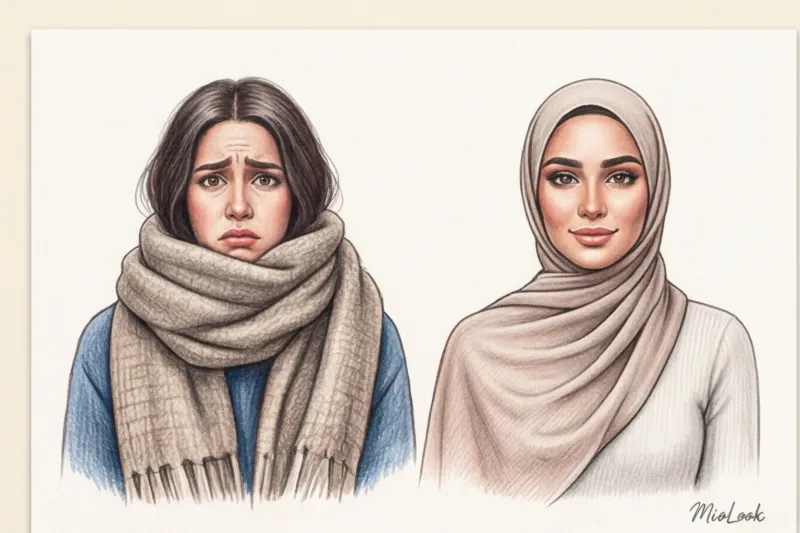
I still remember that August day in Dubai. The temperature outside hit 42°C, and my client sat before me in a luxurious, expensive 100% natural linen hijab, almost crying from discomfort. The fabric was damp around her neck, stiff, and her hairline was painfully irritated. It was then that I finally realized: blindly believing that "natural is always better" in extreme heat isn't just wrong—it's downright damaging to your skin.
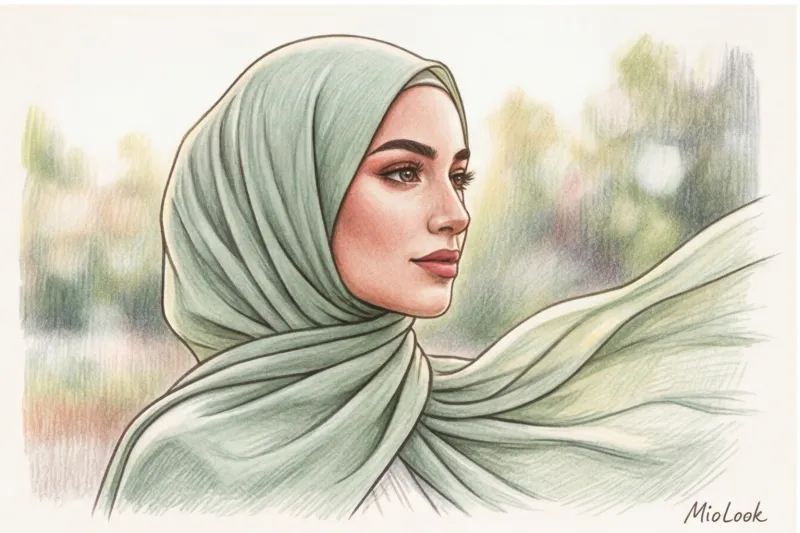
When the thermometer column creeps up, the correct hijab fabric for summer It becomes a question not only of style but also of physical health. Moreover, under the scorching sun, the fabric near the face acts as a powerful photoreflector—it reflects light onto the skin, highlighting either freshness or fatigue. We discussed this effect in more detail in our full article. hijab color guide But today we'll talk physics: how to survive the heat, maintain elegance, and why your favorite cotton stole should be put away until September.
The Anatomy of Summer Comfort: Why Regular Cotton Is the Worst Fabric for a Summer Hijab
Let's break the most important rule of mass-market clothing. We're constantly told: wear cotton and linen to let your skin breathe. But textile engineering research proves otherwise when it comes to layering around the neck.
The problem lies in the difference between moisture absorption And moisture removal (moisture-wicking). Cotton is an excellent absorbent. It soaks up sweat like a sponge, but is incredibly slow to evaporate. As a result, at 30°C (86°F), you end up with a damp, heavy compress on your neck. An ideal summer scarf should weigh no more than 120-150 grams, but wet cotton becomes one and a half times heavier.
Linen is a different story. It breathes well, but the stiff fibers instantly lose their shape at the slightest moisture. A linen hijab looks flawless for exactly 15 minutes after leaving the house, but then becomes covered in stiff, untidy creases.
"The most common complaint my clients have in the summer is small breakouts on their neck and chin. Dermatologists call this acne mechanica. It occurs when damp, rough fabric (like wet linen or thick cotton) constantly rubs against warm skin, disrupting its microbiome," according to notes from my styling practice.
Top 5: Ideal Hijab Fabric for Summer in Temperatures of +30°C and Above
So, if not classic cotton, then what? The future of summer comfort lies in high-tech blends and the proper processing of natural fibers. Over 12 years of work, I've tested dozens of materials. In my app MioLook I even created a separate smart tag, "Summer/Thermoregulation," so my virtual wardrobe would only suggest heat-tested options. Here are the absolute top picks.
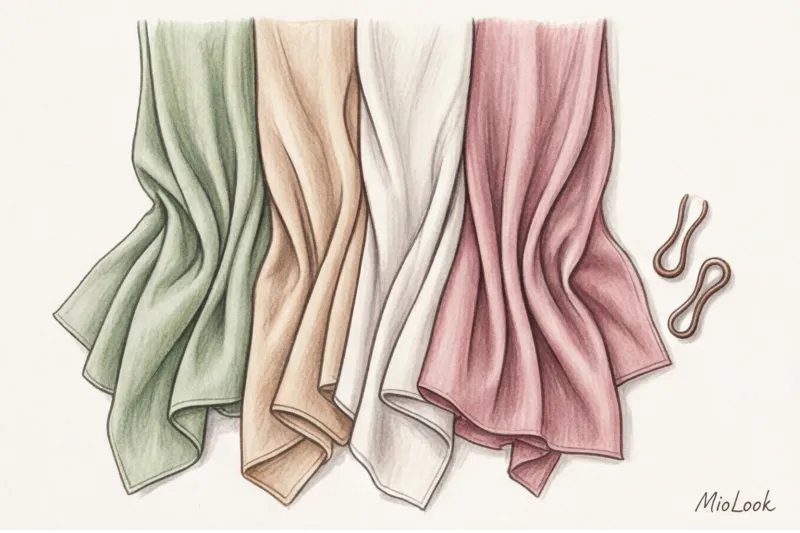
1. Modal and micromodal: the effect of a cooling second skin
Modal (an improved form of viscose derived from beech wood) is my personal favorite. It feels a couple of degrees cooler than body temperature when touching the skin. Its main advantage is zero friction and instant moisture wicking.
Unlike cheap synthetic viscose, which is shiny and slippery, high-quality micromodal has a refined matte texture. It creates a perfectly fluid drape without creating excess bulk around the neck, which is critical in hot weather.
2. Bamboo fiber: a natural antiseptic
If you're looking for something as natural as possible, consider bamboo. According to independent textile lab tests, bamboo fiber absorbs moisture 60% better than cotton and dries three times faster. But its superpower lies elsewhere.
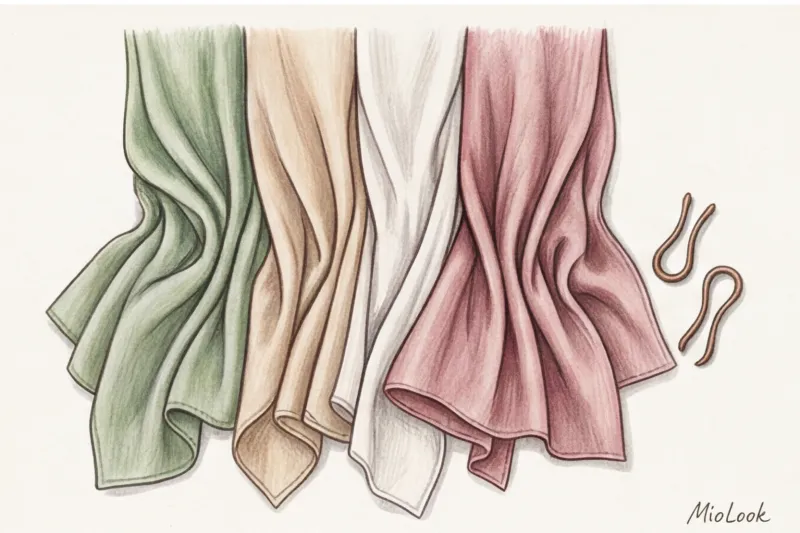
Bamboo contains a natural antibacterial agent kun This means the fabric inhibits bacterial growth and prevents sweat odor, even after a long day in the sun. Furthermore, the dense weave of bamboo threads provides a natural UPF (ultraviolet protection) barrier, protecting the neck from photoaging.
3. Crepe de Chine and stretch silk: status coolness
For the office, business meetings, or events that require a strict dress code (by the way, if this is relevant to you, check out our article on summer business attire for women in hot weather), crepe de chine or matte silk with 3-5% elastane is the ideal choice.
Why does this work? The grainy (crepe) texture of the fabric creates a micro-gap between the material and the skin. The fabric physically cannot stick to a sweaty neck. But there is an important limitation: Never choose pure satin silk for everyday wear in summer. It slips catastrophically, requiring dozens of pins and tight tightening, which completely kills the ventilation.
4. Sports fabrics (Tech-fabrics): innovations for active people
The sports industry has long since solved the problem of overheating. Fabrics with technologies like Coolmax or micro-meril are slowly but surely making their way into everyday, modest fashion. They're a lifesaver for outdoor workouts, long walks with children, or hiking.
Modern brands produce tech hijabs with microperforation—an invisible mesh at the nape and neck. And yes, if you're looking for information on which fabric won't show sweat stains (especially important for speakers), high-tech synthetics in dark or printed shades are your best bet.
Tired of wondering what to wear tomorrow?
Let technology do it for you. MioLook will digitize your wardrobe and suggest ideal combinations based on the weather outside.
Get access — €0.99 onceThe Bottom Cap: The Hidden Culprit of Overheating
This is where the most common and most fatal mistake beginners make lies. You can buy a stunning premium micromodal scarf for hundreds of dollars, but if you wear a tight polyester tube hat underneath, you'll still get heatstroke.
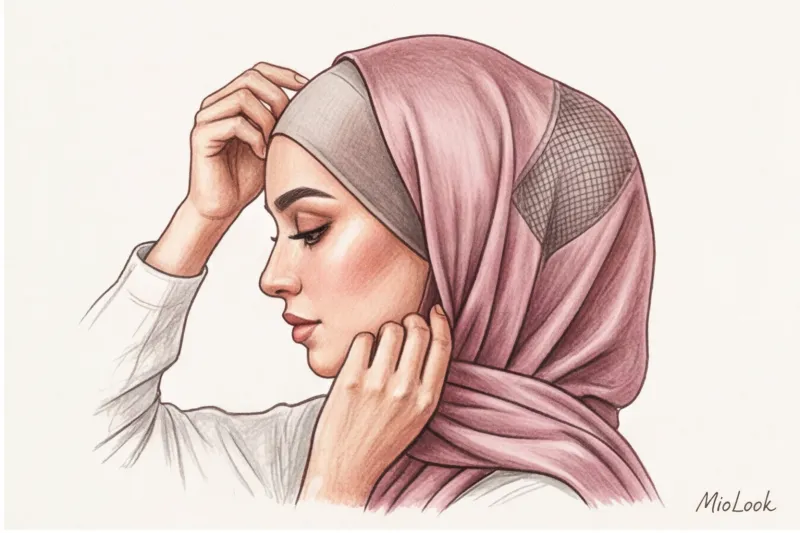
One of my clients complained of constant tension headaches toward the end of the workday. We analyzed her images and discovered that the temperature under her tightly closed headgear was 3-4 degrees higher than her body temperature! Her brain was literally "boiling."
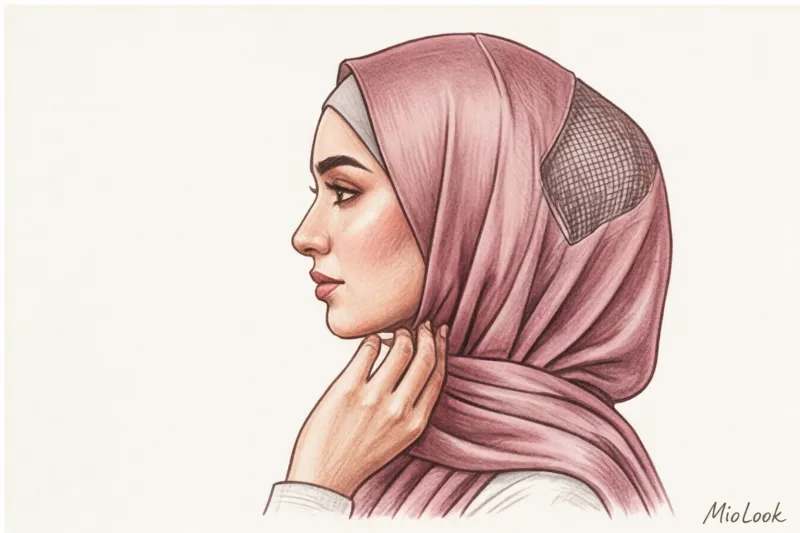
Rules for choosing a summer bonnet:
- Reticulated occiput: Look for models with a back made of soft, breathable mesh.
- Open crown: Half-pipe hats (without a closed top) allow heat to escape upward.
- Ties instead of elastic: A tight elastic band compresses the blood vessels. A drawstring allows for adjustable tension.
- Silk lining: If your hair is prone to breakage, look for cotton bouncy buns with a silk lining—they protect the hair cuticle without compromising ventilation.
Color and Physics: How Shades Affect Temperature and Skin Tone
We're used to thinking that we should only wear white in summer. Physics shows that white fabric does indeed reflect infrared (heat) radiation best. But there's a nuance that fabric retailers don't mention.
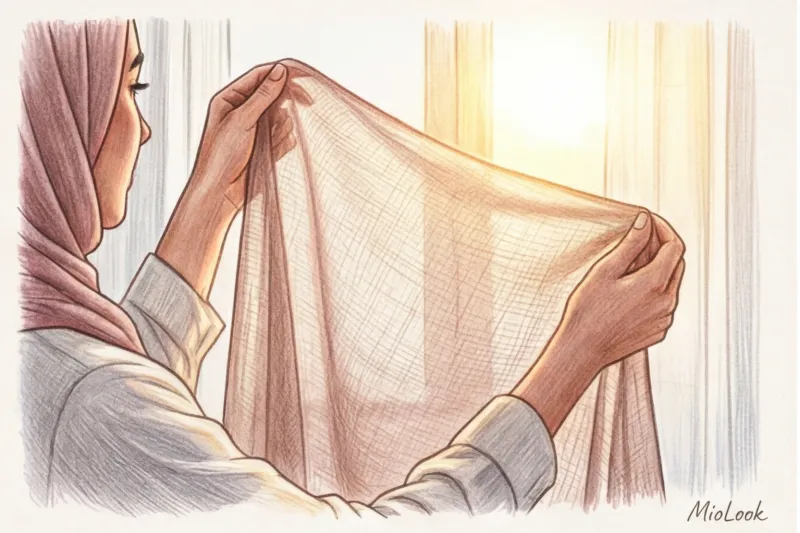
Lightweight white fabrics transmit significantly more ultraviolet rays (UV) than darker fabrics. If the fabric is too thin (transparent in the sun), you risk developing discoloration on your neck. Furthermore, in bright sunlight, a blindingly white hijab acts as a harsh reflector, casting harsh shadows on the face, highlighting under-eye circles and uneven skin.
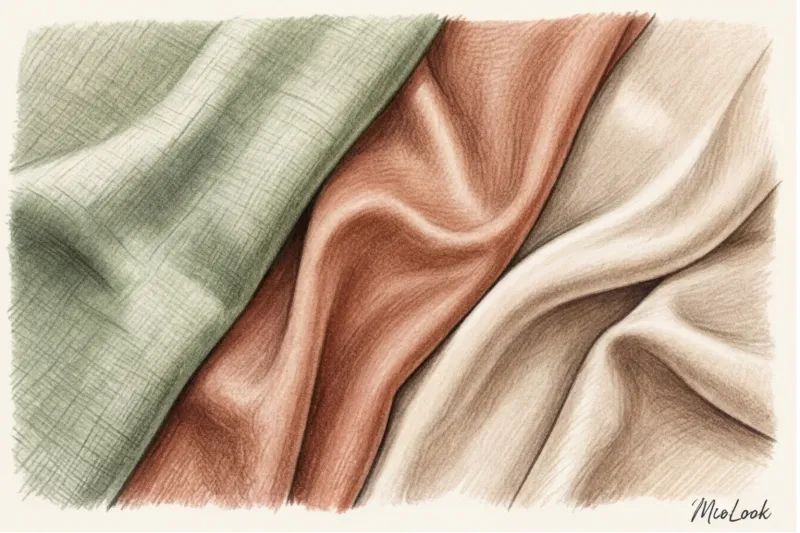
My styling advice: choose medium, slightly muted shades. Dusty rose, sage green, soft taupe - They're light enough that they don't attract heat (like black or navy blue), but pigmented enough to block UV rays and softly illuminate the face.
Create the perfect summer capsule
Upload photos of your items to MioLook, and a smart algorithm will show you which shades you need to create a harmonious look.
Create a capsuleStyle Architecture: How to Wrap a Hijab in Summer Without Suffocating
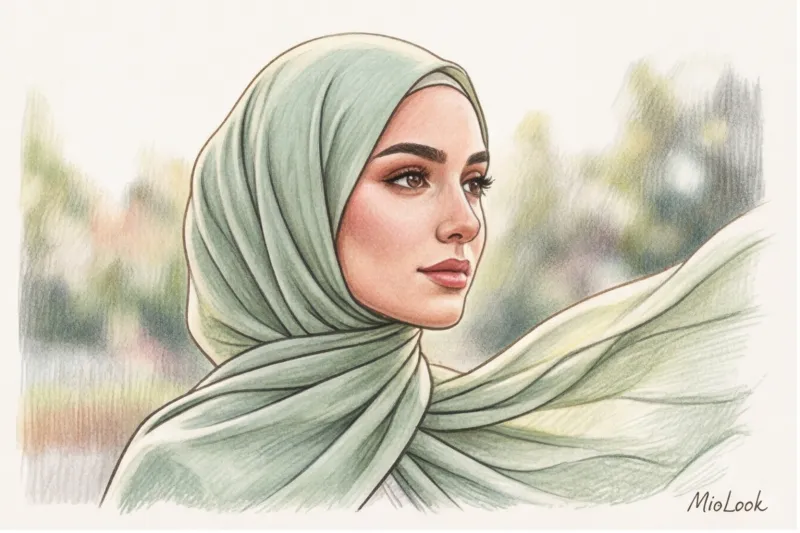
Even the best summer hijab fabric won't work if you wrap it around your neck in three tight layers. The main rule for summer styling is air acts as the best heat insulator.
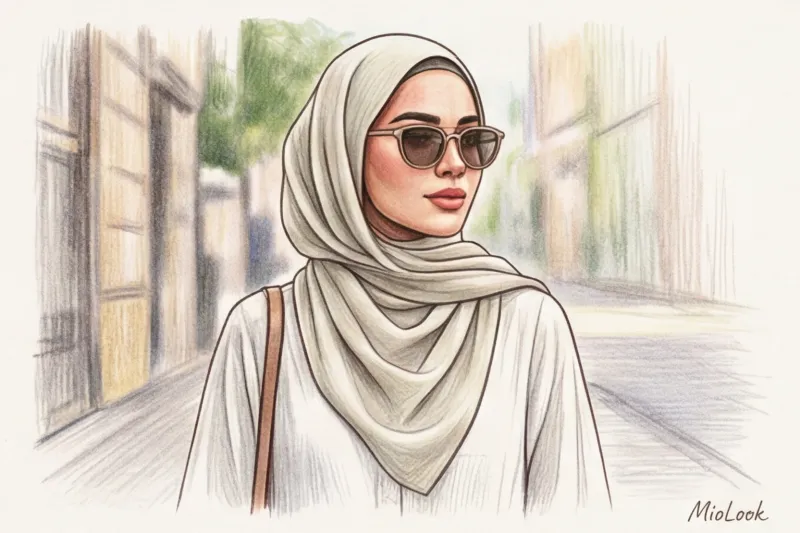
Avoid complicated, multi-tiered turbans with lots of folds. At 30°C (86°F), the "Loose Hijab" style is your best friend. How to create it?
- Avoid pins under your chin. It sounds radical, but try using special magnetic clips. They allow you to leave a micro-gap of half a centimeter, which will ensure constant ventilation of the neck.
- One layer rule. Drape the long end of the stole over your shoulder so that only one layer of fabric lies at the neck itself.
- V-shaped drape. Don't wrap the fabric around your neck like a ring. Instead, arrange the ends to create a soft V-shape across your chest—this visually elongates your silhouette and allows airflow to your collarbones.
I use it often MioLook To plan these lightweight, single-layered looks in advance, visualizing them helps you understand whether the loose cut of the hijab will complement an oversized shirt or dress without weighing down your upper body.
Stylist's Checklist: Testing Hijab Fabric Before Buying
Now that you're armed with the theory, here's a practical plan of action. When you find yourself in the store in front of a rack of stoles, run three quick tests.
- Light test: Hold the fabric up to a window or bright light. You should be able to see the light, but you shouldn't be able to clearly discern the outlines of objects through it. If the fabric feels like gauze, it won't protect against UV rays.
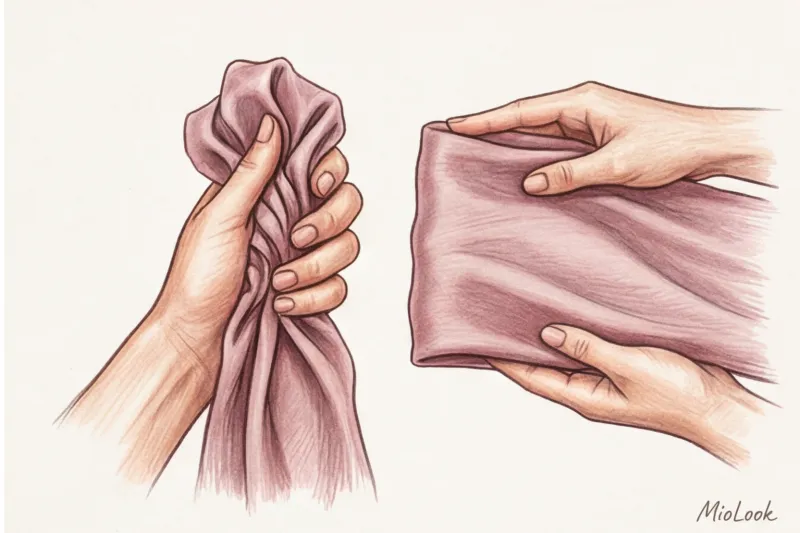
- Crush test (Compression test): Squeeze the corner of the fabric tightly in your fist for 5-7 seconds, then release. Did the fabric straighten out on its own? Great, take it. Is it still wrinkled (like linen or cheap cotton)? Leave it on the shelf, otherwise you'll get the same creases on your neck.
- Friction test: Lightly rub two layers of fabric together near your ear. If you hear a slight crackling sound or the fabric "sticks," it's high in cheap polyester and will accumulate static electricity and stick to your face.
A well-chosen summer hijab shouldn't feel heavy on your body. Forget the stereotypes about cotton being the savior—give micromodal, bamboo, or high-tech crepe a try, and pair them with breathable bonnet. Your skin and your mood will thank you so much at 30°C.