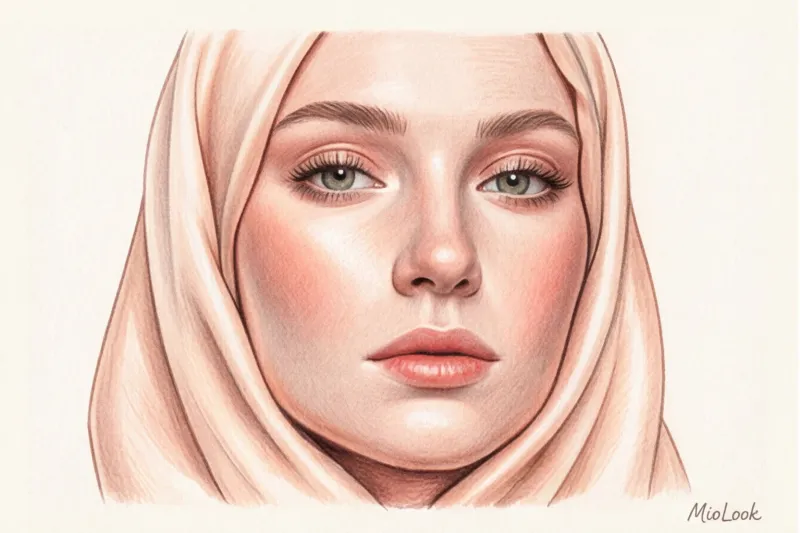
"I just want a basic beige scarf that goes with everything," a client with stunning porcelain skin told me last week. After an hour of trying on, we ruthlessly discarded all six "perfect beige" scarves. Why? Because the right hijab color for fair skin operates according to the strict laws of optics, not the outdated rules of glossy magazines from the 2000s. If you've ever put on a new, expensive scarf and suddenly looked like you hadn't slept in three days, it's not because you're tired. It's because of physics.
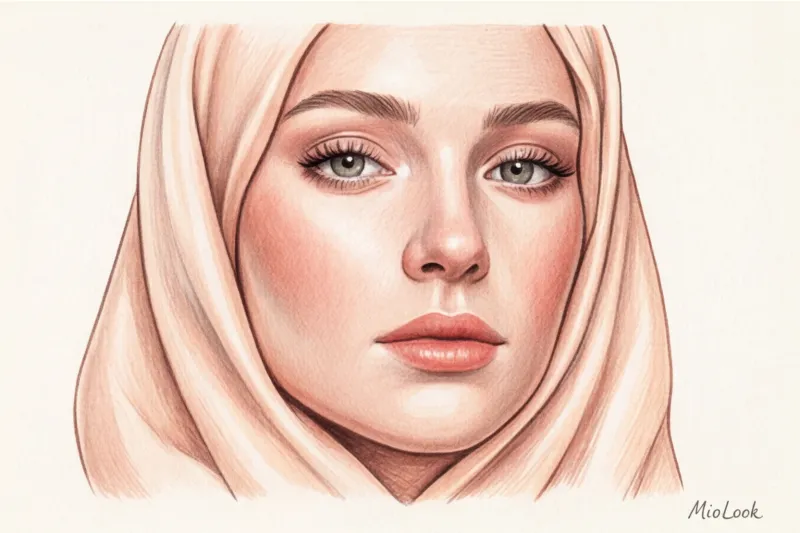
We talked about the basic principles of creating a wardrobe in more detail in our The complete guide to choosing a hijab color But today I want to talk about the specifics of fair skin. Over eight years of working with smart wardrobes, I've become convinced that a scarf around your face isn't just an accessory. It's your personal, physical light reflector.
The Physics of Color: Why a Hijab Works as a Studio Reflector
Let's be honest: choosing a dress color and choosing a hijab color are two completely different tasks. A dress is usually separated from the face by a neckline (even a small one), leaving a buffer at the neck. A hijab, on the other hand, frames the face 360 degrees, fitting snugly against the cheekbones and chin. It catches any light source—the sun, office lamps, your smartphone screen—and casts rays of color directly onto your skin.
I recall a case from my practice. My client, Amina, was convinced she was a "typical Autumn." After reading articles about color types, she bought a dozen fashionable mustard and ochre scarves made of thick, matte cotton. The result? Her naturally fair skin took on a sallow hue, and dark shadows appeared under her eyes that had never been there before.
Back in 1839, French chemist Michel-Eugène Chevreul developed the law of simultaneous contrast, proving that adjacent colors inevitably influence each other optically. In the context of portraiture, fabric reflects up to 70% of light directly onto the face. The right shade literally replaces concealer and heavy foundation, neutralizing pigmentation.
The specifics of fair skin: transparency and micro-shades
Fair skin (unlike dark or olive skin) works like a blank white canvas. Even the slightest reflections are instantly visible. The main problem for fair-skinned women is "show-through." Closely spaced blood vessels create redness on the cheeks and sides of the nose, while the thin skin under the eyes reveals a blue tint. An unflattering scarf color acts as a magnifying glass for these micro-shades, bringing them to the forefront.
Your perfect look starts here
Join thousands of users who look flawless every day with MioLook. Our smart algorithm will help you create a capsule that matches your skin tone.
Get access — €0.99 onceThe biggest mistake: the myth of a "nude" hijab for fair skin
Perhaps the most harmful stereotype I fight every day is: "fair skin needs light nude shades." A study of consumer habits showed that almost 80% of fair-skinned women make the wrong choice when choosing a basic scarf, buying a shade that literally blends with their complexion.
A tone-on-tone hijab with fair skin is a visual disaster. It doesn't look "elegant and expensive." It creates a "floating face" effect, or, worse, visually blurs the line between the hairline and the scarf, making the look unhealthy.
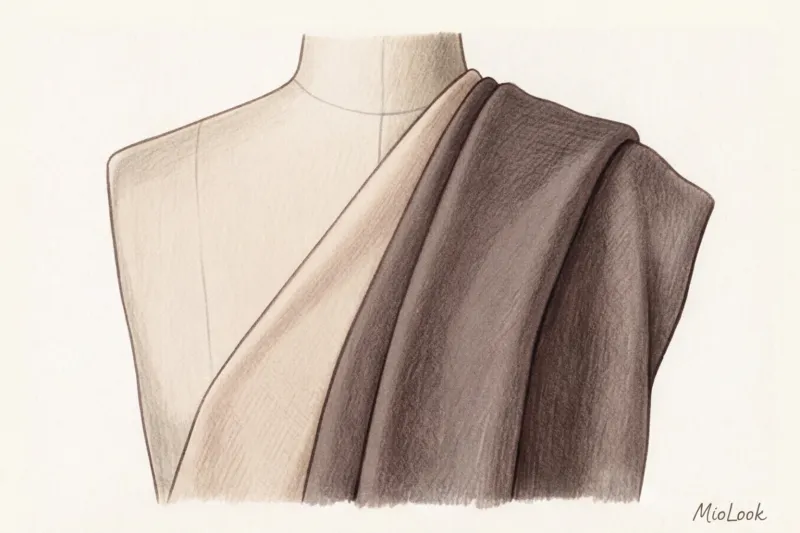
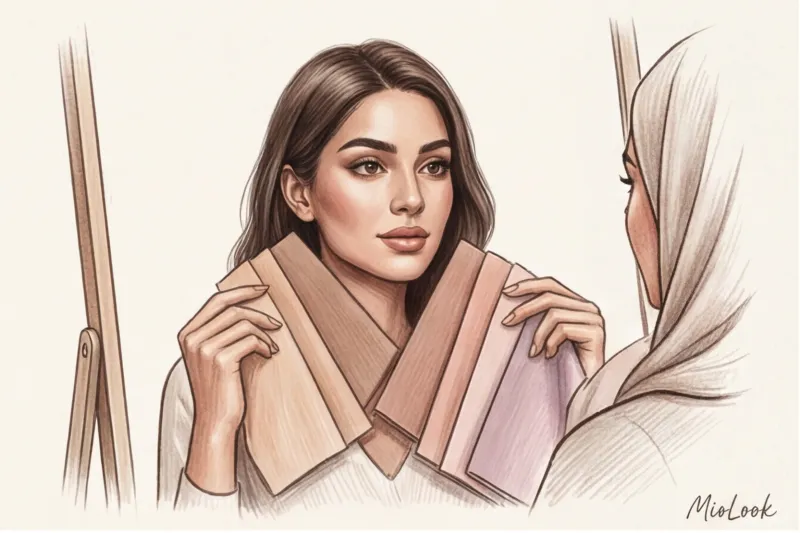
The formula for the perfect basic nude is simple, yet counterintuitive: Your ideal nude shade should be at least 2-3 shades darker than your skin. If you have a porcelain complexion, your nude color will be dusty rose, cool taupe, or rich camel. It's this micro-contrast combinations of brown and beige tones emphasizes the whiteness of the skin, making it look aristocratic rather than dull.
How to determine your undertone without the outdated theory of seasons
The classic 12 color types ("Light Spring," "Soft Summer") are incredibly confusing when it comes to scarves. Forget them. You only need to know one thing: your skin temperature.
However, the popular "look at the color of the veins on your wrist" test often doesn't work for fair-skinned people, as the translucency of the skin can make the veins appear both blue and greenish at the same time.
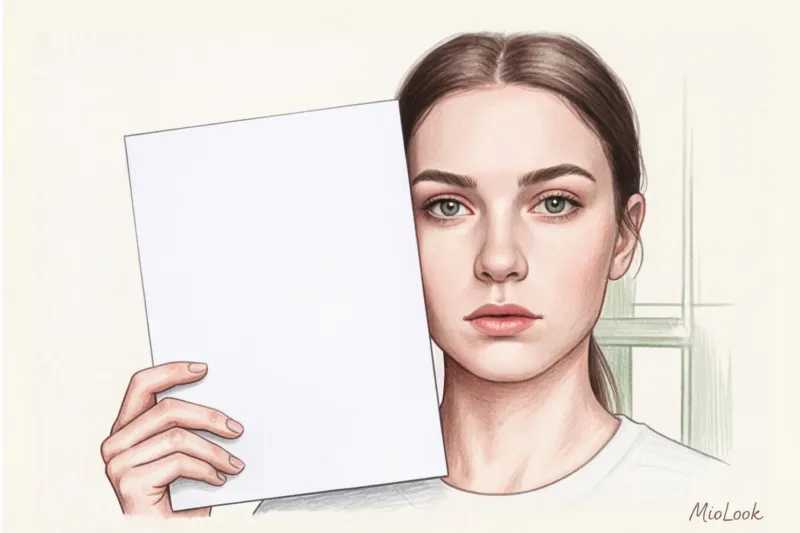
Here's a working method from stylists: white sheet test in daylight.
Wash your face, go to a window (out of direct sunlight) and hold a regular sheet of A4 paper to your face.
- If against the background of snow-white paper your skin appears pinkish, bluish or crimson, you have cool undertone.
- If your skin has a peachy, golden or slightly yellowish tint, you have warm undertone.
- If you see a slight greenish or grayish tint, you have a complex olive undertone (yes, light olive exists and it is a very common story!).
Understanding this base is the key to correct mixing warm and cool colors in clothing.
Contrast in appearance: eyebrows and eyes
Temperature isn't everything. The saturation of the hijab color you choose for fair skin is dictated by your natural contrast. If you have porcelain skin but dark, thick eyebrows and brown eyes (high contrast), you'll easily pull off deep, rich colors (emerald, burgundy). However, if you have fair skin, light brown eyebrows, and gray eyes (low contrast), those same dark shades may overwhelm you, requiring softer, more subtle transitions.
Access to MioLook for €0.99 — one-time payment
A smart AI stylist will analyze your appearance and select the perfect look in just a few clicks. Forget the agony of choosing in front of the mirror.
Get access — €0.99 onceThe Perfect Hijab Color for Fair Skin: A Palette That Refreshes
Based on data from the PANTONE Color Institute (in particular, their analysis of the commercial success of portrait shades) and my own experience, I have put together a palette that works without fail.
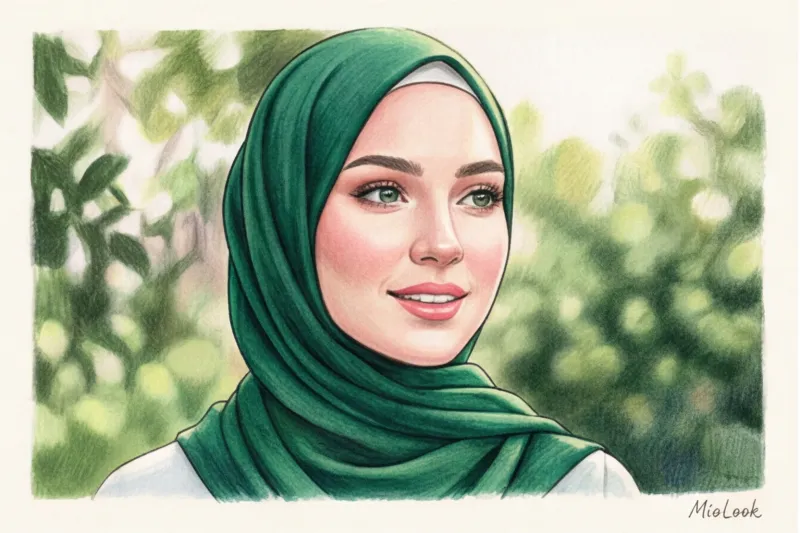
For cool undertones (pinkish skin):
Your goal is to tone down redness. So-called "jewel" shades work great: emerald, deep sapphire, cool berry, ash pink, and pearl gray. Green and blue pigments physically neutralize red capillaries on the face. Deep blue color combination makes the whites of the eyes crystal clear.
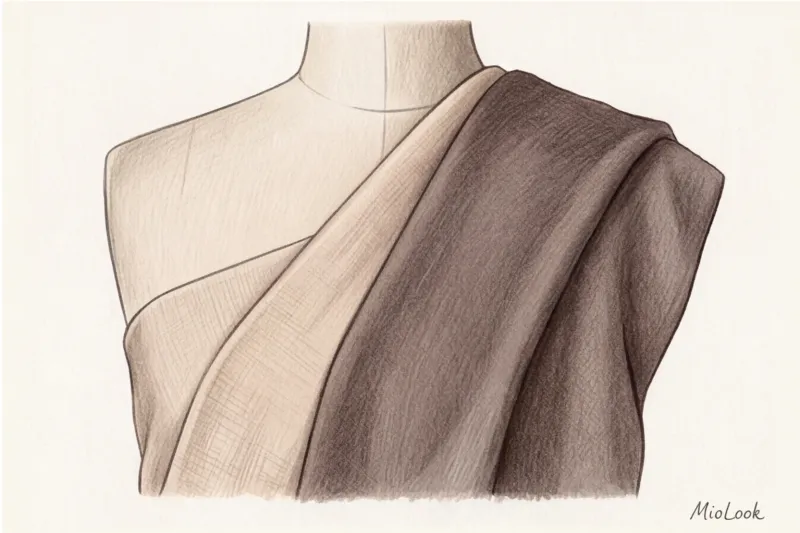
For warm undertones (peachy/golden skin):
You want to highlight your natural glow. Choose warm olive (khaki), terracotta, deep chocolate, and creamy brown. Avoid overtly reddish shades—they can make your face look tear-stained.
Universal fighters (works for 90% of fair-skinned girls):
- Marsala (muted wine): Unlike bright red, Marsala has a grayish base that brings out the blush without highlighting inflammation.
- Navy: The perfect alternative to black. Black often creates harsh shadows on a fair complexion, while navy offers the same severity but is softer.
- Taupe (gray-brown): That perfect base shade that replaces an unsuccessful, blending nude.
Harmful colors: which shades highlight bruises and wrinkles
As much as you love these colors on the hanger, keep them away from the portrait area if you have fair skin.
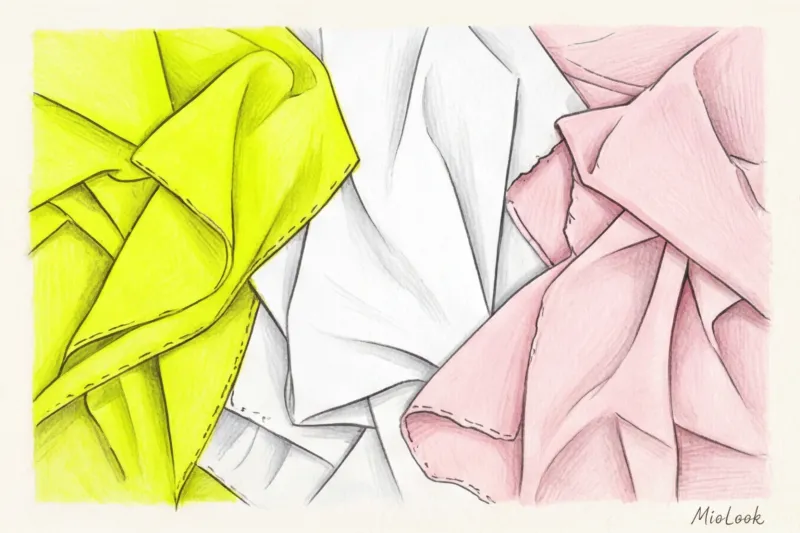
Pure White. Paradoxically, pure, optical white, reminiscent of printer paper, makes fair skin appear gray and dirty. Moreover, against the backdrop of a crisp white scarf, tooth enamel and the whites of the eyes instantly appear yellowish. Replace it with milky, ivory, or eggshell.
Pastel pink and peach (light). These are the same shades that look delicate on a mannequin, but in real life they bring out all the imperfections, inflammation, and broken blood vessels. They blend into the skin, creating the effect of an irritated face.
Neon colors and bright yellow. They're too reflective. Neon literally "eats" the delicate features of a fair complexion. People will see a bright patch of fabric, while your face will be lost in the background.
A Stylist's Secret: How Fabric Texture Changes the Perception of Color
This nuance is often overlooked in style articles, but color is absolutely inseparable from texture. The same dusty rose shade in different fabrics is like three different colors on your face.
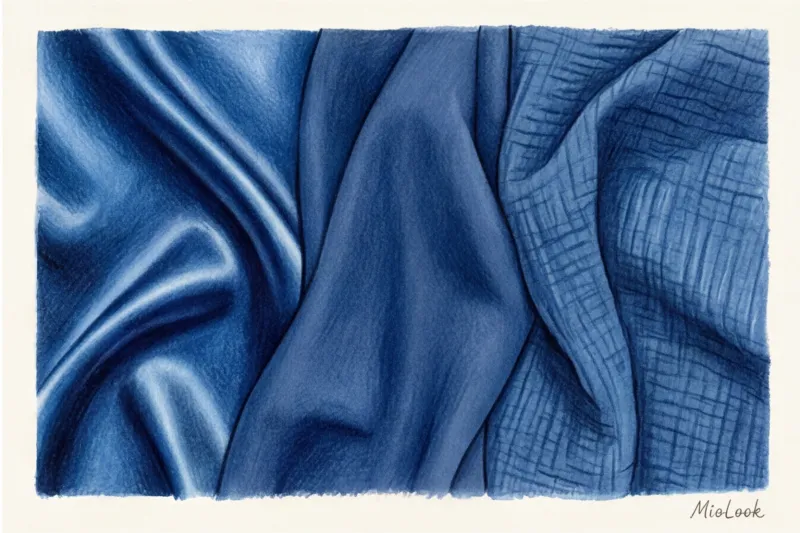
- Matte fabrics (cotton with a density of 180 g/m², linen, crepe georgette). They absorb light. Even the perfect, perfectly matched color with a matte finish can make your face look a little tired if your skin is prone to dryness and lacks a natural glow. If you haven't had enough sleep, matte cotton will make things worse.
- Glossy fabrics (natural silk, thick satin). They act as powerful reflectors. The satin sheen transfers highlights to the cheekbones, making the complexion appear more even and hydrated. But there are limitations: This does NOT work if you have problematic skin with active breakouts. (the gloss will highlight the relief).
- Translucent fabrics (chiffon). They're tricky because their color blends with the skin tone on your neck and with the shadows in the folds of the drapery, creating new, sometimes muddy, undertones. If you choose chiffon, always evaluate its color not in a single layer, but by folding it three or four times.
Ready to get started?
Try the free plan—no commitments. Digitize your favorite scarves and create looks in the MioLook app.
Get access — €0.99 onceChecklist: How to Digitize Your Palette and Create a Scarf Capsule
Stop buying headscarves randomly. If you start taking a systematic approach, you'll discover you don't need 50 hijabs—a well-thought-out base guaranteed to flatter your appearance is enough.
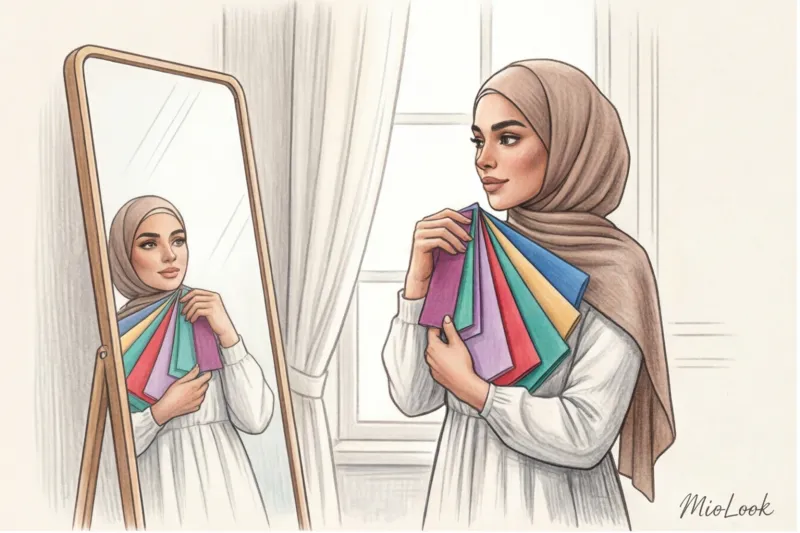
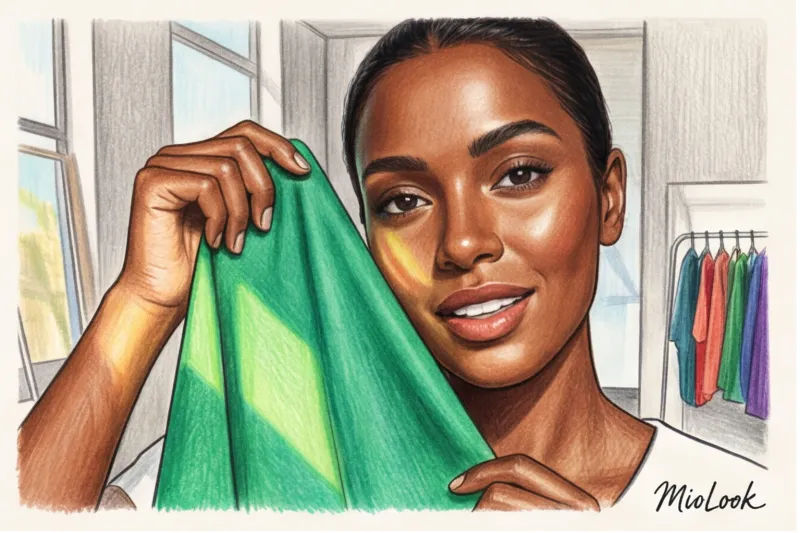
Step 1: Practical test in daylight. Take a series of makeup-free selfies (this is important!) while standing by a window. Apply cloths of varying temperatures and thicknesses to your face. You'll immediately see how the dark circles under your eyes disappear in one photo, while the nasolabial folds become more pronounced in another.
Step 2: Create a digital base. I recommend using smart wardrobe apps. Download in MioLook Photos of the scarves that passed your personal casting. The app will help you visualize how they pair with the rest of your outfit, whether it's a tailored jacket or a basic trench coat.
Step 3: Assemble a minimalist capsule. The formula for the perfect base for a fair-skinned girl consists of just 5 scarves:
— 2 “correct nudes” (a couple of shades darker than your skin: for example, taupe and dusty rose);
- 2 deep dark shades for contrast (navy and emerald);
— 1 accent color or print for special occasions (here you can experiment with silk textures). And remember, if you choose a print, gold or silver in your jewelry should be in harmony with the dominant shade of the pattern.
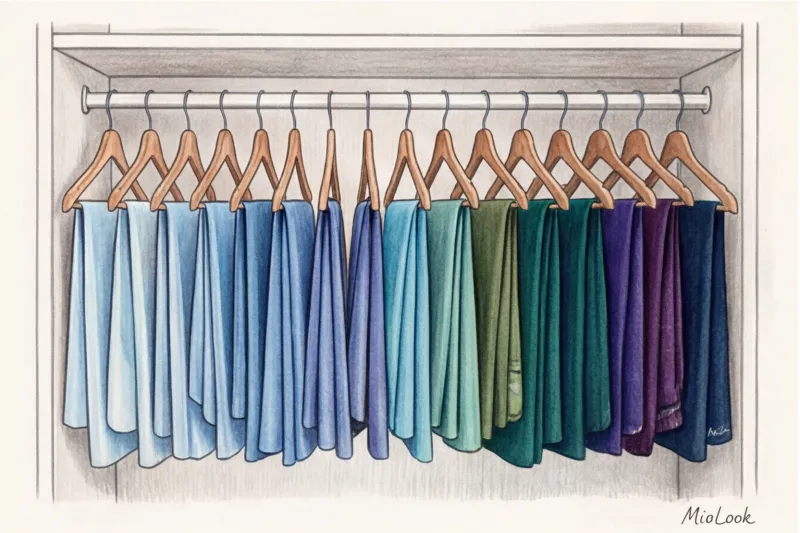
Invest in shades that attract compliments not on the headscarf itself ("what a beautiful hijab!"), but on your face ("how fresh you look!"). When color is chosen correctly, based on the laws of optics and texture, it becomes an invisible assistant, keeping the focus on what matters most—you.