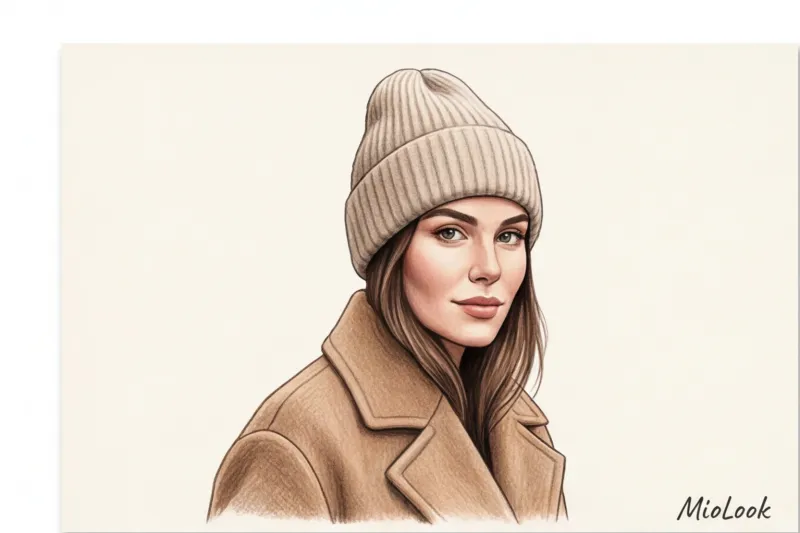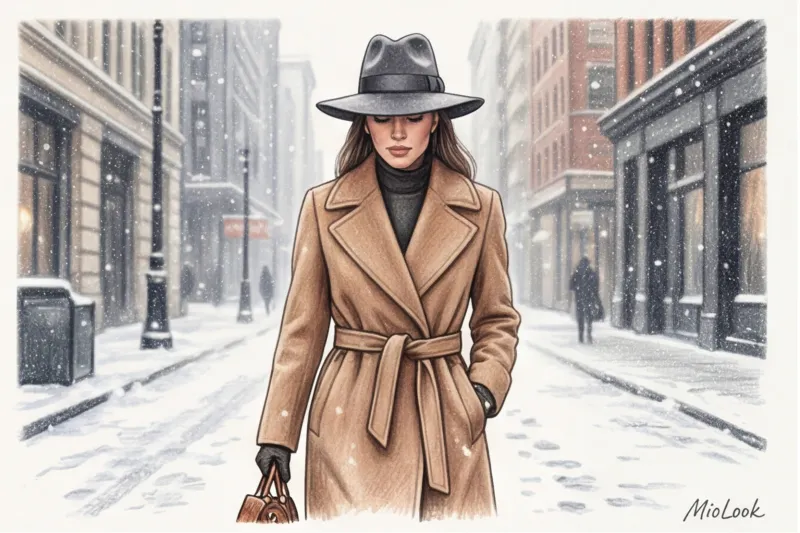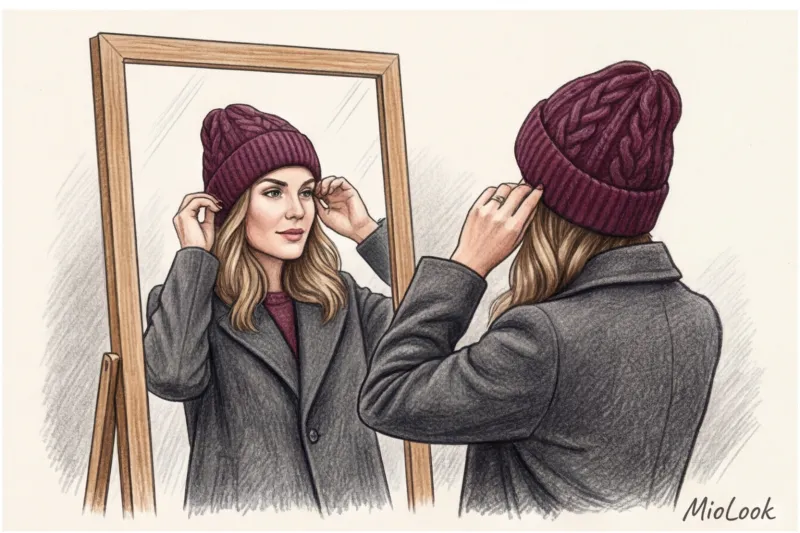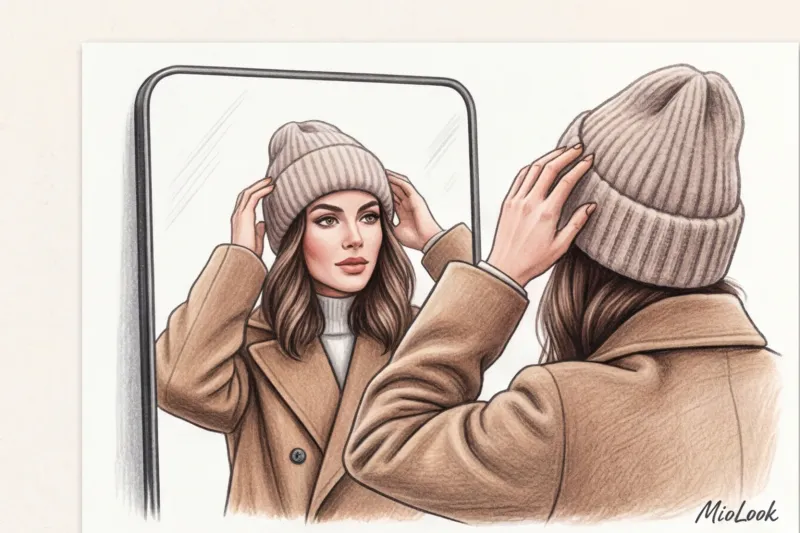
Recently, a client came to me with a classic winter pain point. She'd invested in a stunning €2,800 camel-colored Max Mara coat, but complained that she looked "like a tired teenager" in the mirror. The answer wasn't the cut of the coat or the lack of makeup. All the luxurious Italian cashmere was ruined by one detail: a thin, squeaky acrylic cap that fit snugly around her head.
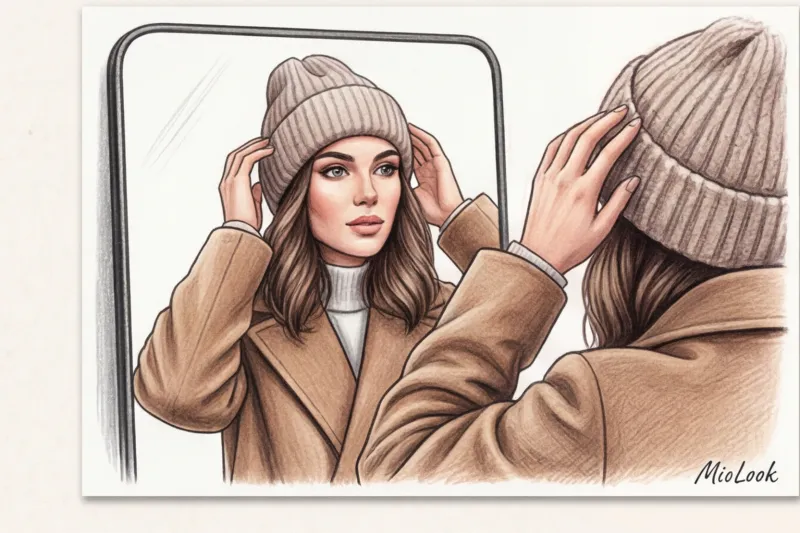
As a stylist, I see this mistake all the time. We spend weeks searching for the perfect outerwear, and then rush to grab the first accessory we see. However, it's the hat underneath a coat that defines that "portrait zone"—the area of the face, neck, and shoulders that, statistically, accounts for 80% of how others perceive our style and status. If this zone is misaligned, even the most expensive piece will lose its luster. We covered the basic principles of accessorizing in more detail in our complete guide. How to choose a hat without looking stupid.
Image architecture: why choosing a hat for a coat doesn't depend on your face shape
Perhaps the most persistent style myth, which has been perpetuated by magazine after magazine for the past twenty years, is that choosing a hat based on your "face type." Forget charts of ovals, squares, and triangles. Your face shape is completely irrelevant if you violate the basic laws of proportion.
Last year, I conducted a personal test drive: I photographed 15 different hat and coat combinations on myself. The goal was simple—to demonstrate how an optical illusion works. When you put on a voluminous winter coat, your silhouette visually expands. If you simultaneously wear a thin, tight-fitting hat, the rule of proportionality kicks in: against the massive body, your head appears microscopic, and your neck is visually shortened by a few centimeters. This creates a comical "pinhead" effect.
The real secret of stylists lies not in finding the perfect hat shape, but in hair styling. Leave loose strands around your face—they'll create the necessary vertical lines, conceal the true contours of your cheekbones, and ensure the harmonious placement of absolutely any accessory. Try taking two selfies right now: one in a hat with your hair tucked away (you'll see that dreaded "bald spot effect"), and the other with a few strands of hair loose. The difference is dramatic.
The formula for the perfect pair: coat style + the right hat
Instead of guessing in front of a mirror, I suggest using a clear matching system. The main dictator in choosing a hat is the geometry of your coat's collar and lapels. The wider the lapel and the deeper the armhole, the more texture should be on your face.
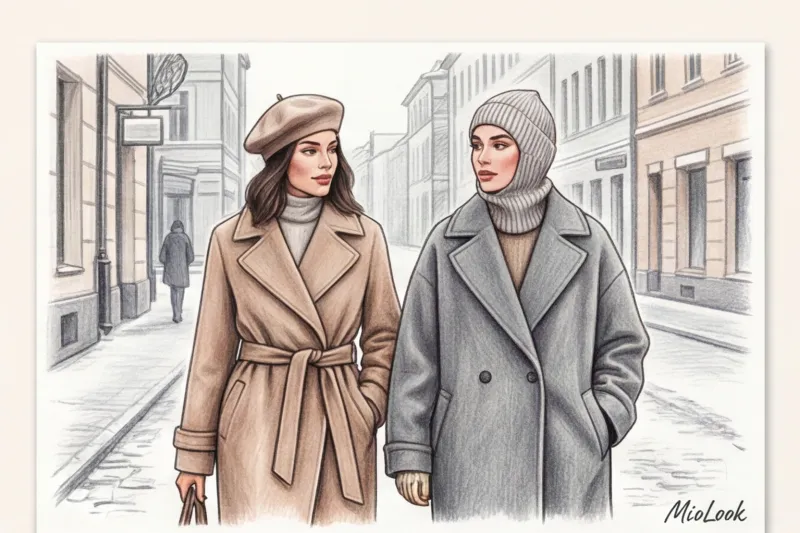
Classic double-breasted coat and robe coat
A wrap coat with a soft belt is the quintessence of relaxed elegance. It calls for soft yet refined lines. A smooth-knit cashmere beanie (you can find excellent options in the €50–€120 range) or a structured beret are ideal choices.
What should be strictly avoided here are sports hats with pom-poms. The English collar of a double-breasted coat has strict, pointed corners. A playful pom-pom clashes sharply with this geometric shape, instantly cheapening the look and making you look like an overgrown schoolgirl.
Oversized and cocoon coats
The massive shoulders of an oversized coat dictate their own strict rules. A primordial law applies here: the larger the coat, the thicker the knit of the hat. To balance the exaggerated volume of fabric, we need large, textured accessories.
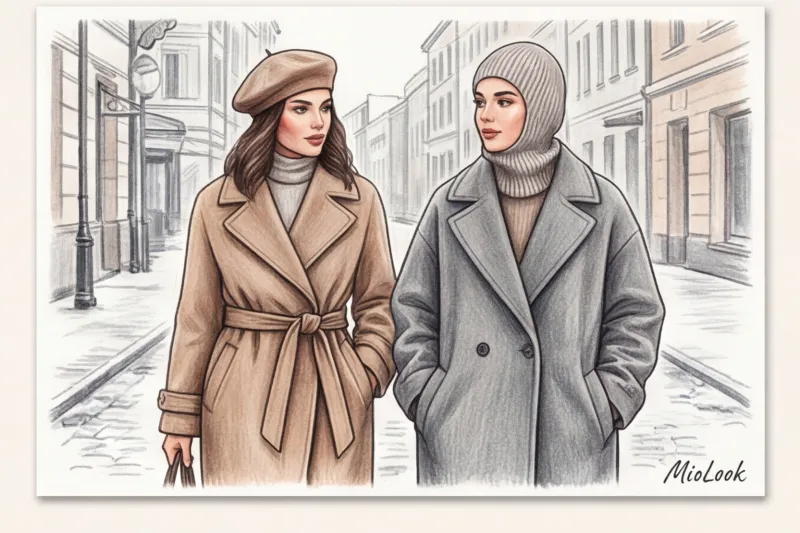
Chunky ribbed beanies with wide lapels, balaclavas, or even fur Panama hats are excellent options. If you wear a thin cashmere beret under a cocoon coat, it will simply be visually lost against the broad shoulders.
Access to MioLook for €0.99 — one-time payment
Start creating your perfect look with AI and Smart Wardrobe.
Get access — €0.99 onceFrom the Basic Beanie to the Bold Panama Hat: A Guide to the Hottest Styles
Analyzing the street style reports from Copenhagen Fashion Week 2024, it's easy to see how dramatically the approach to winter accessories has changed. Scandinavian fashionistas were the first to prove that we no longer have to choose between warmth and style. Trends have become incredibly practical and easy to integrate into a basic wardrobe.
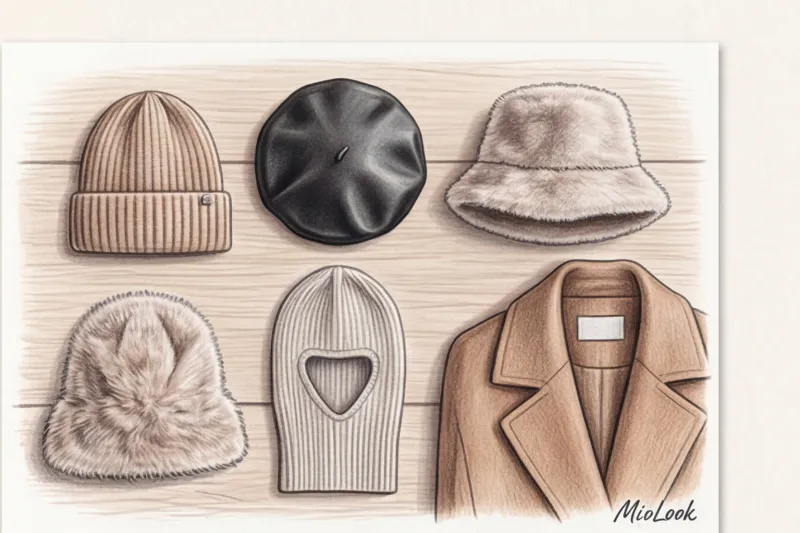
Beanie Hat: How to Avoid the "Bald Head" Effect
Beanies remain the most popular style, but the devil is in the fit. Opt for styles with a wide lapel—the extra fabric at the forehead visually enhances facial features.
A beanie's proper fit requires some airiness. It shouldn't cling to the crown of your head like a swimming cap. Pull it back slightly to reveal a 1-2 centimeters of hairline while still covering your ears. This will create that effortless yet sophisticated chic look.
French Beret and Kepi: Adding Structure
If your coat has a straight, rigid cut, a beret is the perfect companion. But there's an important requirement: it should be a thick felt that holds its shape well, not a soft knit that sags like a sad pancake.
Kepis (or peaked caps) work beautifully with military-style coats. The peak creates a beautiful shadow on the upper third of the face, adding a touch of mystery to the look. The main rule of modern times: we no longer wear berets and caps pushed all the way back, as was the custom in the 2000s. The fit should be confident, slightly asymmetrical, and closer to the brow line.
Warm Panama Hat, Bonnet, and Hood: Trends for the Bold
For those who hate wearing scarves, modern fashion has given us a brilliant invention: the knitted bonnet. They create a continuous line of color from head to shoulders and are the perfect complement to collarless coats (with a round neckline).
A padded bucket hat made of faux fur or thick, textured wool is another hit, pairing perfectly with a relaxed oversized look. These styles have a subtle but crucial bonus: their design prevents frizz at the roots and keeps your hair in place much better than classic hats.
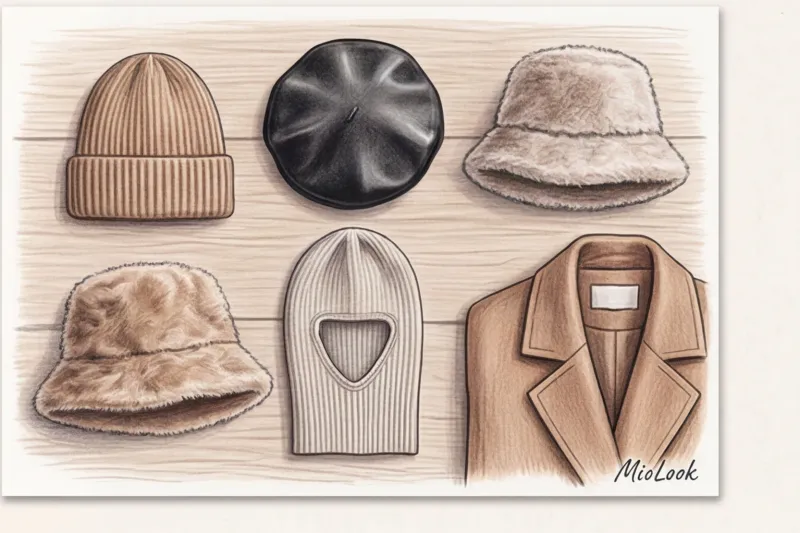
Color Geometry: How to Combine Shades in a Portrait Space
Let's get rid of the habit of buying ready-made "hat + scarf + gloves" sets made from the same yarn once and for all. This technique is hopelessly outdated. Identical textures and colors in three spots instantly make the look flat, boring, and visually add five years to your age.
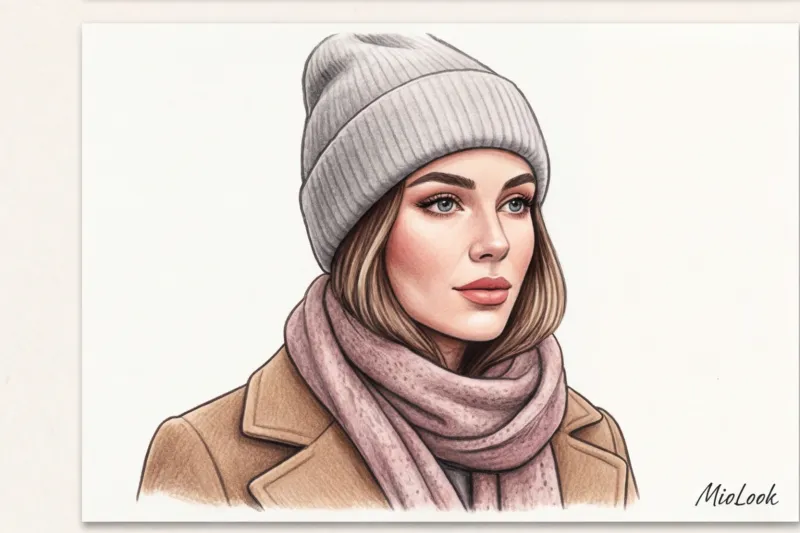
A hat should act as a professional photographic reflector. According to the Pantone Color Institute, light, rich shades can reflect light onto the skin, visually evening out its tone. In my experience working with clients over 35, replacing the dull black of the face with a pearl gray, cream, or dusty rose shade has provided an instant visual lift, concealing under-eye circles better than heavy concealer.
Use the rule of contrast. If your coat is basic (gray, camel, navy), let your hat be a color accent—for example, emerald or burgundy. Conversely, pair a bright coat with subdued, neutral accessories. By the way, if you want to learn more about how textures and colors near the face enhance the look, check out our article. What to wear with a women's turtleneck to look expensive.
Your perfect look starts here
Join thousands of users who look flawless every day with MioLook.
Get access — €0.99 onceKey Mistakes: How to Avoid Ruining an Expensive Coat with a Cheap Hat
We often forget about the texture dissonance. Cheap synthetics not only don't keep you warm, but they also instantly ruin the style of a thick wool drape. Textile laboratory studies show that acrylic loses its original shape three times faster than natural wool. Furthermore, synthetics strongly staticate the hair, ruining that very style we mentioned at the beginning.
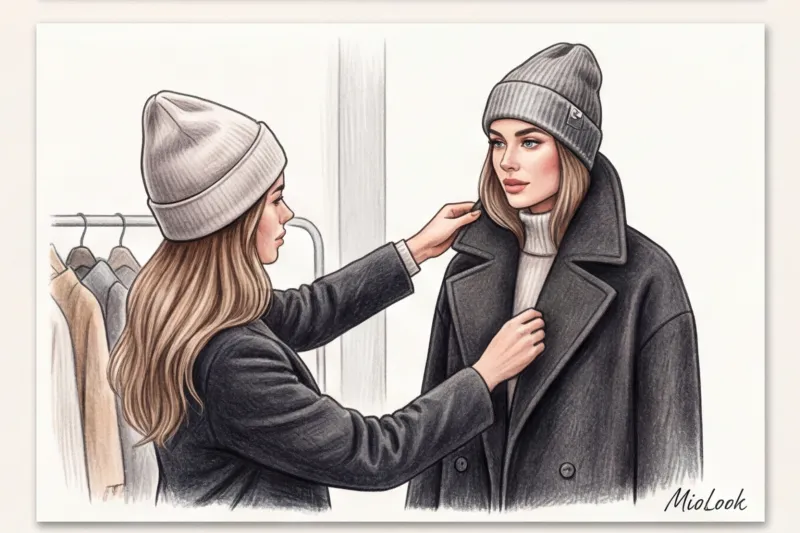
Look for a hat made from at least 50% merino wool, alpaca, or cashmere. In the €30 to €80 price range, brands like COS, Arket, and Massimo Dutti always offer excellent basic compositions.
"Of course, this rule does NOT apply if you have a wool allergy. In that case, avoid pure acrylic and polyester—look for dense cotton (from 180 g/m²) or viscose blends, which have a luxurious matte finish."
Another fatal mistake is excessive embellishment. Hats with rhinestones, large logos, beads, and complex appliqués look provincial in 99% of cases. A classic coat requires simplicity. The texture of the fabric—rib, alpaca, the smoothness of cashmere—should serve as the entire decorative element.
Also, be mindful of the temperature of the materials. A thin felt-cardboard summer hat paired with a heavy winter coat looks as awkward as a down jacket paired with sandals.
MioLook Checklist: Choosing a Headpiece to Wear with a Coat in 3 Steps
To avoid hanging around in fitting rooms, use this simple algorithm. Take a screenshot before your next shopping trip:
- Step 1: Assess the proportions. Put on your coat and look at the lapels. If they're wider than your palm, you need a chunky knit hat or a fur Panama. If the collar is a stand-up collar or a narrow tab, choose a smooth beanie or bonnet.
- Step 2: Test the color on your face. Never buy a hat based on the artificial yellow light in the store. Go to a window or go outside: the color should brighten your face in daylight, not highlight dark circles under your eyes.
- Step 3: Setting up styling. Try on the hat only with your hair down or loose. Make sure the lapel doesn't press on your forehead and there's some air left on the crown.
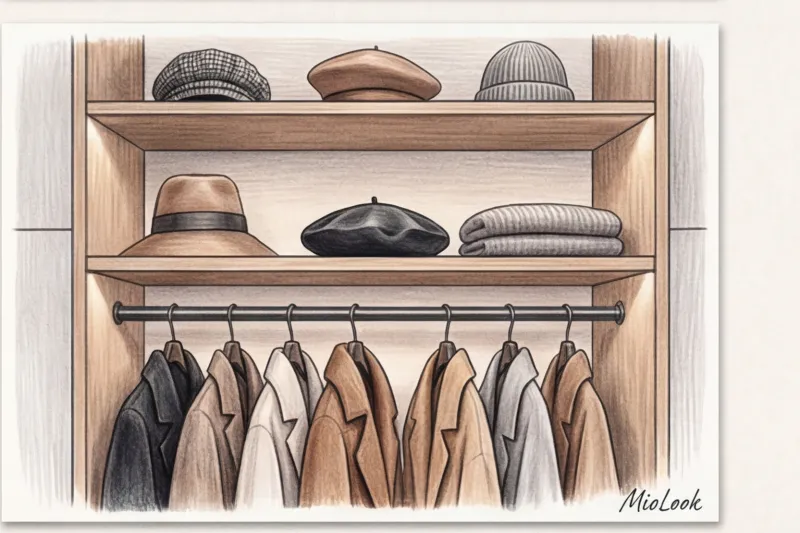
The easiest way to avoid morning stress is to digitize your options. Upload photos of your coats and all your hats to the app. MioLook A smart algorithm will help you create ready-made capsules and show you combinations you never even thought of.
When choosing a hat to go with your coat, remember the most important thing: you're buying more than just "cold protection," but an architectural element that completes your silhouette. Avoid boring sets made from the same yarn, invest in the right textures, and your coat will always look great.