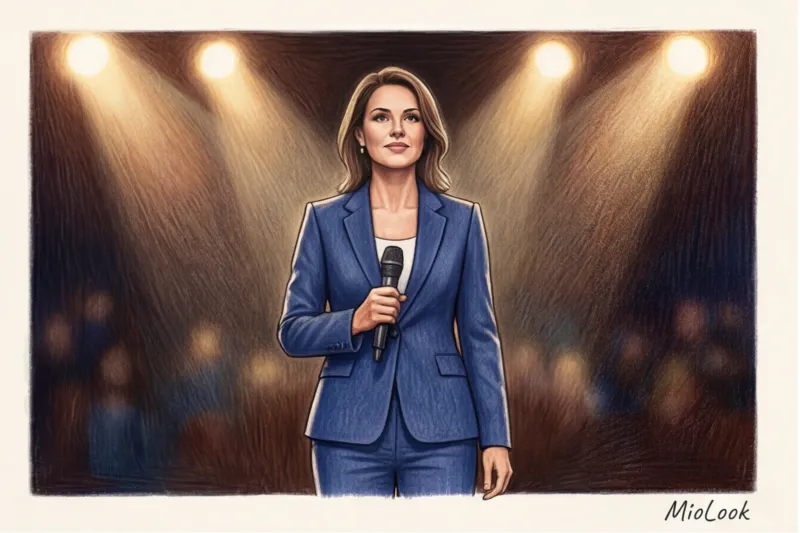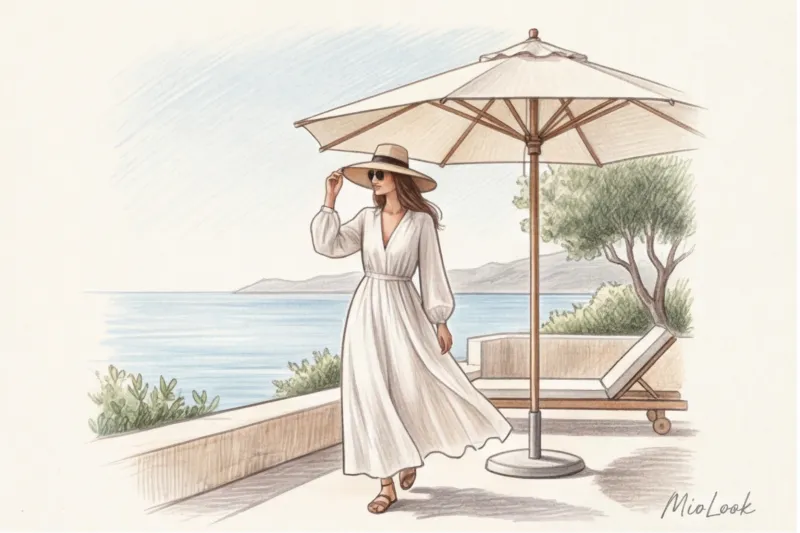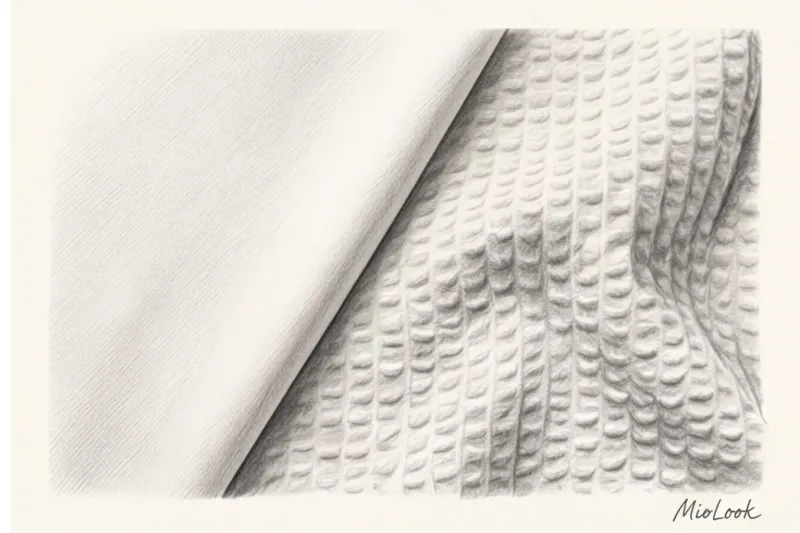
Last August. Milan is melting in the heat, the thermometer reading a relentless 35°C. My client, a top manager at an international corporation, is leaving after three hours of tense negotiations. She's wearing a stunning €800 blouse of the finest powder silk, which now looks like she's been caught in a tropical downpour. Dark, garish, damp stains have transformed her once-status look into a visual disaster.
This is a classic mistake I see in my practice every summer. We're used to following basic advice: "Wear natural and light colors in hot weather." But when the stakes are high and stress levels are through the roof, standard rules no longer apply. To assemble a truly bulletproof summer wardrobe, we need to look beyond the label's composition to consider the architecture of the cut, optical illusions, and the physics of light. We've covered the basic principles of summer materials in more detail in our article. The complete guide to the best fabrics for summer clothing , and today I want to share some highly specialized styling secrets.
The Physics of Moisture: Why Stains Shout on Some Materials, and Silence on Others
To understand how to conceal the problem, we need to understand why we see it in the first place. The answer lies not in water, but in light. According to research by the German Textile Institute Hohenstein (2023), which evaluates the physiological comfort of clothing, the visibility of moisture is directly related to the light reflectance index.
When a smooth fabric (such as classic cotton poplin) gets wet, water fills the microscopic spaces between the fibers. Light no longer scatters from the surface, but passes through or is absorbed. The result is a sharp darkening of the area—the so-called "wet spot" effect.
The second critical factor is the capillary effect. Some fabrics locally trap moisture (creating a clear, defined contour), while others instantly distribute it over a wide area, accelerating evaporation. A smooth, tightly woven texture always loses to a textured one. This is why we must reconsider our approach to texture.
Fabrics that don't show sweat: A premium rating of materials for hot days
When wondering which fabrics won't show sweat, many people automatically look for ultra-thin materials. This is a false alarm. Fabric density isn't always the enemy of ventilation. If you want to invest in items that will last for years and won't let you down during an important meeting, consider the following textures.
Architectural fabrics: seersucker, pique, and jacquard
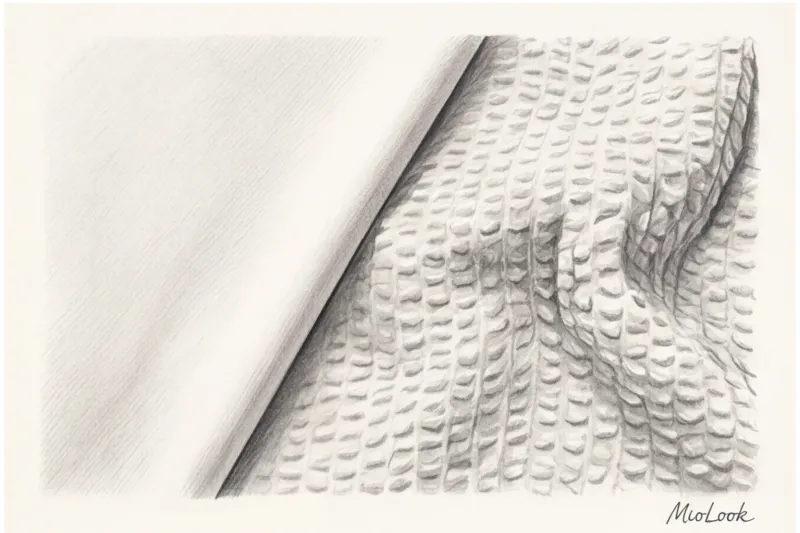
My absolute favorite for scorching city summers is seersucker. Due to the uneven tension of the threads during production, this fabric has a characteristic alternating smooth and crinkled stripes. What does this mean in practice? The fabric physically cannot lie flat against the body. It creates micro-air pockets, acting like a built-in air conditioner.
Pique is a fabric with a honeycomb structure (used to make classic polo shirts). Its micro-relief breaks light rays. Even if moisture gets on the material, the depth of the honeycomb visually absorbs the darkening. Summer cotton jacquard works on the same principle: the complex relief pattern acts as optical camouflage.
Don't know how to combine textures?
Upload photos of your summer items to the app, and a smart stylist will put together the perfect combinations for you for the hot weather.
Collect images in MioLookTechnological compositions: cupro, tencel and micromodal
If your dress code or personal style calls for flowing, silky textures, forget about natural silk and turn to smart synthetic fibers. Cupro, often called "vegan silk," is made from cotton fluff. It looks expensive and has a refined sheen, but unlike silk, it breathes beautifully and doesn't leave telltale halos when dry.
Tencel (lyocell) is another lifesaver. According to the Lenzing Group, the creator of this fiber, Tencel absorbs moisture 50% more effectively than cotton and distributes it within the fiber structure rather than on the surface. On a high-quality Tencel blouse (priced between €100 and €250), traces of moisture evaporate many times faster.
The Stylist's Paradox: High-Twist Wool
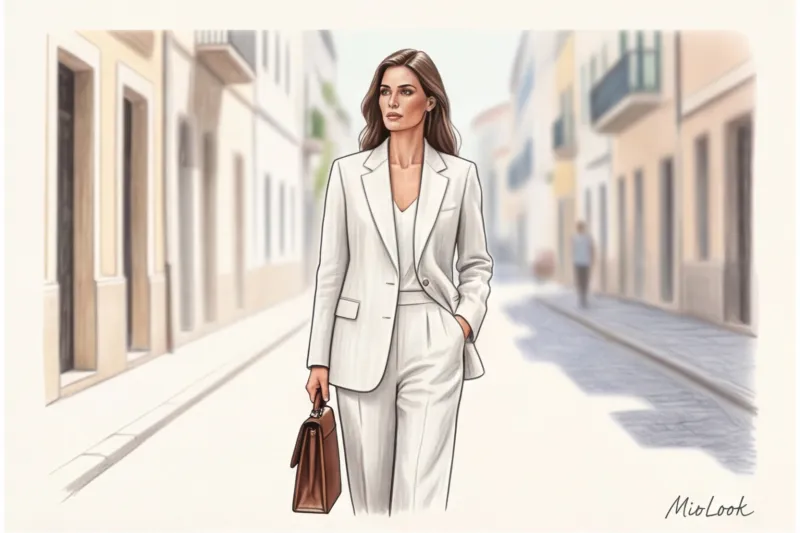
Did you know why Neapolitan businessmen can calmly drink espresso on terraces in three-piece suits at 32°C without looking sweaty? Their secret is fresco wool (a highly twisted wool).
"Wool fiber is naturally hydrophobic on the outside and hydrophilic on the inside. It repels water droplets from the surface but absorbs body vapor, leaving you feeling dry to the touch."
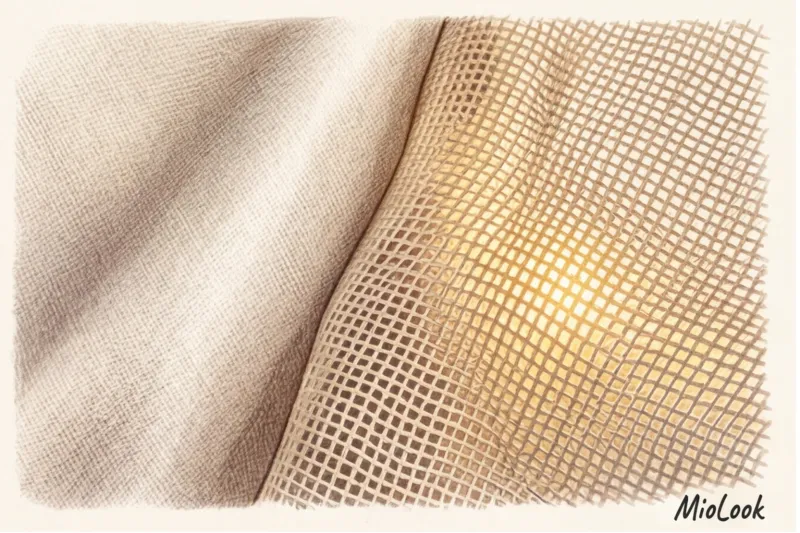
Summer wool has an open weave that's translucent when held up to a window. A good fresco wool jacket, unlined (or with a half-lined cupro) will protect you from the temperature fluctuations between an air-conditioned office and the scorching outdoors better than any linen.
The Illusion of Color: A Palette That Forgives Everything
The physics of color is inexorable: only extremes work. Either absolute light or absolute darkness.
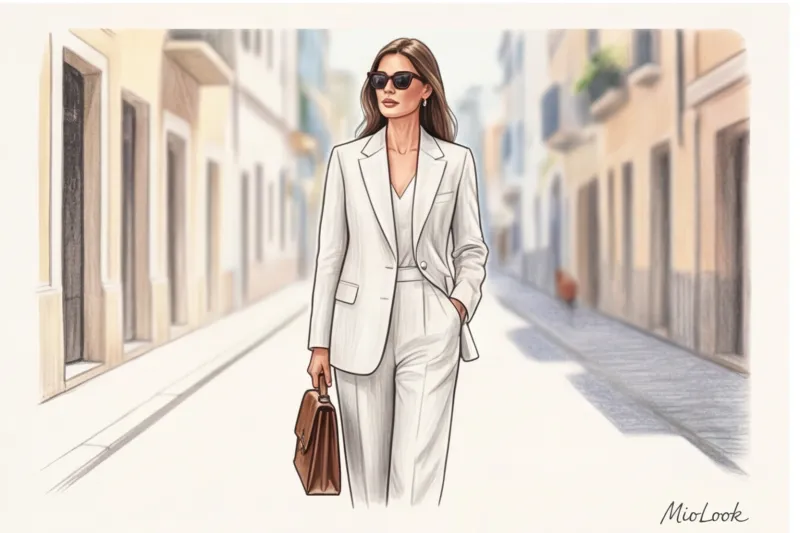
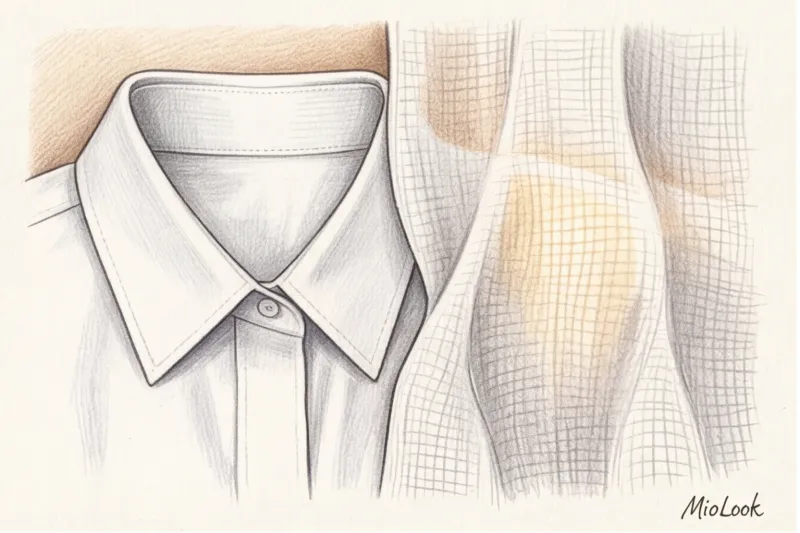
Pure optical white has the highest light-reflecting properties. When a white cotton shirt gets wet, it may become slightly translucent, but it won't change to a contrasting dark shade. Ivory works similarly, but is more complementary to most skin tones.
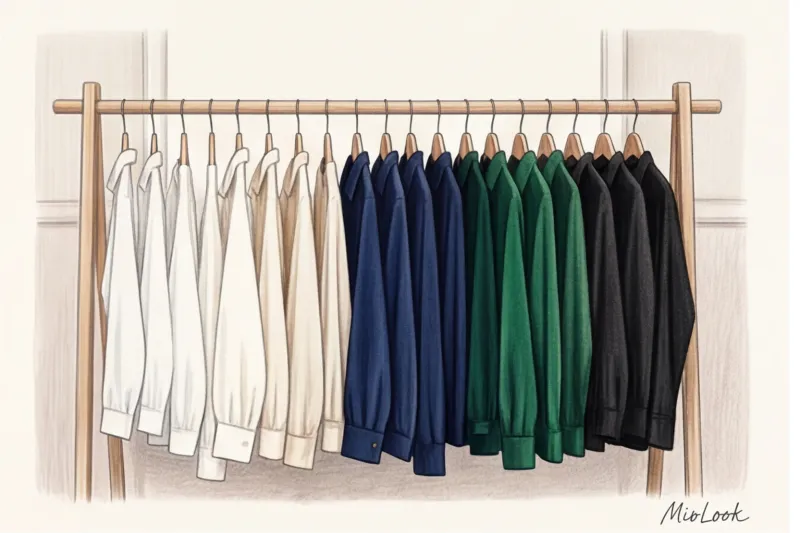
At the other end of the spectrum are colors that absorb light. These include deep navy, rich emerald, dark chocolate, and classic black. According to the Pantone Color Institute, deep dark shades have such low light reflectivity that the difference between their dry and wet states is virtually imperceptible to the human eye.
A Wardrobe's Worst Enemy: Why You Should Avoid Gray Melange
Over 12 years of working as a stylist, I've developed a strict rule: no light gray in summer. Gray melange, dusty rose, taupe, and muted blue are mid-tone shades. It's in these shades that the contrast between dry and wet fabric reaches a catastrophic 40%. A gray T-shirt will give you away completely at the slightest increase in temperature. The exception? Only if the gray is the background for a very bold, contrasting print.
Optical Camouflage: How the Right Print Saves Your Reputation
A plain, smooth fabric is a blank canvas. Any spot on it immediately becomes a compositional focal point. But add the right pattern, and Gestalt psychology comes into play: the human eye is drawn to the contrast of the pattern, losing the ability to focus on the background halftones.
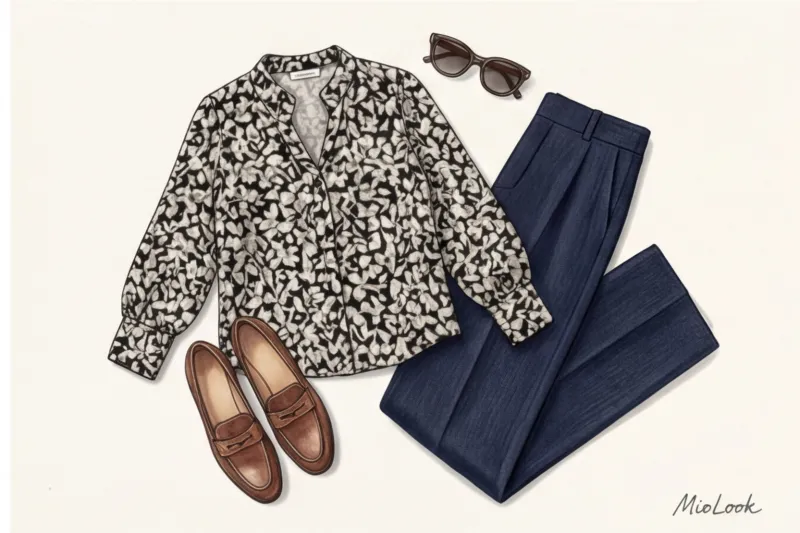
- Micro-floristry (millefleur): A small, dense floral pattern is a great way to distract attention. The more densely the pattern elements are placed, the better.
- Chaotic Geometry: A strict check or stripe pattern can reveal a problem (lines will distort or darken locally), but abstract brushstrokes, ripples, or asymmetrical geometry will hide everything.
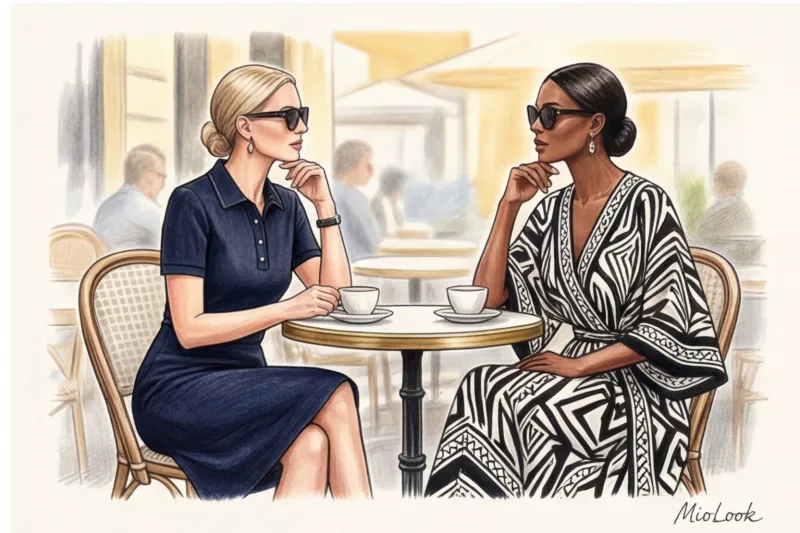
- Black and white patterns: High contrast between black and white (such as houndstooth or abstract patterns) is the most reliable camouflage available.
Conduct an audit of your summer clothes
Take a photo of your summer clothes, and MioLook will help you weed out the risky fabrics and create a capsule wardrobe you'll always feel confident in.
Sort out your wardrobe onlineVolume Mapping: Where Clothes Shouldn't Touch the Body
Here lies the most important limitation, which is often kept silent. This tip does not work for all styles. You can buy the most expensive blouse made of innovative Tencel, but if it's cut too tightly and digs into your armpits, it won't work. Moisture will inevitably transfer to the fabric.
Luxury clothing design utilizes the principle of volume mapping—the architectural distribution of volumes. The idea is to allow fabric to flow without touching critical areas.
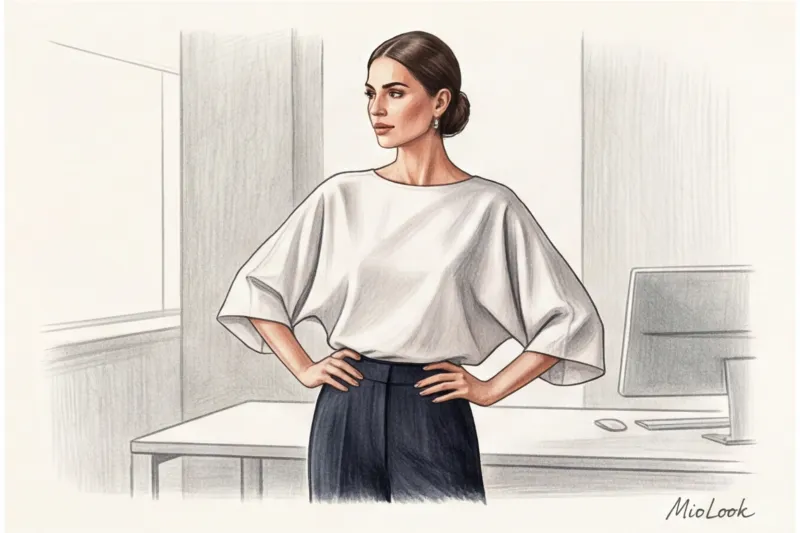
Choose a one-piece dolman sleeve, dropped armhole, or kimono sleeve. Consider a structured shoulder: a strong shoulder line (even with minimal padding) creates a framework that allows the fabric to fall smoothly without clinging to the underarms.
I'll let you in on an inside secret from the Savile Row tailors. During fittings for expensive jackets and dresses (priced over €1,500), we always suggest clients have special silk or cotton dress shields sewn in. These are invisible from the outside, attached with a few stitches or snaps, absorb the full impact, and are easily ripped out for washing, keeping the expensive garment in pristine condition.
The Main Antiheroes: Fabrics That Will Give You Away
It's time to bust the biggest myth perpetuated by glossy magazines: smooth, natural silk is the worst choice for stressful events in the heat. Yes, it feels pleasantly cool against the skin. But fine silk (crepe de Chine, satin) is incredibly absorbent. It darkens instantly with the slightest drop of moisture, forms a stiff outline after drying, and can leave indelible yellowish marks on lighter shades. Save silk slip dresses for leisurely evening strolls, but don't wear them to a project presentation.
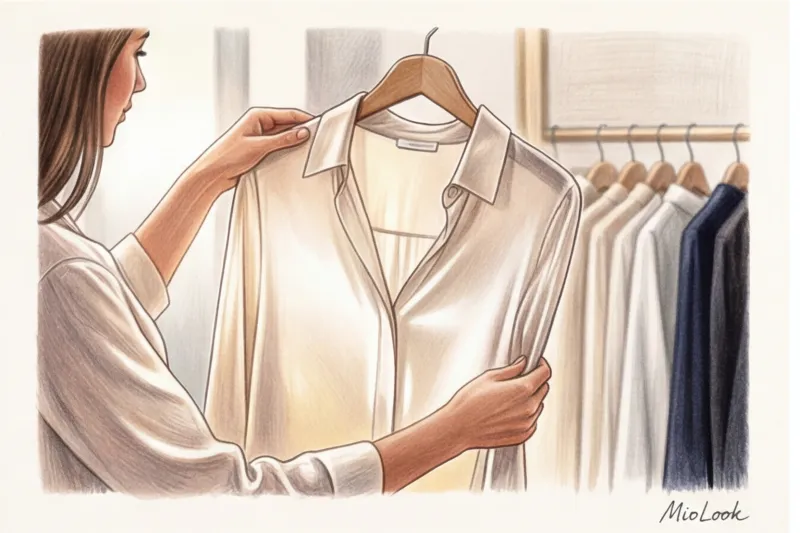
Who else should you avoid:
- Cheap plain weave viscose: Budget blouses (up to €30-40) are often made from low-quality viscose, which turns into wet paper in hot weather, losing its shape.
- Synthetics without mesh inserts: 100% polyester or nylon without perforations acts like a mini-sauna. The body overheats, producing even more moisture, which has nowhere to evaporate.
- Fine linen jersey: Unlike woven linen, knitted linen quickly deforms when wet, sagging on the figure.
Checklist: How to Create a Flawless Look for Important Meetings in 30°C
So, you've got a challenging day ahead, the thermometer is showing abnormally high temperatures, and you need to look your best. Let's put together an outfit that respects optical and physical safety:
- Base layer: If you wear a jacket, wear a sleeveless top made of micromodal or cupro in a deep dark color underneath.
- Base layer: A jacket made of summer fresco wool or structured linen with Tencel. Strictly unlined on the back.
- Alternative to dresses: One-piece dresses often fit tightly around the back and waist. A much more reliable option is wide, high-waisted palazzo pants and a loose, dropped-arm blouse. The movement of air between the layers will cool you with every step.
Your comfort directly translates into your confidence. Choose architectural fabrics, avoid gray tones, don't be afraid of bold prints, and let the only thing that makes you sweat this summer be choosing your vacation destination.
Ready to update your style?
A smart AI stylist will select the perfect looks based on your body type, color type, and lifestyle.
Get access — €0.99 once