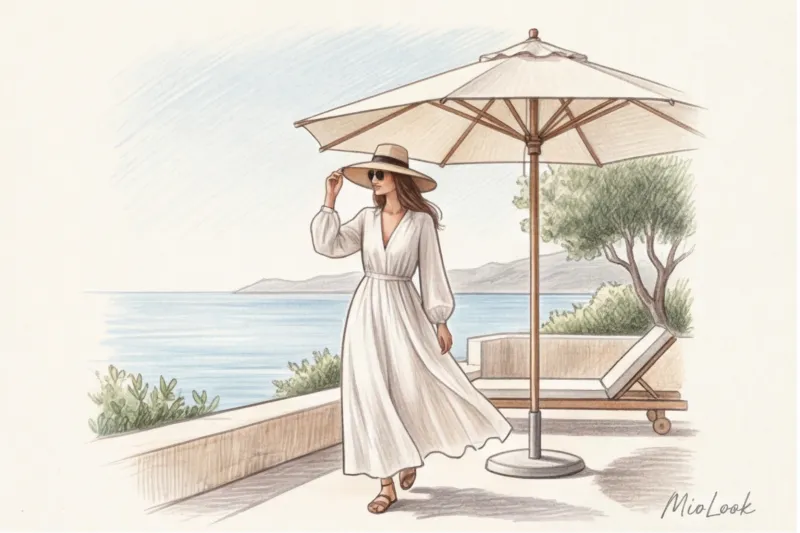
We've all heard the glossy magazine mantra: "When the weather heats up, wear only 100% linen and cotton." After 12 years as a personal stylist and luxury wardrobe consultant, I've realized one thing: this advice is hopelessly outdated if you live in the fast lane of a big city. Sure, linen looks luxurious on a yacht somewhere on the Amalfi Coast. But for a busy workday with sprints across scorching asphalt, it's absolutely not suitable. Within 15 minutes of getting into a taxi, your immaculate linen suit will be covered in deep creases, and the look will instantly lose its luster.

In this article, I'll explain why luxury brands have long relied on innovative cellulose fibers and how to choose the perfect fabrics for hot weather to look expensive and stay cool. Spoiler alert: the future of an elegant summer wardrobe belongs to lyocell and cupra. We've covered their origins in more detail in our comprehensive guide. Eco-friendly clothing fabrics: Tencel, Modal, and Lyocell.
Why Linen and Cotton Are No Longer Monopolists: Choosing Fabrics for Hot Weather
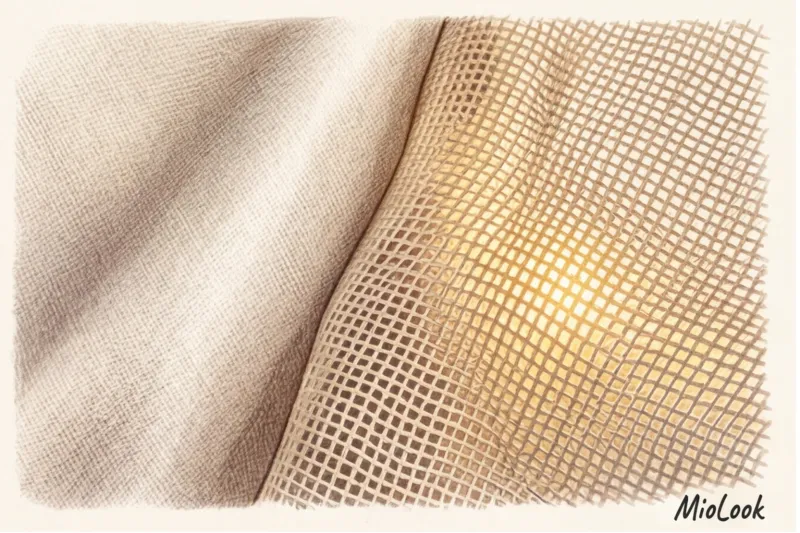
In my experience, every other summer wardrobe review begins the same way: a client shows me a stack of heavy cotton dresses and shirts hanging unused. The reason is simple: they're simply too hot. Heavy cotton poplin, often used for office shirts, is practically impermeable, creating a greenhouse effect at 30°C.
With pure linen, the problem is different—it's a matter of aesthetics and status. In the business world, wrinkled clothing is subconsciously perceived as sloppiness. This is why we've seen a quiet revolution in fabric composition in recent years. According to the Textile Exchange Preferred Fiber and Materials Market Report (2023), the share of man-made cellulose fibers in premium brand collections has grown by 24%.
Take a look at COS, Massimo Dutti, or even Loro Piana boutiques. You'll rarely find 100% cotton summer trousers there. Brands are rapidly switching to lyocell (Tencel) blends to improve drape, add a luxurious heft to the fabric, and extend the life of the garment. This isn't a skimping on natural materials; it's a technologically advanced response to the demands of modern women: we want to look flawless without ironing or dry cleaning.
Lyocell (Tencel): eucalyptus silk that cools the skin
Lyocell (and its most famous patented version, Tencel, from the Austrian company Lenzing) is a man-made fiber derived from eucalyptus wood. I often correct my clients: man-made does not mean synthetic. Synthetics (polyester) are made from petroleum byproducts, while lyocell is made from renewable cellulose. It is a breathable, living material.
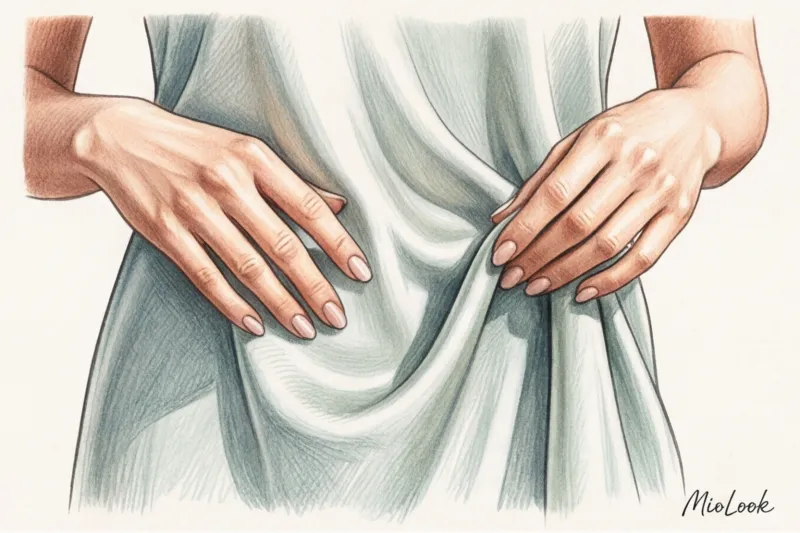
Its main superpower in a summer wardrobe is its unrivaled "climate control." According to textile lab research, lyocell absorbs moisture 50% more effectively than regular cotton and instantly releases it into the atmosphere. You simply don't have time to sweat.
"Under a microscope, Tencel fiber has a completely smooth surface, while cotton thread looks like a twisted, rough ribbon. It's this smoothness that gives the fabric a cool, silky feel against the skin, making it ideal for sensitive skin."
Investing in the Basics: What to Buy from Lyocell for Summer
If you want to test this material, start with the basic elements that form the silhouette.
- Wide flowing palazzo pants: Pure linen in this cut feels stiff and adds visual weight. Lyocell lays in heavy, fluid folds, creating a perfect fit without excess bulk.
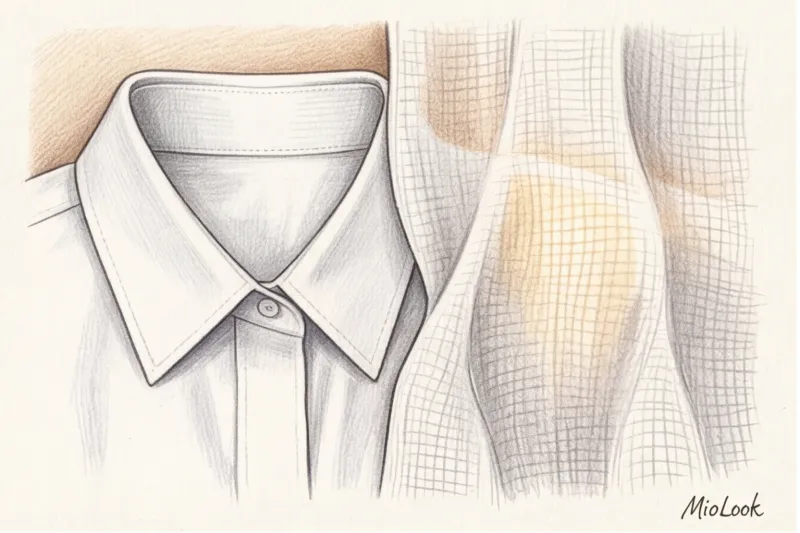
- Basic shirts and shirt dresses: They maintain the crispness of the collar and cuffs, but flow beautifully across the figure rather than sticking out like cardboard.
- Summer trench coat or duster: An essential item for evening strolls or protection from harsh office air conditioning. The fabric protects from the sun without causing overheating.
Access to MioLook for €0.99 — one-time payment
A smart AI stylist will analyze your figure and select the perfect summer clothing styles made from breathable fabrics.
Get access — €0.99 onceCupra: Vegan Silk for Statement Summer Looks
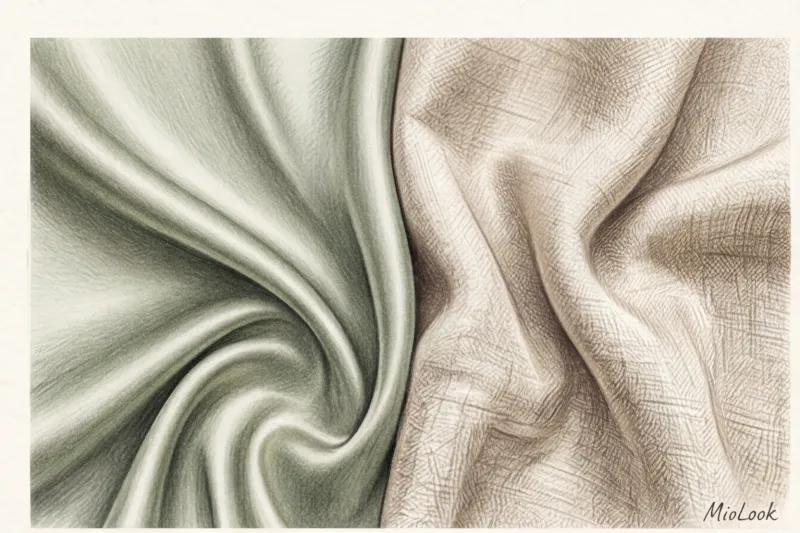
If Tencel is a cotton substitute, then Cupro is a high-tech alternative to natural silk. It's made from cotton linters—the finest fibers that envelop the cotton seeds, which would previously have been discarded. Cupro possesses incredible tactile luxury: it has a heavy, fluid drape and a delicate matte sheen that looks like a million dollars.
One of my clients, a top manager at an IT corporation, adored natural silk. Before the summer season, we bought her three stunning silk blouses for a total of about €800. The problem became apparent on the very first hot day: natural silk immediately develops dark stains from the slightest sweat. And such items are not machine-washable. As a result, the blouses were taken to the delicate dry cleaner twice a week, which caused the silk to become thinner and lose its color by August.
We replaced them with premium cupra blouses. The result? The same high-class look, the same cool feeling on the skin, but with absolutely no sweat stains and the ability to be gently washed at home. For me, cupra is the quintessence of the "smart luxury" concept.
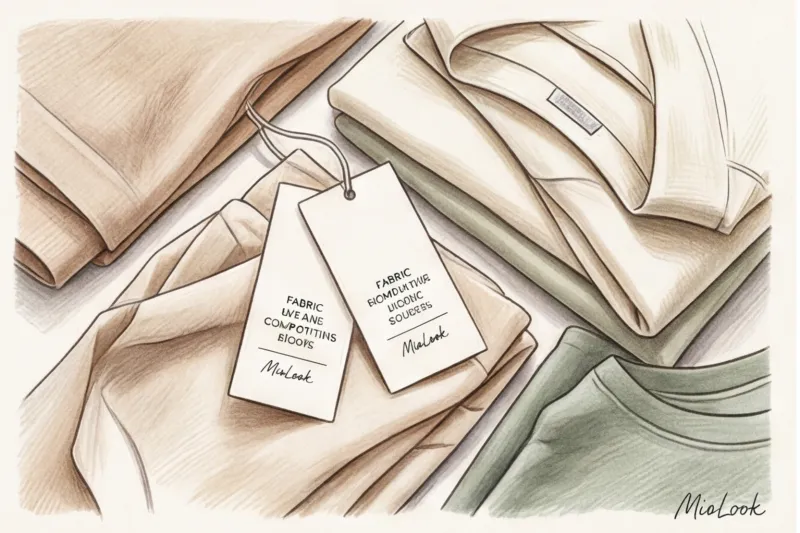
The "Synthetics" Myth: How to Read Summer Labels
The biggest mistake I see in fitting rooms is a panicky fear of anything on the label other than cotton, linen, and silk. Let's get this straight.
Polyester, acrylic, and polyamide are plastic. In hot weather, they act like a plastic bag. Modal, lyocell, tencel, cupra, and viscose, on the other hand, are synthetic but eco-friendly fabrics. They "breathe."
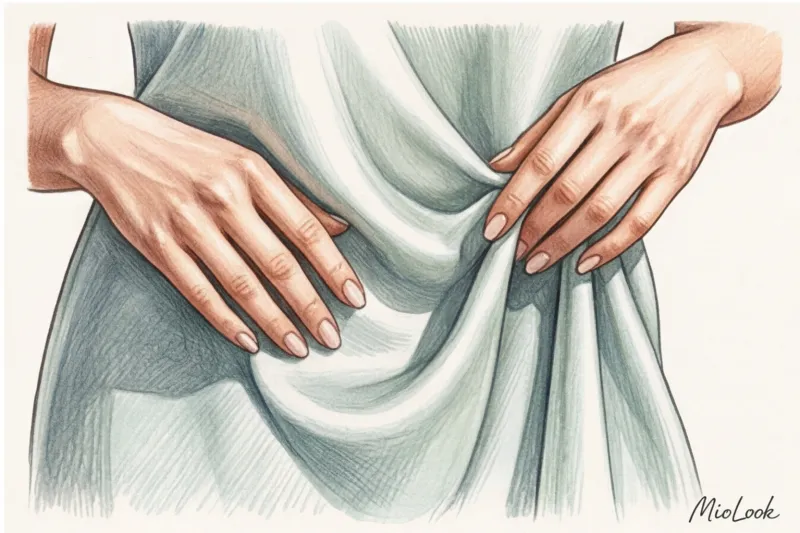
Moreover, the best summer fabrics are blends. My personal favorite for summer business style clothing for women — a mix of 30% lyocell and 70% linen. The linen provides texture and strength, while the lyocell absorbs stiffness and minimizes wrinkling. You get a refined fabric with a slightly casual (old-money) look, but without the texture of paper.
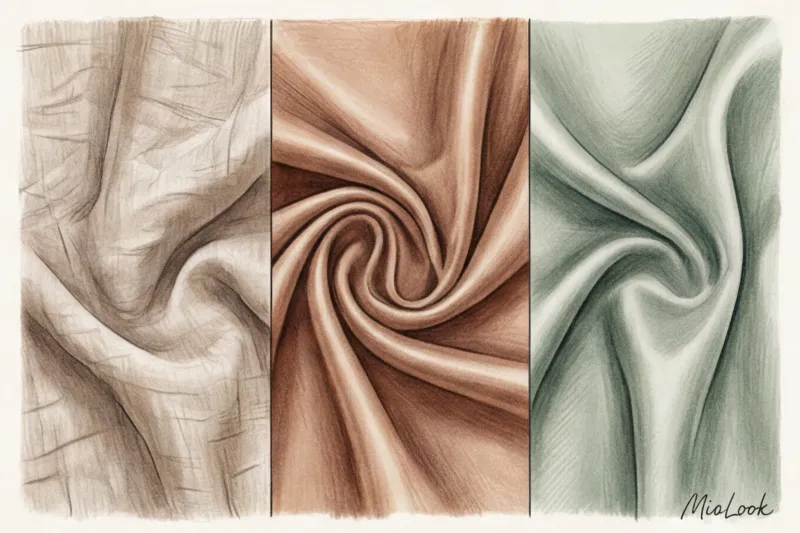
Professional stylist advice: How can you tell high-quality modal or lyocell from cheap, flimsy viscose in a store? Perform a compression test. Pinch the edge of the fabric in your fist and hold it there for exactly 5 seconds. Cheap viscose or pure, untreated linen will remain wrinkled like paper. High-quality Tencel is springy—the creases will be soft and will quickly begin to unravel right before your eyes.
Comparing Cost and Wear: Cost-Per-Wear of a Summer Wardrobe
When we talk about an investment wardrobe, I always teach my clients to calculate Cost-Per-Wear (CPW)—the cost of one wear. Let's do some summer math in euros.
Let's take a classic slip dress. A basic silk version will cost you around €200. You'll wear it 15 times per season. Every 2-3 wears, you'll need to dry clean it (around €15 per service). Total: €200 + (5 dry cleaners * €15) = €275. Cost per wear: ~18 €.
A similar dress made of premium cupra will cost around €150. Dry cleaning is not necessary—the fabric is hand washable with mild detergents. You'll wear it the same 15 times. Cost: 10 € Moreover, cupra will outlast silk by 2-3 seasons of active summer wear, as its fibers are more resistant to abrasion.
Cotton loses its pigment drastically quickly in the sun and washes out. A dark blue cotton dress will fade within a month, while a similar one made of lyocell will retain its rich, deep color even after a year, because the dye penetrates deep into the structure of the eucalyptus fiber.
Your perfect look starts here
Digitize your wardrobe with MioLook and let the app create smart capsules from your items.
Get access — €0.99 onceExpert Wardrobe: Hot-Weather Fabrics That Don't Show Sweat
If your job involves public speaking, presentations, or complex negotiations, sweat stains are your worst enemy. My secret, What fabric doesn't show sweat stains?: Avoid solid-color fabrics with a glossy sheen (yes, satin silk is at the top of the black list).

Choose materials with a matte finish and a subtle melange effect (when the threads barely differ in tone). The dense diagonal weave of Tencel perfectly camouflages any moisture. For stage speakers, I always choose suits made of a blend of cool wool, viscose, or lyocell—they hold their shape perfectly under the spotlight, and sweat simply doesn't show through.
A stylist's checklist: putting together a capsule wardrobe of breathable materials
It's time to take stock. Open your closet and, without regret, put all your 100% polyester chiffon blouses on the back shelf—they're a crime against your comfort.
To assemble a functional urban capsule that looks classy, you'll need a minimum of things:
- 1 pair of heavyweight lyocell trousers (in cool beige or taupe shades) - will replace your usual jeans.
- 1 short sleeve cupra top or shirt (Pearl or Sage Green) - For a silky feel without the fuss.
- 1 x Linen Modal Blend Oversized Shirt (deep blue or classic white) - as a top layer instead of a jacket.
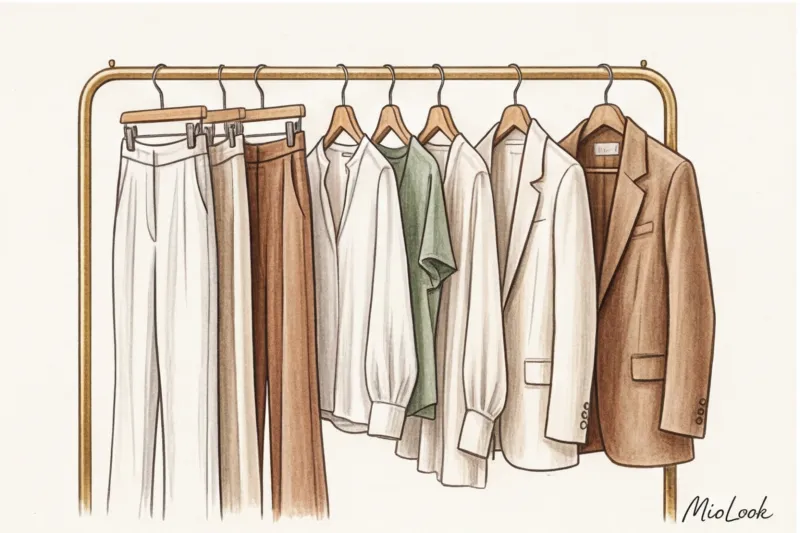
Choose a color palette that visually enhances the "cool" effect. Pearl, sage, and icy blue shades look incredibly expensive on flowing fabrics. Avoid loud neon colors—they will dull the texture of innovative materials.
Choosing the right fabric solves 80% of your summer style problems. Forget about enduring discomfort for the sake of beauty. Switching to high-tech cellulose fibers isn't a fashion fad, but a sign of respect for yourself, your body, and your time. Next time you're choosing a summer dress, just take a look at the label—now you'll know exactly what to look for.