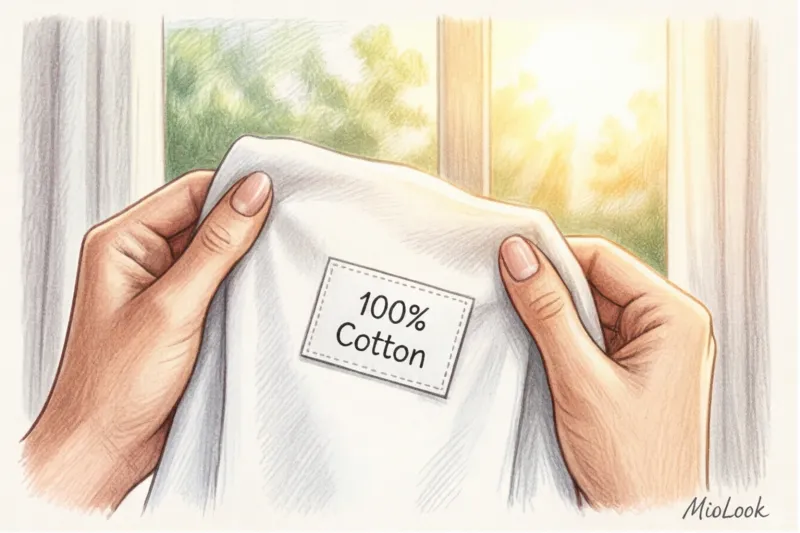
How many times have you bought a dress with the coveted "100% Cotton" tag, put it on in the July heat, and discovered it's a veritable sauna inside? You feel every degree of heat, the fabric sticks to your back, and dark marks appear treacherously. And you wonder: why does a natural material perform like a cheap synthetic?
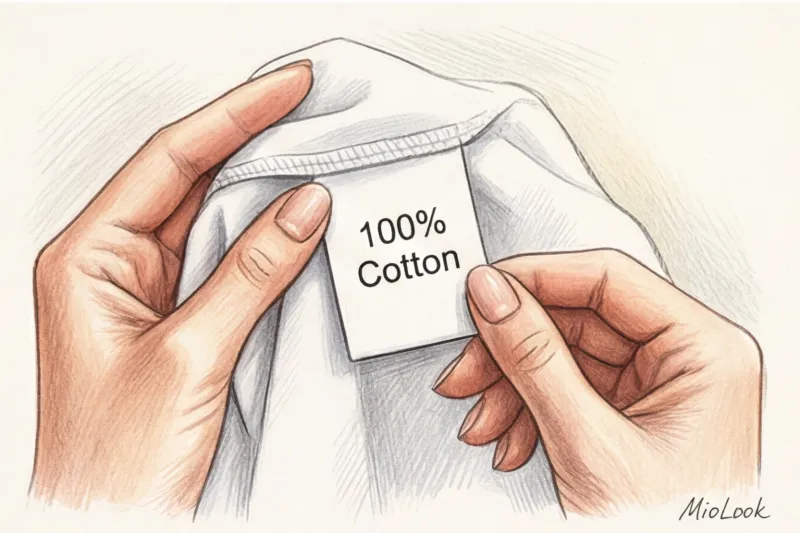
As a textile expert and stylist, I constantly encounter this misconception. We're used to reading the composition, but we completely forget to look at the physics of the fabric. The way the threads are woven affects your comfort in the heat far more than the raw material itself. The same cotton fiber can become a weightless air conditioner or a dense greenhouse. We discussed the anatomy of a healthy wardrobe in more detail in our The complete guide to the best fabrics for summer clothing , and today, let's delve into the details. So, which cotton is best for summer and why the ingredients on the label are only half the truth.
Why the "100% cotton" label isn't a guarantee of coolness
Cotton thread itself has excellent hygroscopic properties (the ability to absorb moisture). However, how quickly this moisture evaporates and whether your skin receives fresh air depends on the density of the weave and twist of the thread.
In the professional community, we evaluate fabrics by their GSM (Grams per Square Meter). This is the weight of the fabric. According to textile research, for comfortable wear at temperatures above 25°C, you need materials with a GSM below 120. For comparison, a standard denim jacket weighs around 350–400 GSM, and a heavyweight shirt from a mass-market store weighs around 160 GSM.
If the threads are woven too tightly (as in heavy twill or denim), a greenhouse effect is created. The fabric absorbs your sweat, but because there are no micro-gaps between the threads, air cannot circulate. The moisture doesn't evaporate. You're left with a wet, heavy, and hot shell. This is why heavy cotton can be a true summer nightmare, just as bad as polyester.
Access to MioLook for €0.99 — one-time payment
A smart AI stylist will select the perfect look based on the season and your preferences.
Get access — €0.99 oncePoplin: the perfect frame for office and urban looks
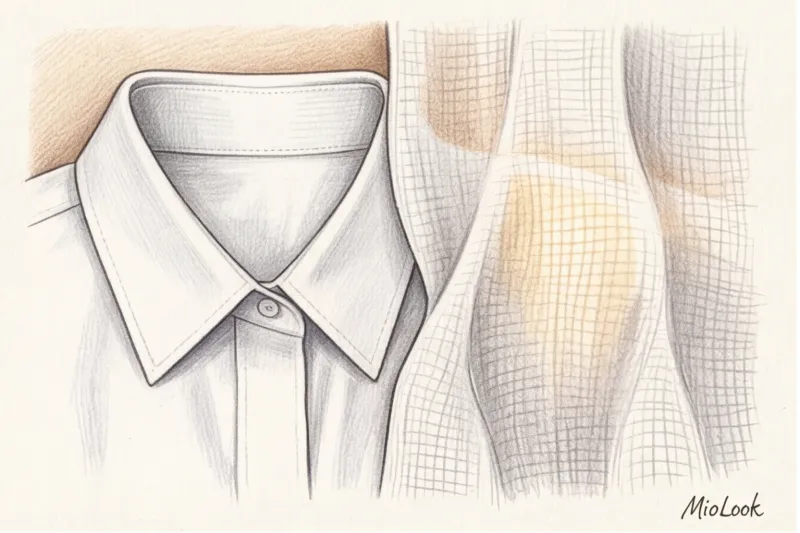
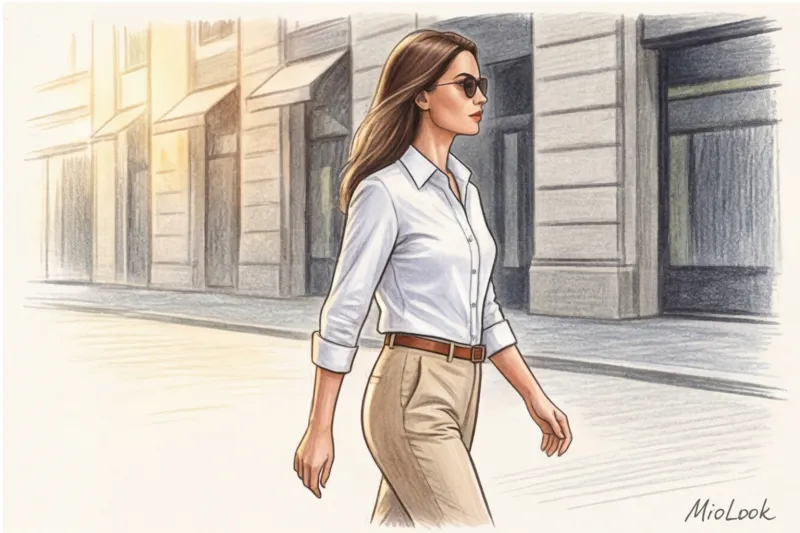
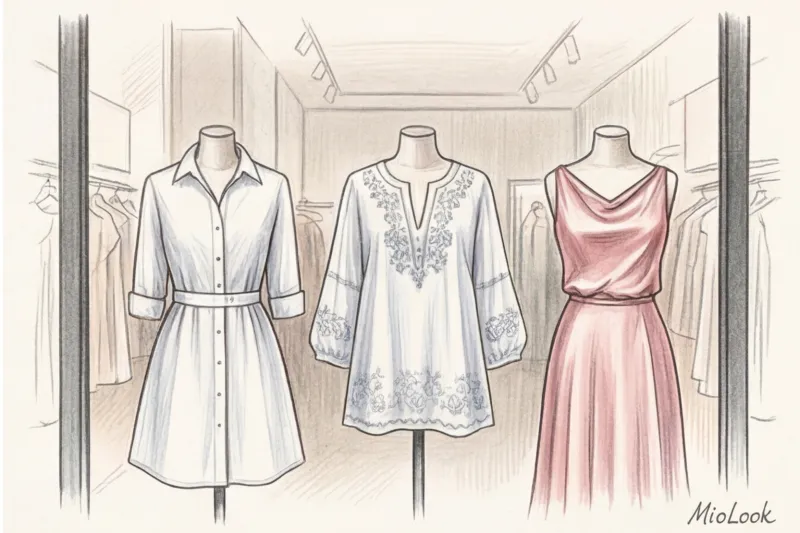
Poplin is a classic plain weave, where a thin warp thread intersects with a slightly thicker weft thread. This creates a subtle transverse rib. This microstructure gives the fabric a stunningly smooth finish and excellent shape retention.
In my experience, poplin is a lifesaver for clients with strict corporate dress codes. When you need to commute to the office in 28°C and then look impeccable at a board meeting, shapeless linen tunics just won't cut it. A white poplin shirt in a men's cut, an A-line midi skirt, or a shirtdress create that crisp, classy silhouette. A basic, high-quality poplin shirt from brands like COS will cost you around €70–€90, making it a great investment.

Fair Limit: Poplin has average breathability. Its smooth texture makes sweat stains immediately visible. If you'll be speaking in public or moving a lot, it's best to choose a different material. More life hacks on this topic can be found in the article. Fabrics that don't show sweat stains: A guide for speakers.
Batiste and veil: weightless luxury for extreme heat
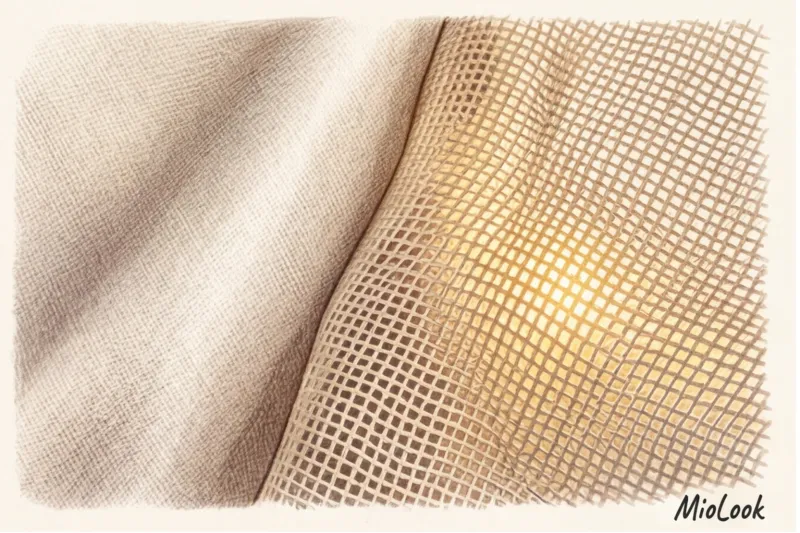
If poplin is the frame, then cambric is the air. This fabric is made from tightly twisted, ultra-fine threads in a loose weave. If you look at cambric under a magnifying glass, you'll see a veritable mesh with millions of microscopic holes. It's this structure that ensures perfect air circulation and cools the body.
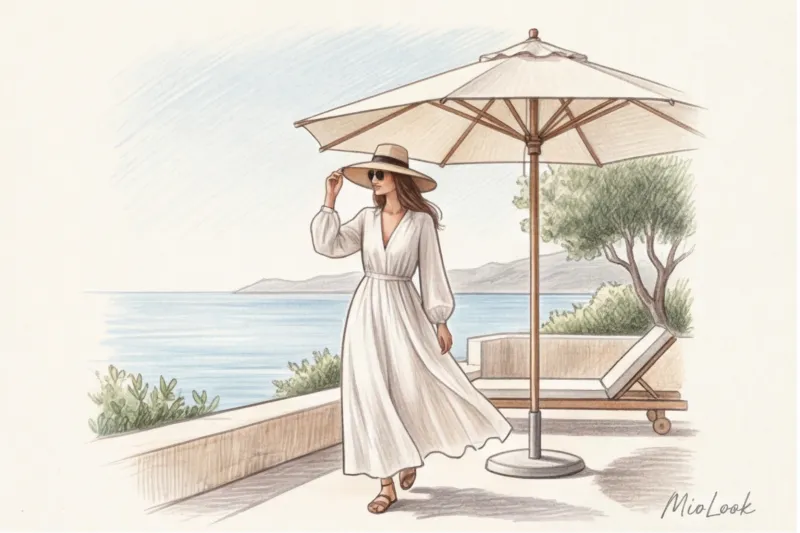
The density of batiste rarely exceeds 70–90 GSM. No other type of cotton will give you such a cool feeling. It's the perfect choice for tiered dresses, romantic blouses, and relaxed Mediterranean-style tunics.

"The secret to surviving extreme heat isn't minimizing clothing, but maximizing the air gap between the fabric and your skin. A long cambric dress will cool you better than short, thick shorts."
However, the translucent nature of cambric requires careful styling in urban settings. Forget contrasting underwear. You'll need a smooth, nude-toned slip made of the finest viscose or microfiber (budget basics typically start at €30). This will eliminate the sheerness while maintaining a flowing silhouette.
Your perfect look starts here
Join thousands of users who look flawless every day with MioLook. Digitize your wardrobe and create capsule collections in one click.
Get access — €0.99 onceSatin: a noble shine that needs to be handled with care
Cotton satin is often confused with silk. The secret lies in the satin weave: the weft threads overlap several warp threads, creating long overlaps on the face. The resulting fabric is heavy, smooth, and has a luxurious, refined sheen. The threads are often additionally mercerized—a treatment with sodium hydroxide that removes fuzz from the fiber and makes it incredibly strong and lustrous.
There's a cautionary tale about satin. One of my clients bought a stunning emerald slip dress made of heavy cotton satin (labeled 100% Cotton) for a daytime wedding in July. The fabric looked fabulous, but by the middle of the outdoor ceremony, she was desperate to take it off. Because of the weave, satin is practically impermeable. It created a clinging effect, ruining the entire wedding experience. If you're interested in learning how to choose luxurious textures, check out this article. How to Look Expensive: Secrets of a Status Wardrobe.
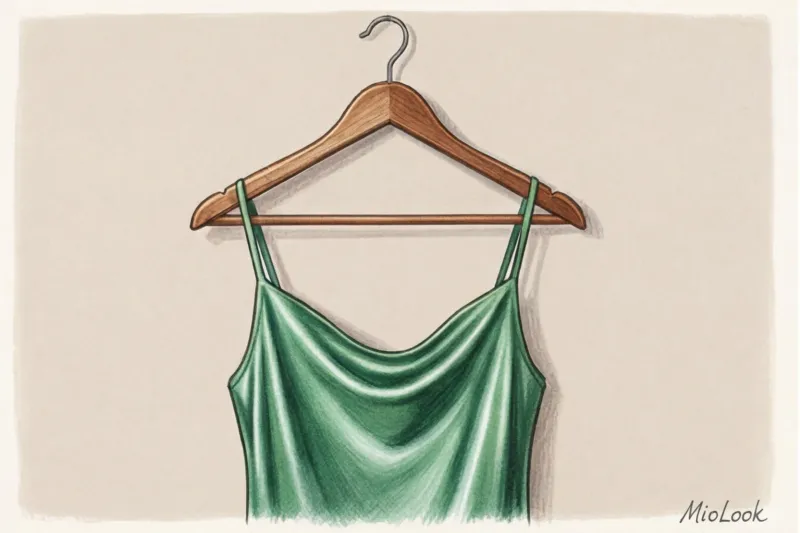
Save cotton satin for evenings on the terrace, cool August evenings, or air-conditioned rooms. It's your enemy in the sun.
Muslin and seersucker: Underrated Summer Wardrobe Heroes
And so we come to my favorite counterintuitive rule: the coolest fabric is the one that touches your skin the least. Muslin and seersucker utilize an ancient textile technique for cooling through texture.
The crinkled texture of seersucker creates micro-air pockets. The fabric touches the body only in small spots, ensuring constant ventilation with every movement. Muslin, made of two thin, loose layers bonded together, works like a reverse thermos: the air gap between the layers blocks the sun's heat, preventing it from warming the skin.
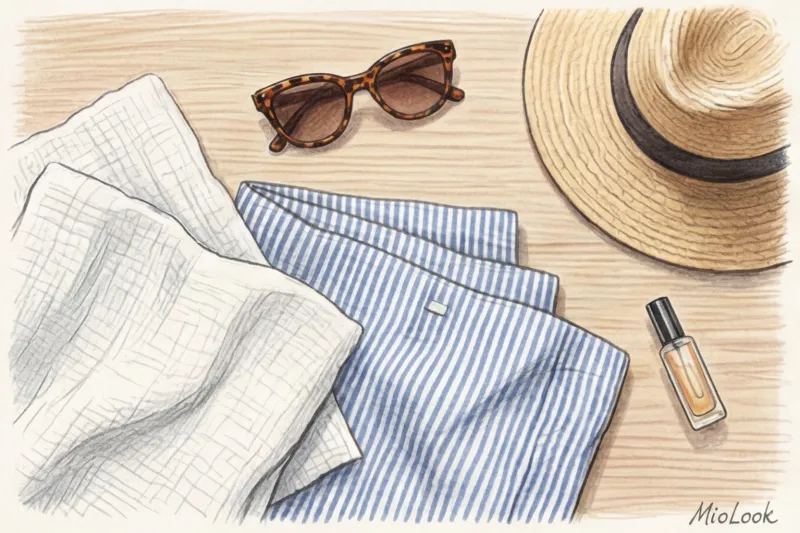
The main bonus for travelers is that these fabrics require no ironing. Just take the shirt out of your suitcase upon arrival at your resort, shake it out, and go. The perfect vacation scenario.
Comparison Guide: Which Cotton is Best for Summer in Different Situations?
To help you navigate the stores, I've put together a quick cheat sheet. When deciding which cotton is best for summer, always consider the context of your day:
- For stuffy offices and meetings: Poplin. It holds its shape, doesn't wrinkle as much as linen, and looks professional. Be sure to follow the guidelines described in the article. Summer business attire for women in hot weather.
- For an active day in the city: seersucker or lightweight chambray (a thin denim analogue with a density of about 120-140 GSM).
- For an evening cocktail: Mercerized cotton sateen. It gives off a beautiful shimmer in the lamplight and provides warmth when a cool breeze blows.
- For walks around the hot resort (from +30°C): muslin, cambric or cotton voile.
Ready to get started?
Create the perfect summer wardrobe without breaking the bank. Try the MioLook free plan—no card required, no commitments.
Get access — €0.99 onceStylist's Workshop: How to Check Cotton Quality Right in the Store
Theory is great, but how do you apply it in a shopping mall fitting room? Over the years as a stylist, I've come up with three simple checkpoints that will help you make the right choice. I always recommend this algorithm to my clients when we're creating a capsule wardrobe. MioLook app.
1. "Transmission test". Hold the fabric, in a single layer, up to a bright lamp in the fitting room. If you can't see any light between the threads (a solid dark wall), you'll feel stuffy at 30°C. If you can see microscopic pinpoints of light (like a starry sky), the fabric will breathe perfectly.
2. "Crumple test". Take the edge of the garment (preferably somewhere near the bottom, near the seam), squeeze it in your fist, and hold it for 10 seconds. Release. If the fabric has turned into a wrinkled paper that can't be smoothed out by hand, you'll look untidy within an hour of leaving the house. High-quality cotton with long fibers will straighten out slightly on its own.
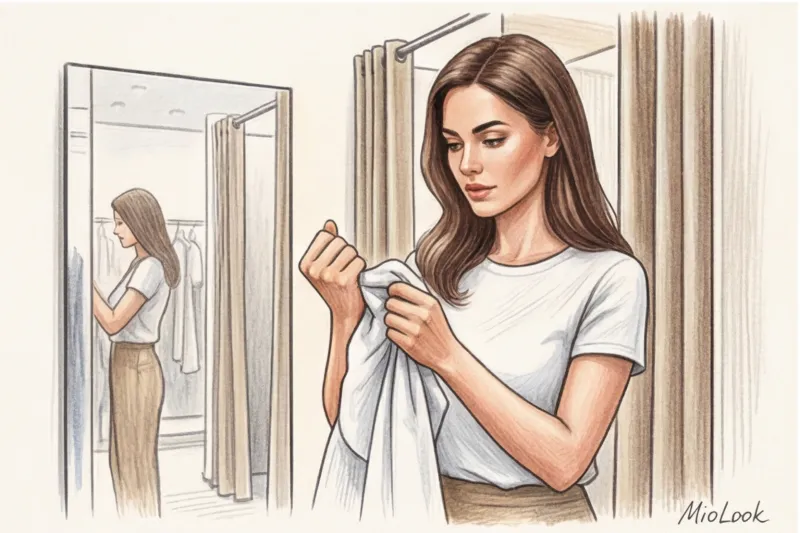
3. Tactile test for hidden polyester. Mass-market brands (Zara, H&M, Mango) sometimes cheat: the tag says cotton, but they're made with cheap polyester threads or the manufacturing process isn't perfect. Rub the fabric between your fingers. High-quality cotton has a soft, dull rustle. If you hear a quiet but distinct "squeak" (like plastic rubbing against each other), return the item to its hanger.
A summer wardrobe is unforgiving of texture mistakes. By stopping blindly trusting labels and learning to read the fabric itself with your fingertips, you'll forever free yourself from discomfort in the heat. Remember the main rule: the best summer look is built not on the amount of skin exposed, but on proper air circulation.