Last summer, a client approached me with an unusual request. "Sofia, I can't sleep. I spend crazy amounts of money on expensive bedding, bought thick cotton pajamas for €150, the air conditioning is on low, and yet I still wake up sweating and can't fall asleep until morning." We sorted through her bedroom wardrobe, and the problem turned out to be precisely this "perfect," seemingly cotton item.

Sound familiar? When choosing what to sleep in during the heat, we instinctively gravitate toward 100% cotton, considering it the pinnacle of naturalness and comfort. But textile engineering has long since advanced. The right summer pajamas aren't just a piece of natural fabric; they're a high-tech thermoregulatory tool. We've already discussed the basic principles of creating a sleep wardrobe in more detail in our article. A complete guide to choosing pajamas for healthy sleep and beautiful skin , and today we will focus exclusively on the physics of cooling.
The Anatomy of Cool: How Fabric Acts as a Body Conditioner
For your body to trigger the production of melatonin (the main sleep hormone), your body temperature must physiologically drop by 1–1.5°C. If fabric interferes with this process, your brain receives an alarm, and you wake up feeling groggy. The textile industry uses the Q-max (heat transfer coefficient) to evaluate this "cooling" effect. The higher the Q-max, the faster the material absorbs heat from your skin, creating a real feeling of coolness.
It's important to understand the difference between the terms "breathability" and "moisture-wicking." According to the American Association of Textile Chemists and Colorists (AATCC 195-2017), the ideal sleep material should not simply absorb sweat. It should also distribute it quickly across the surface for rapid evaporation.
If your nightgown acts like a sponge, absorbing moisture but not releasing it back into the air, your bedding microclimate is disrupted. Humidity builds up under the covers, blocking the body's natural cooling process.
The Cotton Myth: Why Your Favorite Summer Pajamas May Be Making You Overheat
Here's a counterintuitive fact that surprises almost all of my clients: in extreme heat and muggy weather, 100% cotton can be your worst enemy. Let's debunk the biggest stereotype: that you should only sleep in cotton in hot weather.
The physics of the process are incredibly simple. Cotton is a phenomenal absorbent. It can hold 24-27 times its own weight in moisture. A person can sweat up to a glass of sweat in a stuffy room overnight. Cotton fibers will happily soak it up, but this material dries twice as slowly as modern eco-friendly fibers.
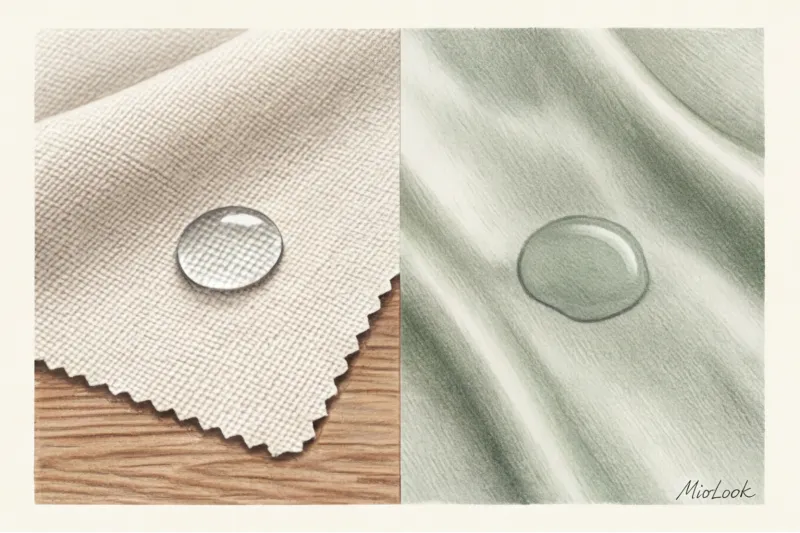
As a result, by three o'clock in the morning, you're wearing a damp, heavy compress. The damp fabric sticks to your body, blocking air circulation and triggering a greenhouse effect. You begin to overheat.
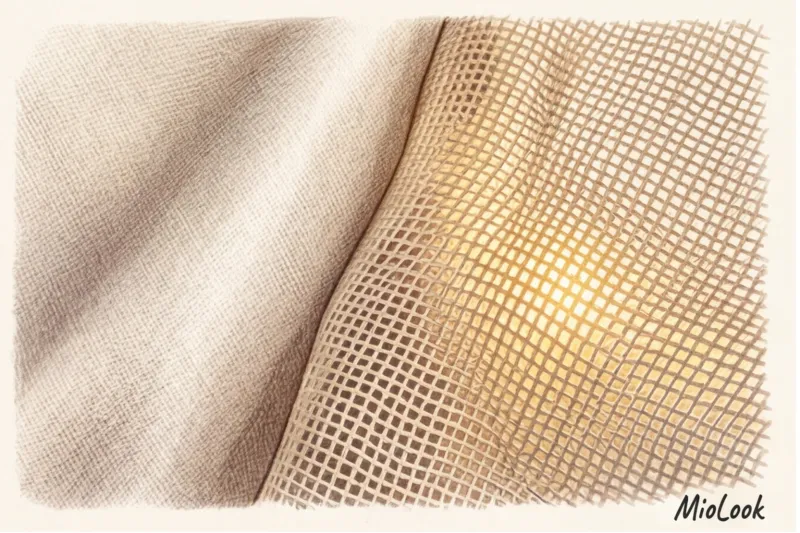
Does this mean cotton should be banished from the bedroom forever? No. The finest translucent cambric or loosely woven muslin gauze work perfectly. But it's best to avoid classic, heavy knits (stockinette) entirely in July.
Access to MioLook for €0.99 — one-time payment
A smart AI stylist will select the perfect home and everyday wardrobe, taking into account your body shape and preferences.
Get access — €0.99 onceTop 5 Cooling Fabrics for Perfect Sleep
Forget the marketing gimmicks on labels like "breathable," "natural." Based on rigorous textile science data, the ranking of materials that can physically lower skin temperature looks completely different.
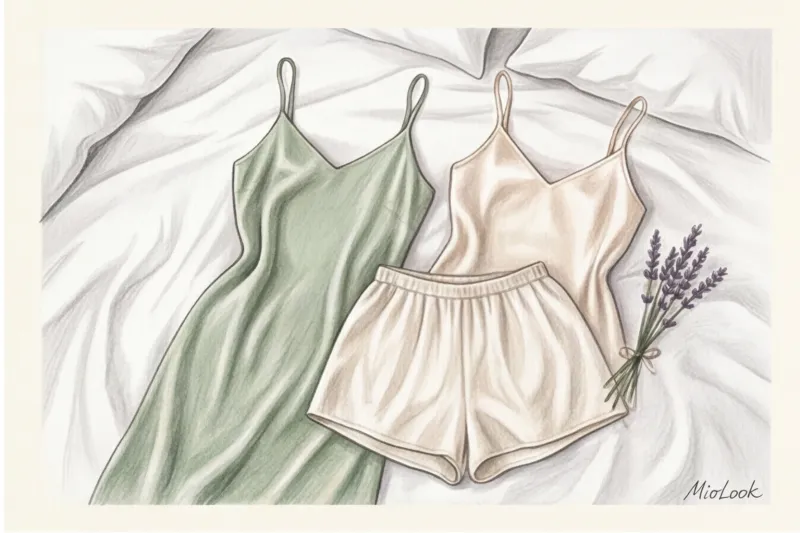
Tencel (Lyocell) is the champion in moisture wicking
Lyocell (the most famous patent is Tencel) is produced from eucalyptus wood in a closed, eco-friendly cycle. According to research by the Lenzing Group (2023), Tencel fibers absorb moisture 50% more effectively than cotton and, crucially, evaporate it instantly.
Unlike the scaly structure of cotton fiber, Tencel's surface is completely smooth. This makes it softer than silk and cooler than linen. In the €60–€120 price range, a lyocell set offers the best balance of price and performance.
Natural silk – luxurious thermoregulation with caveats
The protein structure of natural silk is extremely similar to human skin. Its Q-max value is one of the highest in nature—you feel a distinct cooling sensation at the first touch.
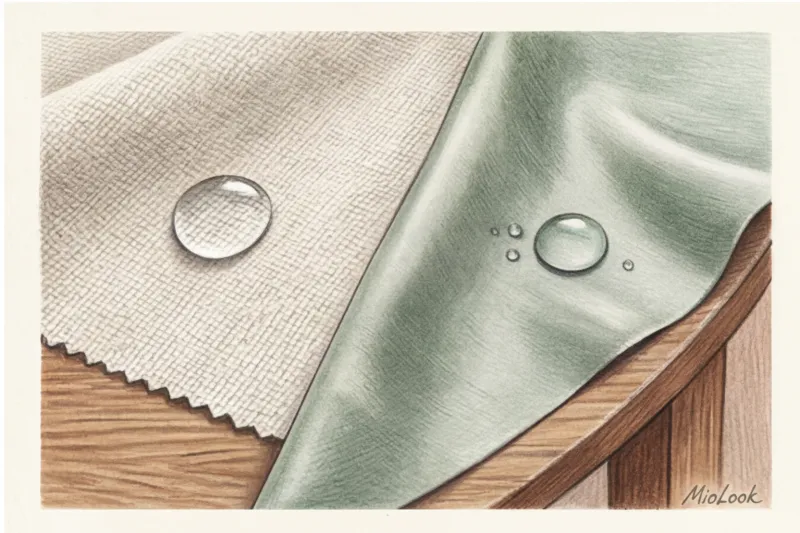
But there's a strict limitation here that's often overlooked. As a stylist, I constantly see women buying thick, heavy silk satin. In extreme heat, it clings to the body like a glossy shell, creating that very greenhouse effect, preventing air convection. For summer, look for exceptionally fine matte silk crepe de Chine or flowing chiffon with a density of no more than 16-19 momme.
Flax, Cupro and Bamboo are natural fans
Linen offers ideal air circulation thanks to its rigid structure—it doesn't wrinkle and doesn't cling to sweaty skin, leaving a layer of air. The only drawback: it can be too rough for sensitive skin.
Cupro (copper silk, created from cotton fluff) is a brilliant compromise in the textile industry. It breathes like cotton, but flows and cools like natural silk, while costing half as much.
Bamboo viscose has unique natural antibacterial properties and an incredibly soft texture. If you're prone to irritation, allergies, or acne, bamboo pajamas will be your summer salvation.
How to Test Pajamas for Coolness Right in the Store: Stylist Tips
I never rely solely on the label's composition, as even 100% silk can be ruined by too-tight weaves. During shopping sessions, I teach clients three simple tests that can be performed in just a few seconds:
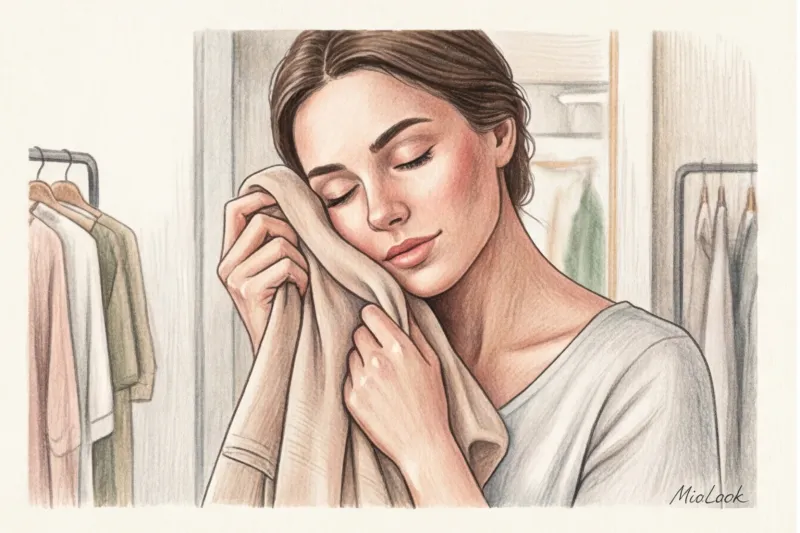
- "Cheek test". The skin on your face and neck contains many more thermoreceptors than the rough skin on your fingertips. Place the cloth on your cheek. If you don't feel a noticeable, refreshing chill within the first second, it won't cool you down.
- "Light test". Hold the fabric up to a bright light in a store (this doesn't apply to silk). You should see microscopic gaps between the threads. If there are no gaps, there's no air circulation.
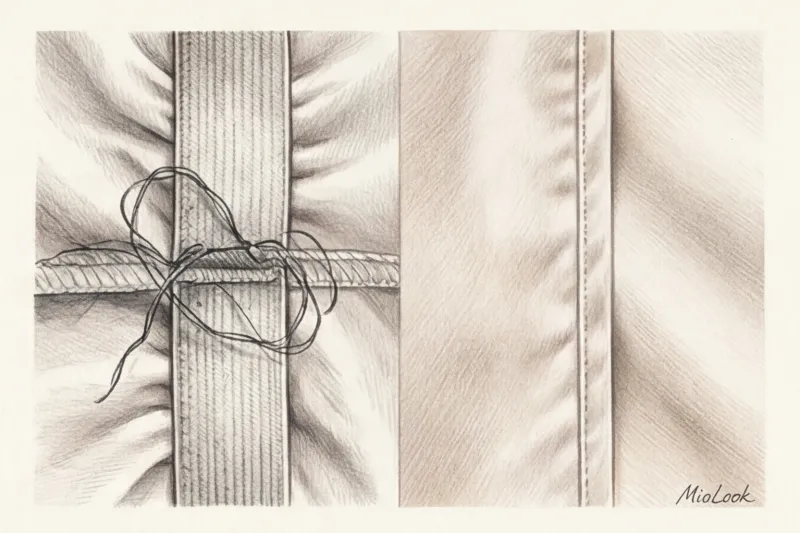
- Checking the seams. Over 12 years of sewing, I've noticed: even the most expensive fabric is worthless if it's poorly assembled. A closed French seam isn't a perfectionist's indulgence. Cheap overlock stitches are almost always made with textured nylon threads. They feel soft on dry skin in the fitting room. But at night, when your skin gets slightly sweaty, this nylon will chafe it until it turns red. Look only for closed flatlock seams.
Your perfect look starts here
Join thousands of users who look flawless every day with the Smart Wardrobe feature.
Get access — €0.99 onceWhat should absolutely not be in summer sleepwear?
When I dismantle sleeping pods, I regularly throw away beautiful, expensive, but physiologically dangerous items. If you want to get a good night's sleep, avoid the following items:
- Even 10-15% polyester, acrylic or polyamide. Synthetics instantly kill the absorbency. Blended fabrics hold their shape perfectly in an office suit, but they're a no-no for sleeping.
- Solid rubber (plastisol) prints. The huge teddy bear on your chest is literally a piece of impenetrable plastic. Your skin can't breathe under it at all.
- Tight wide elastic bands on the waistband. Due to the heat, the body is prone to mild swelling at night. A stiff elastic band constricts blood vessels, impairing lymph flow and microcirculation in the pelvic area. Replace it with a soft drawstring with a cotton cord.
- Abundance of synthetic lace. Polyamide lace inserts on shorts or in the décolleté area mercilessly scratch heated skin and often provoke localized heat rash.
Style Matters: How Cut Affects Microclimate
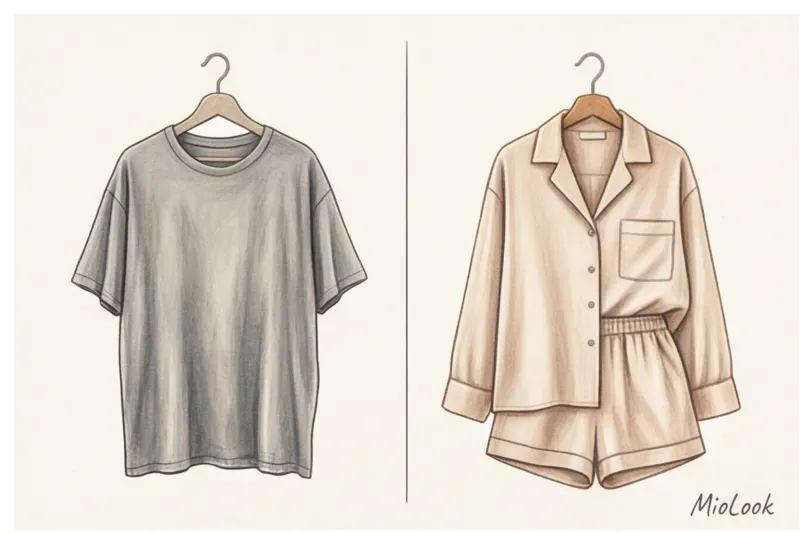
Even the most expensive premium Tencel won't work if your clothes feel tight like a surfing wetsuit. The right summer pajamas should be 1-2 sizes larger than your regular everyday clothes (oversize effect).
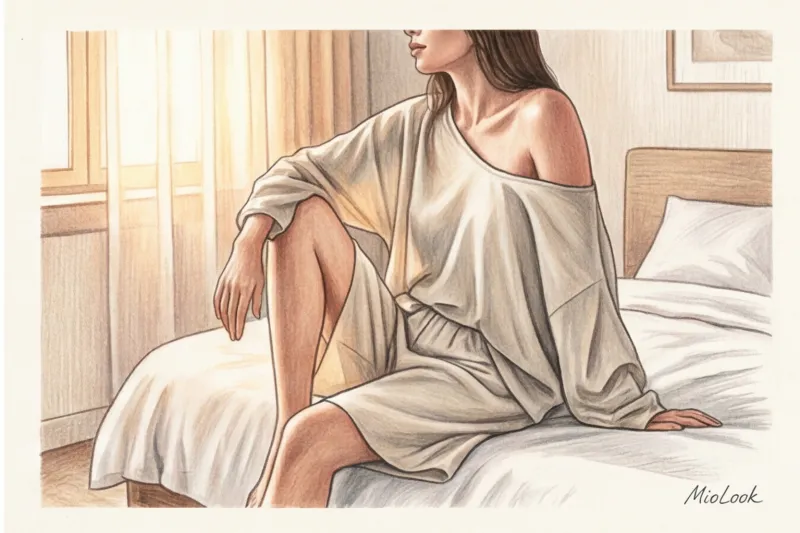
Note the bias cut, which is especially useful for silk and viscose. This geometry provides phenomenal freedom of movement, without the need for elastane to provide stretch.
Opt for deep armholes, wide Bermuda shorts, and flowing silhouettes. This creates a mechanical pumping effect: every slight movement you make while sleeping causes air to circulate under the fabric, instantly releasing excess heat.
Checklist: The Perfect Summer Pajamas for a Deep Sleep
To summarize, let's outline the specific parameters of a flawless nightcap for the hot season. This isn't just a simple clothing purchase—it's an investment in your recovery.
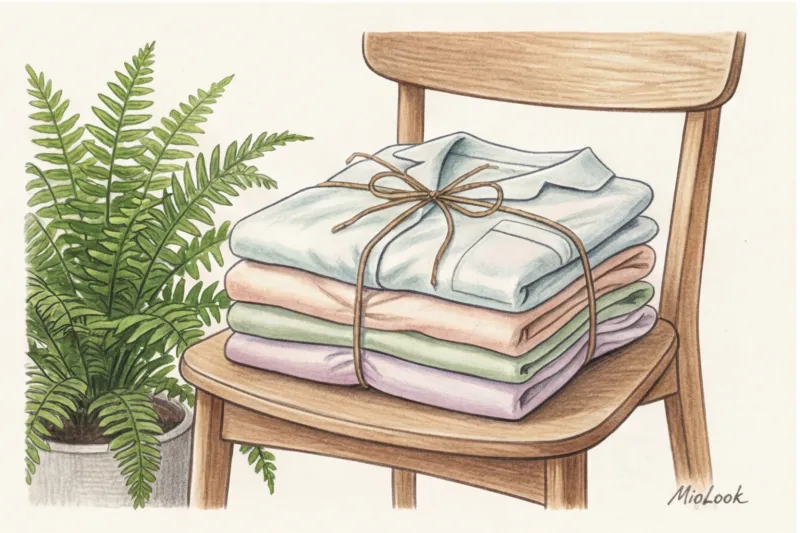
- Compound: 100% Tencel, natural silk (crepe de Chine), fine linen (up to 150 g/m²), bamboo, or cupro. No compromises with polyester.
- Tactility: The material instantly cools when touched to the cheek.
- Fittings: a complete absence of bulky buttons on the back or sides (they dig into your body when you toss and turn).
- Landing: freedom of fit of at least +5–7 cm to your actual parameters.
- Care: This is extremely important! Wash cooling fabrics only with liquid gels. Regular dry laundry detergent doesn't rinse out completely and clogs the micropores of the technical fabric, depriving it of its ability to wick away moisture.
"Choose your sleepwear as if you were blind. You shouldn't care about color, trendy cuts, or cute prints. If your hands and cheeks tell you the fabric is trustworthy, only then open your eyes and look in the mirror."
Don't let pretty but non-breathable synthetics steal your melatonin. Review your nightwear tonight, use the "cheek test," and you'll be surprised at how much deeper and more restful your sleep will be.