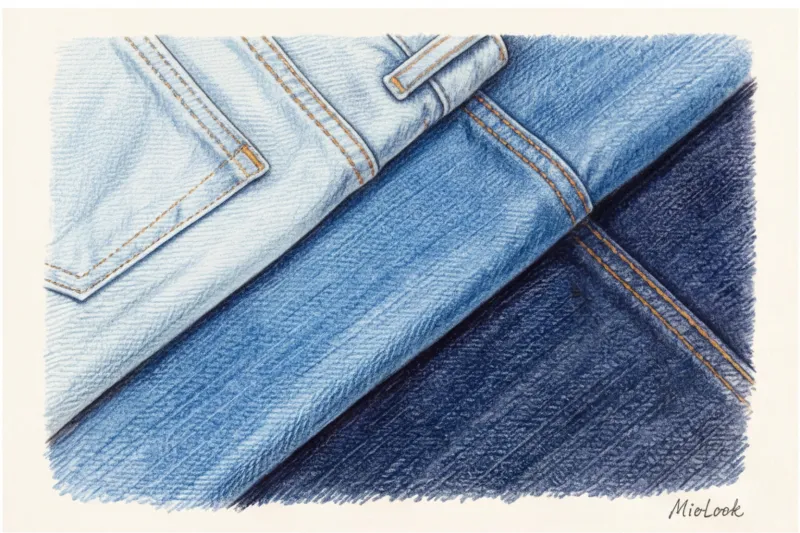
In my 12 years as a personal stylist and textile researcher, I've heard this phrase hundreds of times: "Jeans are a basic; they go with absolutely everything." And every time, I disappoint my clients. This fashion myth ruins thousands of carefully crafted looks every year. Blue denim isn't a neutral gray, black, or white. It's a complex, chemically reactive material with a pronounced color pigment that can elevate a look to the level of a magazine cover or visually "dirty" expensive complementary fabrics.
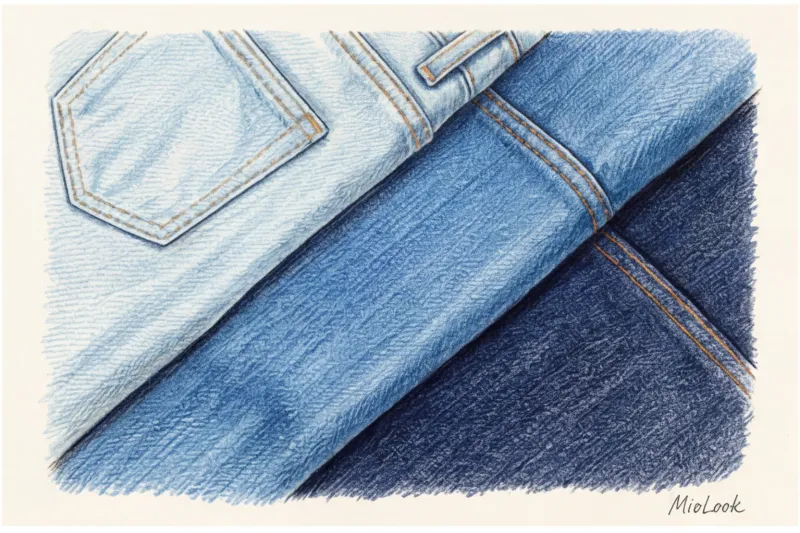
If you want to get it straight once and for all, What colors go with blue jeans? , we'll have to forget the standard glossy advice and delve a little into the physics of color and fabric chemistry. We've covered the role of denim as the foundation of a smart wardrobe in more detail in our The complete guide to a basic denim wardrobe , and today we will look exclusively at coloristics.
Why the "blue jeans go with everything" myth is ruining your looks
The main mistake beginners make is to perceive jeans as achromatic (a color without a hue). Classic indigo has a property that technologists call Crocking and Fading — dry rubbing and fading. Denim threads are dyed using rope dyeing, a process in which the pigment coats the outside of the thread, but its core remains pure white.
"When washed and worn, the top layer of dye wears off. The white core begins to show through the blue pigment, mixing with dirt and dust particles. As a result, the jeans acquire a distinctive yellowish or grayish undertone in the creases, which immediately clashes with the pure colors of the outer garment," according to a report by textile industry technologists.
I had a telling case in my practice. A client invested in luxurious cashmere sweaters in warm peach and caramel shades (ranging from €300–€450). But when she paired them with her favorite icy blue jeans (acid wash), her face looked tired and the sweater itself looked washed out. The problem wasn't the cashmere, but the radical temperature clash between the icy denim and the warm fleece.
The Anatomy of Blue: How Denim Washes Dictate Your Palette
You can't use the same color formula for every pair of jeans in your closet. Modern eco-friendly brands use laser treatment and ozonation instead of toxic chlorine bleaching. This not only saves rivers from pollution but also gives us a completely pure, unadulterated color, free of rusty impurities.
To avoid getting lost in dozens of pairs, I always recommend digitizing your items. After uploading your database to MioLook , you'll clearly see how many warm and cool shades of blue you have, and the algorithm will tell you which pair will go with your new terracotta top.
Access to MioLook for €0.99 — one-time payment
A smart AI stylist will analyze your wardrobe and select the perfect color combinations for denim.
Get access — €0.99 onceLight Blue Denim (Ice & Vintage Wash)
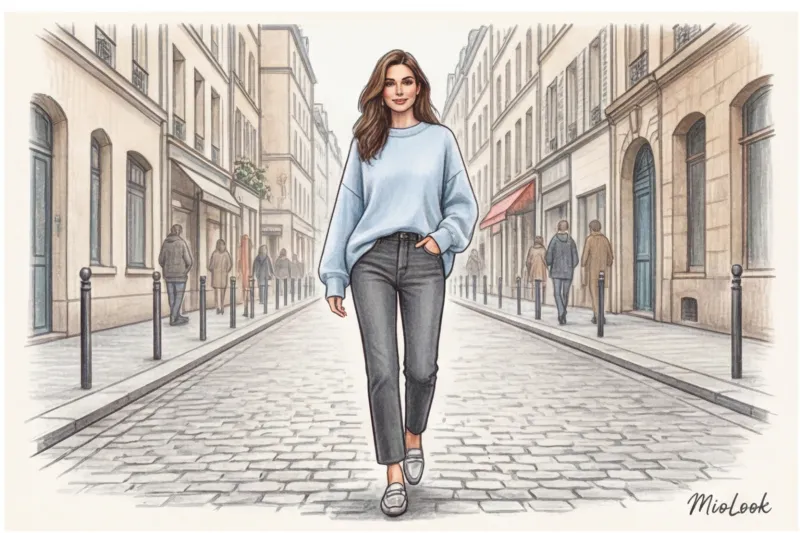
Bleached denim is always about lightness and coolness. It contains a lot of white pigment, so it requires an equally clean and light complement.
- Ideal companions: pastel colors (dusty rose, cool lavender, icy mint), snow-white, pearl gray.
- Dangerous combinations: Heavy, muted autumn tones. A dark burgundy, chocolate, or eggplant top paired with light-colored jeans will visually "cut" your figure in half, weighing down your torso and making your legs look disproportionately short.
Classic Blue (Mid-blue / Stonewash)
If you're looking for an answer to the question of what colors go with medium-toned blue jeans, the answer is almost any, as long as they have complex pigments. According to the Pantone Color Institute, Classic Blue acts as an anchor of stability, allowing its companions to shine brighter.
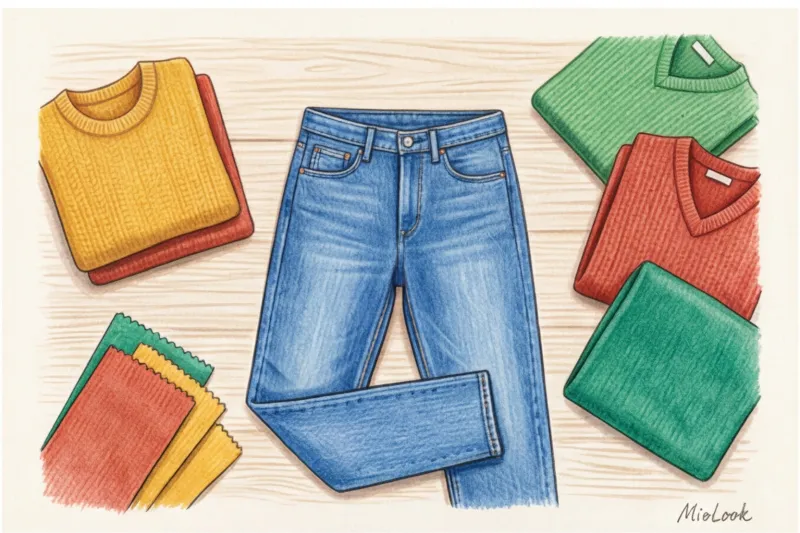
- Successful combinations: Mustard, complex terracotta, rich tomato red, deep emerald. This is the perfect canvas for even the boldest color experiments.
Raw Denim (Dark Indigo)
Rigid, unwashed dark blue jeans are a signature piece of the "quiet luxury" aesthetic. Their color is close to black, yet retains a deep blue hue.
- The aesthetics of expensive images: precious shades (sapphire, ruby, deep amethyst, emerald).
- When it does NOT work: A combination of raw denim and washed black cotton. Black next to dark indigo often looks dirty and dusty. If you choose a black top, choose glossy leather, silk, or dense, perfectly dyed wool.
Coloristics in Action: 4 Win-Win Color Formulas
Forget about picking clothes by eye. The WGSN Institute noted in its 2024 report that using clear color capsules reduces wardrobe wear by 40%, as items complement each other rather than sit idle. Here are four formulas based on an adapted Itten Circle (adjusted for the matte finish of denim).
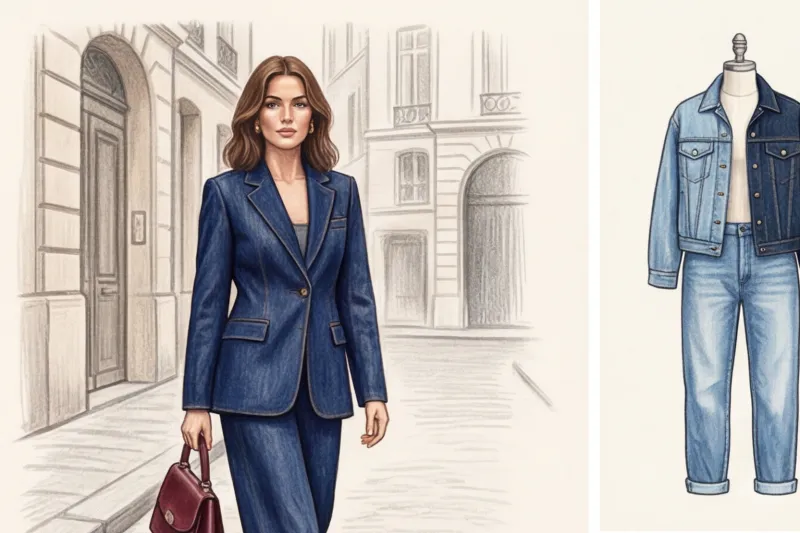
1. Total denim (Canadian tuxedo)
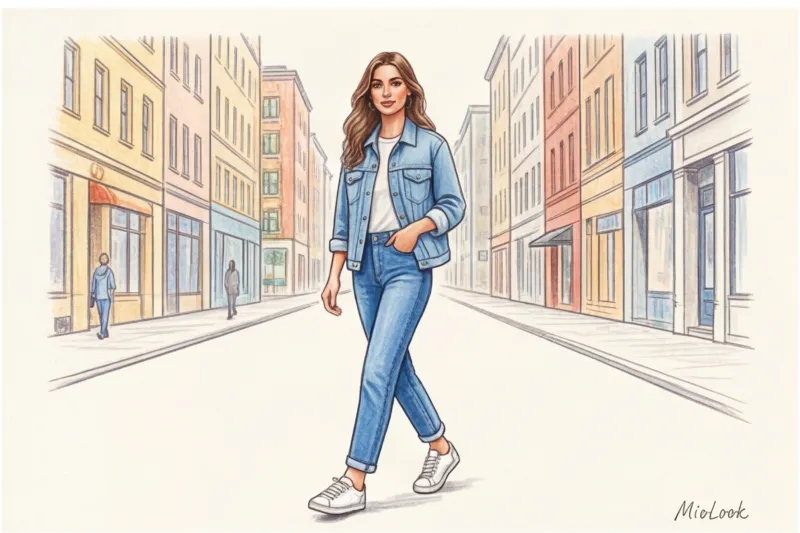
The monochrome denim look is back in fashion, but it should be worn with caution. The main rule: don't try to match your top and bottoms tone-on-tone (unless it's a suit). A difference of one or two shades adds dimension to the look. A light jacket and dark jeans visually shape the figure, making the hips appear slimmer.
2. Contrasting geometry
Denim is a twill weave fabric with an architectural density. Accentuate this ruggedness with graphic colors: crisp white cotton poplin or graphite cashmere. A white architectural shirt and blue jeans are a timeless pairing.
3. Analogue Harmony
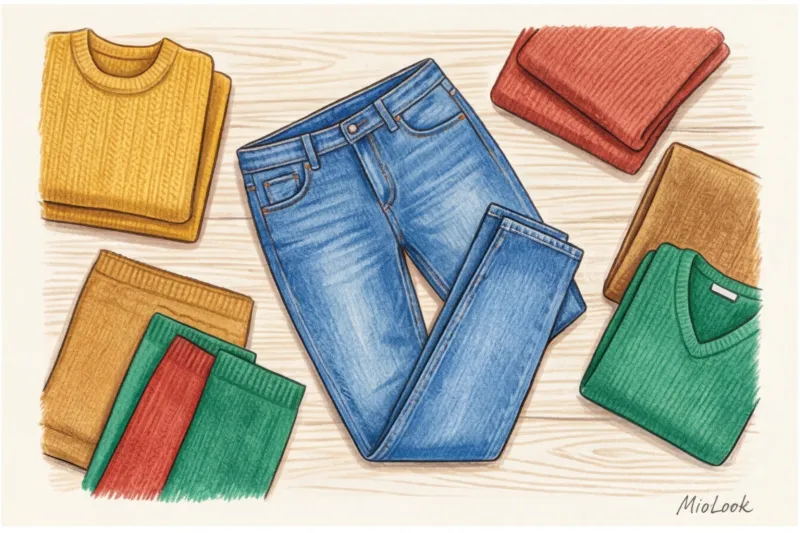
We use colors that are adjacent on the color wheel. For indigo blue, this means deep pine green, turquoise, and eggplant purple. These combinations create a calm, enveloping look without any sudden changes in focus.
4. Complementary contrast
Want to get noticed on the street? Use contrasting colors. Opposite blue is orange. Terracotta, burnt orange, coral, and warm peach make blue denim literally glow from within. Just be mindful of the temperature (cool blue + cool coral; warm indigo + warm orange).
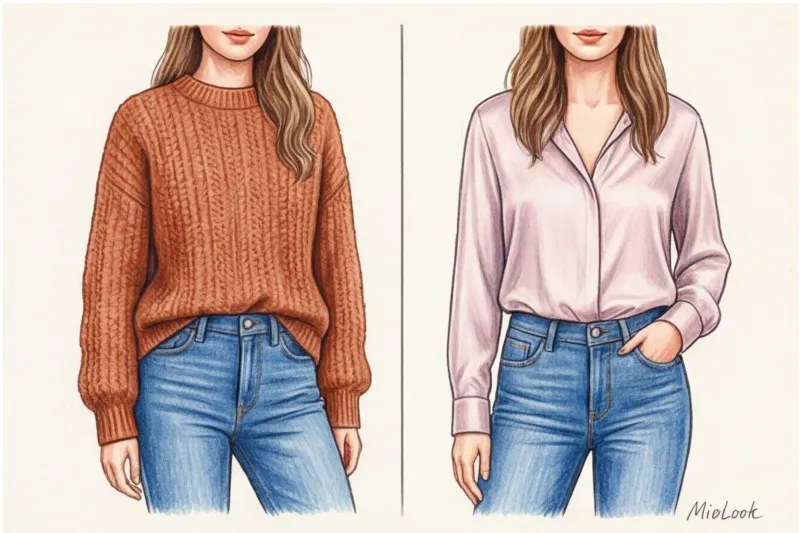
Texture Decides: Why Color Looks Different on Silk and Knitwear
The same shade of red will look luxurious on a chunky knit sweater and incredibly cheap on a mass-market nylon blouse. Why? Because of light absorption.
Rough cotton twill (denim) absorbs light, creating a matte finish. For the look to work, the top should either support this matte finish (natural linen, organic cotton with a weight of 180 g/m² or more, wool) or create a radically glossy contrast (silk, satin, viscose with added elastane).
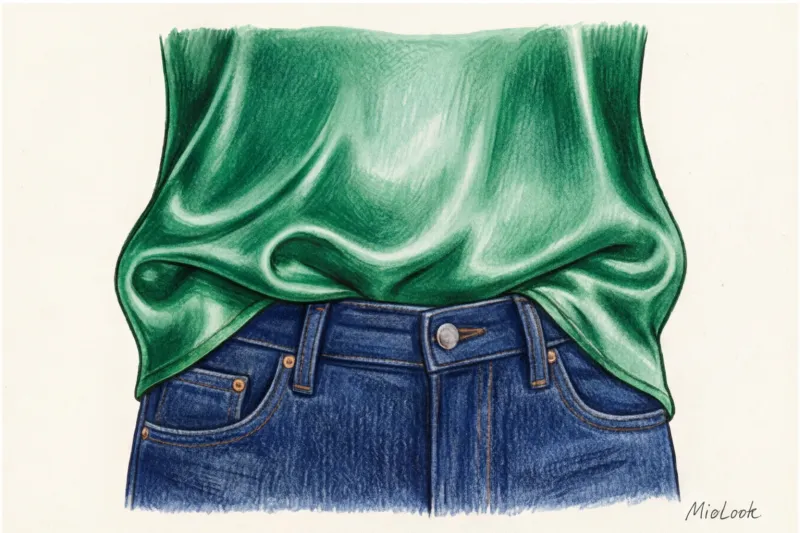
I was once putting together a wardrobe for a client with a pear-shaped body. We used a heavy, stiff raw denim (around 14 ounces) to gather and define her hips, and layered it with a flowing emerald silk blouse. The sheen of the silk reflected the light and drew the eye to her face and décolletage, completely shifting the focus away from the problematic area.
Your perfect look starts here
Join thousands of users who look flawless every day with the MioLook intelligent platform.
Get access — €0.99 onceImage Temperature: Selecting Shades Based on Your Color Type
"What should I do if blue is a cool color, and I have a warm complexion?" is a common question during my consultations. Jeans are far from the portrait zone (unless we're talking about jackets), so they serve as an excellent color balancer.
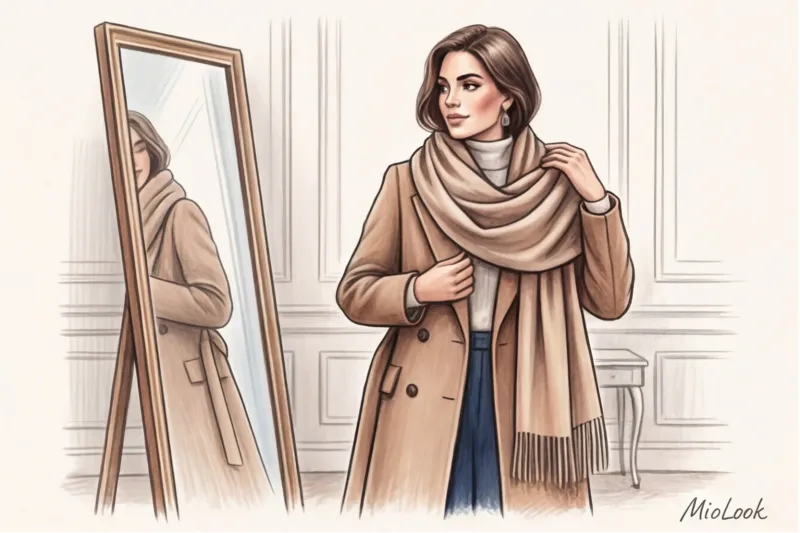
For example, if you have warm autumnal complexion (golden skin, copper hair), cool, icy denim may feel out of place. The secret is simple: integrate "your" warm tones into the area around your face (an ochre sweater, a camel scarf), and use cool blue denim as a base. A warm cognac belt will create the perfect bridge between the "foreign" bottom and the "your" top.
Business Etiquette: Acceptable Color Palette for Jeans in the Office
Jeans have long since broken the glass ceiling of corporate dress codes. But for them to look classy within the confines of business casual, the color of the jeans must be impeccable.
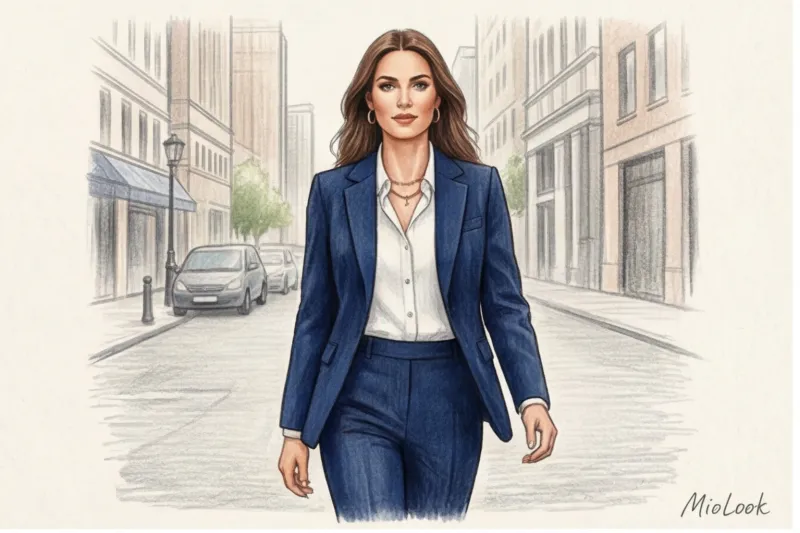
For the office (for example, for a Friday dress code where you want to look put-together), choose only dark blue denim with no fraying, rips, or contrasting yellow stitching. Ideal color pairings that increase the formality level include:
- Camel: A double-breasted camel-colored jacket (a good one will cost €150–€250) instantly makes a look expensive.
- Graphite: thin cashmere turtleneck in dark gray.
- Navy: a jacket to match the jeans, but made of smooth suit wool.
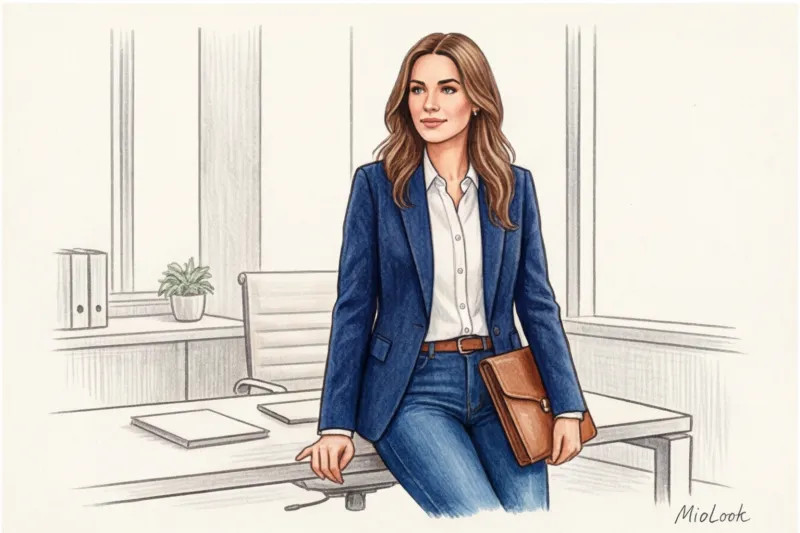
Leather accessories are a key element of a business look. A belt and shoes in dark chocolate or classic black will tie together the color blocking. Avoid light-colored or red shoes paired with dark jeans in the office—this is the preserve of country style.
Stylist Checklist: How to Check Your Color Combination Before You Go Out
To be 100% confident in your look, I recommend my clients do a quick self-check in front of the mirror. This minute-long ritual saves you from many fashion faux pas.
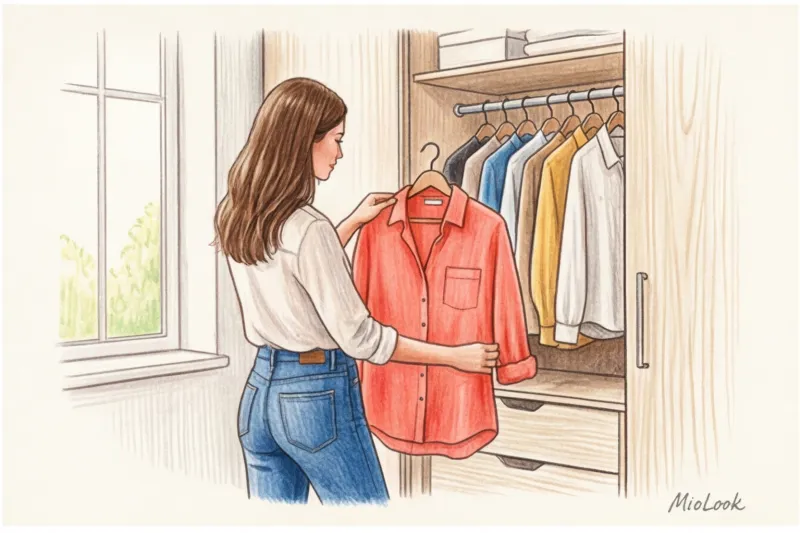
- Test by the window. Never judge the combination of blue denim with other colors under artificial yellow light. Indigo absorbs yellow light and distorts it. Go to a window: daylight will reveal the true picture.
- The 60/30/10 rule. A harmonious look with jeans is built on this proportion: 60% main color (for example, blue jeans), 30% additional (milk sweater) and 10% accent (burgundy bag or bright lipstick).
- Appearance contrast test. If you have a low-contrast appearance (light hair, light eyes, fair skin), avoid pairing dark blue jeans with a crisp white shirt. This harsh contrast will "eat up" your face. Replace white with ecru or pearl gray.
Denim isn't a disposable item, but a long-term investment in your personal style. By stopping viewing blue jeans as a bland "everything basic" and starting to embrace them as a full-fledged participant in a color symphony, you'll notice a dramatic change in the quality of your wardrobe. Choose clean shades, pay attention to the texture of the fabrics, and don't be afraid to experiment with clever contrasts.