What fabric composition is best for clothing: debunking the myth of 100% naturalness
One of my clients, a top manager at a major IT holding, insisted on a 100% silk pantsuit for a keynote address at a conference. "I want uncompromising luxury, no synthetics," she declared confidently. The suit fit phenomenally well until she got into a taxi. An hour later, when she took the stage, she looked like she'd slept in it: creases at the elbows, wrinkled knees, and a jacket that had lost its shape.
This case perfectly illustrates the main mistake women make when building a premium wardrobe. When clients ask me, Which fabric composition is best for clothing? , they usually expect to hear the mantra of 100% naturalness. But the truth is, blindly chasing the "100% Natural" label often leads to ruined silhouettes, endless ironing, and wasted money. We discussed the basic principles in more detail in our the complete guide to fabrics , but today I want to show you the inside story of luxury production.
The true mark of modern heavy luxury is not the absolute purity of the fibre, but intelligent blend Adding 5–15% high-quality synthetic threads to a natural base doesn't make a garment cheaper; rather, it acts like reinforcement in concrete. This structural necessity reduces the cost-per-wear from €50 to a few cents, because such a garment lasts for years, not just until the first dry cleaning.
The Hierarchy of Natural Fibers: Investments That Pay Off
Let's be honest: the "100% cashmere" label on a €80 mass-market sweater and a €1,200 Loro Piana jumper are legally the same composition. But in practice, they are two completely different universes.
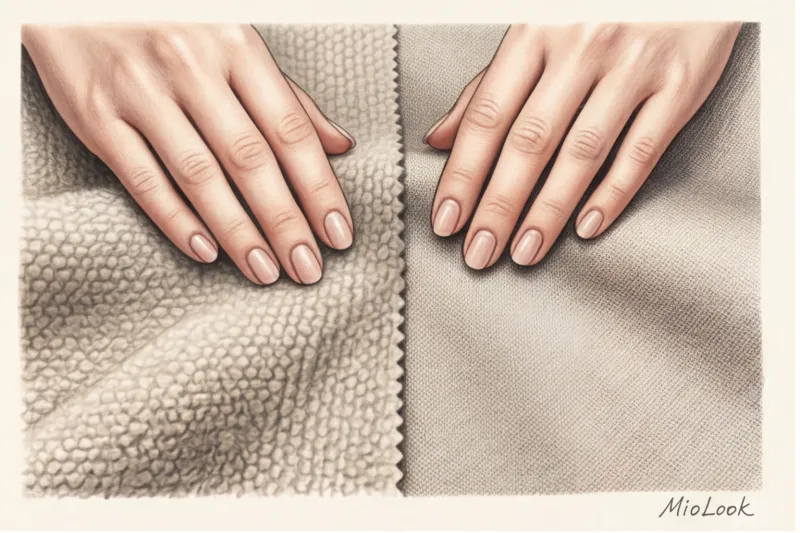
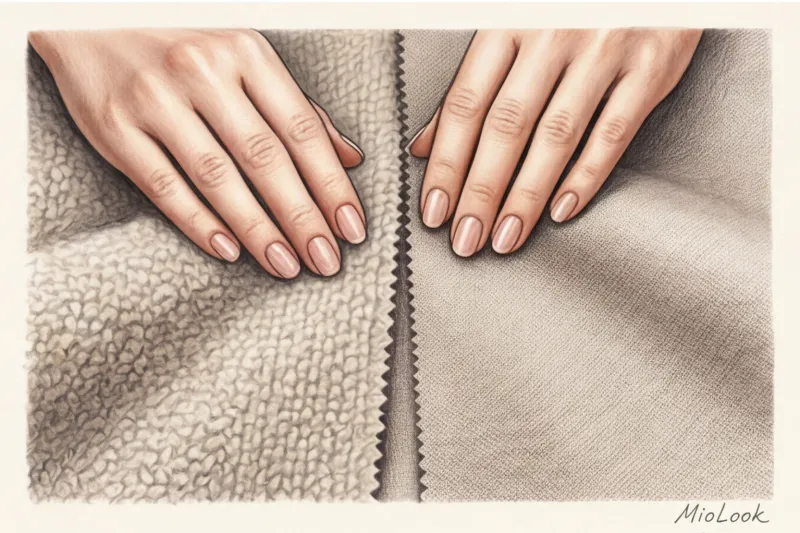
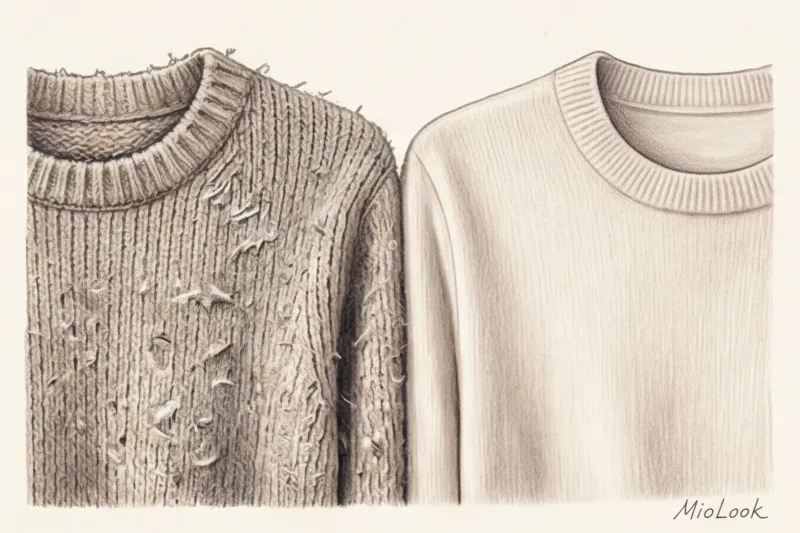
Over 12 years of sourcing fabrics from Italian mills like Zegna, I've developed my own "tactile test." Cheap wool feels glassy and prickly because it's made from short fibers (towel), which quickly unravel and form pilling. Expensive natural wool feels oily and fluid. The secret lies in the length of the staple (the fiber itself) and the tightness of the yarn twist.
According to The Woolmark Company's durability standards, it's precisely virgin wool with a tight twist that can withstand decades of heavy wear without deformation. Therefore, it's worth investing not just in the material's name, but in its grade:
- Long-staple cotton (Pima, Egyptian): does not warp after washing, unlike cheap short-staple cotton.
- Virgin wool (primary wool): Sheared from live sheep, retains natural lanolin and repels water and dirt.
- Mulberry silk: The highest quality mulberry silk thread, which does not split and has a noble, muted, rather than cheap, glossy shine.
Of course, the blend rule isn't absolute. When does it NOT work? I always insist on 100% natural fibers (or viscose) when it comes to underwear, pajamas, and basic summer tank tops that fit close to the body. Compromises with synthetics are unacceptable here.
Access to MioLook for €0.99 — one-time payment
A smart AI stylist will select the perfect look based on your wardrobe.
Get access — €0.99 onceSynthetics in the premium segment: why luxury brands are adding polyester and polyamide
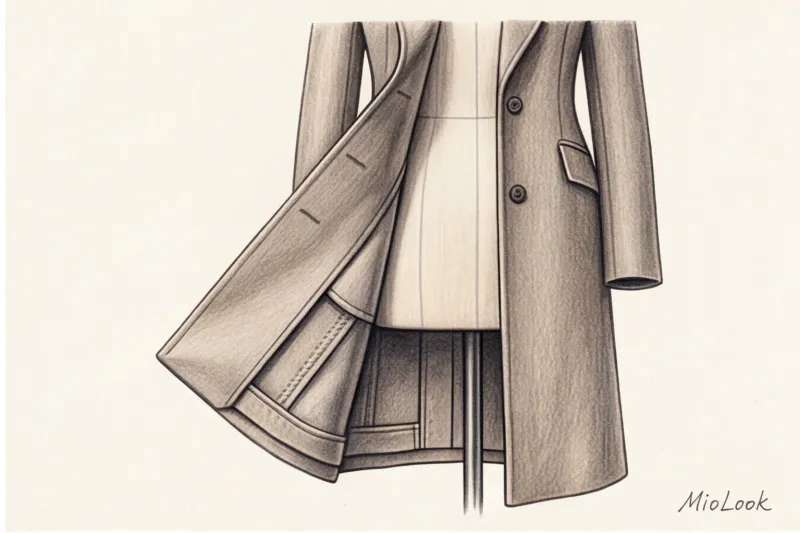
Now here's a paradox. If you visit a Max Mara boutique and look at the composition of their legendary structured coats, you'll often see 10-20% polyamide (nylon). This isn't an attempt to skimp on cashmere. It's the laws of technical tailoring.
The fact is, 100% soft wool or cashmere can't support a rigid, sculpted shoulder or a peak lapel. They sag under their own weight. Polyamide in outerwear increases abrasion resistance by more than 30%. This is why a coat with the right blend won't wear out where a shoulder bag is worn.
The same goes for business suits and premium denim. 2–5% elastane is your insurance against "bubbling" at the knees and elbows. Elastane acts like a spring, returning the fabric to its original shape after you get up from a chair.
How can you tell the difference between structured synthetics and cheap padding? Look at the proportions. If a brand (even the likes of Massimo Dutti) makes a jacket from 60% polyester and 40% wool, it's the manufacturer cutting corners, and you'll sweat in it. If the composition is 95% wool and 5% elastane or polyamide, it's a sign of fit and comfort.
Artificial fabrics: viscose, tencel and cupra - the golden mean
A huge mistake is confusing synthetic fabrics (derived from petroleum) with artificial ones (derived from cellulose, or wood). The latter include viscose, modal, lyocell (Tencel), and cupro. Their properties are closer to natural materials, and in some respects even surpass them.
The Textile Exchange (2024) report on materials confirms that modern cellulose fibers, such as viscose and cupra, absorb moisture 50% better than standard cotton. For a stuffy summer office, a blouse made of heavy viscose is a much smarter investment than fickle 100% silk, which instantly shows sweat stains and is destroyed by deodorant.
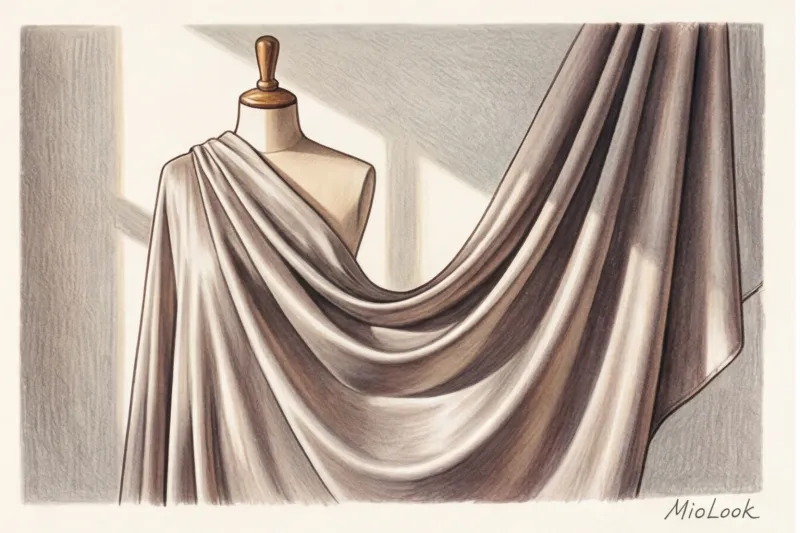
My personal marker of a jacket's quality is its lining. Mass-market options almost always use polyester, turning even a good wool jacket into a greenhouse. Premium brands use cupra (bemberg). This luxurious cotton-fleece material floats like water, has an anti-static effect (your silk blouse won't stick to your back), and wicks heat away perfectly.
Your perfect wardrobe starts here.
Join thousands of users who look flawless every day with MioLook. Digitize your items in just a few clicks.
Get access — €0.99 onceHidden Traps: Which Compositions Should You Avoid?
While structured blends are a blessing, there are some materials that simply have no place in an adult woman's wardrobe. The biggest enemy of an investment wardrobe is 100% acrylic It's often passed off as "faux wool," but in reality, it's plastic, which doesn't provide warmth, causes profuse sweating, and becomes pilled within the first few days of wear.
"My clients' wardrobe analytics data in the app MioLook The statistics reveal a ruthless truth: a 100% acrylic sweater is thrown away after an average of three wears. Meanwhile, a blend of 70% wool and 30% silk or cashmere can be worn for years, reducing the cost to a mere fraction of the original price.
What else to avoid:
- 100% polyester in contact with skin: Blouses and dresses made of cheap polyester create a "greenhouse effect." Worse, synthetics retain body odor molecules three times longer than natural wool, and the odor often persists even after washing.
- Recycled polyester disguised as eco-luxe: Brands often greenwash, selling dresses made from bottles for €200. It's still plastic, just with a different marketing narrative.
- "Hodgepodge" (mixed waste): If the label lists five or more different fibers (for example, 30% cotton, 20% acrylic, 20% polyester, 15% viscose, 15% nylon), this is a sure sign that the item was made from textile waste to minimize production costs. It will lose its shape after the first wash.
The Anatomy of the Perfect Blend: Formulas for a Long-Lasting Wardrobe
Over the years of working with clients' wardrobes (and relying on the rules of classic Italian tailoring), I've developed a sort of cheat sheet—the ideal proportions of ingredients for different elements of a capsule collection. Save these numbers; they'll save you thousands of euros.
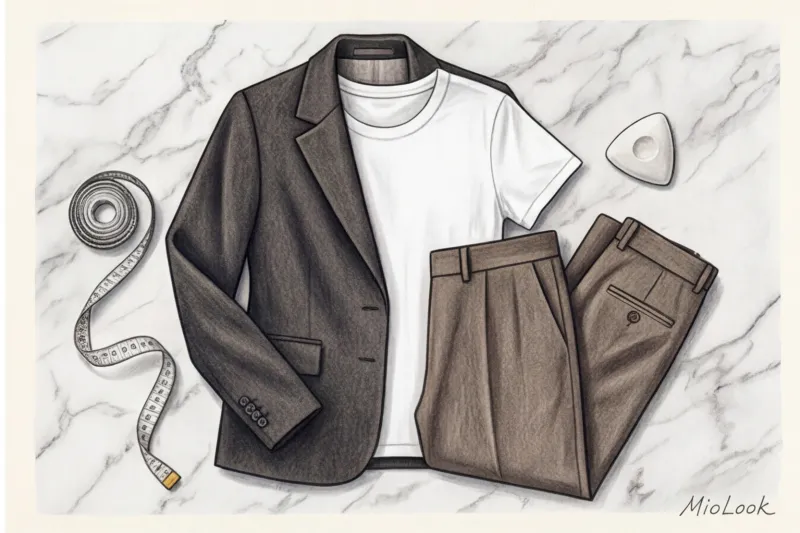
The perfect business suit: 85–95% virgin wool, 3–10% silk (for a delicate sheen), and 2–5% elastane (for comfortable movement). You can fly in this suit for 10 hours and still walk off the plane without a single wrinkle.
Status winter coat: 70–80% wool, 10–20% cashmere or alpaca (for softness and lightness), 10% polyamide (for wear resistance and wind protection).
Basic T-shirt: 90–95% dense cotton (from 180 g/m²), 5–10% elastane or modal. This T-shirt won't curl at the side seams after washing and will drape beautifully, rather than being stiff.
Office knitwear: 70% merino wool, 30% silk. This is the perfect balance: merino wool regulates temperature (not too hot indoors, not too cold outdoors), while silk prevents pilling and adds luster.
Ready to get started?
Try the MioLook plan for free—no commitments required. Organize your closet and create stylish combinations.
Get access — €0.99 onceForensic Shopper's Checklist: How to Read Labels and Evaluate Fabric
The art of choosing clothes is a kind of detective work. Before you look at the price tag, look inside. Here are three tricks I make every client do right in the fitting room:
- Crash test: Squeeze the edge of a fabric (for example, the hem of a dress or the sleeve of a jacket) in your fist for 10 seconds. Release your hand. If the fabric is very wrinkled, don't buy it for the office or travel. A high-quality elastane blend or a good, thick wool will straighten out before your eyes.
- Light test: Hold the item up to a bright light in the store. If a basic T-shirt, shirt, or pants shows through unevenly (you can see the thickened threads and obvious "bald spots"), it's cheap, loosely woven fabric. It will deform very quickly.
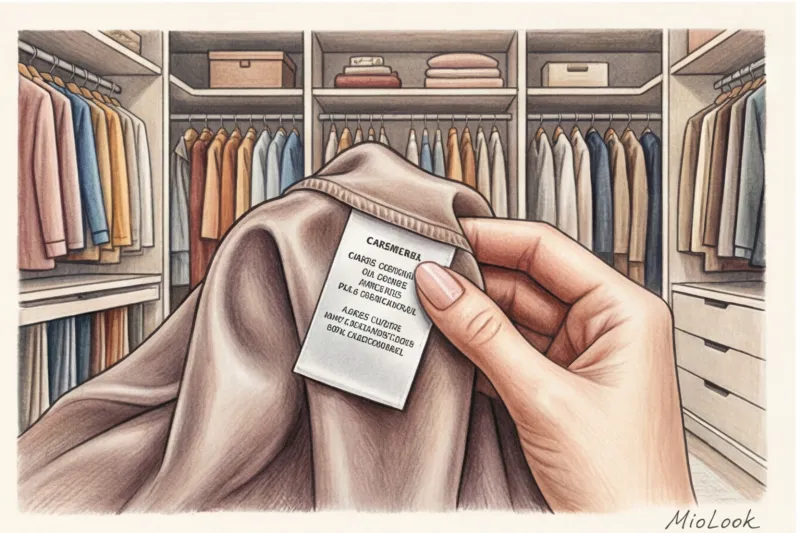
- Logic of departure: Always read the care label. If a basic turtleneck from a mass-market store or a cotton shirt requires "Dry Clean Only," it's a bad investment. The manufacturer understands that the fabric won't withstand even a delicate machine wash and disclaims responsibility.
Bring new things in MioLook to track how often you actually wear them. You'll quickly notice a pattern: we wear the clothes that are composed of the right, balanced blends most often. They don't require complicated ironing, don't lose their shape by the middle of the workday, and make us feel confident. Ultimately, the best fabric blend is the one that works for you, not the one that makes you work for it.