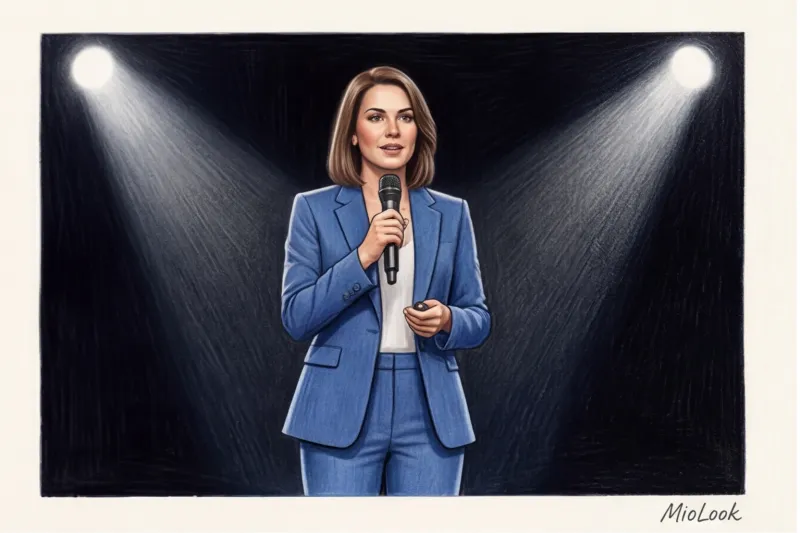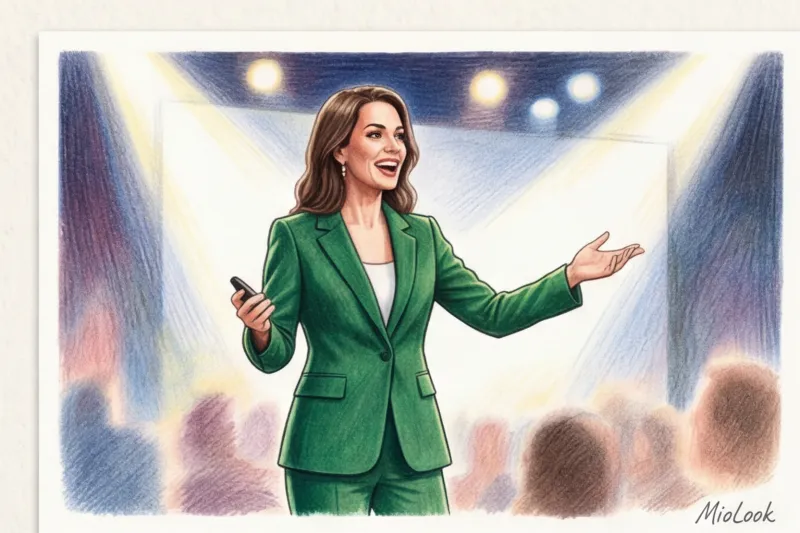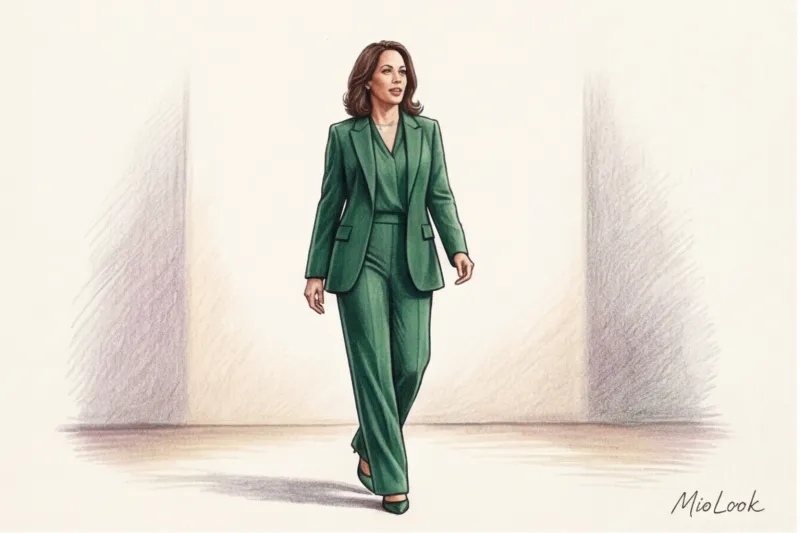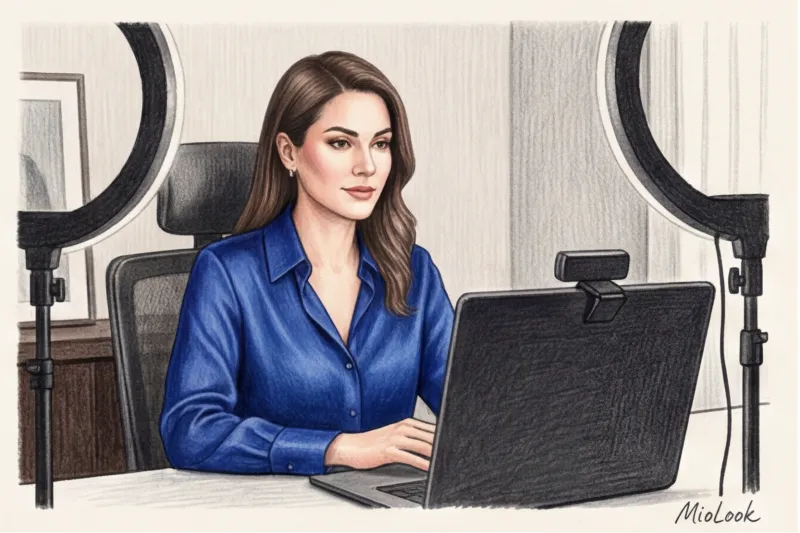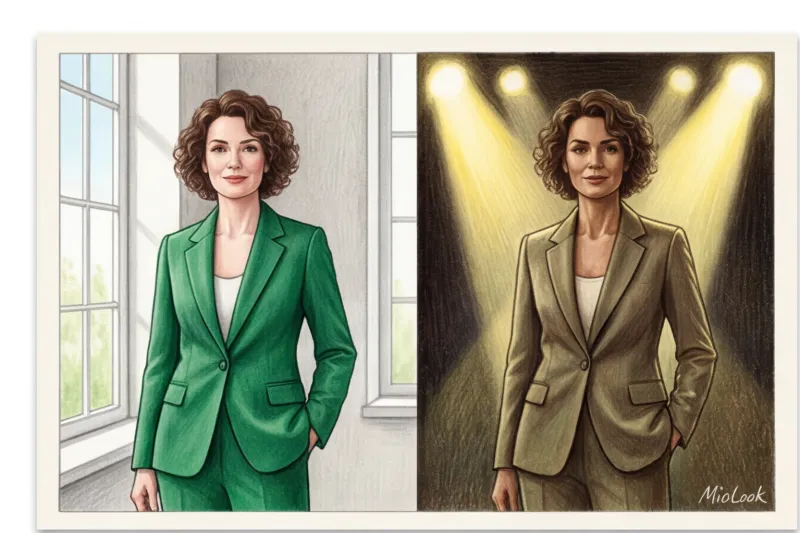
Imagine this: you're buying a luxurious magenta suit. In the boutique's fitting room, in the soft daylight, you look like a confident Forbes-listed CEO. But then you take the stage at a professional conference, the online broadcast begins, and on the YouTube screen, you transform into a glowing neon spot, making viewers' eyes water. Why is this happening?
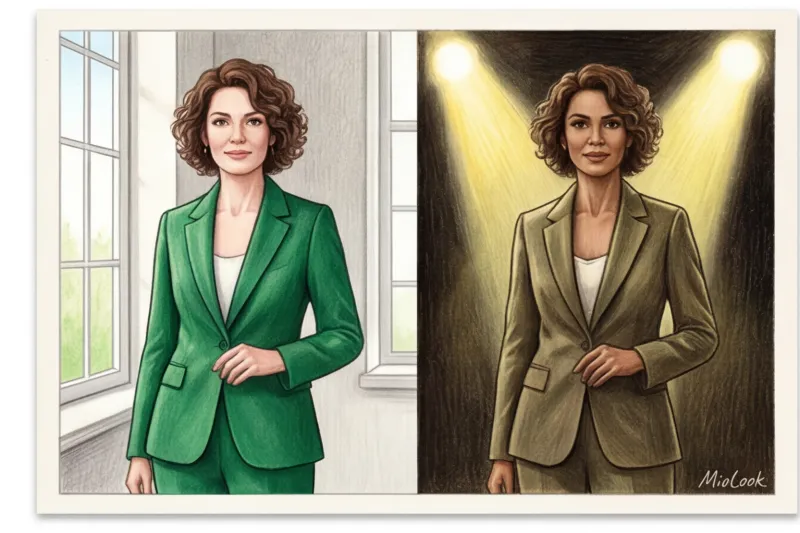
As a stylist working with speakers and top managers, I constantly encounter the same mistake. When choosing color of clothes for stage performance Most people rely solely on the psychology of color or their "color type." But the stage doesn't forgive this approach. Stage lighting and camera lenses are subject to the strict laws of physics. If your outfit doesn't absorb and reflect the spotlights correctly, even the most expensive cut will be meaningless.
In this article, we'll explore the anatomy of color through the lens of stage lighting. I've already discussed building a holistic, high-status image in more detail in our The Complete Guide to Dressing for Public Speaking , and today we'll focus on the magic (and treachery) of shades under the spotlight.
The Spotlight Illusion: Why Your Favorite Color Changes on Stage
The light in your bedroom, the light outside, and the light on stage are three completely different physical environments. How a fabric performs under spotlights depends on two technical parameters: color temperature (in Kelvin) and color rendering index (CRI).
I had a particularly revealing experience. I was styling a client for a TEDx talk. We chose a stunning dress made of thick silk in a cool emerald shade. During the dress rehearsal, it turned out the organizers were using old halogen lamps with a warm temperature of around 3200K. Under their yellow rays, the noble emerald instantly turned a dirty, swampy brown. We had to urgently change the dress the day before the event.
According to the 2023 report from the International Commission on Illumination (CIE), cheap LED panels with a color rendering index (CRI) below 85 critically distort the red and green spectrums. Speakers' faces become sallow, and their clothes appear washed out.
What does this mean for you? If you don't know what equipment is on set in advance (and in 90% of cases, you don't), you need "bulletproof" colors that are minimally distorted when lighting changes from cool to warm.
Your perfect look starts here
Join thousands of users who look flawless every day with MioLook. Our intelligent AI stylist will select the perfect palette for your next performance.
Get access — €0.99 onceThe main rule: how to choose the color of clothes for performing on stage
Behind the scenes of TV stylists, there is a golden rule: "Never blend into the background, but never shout louder than it." To ensure your image appeals to both the audience and the camera, stick to the concept of mid-tones.
Cameras love midtones—shades that are neither too light nor too dark. They allow the optics to focus on the details of your clothing and face without straining the exposure sensors.

- Contrast analysis: Ask the organizers for a photo of the stage or brand wall. If the background is dark (black, deep blue), choose light midtones (dusty rose, camel, pistachio). If the background is light or colorful, go for deep, saturated colors.
- Decrease saturation: A camera and bright light always enhance the vibrancy of a color. My personal life hack: take your favorite color and mentally tone it down by 1-2 shades. Love red? Try a deep burgundy or terracotta. Love blue? Choose a muted sapphire instead of a loud electric blue.
Taboo colors: what you absolutely shouldn't wear under the spotlights
Now for the most important part. There are shades and patterns that are a real nightmare for camera operators and lighting designers. Wear them, and you're guaranteed to ruin the footage of your performance.

The Myth of Elegant Black
This is the most counterintuitive discovery for many of my clients. Most speakers choose all-black to appear slimmer, more prestigious, and to avoid distracting from the presentation. But on stage, it works just the opposite.
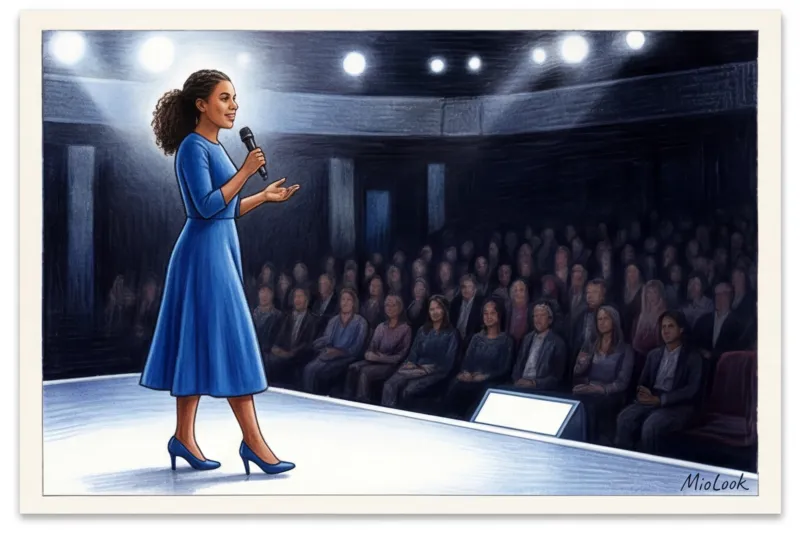
Modern cameras have a limited dynamic range. Black absorbs all directional light. As a result, the camera simply can't see the cut of your jacket, the lapels, or the texture of the fabric. In the video, you become a flat, dark spot—we call this the "floating head" effect, especially if the backdrop is also dark. Black doesn't make you look slimmer on stage; it makes you look shapeless.
The danger of pure white
A crisp white shirt or suit acts as a reflector under harsh lighting. The camera overexposes (clipping) the white, creating a luminous hole in the screen. This makes the speaker's face appear dark and out of focus, as the camera's automatic shutter speed darkens the frame to compensate for the bright white spot.
Neon and pinstripes
Neon shades (fuchsia, lime green, lemon) tend to "bleed" in video—the color literally spills over the contours of your figure, creating digital noise. Fine stripes, houndstooth, or fine checkered patterns create a moiré effect—an optical illusion in which patterns on the screen begin to "dance" and ripple. According to SMPTE broadcast standards, such patterns are strictly prohibited for broadcast.
How to replace the classic black and white dress code
If corporate rules or personal taste require strictness, use smart alternatives:

- Instead of pure white: Cream, ivory, pale blue, pearl gray. They look fresh but don't blind the camera.
- Instead of black: Deep navy, charcoal, dark chocolate, and deep plum. They convey the same class but retain the architectural cut.
Top 5 Most Flattering Colors for Camera and Scenes
Over 12 years of working with speakers, I've developed a palette of shades that look expensive in any light. If you're unsure which color is right for you, I recommend checking out our A guide to the 12 color types of appearance , to adapt this top five to your needs.
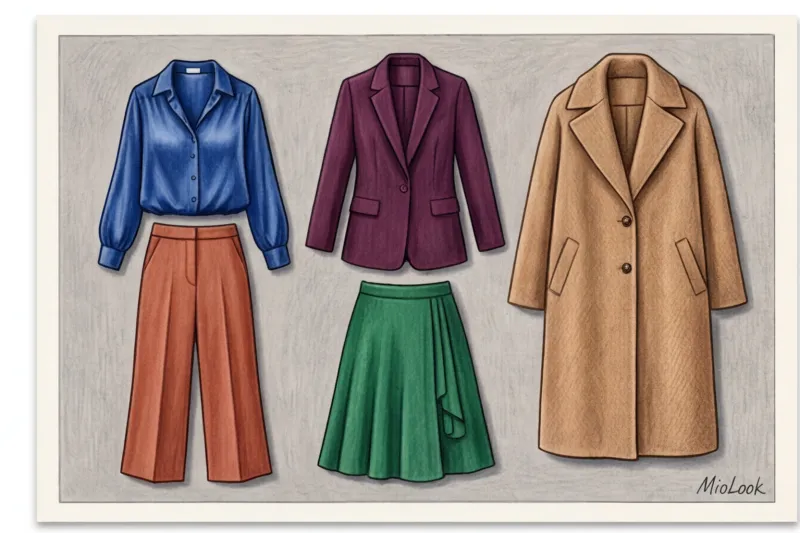
- Sapphire Blue. An absolute winner. It inspires confidence, contrasts beautifully with any skin tone, and perfectly captures stage light, highlighting the quality of the fabric. Formula: sapphire suit + cream blouse = flawless hybrid look.
- Emerald and pine green. A refined alternative to blue. Unlike lime green, deep green doesn't create a harsh, aristocratic effect on dense fabrics.
- Deep plum/eggplant. The perfect status substitute for black and red. It's dark enough to convey authority, but contains enough red pigment to avoid looking dull.
- Terracotta and complex mustard. If you want to convey energy, warmth, and creativity, forget pure orange or yellow. Complex, slightly dusty earth tones look incredibly cinematic in a frame.
- Dusty rose and complex coral. Indispensable if you know you'll be on stage under cool, bluish LED lighting. These shades act as a built-in filter, restoring a healthy glow to your complexion.
By the way, to avoid buying new things just for one performance, I always advise clients to take inventory. Upload your items to MioLook wardrobe — the app will analyze your base and suggest which of these five ideal colors you already have and what to combine them with.
Fabric Texture: The Hidden Factor That Changes Color
Imagine two pieces of fabric: one made of shiny satin, the other of dense wool crepe. Both are dyed the same shade of burgundy. On stage, they will appear as two completely different colors. Why? Because of the physics of light reflection.
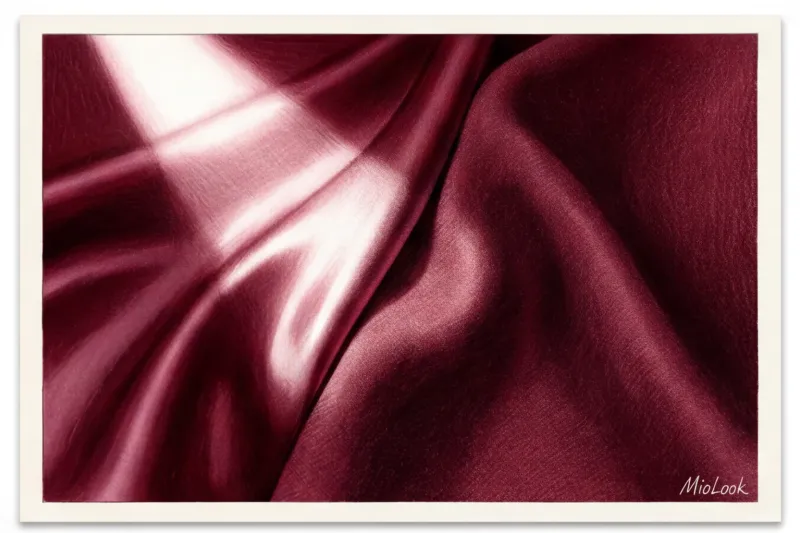
Glossy textures (silk, satin, organza, sequins) create a mirror-like (directional) reflection. Under spotlights, they create harsh white glare. This glare not only cheapens the look but also visually adds 5-7 kilograms to your figure in the video, as it disrupts the natural proportions of the body.
Matte fabrics (suiting wool, diving crepe, heavy cotton over 180 g/m², viscose with elastane) produce diffuse (scattered) reflections. They absorb light evenly, creating a deep, velvety, and saturated color. Matte fabrics allow the camera to capture the expensive cut of your clothing.
Ready to get started?
Try the MioLook free plan—no commitments required. Create a performance capsule that will enhance your personal brand.
Get access — €0.99 onceStylist Checklist: The Flashlight Test Before Going on Stage
I never let a client go to an important event without this final step. It's my signature life hack, and it's saved more than one reputation. While this test won't replace a $50,000 professional Arri light gun, it will catch 90% of wardrobe malfunctions.
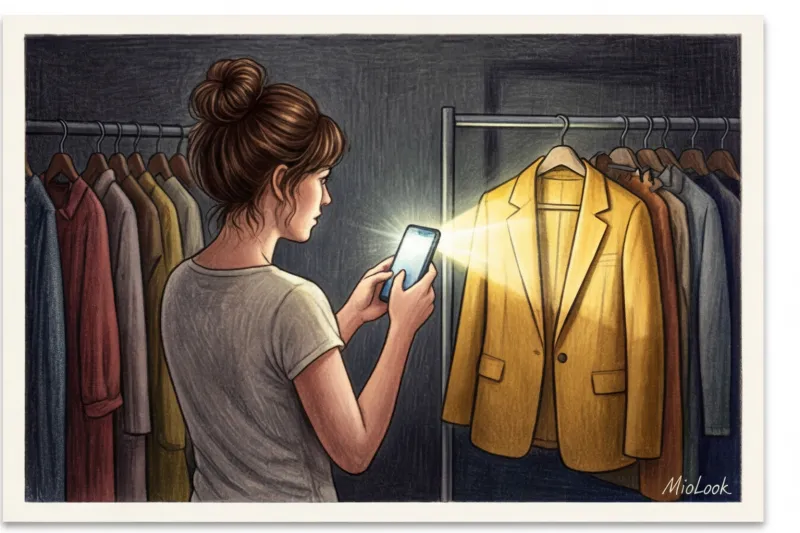
How to perform the "flashlight test" at home:
- Put on your chosen outfit (including the underwear you plan to wear for the performance).
- Go into the darkest room in the house (a bathroom or windowless walk-in closet works well).
- Ask someone (or use a tripod) to turn on the flashlight on their smartphone to maximum brightness and point it at you from a distance of 2-3 meters at chest level.
- Transparency check: Harsh, directional light often makes thick-looking fabrics appear translucent. Make sure the outline of your underwear or the silhouette of your legs under your skirt isn't visible.
- Checking color and glare: Take a short video with your phone and turn on the flash. Spin around. Is the pattern fraying? Does the fabric look cheap and shiny? Has your navy blue suit turned a dull black?
Take a photo of the successful result and save it to your digital wardrobe in MioLook Marked "Stage-Tested," this ensures you'll always have a ready-to-use, safe capsule on hand for any public performance.
Choosing a color for the stage isn't about the latest fashion trends. It's about respecting your audience and carefully managing their attention. Dress for the camera lens and the physics of light, save complex patterns and all-black for in-person meetings, and your expert image will be perfectly captured in any video.