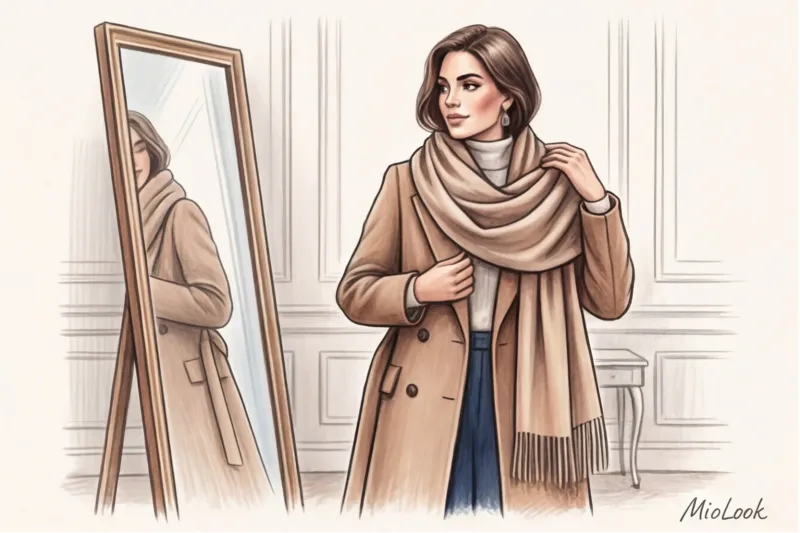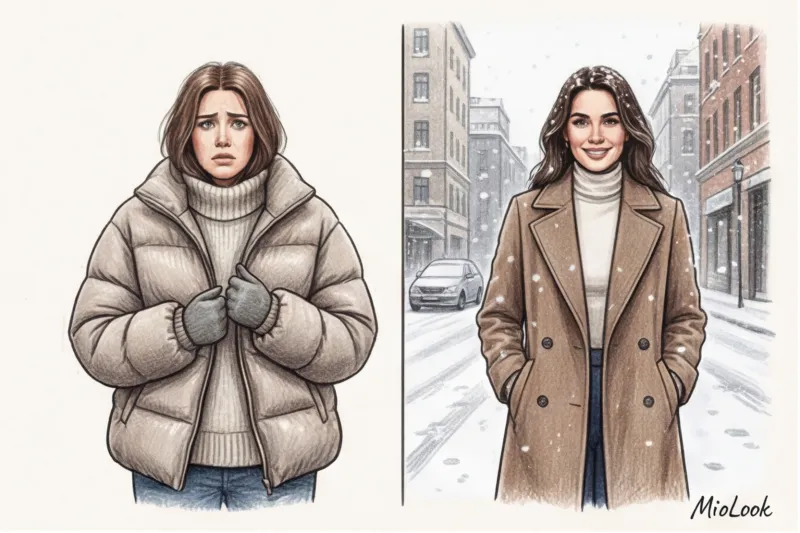
How many times have you stood in front of the hallway mirror, choosing between "it's beautiful, but my feet will freeze to death in 10 minutes" and "it's warm, but I look like a polar explorer"? As a stylist with twelve years of experience in the luxury segment, I constantly hear this cry from my clients. For some reason, we're so used to thinking that elegance ends when the thermometer dips below freezing.
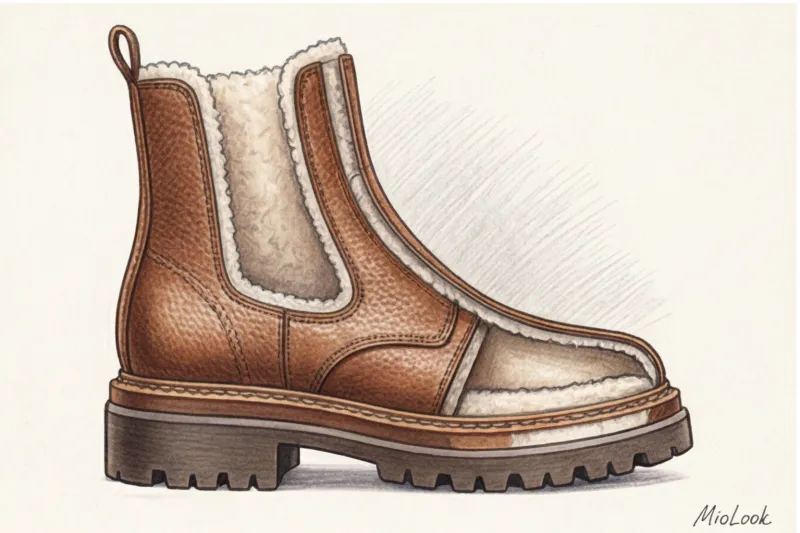
Today, we'll bust that myth. We won't be talking about compromises. We'll take an architectural approach: we'll examine thermoregulation through the lens of Italian shoe design and build a wardrobe that basic winter footwear for women will work for you, not against you. We discussed architecture and purchase planning in more detail in our the complete guide to creating the perfect capsule , and now we'll focus on surviving (and feeling chic) during the cold season.
The Anatomy of Heat: Why You're Cold Even in Expensive Boots
The most common and most dangerous winter misconception is: "To stay warm, you need the thickest fur and shoes that fit snugly." It's because of this rule that women spend hundreds of dollars on boots that they can't feel their toes in.
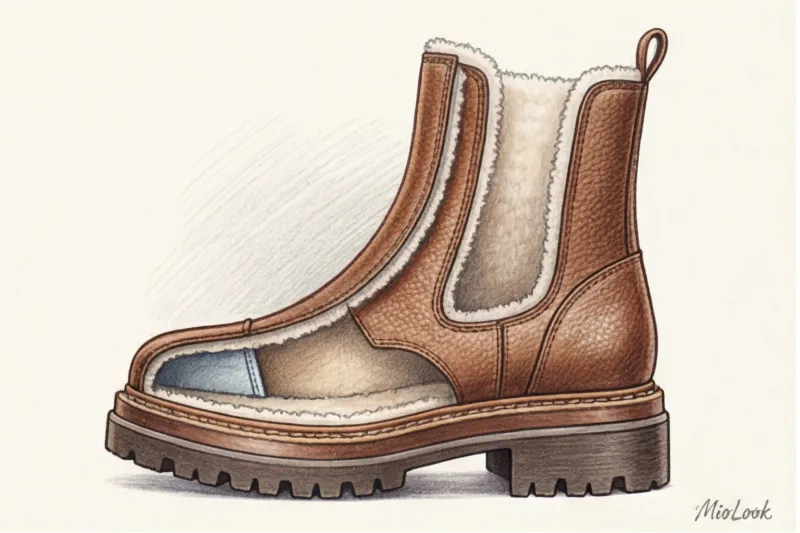
Let's turn to physics and podiatrists' recommendations. According to the British College of Podiatry, tight winter shoes constrict the capillaries of the foot. As soon as blood microcirculation is disrupted, your feet freeze instantly, even if you're wearing Arctic wolf fur boots. The ideal formula used by artisans in Italian factories is: smooth leather, medium fur (or sheepskin), and strictly Plus half a size to your summer standard.
The second critical factor is conductive heat loss. Up to 70% of heat loss occurs through the sole when it comes into contact with frozen asphalt, not through the upper. You can wrap your feet in cashmere, but if the sole is less than 1.5–2 centimeters thick, the cold will win.
- Find the right protector: Smooth soles turn into skates in the cold. Technologies like Vibram (a special rubber compound) or high-quality thermoplastic elastomer (TPE) not only prevent slipping but also resist hardening in sub-zero temperatures.
- Mounting method: In the premium segment, the welt method is often used for winter. Goodyear Welted Unlike conventional bonding, it creates an additional layer between the insole and the sole, which acts as an excellent thermal insulator.
Basic winter footwear for women: the formula for the perfect capsule
A story from my experience: one of my clients bought four pairs of boots from mass-market stores last winter. Some were soaked, others had cracked leather at the fold, others were slippery, and others simply lost their appearance due to chemicals. In total, she spent more than enough money to buy a luxury pair from a niche Italian brand that would have lasted her at least five years.
I always teach my clients to count Cost-Per-Wear (CPW) — cost per wear. A pair of $500 boots that you'll wear 100 times over the winter (CPW = $5) is more economical and eco-friendly than a trendy $100 pair that will fall apart after 10 wears (CPW = $10).
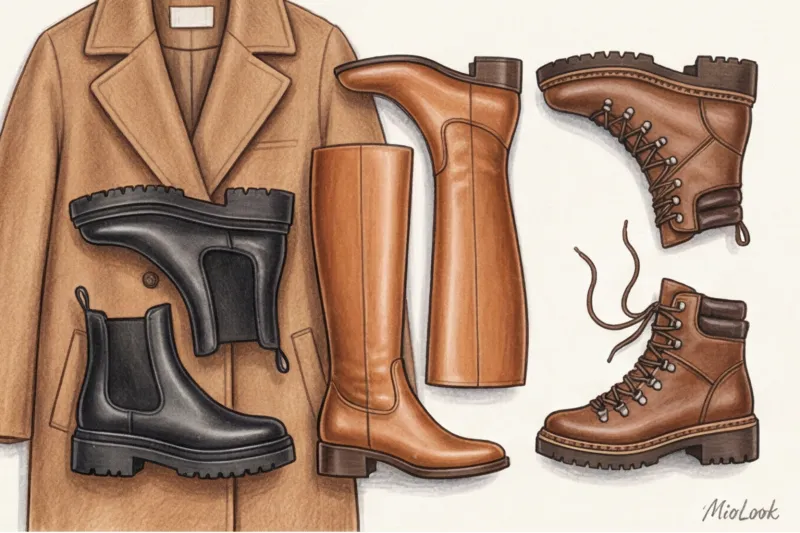
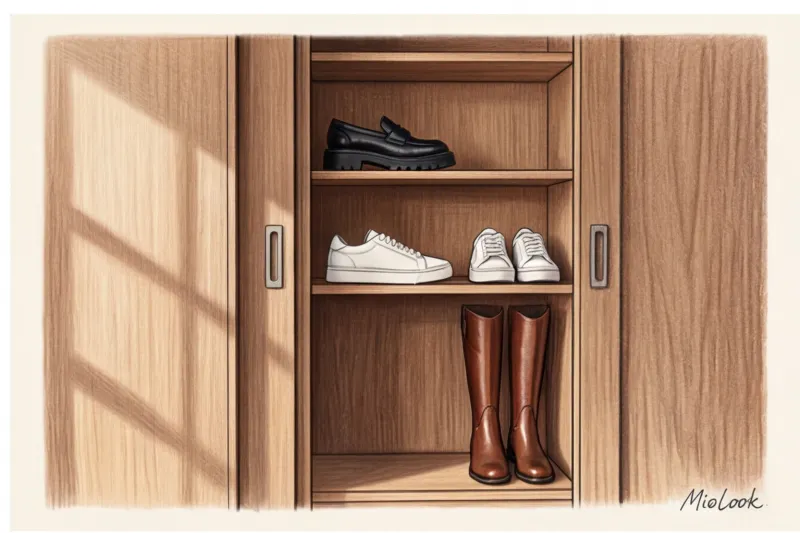
You don't need 10 pairs to build a functional wardrobe. Three pairs are enough if they adequately cover your lifestyle (car, office, long walks with the kids). Here are the three pillars of a winter wardrobe.
Chunky-soled urban Chelsea boots: the capsule's foundation
Chelsea boots have long since transcended the microtrend category and become the gold standard. For winter, we choose chunky soles over classic flats. This solves two problems at once: it elevates the foot above icy puddles of salt and balances out bulky winter down jackets.
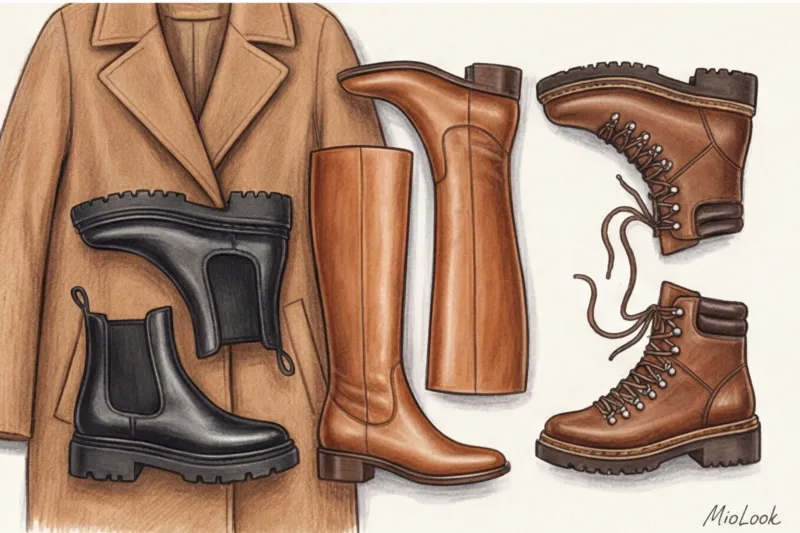
The secret to a proper fit: the ideal shaft height is 2-3 fingers above the ankle. This allows them to be worn with cropped wool trousers and straight-leg jeans without leaving a strip of bare skin between the shoe and the leg, breaking up the silhouette.
Knee-high boots: elegance for dresses and skirts
Save tight-fitting sock boots for dry autumn weather or taxi rides. A true winter investment is a straight, wide-shaft tube boot. According to the analytical agency WGSN (2024), a loose fit remains the dominant trend in premium footwear.
Why does this work? Firstly, the wide shaft creates the necessary air gap. Secondly, the most expensive winter styling trick is when the hem of your midi skirt overlaps the shaft of your boots. You create a continuous vertical line of color, elongate your height, and are guaranteed to stay warm.
To be fair, there is a limitation here. Tube boots don't work for women with very thin calves—they make your leg look like a pencil in a glass. In this case, it's better to look for classic riding boots with an asymmetrical hem or adjustable fit.
Lace-up boots (Hiker / Combat boots): smart-casual basics
The perfect balance between rugged military aesthetics and urban practicality. The main advantage of lacing in winter is the ability to perfectly secure your foot, regardless of instep, especially if you're wearing a thin silk sock one day and a thick cashmere one the next.
They integrate flawlessly into relaxed weekend looks, but when styled correctly (with a cashmere sweater and a formal coat), they are also appropriate in a creative office.
Your perfect look starts here
Join thousands of users who look flawless every day. MioLook's AI stylist will help you calculate your Cost-Per-Wear and put together a capsule wardrobe.
Get access — €0.99 onceMaterials and Investments: What's Really Worth Paying For
Let's talk about how manufacturers deceive us. You see the label "genuine leather," but after a month, the boots are covered in deep creases. Why? Because they were split leather (the bottom layer of the hide coated with a polyurethane film), not full-grain leather.
Investment shoes are always made from full-grain leather. It breathes, adapts to the shape of your foot, and, with proper care, develops a beautiful patina over time rather than cracking.
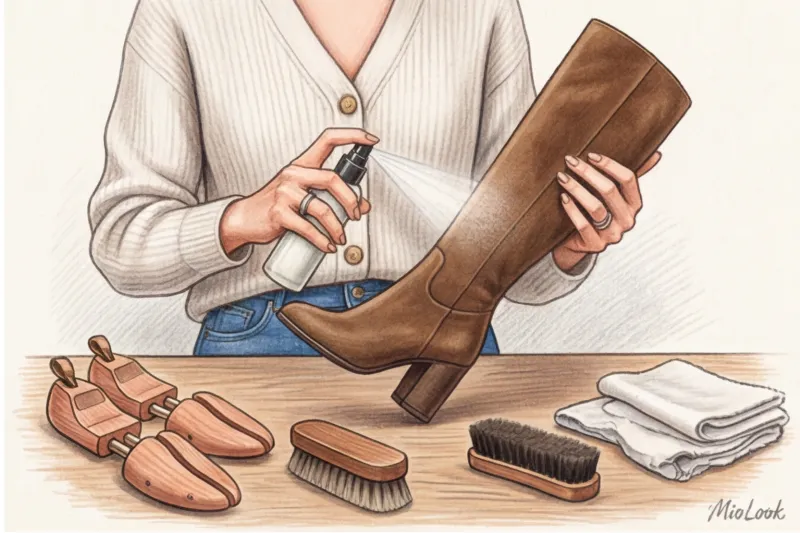
Now let me bust the biggest myth about winter footwear: "Suede is only for dry weather and cars." My personal test drive: I live in a city where the sidewalks are generously sprayed with aggressive chemicals in winter. My basic camel-colored suede boots are already four years old, and they look like new. The secret isn't a miracle, but a new generation of nano-impregnations. If you treat high-quality suede with a fluorocarbon resin-based spray in three layers before your first outing, it will repel dirty water better than smooth leather.
- Lining: Shearling is the gold standard for cold weather. Wool fur (towel woven into the fabric) wears out faster at the heel. Gore-Tex membrane is ideal for the slushy European winter, but it will be cold in static conditions at -15°C.
- The secret of mountaineers: If you're still cold, consider buying foil-lined insoles. The foil reflects heat back from your feet, preventing it from escaping into the sole. This works even for mid-season shoes.
How to Pair Winter Shoes with an Office Dress Code Without Losing Your Style
The problem of "shifting clothes" is familiar to every woman working in a corporate environment. How do you get to the office through snowdrifts without ruining your look? Proper proportions and color are the keys.
The formula for the ideal winter proportions for business casual: wide wool trousers + ankle boots or shoes with an elongated (almond-shaped or slightly square) toe Trousers should completely cover the shaft and end 1-1.5 cm from the floor (taking into account the height of the sole or stable heel). A round toe paired with wide trousers will make your leg look like a hoof—avoid this.
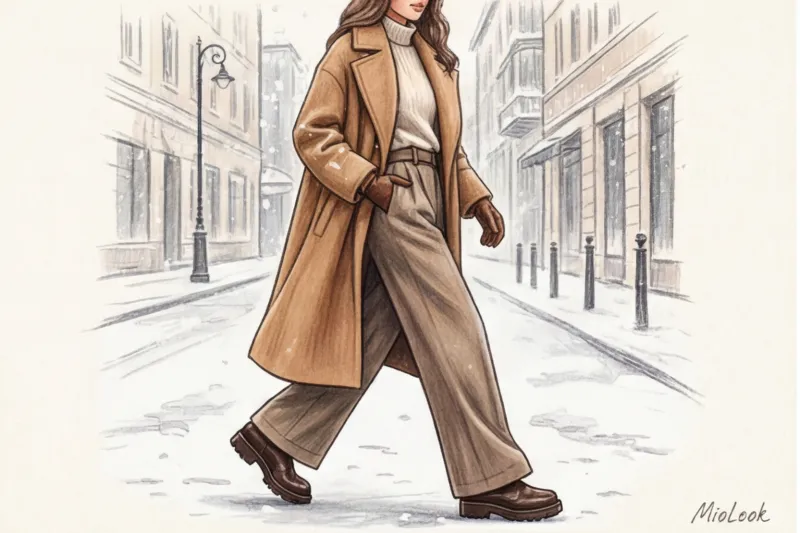
Should you only buy black shoes? Absolutely not. Black shoes often look too heavy and contrasting, especially if your wardrobe is built on pastels or complex autumnal shades. Invest in deep chocolate, burgundy (oxblood), or dark olive. Dark brown boots look twice as expensive as black ones in the same price range and fit perfectly. office style with accent details.
Stylist checklist: rules for trying on winter basics in a store
Buying winter shoes is not something to be rushed. I use this checklist during every shopping experience, and it saves my clients from making fatal mistakes.
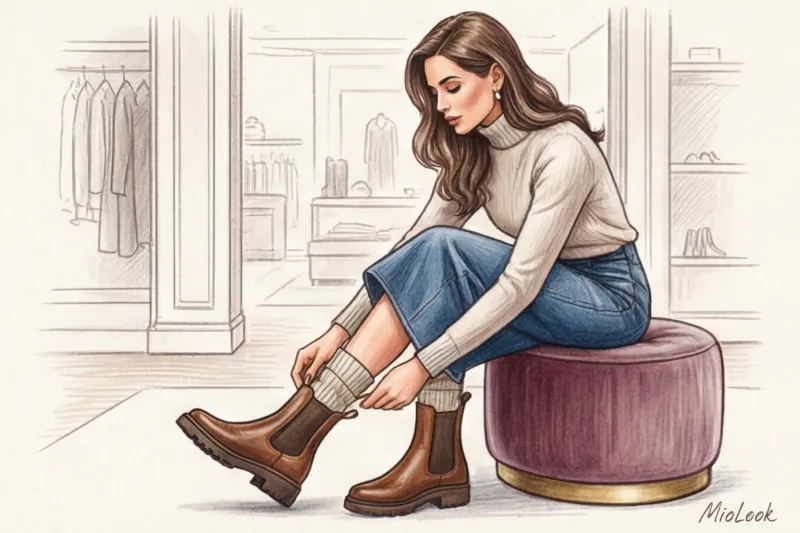
- Fitting time: Only go shopping in the evening. By the end of the day, your feet will swell and flatten slightly under your weight. What was perfect at 10 a.m. will be a shabby shoe by 7 p.m.
- Warm sock test: Never try on winter shoes with a thin nylon sole. Bring the cashmere or thick cotton sock you plan to wear with the pair.
- Rule of thumb: After putting on your shoes, stand up and press down on the toe. There should be a gap exactly the width of your thumb between your longest toe and the edge of the shoe. This is the "air pocket" for warmth.
- Flexibility test: Take the shoe in your hands and try to bend the sole. If it's completely stiff, your foot muscles will overexert themselves as you walk, trying to compensate for the lack of roll. The result: your feet will tire and get cold twice as fast.
Ready to get started?
Try the free plan—no commitments required. Upload your looks to MioLook and see how they pair with your new shoes.
Get access — €0.99 onceCaring for investment shoes: how to keep them looking good for 5 seasons
True luxury isn't just about the price at checkout, but also about how you care for your items. Quality, basic women's winter footwear requires its own "cosmetics bag."
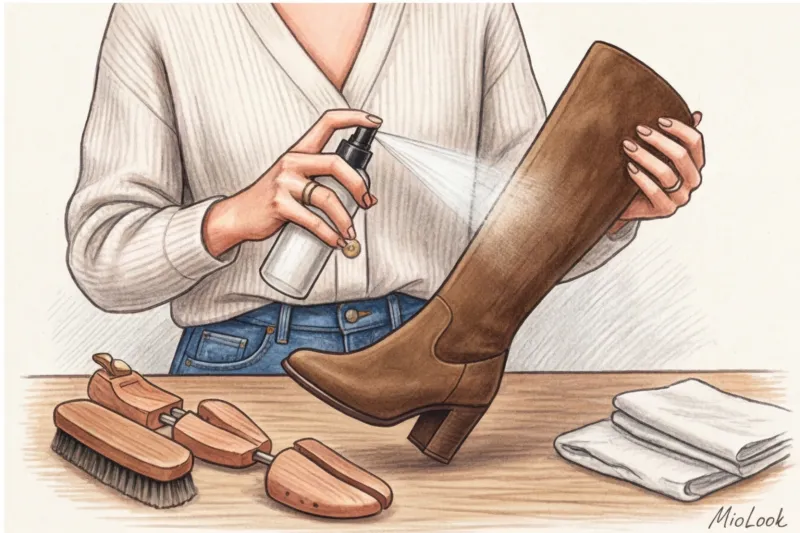
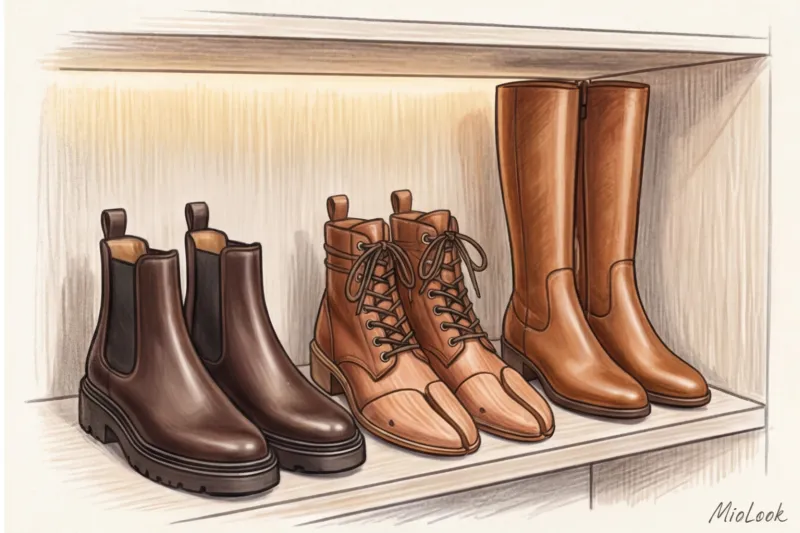
The first thing you should buy along with the boots is unvarnished red cedar shoe trees Why? A foot releases about 20 ml of moisture per day. Fur and leather absorb it. If you leave your shoes in the hallway as they are, the leather will shrink as they dry, and deep cracks will appear at the toes. Cedar draws moisture from within, smooths out creases, and deodorizes shoes.
Algorithm for saving from reagents:
If you've walked through salty slush, you need to act immediately upon returning home. Don't wait until morning. Wipe your shoes with a damp cotton cloth (no hand wipes with their fragrances and alcohol!). If white stains have already appeared, use a special salt remover (desalter). Drying shoes near a radiator is a crime against the leather. Only room temperature and cedar shoe trees are recommended.
And the last rule that British gentlemen follow and which we should adopt: shoes need a day off The skin needs to rest and dry for at least 24 hours. That's why our capsule contains at least 2-3 pairs. By alternating them, you increase the lifespan of each not by two, but by three or four times.
Invest in quality, treat it with respect, and your winter capsule will stop being an annual expense and become a reliable foundation for your impeccable style.