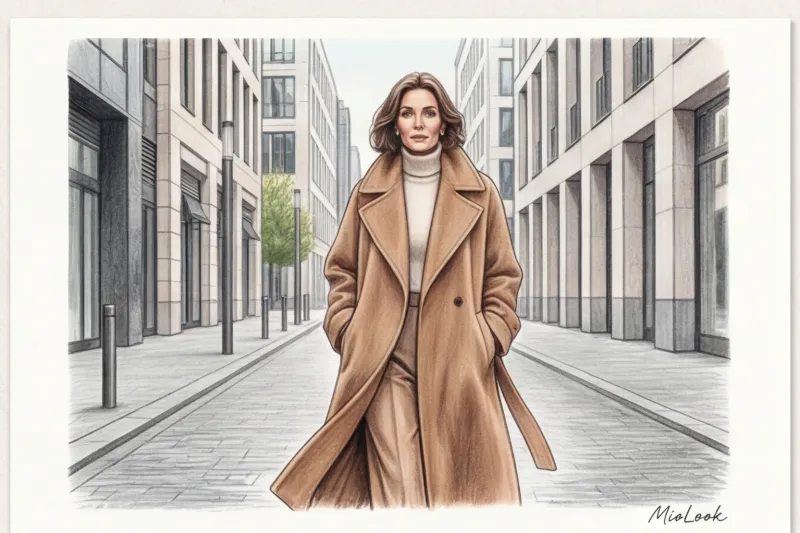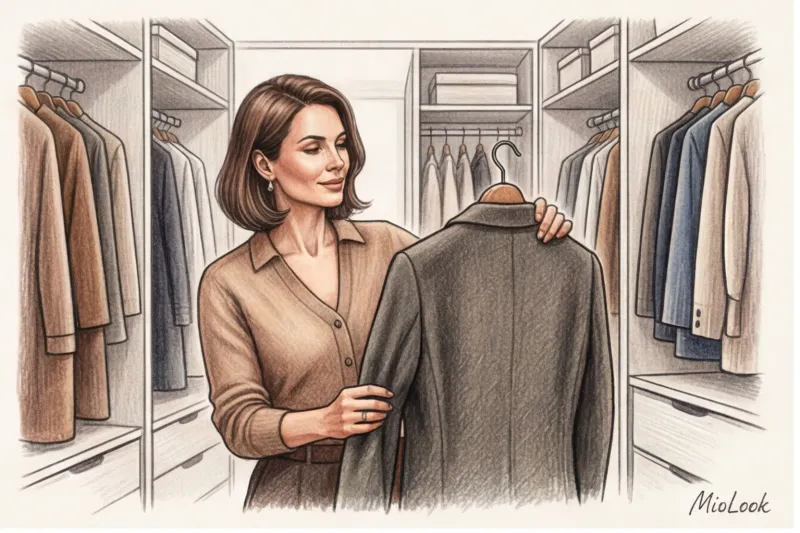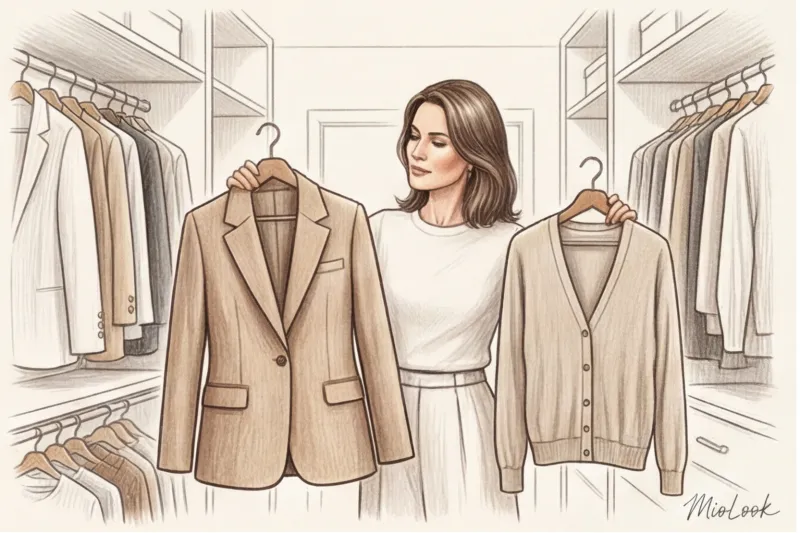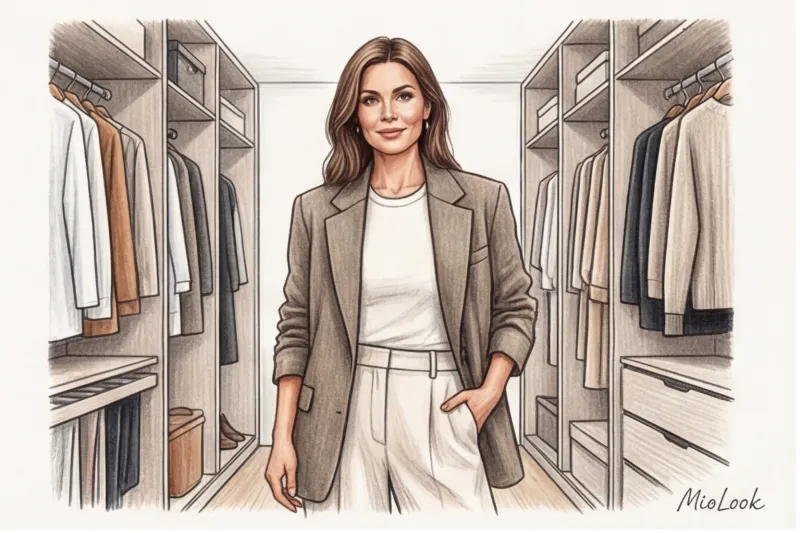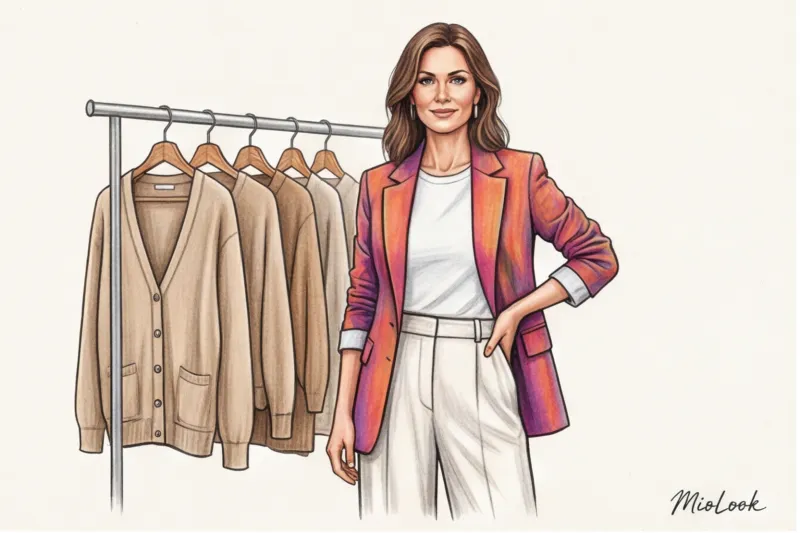
One of my clients, 42-year-old Anna, once made a classic style mistake. In an attempt to look "more classy and respectable," she packed all her bright, architectural clothes into charity bags and bought "safe" basics: a dozen thin beige knit turtlenecks, soft cardigans, and shapeless elastic-waist trousers. The result? A month later, I had a tired-looking woman sitting in front of me who had visually added at least ten years to her age. And this is a typical trap.
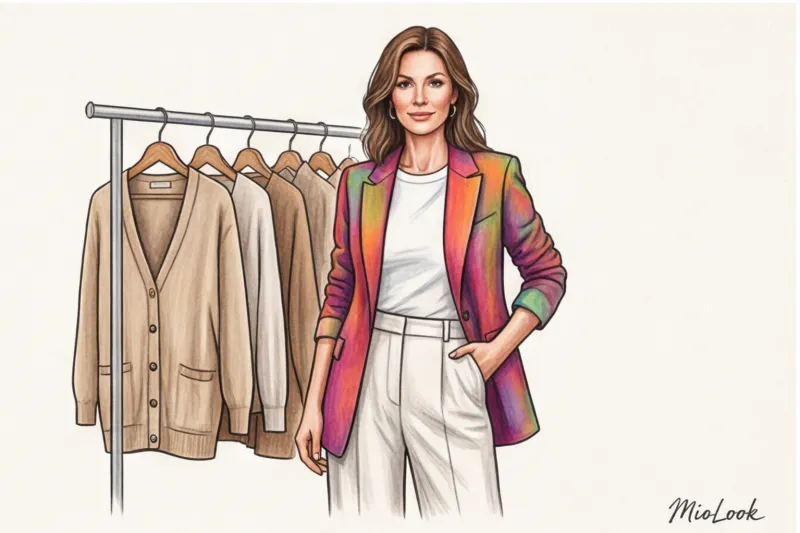
I see this all the time: once they reach a certain age, women start to hide their bodies in panic behind flimsy fabrics, forgetting the main rule. Ideal Basic wardrobe for a 40-year-old woman It's not based on a midi length or a ditching of cleavage. It obeys the strict laws of "textile physics," where the density and tension of the threads work better than any shapewear.
The "Age-Proof Wardrobe" Myth: Why Old Style Rules No Longer Work
The fashion industry often presents adult women with an ultimatum: either buy infantile micro-trends for teenagers, or revert to mothballed classics. This is where harmful stereotypes come from, such as the idea that after 40, you should "hide your arms," avoid bright colors, and wear only low-cut styles.
But the paradigm has shifted. Today, we're moving from the question "What do I need to conceal?" to the question "What do I want to highlight?" According to a large-scale study by the British organization WRAP (2023), the average woman regularly wears only 20-30% of her closet's contents. The rest is dead weight, bought under the influence of those very same outdated rules of "dressing for one's age."
As we age, not only our bodies change, but also our lifestyle, social capital, and comfort standards. This inevitably leads to cognitive overload in the mornings: your closet is overflowing with clothes, but you have nothing to wear because 80% of them simply don't fit your current reality. You no longer need 150 mediocre items. You need 30 pieces of impeccable quality.
Textile Physics: How Fabrics Shape Silhouette (and Status)
Over 12 years of wardrobe analysis, I've developed a firm rule: the fit of a garment is 80% dependent on the weight of the material. This is the very essence of textile physics. A dense, heavy fabric acts like a lightweight outer corset. It sculpts the figure, ignoring minor imperfections in the body's contours, and creates that architectural, luxurious silhouette.
Density and Drapery: Investing in the Right Textures
An expensive item always has a noticeable weight. If you pick up a premium silk blouse and a mass-market equivalent, the difference will be in the density (measured in momme for silk or grams per square meter for cotton).
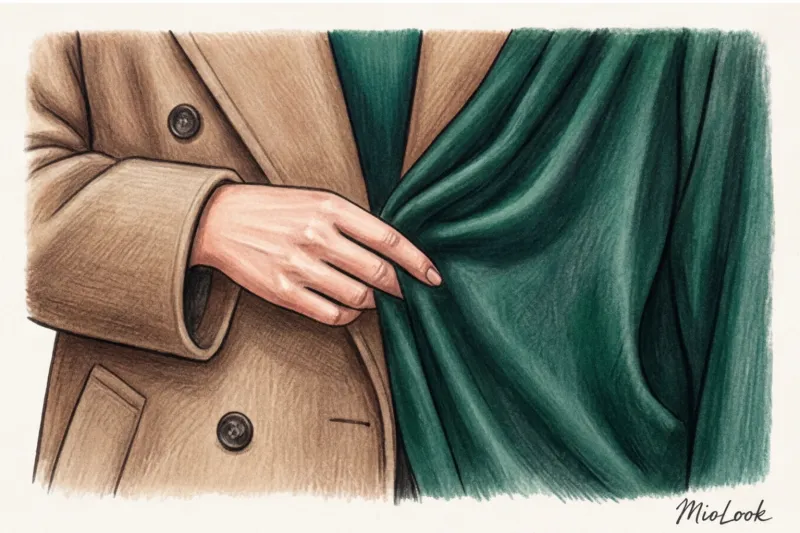
- Heavy Silk (from 19 momme): flows down the body like water, without clinging to underwear.
- Mercerized cotton: A smooth, slightly shiny material that holds the shape of a shirt well and doesn't turn into a rag by the end of the work day.
- Merino wool: It has natural elasticity. Merino fibers act as microsprings, returning the sweater to its original shape even after stretching.
"Always do the wrinkle test at the store: squeeze the edge of the fabric tightly in your fist for 10 seconds. If it's covered in hard creases that don't straighten out with a gentle shake, leave it on the hanger. It will ruin your whole day."
Enemies of Elegance: Fabrics to Avoid
The most common item found in trash bags during my wardrobe audits is thin, flimsy knitwear (stockinette). It's the worst enemy of women over 40. Because it's so thin, it clings unevenly to the body, highlighting folds that aren't actually there.
The second enemy is cheap polyester satin. Its unnatural, glassy sheen acts as a magnifying glass for any imperfections in fit. If you want a shimmery texture, choose cupro or dense satin-weave viscose—they impart a refined, muted glow.
Tired of things that ruin your figure?
Digitize your wardrobe with MioLook. Our AI assistant will help you create perfect looks using only the items that truly flatter you.
Get access — €0.99 onceA Basic Wardrobe for a 40-Year-Old Woman: 12 Structural Elements
A modern, elegant capsule collection is all about math. Items should fit together seamlessly. The key to a proper fit is to always leave some air between the body and the fabric. A semi-fitted silhouette looks much slimmer than a tight, tight fit.
Here's a tried and tested list of 12 items that can be combined into 50+ looks for any occasion.
Tops: From architectural shirts to cashmere
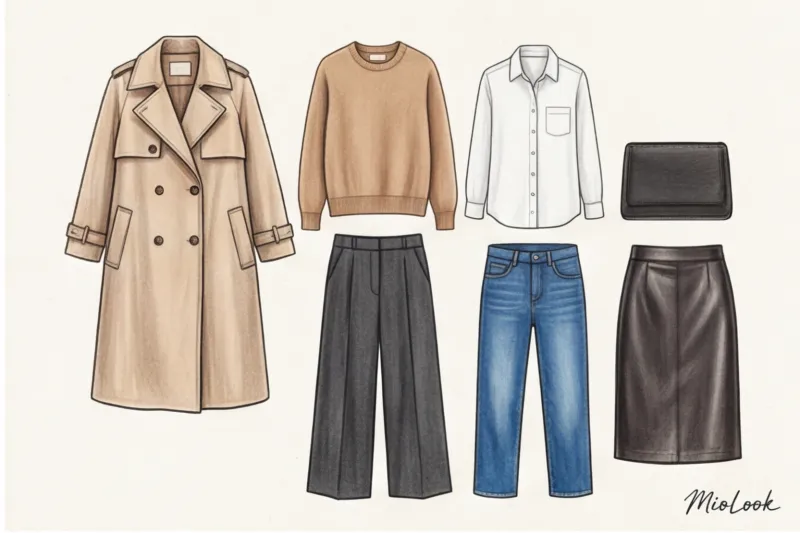
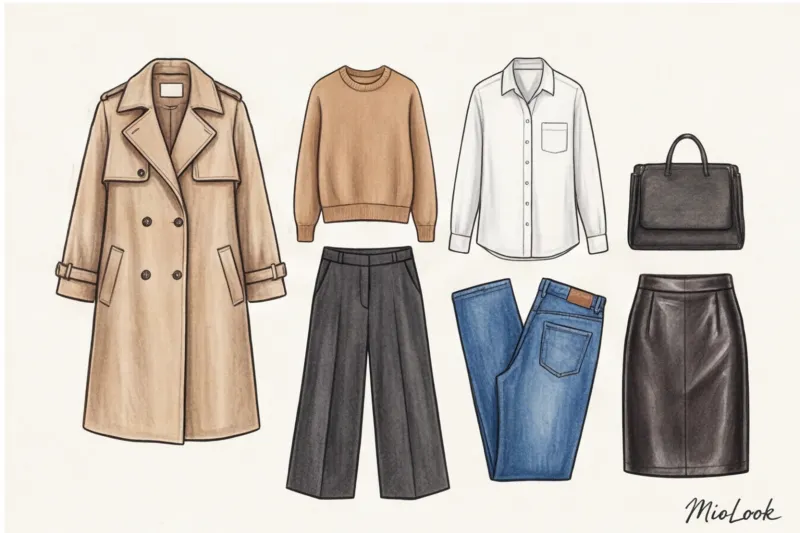
- Men's shirt made of thick oxford cotton. Forget about fitted office blouses with darts. A straight, slightly loose shirt (in the €60 to €120 price range from brands like COS or Massimo Dutti) adds a dynamic touch.
- V-neck top in heavy silk. The V-neckline visually lengthens the neck and reveals the collarbones, the most graceful part of the body that does not change with age.
- Loose cashmere sweater. On a cost-per-wear basis, a €200 cashmere that you can wear for 5 years will cost you less than a €40 acrylic equivalent that will pill in a month.
Bottoms: The Perfect Fit for Trousers and Skirts
- Palazzo trousers made of suit wool. The high waist, pleats and wide legs with creases stretch the legs to infinity.
- Straight-cut jeans made of thick denim. Look for 100% cotton or a maximum of 1-2% elastane. Skinny jeans distort your proportions, while stiff denim acts like a corset for your hips.
- A-line skirt or bias-cut slip skirt. The bias cut has a magical property: the fabric smoothly hugs the hips without adding bulk.
The third layer: an investment that pays off over decades
The third layer is the painting frame. If the frame is cheap, even a masterpiece will lose its appearance.
- Structured jacket with a crisp shoulder line. Shoulder pads are your best friend. They create a geometric shape to your top, which makes your waist appear smaller.
- Trench coat of midi or maxi length. Short, knee-length trench coats visually cut your figure in half. Choose a length that falls below mid-calf.
- Coat-robe made of mixed wool and cashmere. The soft lines of the lapels and belt accentuate the waist without rigid fixation.
From Physical Chaos to Digital Order: Digitizing a Capsule at MioLook
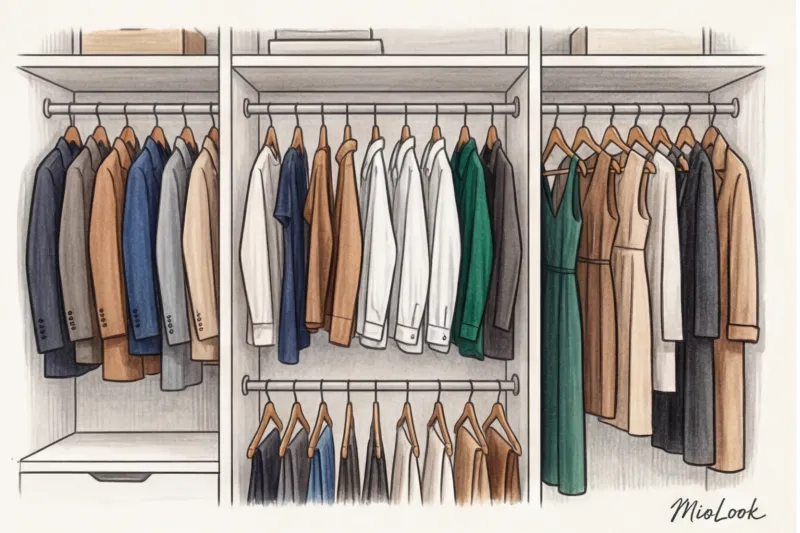
There's an interesting neurobiological fact (Miller's Law): human short-term memory can only hold 7±2 objects in active memory. In the context of wardrobe, this means that if you have more than 40 hangers hanging in your closet, your brain simply "miss[es]" 80% of them. This is why we wear the same five tried-and-true outfits for years, ignoring the rest.
The visual noise in your closet ruins your morning routine. Clothes hanging close together not only cause stress but also cause physical damage: wool suffocates, and silk wrinkles. Fabrics need air.
That's why I recommend digitizing the planning process. Smart wardrobe features in MioLook Solves the problem of cognitive overload. You simply upload your 12 ideal basic items into the app, and artificial intelligence generates ready-made outfit formulas. No longer do you have to stand in front of an open closet and waste precious morning energy on pairing ideas.
Your perfect look starts here
Join thousands of women who look flawless every day and save time in the morning with MioLook.
Try the appDecluttering Algorithm: How to Clean Out Your Closet Without Regret
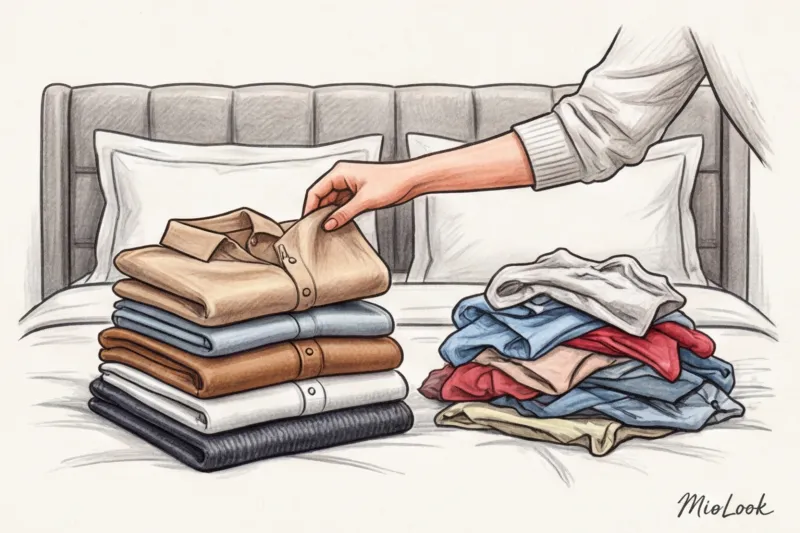
To build a new wardrobe, you must ruthlessly tear down the old one. I use a strict auditing algorithm with my clients that eliminates emotion.
- One year test. If an item hasn't been worn in the last 12 months (all seasons change), it's gone. No exceptions.
- Showcase test. Ask yourself: "If I saw this item in a store today, would I buy it at full price?" If the answer is "no" or "well, I'd get it on sale," get rid of it.
- Assessment of tissue condition. Pilling on acrylic, elongated elbows, washed-out color - these are visual markers of untidiness that automatically cheapen the entire look.
Please note: there is one strict limitation to my practice. This strict decluttering method It doesn't work If you're experiencing drastic hormonal fluctuations or severe stress with a weight change of more than two sizes, we create a time capsule and vacuum-seal essentials for six months to avoid making impulsive decisions you'll later regret.
As for the "I'll lose weight and fit into it" category of clothes, it's a psychological anchor that makes you feel guilty about your body every day. Clothes should suit who you are. Today , and not that ideal version from the last decade.
Color and the Portrait Zone: Visual Anti-Aging Without Cosmetics
One of the most pernicious myths is that "black is slimming and always appropriate." It may make your hips look slimmer, but in the portrait area after 40, deep black acts as a light absorber. From a light physics perspective, black doesn't reflect light onto your face. Instead, it accentuates any shadows—nasolabial folds, signs of fatigue under the eyes, and uneven pigmentation.
In its 2024 report on the psychology of color, the Pantone Color Institute emphasizes that deep, rich hues are associated with maturity and high status. Replace all-black faces with jewel tones: deep sapphire, emerald, wine-colored burgundy, or dark chocolate. They retain contrast but have a much softer light output.
For a light base, avoid stark white (it can make skin appear gray), but instead opt for softer alternatives: ecru, pearl, oatmeal, or ivory. These shades act as a natural highlighter, literally "illuminating" the face from below.
Prints also require surgical precision. A small floral pattern (a "pearl" pattern) on a shapeless dress is guaranteed to add age. If you love prints, choose strict geometric patterns, wide stripes, abstract designs, or elegant color blocking. The sharp lines of a print add dynamism and modernity.
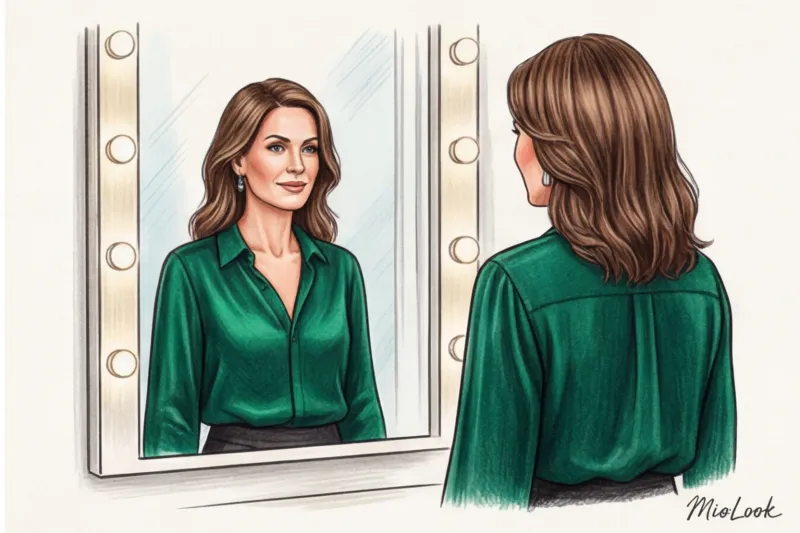
Style after 40 isn't about restrictions, it's about the highest quality standards. Go to your closet right now, take out your most-worn item, and do the "wrinkle test." If the fabric doesn't pass the test, take the first step: get rid of it and make room for clothes that respect you and your body.