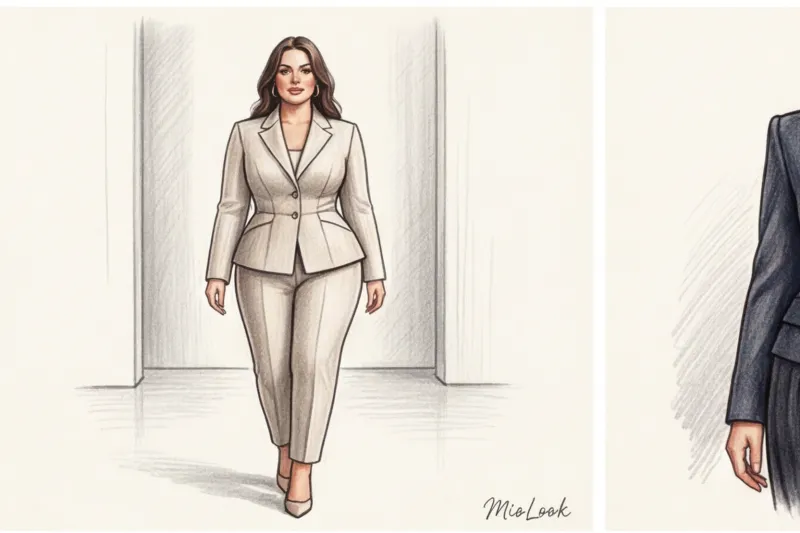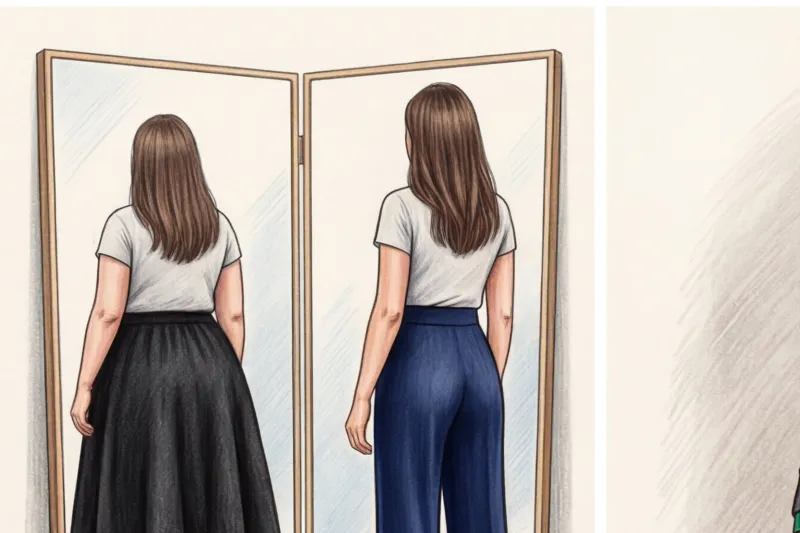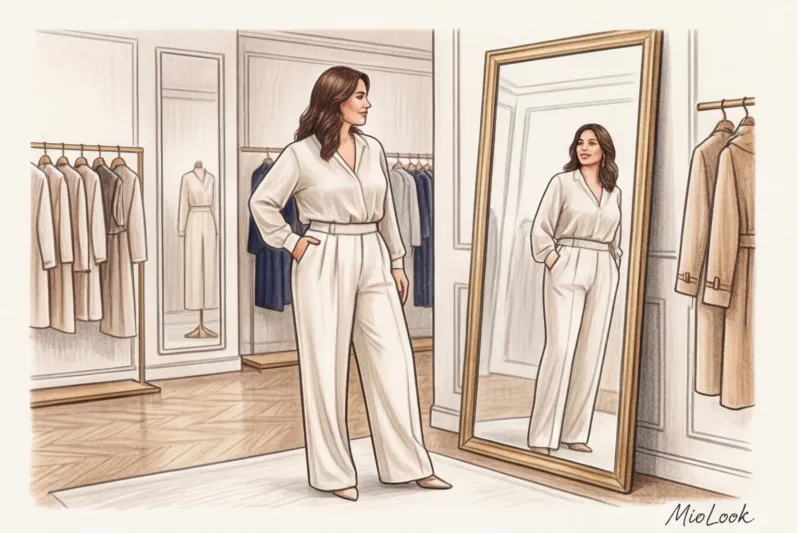
One of my clients, a senior executive at a large IT company, confessed at our first meeting: "Julia, I've been wearing only black straight skirts and sheath dresses for 10 years. I hate my hips." When we changed her into flowing ivory palazzo pants made of the finest wool, she burst into tears in the fitting room. It turned out the problem wasn't her figure, but the shape of the clothes she was trying to squeeze into.
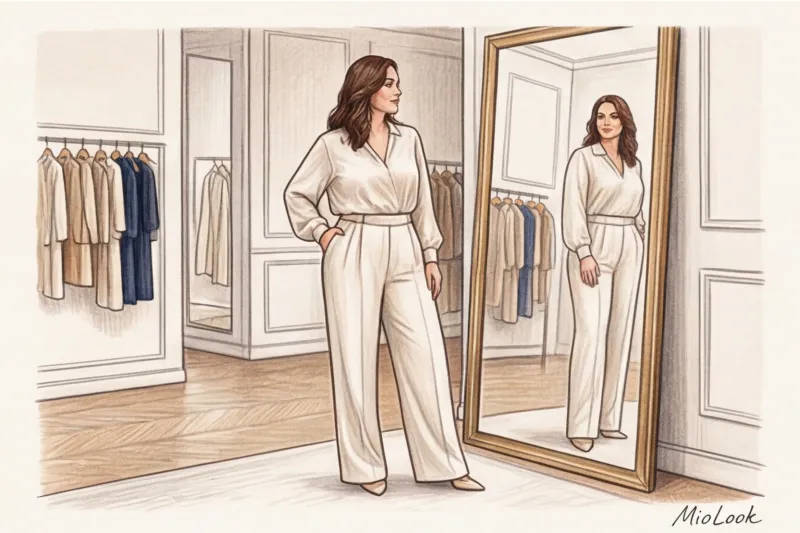
Over 12 years of working in premium styling, I am convinced: standard Basic wardrobe for a pear-shaped figure A look consisting of stiff white shirts and tight jeans is a crime against the feminine silhouette. You shouldn't "hide" your curves under a bland uniform. We discussed style architecture for different body types in more detail in our A complete guide to a basic wardrobe based on your body type Today, we'll explore a premium approach specifically for body type A: how the laws of fabric physics and clever tailoring can visually reduce your hip size by two sizes and create a look that looks expensive.
Silhouette Anatomy: Why Standard Base Lists Are Letting You Down
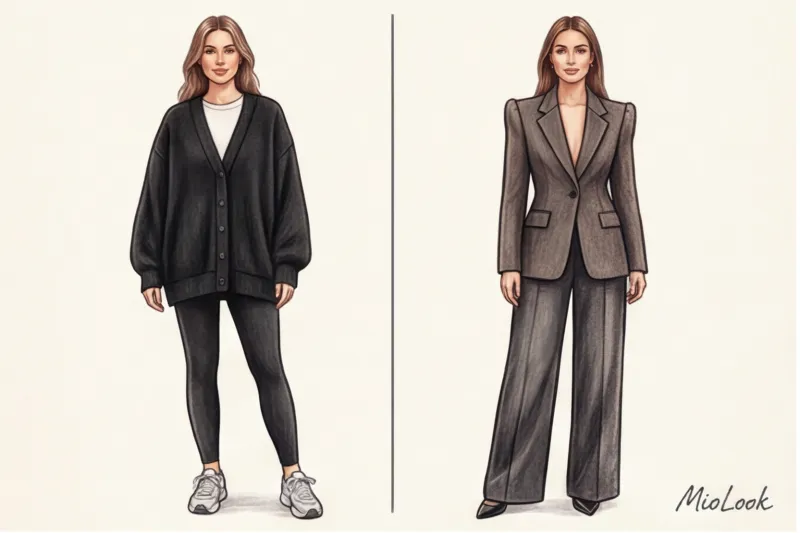
Most online "must-have" lists are based on borrowed elements from the men's wardrobe. Oversized, straight-shouldered jackets, crisp poplin shirts, and stiff denim. All this geometric styling works beautifully on narrow hips, but on a pear-shaped figure (type A—slim collarbones, defined waist, voluminous hemline), straight, hard lines can throw off proportions.
Men's cuts don't hug curves; they bump into them. When you wear a straight, stiff shirt untucked, it hangs at the widest point of your hips, visually making your waist appear just as wide.
The key principle of luxury styling for curved figures is not to disguise volume, but to engage with the fabric. You need materials that are highly flexible. Clothing should flow along the body under its own weight, not stand rigidly.
Your perfect look starts here
Join thousands of users who look flawless every day with MioLook.
Get access — €0.99 onceThe main myth: dark bottom, light top and the A-line silhouette rule
How many times have you read the advice: "Wear A-line skirts to hide your hips"? Let's be honest. If you choose a circle or half-circle skirt made of a shape-holding fabric (gabardine, heavy cotton, or taffeta), you won't hide your hips. You'll create a monumental tent effect. Instead of a graceful silhouette, you'll create excess volume, which will weigh down the entire look.
"Strong A-line fabrics don't hide your curves; they enhance them. True elegance demands softness."
The second popular myth is that black bottoms are essential. Black does absorb light, but flat, cheap black fabrics (like a basic polyester suit) make the silhouette appear dull and heavy. Analysis from the Pantone Color Institute (2024) confirms the concept of visual color weight: deep, complex shades have a better ability to "unify" the figure than pure black.
Try replacing black with:
- Deep burgundy;
- Dark emerald;
- Complex dark blue (navy).
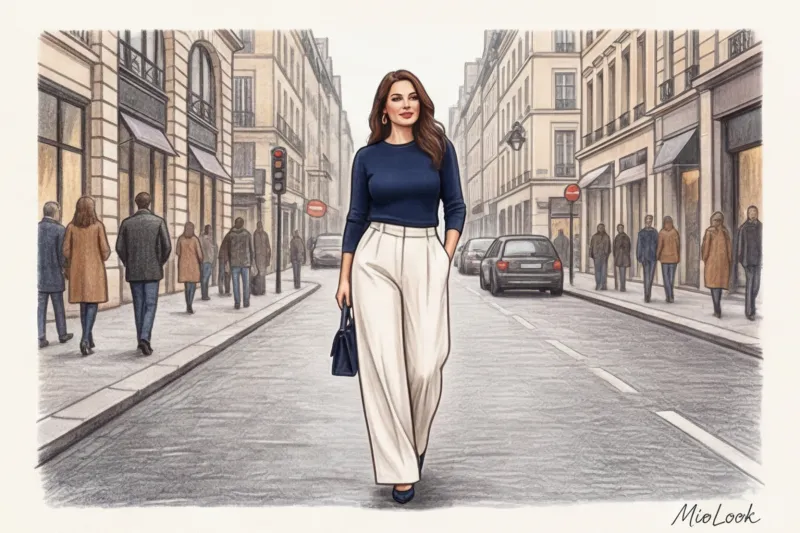
My favorite technique is contrasting textures rather than contrasting colors. Wearing matte wool trousers in a rich chocolate shade with a shimmering silk blouse a shade lighter will create a much more elegant balance than the typical "white top, black bottom" combination.
Upper architecture: creating premium balance without bulky shoulder pads
The purpose of the top is to subtly broaden the shoulders to balance the hips. Many people mistakenly buy jackets with exaggerated shoulder pads from the '80s. They look too theatrical. We need a more subtle approach.
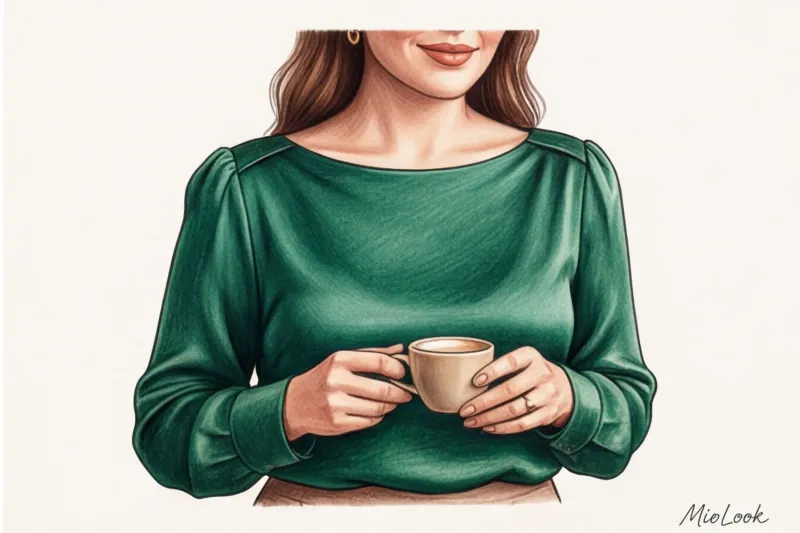
Note the boatneck. It reveals the collarbones and horizontally stretches the portrait area. When paired with the right hair styling for a cutout , this creates an aristocratic focus on the upper body.
And now about the main enemy of our architecture—the drop shoulder. In cheap knitwear, a seam that falls below the natural shoulder line visually lowers the entire silhouette, makes the shoulders appear sloping, and the figure appear bulky. Your only choice is classic. set-in sleeve with a clear armhole line. It gathers the figure and creates a prestigious geometric shape.
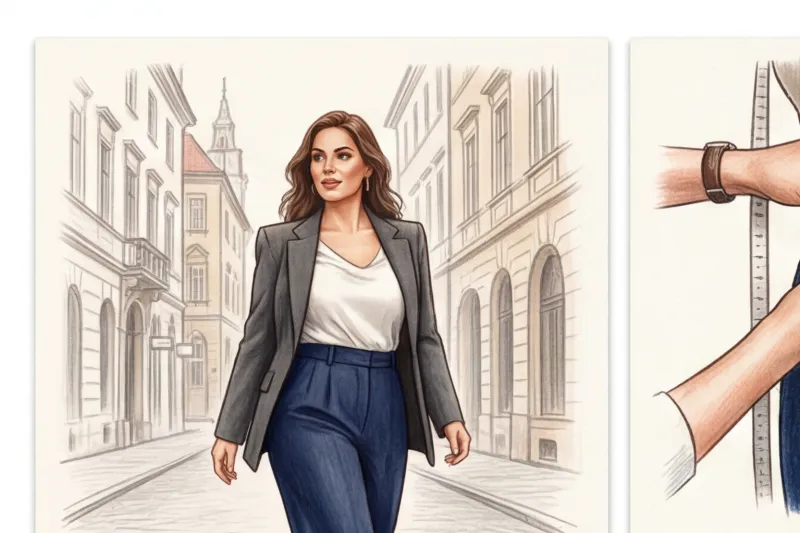
When creating a premium look, the golden ratio rule applies: 1/3 (top) to 2/3 (bottom). Tops, sweaters, and blouses should end either higher The widest part of the hips (just below the waist), or cover it completely (like a long blazer). A horizontal line running exactly along the equator of the hips is the most common and annoying mistake.
Access to MioLook for €0.99 — one-time payment
A smart AI stylist will select the perfect look based on your proportions.
Get access — €0.99 onceThe Perfect Bottoms: Fabrics and Cuts Worth Investing In
I always tell my clients: you can save on a T-shirt, but the pants need to be perfect. Stiff denim (especially skinny) will highlight any unevenness and visually shorten your legs. Our go-to is a palazzo or lightweight bootcut made from flexible Italian suiting wool (marked Super 120s or 130s).
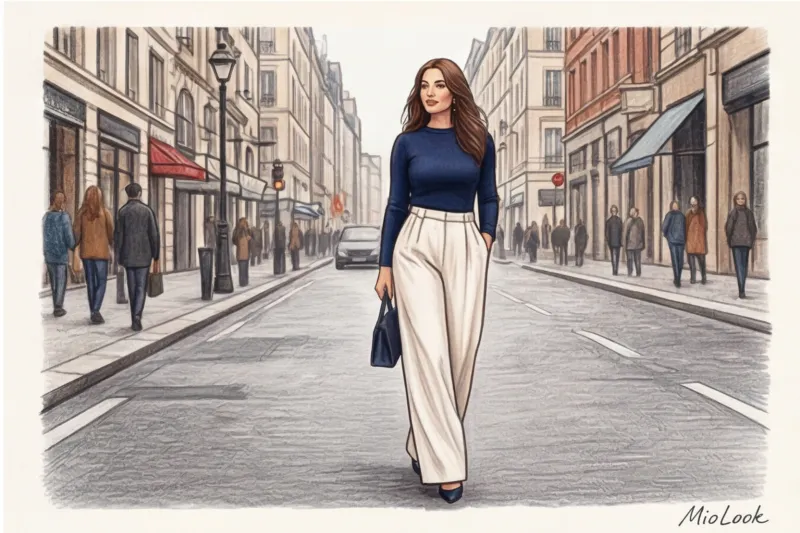
Essential requirements for ideal trousers:
- High waist - to emphasize your natural graceful waist;
- No tucks in the abdominal area (we don’t need extra volume);
- Smooth side seams (avoid pockets in the side seams, they will inevitably bulge on wide hips, breaking the clean line).
Let's calculate the cost-per-wear. You can buy five pairs of poorly made, stiff, mass-market jeans for €40 each, which will quickly lose their shape. Or you can invest €200–€250 in a single pair of impeccable wool palazzo pants. Over three years of regular wear, their cost-per-wear will be less than €1, while still looking classy every day.
The magic of bias cuts and correct vents
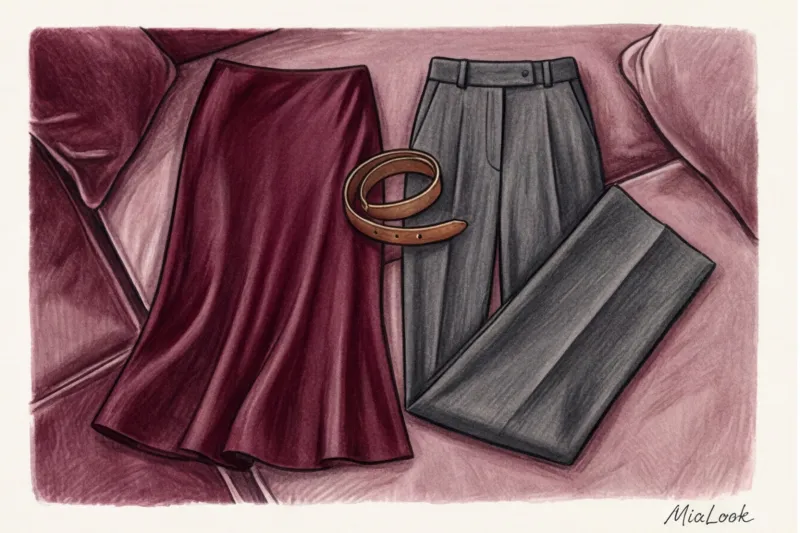
Back in the 1920s, the great Madeleine Vionnet revolutionized fashion by introducing the bias cut. Fabric cut at a 45-degree angle to the grain gives it incredible elasticity.
A midi skirt in heavyweight silk (weight 22+ momme) cut on the bias is the perfect complement to a pear-shaped figure. It gently curves around the hips without adding a millimeter of bulk, and tapers gracefully toward the hem. But there is an important limitation here: This advice absolutely doesn't work with cheap, thin polyester. Bias-woven synthetics will highlight even the slightest imperfections and cling to your tights with static electricity. This is a case where texture is everything.
Status accessories as a tool for correcting proportions
Accessories in a premium wardrobe are more than just decoration. They're optical tools that help us direct the gaze of others. You can wear the most perfect dress, but ruin it all with a single crossbody bag.
A long shoulder bag that hangs flat on your hip acts like a magnifying glass, instantly adding two sizes to your bottom. This shifts the visual weight upward.
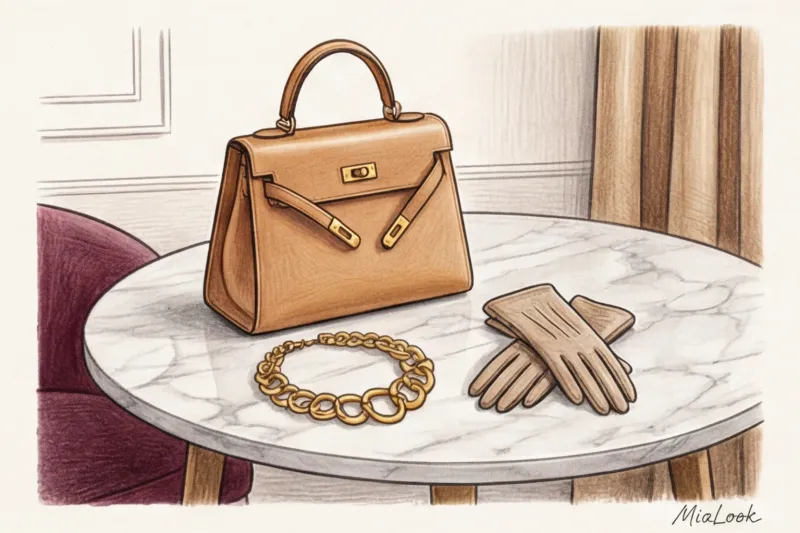
What we invest in:
- Top-handle bags (with short handles) that you carry in your hand or on the crook of your elbow - they shift the emphasis to the waist.
- Baguette or hobo bags on a short strap under the arm - they add the necessary volume to the portrait area.
- Accent earrings and necklace - the best way to draw attention to your face (especially if you are choosing date look , where eye contact plays a key role).
- Wide matte leather belts - to emphasize a thin waist, but without the effect of rigid constriction.
Shoes: a point of support and visual lengthening of the legs
Shoes can either elongate the silhouette or ruthlessly ground it. Ankle straps, contrasting ankle boots that end at the widest point of the calf, and heavy, chunky soles all break up the continuous vertical line that the pear-shaped figure so desperately needs.
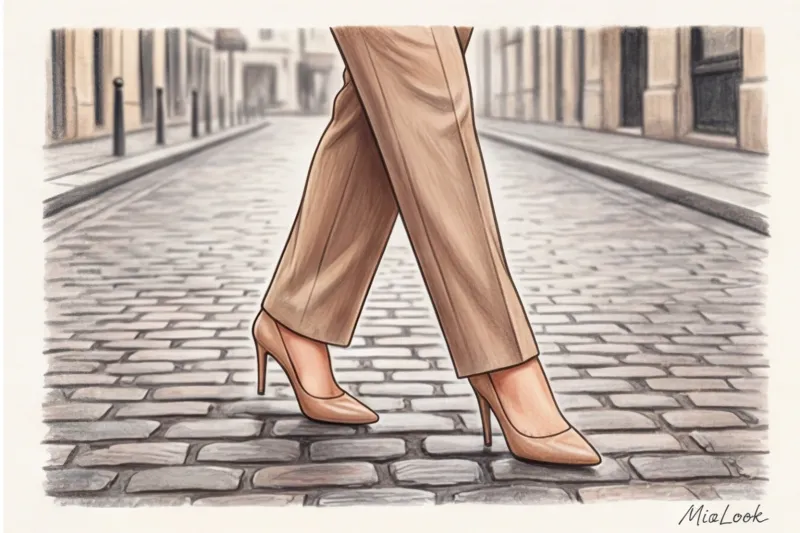
Use the secret to monochrome: choose shoes that match your trousers or your skin tone (if you're wearing a skirt). A pointed or almond-shaped toe works like a wingtip, visually lengthening the leg. A square toe, on the other hand, creates a chopped-off effect.
Checklist: Building a Basic Wardrobe for a Pear-Shaped Body Without Breaking the Bank
A well-thought-out basic wardrobe for a pear-shaped figure isn't a mindless purchase of 30 items on sale. It's a carefully curated capsule of 10-12 pieces, where everything goes with everything.
Here's my working formula for my clients:
- 3 bottoms (investment, 150-300 € per unit): Flowing wool palazzo pants, silk bias-cut midi skirt, straight jeans made of soft cotton with 2-3% elastane (no fraying on the hips).
- 5 tops (can save €30-€80): 2 silk/viscose blouses with boat necklines, 2 tops made of thick cotton (from 180 g/m²) with set-in sleeves, 1 thin cashmere jumper.
- 2 top layers: An elongated blazer (covering the hips) made of flexible fabric and a tightly knit cardigan reaching to the waist.
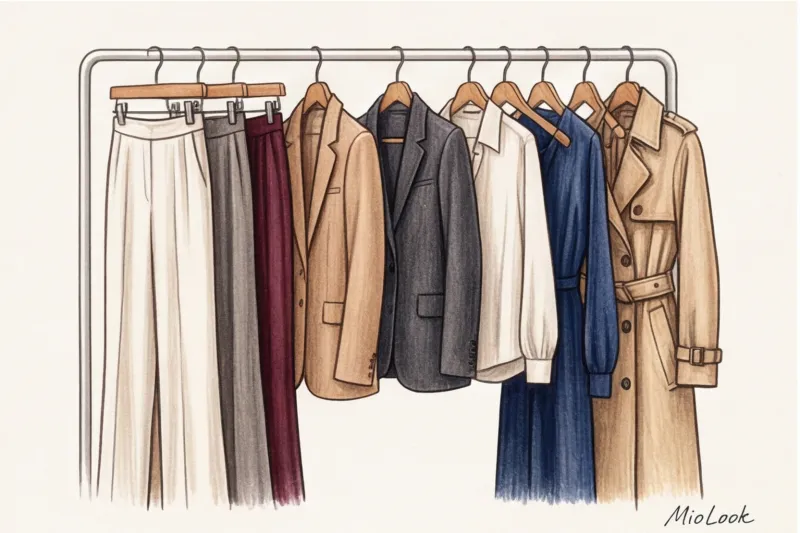
When I help women organize their closets, we often use an app MioLook To digitize your existing items, this allows you to clearly see which elements are missing to balance your capsule and avoid impulse purchases.
Stop apologizing for your curves with shapeless clothes or stiff, restrictive fabrics. Your silhouette is a luxurious given. Give it freedom in high-quality, flexible wool and flowing silk, and you'll see how not only your reflection in the mirror but also your posture will change.