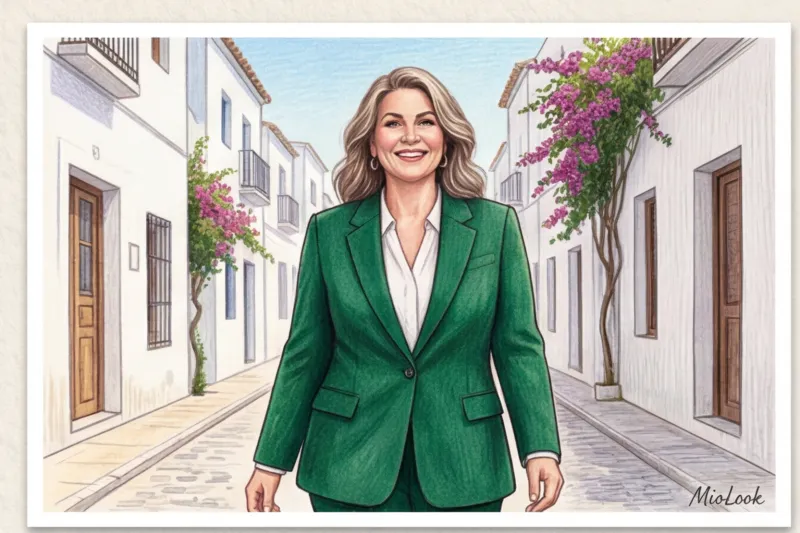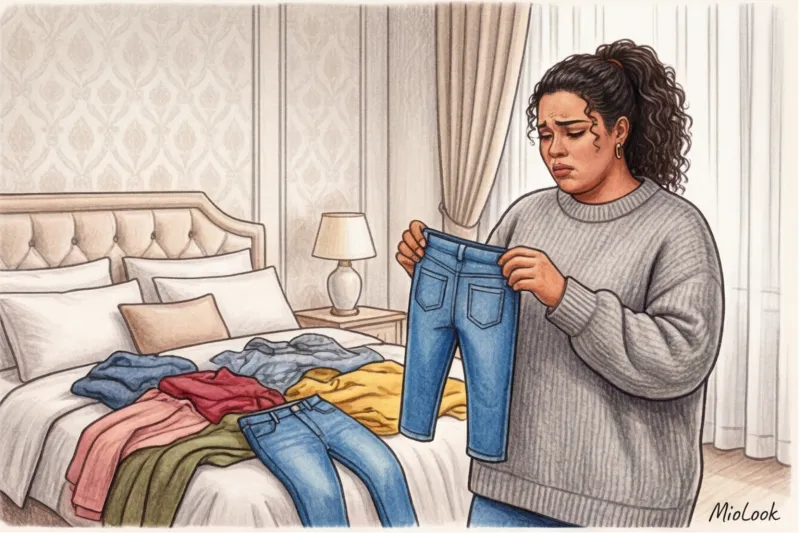
The familiar sound of a zipper zipping up and getting stuck somewhere mid-thigh. A deep sigh. The urge to walk out of the mall immediately and never try on anything again. If this scene gives you a nervous chill, I want to tell you the most important thing: there's absolutely nothing wrong with your body. In 12 years of working as a personal stylist, I've learned one indisputable truth: when a garment doesn't fit, it's the pattern's fault, not yours. Traditional Selecting clothes for plus-size women For decades, it was built on the cult of concealment and disguise, but the rules of the game have finally changed.
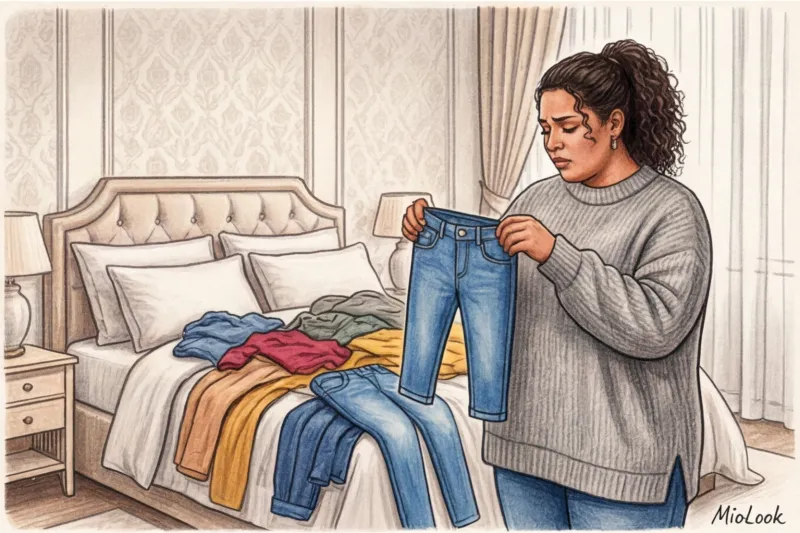
Today, we won't be discussing boring advice like "wear only black and don't attract attention." We'll be discussing how algorithms and artificial intelligence use pure geometry and the laws of architecture to perfectly fit clothing, completely ignoring toxic numbers on tags. We've covered how technology is changing the industry as a whole in our article. the complete guide to virtual styling.
Why traditional clothing choices for plus-size women often end in disappointment
One of my clients, the amazing Anna, was crying in the Zara fitting room. She blamed herself for the fact that her premium palazzo pants, which cost around €120, were treacherously digging into her waist, even though her hips were perfectly in place. This is a typical victim of the "dictatorship of sizes." Mass-market brands force women to fit living, breathing bodies into a synthetic norm.
Did you know that modern sizing is a relic of the past? According to a 2022 study by the Textile Institute, the basic proportions still used by many factories were developed based on US military standards from the 1940s. They were created for standardization and strict fabric economy, not to accentuate feminine curves.
The main problem is called "straight gradation." When a brand decides to release a size 52, it often simply takes the 42 pattern and evenly adds a few centimeters to the sides. But a woman's body, from size 48 and up, doesn't grow in a straight line! It changes volume three-dimensionally: the shoulder slope, the bust size, and the curve of the back change. A stretched-out size 42 will never fit a curvy plus-size figure.
Your perfect look starts here
Join thousands of users who look flawless every day with MioLook.
Get access — €0.99 onceGeometry vs. Labels: What's the Mass Market Mistake?
European cuts (like those popular at H&M or Massimo Dutti) are often designed for a narrower hip and less defined buttocks. This means that if you have fuller hips, the back seam of your trousers will pull you down.
Another way brands save money is by eliminating darts entirely. An anatomical dart (at the bust or waist) requires additional minutes of work from the seamstress, which increases production costs. The result is a flat cut that flattens a voluptuous bust and creates a billowing back.
How AI Stylist MioLook Is Changing the Plus-Size Game
According to a 2023 McKinsey report, over 70% of plus-size clothing returns from online retailers are due solely to poor fit in the bust and hip area. And that's where math comes in. Artificial intelligence has no aesthetic biases. It doesn't judge you. It sees the geometry of proportions.
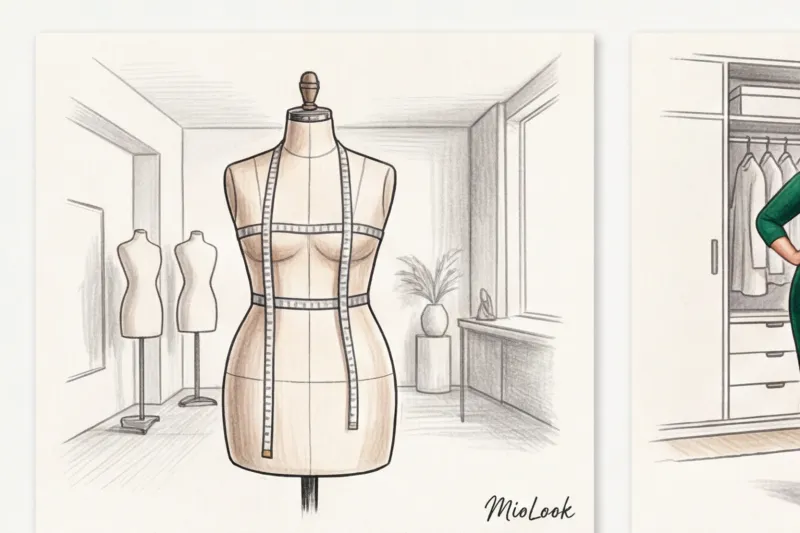
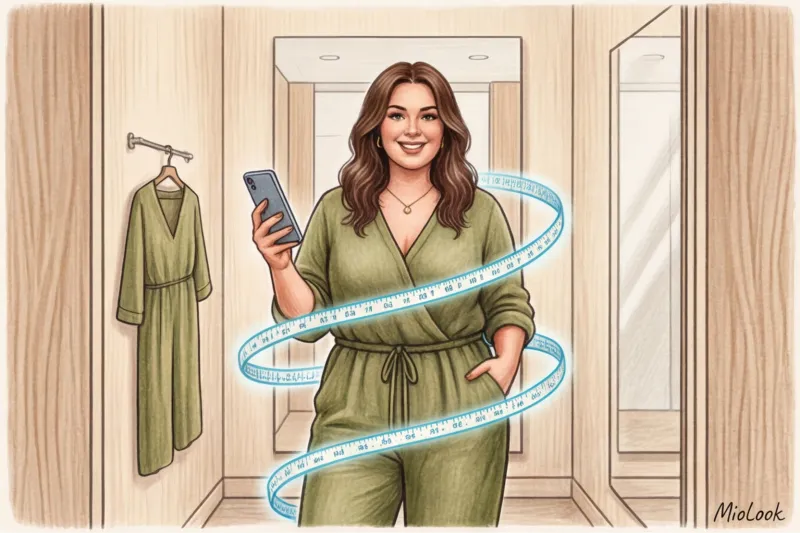
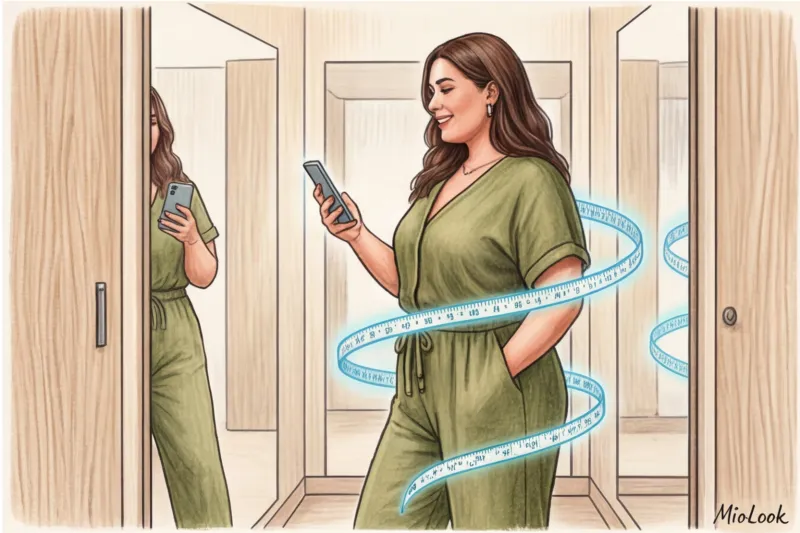
When you use smart selection feature in MioLook The algorithm works like a hereditary Italian tailor. First, it "digitizes" your silhouette. Then, it matches your body structure with the cut of a specific garment. The AI analyzes how the fabric volume will be distributed, whether the armhole depth is sufficient for your shoulder width, and how the drape will fall.
This completely eliminates the most stressful part of shopping—the "squeezing yourself in, looking in the mirror, and getting frustrated" part. You know how the item will fit before you even hit the checkout button.
Top 3 Plus-Size Style Myths That AI Ruthlessly Debunks
The industry has been feeding us bad advice for decades. Let's debunk it using the visual physics behind the algorithms.
Myth 1: “Black makes you look slimmer.”
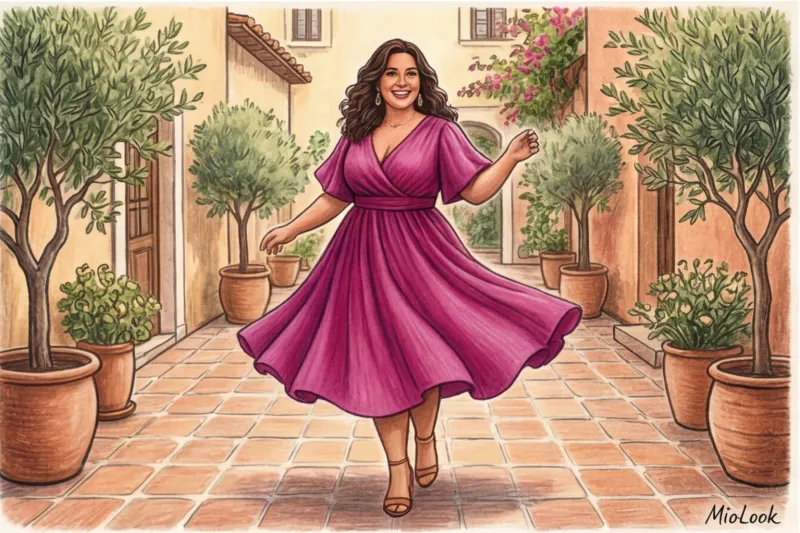
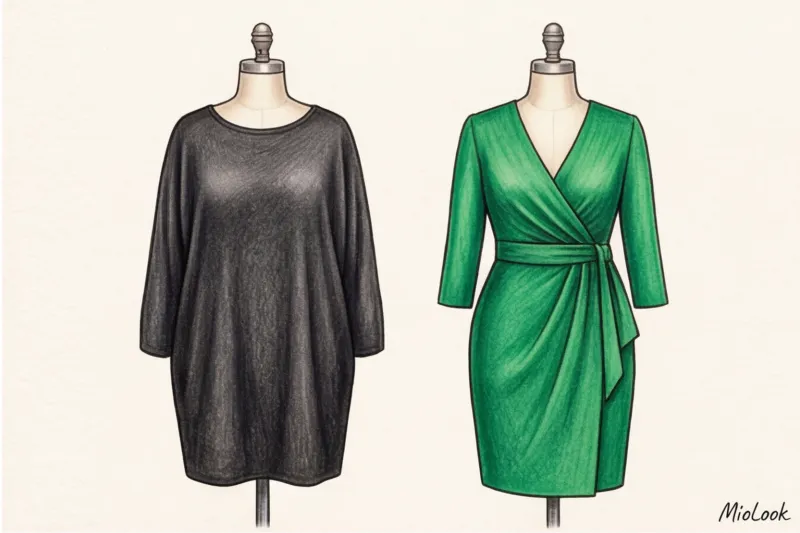
This is my favorite misconception. Yes, black absorbs light. But if it's low-quality black knitwear with no clear shape, it simply turns your figure into one big, shapeless blob, emphasizing every wrinkle. I once had a case where, as soon as I changed a client from a black robe to a structured fuchsia wrap dress, she visually dropped a couple of sizes. AI suggests a Mediterranean palette: emerald, terracotta, sapphire. They distract attention from the nuances of the figure and stunningly refresh the portrait area.
Myth 2: “Oversized clothing will hide everything unnecessary.”
A completely counterintuitive fact, confirmed by silhouette analysis: baggy clothing always visually focuses on your widest point (usually the chest or stomach) and "builds up" the rest of the volume to that width. You're hiding your most graceful features! A semi-fitted cut is the ideal choice.
Myth 3: “Horizontal stripes are prohibited.”
A study of print perception shows that it's not the stripe itself that matters, but its rhythm and width. A tight Breton stripe on thick cotton looks great on a full bust when layered with an unbuttoned jacket.
Access to MioLook for €0.99 — one-time payment
A smart AI stylist will select the perfect look.
Get access — €0.99 onceThe Anatomy of the Ideal Image: Formulas That Always Work
I will never tire of repeating this: for Plus Size the structure of the fabric is more important than the model itself A flimsy viscose jersey for €15 will reveal the contours of your underwear, even if it's a size 60. Your choices include cotton with a weight of 180 g/m² or higher, linen with added viscose (to prevent stiffness), and heavy suiting fabric.
"You don't need to lose weight for summer, you need the right bias cut" - Isabella Garcia.
Bias cutting is a professional secret. The fabric is cut at a 45-degree angle to the grain. This allows it to gently hug your curves without digging into your skin.
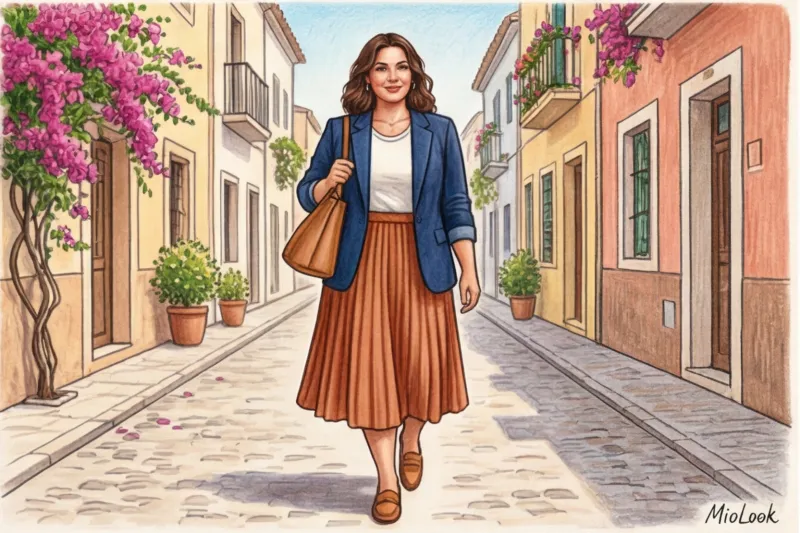
And here is my favorite, reliable one formula of elegance:
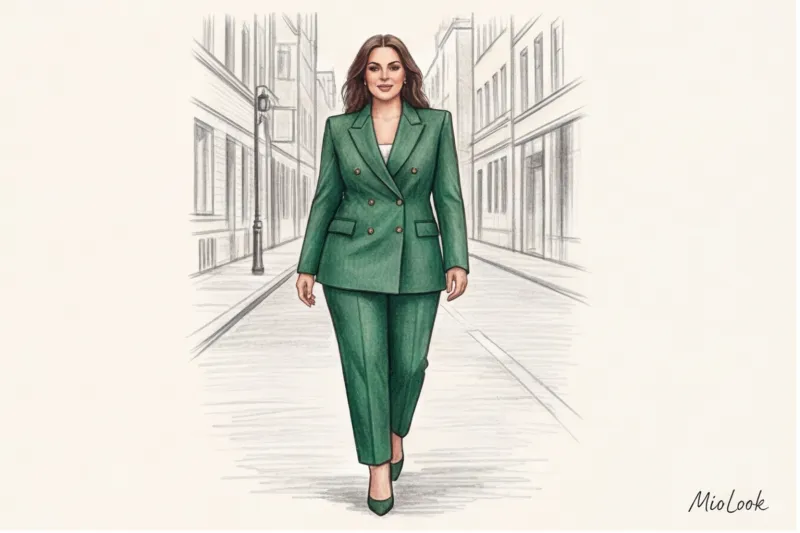
- Structured blazer (holds shoulders, gathers silhouette into a frame).
- Midi slip dress (cut on the bias, flows down the hips).
- Suede loafers (open the ankle).
This look uses "magic verticals"—the two lines of the unbuttoned jacket visually elongate the figure better than any heels.
Accessories as a correction tool
The law of scale dictates that large features and shapes require proportionate details. A small, purse-sized crossbody bag will be lost against curvy hips, visually making them appear larger. Opt for structured, rigid totes or oversized hobo bags. Accessories serve as focal points: bright shoes or a chunky necklace in creased metal will draw the eye away from areas you're not yet ready to highlight.
Focus on Value: Personalization with Algorithms
The paradigm shift in modern styling is that we no longer ask, "What are we hiding?" We ask, "What gorgeous features are we emphasizing today?" Every woman has stunning areas.
The ultimate in style mathematics (which AI can calculate perfectly) is to highlight the body's most subtle features. These are called points of grace:
- Graceful ankles: The correct length of trousers is exactly 7/8, exposing the narrow part of the leg.
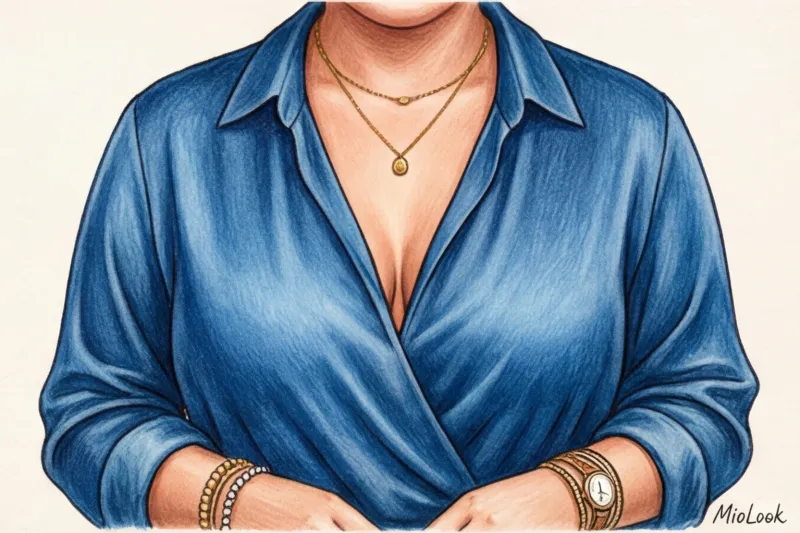
- Luxurious neckline: The ideal depth of a V-neck is calculated based on the geometry of your face and the length of your neck.
- Thin wrists: Italian reception sprezzatura (slight casualness) - always roll up or pull up the sleeves of jackets and shirts, exposing the wrists.
Checklist: How to prepare your AI stylist profile for flawless results
To virtual stylist MioLook It worked 100%, you need to set it up correctly. But there's one important caveat. This advice WON'T work if you decide to cheat.
A rookie mistake is entering desired measurements ("Well, I'm planning to lose 3 kg by vacation") instead of actual ones. AI won't judge your centimeters; it will brilliantly work with what you have here and now.
- Be brutally honest: Take a measuring tape and take precise measurements without sucking in your stomach.
- Identify winning zones: In your profile settings, indicate what you like to reveal (calves, collarbones, décolleté).
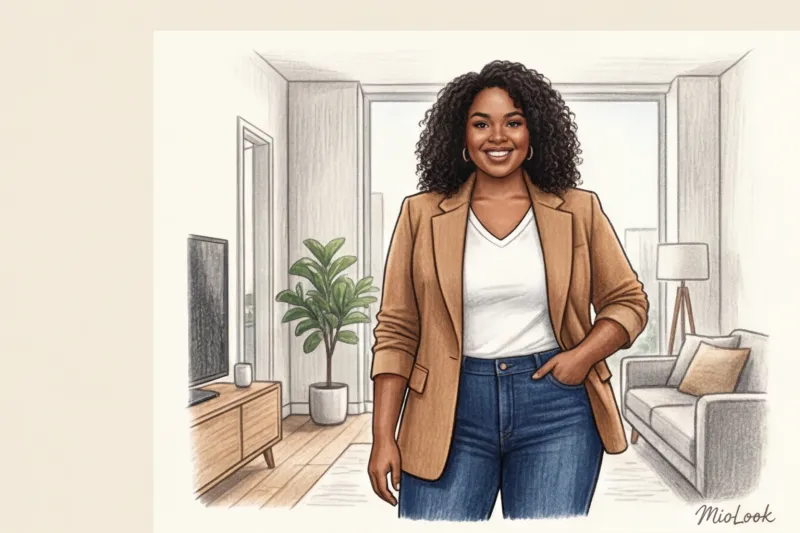
- Degree of fit: Choose a semi-fitted silhouette, avoiding extremes such as full-fitting or hyper-oversized.
- Invoices: Avoid flimsy knitwear and shiny fabrics (satin, lurex) in areas where you don't need extra bulk.
Summary: Your wardrobe, your rules
Choosing the right clothes for plus-size women today is a beautiful combination of cutting-edge technology and deep self-love. You no longer have to spend hours in shopping malls, bringing yourself to tears in cramped, dimly lit stalls.
Trust the routine analysis of darts, armhole depth, and volume distribution to algorithms. Remember the main rule I impart to all my clients: a woman's body shouldn't adapt to clothes. Clothes should fit your unique figure.