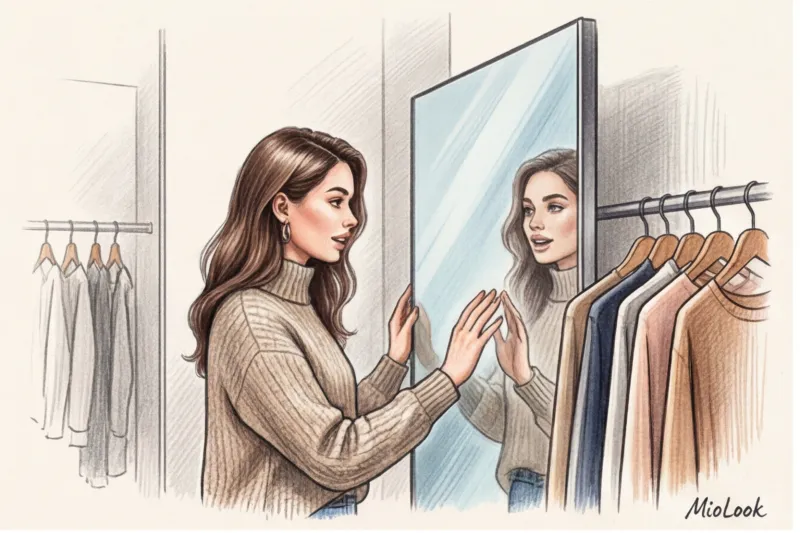
Ending the Shopping Nightmare: How an AI Stylist in Stores is Changing the Rules of the Game
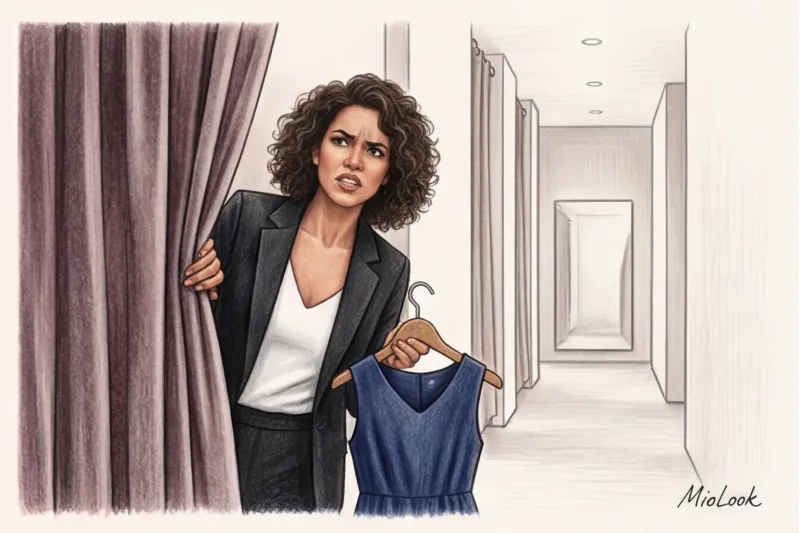
It's Saturday, a shopping mall, the fluorescent light of a fitting room. You're standing among a mountain of clothes that don't fit, the salesperson has disappeared, and only one thought is pulsing in your head: "I have a non-standard figure, and nothing suits me." Sound familiar? In 14 years as a stylist, I've seen that tired look on hundreds of clients. Sometimes it brought tears to my eyes right there in the dressing room.
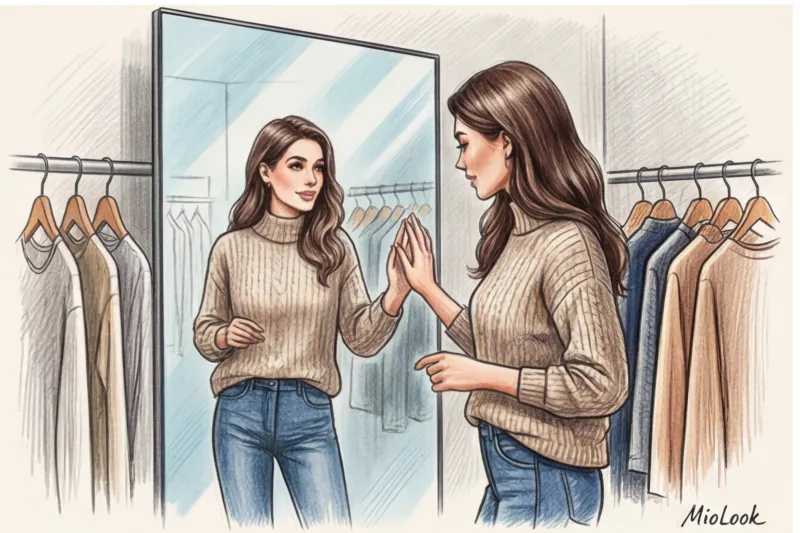
The problem isn't you or your figure. The problem is the outdated shopping process. But now the rules of the game are changing. Enter the arena ai stylist in the store — technology that turns a stuffy cubicle into your personal dressing room.
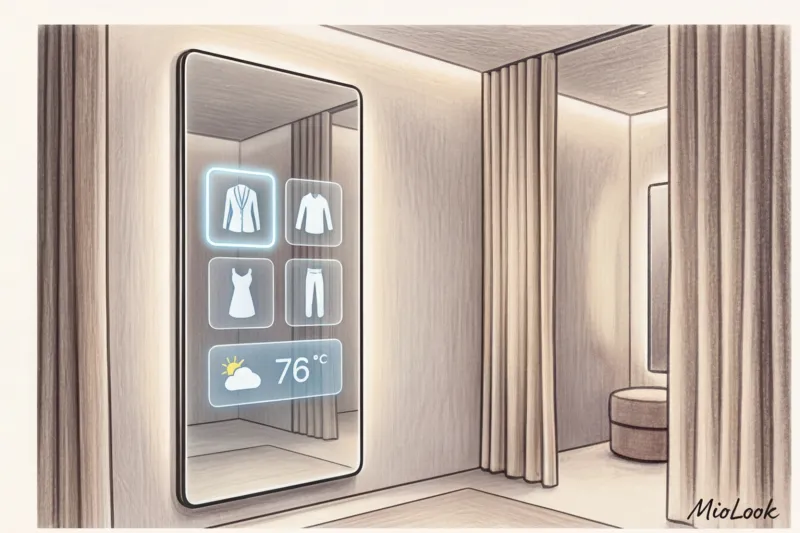
We're not talking about simple tablets with a catalog attached to the wall. Modern smart mirrors read RFID tags on the clothes you bring into the locker, instantly recognize the style and color, and offer ready-made capsule solutions. We've covered the evolution of these technologies and their technical design in more detail in our comprehensive guide. Smart Mirrors in Stores: How AI is Transforming Boutiques.
In the meantime, let's figure out how this magic works on the buyer's side and why it saves our nerves and wallets.
Your perfect look starts here
Join thousands of users who look flawless every day with MioLook. Digitize your wardrobe before your next shopping trip!
Get access — €0.99 onceThe Sales Myth: Why a Smart Mirror Makes You Buy Less
It's commonly believed that digital screens in retail are designed with one cynical goal: to trick you into buying more. In reality, a skilled AI stylist in the fitting room is like a cold shower for impulse shoppers.
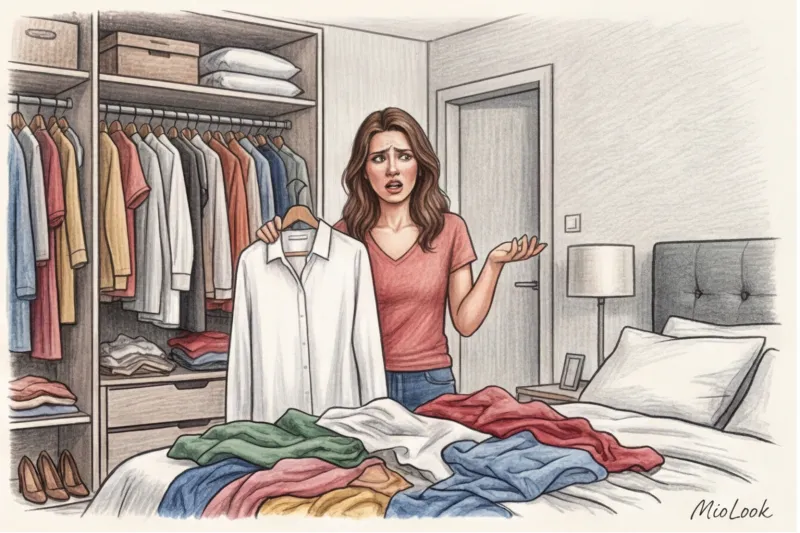
How often have you bought an incredibly beautiful sequined skirt, brought it home, and realized you needed a completely different top, different shoes, and, ideally, a different life? In my professional lexicon, these are called "single items." They're the reason the cruel Pareto principle applies to your closet: we wear only 20% of our clothes 80% of the time.
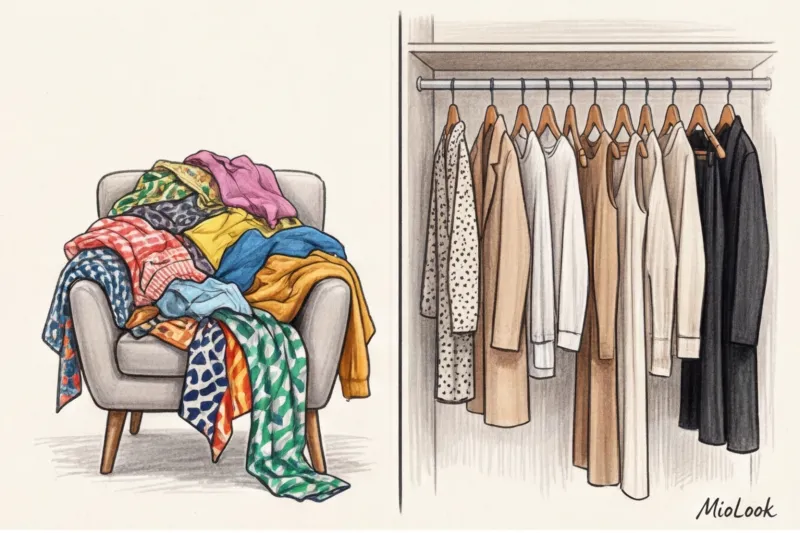
When you bring such a skirt to a smart mirror, the algorithm tries to create an outfit with it from the store's current selection. If the system only returns basic white T-shirts or struggles to find a pair at all, that's a red flag. The AI clearly shows you that this item is difficult to style. You pass on the purchase, saving, say, €80.
According to the McKinsey State of Fashion (2024) report, integrating AI into the customer experience during the fitting room reduces return rates by up to 30%. Shoppers take home not just clothes, but thoughtfully designed outfits they'll actually wear.
Instead of a chaotic bag, you leave with three perfectly coordinated items. You buy less , But better.
Assembling a capsule right in the booth: a step-by-step stylist system
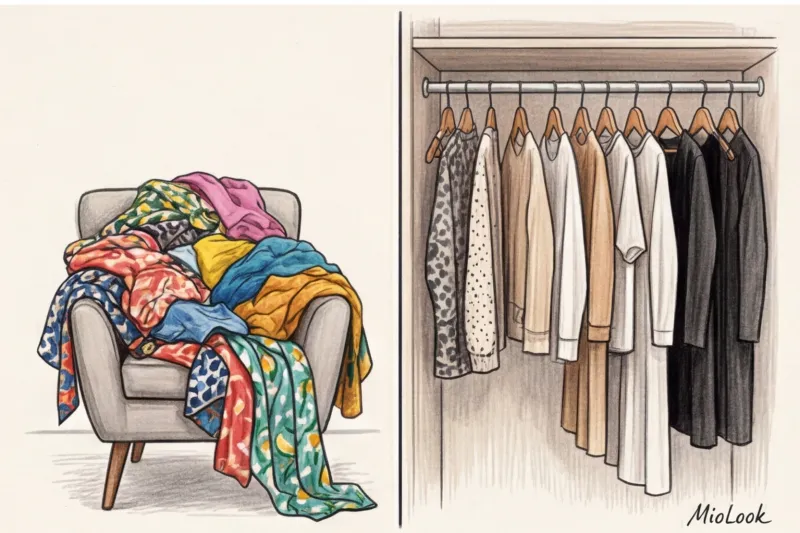
I always teach my clients the "rigid framework" method. First, we assemble a solid capsule base (pants, jackets, the right knitwear), and then we let in some "air"—accent colors and accessories. The interactive glass in the store is ideal for this approach. The golden rule for capsule collections in a digital try-on environment is: 1 bottom = 3 tops.
Step 1: The Base Layer and the RFID Magic
You go into the showroom and grab just one or two basic items from the rail. For example, a classic pair of straight-leg wool-blend trousers or the perfect pair of basic jeans. That's all you need. You step into the fitting room, and the screen instantly (thanks to an invisible RFID tag) displays your item.
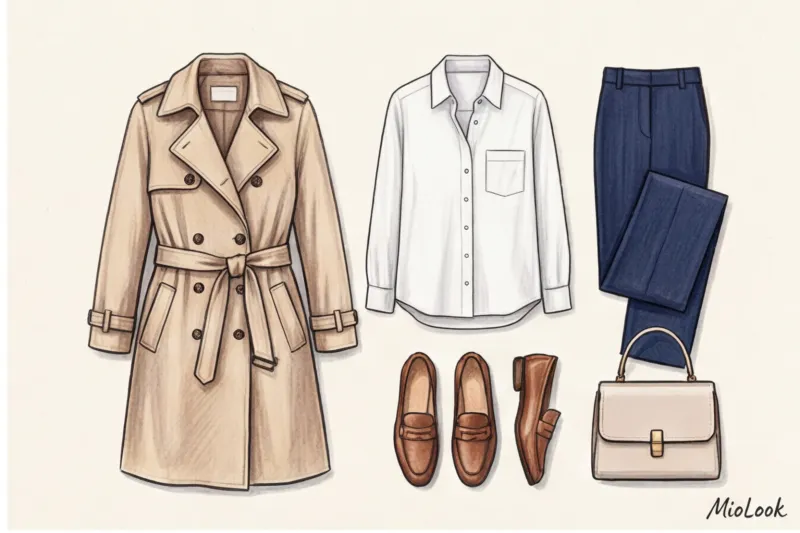
An AI stylist in the store immediately analyzes the cut. If it's a pair of wide palazzo pants, it'll understand that the volume balance calls for a more compact top and eliminate oversized chunky knit sweaters.
Step 2: Cross-selling a healthy person
Options appear on the screen. Your task is to select the "3 tops" of varying degrees of formality. For example:
- A formal shirt made of thick cotton (from 180 g/m²) for the office.
- Relaxed cashmere jumper for weekends.
- Silk top for an evening out.
And this is where the real magic happens: you don't have to get dressed and go into the store to get them. You press a button on the screen, and a consultant brings them right to your booth. This saves up to 40% of your shopping time.
Step 3: Virtual try-on of colors and textures
Another useful feature is changing the color of an item on the screen. You're wearing a beige trench coat, and it fits perfectly, but you want to see how the same style would look in khaki. One click, and the mirror "changes" the color of the item on you.
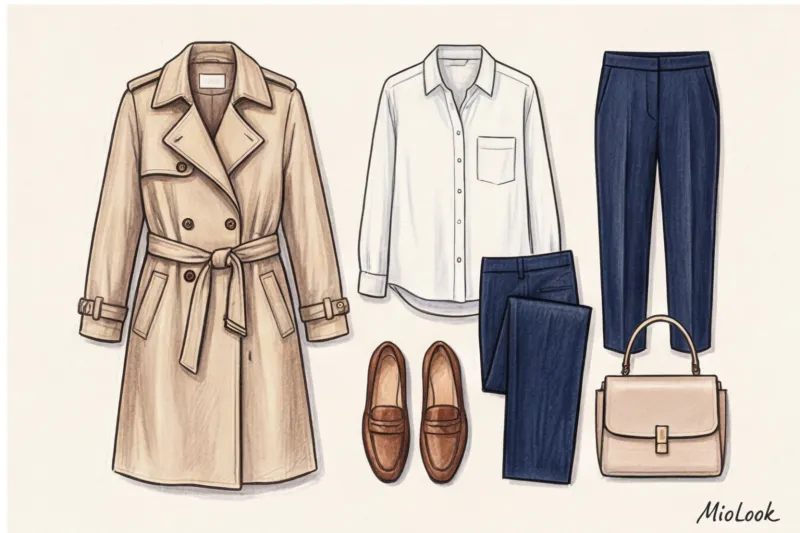
But there is a fair limitation here (when it DOESN'T work): Virtual color matching works well for smooth fabrics like heavy cotton or viscose. If we're talking about complex textures—for example, bouclé, heavy tweed, or flowing silk—don't rely blindly on the screen. You need to physically touch the fabric and see how it moves and refracts light. Screens can't yet convey the tactile weight of a garment.
Access to MioLook for €0.99 — one-time payment
A smart AI stylist will select the perfect look based on your measurements and the items in your closet.
Get access — €0.99 onceConnecting with your closet: MioLook store and app integration
Even if a smart mirror has put together a great look for you from a specific brand’s range (be it Massimo Dutti or a local premium brand), the question arises: how will this fit into what already is it hanging in your home?
This is where the function comes to the rescue. Smart Wardrobe at MioLook Let's say you're standing in front of a store screen, trying on a great structured blazer for €180. The price is steep. How can you justify the purchase?
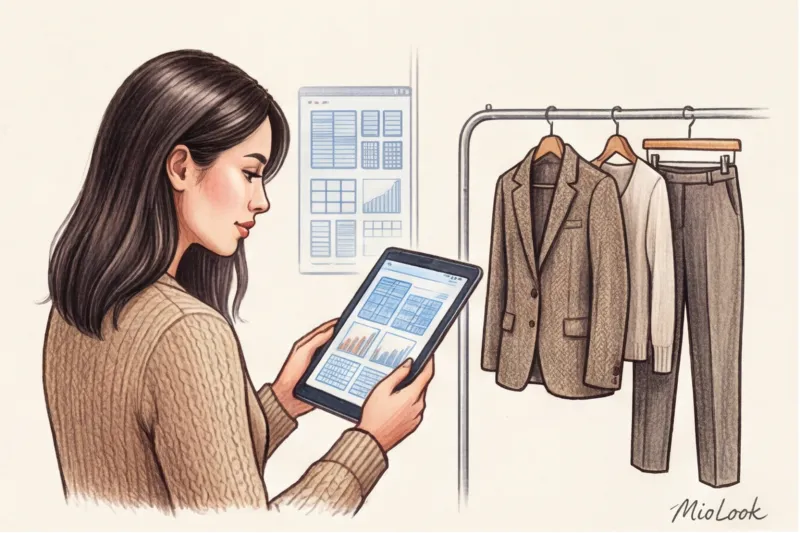
We use the Cost per Wear (CPW) formula. You open the MioLook app, which already has your closet digitized, and check:
- Does this blazer go with your favorite navy jeans? Yes.
- To the silk slip dress from last summer? Yes.
- With white sneakers and a basic T-shirt? Yes again.
If you wear it 36 times a year, the actual cost to your budget will be just €5 per occasion. An AI stylist in the store helps you choose the item, and your personal AI assistant on your smartphone confirms its cost-effectiveness.
Three mistakes shoppers make when using smart booths
In my observations of clients (especially women over 40), I have identified three main pitfalls they fall into when encountering new technologies.
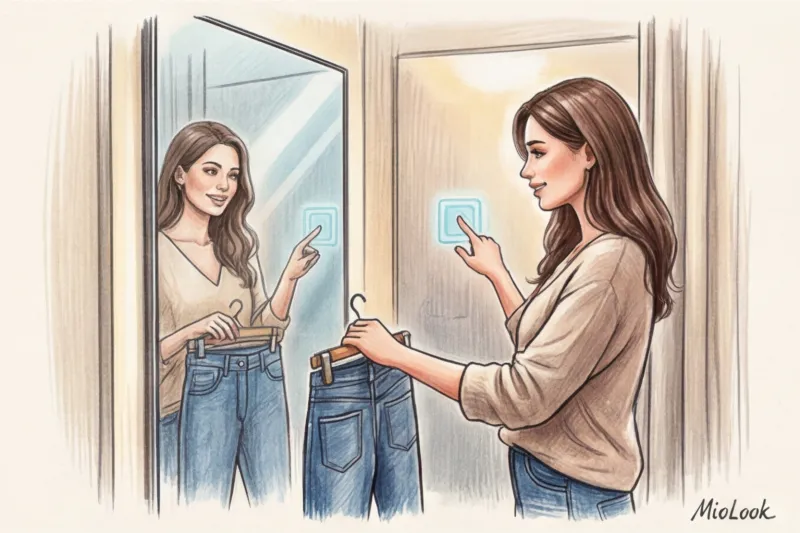
- Mistake 1: Fear of a “complex machine”. Many people simply ignore the screen, treating it like a complicated banking terminal. Remember: the interface is designed to be intuitive. Tapping an item and choosing a size is no more difficult than liking a photo on social media.
- Mistake 2: Blindly trusting the algorithm without taking into account your own figure. AI sees an item in a store, but it doesn't yet understand the nuances of your body. If the algorithm suggests a voluminous hoodie to go with wide jeans (because it's a current street style trend), but you have an inverted triangle body shape with broad shoulders, this outfit will turn you into a square. Always filter advice based on your own body proportions.
- Mistake 3: Ignoring the consultant's call. The most common scenario: a woman tries on an item, realizes it's too small, puts it back on, goes out into the store, looks for her size, can't find it, gets upset, and leaves. The "Request a different size" button on the screen is designed just for you! Use the service the brand has already paid for.
Checklist: Your Next Shopping Trip Plan with an AI Assistant
To ensure your next shopping trip to a smart fitting room goes perfectly, follow this simple action plan:
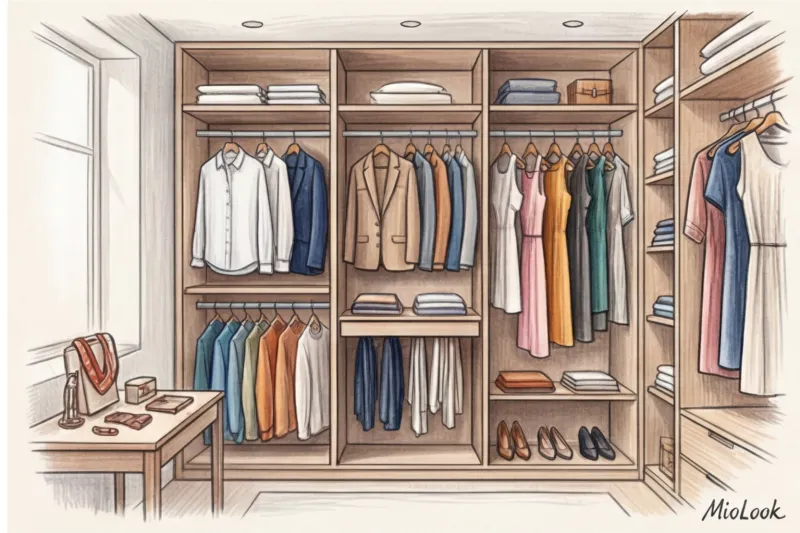
- Preparing the house: Add 3-4 of your favorite basic items to MioLook You must clearly remember their shades.
- In the hall: Don't pack 15 hangers. Just pick one or two items with a complex cut or good quality (like wool pants or a statement skirt). The in-store AI stylist will do the rest.
- In the fitting room: Use the glass to request three different tops in a price range you are comfortable with (e.g. €30-€80) for your bottom.
- Service: Be sure to request adjacent sizes on-screen. If you're unsure between a medium or large, ask for both.
- Final filter: Evaluate the resulting mini capsule. If these four items can't be mixed and matched to create at least three different looks, return the excess to the shelf.
Technology didn't come to stores to deprive us of the joy of shopping. It's here to take over the drudgery: the hassle of fussing over sizes, the agonizing choice of shades, and the frustration of mismatched proportions. Leave the grunt work to the algorithms, and leave yourself the pure creativity and joy of seeing how beautiful you look in the mirror. Even if it's a smart one.