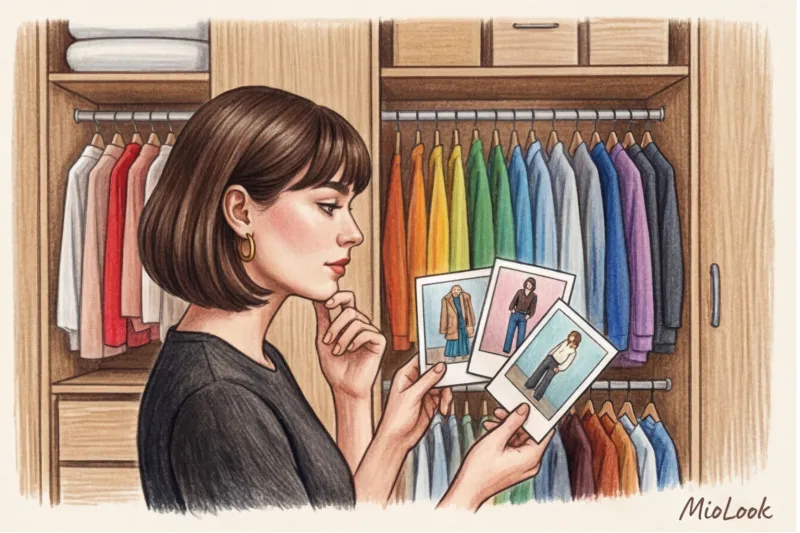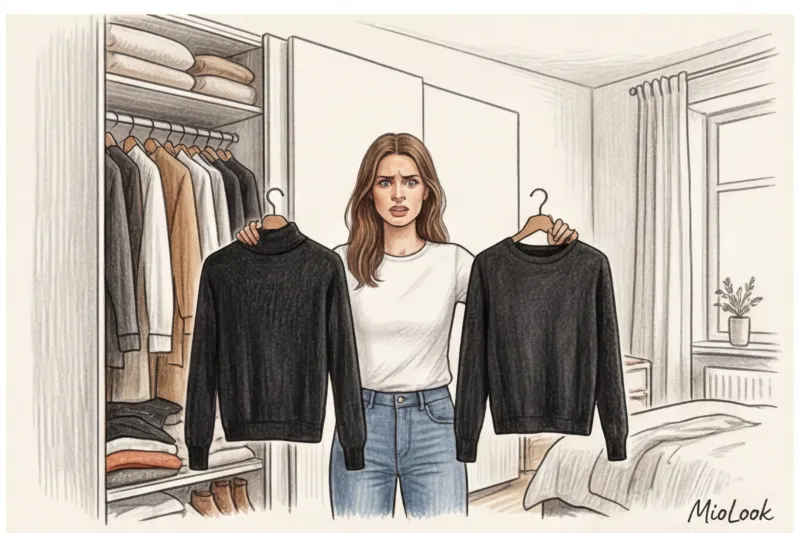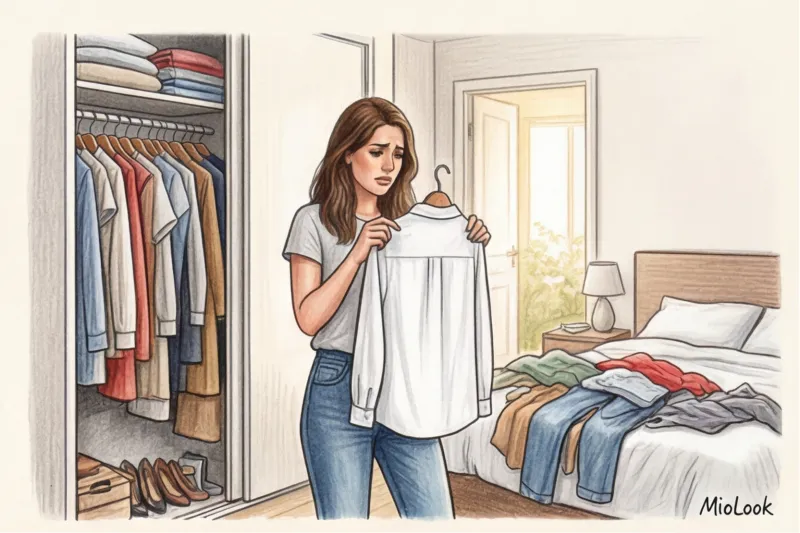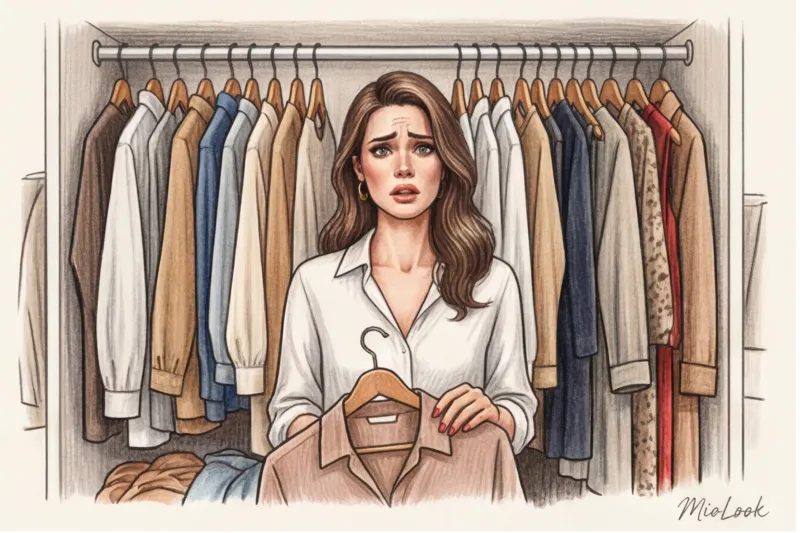
Picture this: It's 7:30 a.m. on a Tuesday. You're standing in front of a closet filled with over two hundred items, worth at least €3,000, but your hand stubbornly reaches for the same pair of faded jeans and black sweater. A familiar thought throbs in your head: I have absolutely nothing to wear. We've already discussed the architecture of the ideal and functional closet in more detail in our The Complete Guide: MioLook — An AI-Powered Capsule Wardrobe App , but today I want to address the most painful morning problem.
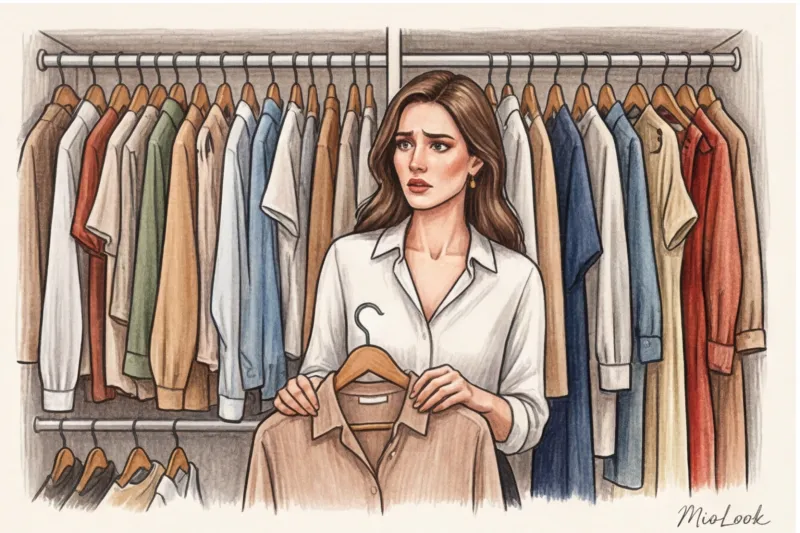
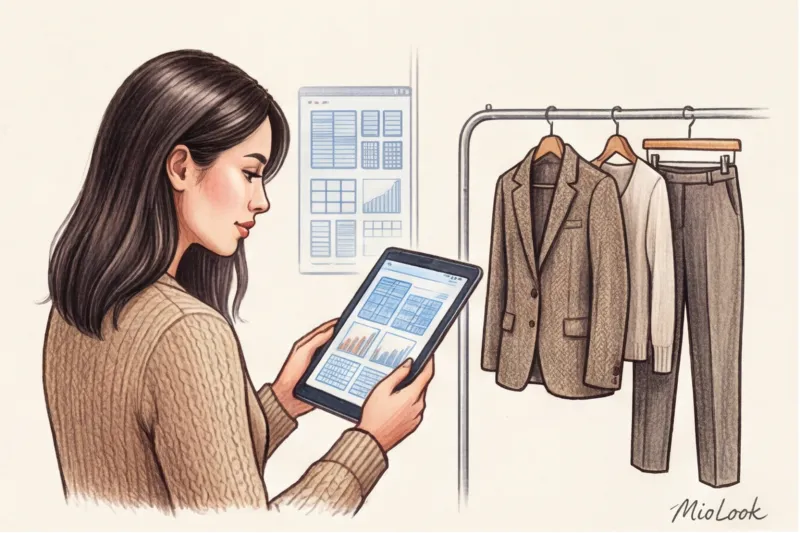
Over 12 years of working as a personal stylist, I've realized: it's not a matter of lack of taste or a shortage of clothes. It's that our brains need a quality assistant. A tool that will transform chaos into system—a smart clothing look generator. And no, this isn't just a fun tech toy for Zoomers. It's a fully-fledged mathematical style algorithm that thinks in terms of proportions and textures. Let's explore how artificial intelligence is changing the rules of the wardrobe game.
Why a Physical Closet Loses to Digital: The "Nothing to Wear" Paradox
Our brains have rather strict limitations, which stylists often forget to mention. Neuroscientists confirm that human working memory is physically incapable of retaining and analyzing more than three or four complex, multi-layered clothing combinations simultaneously. In the morning rush, when cortisol levels are already elevated, the brain always chooses the path of least resistance—putting on what's been hanging on the chair since yesterday.
Furthermore, there's the problem of "wardrobe blind spots." A 2023 study by the British environmental organization WRAP revealed shocking figures: on average, 30% of the clothes in a European woman's closet haven't been worn in the past year. Think about it. Why is this happening?
We wear only what we can see directly at eye level. Items hung too tightly create a lot of visual noise. Furthermore, when stored this way, delicate fabrics like silk or fine viscose become distorted, literally wasting your investment in quality clothing. Digitalization solves this problem with a single click: on a smartphone screen, every item is given equal priority.
Access to MioLook for €0.99 — one-time payment
A smart AI stylist will select the perfect look for every day, relieving you of morning stress.
Get access — €0.99 onceHow does the MioLook clothing look generator work?
People often think that AI works like a roulette wheel: spinning a wheel of uploaded photos and producing a random selection. As a practicing stylist, I was a huge skeptic myself until I figured out the algorithm. MioLook screw by screw. It turned out he was trained in the same rules that I've been teaching for years in my personal consultations.
For example, the system will never suggest you wear thin knitwear over heavy denim—the algorithm considers fabric density and seasonality. It relies on rigorous color theory based on a system of 12 color types, selecting flawless complementary (contrasting) or elegant monochrome combinations. According to a McKinsey report on the future of fashion (2024), personalized algorithms can now consider up to 50 parameters of a single garment.
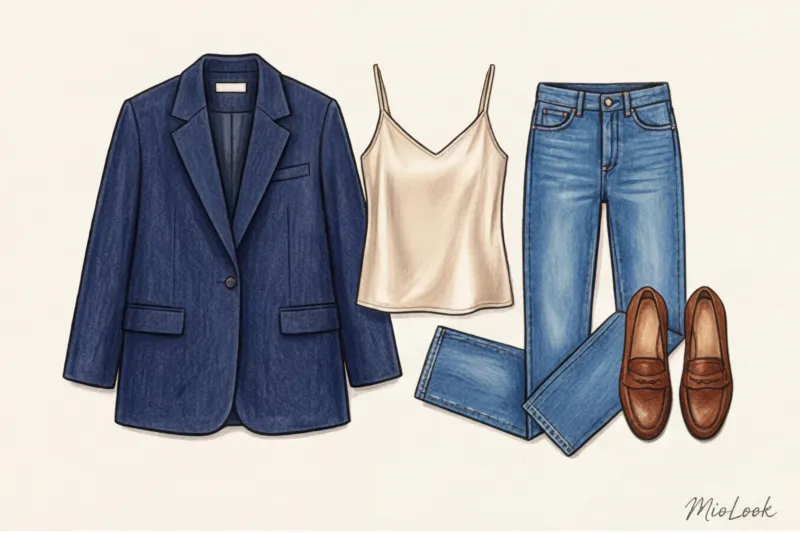
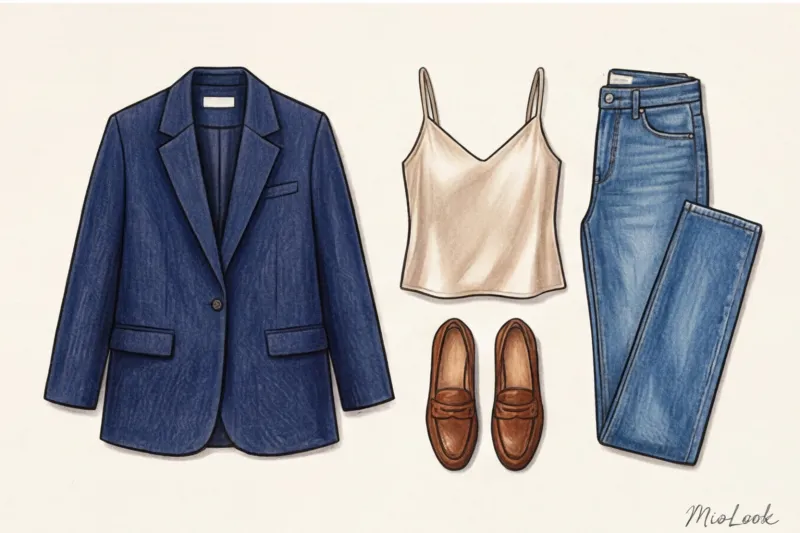
The secret to a truly luxurious look always lies in the contrast of textures. My personal formula, which AI has mastered perfectly, is: an oversized wool blazer + a lingerie-style top + straight-leg jeans + leather loafers. The rough matte knit luxuriously accentuates the smoothness of the silk.
The "Anchor Thing" Method: From Chaos to a Finished Look
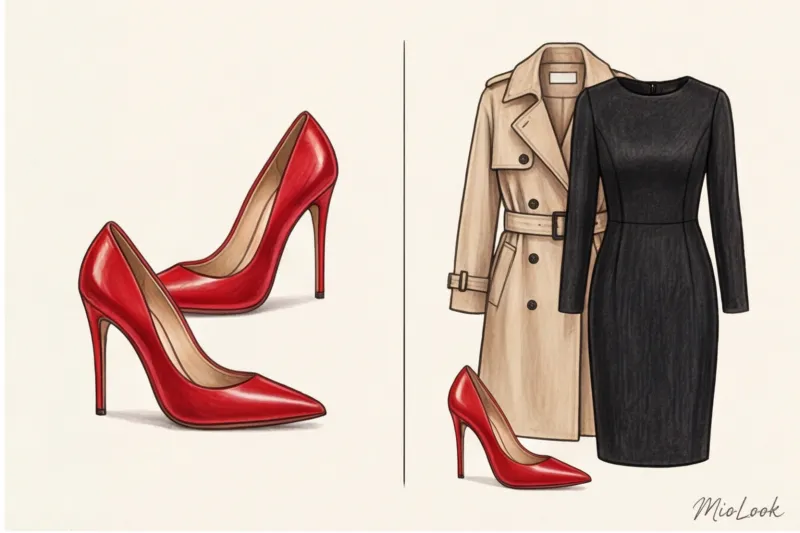
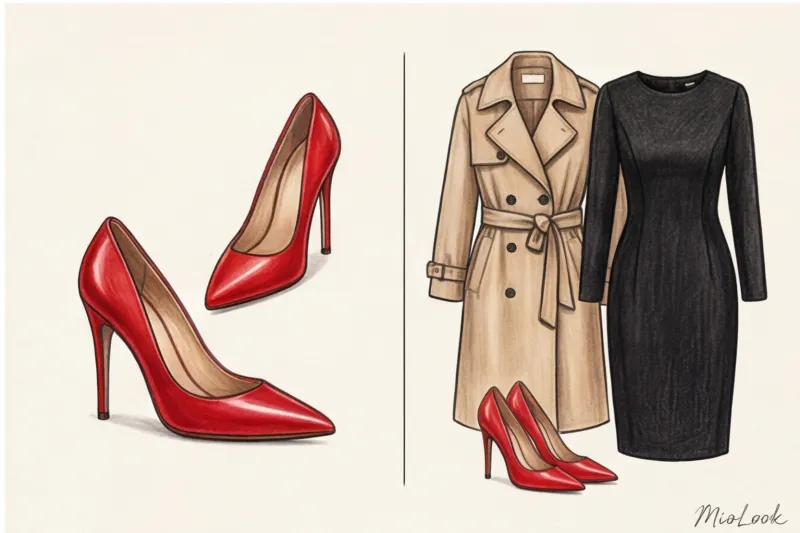
How do we work with clients in person? We take one complex, vibrant piece and "calm it down" with a simple base. The generator uses the same professional method. Let's say you bought a stunning pair of red shoes. You love them on the shelf, but you're not sure how to incorporate them into your life.
You select these shoes in the app as an "anchor." The AI builds an outfit around them. It won't add a leopard-print blouse and gold trousers. Instead, it will suggest a neutral base: a loose-fitting gray pantsuit or a classic beige trench coat. The balance of volumes is strictly maintained: if the generator chooses wide palazzo trousers, the top is guaranteed to be more compact and put-together.
Your perfect look starts here
Join thousands of users who look flawless every day with the MioLook app.
Get access — €0.99 onceBusting the Myth: AI Doesn't Suggest 'Crazy' Combinations
Let's be honest. My clients' most common fear about digitalization is: "What if he asks me to wear a polka-dot skirt with a striped sweater and look like the town lunatic?" This is the biggest misconception about fashion neural networks.
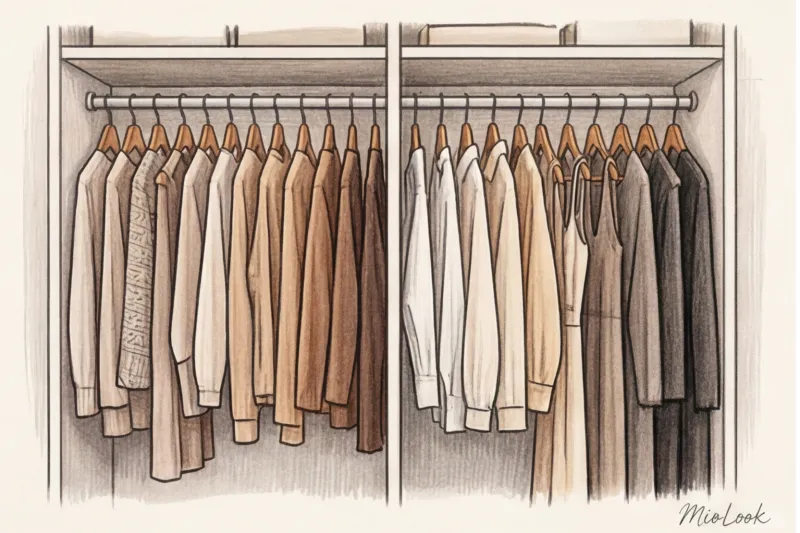
For some reason, we expect Carrie Bradshaw-style extravagance from machines. But reality is counterintuitive: a quality virtual stylist is incredibly conservative. It doesn't take risks. It creates looks based on precise mathematical patterns. The system clearly divides your wardrobe into basic and accent capsules.
The algorithm flawlessly interprets dress codes. If you're putting together a look for business casual on Friday at the office, it'll apply the great "rule of three." Have you ever noticed how a simple jeans and T-shirt outfit looks downright boring until you throw on a structured jacket or add a statement belt? The third element is what separates "just clothes" from "stylish outfits." The generator always searches for and adds this finishing touch.
Instructions: How to prepare items so that the bow generator works perfectly
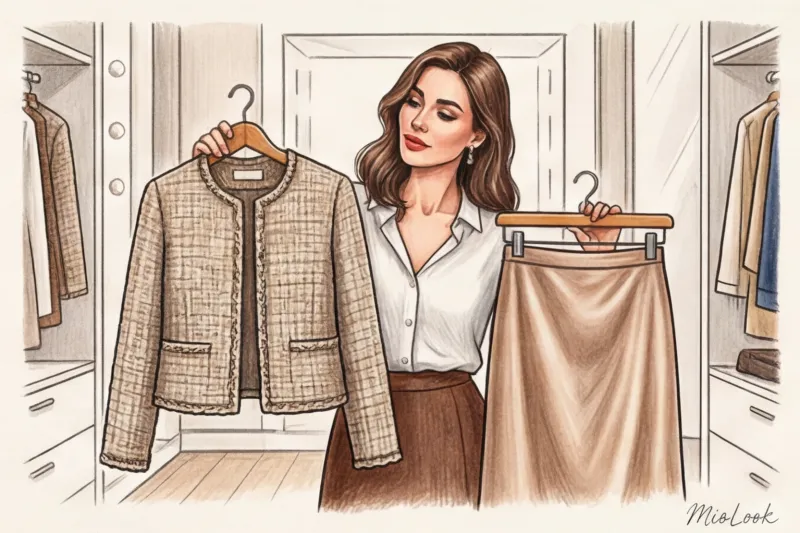
I should draw some clear boundaries here: a look generator isn't a magic pill. It's a powerful tool, and the results depend 100% on the quality of the input data. If you photograph a dark blue sweater in the dim yellow light of a hallway, the AI will think it's a dirty gray and produce incorrect color combinations.
We recently digitized one of my clients' wardrobes (about 150 premium items). We made a classic mistake: we added a pencil skirt that was a size too small to the virtual closet, hoping to "lose weight quickly." As a result, the generator regularly suggested stunning looks with it, causing the client nothing but morning irritation. This is the system's main limitation: it doesn't know your measurements in real time. Only digitize what fits you perfectly, right now.
Secrets of proper preparation:
- Light and background: Photograph things only in daylight on a plain background (ideally, a white drawing paper on the floor or a plain door).
- Tagging is magic: Don't be lazy when filling out the cards. Specify the brand (Zara, Massimo Dutti, COS), season, material (180 g/m² cotton or viscose), and occasion. The more tags you include, the more accurate the algorithm's target will be.
- Crushing into capsules: Immediately divide your items into categories—"for work," "weekend," "vacation." This will narrow the AI search field and speed up search results.
Checklist: 5 steps to a smart wardrobe this week
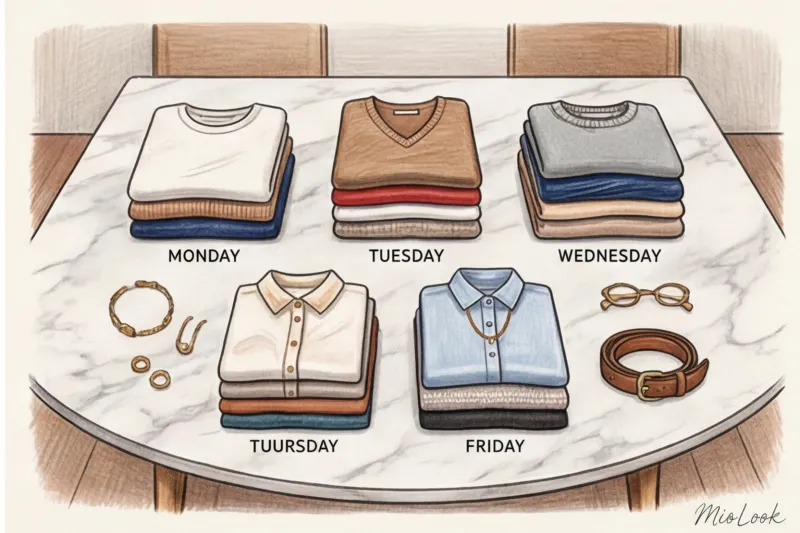
To put this theory into practice today, follow these simple steps:
- Conduct a ruthless audit: remove duplicates from your digital database (five identical white T-shirts will only confuse the algorithm) and items that require dry cleaning or repair.
- Mark your favorite, high-quality items (like a basic cashmere sweater) as "favorites" so the AI can build looks around them more often.
- Set a ritual: set aside exactly 10 minutes on Sunday evening. Generate and save five images for the upcoming work week in the app.
Ready to get started?
Try the MioLook plan for free—no commitments required. Download your first 10 items and see how the magic works.
Get access — €0.99 onceSummary: Your Personal Stylist Who Never Sleeps
Fashion shouldn't be a source of daily neurosis. It's a tool for communicating your status and mood, a captivating game whose routine rules can now be safely delegated to technology. Going from 20 minutes of morning fussing in front of the mirror to two minutes of absolute confidence is a new luxury, accessible to every woman today.
A look generator based on your clothes does the most important thing: it doesn't just recoup your past shopping expenses by plucking undeservedly forgotten treasures from the depths of your closet. It gives you an incredible sense of control. You finally begin to control your things, rather than them controlling you. And this feeling of self-confidence is worth far more than the most expensive designer bag in your closet.