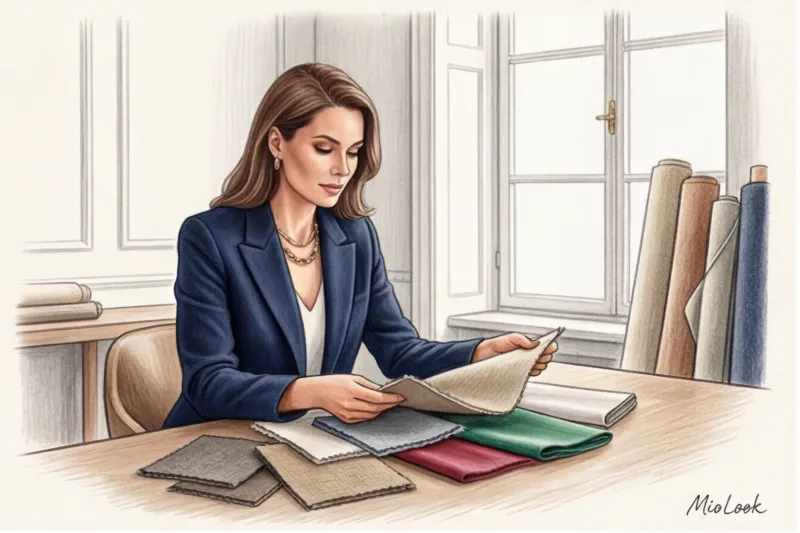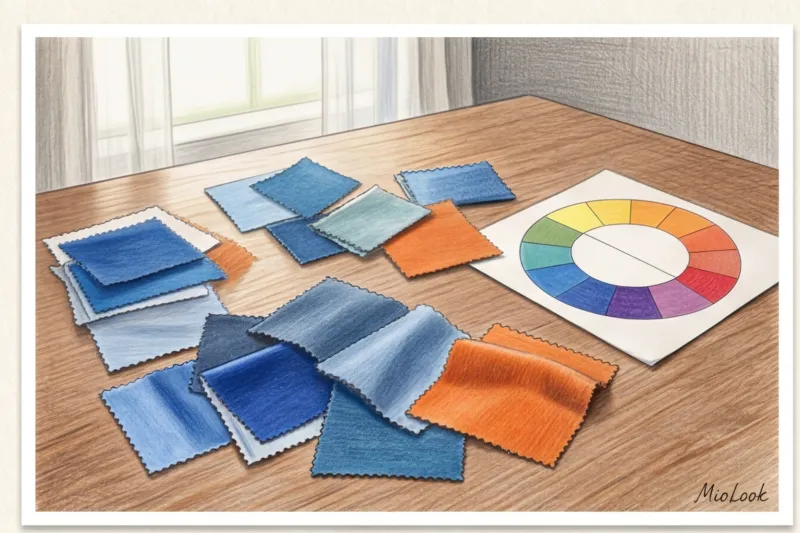
Over 12 years as a personal stylist, I spent hundreds of hours applying multi-colored fabric strips to clients' faces. We were searching for "that" shade of blue that would make their eyes sparkle without accentuating signs of fatigue. It was a long, subjective, and rather tedious process. Today, modern clothing color matching app It can analyze micro-contrasts in your appearance and wardrobe in a split second.
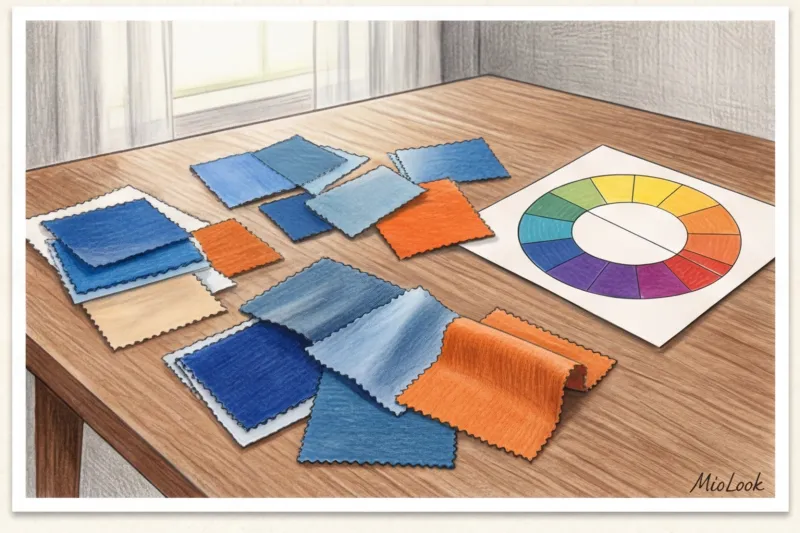
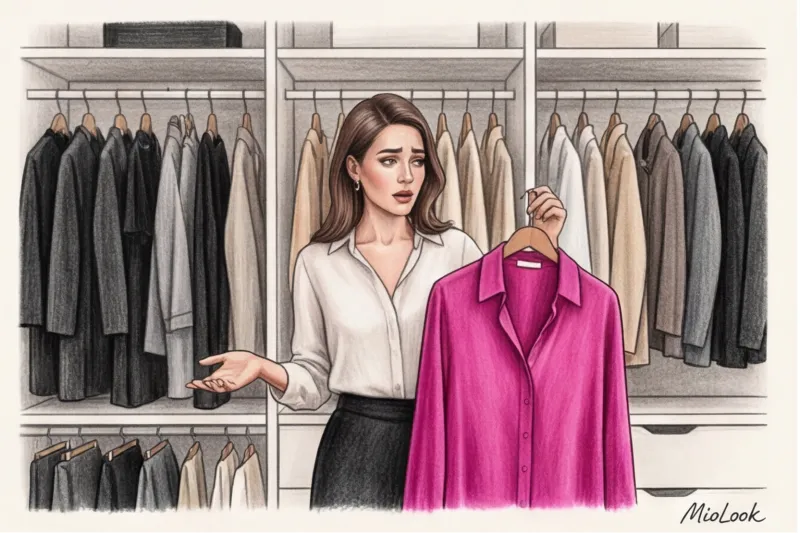
According to internal industry research, 80% of women wear only basic colors every day: black, gray, beige. And they do this not out of a deep love of minimalism, but out of a simple fear of mixing and matching bright shades. We're afraid of looking awkward, so we choose safety.
But technology has changed the rules of the game. We've already covered the basic theory in more detail in our complete guide. Fashionable colors in clothing: trends and combination rules , and today I want to show you the inside story. We'll explore how computer vision algorithms see your wardrobe, why traditional color rules are outdated, and how artificial intelligence helps create mathematically precise yet visually stunning looks.
Why the Color Wheel No Longer Works (and Why We Need Algorithms)
Every other style article advises, "Take Itten's color wheel, find opposing shades, and wear them together." It sounds simple, but in practice, it's a recipe for fashion failure. The color wheel was created for painters mixing pure pigments on canvas, not for women trying to pair a silk blouse with wool trousers.
I had a client who, strictly following Itten's rules, bought a complementary outfit: a deep orange top and a bright blue skirt. In theory, it was the perfect contrast. In reality, the cheap sheen of the polyester on the top, paired with the thick, matte suit fabric of the skirt, created the effect of a promoter's uniform rather than an elegant color block.
The fact is, the human eye is easily deceived. There's an illusion of simultaneous color contrast: our brain alters the perception of a hue depending on the color next to it. Add to this the distorting lighting in fitting rooms (where lamps often have a warm yellow or dead-white undertone), and you end up with an item that will look completely different at home.
This is where algorithms come into play. A neural network isn't susceptible to optical illusions. It reads objective data.
How a modern clothing color matching app works
To understand the magic of a smart wardrobe, we need to delve a little deeper into fashion tech. Artificial intelligence uses computer vision technology. When you upload a photo of an item, the algorithm doesn't just see "a red sweater."
It breaks the image down into pixels, isolates the background, accounts for glare from lighting, and calculates the exact hex code (hexadecimal color code) of your item. The AI can distinguish up to 16 million micro-shades. By comparison, even the trained eye of a professional colorist can confidently identify and remember only a few hundred.
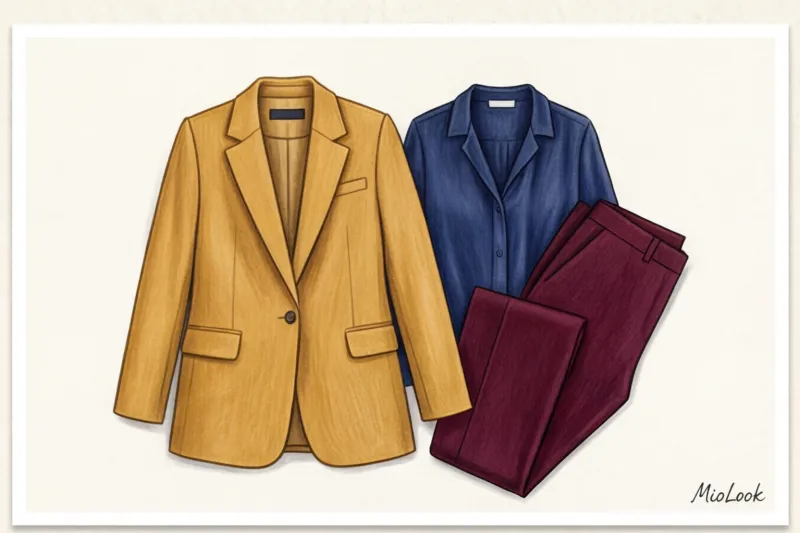
In addition to recognition, algorithms implement the rule of proportions in image selection 60-30-10 , which is borrowed from architectural design. A good color-matching app won't suggest you wear 50% green and 50% pink. It will distribute the colors as follows: 60% main color (e.g., a suit), 30% secondary color (a blouse), and 10% accent color (a bag or shoes). This is pure style mathematics.
3 subtle coloring errors that AI can spot right away
Before my clients started using digital wardrobes, they often made the same micro-mistakes. It's hard to spot them with the naked eye—the look just seems "off."
- Temperature conflict in one base color. You wear a white T-shirt from a mass-market store (like H&M, where the cotton is often bleached to a cool, bluish undertone) under an ivory jacket (with a warm undertone). The result? Next to the warm jacket, the T-shirt appears washed out and bluish, while the jacket, compared to the T-shirt, looks yellowed with age. AI instantly detects the temperature difference and blocks such combinations.
- Ignoring the "weight" of color. Dark colors are visually heavier than light ones. If you wear a chunky black chunky knit sweater with flowing light beige viscose trousers, you'll look like an inverted triangle. Algorithms balance the visual weight by suggesting dark shoes or a belt to ground the look.
- Dispute with the portrait zone. We often forget that our makeup and hair color are just as much a part of our image as our clothes. Wearing a neon pink sweater without wearing any makeup risks erasing your face from your own portrait.
The Texture Factor: What Breaks Even the Perfect Palettes
Texture is the hidden boss of coloristics. For the algorithm, burgundy on glossy velour and the same burgundy hex code on dense matte cotton are two different colors. Smooth textures (silk, satin, leather) reflect light, making the color brighter and lighter at the edges. Loose matte textures (wool, linen, suede) absorb light, making the shade deeper and darker.
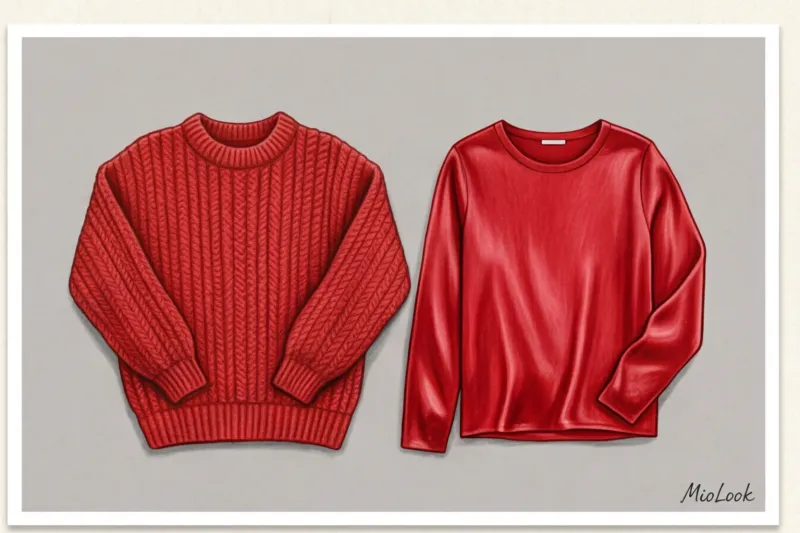
If you're going for a sophisticated monochromatic look, AI will tell you: don't try to match tone-on-tone pieces (you'll always end up looking wrong). Instead, mix different textures within the same shade. The smooth silk of a skirt and the fluffy cashmere of a sweater will create the necessary depth.
Your personal AI colorist in your pocket
Upload your items to MioLook, and the algorithm will instantly select perfect color combinations based on texture and your body type.
Get access — €0.99 onceForget the 12 color types: why neural networks are more accurate
And now I'll say something that classic stylists might throw stones at me for: the system of 12 color types is hopelessly outdated. All these "Soft Autumn," "Contrasting Winter," and "Light Summer" ideas were a great marketing tool in the 1980s, when Suzanne Cagil adapted color theory for the mass market.
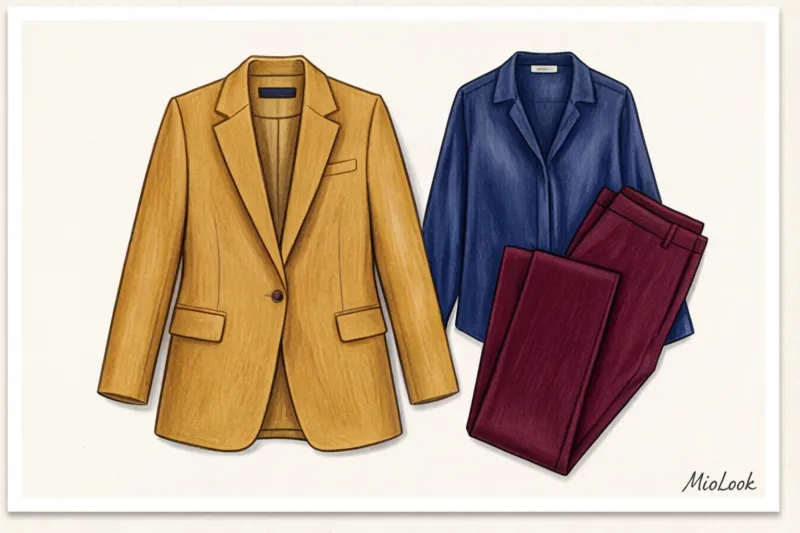
But today, trying to squeeze 8 billion people with unique levels of melanin, carotene, and hemoglobin into 12 rigid frames is absurd. Because of these frames, my clients forbade themselves for years to wear their favorite colors, black or yellow, because someone told them, "You're Spring, so it's not recommended for you!"
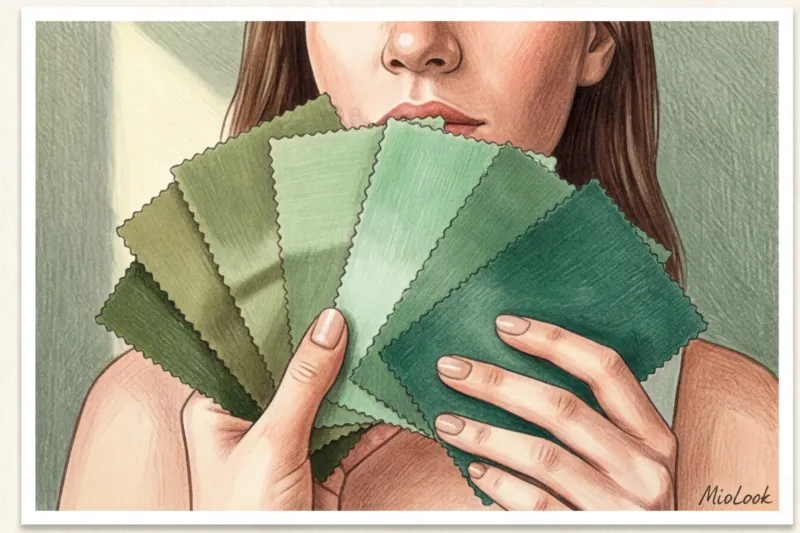
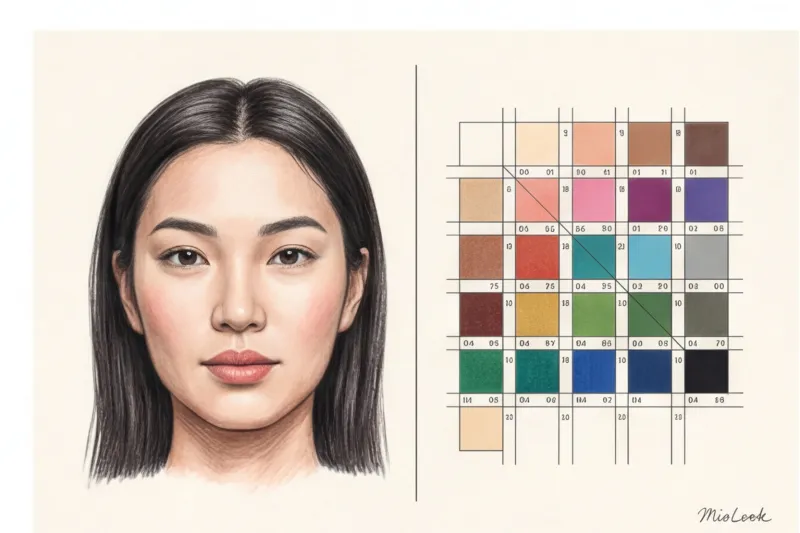
Artificial intelligence works differently. It relies on the principles of spectrophotometry. The algorithm doesn't label you. It calculates the precise level of contrast between your eyes, skin, and hair, and then creates a personalized dynamic color matrix. (By the way, if you're interested in how this theory developed before the age of AI, you can read about it in our article about 12 Color Types of Appearance: A Guide to Choosing a Palette ).
Moreover, AI gives freedom. It doesn't prohibit colors. If the neural network sees that a trendy lime shade makes your skin look gray, it won't remove it from the capsule. It will simply suggest shifting this color to the lower part of your body (pants or skirt), keeping it away from your face, and will add your ideal complementary shade to the portrait zone.
Pantone Sync: AI vs. Trend Marketing
Every season, trend agencies like WGSN and the Pantone Color Institute announce new "must-have" shades. According to McKinsey (2024), rapidly changing color trends are one of the main drivers of impulse purchases.
Remember the recent butter yellow craze? Brands profit from you buying up new collections. But should you? A clothing color picker app works like your own personal financial filter.
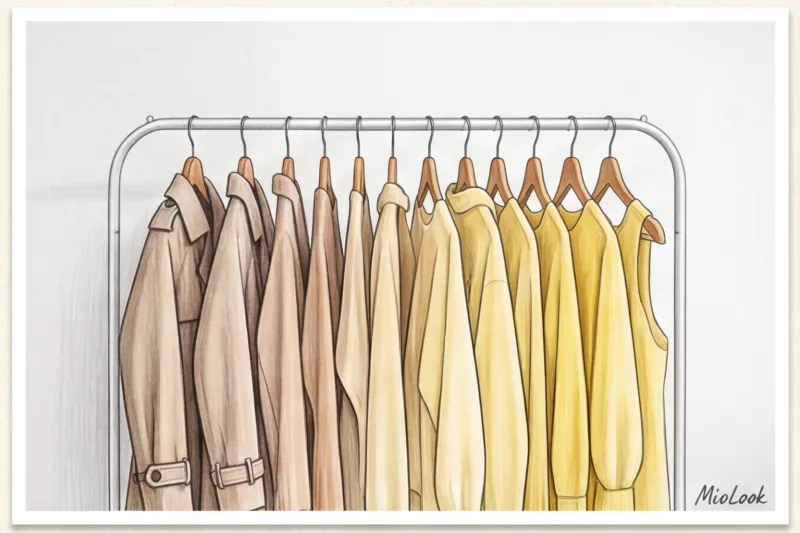
Before buying a trendy jacket, you can virtually try it on against your already digitized database. The AI will show that this shade of yellow only pairs with your jeans and clashes with the other 80% of your wardrobe. Cancel the purchase—money saved.
Conversely, if the algorithm finds five or more harmonious pairings between a new item and your old ones, it helps you safely integrate a trendy piece into your basic capsule wardrobe without the "I've put on all my best pieces at once" effect.
A Stylist's Experiment: Assembling a Capsule with an Algorithm
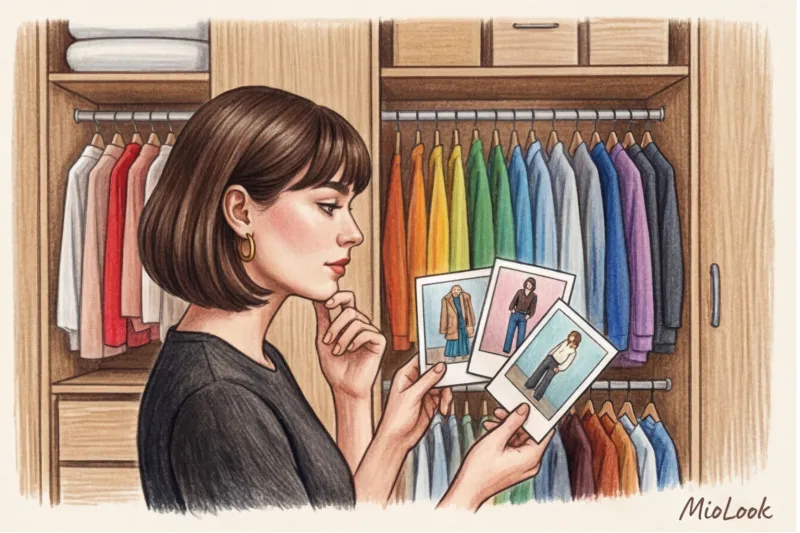
To prove my point, I conducted a personal experiment. For six months, I dressed exclusively based on AI recommendations in an app. The results? My morning preparation time dropped by exactly 15 minutes (and for a busy person, that's precious minutes of sleep or a quiet coffee). But most importantly, my wardrobe utilization increased from the typical 20% to 75%.
How does this work in practice? Here's a step-by-step process for creating non-obvious images from an article about Capsule Wardrobe: A Complete Guide to Creating One using a neural network:
- Digitization. You take pictures of your things. This is where it all lies. important limitation , which many people keep quiet about. Let's be honest: AI is useless if you're photographing things in the evening under a yellow incandescent lamp. Computer vision works with pixels, and poor lighting will distort any hex code. Shoot only in natural daylight.
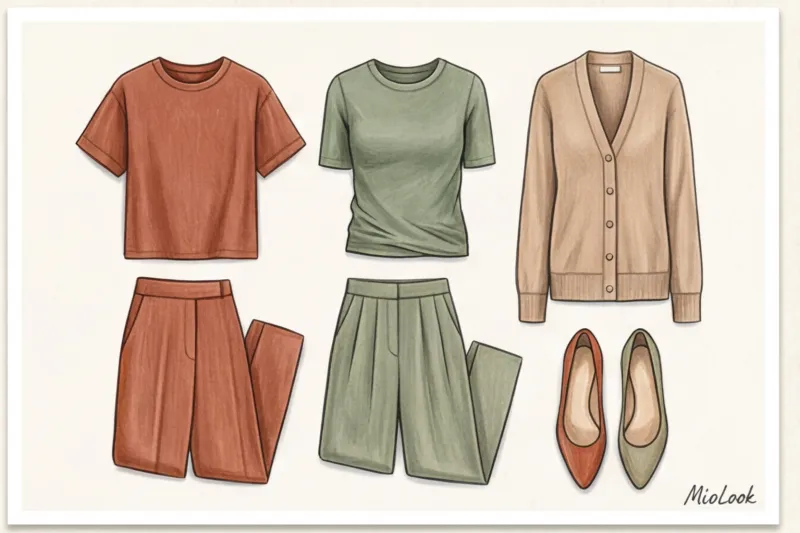
- Generation. You press a button, and the algorithm cycles through thousands of combinations. One time, the system suggested my client wear a chunky emerald merino wool sweater with a light lavender silk skirt. She would never have paired these two items together on her own. But in reality, the deep green and soft purple created an incredibly stylish color-blocked look.
- Statistics tracking. The app remembers what you've been wearing and calculates your true "confidence color"—the shade you most often wear on important days, even if you don't realize it.
Ready to rethink your wardrobe?
Try MioLook's free plan—no commitments required. Digitize your items and get your first 10 AI looks today.
Get access — €0.99 onceSmart Wardrobe Technologies: The Future of Style
The future of fashion isn't about abandoning human taste in favor of soulless machines. It's a hybrid of your individuality and machine-like precision. The app doesn't dictate your style; it expands the boundaries of your imagination, removing cognitive load.
We're moving from simple palette generators to full-fledged virtual try-ons, where algorithms consider not only color but also fit. You'll stop buying duplicates and start seeing the potential in what's already hanging in your closet.
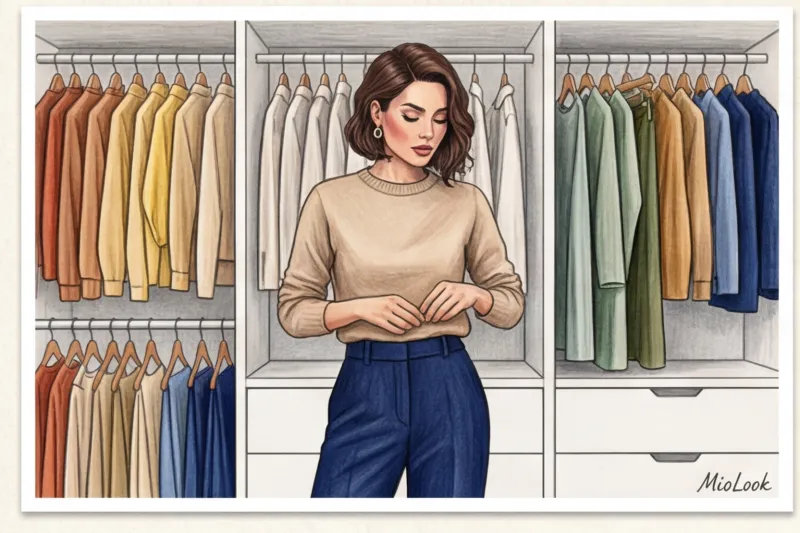
If you want to start using technology today, here's my professional checklist:
- Start by digitizing your base: upload your jeans, basic t-shirts, and outerwear to the app.
- Take a photo of the 3 brightest, most striking items that you don't know what to wear with.
- Ask the algorithm to associate the base with accents.
- At least once a week, wear the combination suggested by the neural network, even if it seems unusual to you.
"Technology in fashion isn't meant to replace stylists. It's meant to give every woman a tool that allows her to feel confident every day without spending hours in front of the mirror."
Don't rush into buying a new color in the hopes it will change your style. Digitize the colors you already own and let mathematics find the perfect pair for them. It's amazing how many new looks you can create simply by looking at your closet through the eyes of a neural network.