Have you ever noticed the paradox: we spend hours admiring the complex shades in Milan Fashion Week street style photos, and then head to the checkout with yet another black turtleneck or beige trench coat? In 12 years of working as a stylist in the luxury segment, I've seen hundreds of wardrobes that look exactly the same. It's not a lack of taste. It's cognitive fatigue and a simple fear of making a mistake.
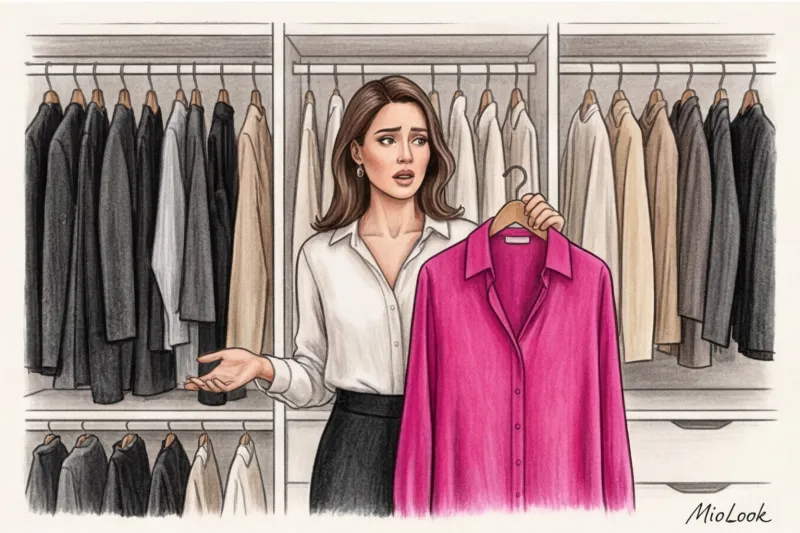
This is where the rules of the game change Neural network: color combinations in clothing no longer requires a colorist's degree. Algorithms take care of the most complex style mathematics—analyzing undertones, textures, and light reflections. I wrote more about how technology is completely changing our approach to shopping in our A complete guide to a neural network stylist for your closet.
Today, we'll explore why classic coloristics rules are hopelessly outdated, and how artificial intelligence helps you wear complex shades with the confidence of a Milanese fashion influencer.
Black and Beige Syndrome: Why Your Wardrobe Is Losing Money
According to McKinsey's extensive "State of Fashion" report (2024), the average wardrobe utilization rate (WU) globally is a dismal 20%. The remaining 80% is what's known as "dead capital." And, in my experience, in the premium segment, this capital is almost always black, gray, or beige.
Why do we invest thousands of euros in basic shades? The answer is simple: the cost of error is too high. When buying a Max Mara cashmere coat or a classic bag, we want to be sure it will go with everything. The end result is a wardrobe that's "safe," but unbearably boring.
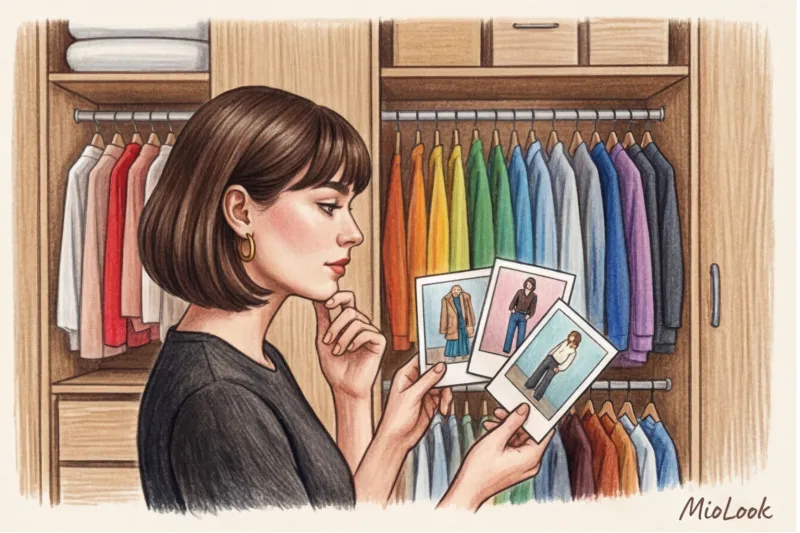
One of my clients, a top manager at an IT corporation, admitted: "I love emerald green, but when I wear it, I feel like I look like a Christmas tree. So I always go back to a black suit." The human brain avoids complex tasks in the morning. The introduction of an AI stylist, such as MioLook , solves this problem by taking over the decision-making process and increasing the wardrobe utilization rate to 65-70%.
Access to MioLook for €0.99 — one-time payment
A smart AI stylist will choose the perfect look for you and help you incorporate color into your basic wardrobe.
Get access — €0.99 onceThe Anatomy of Hue: Why Itten's Color Wheel No Longer Works
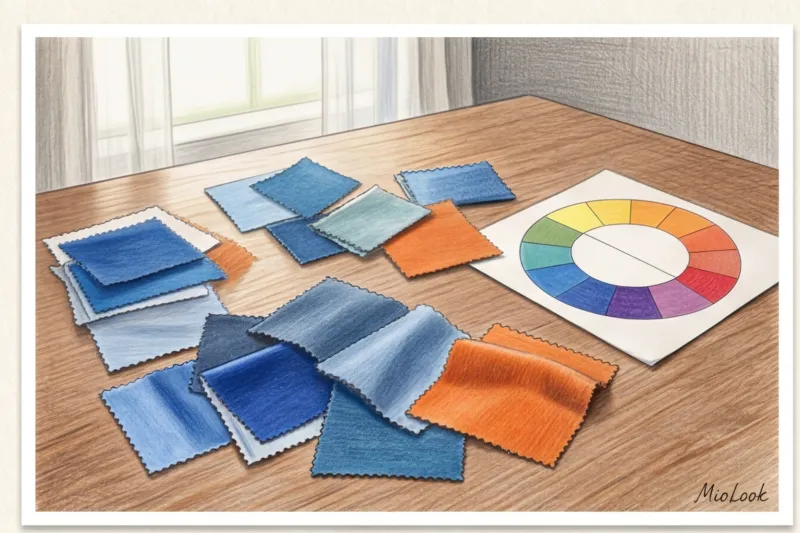
Open any article on style from ten years ago, and you'll be told to use Itten's famous color wheel. Forget it. Johannes Itten created his circle at the Bauhaus school for artists working with gouache and watercolor on flat white paper. But clothing doesn't exist in 2D space.
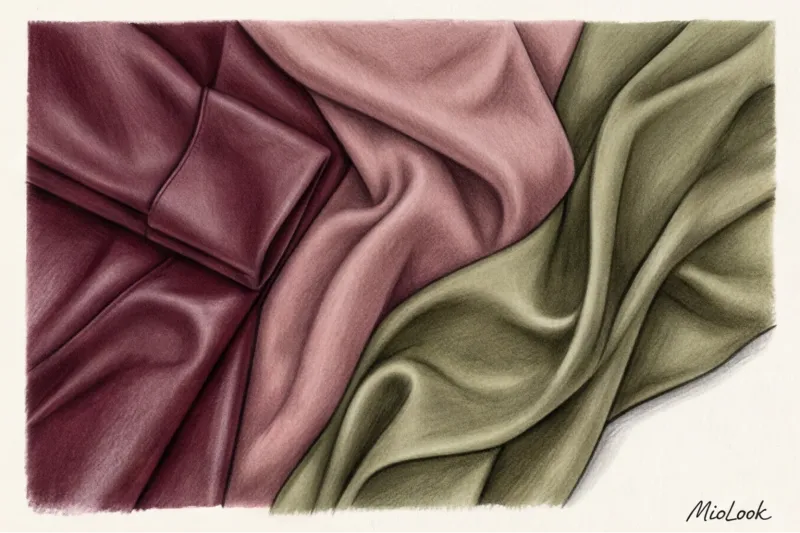
Research by the Pantone Color Institute (2023) confirms that while the human eye can distinguish millions of micro-shades, our working memory can only hold three or four at a time for combination. Moreover, color in clothing is subject to the laws of optics and the physics of materials. The neural network is trained not on dry theory from drawing textbooks, but on millions of street style images. It understands that burgundy on thick cotton and burgundy on glossy silk are, from a styling perspective, two completely different colors.
How AI "Sees" Things: Three Hidden Parameters of Premium Style
When you upload a photo of an item to an app, the algorithm doesn't simply tag it with "red" or "blue." It reads complex metadata that the human eye often misses. That's why attempts to assemble an image "in a single color scheme" by eye often end in failure.
Temperature and Undertones
The most common and insidious mistake is mixing different temperatures of the same color, especially white. There's optical white (with a cool, bluish undertone), milky white, ecru, ivory, and eggshell.
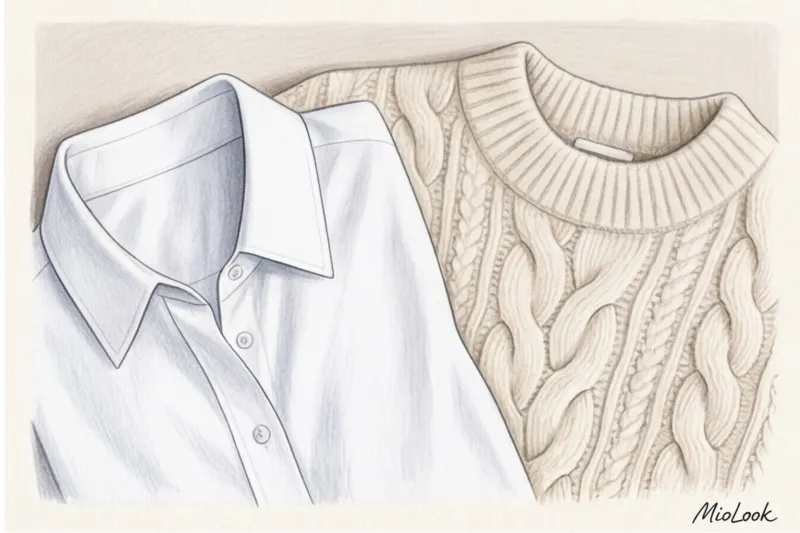
Let me give you a practical example. A client bought a stunning warm-toned camel wool cardigan from Loro Piana and paired it with a crisp white crisp poplin shirt. The cool contrast of the shirt made the expensive, soft cardigan look dirty and made her look tired. When we ran the wardrobe through the AI, the system categorically separated these items, suggesting an ecru silk top to pair with the cardigan. The temperature conflict was resolved, and the look instantly lived up to its price tag.
Texture and light reflection
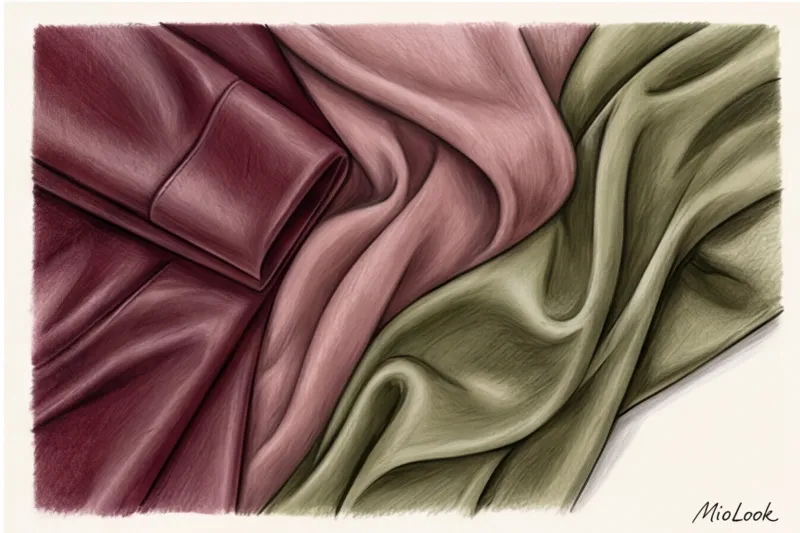
Material dictates color. Smooth textures (silk, satin, polished leather) reflect light, making the color appear brighter, lighter, and more vibrant. Fleecy and loose textures (cashmere, suede, velvet, corduroy) absorb light, making the color appear deep, matte, and heavy.
That's why a smart algorithm will never suggest pairing a deep burgundy suede skirt with a glossy red leather jacket without a neutral element to tie it all together. The difference in light reflection will create a visual dissonance, cheapening both pieces.
4 complex coloristic techniques that a neural network assembles without errors
The famous "three-color rule" is an outdated myth. It's a stylistic "wheels on a child's bicycle," created to prevent beginners from making mistakes. Premium styling at the level of Vogue works entirely differently.
Deep Monochrome (Quiet Luxury)
The most expensive and prestigious looks are often built on five or six shades of a single color. For example, a gradient from light sand to rich dark chocolate. It's incredibly difficult for anyone to create such a look on their own: there's a risk of ending up looking like a boring, flat blob.
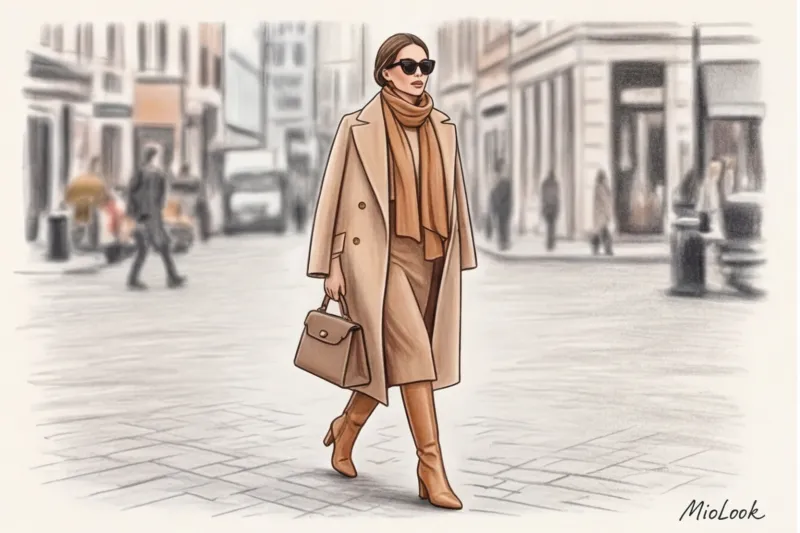
The neural network masterfully solves this problem by playing on the differences in texture: it combines smooth camel wool trousers, a fluffy beige alpaca sweater, and a sleek caramel coat. The color is the same, but the interplay of light adds depth to the image.
Analog color block
This is a combination of complex shades adjacent to each other on the spectrum. Instead of the sharp contrasts of the '90s (red and green), modern influencers are opting for complex transitions: emerald, sea green, and deep cobalt in a single look.
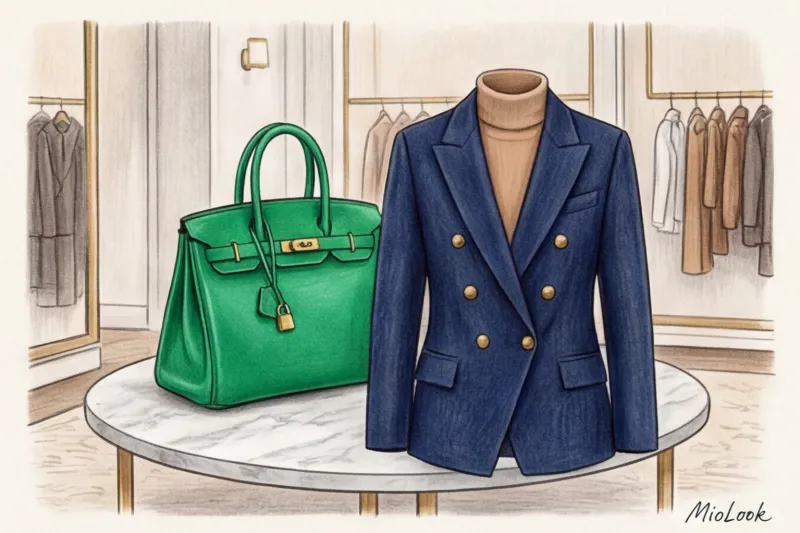
Our brain often rejects such combinations at the trial stage because they seem unfamiliar. The algorithm, however, calculates the harmony of undertones and produces a ready-made solution that looks incredibly elegant and fresh.
Your perfect look starts here
Join thousands of users who look flawless every day with MioLook. Digitize your wardrobe in 15 minutes.
Get access — €0.99 onceInvesting in Color: How AI Saves Impulse Purchases
There's a key concept in the philosophy of a smart wardrobe: Cost-Per-Wear (CPW). Let's say you bought a pair of classic black pumps for $500 and wore them 100 times a year. Their CPW is $5. But what about those stunning fuchsia pumps for the same $500 that you bought on a whim and wore exactly once to a party? Their CPW is a disastrous $500.
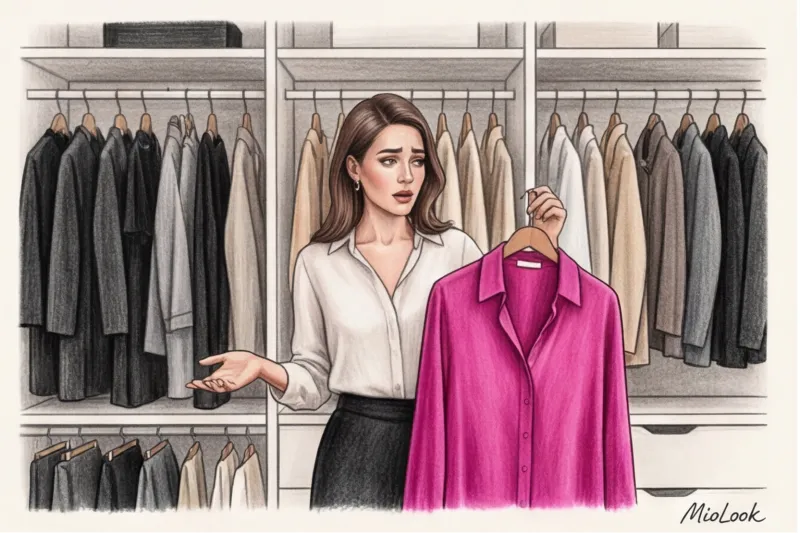
The main financial value of an AI stylist is saving such emotional investments. You simply mark a bright item in the app as "I want to wear," and the neural network integrates these fuchsia shoes into your basic wardrobe in 15 different ways. For example, with a dark gray flannel suit for a work Friday or with straight-leg jeans and a houndstooth jacket.
Of course, let's be honest: this doesn't work if the brightly colored item physically doesn't suit your body type or is completely at odds with your lifestyle (for example, a neon crop top with a strict corporate dress code). AI won't work miracles with an inappropriate item, but it can brilliantly adapt complex colors to basic cuts.
Checklist: How to digitize your wardrobe so AI can produce the perfect colors
An algorithm is only as smart as the input data. To smart wardrobe function It worked flawlessly, follow three rules when digitizing:
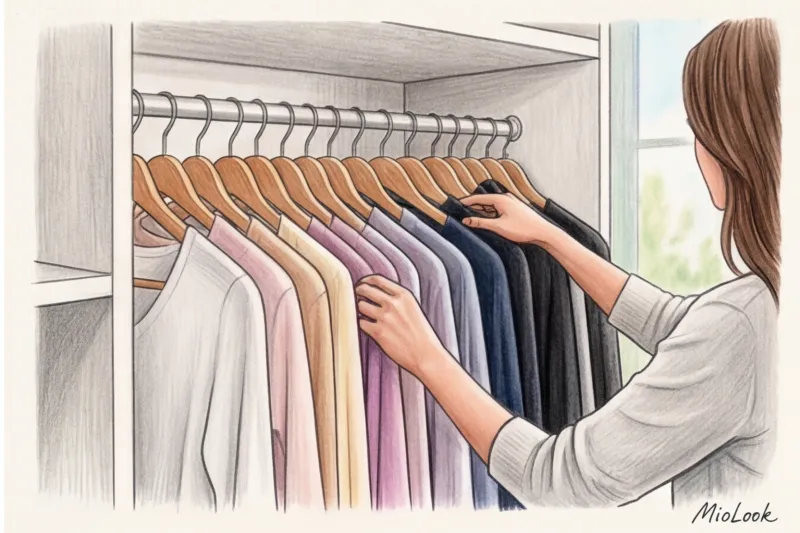
- Shoot only in daylight. Never photograph objects under yellow incandescent bulbs in the bedroom. They distort the color temperature beyond recognition. The optimal time is soft morning light near a window.
- Be sure to indicate the material. If the app allows you to add tags, don't ignore them. "100% silk" or "180 g/m² cotton" will give the neural network an understanding of the item's light reflectivity.
- Update your database seasonally. Skin tone in winter is different than in summer after vacation. If you've changed your hair color or gotten a deep tan, the AI should take this into account when selecting your portrait zone.
New Era: Why Your Best Colorist Now Lives in Your Smartphone
We live in an era where delegating routine tasks to algorithms has become the norm. You wouldn't calculate a route using a paper map, but rather rely on a GPS. Similarly, human visual memory is hopelessly inferior to algorithms in clothing combinations.
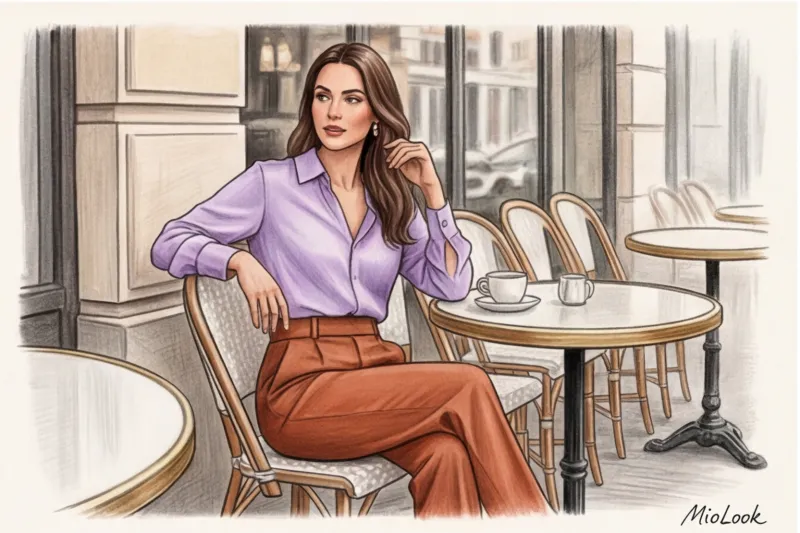
Technology relieves us of the burden of cognitive fatigue. You no longer have to stand in front of your closet wondering if terracotta and lavender go together. Start small: digitize 10 of your favorite basics and five bold accents you rarely wear. You'll be surprised how many new, color-coordinated looks are hidden in your own closet.