If you still consider yourself a "pear," "apple," or "inverted triangle," I have bad news. This system is hopelessly outdated. Fruit-based classifications were invented decades ago to simplify mass-produced clothing, not to make you look stylish.
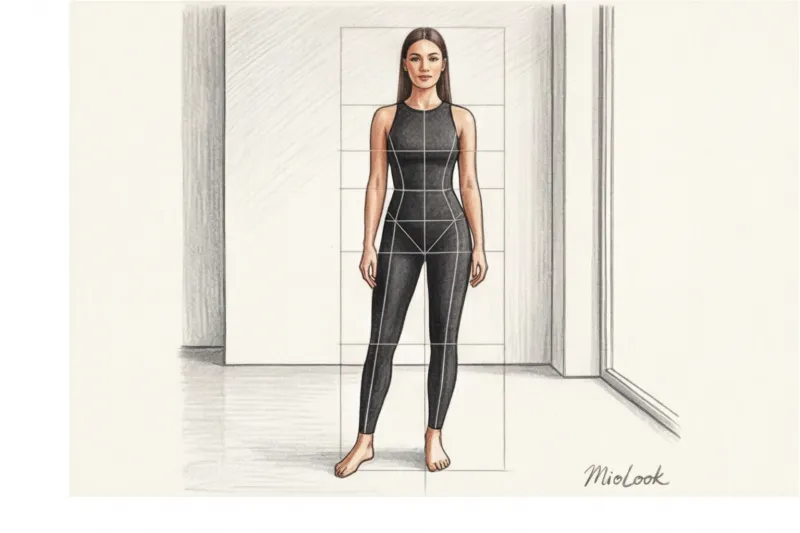
Just as we no longer divide people solely into the rigid categories of “winter” and “summer” (we talked about this in more detail in our the complete guide to neural network style analysis ), it's time to stop fitting the living, asymmetrical and unique body into flat geometric patterns.
Today Use a neural network to determine body type from a photo It can do this in a matter of seconds, producing not just an offensive label, but a precise mathematical matrix of your proportions. And trust me, knowing that your torso is 4 centimeters longer than the standard has a much greater impact on the fit of your pants than the mythical "hourglass" figure.
Forget about "pears" and "apples": how a neural network actually sees your body
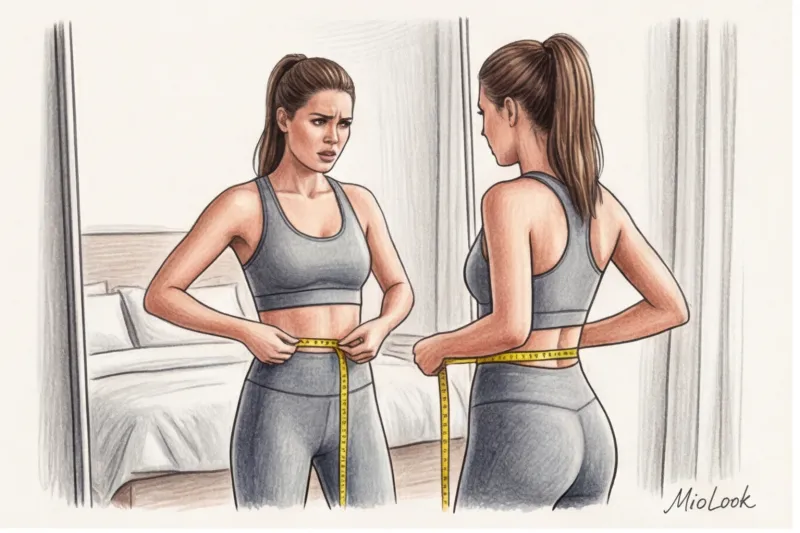
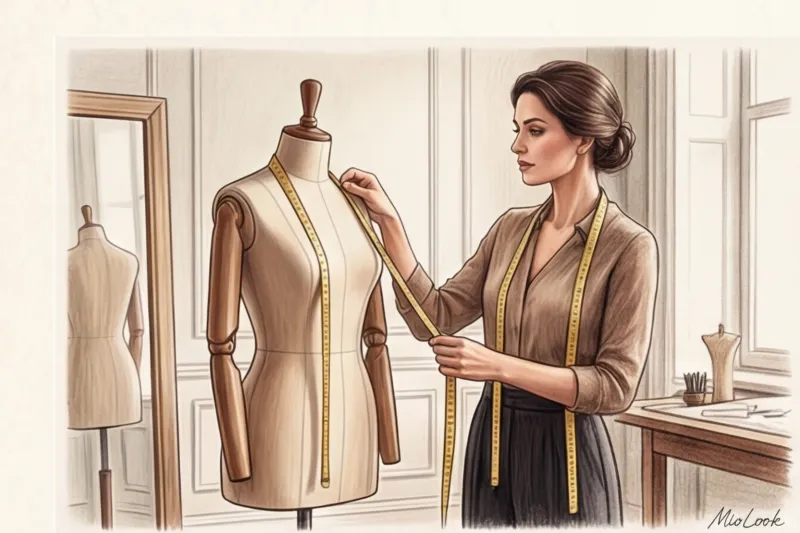
Just seven years ago, I'd spend at least half an hour during my first consultation with a client, crawling around with a measuring tape. I'd measure their circumferences, calculate coefficients, and try to adjust the results to standards. Spoiler alert: according to a large-scale anthropometric study by McKinsey (2024), more than 80% of women don't physically fit into the five classic body types.
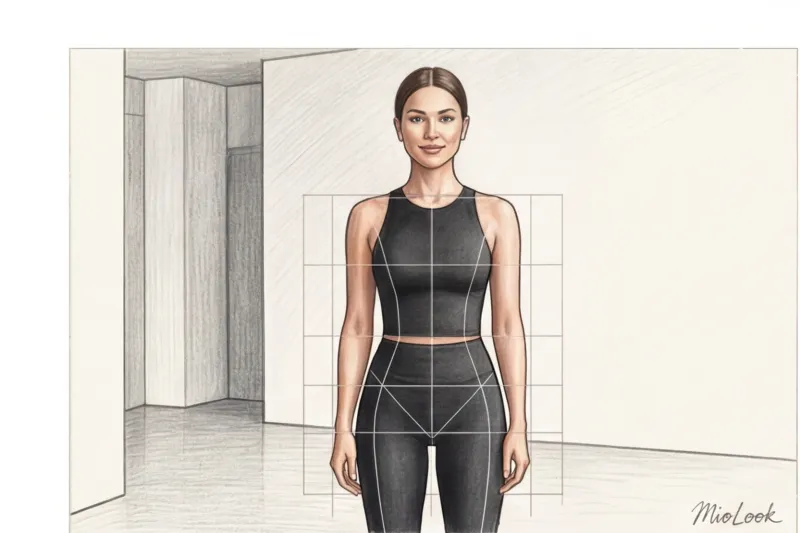
Computer vision algorithms work completely differently. They don't look for similarities with fruit. Artificial intelligence scans a photograph and places dozens of control points on your silhouette.
The system analyzes the international ISO 8559 standard (for clothing sizes) and compares your actual millimeters to it. It calculates your shoulder girdle slope, the difference between your waist and hipbone, and the length of your neck relative to your chest. This transitions from subjective judgment ("I think your hips are wide") to ruthless, yet life-saving, mathematics.
"Your figure isn't a flaw to be hidden with bulky sweaters. It's a set of architectural inputs. Once you have a precise blueprint, shopping turns from a lottery into a clear business objective."
A neural network can determine a person's body type from a photo only under one condition: a checklist for the perfect shot.
Technology works wonders, but it's blind if you give it poor input. One time, my client Anna sent a photo for scanning, and the algorithm persistently recommended cropped trousers and straight-cut jackets. I looked at the results and couldn't understand—in real life, Anna has incredibly long legs. It turned out her husband had taken the photo from top to bottom while sitting on the couch. The perspective distortion had shaved off 15 centimeters of her height.
For AI to work with tailor-like precision, you need the right source material.
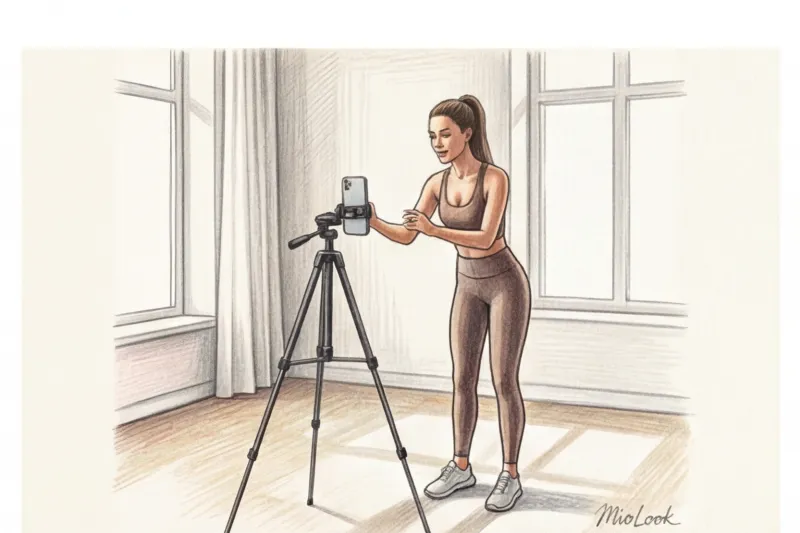
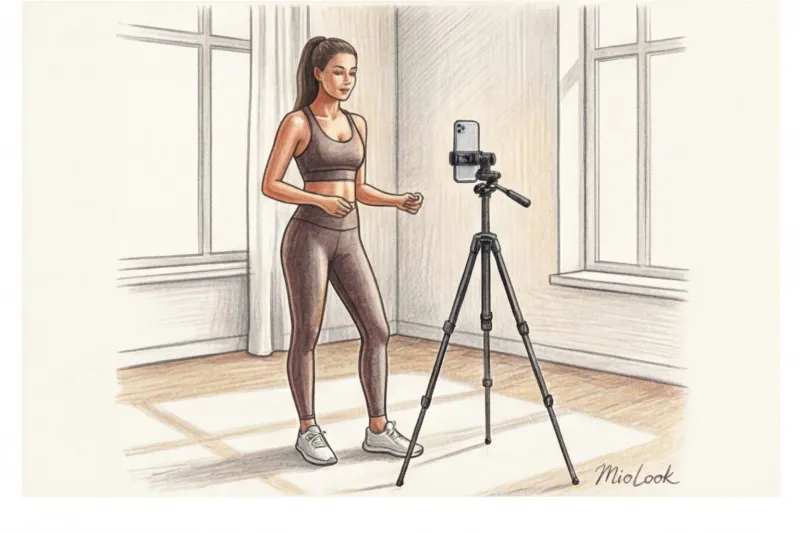
- Camera height: Strictly at your waist level. Any lower, and your legs will appear endless and your shoulders will be narrow. Any higher, and you'll have short legs and a massive head.
- Light: Daylight from the window in front of you. Harsh overhead lighting creates deep shadows under the chest and stomach, which the algorithm can interpret as additional volume.
- Pose: Stand up straight with your feet shoulder-width apart and your arms slightly away from your hips. The space between your arms and waist is crucial for defining your silhouette.
What to Wear for a Scan: The "Second Skin" Rule
No favorite sweatpants or oversized t-shirts. Machine learning can't X-ray thick cotton. Your photo outfit should be thick leggings and a form-fitting top or bodysuit. Be sure to consider contrast: if you have a white wall, wear black. A silhouette that blends into the background will force the neural network to "infer" your contours, and accuracy will drop to a paltry 60%.
Your perfect look starts here
Join thousands of users who look flawless every day with MioLook. Upload a photo and get a body analysis in seconds.
Get access — €0.99 onceMore than just a silhouette: deciphering the algorithm's hidden metrics
According to the Computer Vision in Fashion Tech (2024) report, modern AI scanners calculate up to 50 micro-proportions with 98% accuracy compared to a tailor's manual measurements. And it's these micro-details that are the most interesting.
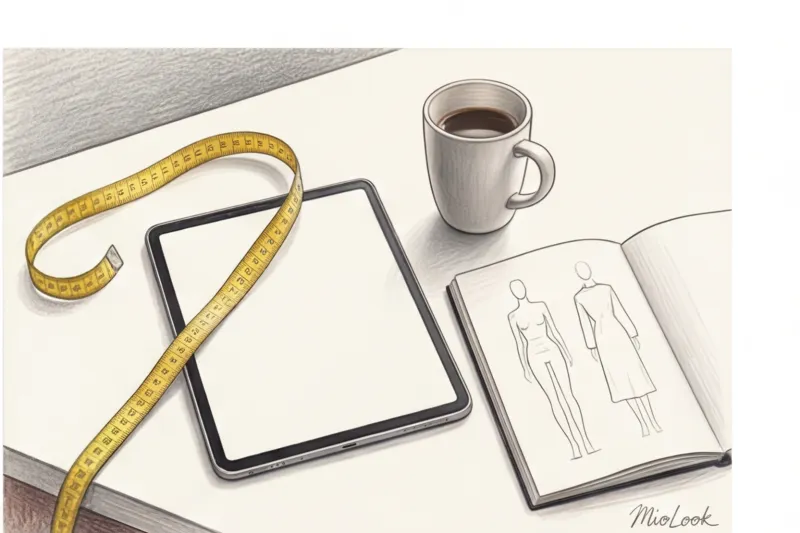
Most women are fixated on horizontal measurements: the width of the chest, waist, and hips. But the actual fit of clothing is 70% dependent on vertical Proportions. The neural network shows the exact ratio between your torso length and leg length.
If you have a short torso (the distance from your lowest rib to your pelvic bone is minimal), wide belts and extremely high-waisted pants will visually transform you into a "man on stilts," where your chest immediately merges with your legs. Understanding your shoulder slope is equally important: sloping shoulders require jackets with a firm shoulder line and shoulder pads, otherwise even an expensive blazer will hang like a sad sack.
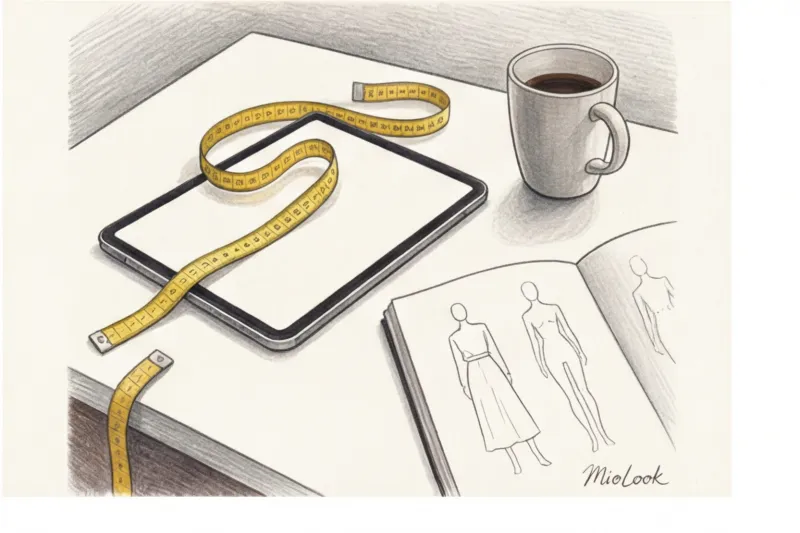
From Math to Shopping: Applying AI Data at Zara, COS, and Massimo Dutti
As a practicing personal stylist, I translate this digital data into the language of rails and price tags every day. Knowing your metrics allows you to filter out 70% of any store's inventory before even stepping into the fitting room.
Let's look at some specific examples from the mass market:
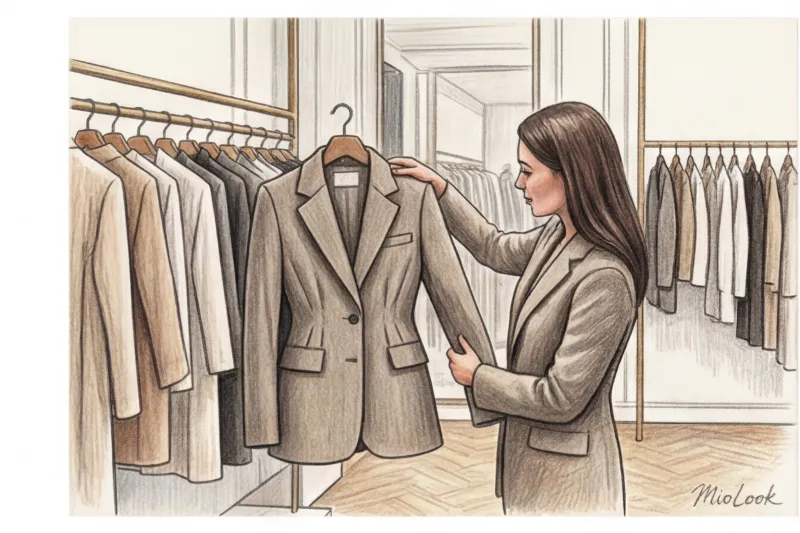
- Zara (budget 40–80 €): Their classic wide-leg trousers are tailored for both regular and long torsos. If artificial intelligence detects a high hipline, the waistband of Zara trousers will painfully dig into your ribs, and a bulge will form in your crotch. Mid-rise styles are your best bet.
- Massimo Dutti (mid-range €90–€150): The brand uses patterns that perfectly fit straight shoulders and an elongated silhouette. If the neural network detects sloping shoulders and a pronounced waist-to-hip difference, their signature straight-cut silk shirts will bulge at the waist.
- COS (mid-range €80–140): This brand's architectural cut demands a precise body shape. If the algorithm shows a predominance of curves in the figure, COS's rigid A-line dresses will make you look two sizes larger.
The point of smart shopping isn't to find the "perfect store," but to understand whose factory patterns match your personal body matrix.
Tired of unsuccessful shopping?
Try MioLook for free: Our smart AI stylist will suggest brands and styles tailored to your exact measurements.
Get access — €0.99 onceThe Biggest Blind Spot: Where Artificial Intelligence Loses to a Human Stylist
I love technology, but I have to be honest: neural networks have a limit to their capabilities. The algorithms' main blind spot is that they don't understand the physics of tissue or your psychology.
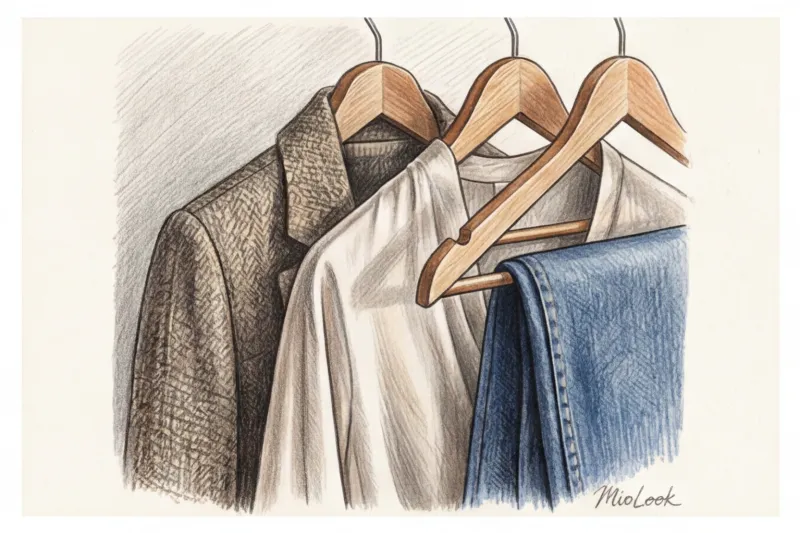
The machine sees your proportions and says, "You need to emphasize your waist with a wrap dress." But it doesn't know the difference between 19-millimeter silk, which flows beautifully over your hips, and cheap viscose, which will highlight even the slightest unevenness. Stiff denim (14 ounces and over) holds its shape and flatters the figure, while thin cotton (up to 120 g/m²) with the same measurements will create a sloppy look.
Furthermore, AI ignores your lifestyle and insecurities. The algorithm might deem your collarbones ideal and suggest a deep V-neck, but if you work at a conservative bank or simply don't like revealing cleavage, this mathematically flawless recommendation will be useless. The technology provides you with a map of the area, but it's up to you (or your stylist) to plot your route based on your comfort level.
Your Action Plan: How to Integrate AI Analytics into Your Wardrobe
Knowledge without application is just informational noise. To put your new data to work, I offer a rigorous action plan that I teach my clients:
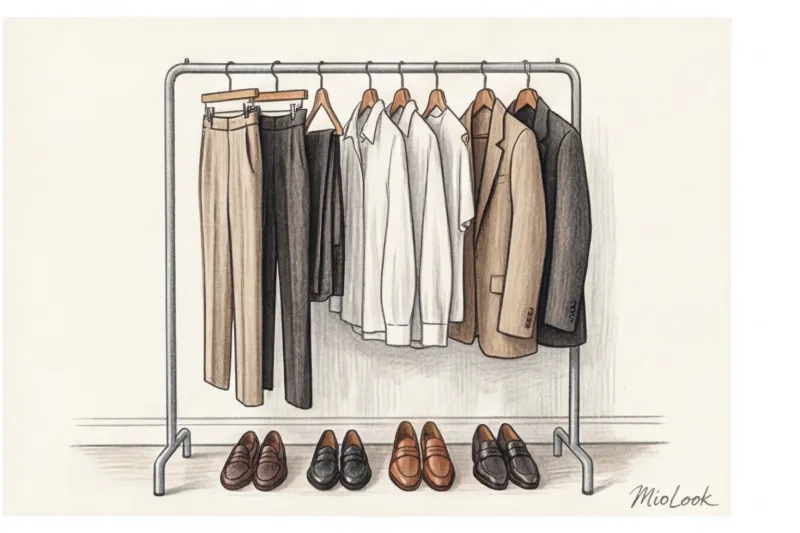
- Digitize yourself correctly: Take a photo according to the checklist at the beginning of the article. Upload it to MioLook app Save the obtained metrics (torso length, shoulder type, volume vectors) in notes.
- Conduct a ruthless audit: Open your closet and take out three items you haven't worn in over six months. Compare their styles with your new AI data. I bet you'll see that this skirt throws off your vertical proportions, and that sweater clashes with your shoulder line. Sell them or recycle them.
- Create a point-by-point shopping list: No more shopping for "mood." Now you're looking for something specific: "mid-rise trousers in a thick fabric for a shorter torso" or "a jacket with a stiff shoulder to balance out the hips."
Style isn't an innate gift or magic. It's the skill of understanding your own proportions and embodying them in the right textures. Hand over the routine measurements to artificial intelligence, and enjoy the creative process of creating your perfect wardrobe.