The Physics of Light and Textiles: How We Choose Fabrics That Age
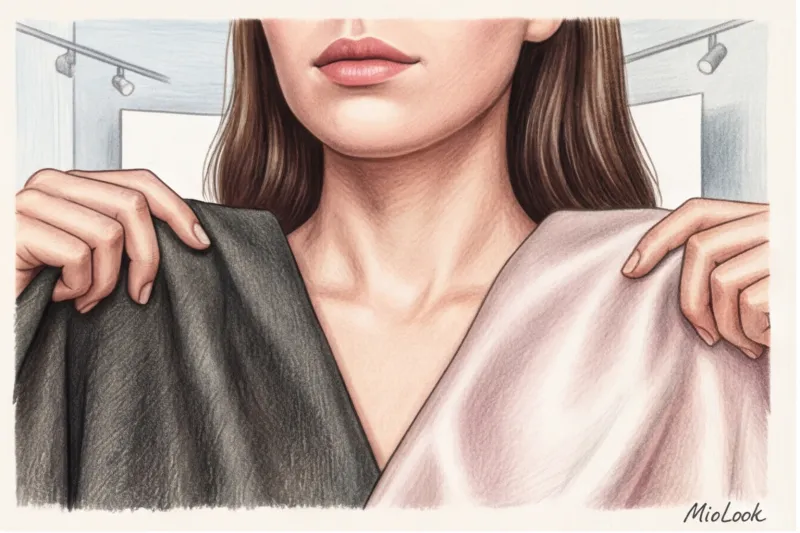
If you've ever been to a professional photo shoot, you know: poor lighting can add a decade to your appearance, while a good studio softbox can erase the signs of a sleepless night and smooth your skin better than any cream. The clothes we wear near our faces operate according to exactly the same laws of optics.
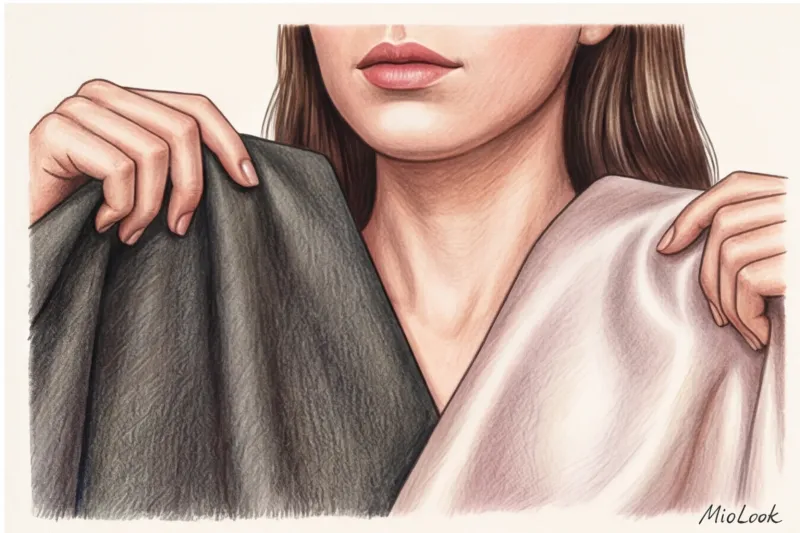
Over 12 years of working as a personal stylist, I have realized the main thing: most often, it is not the styles or prints that betray us, but fabrics that age — textures that mercilessly highlight what you'd like to tone down. We discussed the silhouette's architecture in more detail in our A complete guide to style mistakes that make women look older , but today we will talk specifically about the microrelief of materials.
Last month, at a workshop, my colleagues and I conducted an experiment: we tested 20 types of white shirts on models over 45 in harsh daylight (5500K). The results were striking. A flawless shade with the wrong texture instantly made the face look tired. It's all about how the microrelief of the fabric resonates with age-related changes in the skin—loss of turgor and fine wrinkles. The fabric can either softly diffuse the light onto the chin and neck or cast harsh micro-shadows, turning into a merciless spotlight.
The Cheap Glitter Trap: Polyester, Lurex, and Thin Satin
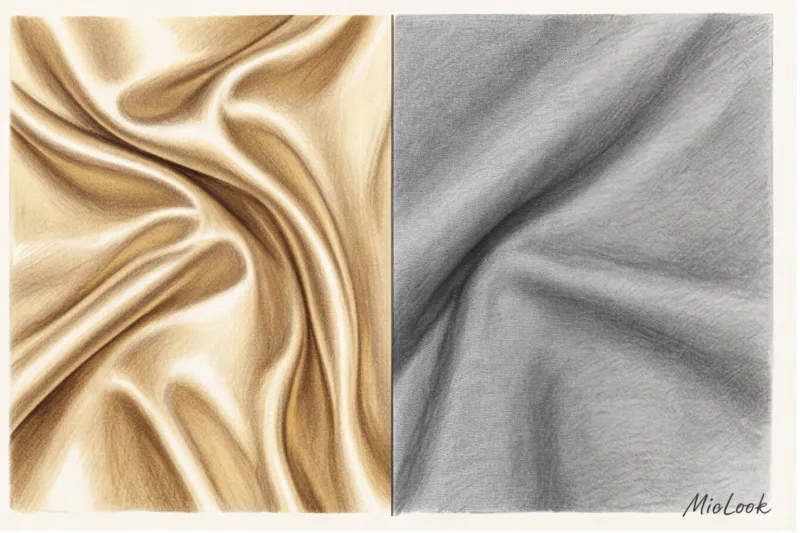
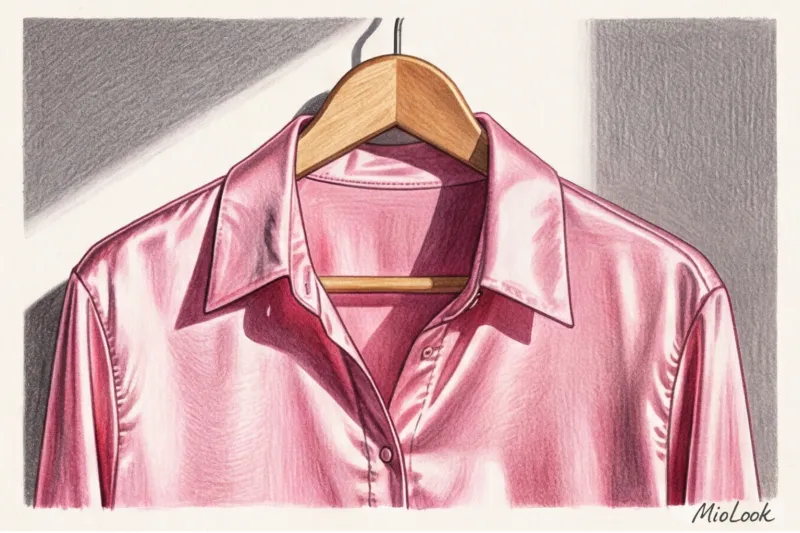
Glossy shine is one of the most insidious elements of a mature wardrobe. Research from the German Textile Institute Hohenstein Institute Studies show that synthetic fibers (such as 100% polyester) have extremely high and harsh light reflectivity. Unlike natural silk, which glows from within, cheap synthetics reflect light in flat, harsh reflections.
This "glassy" sheen works like a smartphone flash aimed directly at the face: it reveals the slightest skin imperfections, pigmentation, and signs of fatigue. The same applies to fabrics with a generous amount of lurex. Metallic threads create visual noise, which not only cheapens the look but also makes it appear fussy. Elegance in adulthood requires a calming texture.
Your perfect look starts here
Join thousands of users who look flawless every day with MioLook. A smart AI stylist will analyze your clothes and create stylish outfits.
Get access — €0.99 onceThe Foil Effect: How Artificial Silk Accentuates Imperfections
Thin synthetic satin (especially in the budget segment of €15–€30) has an unpleasant property: it doesn't flow, but rather breaks. The resulting sharp folds visually replicate nasolabial folds and wrinkles on the neck. Furthermore, thin synthetics accumulate static electricity. The fabric literally clings to the body, treacherously clinging to the stomach, hips, and bra line, revealing to others what a good cut should delicately conceal.
The Downside of Naturalness: When Linen and Heavy Cotton Work Against You
In the world of sustainable fashion, it's common to swear by 100% natural fabrics. However, I'm here to debunk this myth: coarse linen and completely matte, stiff cotton are far from the best choice after 40. This is one of the most counterintuitive insights my clients encounter.
Why does this happen? A dull, overly matte texture completely absorbs light. It doesn't provide any backlighting to the subject. As a result, the face next to such fabrics (especially dark and earthy shades) appears drier, duller, and lacking volume.
"Deep matte fabrics act like a black hole of light. They suck the radiance out of your skin. A light satin finish always works better than a full, rough matte finish," notes color theorist and stylist Anna Bey.
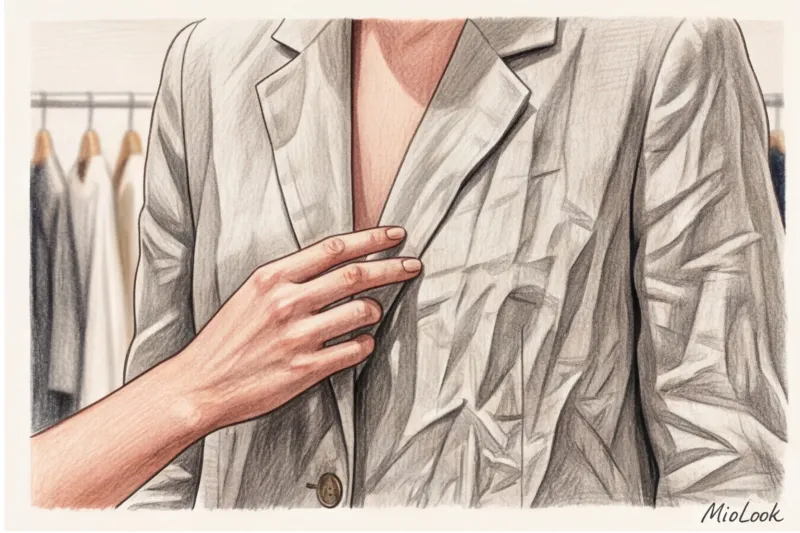
We recently analyzed the wardrobe of a client who was trying to achieve a more eco-friendly look. Her closet was overflowing with dresses made from 100% wild linen. The problem was that the rough, uncontrolled creases in this type of linen create chaos in the silhouette. In her youth, this slight creasing is perceived as bohemian carelessness, but in adulthood, it's perceived by others as banal untidiness. As soon as we replaced this stiff material with a linen and viscose blend, her look instantly became lighter and her complexion fresher.
Loose and shapeless textures: bouclé, fine knitwear and cheap viscose
Physiology is relentless: with age, the natural lines of our face and body soften. The facial contours lose some definition, and the shoulder line slants. To visually compose our look and add dynamism, our clothes need a structural framework.
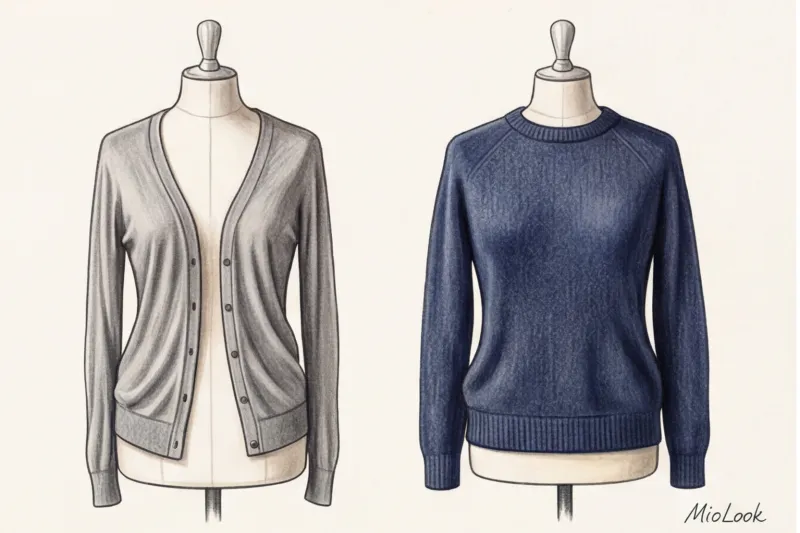
Loose fabrics do the exact opposite. They blur the silhouette. A classic Chanel-style bouclé, if made from cheap blended yarn, transforms the figure into a shapeless "cloud." The same goes for cardigans made of thin melange and T-shirts made of cheap viscose, which stretch out at the elbows and sag under their own weight after just three washes.
When a garment flows down the figure in dull folds, it visually pulls the silhouette down, adding gravity, and therefore age.
Ready to start a wardrobe revolution?
Try the MioLook free plan—no commitments required. Digitize your pieces and discover which textures really work for you.
Get access — €0.99 onceFlimsy knitwear: the main enemy of a clean silhouette
Thin cotton jersey (so-called "kulirka") is a crime against style. It clings to every fold of underwear, highlights the slightest unevenness of the silhouette, and always looks too casual. We wrote more about how to replace such items in the article about the perfect knitted suit.
To be fair, there is an exception to this rule: Switching to a thick jersey isn't a panacea if you're buying a garment that's too tight. Thick knits don't work for plus-size figures if they cling to the body like a spacesuit. There should always be air between the skin and the thick fabric (at least 2-3 centimeters of ease), otherwise the effect will be counterproductive.
Heavy luxury that adds age: velvet, tapestry and brocade
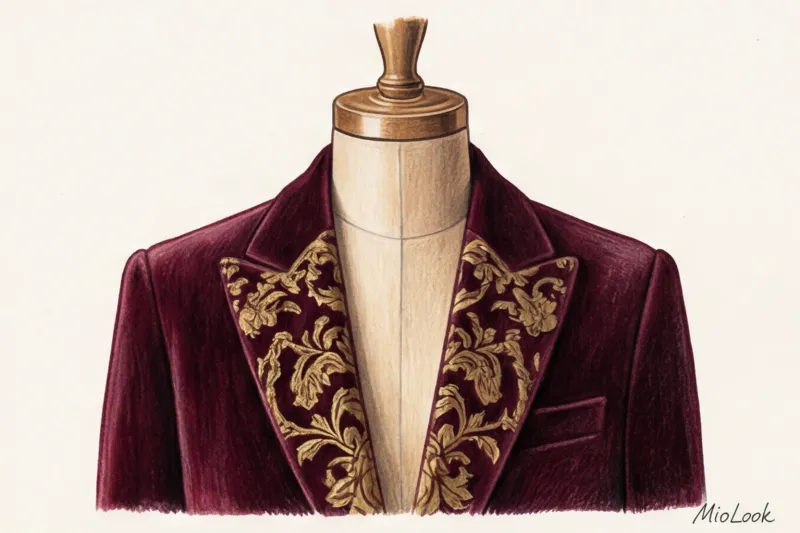
Beyond the physics of light, psychology and historical context play a huge role in how we perceive fabrics. Velvet, brocade, jacquard, and tapestry textures with large patterns are historically associated with museum opulence, theater curtains, and the aesthetics of bygone centuries. When you wear them, you subconsciously imbue yourself with this historical, "age-defining" quality.
From an optical perspective, velvet is a fabric that absorbs light the most. Wearing a dark burgundy or emerald velvet jacket creates a massive, muted splash of color near the face, sharpening features and deepening the shadows under the eyes. Brocade and jacquard, due to their rigid, stiff texture, weigh down the figure, turning a woman into a monument. For information on how to properly use these materials, see this article. How to Create an Expensive Look: Combining Textures in Clothing.
Anti-aging textiles: 5 textures that visually rejuvenate
If dull matte fabrics make you look older, and synthetic sheens make you look cheap, what should you wear? The answer lies in fabrics with a complex, delicate sheen and a resilient structure. According to a report from an analytical agency WGSN (2024) , the future of elegant wardrobes lies in high-tech eco-blends.
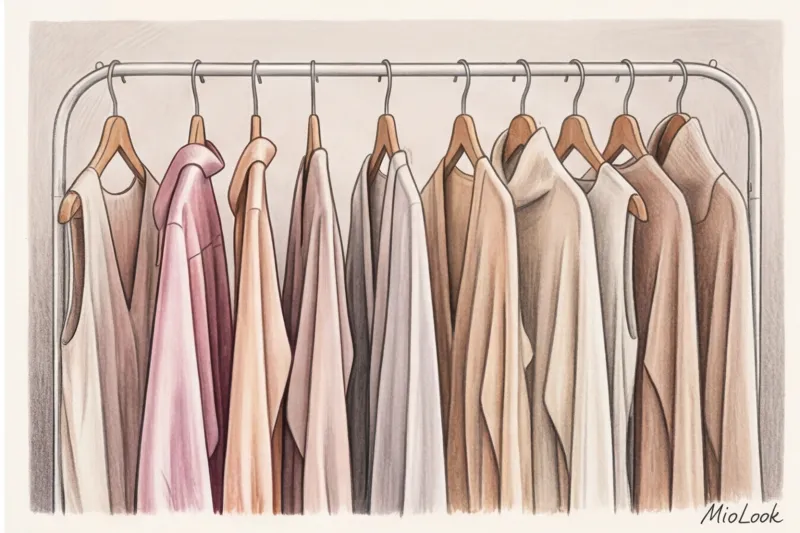
- Cupro and Tencel (lyocell): These are next-generation fabrics made from wood pulp. They have a silky, peach-colored surface with a soft, pearly sheen. They create that signature "softbox" effect, blurring skin imperfections.
- Crepe de Chine and matte silk: Unlike satin, crepe de chine has a grainy surface. It flows, creating a beautiful movement when walking, but without harsh reflections.
- Cashmere and smooth-knit wool blends: They exude nobility and structure. Their smooth, fuzz- and pilling-free texture speaks of status and well-groomed appearance.
- Thick jersey (viscose + nylon + elastane): The optimal percentage of elastane (2–5%) creates an ideal framework that physically tightens the figure, acting as a light corrective layer.
- Blends (linen + silk or viscose): Viscose takes away linen's harshness, while silk adds a delicate sheen. The garment remains breathable, but creases into soft, rich waves rather than chopped folds.
If you find it difficult to keep track of the proportions of fabrics in your closet, try digitizing your basic items. In the app MioLook You can systematize your wardrobe and clearly see which textures you need to achieve balance.
A stylist's checklist: how to check fabric before buying
Theory is great, but how do you apply it in the fitting room? I teach my clients a simple four-step tactile-visual algorithm that will save you from making bad investments:
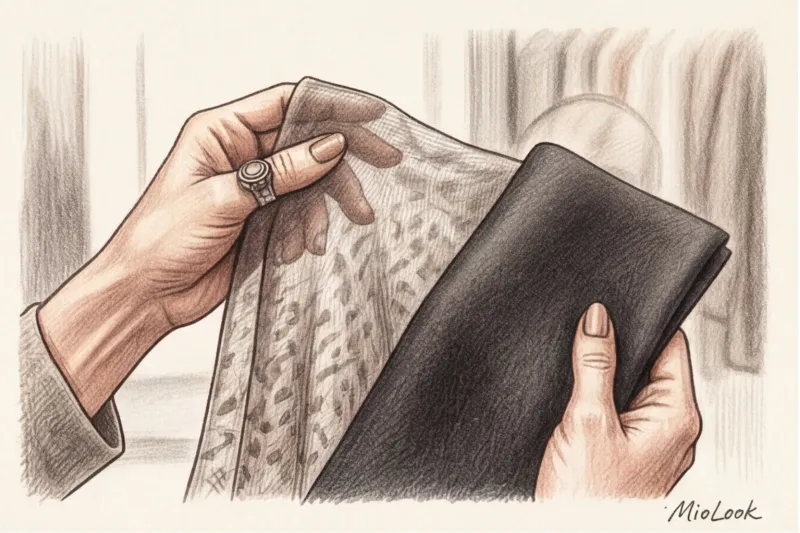
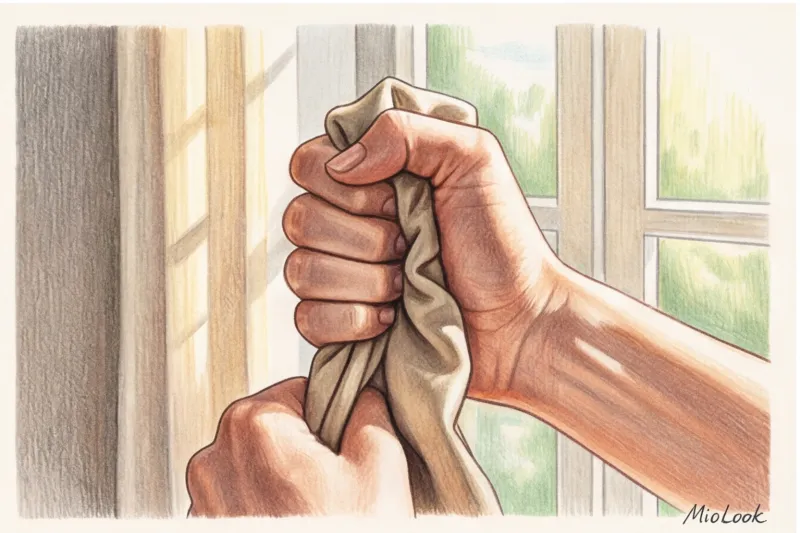
- Fist test: Squeeze the edge of the garment tightly in your fist and hold for 10 seconds. Release. If the fabric has small, sharp, and stubborn creases, return it to the hanger. If the creases are soft and smooth, or the fabric straightens out quickly, it's a great choice.
- Window Test: Step out of the yellow-lit fitting room. Hold the item up to your face in natural daylight and take a selfie without filters. Notice your nasolabial folds—have they deepened against the fabric?
- Tension check: Stretch the fabric slightly with both hands and release. A cheap, loose texture will remain deformed. A high-quality one (even one without elastane) will instantly return to its original shape thanks to the correct weave.
- Seam assessment: Look at the side seam. On flimsy, cheap fabrics, especially thin viscose, the seams always wrinkle and ripple. If the seam isn't perfectly straight on the hanger, it will look even worse on the figure.
Access to MioLook for €0.99 — one-time payment
Start creating the perfect look with artificial intelligence. Upload your photos, and the algorithm will help you eliminate elements that ruin your silhouette.
Get access — €0.99 onceConclusion: Invest in smart textures, not quantity
As you age, your wardrobe inevitably evolves: the focus must shift from extravagant cuts to uncompromising quality materials. You no longer need dozens of ultra-fashionable, disposable items from the mass market.
Even the most basic straight-cut T-shirt, if made from thick Egyptian cotton with 5% elastane (in the price range of €50), will look much more classy and fresh than a blouse with a complex asymmetrical cut made from thin polyester.
Think of buying the right fabrics not as a splurge on clothing, but as a daily investment in your own visual enhancement. The right texture does half the work for you: it sculpts your silhouette, illuminates your skin, and conveys the calm confidence of a woman who knows her worth.