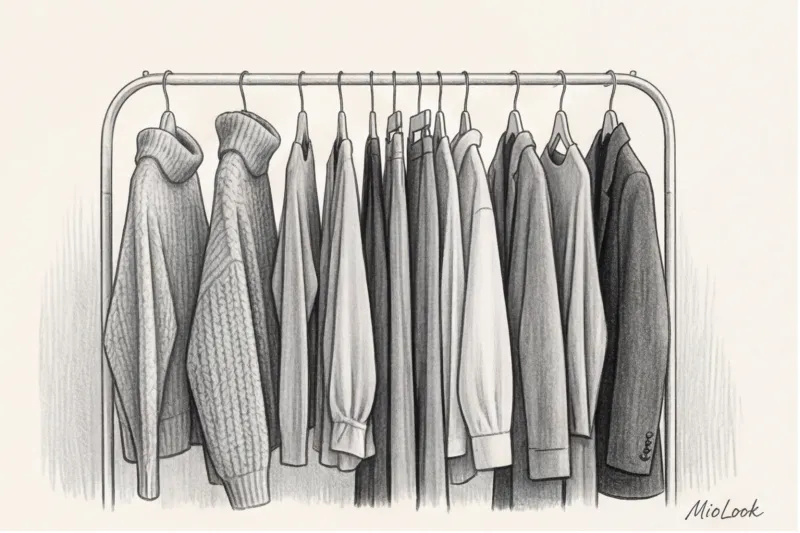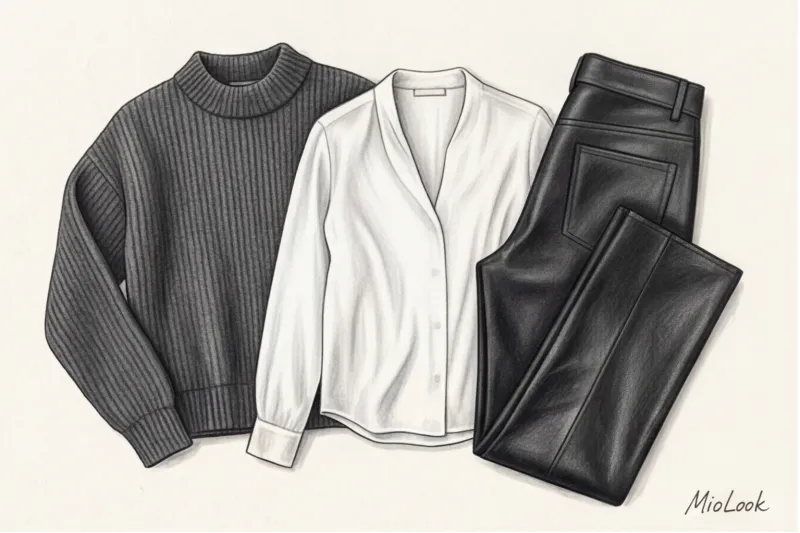
I often hear the same phrase from my clients: "I buy black and gray because it's safe. Everything goes with everything." But after 12 years of styling and regularly covering fashion weeks from Paris to New York, I've learned one hard lesson: hiding behind a lack of color is fashion's biggest illusion.
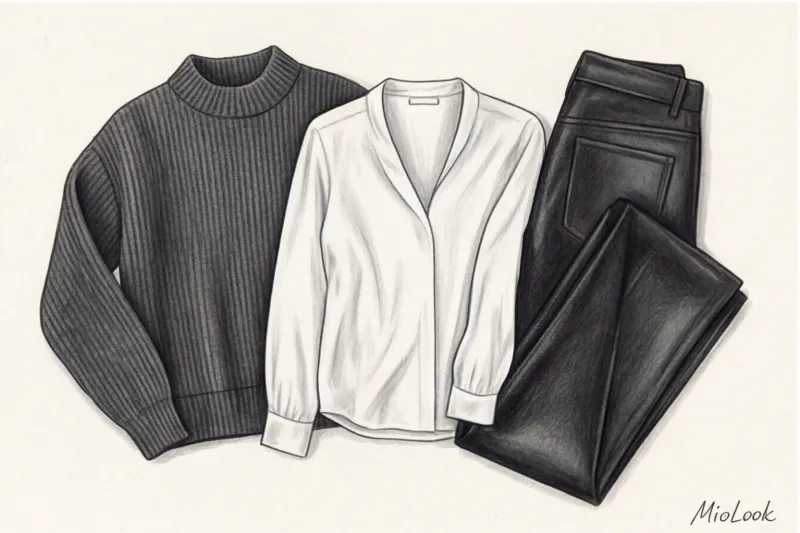
When you forego bright colors, the quality of the cut, the density of the fabric, and how the material reflects light immediately come to the fore. While a red dress can distract from cheap hardware simply by its brightness, a gray sweater is unforgiving. Today, we'll explore how achromatic colors in clothing They can become not just a dull base, but a complex architectural tool that will make your image visually expensive.
Of course, no one has cancelled the understanding of the color wheel (and we talked about this in more detail in our a complete guide to color combinations in clothing ), but achromaticism requires a completely different approach – working with textures, halftones and optical illusions.
What are achromatic colors in clothing: architecture instead of "safety"
Physically, achromatic colors are black, white, and all the grayscale in between. They have no hue, only lightness. Most people use them as psychological armor, hoping to blend in or hide figure flaws.
But let's look at this through the eyes of the geniuses of the Japanese avant-garde. Backstage at Yohji Yamamoto and Rei Kawakubo shows in Paris, I observed how designers approached black. For them, it's not a "safe choice," but a blank canvas. When you remove color, the viewer's eye begins to scan form, silhouette, and texture. Achromaticism is fashion's sculpture.
The Anatomy of Black: Why It Doesn't Suit Everyone and Isn't Always Slimming
Let's start by debunking the main myth that glossy magazines have been selling us for decades: "Black makes everyone look slimmer." This is only half true.
Black absorbs light and creates a sharp, uncompromising outline. If you wear a black dress made of thin, matte knitwear (like cheap viscose), it won't make you look two sizes smaller. It will act like a black hole, mercilessly emphasizing every fold of your body and the contours of your underwear.
For black to truly make you look slimmer, the fabric should hold its shape: thick cotton from 180 g/m², structured wool or high-quality eco-leather.
The second problem is the portrait zone. I had a client, a top manager at a logistics company, who wore exclusively black from head to toe to look authoritative. As a result, she looked chronically tired. Black near the face casts harsh shadows on the skin, emphasizing nasolabial folds, dark circles under the eyes, and even the slightest redness. If you have a "warm" or muted complexion, deep black near the face can visually add 5-10 years to your age.
Fair Limit: If you notice that black makes you look pale or tired, don't force yourself to wear it. Replace it in portraits with deep graphite, wet asphalt, or anthracite—they maintain a sober look without draining the life from your face.
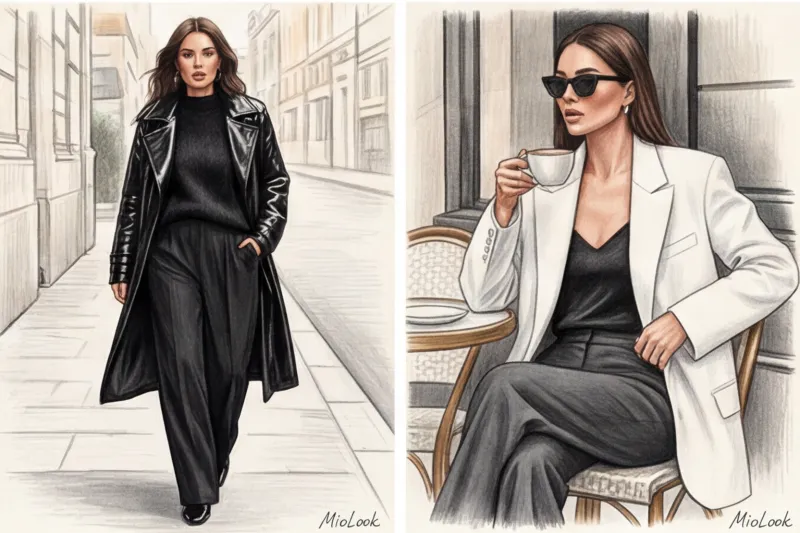
50 Shades of Grey: The Essential Tool for a Status Wardrobe
If you analyze the collections of brands that champion "quiet luxury" (The Row, Brunello Cucinelli, Loro Piana), you'll notice that gray, not black, dominates. The human eye can distinguish over 30 shades of gray, depending on how the light hits it.
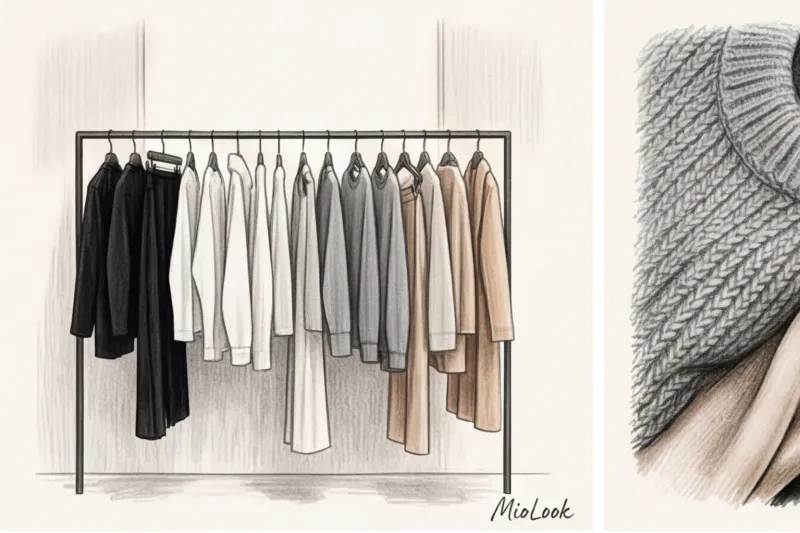
Why does gray appear more expensive than black? It's all about textile science. Black pigment absorbs light, concealing the nuances of the weave. Gray, on the other hand, reflects light just enough to highlight the fine fuzz of cashmere, the ribbing of wool, or the delicate sheen of silk. A melange gray sweater will always look more textured and more expensive than an identical black one.
Your perfect look starts here
Tired of wondering which shades of gray or black suit you? Upload your items to MioLook, and our smart AI stylist will create flawless capsule wardrobes tailored to your appearance.
Get access — €0.99 onceThe Three Textures Rule: How to Wear Achromatic Colors Without Looking Boring
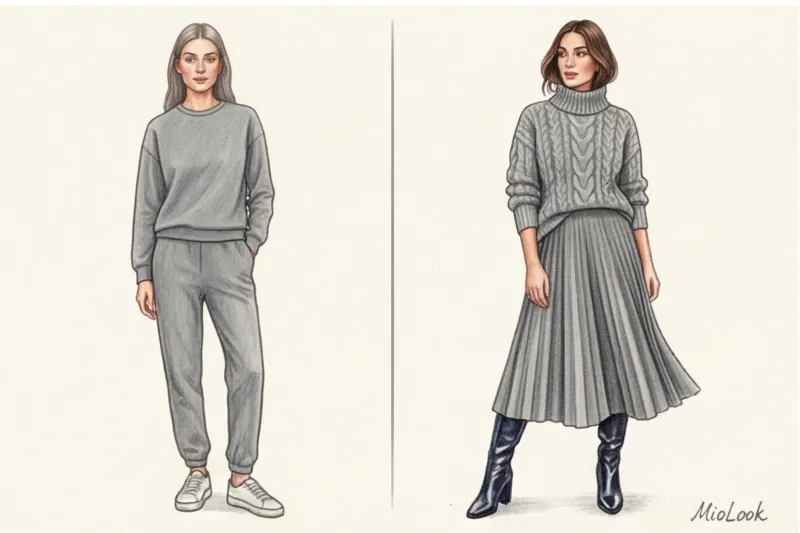
The main secret of professional stylists is this: if there's no difference in color in an outfit, there must be a huge difference in the materials. A monochrome look made from the same fabric turns you into a flat blob.
The formula for an ideal 3D image is based on the contrast of three states: Matte + Smooth + Textured.
- Matte: suit wool, thick cotton, cashmere.
- Smooth: silk, satin, viscose with satin weave.
- Textured: Smooth leather, suede, sequins, chunky knitting, boucle.
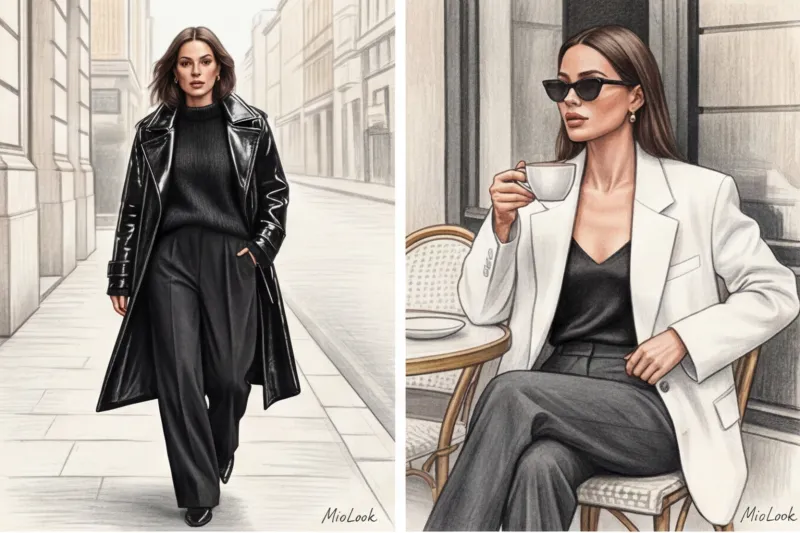
Compare these two scenarios. Black cotton jeans and a black cotton T-shirt are simply clothes you'd wear to the grocery store. But if you take black leather pants, add a sleek black silk top, and throw on a fluffy black mohair cardigan, you're ready for street style.
One of my clients complained that her office dress code (a formal black suit) was depressing. We didn't change the suit. We simply swapped the matte cotton blouse under the jacket for a top made of thick white silk (22 momme). The delicate sheen of the silk against the matte wool instantly made the look luxurious and vibrant.
Stylish outfit plans with black, white, and gray
Putting together a black and white outfit is easy. Putting it together without looking like a flight attendant's uniform is the art of proportion. The least flattering combination is a 50/50 look, where a white top and black bottom cut the figure in half, shortening the legs and widening the waist.
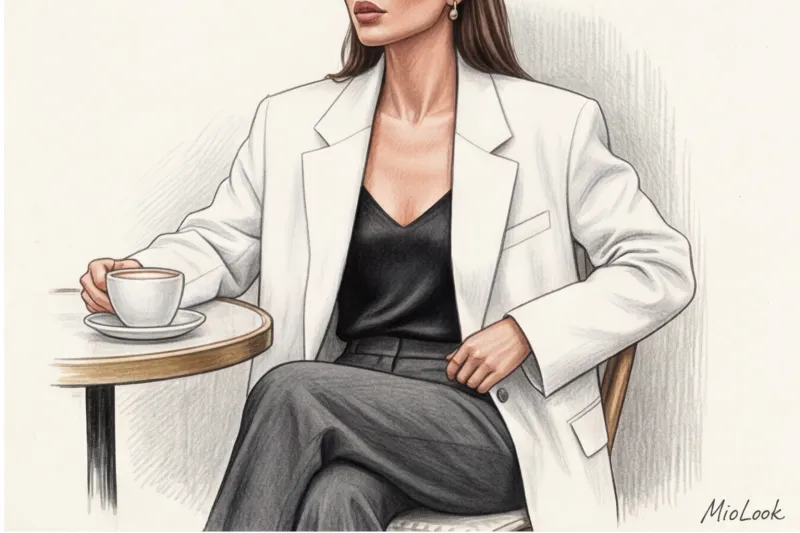
Use the rule of thirds: have one color take up 1/3 of the outfit, and another 2/3. For example, a long black coat over a white top and white pants.
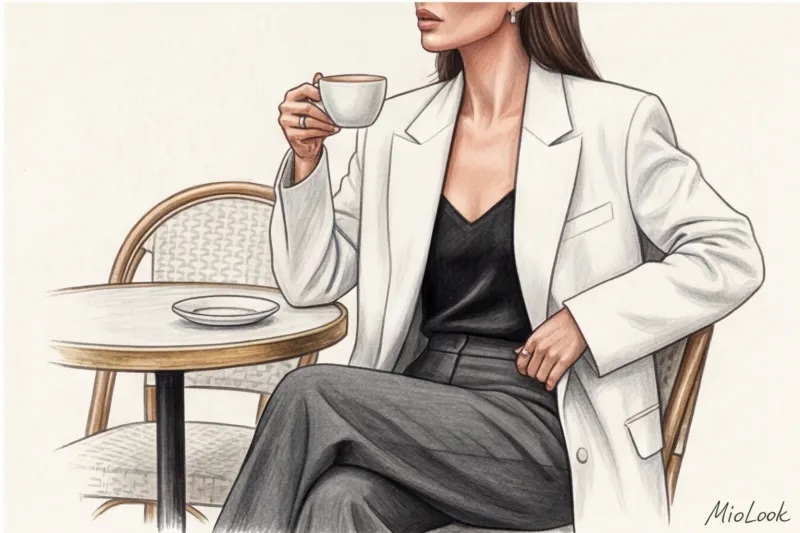
Total Black: How to Avoid the "Consultant Uniform" Effect
If you decide to wear black from head to toe, use your skin as another layer of texture. Solid black adds weight to the silhouette. Reveal your wrists by rolling up your jacket sleeves slightly. Choose a V-neck top to show off your collarbones. Reveal your ankles. These small patches of exposed skin act as "air," preventing the black from completely engulfing you.
Accessories also make a difference. Chunky gold or silver earrings, a statement belt with a metal buckle, and graphic makeup (like a perfect red lipstick) become eye-catchers.
Black and white contrast: from business dress code to Parisian chic
Historical background: When Christian Dior created his famous New Look silhouette in 1947, his iconic Bar Suit was built on the stark, graphic contrast of a dazzling white, intricately tailored jacket and a black, pleated skirt. The contrast sculpted the body's architecture.
To break away from the schoolgirl "white top, black bottom" mentality, try inverting the look. Try pairing a black turtleneck with crisp white jeans (yes, even in fall or winter). This instantly elevates the style, as white pants in the cold season are traditionally associated with luxury and a lifestyle that doesn't involve traveling on crowded public transportation.
Access to MioLook for €0.99 — one-time payment
Not sure what to wear with white jeans this winter? Our AI assistant will suggest dozens of outfit ideas from your existing wardrobe, saving you time in the morning.
Start creating imagesRookie mistake: different "temperatures" in monochrome
This is the very detail that distinguishes professional styling from amateur. White has dozens of undertones. If you wear a "cool" crisp white top with "warm" off-white pants, the off-white shade will immediately appear washed-out, old, and dirty.
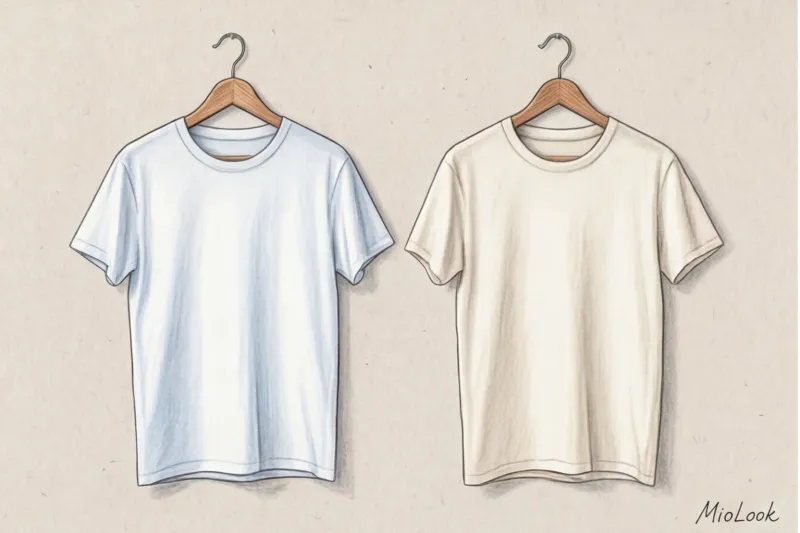
Black behaves exactly the same way! Let's return to my top manager client: her mistake was mixing a "warm" black cotton jacket (cotton often fades to a reddish-brown undertone when dyed and washed) with "cool" black polyester trousers with a bluish tint. In daylight, this dissonance was jarring.
Professional life hack: Warm artificial lighting in fitting rooms hides undertone differences. Always hold black and white items next to each other and approach the store window to check their compatibility in natural daylight before purchasing.
Achromatic Colors as a Base: Going Beyond Beige
According to 2024 research by WGSN, consumers are increasingly using neutral palettes as a "bridge" to bolder colors. And here, achromatic palettes are unrivaled. Black, white, and gray are the perfect mat for complex, deep shades like burgundy, emerald, and cobalt.
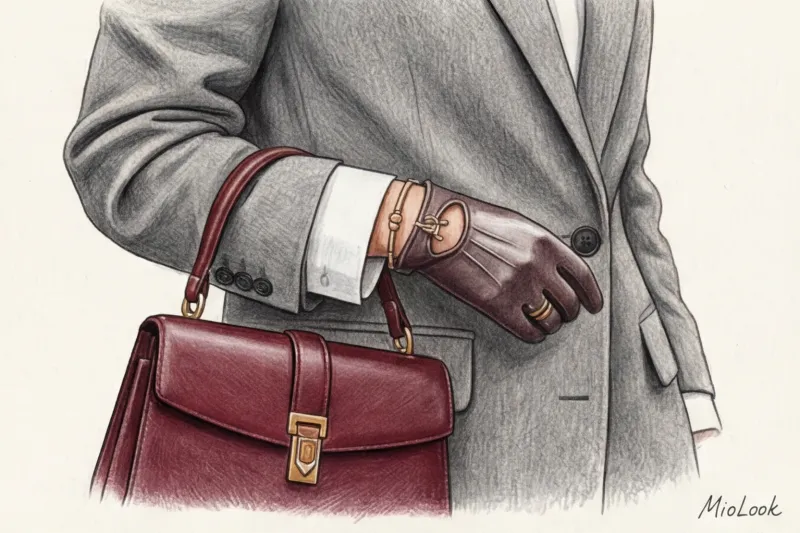
Many people are afraid of color because they don't know how to combine it. Try replacing your usual black background with gray. Black creates maximum contrast: a burgundy bag against a black coat will scream. But the same burgundy bag against a mouse-gray coat will look soft, elegant, and incredibly expensive. Gray reduces the contrast, making any bright accent more refined.
Checklist: Assembling the Perfect Achromatic Capsule
The statistics are relentless: according to the cost-per-wear metric, basic achromatic pieces have a 40% higher turnover in a working wardrobe than bright, trendy pieces. Therefore, skimping on them is unacceptable.
Here are 5 items of perfect quality that will make every penny worth your investment:
- The perfect grey cashmere or wool sweater. Slightly loose, smooth knit, with a high neck or round neckline.
- White shirt of men's cut. Made from a dense cotton poplin (look for a weave of 120 threads or more) that holds the shape of the collar.
- Black palazzo pants or wide straight trousers. Made of thick crepe or suit wool, with a high waist that hides the belly.
- White silk T-shirt or top. The very savior of boring jackets.
- Structured black jacket. With a clear shoulder line, length just below the widest part of the hips.
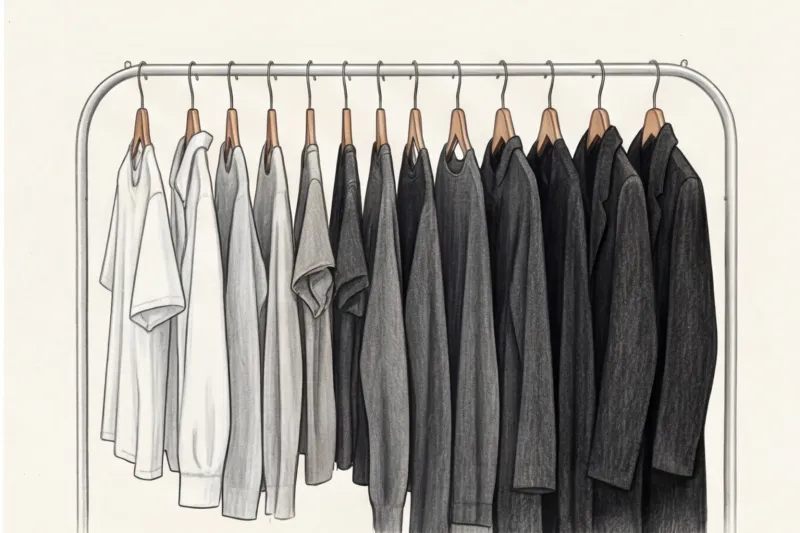
But for this capsule to work, conduct a rigorous audit. Ruthlessly discard grayed white T-shirts with yellowed armpits, black knits covered in pilling, and items that have lost their original shape.
And remember: achromatic fabrics require meticulous care. Wash black only with special gels for dark fabrics (they contain enzymes that smooth the fabric's lint to prevent it from appearing off-white) at temperatures no higher than 30 degrees Celsius. And for white cotton, regularly use oxygen bleaches to restore their pristine, crisp color.
Ready to start your wardrobe audit?
Digitize your essentials with MioLook. Our algorithm will show you what elements you're missing for the perfect capsule wardrobe and help you create a shopping list.
Get access — €0.99 onceAn achromatic wardrobe isn't a sign of boredom or fear of fashion. With the right use of textures, proportions, and color temperature, black, white, and gray become a sign of absolute self-confidence. You stop hiding behind clothes, and your clothes begin to work for you, highlighting what matters most—your personality.