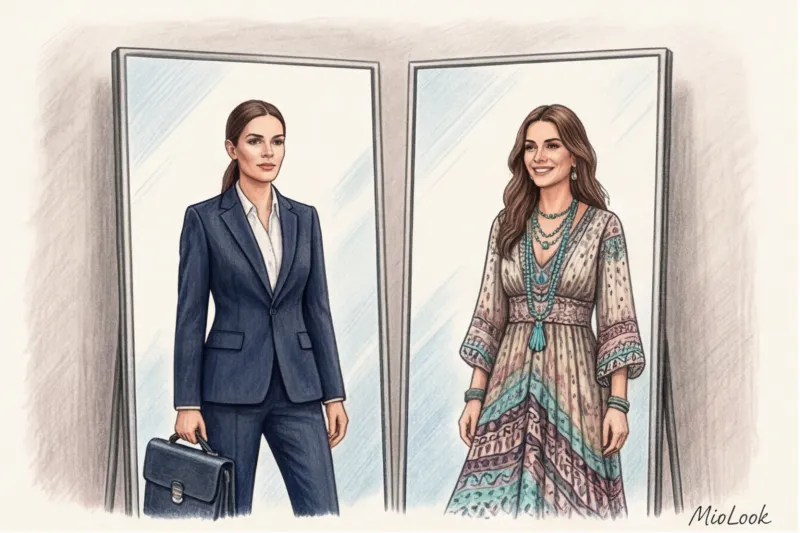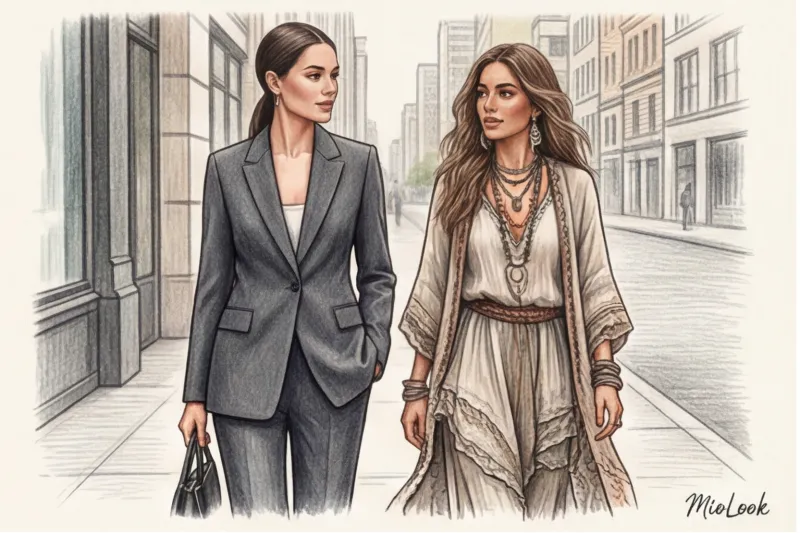
Every time I hear esoteric advice about choosing "birthstones based on your date of birth" or "a bag based on your zodiac sign," my inner pragmatist stylist rolls her eyes. Over 12 years of working with clients' wardrobes across Europe, I've come to the conclusion that style isn't magic; it's visual communication. And the most precise tool for this communication is... accessories by archetypes.
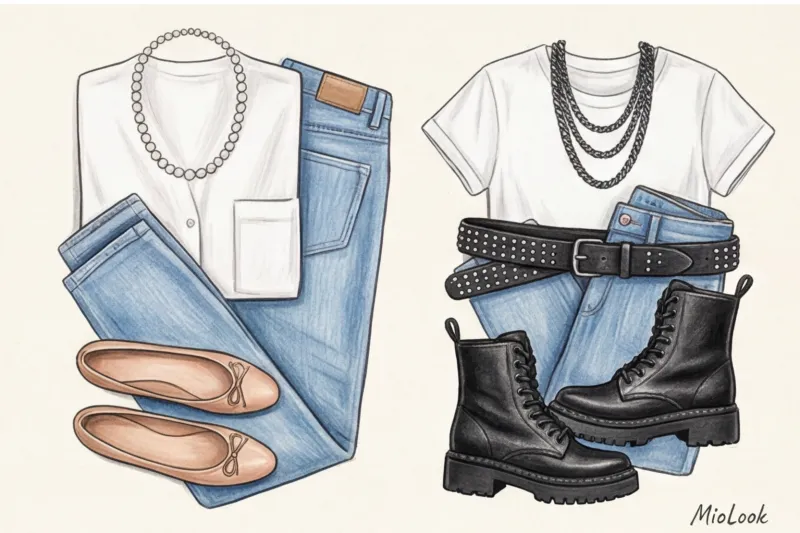
Instead of completely overhauling your wardrobe when you start a new position or change your status, I suggest a utilitarian approach. Your bag, shoes, and jewelry are your "volume control." They can adapt boring basics to any business need. We discussed the theory in more detail in our a complete guide to archetypes in style and expertise , and today we will do pure mathematics and practice.
Why Archetype Accessories Work Better Than Clothing
Let's do the math. Buying a new, high-quality suit will cost you an average of 200–300 euros. You'll wear it maybe 15 times a season. Here's the formula: Cost Per Wear (cost per appearance) will be around 20 euros. Now let's take a status bag for the same 300 euros, which you'll wear every day for three years. Its CPW is close to a few cents. The math of wardrobe is inexorable: an accessories capsule is three times cheaper than a complete wardrobe overhaul when repositioning a personal brand.
But it's not just about money. Research in the Journal of Fashion Marketing and Management (2023) confirms what every visual merchandiser intuitively knows: 80% of a person's status and character is determined by their shoes and facial features (jewelry, eyewear). The human brain is evolutionarily wired to quickly scan details. Smooth, hard leather is perceived as "control," while soft suede is perceived as "safety."
One of my clients complained that she felt "mousy" in a basic sheath dress. We didn't change the dress. We added sculptural square-toe mules and an asymmetrical bag. The look instantly resonated with the voice of the Creator, transforming a boring basic into conceptual minimalism.
Structure and status: Ruler, Guardian, Creator
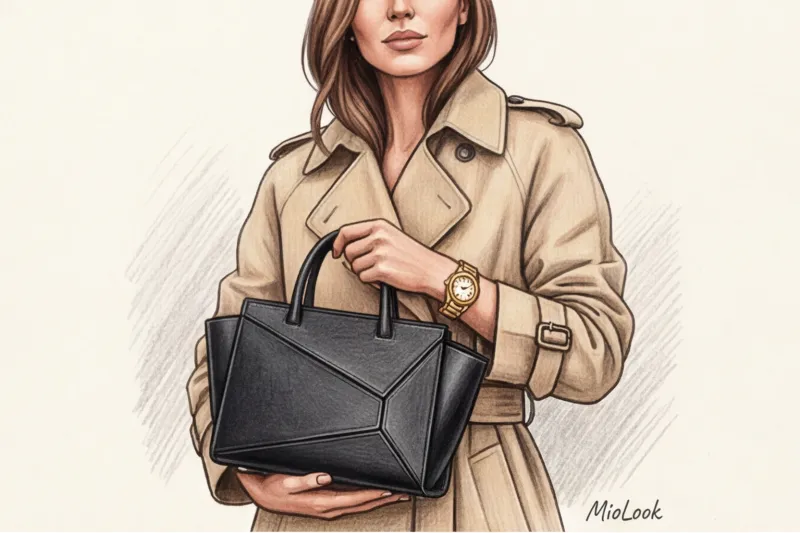
This group is united by a fundamental psychological need for control. The Ruler controls the system, the Guardian controls the safety of loved ones, and the Creator controls matter and form. That's why structure is so important in their accessories. If you walk into Massimo Dutti, you'll find the perfect base for the Ruler, and at COS, a paradise for the Creator.
Bags, shoes and jewelry of the Ruler
A ruler cannot tolerate fuss or laxity. His belongings must hold their shape even when empty.
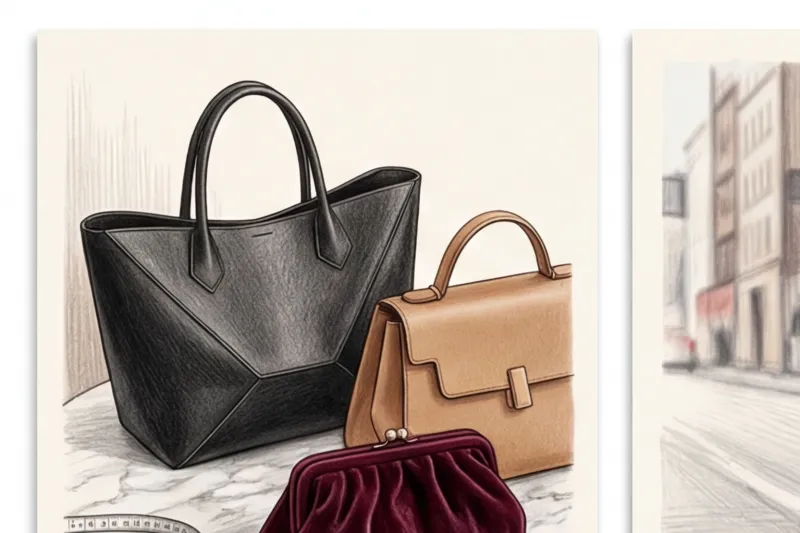
- Bags: A rigid frame, precise geometry, and smooth polished leather. Ideal formats include totes, sleek briefcases, and trapeze bags with minimal hardware.
- Shoes: Classic pumps with a confident heel, oxfords, and thick leather loafers. No worn-out heels.
- Decorations: Strict symmetry. Gold or platinum, classic watches on a leather strap or metal bracelet, simple stud earrings.
Guardian Details: Reliability and Comfort
A guardian projects security. People want to approach them for advice.
- Bags: Roomy but not bulky. A great example are shoppers made of soft yet thick grained leather, which can hold a laptop, a first aid kit, and a spare scarf.
- Shoes: A stable block heel and a comfortable last. Materials you'll want to touch: suede and nubuck.
- Decorations: Timeless classics. Pearls, cameos, heirlooms, pendants with flowing lines.
Creator's Accents: Art in the Details
The creator breaks the rules, but does so aesthetically. His accessories are art objects.
- Bags: Asymmetry, unusual textures (weaving, deliberately wrinkled leather), architectural forms reminiscent of origami.
- Shoes: A sculpted, hand-sculpted heel. A unique toe (a sharp square or split tabi toe).
- Decorations: Handcrafted pieces, crushed metal, large, uneven geometric patterns, single earrings or asymmetrical pairs.
Access to MioLook for €0.99 — one-time payment
A smart AI stylist will select the perfect look and help you intelligently integrate new accessories into your current wardrobe.
Get access — €0.99 onceDynamics and Freedom: Seeker, Rebel, Hero
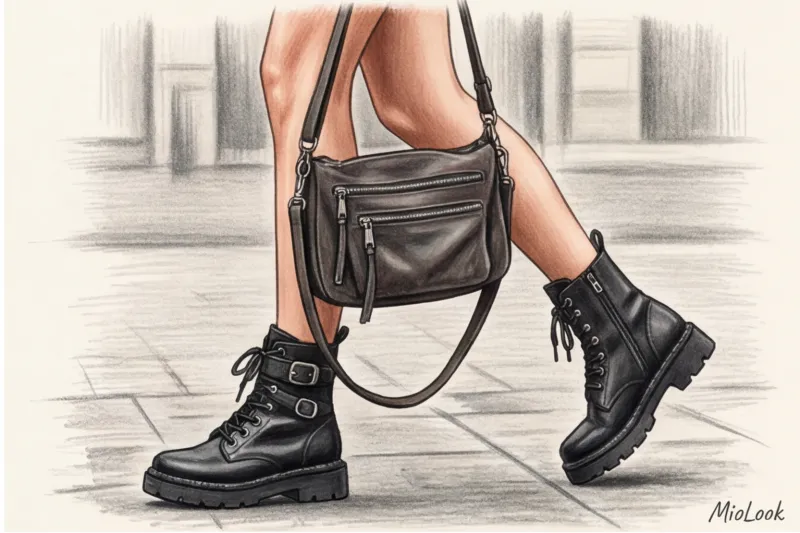
These archetypes have no time to sit still. Their common trait is a readiness for action, which demands uncompromising functionality and durability. Things should age gracefully.
I had a lawyer client who scored as a "Rebel" on a psychological test. But the corporate dress code was still in place. How do you inject rebellion into the office? We kept the formal gray suits, but swapped the classic pumps for loafers with heavy, slightly lugged soles, and replaced the sleek tote with a slightly distressed leather bag with dark matte hardware. The dress code was respected, but her personality immediately came through.
Seeker's Arsenal
The seeker is always on the move, his hands must be free.
- Bags: Cross-body bags, backpacks made of thick canvas or distressed leather, saddle bags.
- Shoes: Cossacks (the perfect base for the Explorer), lace-up boots, and technical sneakers designed for long walks.
- Decorations: Multilayer leather bracelets, cords, amulet pendants, natural unprocessed stones, wood.
Rebel Protest
A rebel tests boundaries. Their accessories often serve as armor.
- Bags: An abundance of metal hardware—zippers, chains, rivets. The leather can be artificially distressed or have a rough texture.
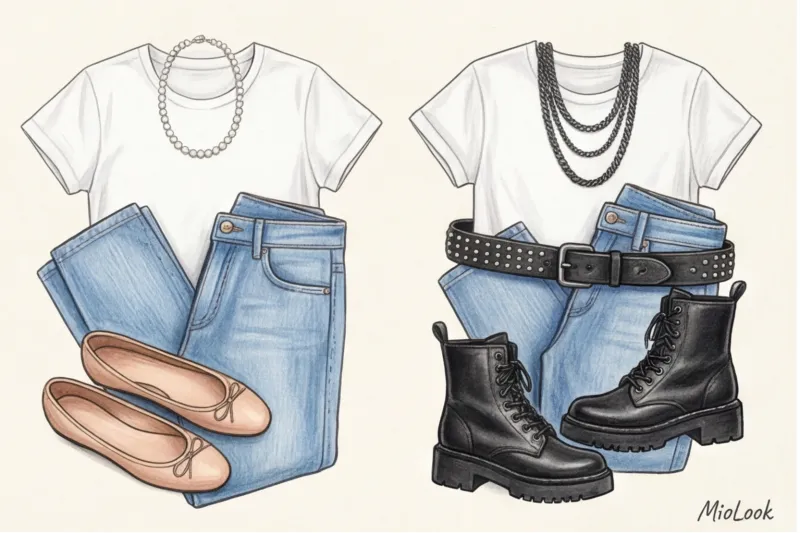
- Shoes: Rough boots (Martins), Chelsea boots with massive tractor soles, shoes with metal inserts.
- Decorations: Chokers, anchor chains, cuffs, dark (blackened) metal.
Hero Equipment
The hero doesn't get distracted by trifles. His style is aerodynamics and steel.
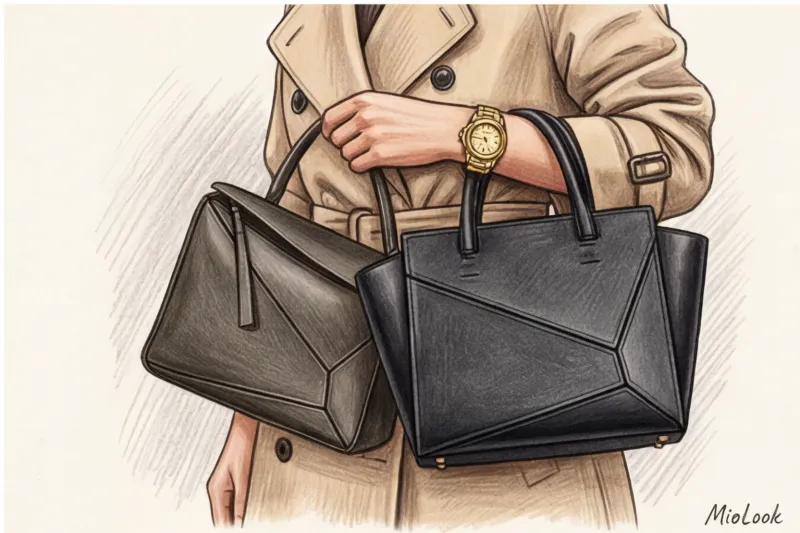
- Bags: Minimalism and thick, smooth leather. Belt bags or simple backpacks that fit snugly to the body.
- Shoes: Minimalist sneakers, shoes with metal toes, high tube boots reminiscent of jockey boots.
- Decorations: Cold steel, simple wide cuff bracelets, a complete absence of small, clinging details.
Communication and ease: Nice guy, Jester, Aesthete (Lover)
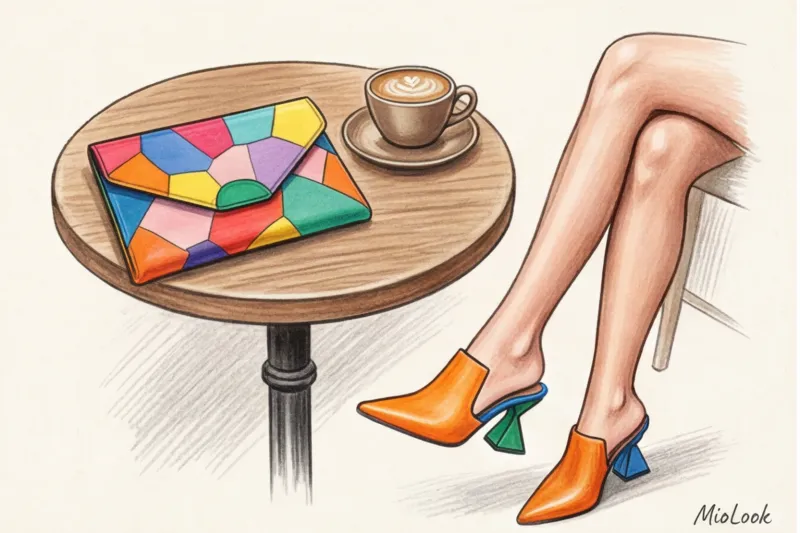
This group is socially oriented. Here, accessories serve as a great icebreaker—a conversation starter. If you need to win over an audience, soften an overly formal look, or add some life to it, turn to these archetypes.
Nice Guy's Base
A nice guy erases the distance. He says, "I'm just like you."
- Bags: Fabric shoppers, soft hobo bags, backpacks without a rigid frame.
- Shoes: Slip-ons, sneakers, soft moccasins, any flat shoes that don't make a noise when you walk.
- Decorations: Baubles, beads, discreet thin rings or no decoration at all.
The Irony of the Jester
The Jester is a genius tool for experts. Jester accessories can save even the most mothballed business suit. Wear a formal two-piece suit, but add a milk carton bag or loafers with ironic accent socks—and you're no longer a boring clerk, but a creative director.
- Bags: Bright color blocking, bags in the shape of objects (lips, animals, books), large inscriptions.
- Shoes: Contrasting heels, unusual prints, colored soles.
- Decorations: High-quality plastic, exaggerated sizes, brooches with an ironic subtext.
Details of the Aesthete (Lover)
An aesthete savors the moment and tactility. Their accessories make the eye linger.
- Bags: Clutches and bags on a thin, elegant chain. Materials: velvet, silk, incredibly soft, finely crafted leather.
- Shoes: Sandals with thin straps, stiletto heels, elegant mules, velvet and suede.
- Decorations: Chokers with crystals, long earrings that emphasize the line of the neck, thin chains with a pendant descending into the hollow.
Your perfect look starts here
Join thousands of users who look flawless every day with the MioLook smart wardrobe.
Get access — €0.99 onceWisdom and meanings: Sage, Magician, Simpleton
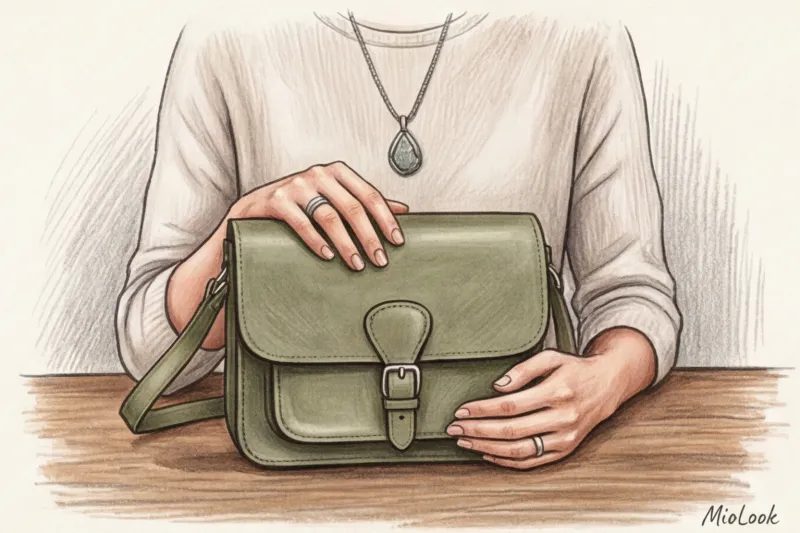
The focus of this group is inward. Every detail here has a hidden meaning, history, or mystery. According to the analytical agency WGSN (2024), the aesthetic of "quiet wisdom" (a variation of quiet luxury) is currently leading the demand for premium accessories.
I'd like to dispel a popular myth right away: the Mage archetype isn't all about floor-length cloaks and stargazer hats. In a modern wardrobe, the Mage manifests itself through complex, deep shades and optical illusions.
Sage Minimalism
A sage has nothing to prove. His works transcend trends.
- Bags: Vintage briefcases, matte leather, completely logo-free. Colors: parchment, dusty graphite, taupe.
- Shoes: Closed shoes, minimalist ankle boots, matte textures without a glossy shine.
- Decorations: Matte silver, heavy horn-rimmed glasses, rings with history (or quality antiques).
Secrets of the Magician
The magician is mesmerizing. You want to examine his accessories, trying to figure out how they work.
- Bags: Complex deep colours (indigo, emerald, marsala), gradient leather finishes, hidden magnetic closures.
- Shoes: Velvet, shoes with embroidery to match the material, heels of an unusual but visually hidden shape.
- Decorations: Complex, non-standard cut stones, pendants on long chains, hidden symbols on the inside of rings.
The Ease of the Simple-minded
The simple-minded believe in miracles and preserve the inner child.
- Bags: Round shapes, straw baskets even in the city, pastel colors, mini-formats.
- Shoes: Ballet flats, Mary Janes with a strap, small, neat kitten heel.
- Decorations: Small floral motifs, colored enamel, thin hairbands, delicate bows.
The main mistake: the "theatrical costume" effect
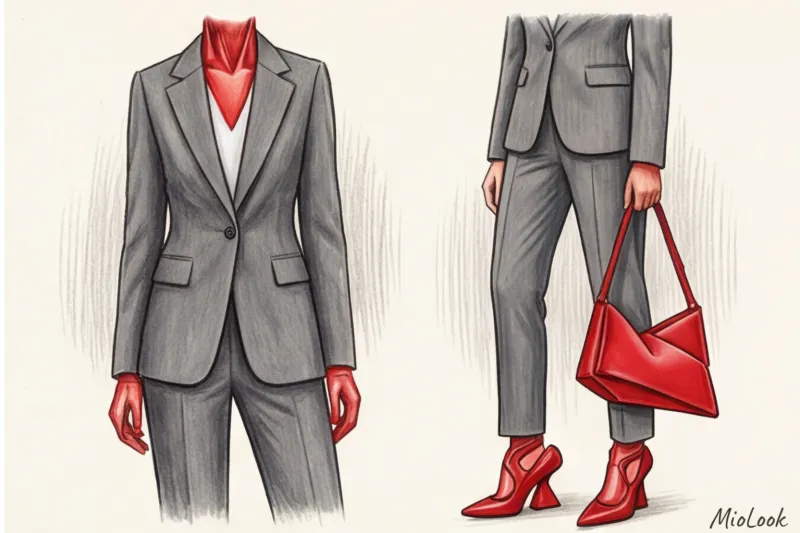
The main paradox, which theorists rarely write about, but which practitioners constantly encounter: Accessories should NOT match the archetype of the clothes 100%.
If you wear a strict Ruler suit, carry a tough Ruler bag, and wear Ruler pumps, you'll look like you're going to a costume party as an evil boss. A total "matchy" look kills the modernity of the look.
"The most stylish, eye-catching looks are always built on contrast. Use the 80/20 rule: let 80% of your look be a basic, work-oriented archetype (like the Ruler), and 20% be an accent piece (like the Creator's bag or the Jester's loafers)."
However, there's an important limitation here. This technique doesn't work if you're mixing diametrically opposed archetypes without a connecting link. For example, the Guardian's cozy knitwear and the Rebel's aggressive spikes will visually clash unless they're "reconciled" with a neutral base color or a unified, smooth texture.
Checklist: How to Incorporate Archetypal Accessories into Your Basic Wardrobe
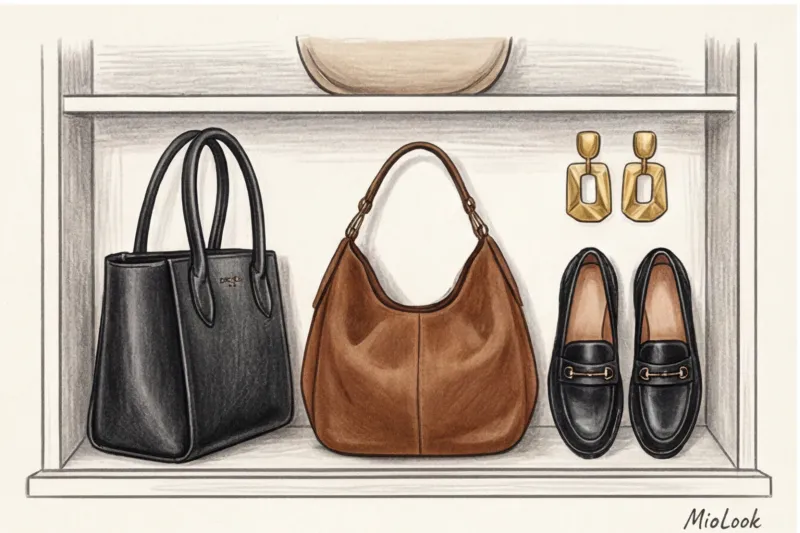
If you want to test this approach, don't rush to the store. Follow this algorithm:
- Step 1: Define the task. Which archetype do you need for your work right now? Do you need to add status (Ruler), creativity (Creator), or reduce the distance with clients (Nice Guy)?
- Step 2: Neutralize the base. Keep the background as simple as possible. Straight-leg jeans, a white shirt (180 g/m² cotton), or a simple pantsuit in a neutral shade are ideal. Incidentally, I recommend using the "smart wardrobe" feature in MioLook — the app will show you what neutral items you already have.
- Step 3: Invest in the three. You'll need just three elements of the chosen archetype: a distinctive bag, shoes that reflect the desired dynamics, and one detail in the portrait zone (earrings or glasses).
- Step 4: Test the reaction. Wear this capsule to a regular meeting and analyze how the attitude of your interlocutors changes.
Well-chosen accessories are more than just decoration. It's your personal experience control panel. And if you learn to use it, you'll never again have to say "I have nothing to wear" while looking at a closet full of great basics.