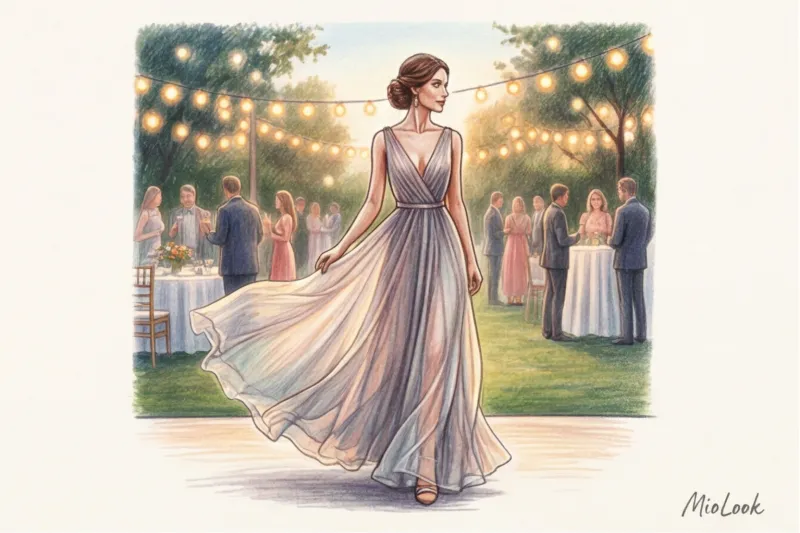
У серпні 2022 року я стояла у номері готелю на Лідо, готуючи клієнтку до виходу на червону доріжку Венеціанського кінофестивалю. Термометр показував +32 ° C, вологість прагнула до 80%. На ліжку лежала чудова сукня з важкого шовкового оксамиту, яку бренд надіслав напередодні. Клієнтка в паніці дивилася на нього, розуміючи, що у цій «розкоші» вона не протримається й двадцяти хвилин. Того дня нас врятував запасний варіант із невагомого шовкового крепу. За 12 років роботи стилістом я засвоїла жорстке правило: коли ви шукаєте вечірню сукню на літо, тканина вирішує все. Фасон, бренд та ціна вторинні перед законами термодинаміки.
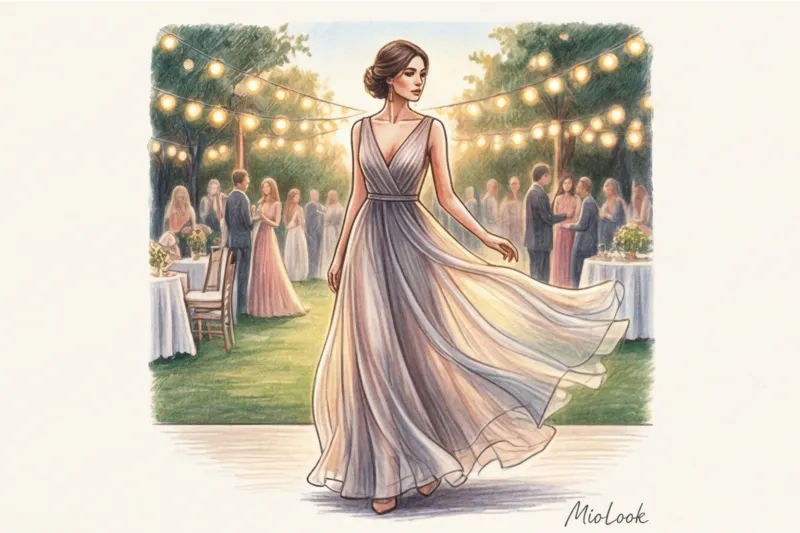
Докладніше про базові принципи створення сезонного гардеробу ми вже говорили в нашому повному гіді за найкращими тканинами для літнього одягу. Але вечірній дрес-код – це зовсім інша ліга. Тут базові рятівники на кшталт простої бавовни або грубого льону виглядають надто повсякденно, а класичні статусні матеріали перетворюються на знаряддя тортур. Давайте розберемо фізику елегантності та з'ясуємо, як виглядати на мільйон, не покриваючись пітом.
Фізика розкоші: чому вечірня сукня на літо - це перш за все правильна тканина
Специфіка літнього вечірнього дрес-коду полягає у жорстокому конфлікті інтересів. З одного боку, статус заходу (чи то весілля на Комо, чи гала-вечеря) вимагає візуально важких, дорогих фактур, які добре тримають форму і красиво відбивають світло. З іншого — ваше тіло відчайдушно потребує вентиляції.
Багато моїх клієнток роблять класичну помилку: вони плутають легкість тканини з її здатністю пропускати повітря. Найтонший поліестеровий шифон важить грами, але працює як парникова плівка. А ось пухкий сумішевий матеріал може здаватися щільним у руках, але за рахунок пористої структури добре відводить тепло.
У моїй практиці ми завжди орієнтуємось на густину матеріалу (GSM — грами на квадратний метр). Для літнього вечірнього виходу ідеальний коридор знаходиться в межах від 60 до 120 г/м². Все, що щільніше 150 г/м² (наприклад, класична тафта або мікадо), при температурі вище +25 ° C позбавить вас можливості насолоджуватися ввечері, навіть якщо плаття коштує 5000 €.
Доступ до MioLook за €0,99 — разовий платіж
Розумний AI-стиліст підбере ідеальний образ з урахуванням погодних умов та дрес-коду.
Відкрити доступ — €0,99 разовоРуйнуємо міфи: коли «штучне» краще за «натуральне»
Найнебезпечніший міф, з яким я борюся рік у рік: «у спеку потрібно носити лише 100% натуральний шовк». Це правда лише частково. Гладкий шовковий атлас (сатин) – один із найгірших виборів для заходу на відкритому повітрі. Він миттєво намокає, довго сохне і зрадницьки демонструє найменші краплі поту, змінюючи колір на два тони.
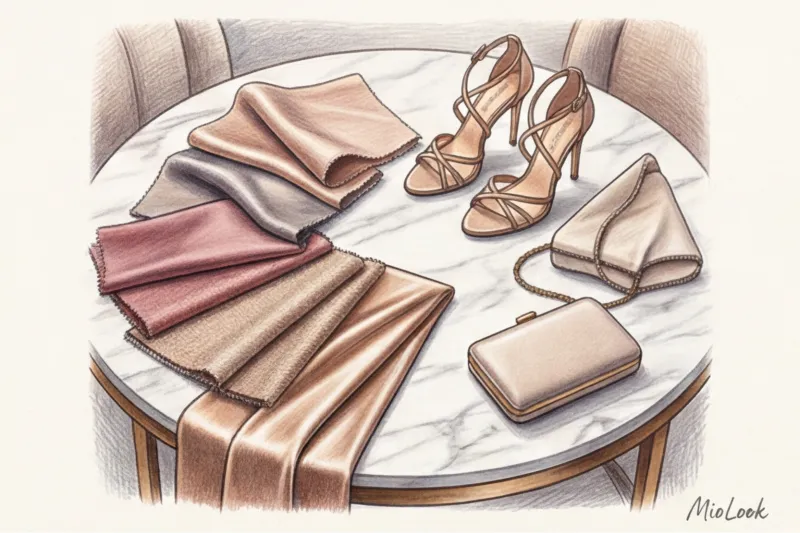
Якось мені довелося рятувати образ нареченої, що обрала сукню-комбінацію зі 100% шовкового сатину для весілля у Тоскані. На примірках під кондиціонером воно виглядало божественно. Але на жаркому сонці тканина прилипла до тіла, створивши ефект мокрої майки. З того часу для літніх заходів я часто пропоную клієнткам купро або високотехнологічну віскозу.
Купро, або "мідний шовк" - це штучне (не плутати з синтетичним!) Волокно, створене з бавовняного пуху. За даними досліджень Textile Exchange (2023), гігроскопічність сучасного купро на 30% вище, ніж у класичного шовку. Воно струмує як рідке золото, але при цьому дихає як бавовна.
Штучні тканини (створені хімічним шляхом із натуральної сировини — деревини або бавовни) на кшталт віскози, модалу та купро часто перевершують натуральний шовк у терморегуляції. А от синтетику (поліестер, нейлон, акрил) для вечірніх літніх образів слід виключити категорично.
Шовк для літніх виходів: вибираємо правильне плетіння
Якщо ви все ж таки віддані натуральному шовку, важливо розуміти: напис «100% silk» на бирці не гарантує прохолоди. Ключову роль відіграє не склад волокна, а спосіб його плетіння. Гладкі нитки, що щільно прилягають одна до одної (як в атласі), блокують циркуляцію повітря. Нам потрібні пухкі, скручені нитки.
Крепдешин та шовковий жоржет: порятунок від спеки
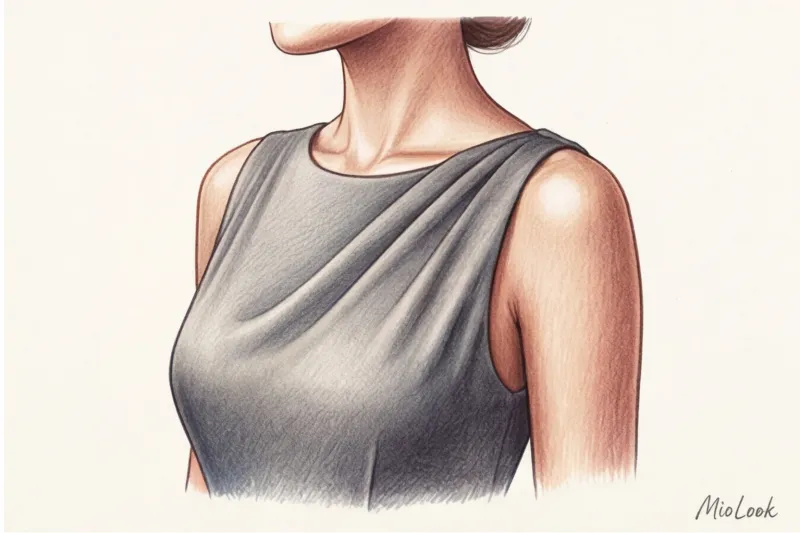
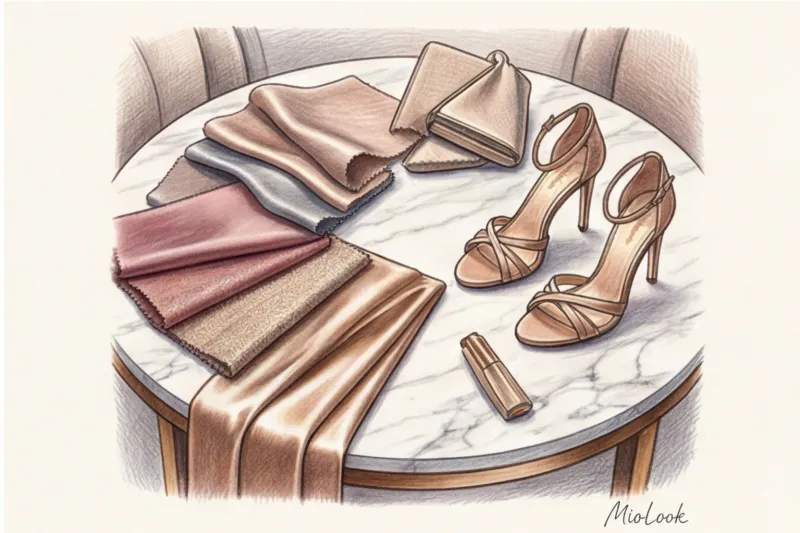
Мій абсолютний фаворит серед вечірніх літніх тканин - шовковий креп (крепдешин). Його секрет криється в сильній, нерівномірній крутці ниток. За рахунок цього на поверхні утворюється дрібна зерниста фактура. Ця шорсткість створює рятівну мікроповітряну подушку між тілом і тканиною.
Крім того, креп має матову поверхню, яка розсіює світло, а не відбиває його. Якщо ви трохи спітнієте, на кріпі це буде практично непомітно. Жоржет йде ще далі: він прозоріший і легший. Згадайте геніальні історичні сукні Мадлен Віонне з 1930-х років: багатошаровий жоржет, скроєний по косій, створює парадоксальний ефект — багато шарів, але в них прохолодніше, ніж в один шар щільної тканини, оскільки тканина працює як віяло при кожному кроці.
Шифон: невагома елегантність
Шовковий шифон – класика літнього Black Tie. Його силует, що летить, забезпечує природну вентиляцію. Однак тут криється каверза, про яку забувають 90% покупниць: підкладка.
Чудова сукня зі 100% шовкового шифону часто садять на підкладку з поліестеру або ацетату (для здешевлення виробництва). Це зводить нанівець всі властивості дорогої верхньої тканини. Завжди перевіряйте внутрішню бирку: підкладка має бути з шовку, тонкої віскози або купро. Якщо основа натуральна, а синтетична підкладка — залиште річ у магазині.
Ваш ідеальний образ починається тут
Довірте оцифровку гардероба додатку MioLook і завжди знайте, що одягти.
Відкрити доступ — €0,99 разовоАрхітектурні форми: льон та бавовна у форматі Black Tie
Що робити, якщо дрес-код вимагає структурного, архітектурного силуету, який шовк, що струмує, просто не здатний тримати? Звернутися до бленд (сумішових тканин). Відмінний приклад - як носити льон увечері і не виглядати так, ніби ви щойно повернулися з пляжу.
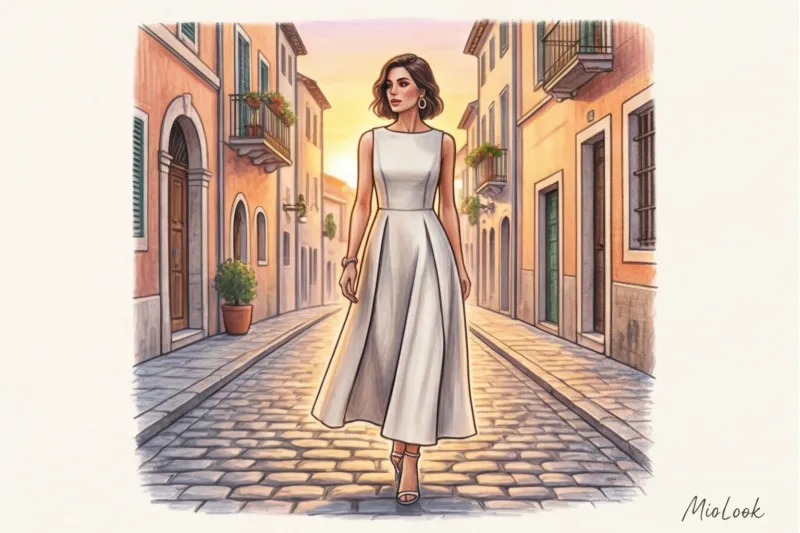
У 1980-х роках Джорджіо Армані зробив революцію у вечірній моді, вивівши на подіуми суміш шовку та льону (Silk-Linen Blend). Це поєднання - головний лідер світської хроніки на італійській Рів'єрі. Ідеальна пропорція: 70% шовку та 30% льону. Шовк дає благородний перлинний блиск і пом'якшує заломи, а льон забезпечує каркас та неперевершену повітропроникність.
Інша блискуча альтернатива - мерсеризована бавовна. Пройшовши спеціальну обробку, бавовняна нитка стає гладкою, міцною і набуває легкого свічення, що нагадує шовк. Саме з таких тканин Крістіан Діор створював свої знамениті літні сукні А-Силуету в епоху New Look (1947). Мерсеризована бавовна чудово тримає форму корсета і пишної спідниці, залишаючись при цьому абсолютно комфортною в спеку.
Зона ризику: тканини, які видадуть вас із головою
Навіть у преміальному сегменті (в діапазоні 1000-3000 €) зустрічаються тканини, які можуть зіпсувати вам вечір. Я називаю це «ефектом мокрої плями». Світлий однотонний атлас (особливо у відтінках пудри, срібла чи небесно-блакитного) та тонка тафта небезпечні: варто кондиціонеру в залі дати збій, як тканина змінить колір у стратегічно важливих місцях.
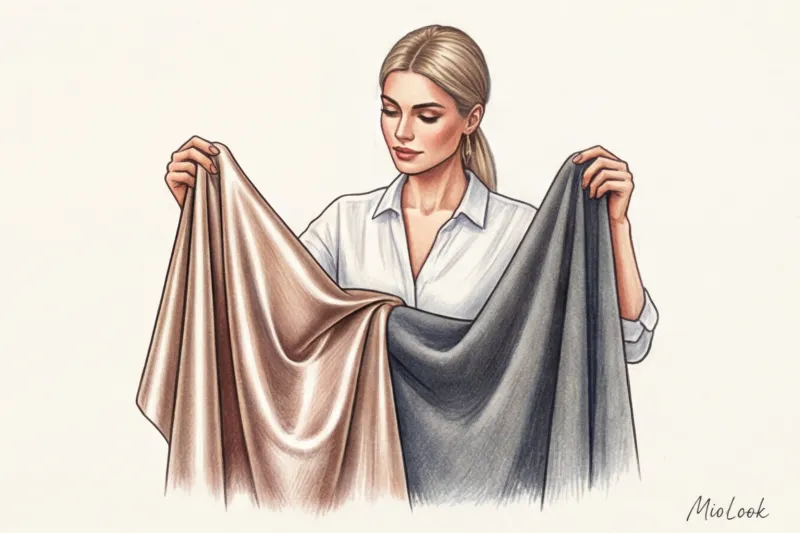
У цього правила є виняток. Якщо ви закохані у глянцеву фактуру і не готові від неї відмовлятися, використовуйте оптичні ілюзії. Дрібний візерунок, абстрактний принт, активне драпірування або колірний градієнт візуально розбивають поверхню тканини і приховують будь-які недоліки. Докладніше про те, як колір та фактура маскують вологу, читайте у нашій спеціальній статті про тканинах та фасонах, яких варто уникати.
Чесно зізнаюся, у матових і пористих тканин є одна вада — вони не дають того самого «голлівудського глянцю» на фотографіях зі спалахом. Це компроміс: ви або вибираєте абсолютний візуальний блиск і зазнаєте спеки, або робите ставку на матову елегантність і почуваєтеся комфортно до самого ранку.
Чек-лист стиліста: як протестувати вечірню сукню на літо та його тканину
Теорія - це чудово, але в примірочній вам потрібні конкретні дії. Ось чек-лист із 4 кроків, який я використовую на шопінг-супроводі перед покупкою літнього вечірнього вбрання:
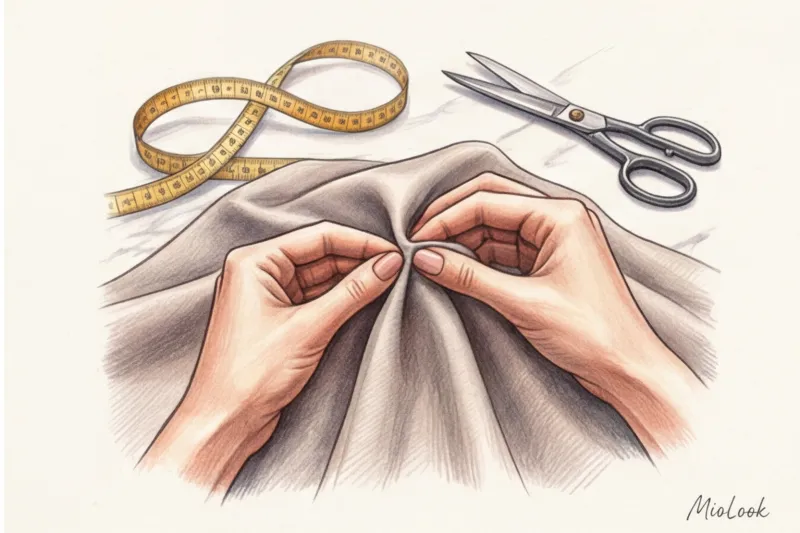
- Тест на зминання (Правило 10 секунд). Стисніть поділ сукні в кулаку, порахуйте до 10 і відпустіть. Якщо тканина миттєво розправилася (як купро чи міцний) – беремо. Якщо залишилася жорстка сітка зморшок (як на 100% льону без домішок) — до кінця вечора на животі та стегнах будуть неохайні заломи.
- Перевірка на вагу. Покладіть складену сукню на передпліччя. Воно має відчуватися майже невагомим. Якщо тканина тягне руку вниз – для літнього вечора вона надто щільна.
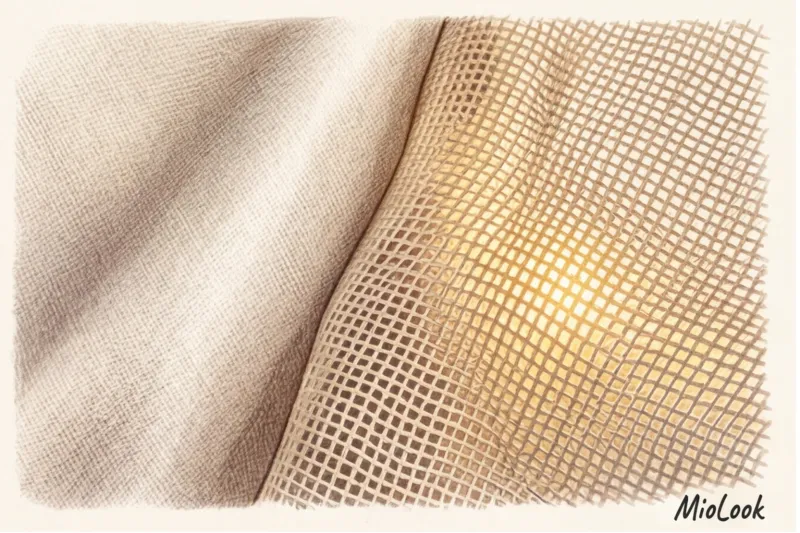
- Тест на просвіт. Піднесіть один шар тканини до лампи чи вікна. Ви бачите крізь неї легкий контур своїх пальців. Це означає, що плетіння досить пухке для циркуляції повітря.
- Правило підкладки. Золоте правило старої школи: підкладка має бути натуральнішою або дорівнює основі. Шовк на шовку, шовк на віскозі - так. Шовк на поліестері – категоричне немає.
Чи готові почати?
Завантажте фото своїх речей у MioLook і алгоритм запропонує десятки нових комбінацій для будь-якого приводу.
Спробувати MioLookРезюме: розкіш без компромісів
Елегантність у спеку - це не магія і не вроджений дар. Це чиста фізика та грамотний вибір текстур. Інвестуючи у сукню, звертайте увагу не на логотип бренду, а на склад та плетіння на внутрішньому ярлику. Високотехнологічні бленди (шовк з льоном) та якісні штучні волокна (купро, віскозний креп) окупляться бездоганним зовнішнім виглядом та вашим комфортом.
Одяг повинен служити вам, а не ви одягу. Немає нічого менш елегантного, ніж жінка, яка весь вечір обмахується меню та боїться підняти руки через неправильно вибрану тканину. Перегляньте свій вечірній гардероб сьогодні, проведіть «тест 10 секунд», і наступний літній раут стане для вас приводом для задоволення, а не випробуванням на витривалість.