In August 2022, I stood in a hotel room on the Lido, preparing a client for the red carpet at the Venice Film Festival. The thermometer read 32°C, and the humidity was approaching 80%. On the bed lay a stunning dress made of heavy silk velvet, which the brand had sent the day before. The client looked at it in panic, realizing she wouldn't last even twenty minutes in this "luxury." That day, we were saved by a backup dress made of weightless silk crepe. In 12 years of working as a stylist, I've learned a hard and fast rule: when you're looking for a summer evening dress, fabric is everything. Style, brand, and price are secondary to the laws of thermodynamics.
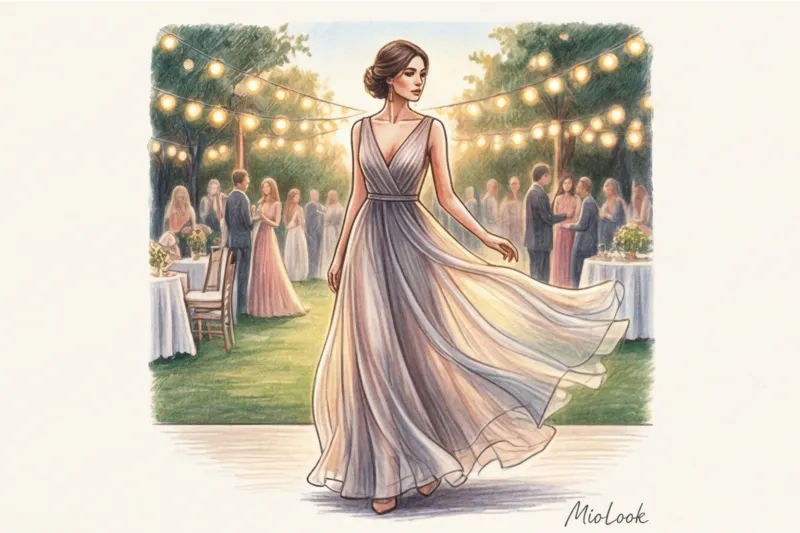
We have already discussed in more detail the basic principles of creating a seasonal wardrobe in our The complete guide to the best fabrics for summer clothing But evening dress codes are a whole different ballgame. Here, basic saviors like simple cotton or coarse linen look too casual, and classic, status-conscious materials become instruments of torture. Let's explore the physics of elegance and find out how to look like a million bucks without breaking out in a sweat.
The Physics of Luxury: Why a Summer Evening Dress Relies, Above All, on the Right Fabric
The peculiarity of the summer evening dress code lies in a stark conflict of interests. On the one hand, the status of the event (be it a wedding on Como or a gala dinner) demands visually heavy, expensive textures that hold their shape well and reflect light beautifully. On the other hand, your body desperately needs ventilation.
Many of my clients make a classic mistake: they confuse the lightness of a fabric with its breathability. The finest polyester chiffon weighs just a few grams, but acts like a greenhouse film. Meanwhile, a loose blended material may feel dense in your hands, but its porous structure wicks away heat perfectly.
In my practice, we always focus on the material's density (GSM—grams per square meter). For a summer evening out, the ideal range is 60–120 g/m². Anything heavier than 150 g/m² (such as classic taffeta or mikado) will ruin your evening at temperatures above 25°C, even if your dress costs €5,000.
Access to MioLook for €0.99 — one-time payment
A smart AI stylist will select the perfect look, taking into account weather conditions and dress code.
Get access — €0.99 onceBusting the Myths: When "Artificial" Is Better Than "Natural"
The most dangerous myth I fight year after year is: "In hot weather, you should only wear 100% natural silk." This is only partially true. Smooth silk satin is one of the worst choices for outdoor events. It gets wet instantly, takes a long time to dry, and betrays even the slightest drop of sweat, changing its color by two tones.
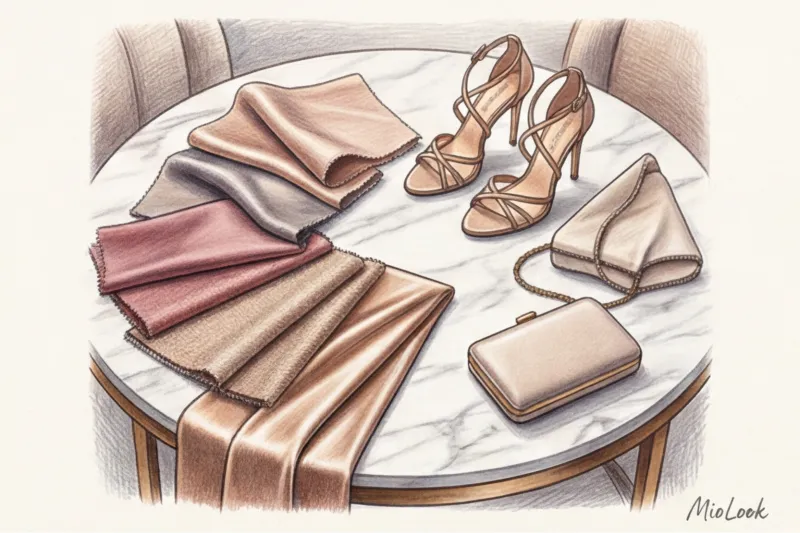
I once had to rescue a bride who had chosen a 100% silk satin slip dress for a wedding in Tuscany. During the fittings under the air conditioning, it looked divine. But in the blazing sun, the fabric clung to her body, creating the effect of a wet T-shirt. Since then, for summer events, I often suggest cupro or high-tech viscose to my clients.
Cupro, or "copper silk," is an artificial fiber (not to be confused with synthetic!) created from cotton fluff. According to research by Textile Exchange (2023), modern cupro is 30% more hygroscopic than classic silk. It flows like liquid gold, yet breathes like cotton.
Man-made fabrics (chemically created from natural materials like wood or cotton) like viscose, modal, and cupro often outperform natural silk in terms of heat regulation. However, synthetics (polyester, nylon, acrylic) should be strictly avoided for summer evening looks.
Silk for Summer Outings: Choosing the Right Weave
If you're still committed to natural silk, it's important to understand: the "100% silk" label doesn't guarantee coolness. It's not the fiber's composition that matters, but the weaving method. Smooth, tightly woven threads (like satin) block air circulation. We want loose, twisted threads.
Crepe de Chine and silk georgette: salvation from the heat
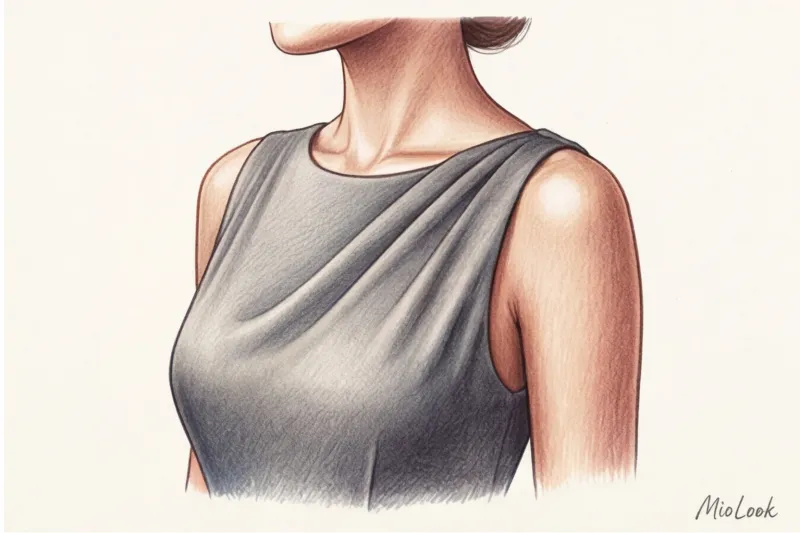
My absolute favorite summer evening fabric is silk crepe (crepe de Chine). Its secret lies in the strong, uneven twist of the threads. This creates a fine grainy texture on the surface. This roughness creates a life-saving micro-air cushion between the body and the fabric.
Furthermore, crepe has a matte surface that diffuses light rather than reflects it. If you sweat a little, it's practically invisible on crepe. Georgette goes even further: it's more sheer and lighter. Recall Madeleine Vionnet's ingenious period dresses from the 1930s: layered georgette, cut on the bias, creates a paradoxical effect—there are many layers, but they're cooler than a single layer of dense fabric, as the fabric acts like a fan with each step.
Chiffon: weightless elegance
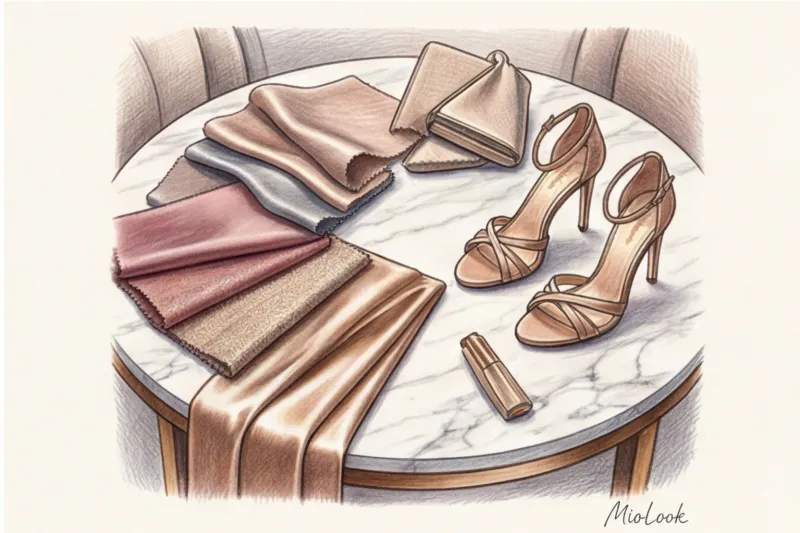
Silk chiffon is a classic summer Black Tie. Its flowing silhouette allows for natural ventilation. However, there's a catch that 90% of shoppers forget: the lining.
A gorgeous 100% silk chiffon dress is often lined with polyester or acetate (to reduce production costs). This negates the properties of the expensive outer fabric. Always check the inside tag: the lining should be silk, fine viscose, or cupro. If the base is natural and the lining is synthetic, leave the item in the store.
Your perfect look starts here
Trust the MioLook app to digitize your wardrobe and always know what to wear.
Get access — €0.99 onceArchitectural Forms: Linen and Cotton in Black Tie Format
What if the dress code calls for a structured, architectural silhouette that flowing silk simply can't support? Turn to blends. A great example is how to wear linen in the evening without looking like you just got back from the beach.
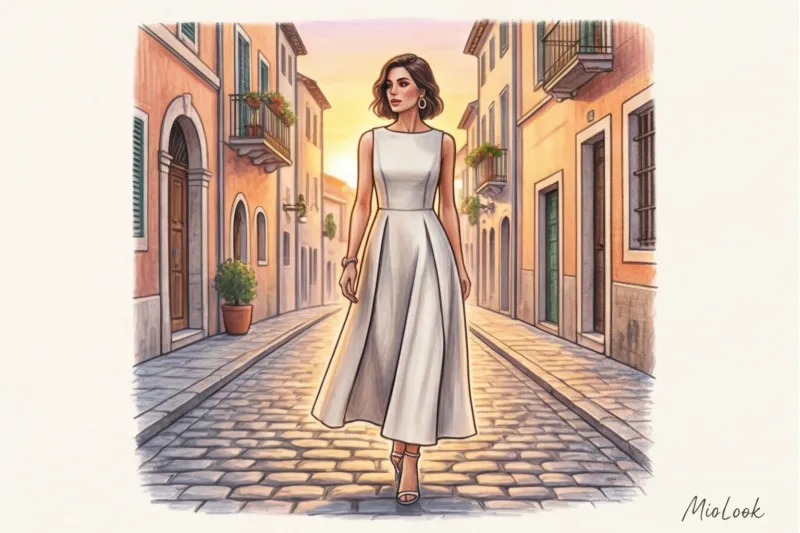
In the 1980s, Giorgio Armani revolutionized eveningwear by introducing a silk-linen blend to the catwalk. This combination is a favorite among the Italian Riviera society columns. The ideal proportions are 70% silk and 30% linen. Silk imparts a refined pearlescent sheen and softens creases, while linen provides structure and unrivaled breathability.
Another lustrous alternative is mercerized cotton. After undergoing a special treatment, the cotton thread becomes smooth, durable, and acquires a subtle sheen reminiscent of silk. It was from this fabric that Christian Dior created his famous A-line summer dresses during the New Look era (1947). Mercerized cotton perfectly holds the shape of corsets and full skirts, while remaining completely comfortable in the heat.
Risk Zone: Fabrics that will give you away
Even in the premium segment (in the €1,000–€3,000 range), there are fabrics that can ruin your evening. I call it the "wet spot effect." Light, solid-color satins (especially in shades of powder, silver, or sky blue) and thin taffeta are dangerous: if the air conditioning in the room fails, the fabric will change color in strategic places.
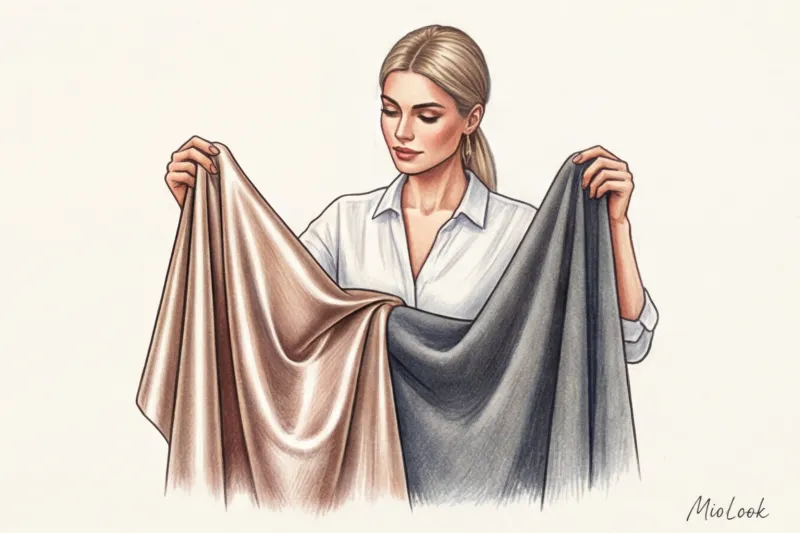
There's an exception to this rule. If you're in love with a glossy texture and aren't ready to give it up, consider using optical illusions. A small pattern, abstract print, active draping, or a color gradient (ombre) will visually break up the fabric's surface and conceal any imperfections. For more information on how color and texture camouflage moisture, read our dedicated article on fabrics and styles to avoid.
To be honest, matte and porous fabrics have one drawback: they don't produce that "Hollywood shine" in flash photos. It's a compromise: you either choose absolute visual shine and endure the heat, or opt for matte elegance and feel comfortable until the early hours.
Stylist's Checklist: How to Test a Summer Evening Dress and Its Fabric
Theory is great, but in the fitting room, you need concrete action. Here's a four-step checklist I use when shopping for a summer evening dress:
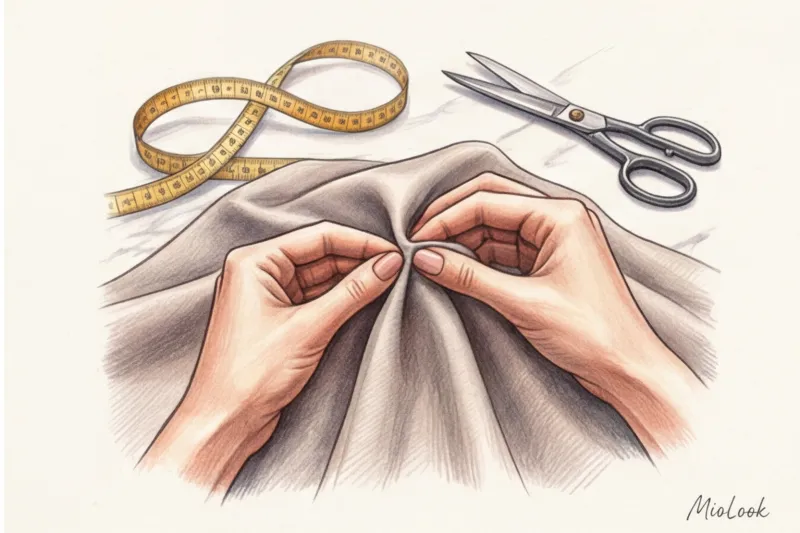
- Crease Test (10 Second Rule). Squeeze the hem of your dress in your fist, count to ten, and release. If the fabric immediately straightens out (like cupro or crepe), buy it. If a stiff mesh of wrinkles remains (like 100% pure linen), you'll have unsightly creases on your stomach and hips by the end of the evening.
- Weight check. Place the folded dress on your forearm. It should feel almost weightless. If the fabric pulls your arm down, it's too thick for a summer evening.
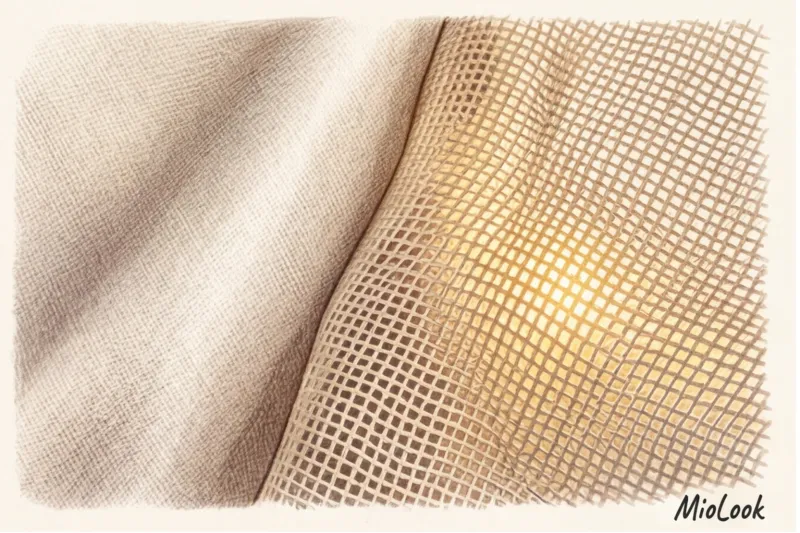
- Translucent test. Hold one layer of fabric up to a lamp or window. You should be able to see the faint outline of your fingers through it. This means the weave is loose enough to allow air to circulate.
- Lining rule. The old-school golden rule: the lining should be more natural than or equal to the base. Silk on silk, silk on viscose—yes. Silk on polyester—a definite no.
Ready to get started?
Upload photos of your items to MioLook, and the algorithm will suggest dozens of new combinations for any occasion.
Try MioLookSummary: Luxury without compromise
Elegance in the heat isn't magic or an innate gift. It's pure physics and a smart choice of textures. When investing in a dress, pay attention not to the brand logo, but to the composition and weave on the inside tag. High-tech blends (silk and linen) and high-quality synthetic fibers (cupro, viscose crepe) will pay off in impeccable looks and comfort.
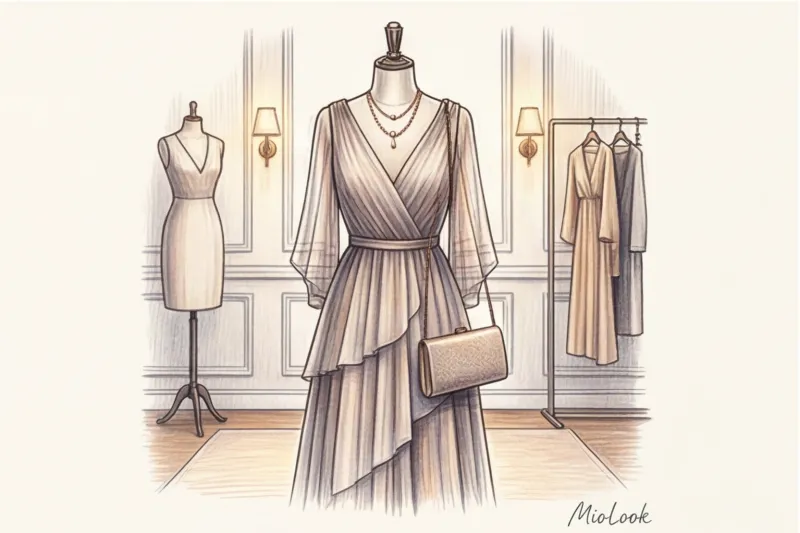
Clothes should serve you, not you serve them. There's nothing less elegant than a woman who spends the entire evening fanning herself with a menu, afraid to raise her hands because she chose the wrong fabric. Review your evening wardrobe today, take the "10-second test," and your next summer gala will be a source of pleasure, not a test of endurance.