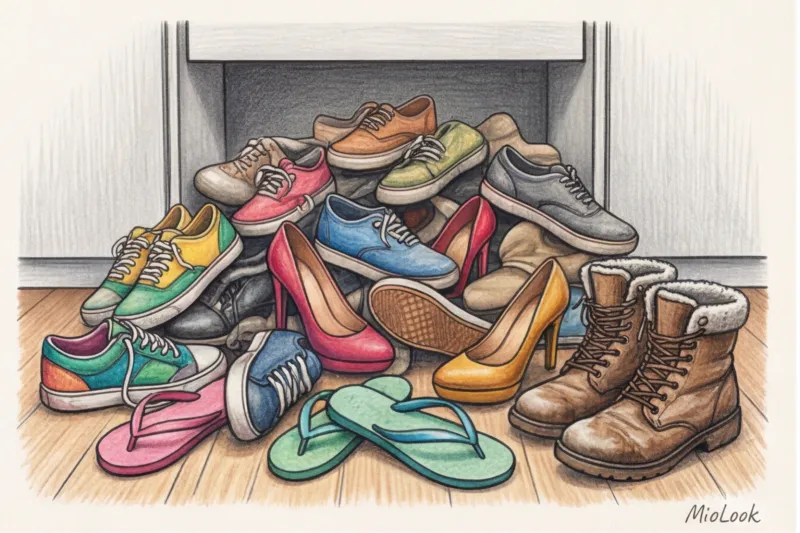
Take a look at the bottom shelf of your closet. We bet there's a pair of sneakers there that's "still okay for a trip to the countryside," even though you haven't worn them in three years. Or what about those beautiful but incredibly rubbing pumps you wore exactly once to a friend's wedding? As a fashion journalist and stylist with over a decade of experience, I regularly review my clients' wardrobes. And you know what I see most often? A graveyard of shoe hopes.
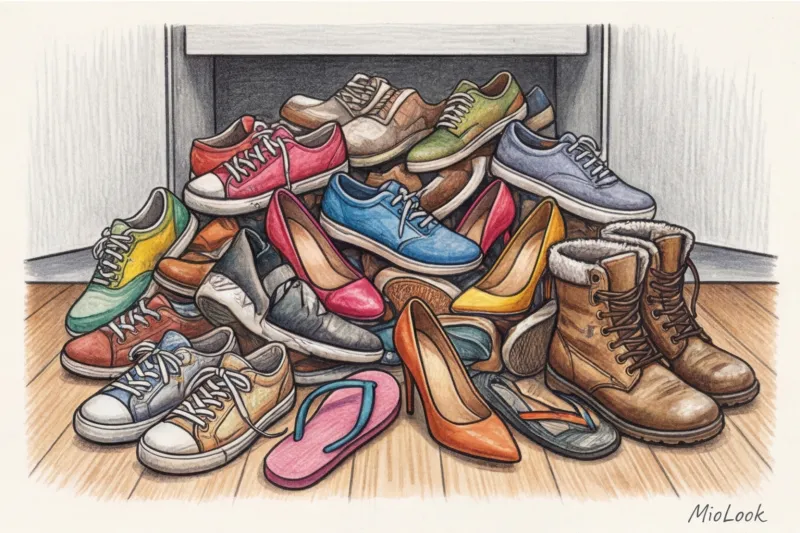
We easily part with stretched-out T-shirts, but shoes somehow carry a special psychological weight. We recently discussed in detail, Where to donate old clothes: stylist tips and an eco-guide But with boots and sneakers, things are much more complicated. They're not just a piece of fabric. They're a complex engineering structure made up of dozens of components.
Let's figure out how to conduct a competent triage of your shoe rack and Where to donate old shoes in a way that will bring benefits and not increase the amount of waste on the planet.
Anatomy of the problem: why we find it hard to part with our shoes and how they harm the environment
In my practice, clients spend hours justifying the presence of a worn-out pair of shoes in their closet. The psychology behind this is simple: shoes are associated with the roads traveled. Those worn-out Chelsea boots "remember" your trip to Paris, while expensive but worn-out designer shoes serve as an anchor to your former status.
But while you're hoarding this archive of memories, the industry is sounding the alarm. Unlike a 100% cotton T-shirt, modern shoes are a recycling nightmare.
According to a 2023 report from the Ellen MacArthur Foundation, about 90% of all shoes produced worldwide end up in landfills, where the synthetic materials take 500 to 1,000 years to decompose.
Manufacturing technologists confirm the alarming statistics: the average running shoe consists of 65 different components. A single pair can contain up to 15 types of plastic, EVA foam, rubber, textiles, metal eyelets, and toxic glue. Separating this "sandwich" into its component parts is incredibly difficult. That's why the bottom shelf of your closet isn't just a storage area—it's a frozen environmental problem.
The Three-Pile Rule: Organize Your Shoe Rack Like a Pro Stylist
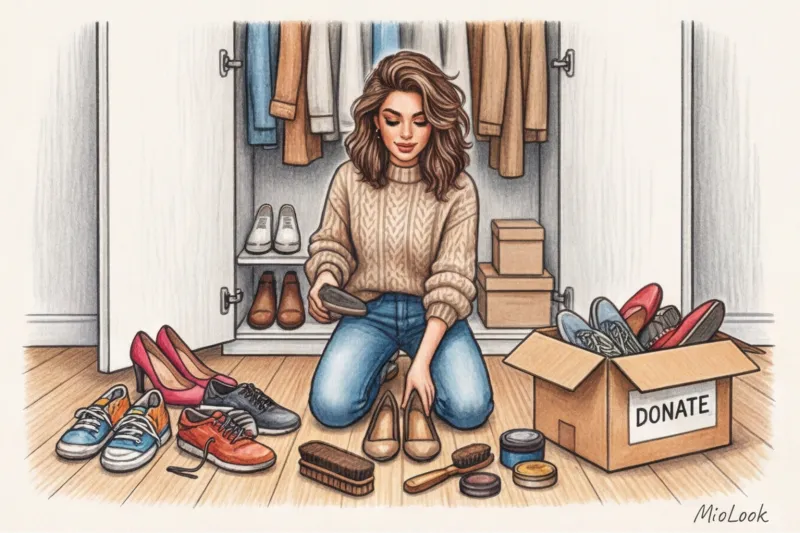
Stop shuffling boxes around. Set aside two hours on your day off and take absolutely everything out of your closets. Yes, even your winter boots from the attic. Lay them out on the floor. Now we'll separate everything into three categories.
- Bunch 1: Leave and carry. Only shoes that fit you in size, are current in style and are in good condition go here.
- Bunch 2: Repair and restoration. Invest in saving a quality base. These are the pairs you love, but they require professional attention.
- Heap 3: Deliverance. Here we decide where to donate old shoes – we divide them into charity and recycling.
Professional insight: Remember this simple rule: If you haven't worn a pair of shoes for two seasons because they're uncomfortable, feel free to consign them to the third pile. Shoes don't "break in." It's the anatomy of your foot resisting the wrong last. Don't torture yourself.
Try MioLook for free
A smart AI stylist will create the perfect look based on your real shoes and clothes.
Start for freeRepair and restoration: when an old couple deserves a second chance
Fixing things today is not a sign of poverty. It's a marker of awareness and high status. As I already wrote in the article about status accessories Well-groomed shoes say more about you than a brand logo.
One day, a client came to me ready to throw away her classic Prada loafers. The soles were worn down, and the toes had deep scratches. She thought they were past their prime. We took them to a reputable repair shop. Replacing the soles, dry cleaning the leather, and restoring the color cost about €45. For that, she got back a perfect pair of basic shoes that would last another five years. Buying new ones would have cost €750.
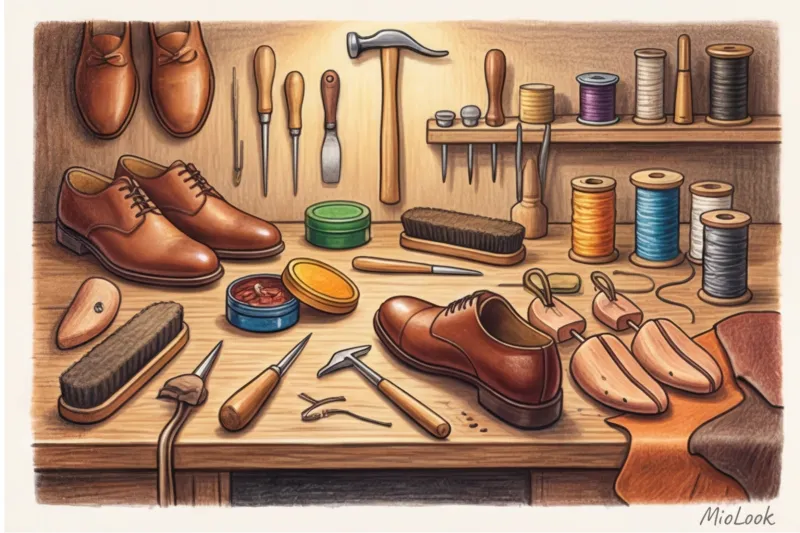
What can be repaired:
- Replacing heels and installing preventative measures on leather soles.
- Deep dry cleaning of suede and nubuck.
- Removal of reagent stains.
- Restoring the color of smooth leather and removing scratches with liquid leather.
Hidden defects: how to understand that shoes are no longer wearable?
But repair has its limitations. It's ineffective if the shoe's geometry is irreparably damaged. If you notice a severe misalignment of the last (the shoe "falls" inward or outward when placed on a level table), repair is pointless. Wearing such a pair ruins your posture and damages your joints.
Sneakers with a damaged arch support or worn-out heel counter are also beyond repair. Thinning of the cushioning layer in athletic shoes (usually after 500-800 km) means the shoe has lost its function, even if it appears to be in good condition.
Where to donate old shoes to charity: etiquette rules
Here we come to the most painful issue. I want to debunk a popular myth and tell you the harsh truth: donating heavily worn, dirty, or torn shoes to charity is Not good deed.
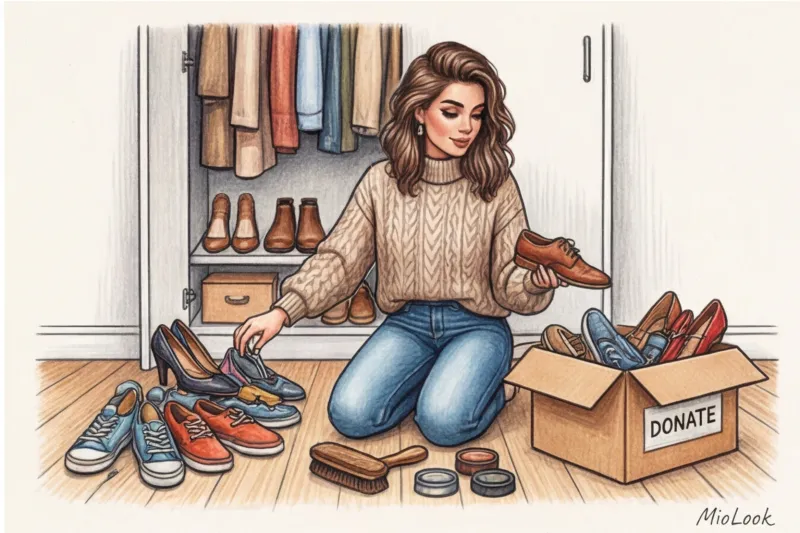
The charities don't have a staff of magical fairies who will wash dried mud from your shoes or replace their heels at their own expense. By disposing of your trash under the guise of "helping those in need," you're forcing volunteers to do your dirty work and wasting the charities' meager budgets on disposing of your waste in landfills.
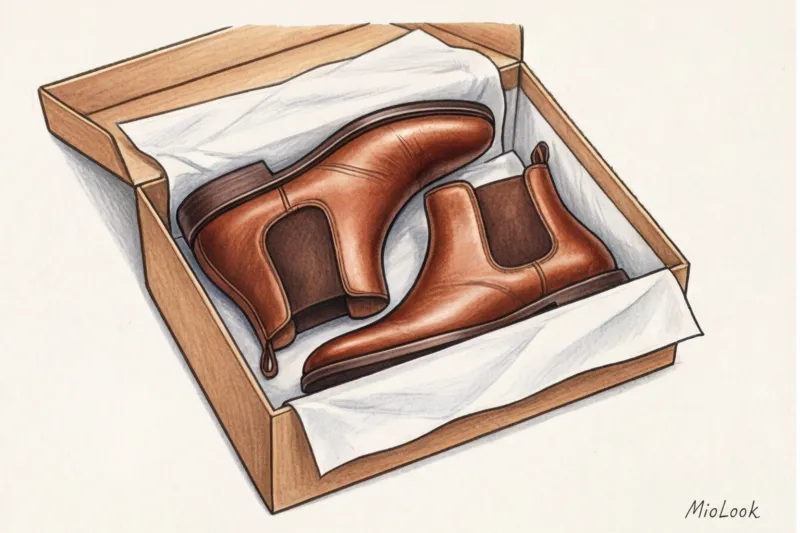
Hard rule of sharing: If you feel squeamish or embarrassed to offer this particular pair to your friend, take it to a recycling center, not to a fund.
How to properly prepare shoes for donation (to local charity shops, churches, social centers, or projects like "Svalka" and "Kind Things"):
- Wash the sole thoroughly and clean the upper.
- Dry the shoes at room temperature.
- Check that the insoles are present and the fittings are intact.
- Critical: Tie the pair together with laces or wrap them tightly with masking tape. In large collection containers, a single shoe will instantly lose its pair and end up in the trash.
Your perfect look starts here
Join thousands of users who look flawless every day with MioLook. Digitize your wardrobe in one click.
Start for freeRecycling: Where to donate shoes that are no longer wearable
What to do with those sneakers that are worn to the point of holes? Never throw them in a regular street plastic recycling bin. Household waste sorting lines are not designed to handle multi-component footwear.
Fortunately, major retailers are taking on this task today. International and local brands (such as Vagabond, Rendez-Vous, and Ralf Ringer) regularly hold collection events. You bring in an old pair of shoes from any brand and, in return, often receive a coupon for a discount (usually 10% to 15%) on a new purchase.
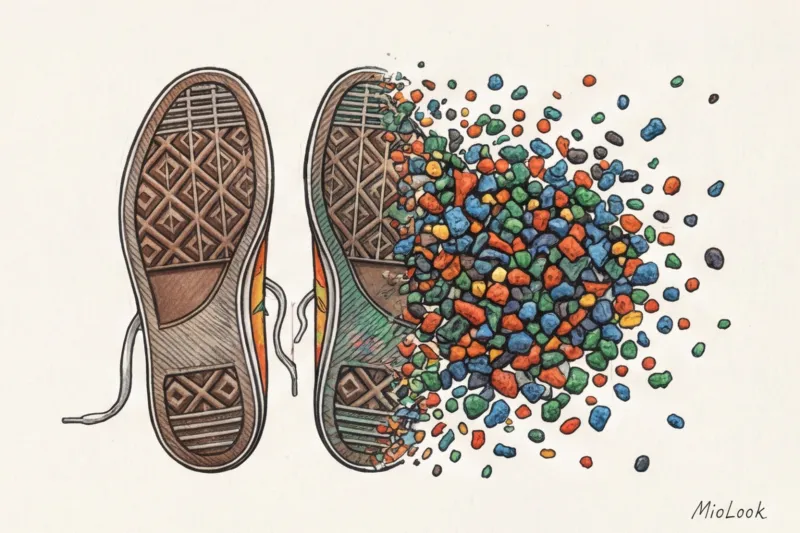
What happens to your old shoes next? Experts from the Vtoroe Dykhanie (Second Wind) Foundation describe this technological process in detail. First, the shoes are sorted by hand. Then, metal eyelets and zippers are cut off using special machines. The textile uppers are often used to make cleaning cloths or technical felt. The most valuable part—the polyurethane or rubber sole—is sent to powerful shredders. There, it is crushed into fine crumbs. It is from these crumbs that the trauma-safe rubber surfaces for modern stadiums and playgrounds are cast.
Wardrobe Investment: How to Choose Shoes You Won't Have to Throw Away
The best way to solve the shoe waste problem is to not create them. This is the foundation of the slow fashion concept. Instead of buying three pairs of trendy shoes made of cheap polyurethane for €40 per season, invest in one pair of quality leather.
Pay attention to the method of fastening the sole. Design Goodyear Welt (when the upper is sewn to the welt, and the welt to the sole) allows the shoemaker to change the sole an unlimited number of times without damaging the upper. Such a pair can last for decades, aging beautifully and acquiring a noble patina.
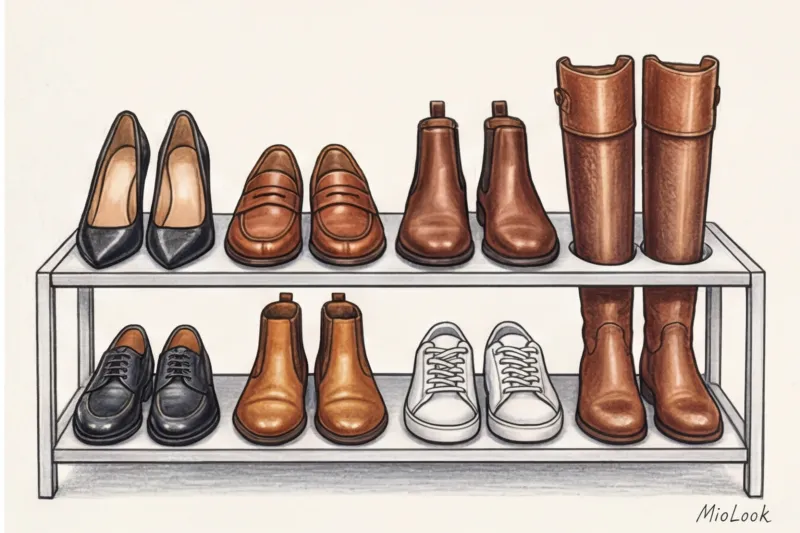
To ensure your shoes last a long time, they need proper care. If you're just starting to build a smart base (which I covered in detail in the guide) How to put together a capsule wardrobe ), buy cedar shoe trees. A pair costs about €15–20, but they instantly absorb moisture from the inside and prevent the leather from curling.
By the way, to clearly see which pairs you wear regularly and which ones are just sitting there, I recommend digitizing your collection. Upload a photo of your shoes to the app. MioLook Artificial intelligence will not only help you create dozens of new looks with the shoes you already own, but will also provide statistics on what really works for your style and what's time to recycle.
Checklist: An Eco-Friendly Weekend Shoe Decluttering Plan
Enough theory, let's get to the practical stuff. Here's your step-by-step plan for the coming weekend:
- Evacuation. Remove all shoes from closets, dressers, and boxes. Wipe down the empty shelves.
- Fitting. Remove any items that are too small, too big, or that are rubbing mercilessly. If the pair is in excellent condition, clean it, tie it with laces, and put it in a bag for a charity or sharing.
- Ambulance. Collect in a separate bag the pairs of shoes you love but need new heels, maintenance, or dry cleaning. Place this bag by the front door to take to the repair shop on Monday.
- Disposal. Collect a bag of worn-out pairs (worn-out sneakers, cracked leatherette). Find the nearest retailer with a recycling program (such as Rendez-Vous) and take the shoes there.
- Organization. Return the remaining, favorite, and trendy shoes to clean shelves. Insert shoe trees into seasonal pairs.
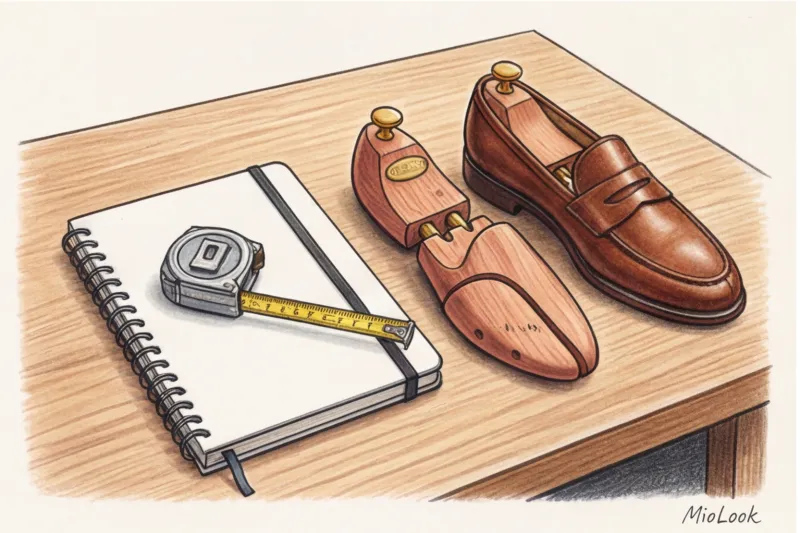
Keeping your wardrobe organized starts with mindfulness. Every time you decide to repair a quality item instead of throwing it away, or every time you take worn-out sneakers to the recycling bin instead of tossing them in the trash, you make your environmental footprint a little less damaging. And remember: a perfect wardrobe isn't one with too many items, but one in which every piece works for you.