Over 14 years of working as a personal stylist in Europe, I've conducted hundreds of closet audits. My personal record for absurdity is an executive client who had five identical dark blue Zara blazers languishing on hangers. All with the factory tags still attached. When I silently asked, she replied, "They were on sale, and I figured a basic item always comes in handy."
If your closet is bursting with clothes and you're constantly overcome with the panic of "I have nothing to wear" in the mornings, you're probably looking for an answer to the question: How to stop buying unnecessary clothes Trite advice like "wait 24 hours before buying" no longer works—our brains have learned to bypass them. To break this vicious cycle, we need a rigorous audit of our habits through the lens of behavioral economics. We've covered the physical shelf clearing step in more detail in our A complete guide to wardrobe management and smart shopping list planning , but today we're going to talk about what goes on in your head before you pull out your credit card.
Why We Buy Things We Don't Wear: Mental Traps
The British organization WRAP (Waste and Resources Action Programme) published a frightening statistic in its 2023 report: on average, we regularly wear only 20% of the contents of our closets. The Pareto principle applies here flawlessly: the remaining 80% hangs like dead weight, causing us daily feelings of guilt.
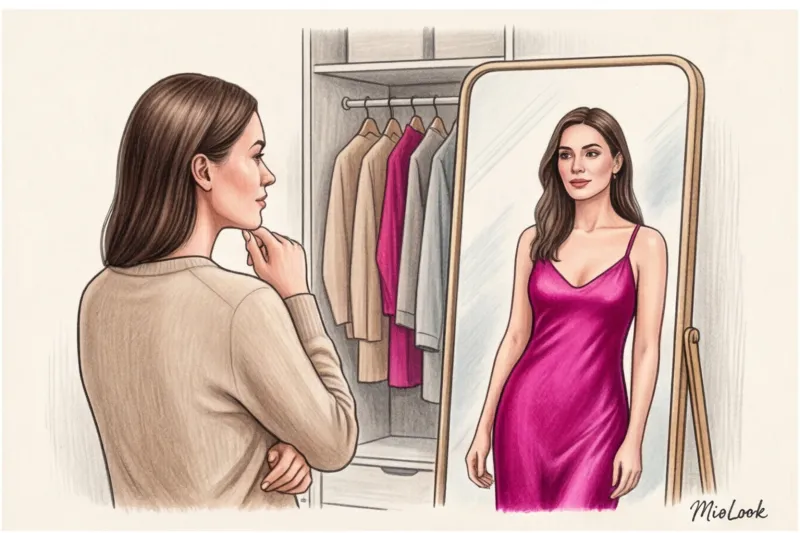
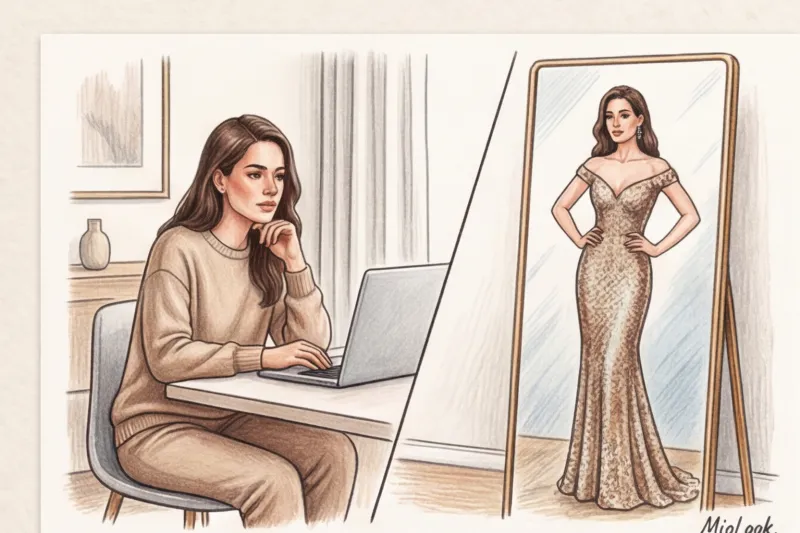
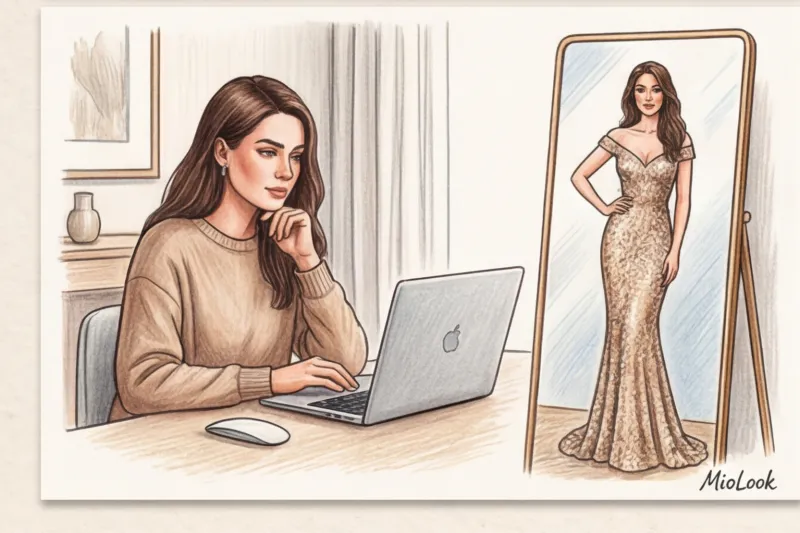
The first and main reason for this catastrophe is the conflict between our real way of life and the so-called fantasy self One of my regular clients works remotely five days a week, but obsessively buys sequin dresses and velvet tops from &OtherStories. She's buying things for the life of a socialite she doesn't live. When you pick up an item from the rack, ask yourself, "Which version of me is this made for?"
The second trap is dopamine addiction. We don't pay for a cotton shirt. We pay for a micro-dose of dopamine, the thrill of novelty, and the anticipation of change. As soon as the item lands in your bag, your brain chemistry changes, and by the time you get home, the shirt no longer evokes the same excitement.
"Sensory overload in your wardrobe kills creativity. When your brain sees 150 things piled up, it blocks your imagination and forces you to wear your trusty jeans and a gray sweater. A full closet doesn't mean abundance, it means stress."
Don't forget the Dunning-Kruger effect in style. A lack of understanding of the basic architecture of a wardrobe leads women to buy complex, statement pieces in the hopes that they will elevate their look. The result is a closet full of soloists, but no choir.
The Illusion of the "Ideal Self" and the Sales Effect
Our brains are brilliant at tricking us. Buying expensive yoga leggings gives us the false sense that we've already started exercising. This is called "comfort shopping," where a transaction replaces the actual action.
But the worst enemy of mindfulness is red price tags. Counter-intuitive fact: Sales make you poorer, not save money When you see a 50% discount, your neocortex (the brain responsible for logic) literally shuts down. You evaluate not the item's usefulness, but the size of your "benefit."
Your perfect wardrobe starts here.
Stop buying unnecessary items. Digitize your closet and create hundreds of looks with the help of a smart AI stylist.
Start for freeHow to Stop Buying Unnecessary Clothes: A Stylist's Method
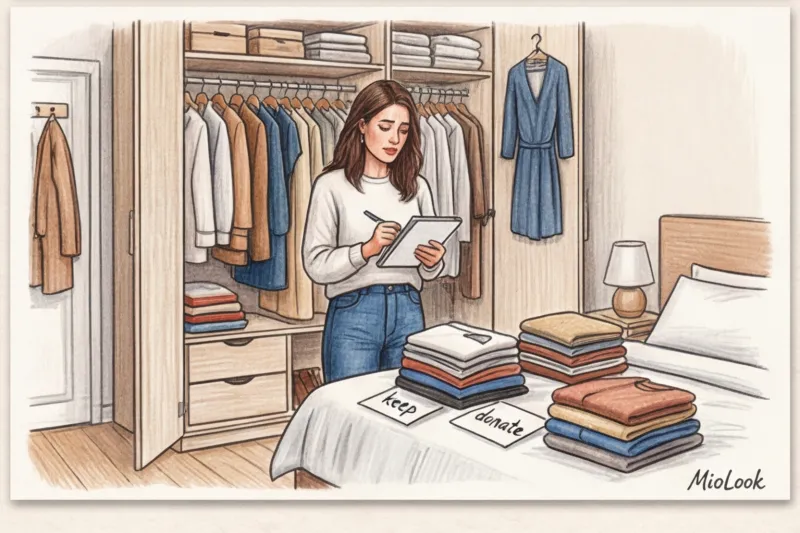
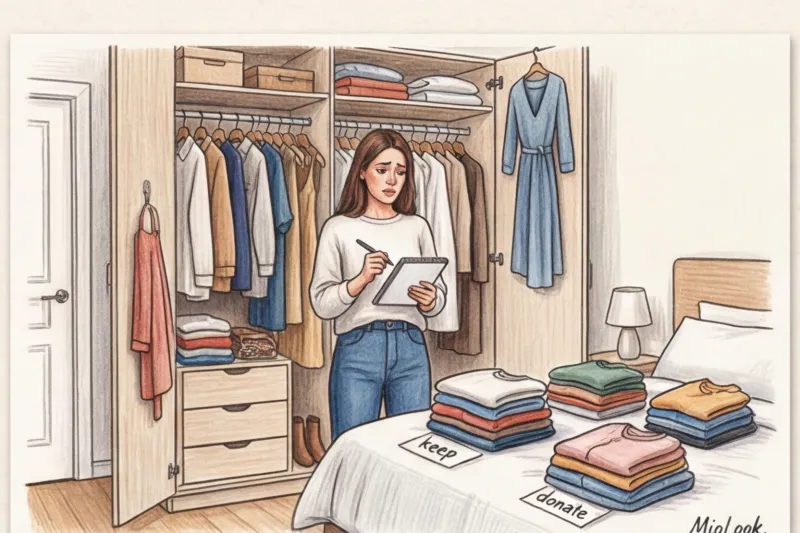
No shopping lists until you've completely cleared out your closet. That's my golden rule. You can't build a new house on top of old ruins. During the audit, we always look for "dupes"—clones of each other. You'd be surprised, but most women spend years buying the same pair of blue jeans in slightly different cuts, thinking they'll add variety to their style.
To break the habit of buying cheap clothes, I make my clients stop judging things by the price tag and switch to the metrics Cost Per Wear (CPW).
Let's do the math. You buy a trendy acrylic sweater at H&M for €20. It pills after the first wash, and you wear it exactly twice. The cost per wear is €10.
Now you invest in a basic cashmere jumper from COS for €150. Yes, it's a pain at the checkout. But you wear it twice a week for two seasons (about 60 times). The price per wear is €2.50.
Buying cheap, one-time items costs your budget four times more than targeted investments in premium mass-market or mid-range fashion. To easily track this math and see the true wearability of items, I recommend transferring your wardrobe to your smartphone. You can use MioLook — the app will not only help you digitize your closet but also clearly display statistics: what works for you every day and what was an impulsive mistake.
The 3-Image Rule: A Tough Filter Before the Checkout
As a practicing stylist, I always require my clients to "defend" their purchases at the checkout. To do this, we use the Rule of Three Looks. Its essence is ruthless: if, right now, standing in the fitting room, you can't mentally create at least three stylistically distinct outfits with this item and something else you already have at home, the item stays in the store.
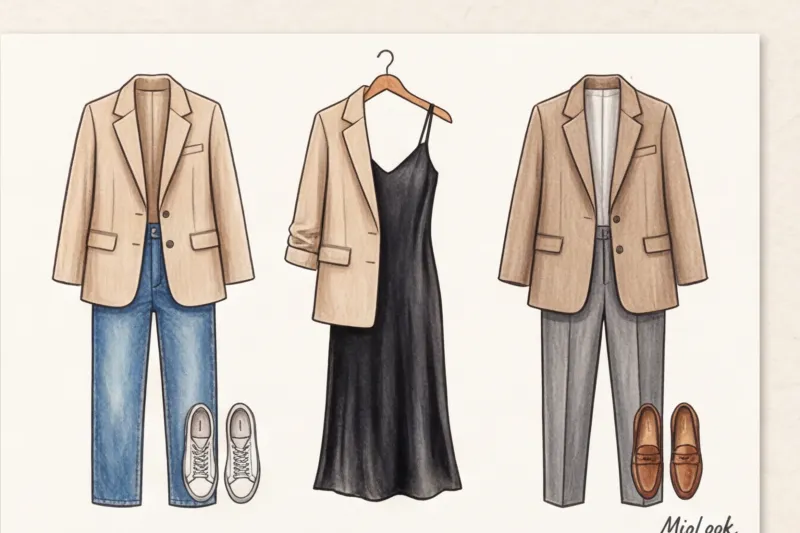
This saves you from buying "single items." You know this scenario? You buy a stunning skirt in a sophisticated olive shade. You bring it home and realize you need different tights, specific shoes, and a top of a certain length to go with it. An €80 skirt adds another €200 to your bill.
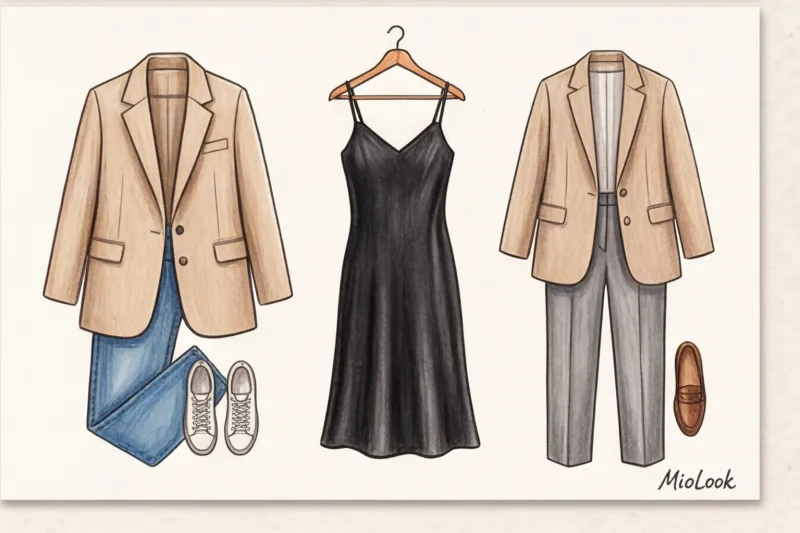
Personal life hack: Before going to the mall, take photos of your seasonal capsule collection (bottoms, basics, outerwear) on your phone. When you reach for another blouse, open your gallery and check it against reality. Even more effective is to generate these combinations right in the fitting room using MioLook's smart AI selection features.
Try MioLook for free
A smart AI stylist will select the perfect look from your items and suggest what's really missing from your wardrobe.
Start for freeMass-market triggers: how stores make us spend
Global corporations spend millions of euros trying to hack our psychology. My experience studying the visual merchandising of Inditex brands (Zara, Massimo Dutti) shows that there's nothing accidental about the store.
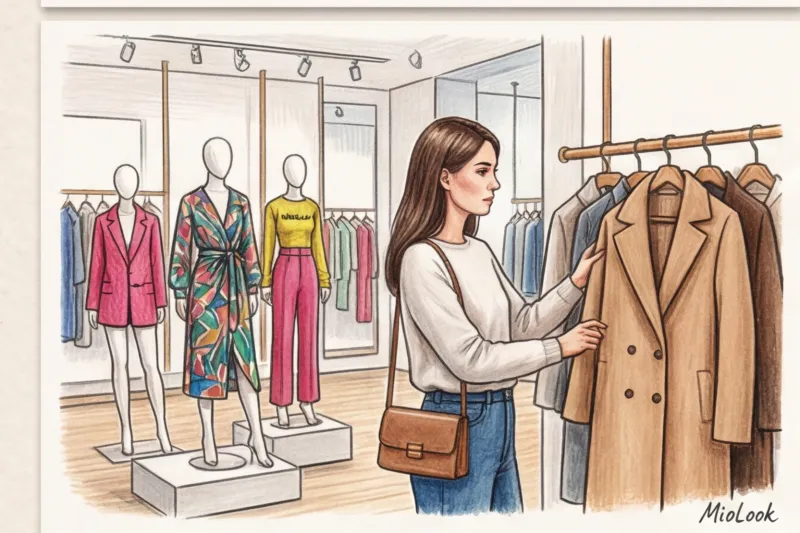
First, there's artificial scarcity. The strategy of frequently changing collections ("Limited Editions") screams at our subconscious: "If you don't buy it now, it won't be around tomorrow." This blocks rational analysis.
Secondly, the distorted reality of fitting rooms. Slightly tilted mirrors elongate your silhouette (making you look 2-3 kg slimmer), and a sophisticated system of warm frontal lighting erases traces of fatigue from your face. The garment seems magical. At home, under harsh overhead lighting, the magic fades.
Third, product juxtaposition. Have you ever noticed how a simple, perfectly tailored turtleneck almost always hangs right next to a complex, ultra-trendy jacket? This isn't a coincidence. Your eye is drawn to the bright jacket, but your brain understands that it's difficult to style. And then merchandisers offer you a ready-made "safe" solution: buy both items at once.
Smart Shopping Checklist: 5 Questions to Ask Before You Buy
I give this step-by-step filter plan to all my clients after shopping assistance. Print it out or save it in your notes. Answer these questions honestly before you go to the checkout.
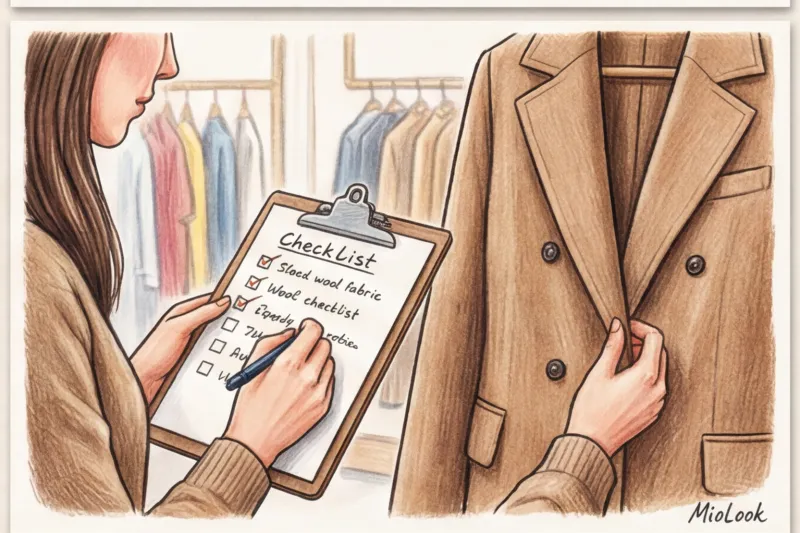
- Would I buy this item if it weren't on sale? (If the answer is "no," you're buying a discount, not clothes.)
- Does it fit my lifestyle in percentage terms? (If you spend 70% of your time in an office with a dress code, and the item is intended for cocktail parties, of which there are 2 a year, put it back on the hanger).
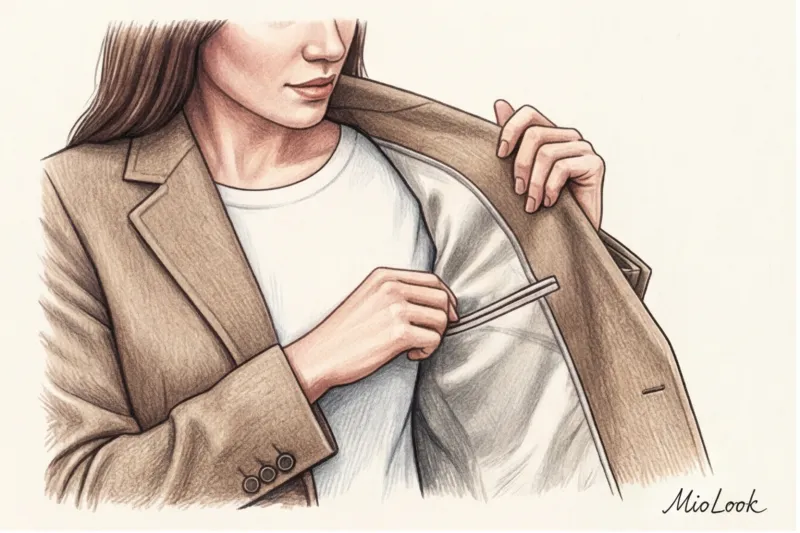
- Am I prepared to care for this fabric? (A €120 silk blouse will require €15 dry cleaning after every second wear. If you hate hand washing and ironing, that silk will die in the laundry basket.)
- Does this thing relieve my morning headache? (The right purchase should save you 5-10 minutes of time in the morning, not add new puzzles like “what to wear with this”).
- Does it replace an outdated item in my wardrobe or just duplicate it? (A tenth white tee won't solve the problem of not having basic structured trousers.)
Important clarification: This checklist is a tool for an everyday basic wardrobe. It does NOT apply to buying a wedding dress or a black-tie event. There, the laws of pure emotion and a unique dress code apply.
Conclusion: From quantity to quality
True style begins when shopping ceases to be a weekend hobby and stress-relief therapy. It's time for a paradigm shift: treat clothing purchases as targeted investments in your personal brand, comfort, and confidence.
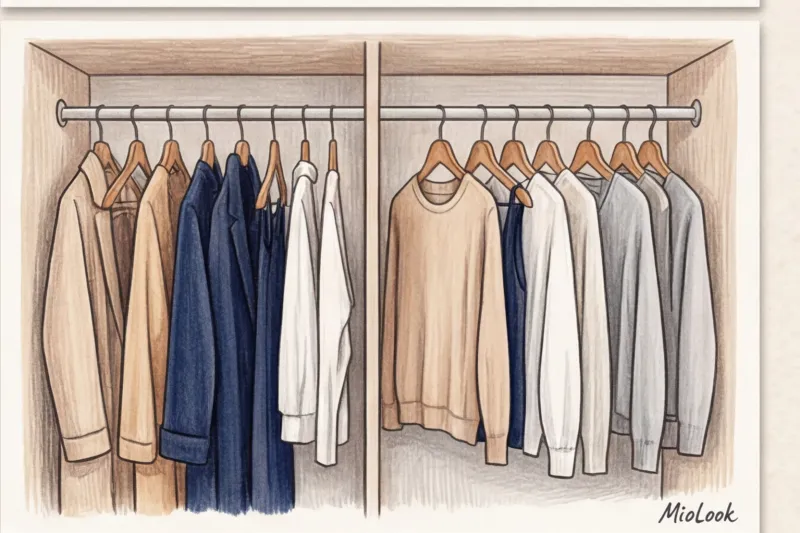
Reward yourself not with spontaneous T-shirt purchases on sale, but with free hanger space, air in your closet, and precious minutes of restful morning sleep. Start small—conduct a ruthless review of your current wardrobe this weekend. Keep only what deserves to touch your skin.
Ready to get started?
Try the MioLook plan for free—no commitments required. Organize your closet and style right now.
Start for free