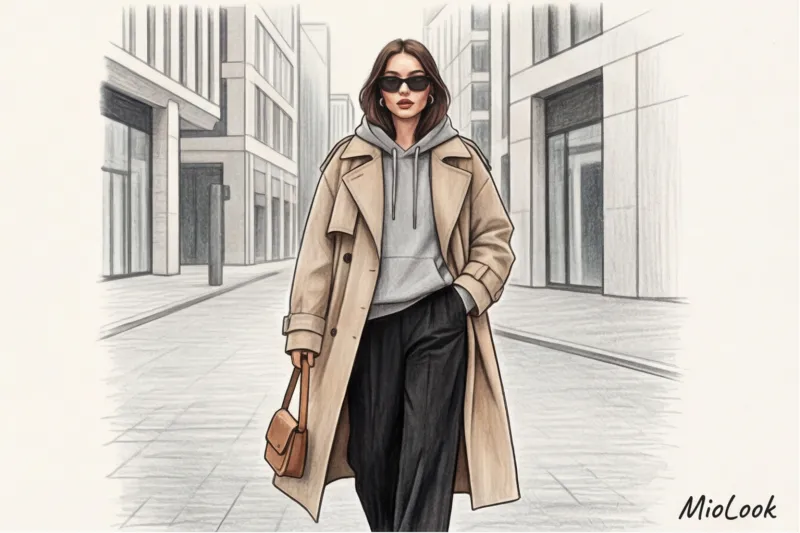
Last week, Anna, a 35-year-old financial director, came to see me. She was tired of stiff jackets and tight skirts, wanted comfort, but was terrified of looking like "an old woman who snatched her teenage son's hoodie." We solved this problem in two hours, simply by shifting the focus from classic casual to Korean street style. And no, I didn't force her to wear pink leg warmers or a plush bucket hat.
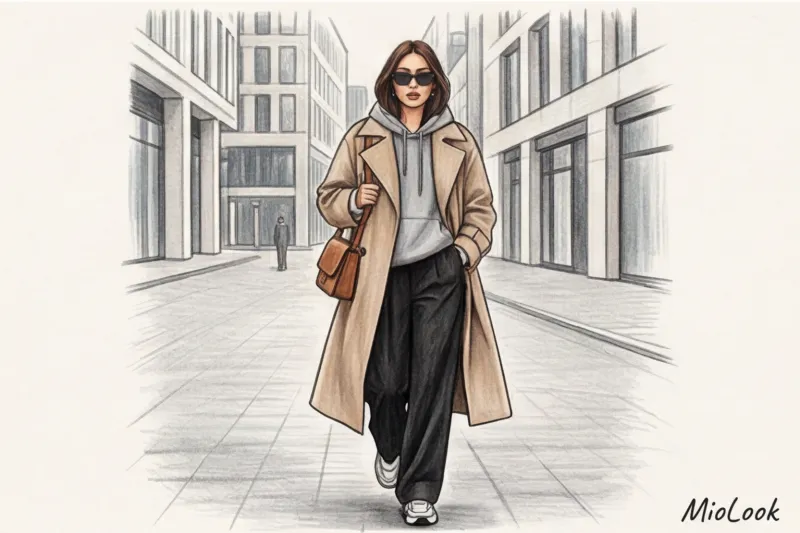
Over 14 years of working as a stylist, I've realized one thing: adult adaptations of Asian fashion aren't about teenage rebellion. They're about status, carefully crafted layering down to the millimeter. We discussed the origins of this phenomenon in more detail in our The complete guide to K-pop fashion and how Korean style conquered the world And today I'll show you how to transform a relaxed Asian silhouette into an elegant and luxurious addition to your wardrobe.
The Anatomy of Korean Street Style: More Than Just Wide-Leg Pants
If your idea of K-fashion is stuck on the garish stage costumes of old dramas, it's time for a refresher. Today's Seoul is shaping the world toward sophisticated architectural minimalism. According to analytics platform Lyst, global searches for "quiet outdoor" and "oversized tailoring," inspired by Asian influencers, grew by 47% in the first half of 2024.
Why did this style become a Hallyu (Korean Wave) phenomenon outside of Asia? The answer lies in the perfect balance of comfort and intelligent fashion. You're not just putting on comfortable clothes—you're creating a complex structure.
Modern Korean street style rests on three pillars:
- Agender. Clothes are losing their strict gender affiliation. Loose pleated trousers or a voluminous trench coat look equally at home on both men and women.
- Deconstruction. Unexpected asymmetrical fastenings, raw edges, and inside-out seams are details that make you want to look at them.
- Hypertrophied volumes. But these volumes are controlled and strictly defined by the cut, and not simply by the large size.
The biggest mistake beginners make: why "going three sizes up" doesn't work.
Going to a mass-market store, stopping in the men's section, and buying a basic XL sweatshirt when you're a size S is the biggest and most damaging mistake I see in my clients. This isn't Korean street style. It's a second-hand item that will visually add 10 kilograms and make your neck look bigger.
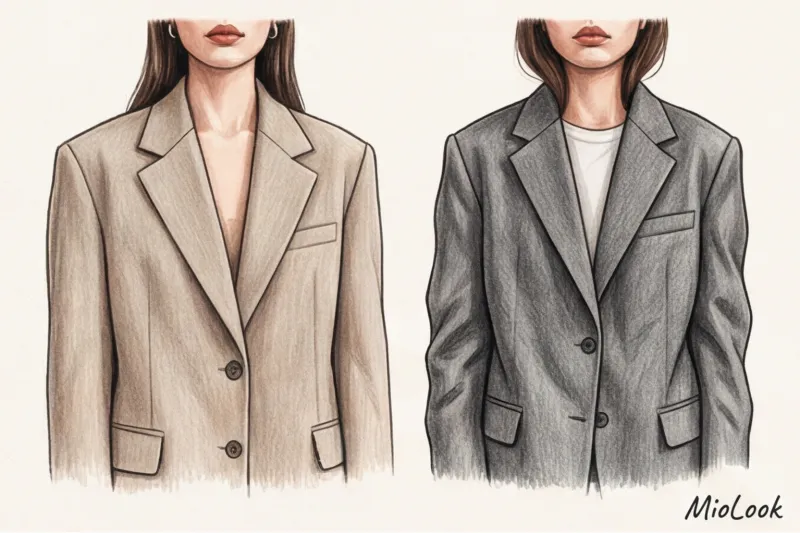
True designer oversize is built into the pattern's design, not the number on the tag. When you buy a larger size, everything gets bigger: the armholes drop to the waist, the neckline gets enormous, revealing unnecessary layers, and the sleeve length makes you look like a Pierrot.
A properly oversized garment from Seoul brands (like Ader Error or Andersson Bell) will have a neckline that fits snugly around the neck, a proper sleeve length, and extra volume created exclusively in the chest, back, and shoulder areas.
The architecture of the ideal dropped shoulder
To ensure a garment is slimming and doesn't make you look boxy, pay attention to the technical parameters of the cut. The shoulder seam in a properly oversized garment should drop exactly 5–7 centimeters below your natural shoulder. If it ends mid-forearm, it disrupts the biomechanics of the fabric's movement.
The second critical factor is the density of the material. Soft, loose knitwear will hang sadly in a baggy fashion, highlighting every fold of the body. Ideal shape requires rigidity. Choose cotton with a density of at least 300 grams per square meter (GSM) or dense suiting wool. Only these fabrics can create that architectural form, independent of your body, for which we love Korean style.
Tired of wondering if oversized clothes suit you?
Upload your measurements to MioLook, and the algorithm will select the ideal proportions and brands with the right patterns for your figure.
Start for freeThe art of layering in Korean (Rule of 3 Layers)
Asian street style is unthinkable without the "cabbage" principle. But why do women in three layers of clothing look fragile in photos from Seoul, while in reality we often end up with a snowman silhouette? The secret is in the "air" rule.
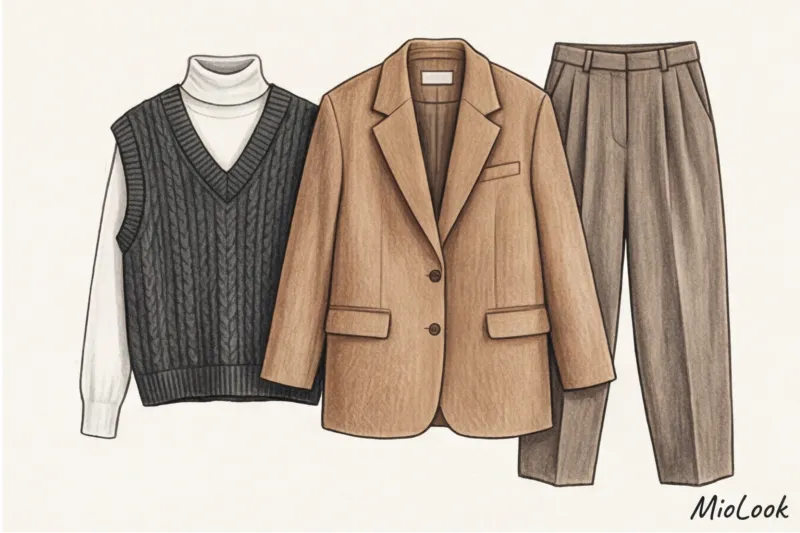
One spring, I was rescuing a client's mid-season wardrobe. She complained that her shirt and trench coat were too cold, and that the sweater underneath felt tight and awkward. We used a Korean Rule of 3 Layers Layering always starts with the thinnest, most form-fitting material and moves to the thickest, most voluminous. There must be space (that same "air") between layers to prevent clothes from rubbing against each other, creating unsightly creases.
Play of textures: matte versus glossy
If you wear a cotton T-shirt, a cotton shirt, and a cotton raincoat, the look will be flat and boring. The eye is drawn to the difference in surfaces. How to combine textures in clothing , you can talk for hours, but Korean street style has its own ironclad formula for success: leather + tight knit + smooth cotton (or silk).
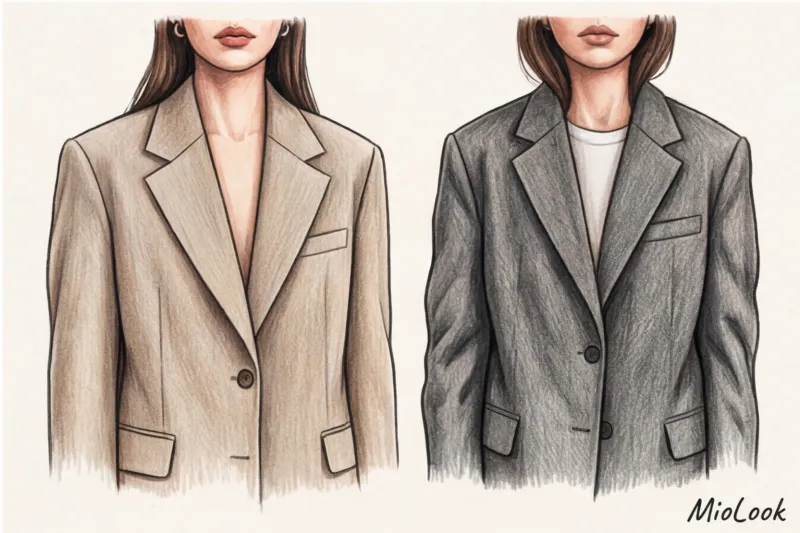
For example: a thin turtleneck made of smooth viscose (bottom layer) + a voluminous large-knit cardigan with horn buttons (middle layer) + a jacket made of distressed matte eco-leather (outer layer).
Base layers: the invisible foundation of the look
The foundation of layering is second-skin pieces: micromodal long sleeves, thin cashmere turtlenecks, and white shirt collars and cuffs that peek out a couple of centimeters.
In the changeable climate of a metropolis, this also provides ideal temperature control. High-quality base layers (ranging from €30–€70 from brands like COS or Arket) are worth investing in first—they protect your skin from the scratchy fur of outer layers and add a pop of color to your face.
Korean Street Style for Over 30s: How to Adapt the Trend
"Olena, why do I need these oversized hoodies? I work in an office and I'm 38 years old." This is the most common phrase my clients say, and we'll now refute it.
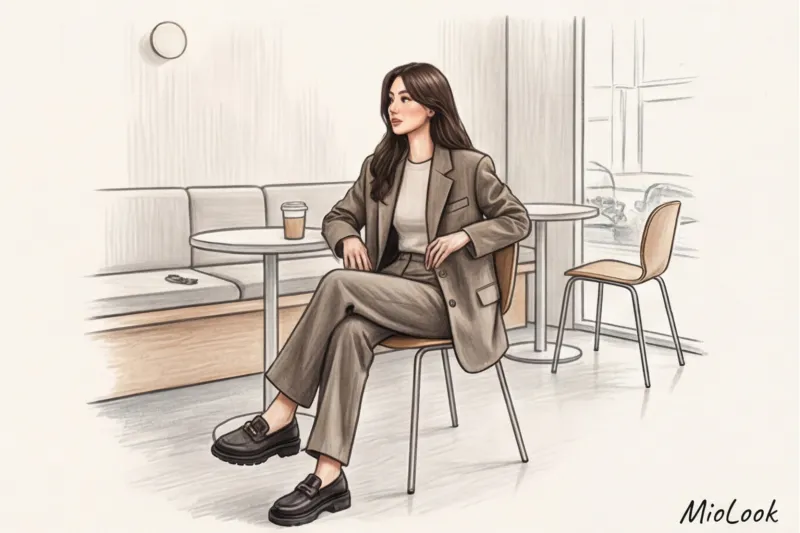
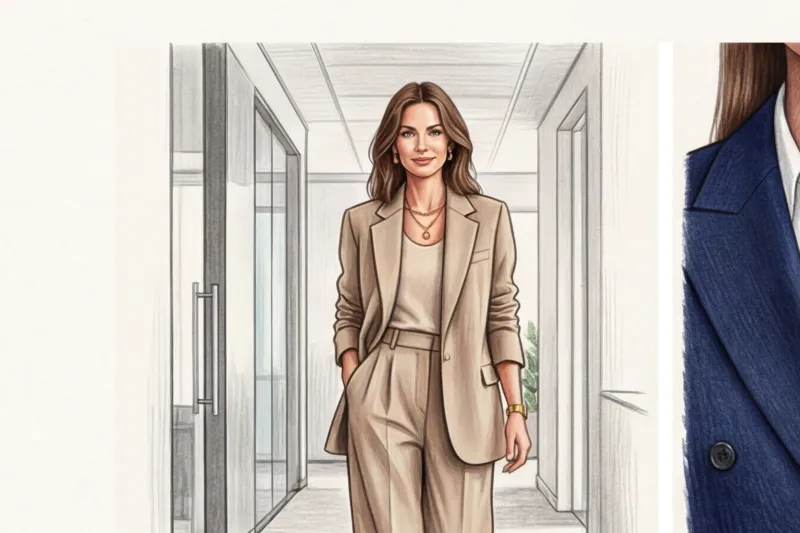
The secret to elegant tailoring for mature women is the rule of mixing and matching. You don't have to dress head-to-toe in street style. Just take one a piece with a distinct K-streetstyle aesthetic and incorporate it into your quality Smart Casual base.
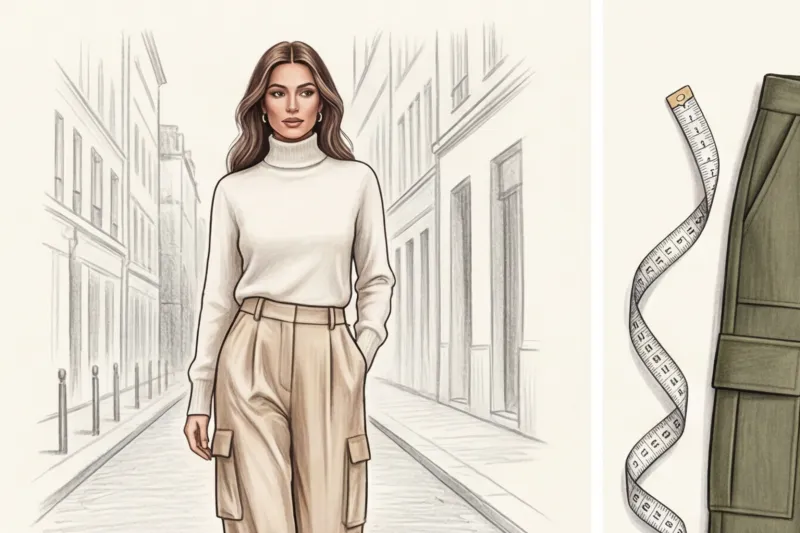
For example, wide-leg Korean palazzo pants with deep pleats. Pair them with sneakers and a ripped sweater and you'll get a grunge-inspired look for a college girl. But pair the same pants with a ribbed cashmere turtleneck, a simple leather belt, and pointed-toe ankle boots and you'll achieve premium minimalism in the spirit of the Lemaire runway or Seoul-based brand Nothing Written. It looks classy and expensive, yet incredibly relaxed.
Avoid loud prints, bold colors, and oversized logos. Mature Korean oversized style favors a complex, muted palette: shades of sage, graphite, dark chocolate, and butter.
Assemble your K-Streetstyle capsule collection
Use the smart MioLook planner: take photos of your clothes, and AI will show you how to style them with trendy oversized elements.
Create a capsule in MioLook5 Key Elements for Creating a K-Streetstyle Capsule
If you want to incorporate this style without breaking the bank, you don't need to replace your entire closet. Simply add five architectural elements to create a focal point.
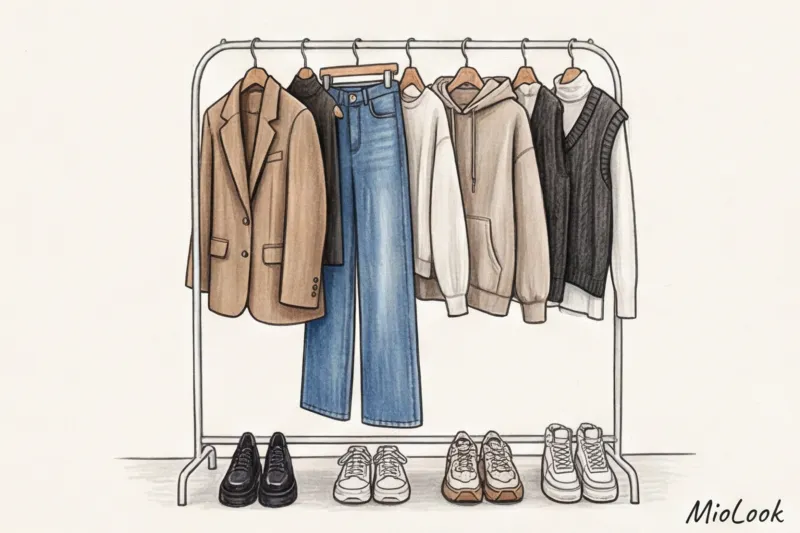
- Palazzo pants or pleated jeans. A high waist is a must. Pleats (the folds of fabric at the waistband) add volume to the hips but visually narrow the waist.
- Structured jacket with a men's cut. With firm, wide shoulders and shoulder pads. A good wool-blend jacket in the mid-price range will cost €120–250, but this item is worth every penny.
- Knitted vest or voluminous cardigan. The perfect midlayer, V-neck vests elongate the silhouette perfectly.
- Chunky shoes. Derbies with tractor soles, platform loafers, or retro sneakers. Thin, elegant shoes worn with wide-leg trousers will make you look like a hut on chicken legs. The bottoms should be heavy for balance. Learn more about stylish but comfortable shoes We wrote about this earlier.
- Accent accessories. A minimalist baseball cap made of smooth fabric without logos, sunglasses-masks, or a micro-crossbody bag that visually “cuts” the voluminous silhouette and brings it together.
Balance of Proportions: The Mathematics of the Oversized Look
Creating a harmonious oversized silhouette is governed by strict mathematical rules. If they are violated, the figure will turn into a shapeless cube.
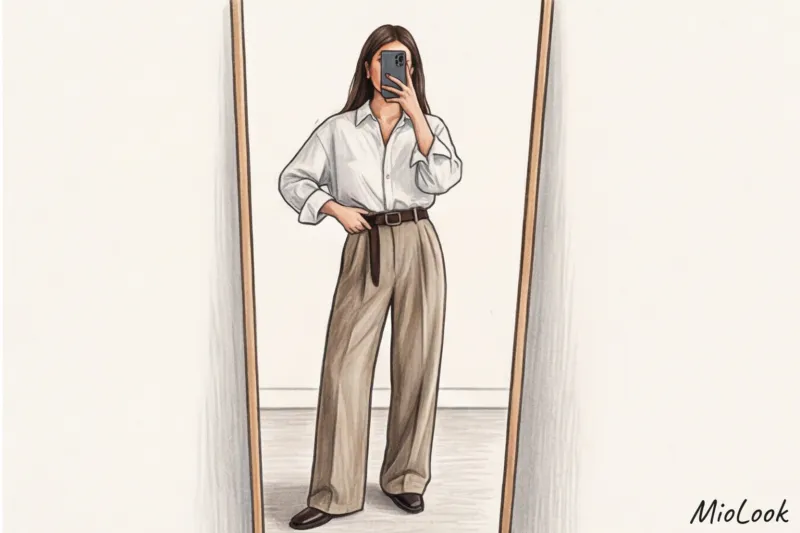
The main one is - Rule of thirds (1/3 to 2/3) The human eye perceives a silhouette most harmoniously when it's divided not in half (1/2), but in a ratio of one to two. In Korean street style, this is achieved by tucking a voluminous shirt (or at least its front edge) into high-waisted trousers. This visually makes the upper body take up one-third, and the lower body two-thirds. Legs appear endless, even in flat shoes.
The second lifeline is Open Wrists and Ankles Method No matter how many layers and volumes you wear, show off the thinnest parts of your body. Roll up your jacket sleeves, exposing your wrists. Choose a trouser length that reveals a glimpse of your ankle when you walk. The viewer's brain constructs the hidden volumes based on these exposed, thin points.
Fair stylist limitation: Baggy street style without any accents is absolutely NOT suitable if you have a pronounced apple-shaped figure with a large bust, and you're trying to hide it with a thick, boxy sweater. In this case, you'll end up with a monolithic block. You should definitely create a vertical V-shape (for example, with an unbuttoned jacket over a basic top) or focus the volume only on the bottom.
A stylist's checklist: creating the perfect look in front of the mirror
Knowing the theory isn't enough. Let's move on to practice. Here's my cheat sheet, which you can use to create an image right now.
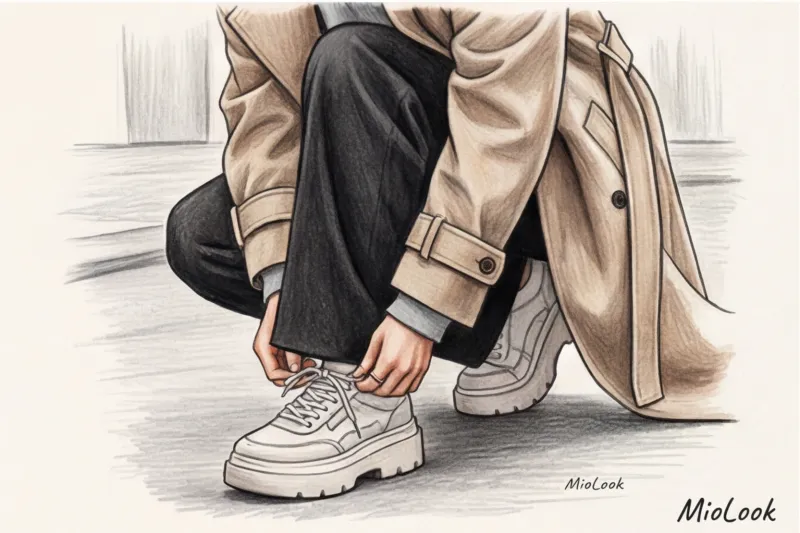
- Step 1: Rigid foundation. Put on wide-leg trousers made of thick fabric. Look in the mirror: they shouldn't be tight around the hips; the fabric should fall loosely.
- Step 2: Base and midcoat. Put on a thin turtleneck (base layer). Layer a thick shirt or vest over it (mid-layer). Tuck the edge of the shirt into the pants to define the waistline (create a 1/3 to 2/3 ratio).
- Step 3: External architecture. Throw on a structured jacket with dropped shoulder seams or a straight-cut coat. Leave the outer garment unbuttoned—this will create those two vertical lines that visually subtract 5 kg from your weight.
- Step 4: Final tuning. Roll up your jacket sleeves, revealing your shirt cuffs and wrists. Put on chunky shoes to ground the look. Choose a structured, rigid bag.
Korean street style isn't about hiding your body behind meters of fabric. It's about playing with volumes and textures, where you play the role of architect. Don't be afraid to experiment with menswear cuts, but remember the rule of thirds and the stiffness of the fabric. By mastering this aesthetic, you'll achieve a wardrobe that combines the comfort of pajamas with the classiness of a business suit.