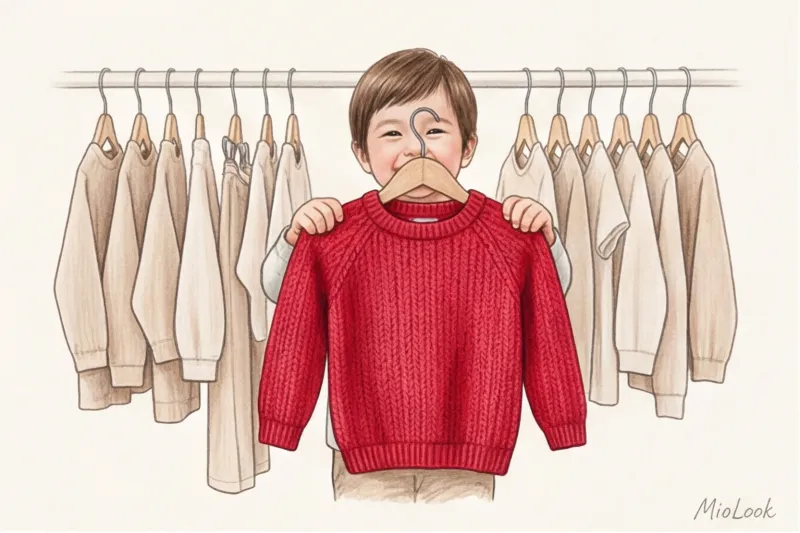
Imagine a typical morning: it's 7:30, you're running late, and your four-year-old is throwing a tantrum. He flatly refuses to wear that "aesthetically pleasing" beige chunky knit sweater you went to three stores to buy. Instead, he demands a neon green dinosaur t-shirt that visually "kills" any pants in his closet. Sound familiar?
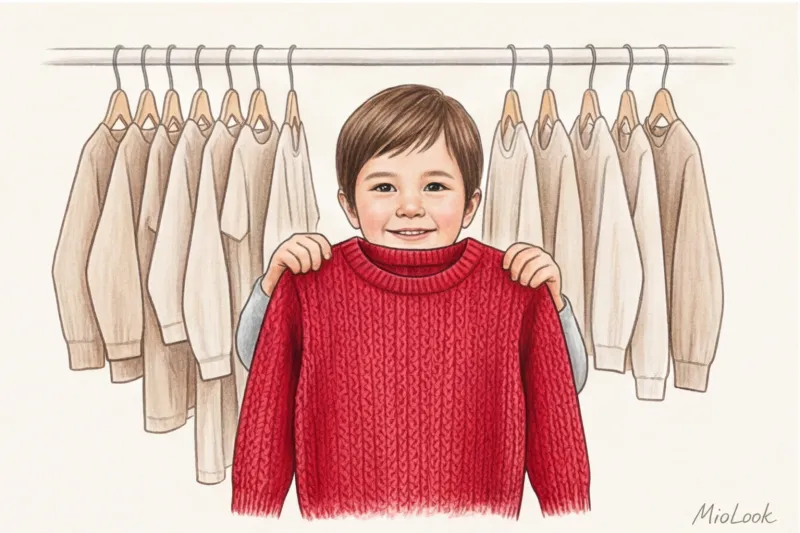
In 12 years of working as a personal stylist, I have realized one important thing: the right color combinations in children's clothing It's not just a matter of taking pretty photos for social media. It's your primary tool for managing the morning chaos. When the palette is carefully chosen, the child gets the visual stimulation they need, and the mother gets a calm, aesthetically pleasing get-ready routine. We discussed the architecture of such wardrobes in more detail in our A complete guide to a child's capsule wardrobe: stylish and practical.
The Myth of "Aesthetic" Beige: Why Children Need Bright Colors
For the last few years, Instagram feeds have been aggressively dictating the trend towards sad beige children ("sad beige children"). Influencers dress their little ones exclusively in shades of oatmeal, ecru, and dusty sand. As a stylist, I appreciate monochrome, but as an expert who studies the influence of color on wardrobe habits, I have to say: this trend is unnatural.
Researchers from the Sussex Colour Group (University of Sussex, 2023) have proven that infants and toddlers have an innate biological attraction to bright, contrasting colors. Bright spots stimulate the formation of new neural connections. By depriving a child of color, we literally place them in a sensory-deprived environment. According to trend forecasting agency WGSN, the microtrend toward absolute neutrality in children's clothing is rapidly fading, giving way to a "dopamine-fueled" wardrobe.
But going to the other extreme and buying every color of the rainbow isn't a good idea either. The visual clutter of random items triggers choice paralysis in children—hence those morning tantrums (according to child psychologists, up to 70% of tantrums while packing are related to frustration from an overabundance of unrelated options).
Tired of morning arguments over the closet?
Let artificial intelligence create outfits for you. Upload your child's items, and MioLook will show you dozens of stylish combinations.
Start for freeWardrobe Mathematics: The Signature 3+2+1 Formula for a Kids' Capsule
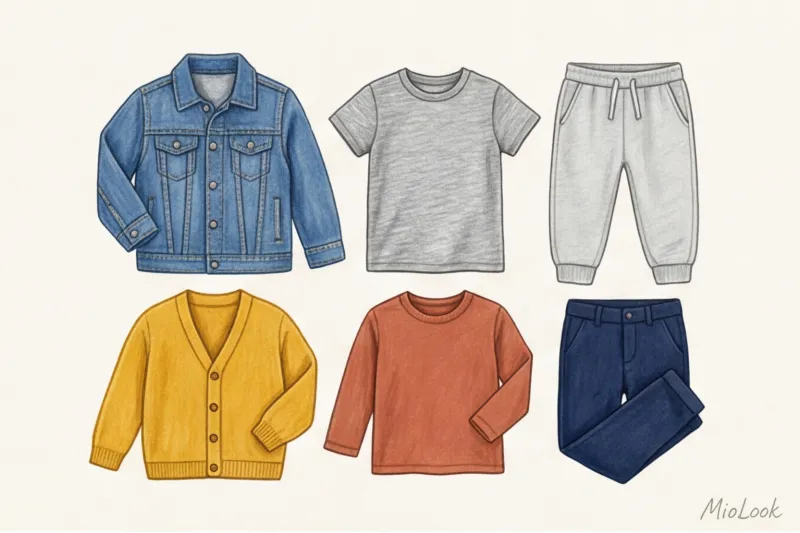
One day, a client named Anna, the mother of active five-year-old twins, approached me. Getting ready for kindergarten took her 40 minutes. Their closets were overflowing with clothes, but they couldn't put them together into a harmonious outfit without their mother's help. We implemented my signature mathematical color formula, "3+2+1." The result? Getting ready was reduced to 10 minutes, and the budget for the seasonal capsule collection stabilized at €250 per child, eliminating impulse purchases.
The optimal size for a seasonal capsule is 15–20 items, which offer over 30 harmonious combinations. The 3+2+1 formula allows for seamless assembly.
3 base shades: the foundation of the capsule
Basics should make up about 50–60% of a wardrobe. And no, they don't have to be dull gray or easily soiled white. Textured colors like classic blue denim, soft khaki (olive), and camel make excellent bases for children's fashion. They're forgiving of grass and apple juice stains while still looking expensive and put-together.
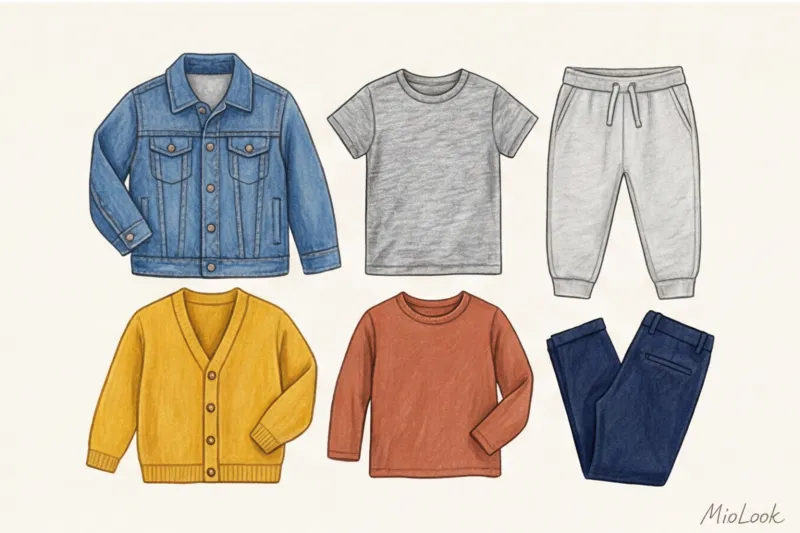
2 accent colors: character and mood
Here we let our emotions run wild. Choose accents based on the contrasts in your baby's appearance. For inspiration, I recommend studying the material How to choose clothing colors based on your color type without sacrifice Pairs that follow the rules of Itten's color wheel work perfectly: for example, complementary (mustard + deep sapphire) or analogous (terracotta + warm burgundy).
1 Grounding Color: Print Saver
This is the darkest shade in your capsule, which will pull the look together. Deep indigo, rich chocolate, or graphite. Why don't I recommend black? On children's clothes, black often looks flat, and every speck of dust and fur from the house cat is treacherously visible.
The perfect color combination for children's clothing, taking into account their age
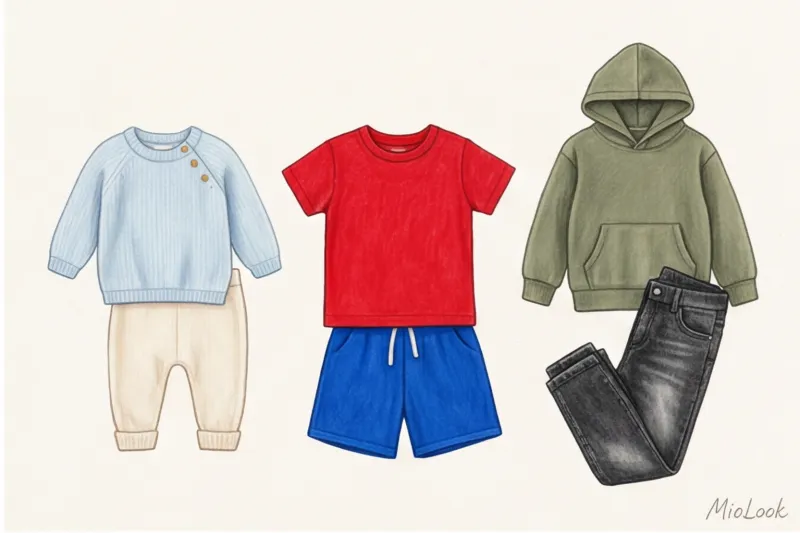
The color capsule is a living organism. What worked perfectly at age two will cause a revolt at age seven. Color perception transforms along with the psyche.
Toddlers (1-3 years): A calming but fun palette
At this age, a child's nervous system is very fragile. We need clean, yet slightly muted shades: dusty rose, sage, soft creamy yellow. Avoid "neon explosions" in everyday clothing. If your baby spends all day in an acid-orange sweatshirt, putting them to bed will be much more difficult due to color overstimulation.
Preschoolers (4-6 years): a time of active contrasts
This is the age of asserting yourself and testing boundaries. Color blocking works great here. Feel free to combine emerald with fuchsia or cobalt with yellow. If you're unsure about proportions, adapt "grown-up" rules—for example, 60 30 10 rule in clothing fits perfectly into children's layering.
Younger students (7-10 years): trends and personal boundaries
Pop culture comes into play. Girls may demand all-out Barbie-style pink, while boys retreat to solid black armor. Don't argue—lead the way. If your child asks for only black, suggest graphite, the color of wet asphalt, and add textures: corduroy, ribbed fabric, heavy denim. This will respect your child's personal boundaries while bringing style back into the look.
Create the perfect capsule without the stress
Your perfect look starts here: join thousands of users who look flawless every day with MioLook and create your children's capsule collection in just two clicks.
Start for freeHow to tame "wild beasts": incorporating cartoon prints into an aesthetic capsule
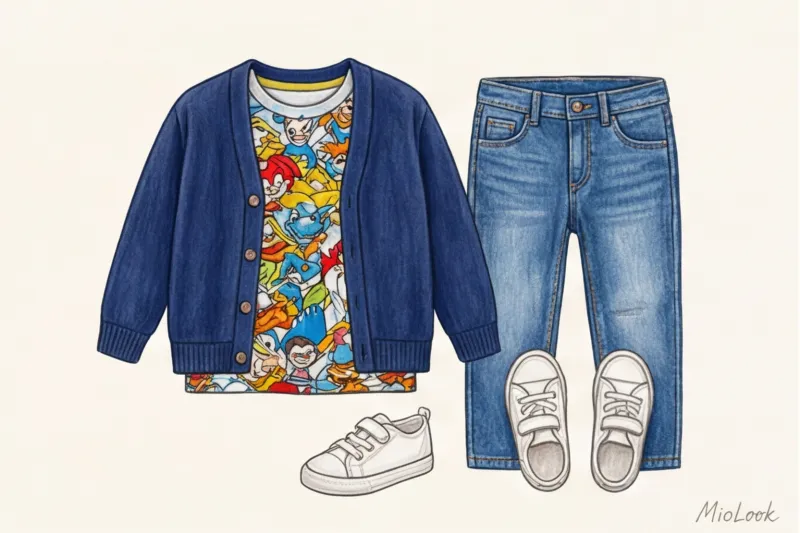
And now for the real story. My child refuses to wear a camel-colored cashmere sweater and demands a T-shirt with a garish print of Paw Patrol, Spider-Man, or Elsa. This is a reality that the glossy magazines keep quiet about, but which we face every day.
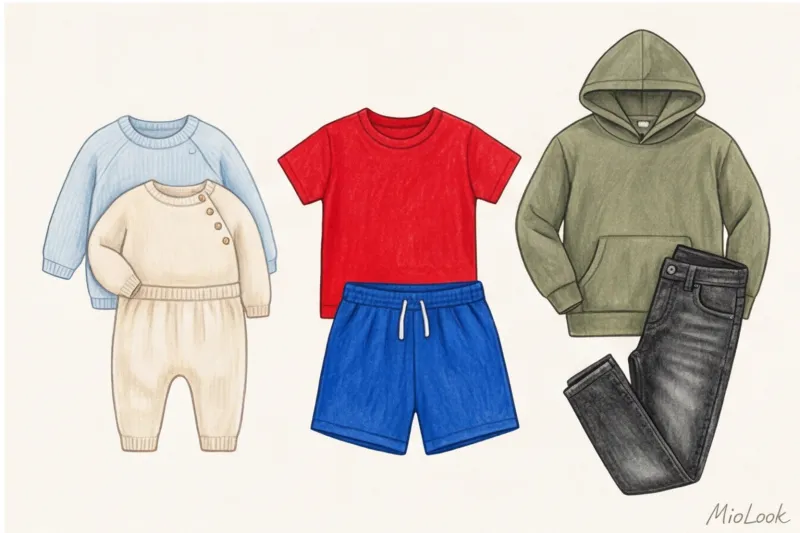
Here's my favorite stylistic trick, which I call the "frame principle." The formula goes like this: Active top + Base second layer + Neutral bottom.
- Step 1: Let your child wear his favorite printed t-shirt.
- Step 2: Layer an unbuttoned heavy denim shirt (about 12 ounces) or a basic deep blue cardigan over the top. The second layer will act as a mat for the painting: it will hide 60% of the colorful knit fabric, leaving only the center of the beloved character visible. The child is happy, and your aesthetic is saved.
- Step 3: Complete the look with basic trousers (chinos or jeans without scuffs).
"The visual noise of a cheap print can always be 'drowned out' by a noble, dense texture of the second layer - corduroy, denim, or chunky knit."
Important limitation: This technique doesn't work if the print covers the entire garment (for example, acid-wash patterns all over pants or pajama-like outfits). In such cases, we honestly agree with the child: these clothes are reserved exclusively for home or the dacha.
Stylish formulas for every day: from theory to practice
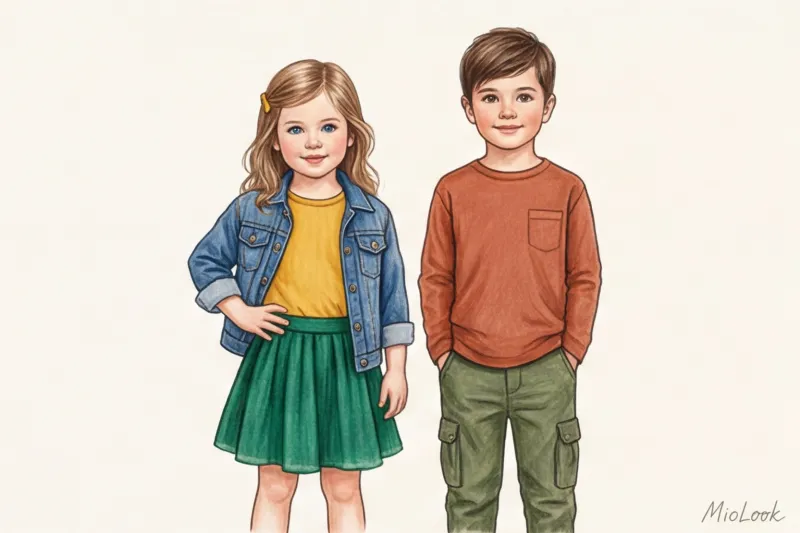
To save you the trouble of racking your brain in the morning, keep these ready-made color schemes handy. They're made up of versatile pieces easily found at H&M, Zara Kids, or Uniqlo's basic line, ranging in price from €20–€45 per item.
Formula for girls: Denim jacket + mustard jumper + olive joggers.
Denim here serves as the perfect blue base, mustard provides that much-needed dopamine rush, and olive bottoms calm the look. Add white leather sneakers, and you've got the perfect park look.
Formula for boys: Check shirt + terracotta long sleeve + navy chinos.
The secret here is in the plaid shirt. Find one where blue (matching the pants) and terracotta (matching the long-sleeved top) intersect. The shirt will tie the disparate elements together into a cohesive, well-thought-out monolith.
Pay special attention to your shoes. Buying red or neon sneakers will inevitably break the color scheme. Invest in neutral-toned shoes (white sneakers, camel boots, or navy Chelsea boots) with a budget of €50–€90—they'll pay off handsomely, as they'll go with absolutely any outfit from the capsule collection.
A smart wardrobe in your pocket
Try MioLook: A smart AI stylist will select the perfect look for you, taking into account colors, textures, and seasonality.
Start for freeChecklist: Auditing a Children's Closet and Assembling a Color Capsule from Scratch
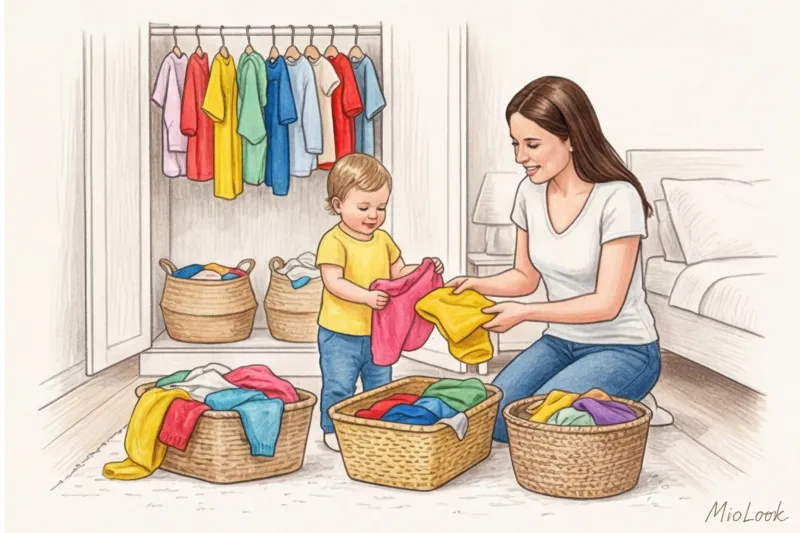
Enough theory, time to take action. Find a free hour (preferably when your child is visiting grandma or playing) and do a quick audit.
- We scoop everything out and sort it by color. Not by type of item (pants to pants), but by shade. Put all the red items in one pile, all the gray items in another. This step will immediately reveal any imbalances. You'll be surprised to discover that you have seven gray long-sleeved T-shirts, but not a single pair of basic dark blue jeans.
- We find the "core". Choose 3-4 items your child loves to wear and feels comfortable in. Look at their colors. Let them become the accents in our 3+2+1 formula.
- We calculate the base deficit. Buy the missing basic and grounding elements (denim, chocolate, khaki) that will tie the bright "core" to the rest of the wardrobe.
A baby capsule isn't a rigid set of rules or a museum exhibit. It's a flexible construction kit that grows with your child. The right color palette gives your little one room for self-expression, and it gives you confidence and freedom in the morning. Start applying the "second base layer" rule to bright T-shirts tomorrow, and you'll see how your child's style transforms without the slightest resistance.