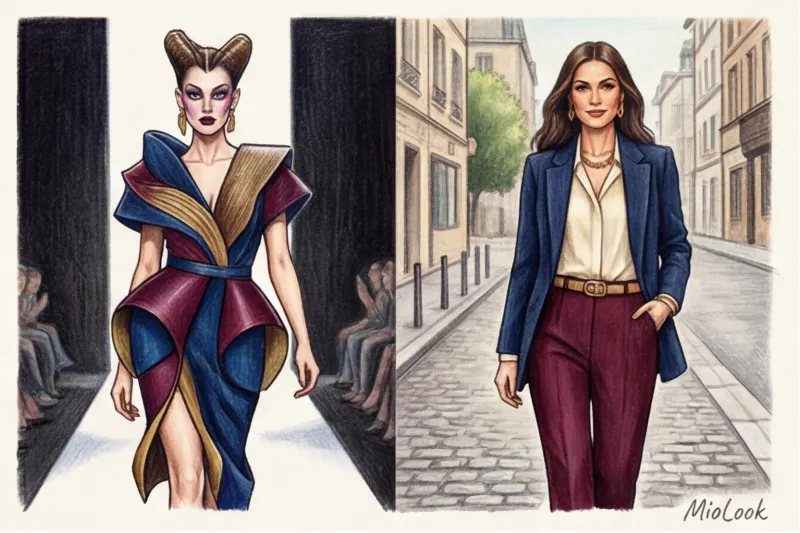
Why Runway Looks Look Weird (and How to Read Them Correctly)
Have you ever watched the Fashion Week broadcast, looking at models in oversized hats, dresses made from recycled plastic, or carrying dove-shaped bags, and wondered, "Who would wear that, and where?" Spoiler alert: probably no one, and nowhere. If you're wondering, How to wear runway trends and without looking like you just walked off the stage, you're not alone.
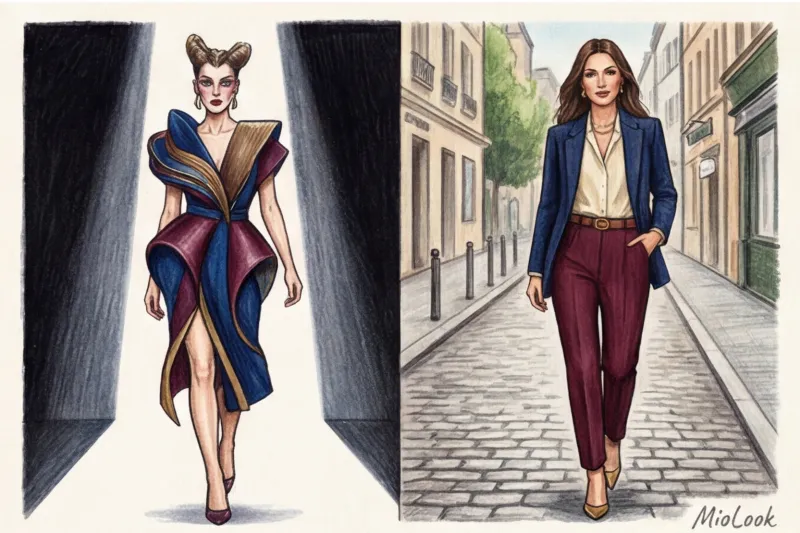
Over 12 years of working as a personal stylist, I've realized one important thing the industry is reluctant to publicize. According to fashion market analysis (such as Business of Fashion reports), about 80% of those "crazy" runway looks are pure marketing. Their main goal is to garner millions of views on social media, shock the press, and get the whole world talking about the brand. But fashion houses make their real money not from avant-garde dresses, but from selling basic leather bags for €1,500-2,000 and perfumes for €150. The runway is a showcase, attracting attention to the checkout.
To stop being afraid of fashion shows, you need to clearly understand the difference between formats. Haute Couture (Haute couture) is pure art, a laboratory of ideas, where a single dress is handcrafted over hundreds of hours. It's exclusive, bought by only a few. But Ready-to-Wear Prêt-à-porter is ready-to-wear clothing that will eventually reach boutiques. But the paradox is that even at prêt-à-porter shows, the brand's stylists deliberately exaggerate looks. They layer pieces, add bulky accessories, and wild makeup to create a spectacular show.
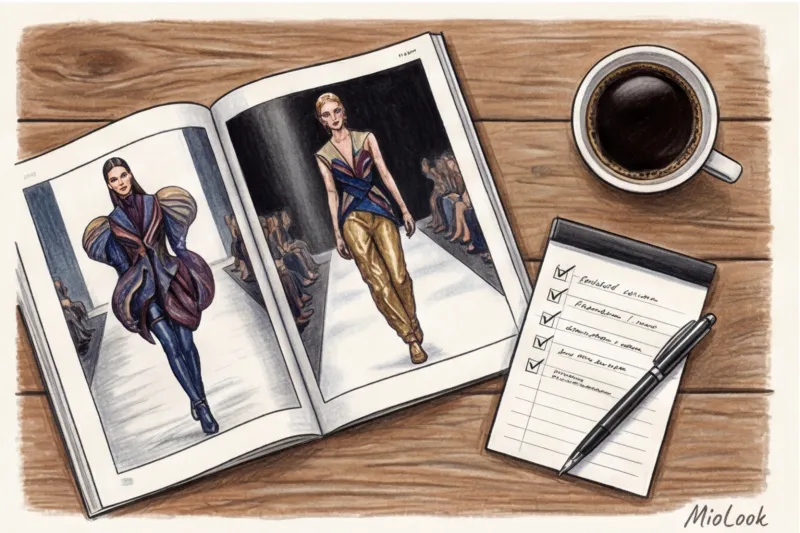
Therefore, the main rule for a stylist is to treat the runway like a mood board. Designers sell an idea, an emotion, and a silhouette, not a guide to everyday wear. When I teach my clients how to "read" the shows, we use the anatomy of a trend method. Any look, even the most complex and intimidating, can be broken down into three easily understandable components:
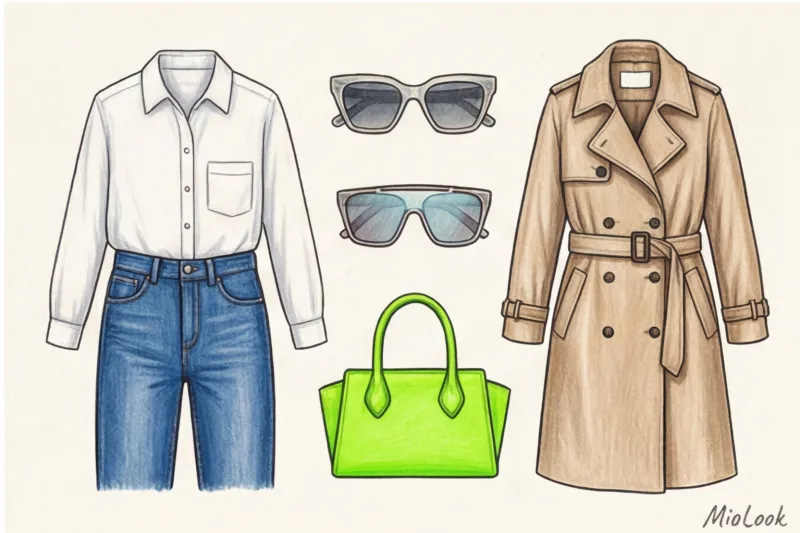
- Color: If a model on the catwalk is dressed head to toe in acid green neon, in real life it's enough to add a neon scarf or bag to a calm gray coat.
- Texture: Did the designer show a completely sheer lace dress worn on bare skin? We take the texture of lace and integrate it safely—for example, as a top under a formal jacket. If the trend is about colored nylon, it's always useful to refresh your knowledge of What is denier in tights and how to choose the right density? to make the texture look expensive.
- Cut: The exaggerated shoulders of the '80s can be easily adapted by choosing a jacket with a slightly more pronounced and defined shoulder line than you usually wear. And the runway trend for extreme shaping can easily be carried over into real life if you know... How to wear a corset belt over clothing without compromising breathing and comfort.
The 10% Rule: The Math of a Modern Wardrobe
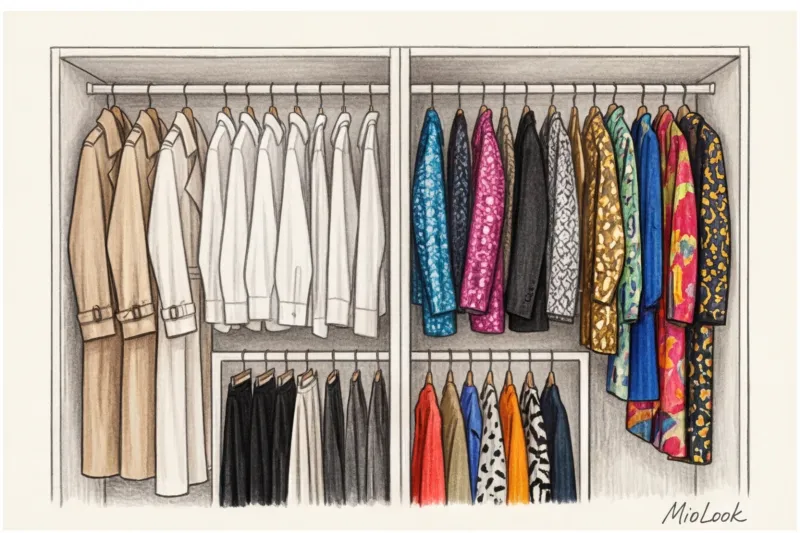
Now, let's talk about how to incorporate these trends, broken down to their atoms, so your closet doesn't become a hoard of weird items. I love numbers and a systematic approach, so I always use the mathematical formula for the perfect wardrobe: 80% basics, 10% individual pieces, and exactly 10% trends.
Why this particular ratio? The basics (80%) are your reliable foundation. These are the perfect jeans, quality T-shirts, sturdy coats, and shoes that work for you every day. Individuality (10%) is your personal stylistic anchors: a vintage brooch, a collection of unusual frames, or an iconic red lipstick. And trends (10%) are the spices. You wouldn't eat soup consisting only of salt and pepper, would you? So, your look shouldn't consist exclusively of the current season's hits.
It's this strict proportion that saves us from the eternal female problem of "a full closet, but nothing to wear." When I started digitizing my clients' wardrobes using an app MioLook Statistics revealed something astounding. Women whose trendy, spontaneous purchases took up more than 30% of their closet spent three times longer getting ready in the morning. Trendy items are often selfish: they're difficult to style, require special placement, and quickly become outdated. Keeping them to 10% is enough to demonstrate your fashion awareness while saving stress, time, and money.
Stylists' Top Secret: How to Wear Runway Trends Without Breaking the Budget
A study by the authoritative portal The Business of Fashion (2023) revealed a curious statistic: the price of runway items has increased by an average of 40% over the past five years. Brands are selling us exclusivity for huge sums of money. But here's the irony: to look like you just stepped out of the pages of Vogue, you don't need to buy these items. You need to copy the brand itself. idea.
In the professional community we call this approach by the "microdosing" method This is the safest, most eco-friendly, and most affordable way to learn how to wear runway trends in real life without the risk of looking ridiculous. Instead of investing €1,200 in a statement jacket with a complex cut that's guaranteed to go out of style in a couple of seasons, you're incorporating the trend through micro-details.
Remember the "geek-chic" aesthetic that rocked the Miu Miu runway? You don't have to completely change your wardrobe to emulate it. Simply add some statement socks or knee-highs (in the €15-€20 range) to your usual office staples, a textured belt, a silk handkerchief, or simply swap out your classic glasses for chunky horn frames. You spend minimally, but your style will soar instantly.
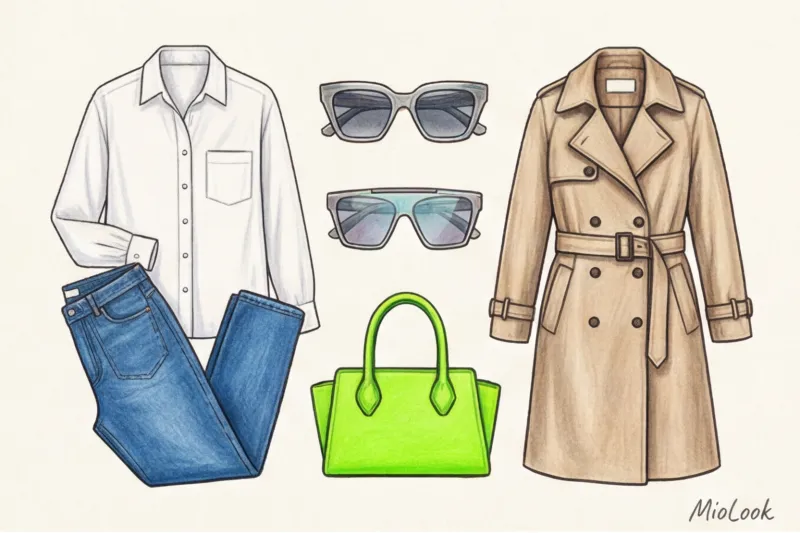
The second, even more powerful tool in the stylist’s arsenal is styling instead of shopping The fast-fashion industry has conditioned us to believe that if you want a new silhouette, go to the store. In reality, 80% of the most talked-about runway looks are based not on unique garments, but on unconventional ways of wearing them.
The secret to a luxurious look isn't in the tag on the inside, but in how the garment interacts with your body and other elements of your wardrobe.
You can easily recreate a trendy silhouette using items you already own. Noticed the emphasis on a complex waistline at the Bottega Veneta shows? Try layering two thin belts over your favorite oversized blazer. Is deconstruction and a touch of casualness reigning supreme on the runways? Try wearing a classic basic shirt backwards, leaving the top two buttons undone at the back. It doesn't cost a cent, but it looks like a deeply conscious fashion statement.
Let me share a personal example from my own experience. Last season, complex, layered asymmetry dominated the Acne Studios and JW Anderson shows. Instead of buying a new deconstructed jumper (which would have cost me at least €500), I simply took my old, basic smooth merino wool cardigan. I buttoned it three buttons off and tucked the hem into my trousers with a complex, asymmetrical knot. The effect was stunning: in one day, three people asked me which collection the designer piece was from.
Digitize your wardrobe
Try MioLook for free: A smart AI stylist will find the perfect look from your clothes and suggest new ways to style them.
Get access — €0.99 onceBefore heading to the checkout with the latest "hot" new item, always ask yourself: can I replicate this effect with what's already on the hangers? More often than not, the answer will be yes. The key is to give yourself permission to experiment and not be afraid to break the usual rules of wearing basic items.
That's why I always recommend starting your trend-adaptation journey with a closet re-examination. When you view your clothes not as ready-made outfits, but as a construction kit, hundreds of new combinations open up. You'll begin to notice that a chunky men's tie, worn as a belt on a tailored sheath dress, instantly elevates the look from boring classic to avant-garde street style.
Integrating the Podium into Real Life: 4 Levels of Difficulty
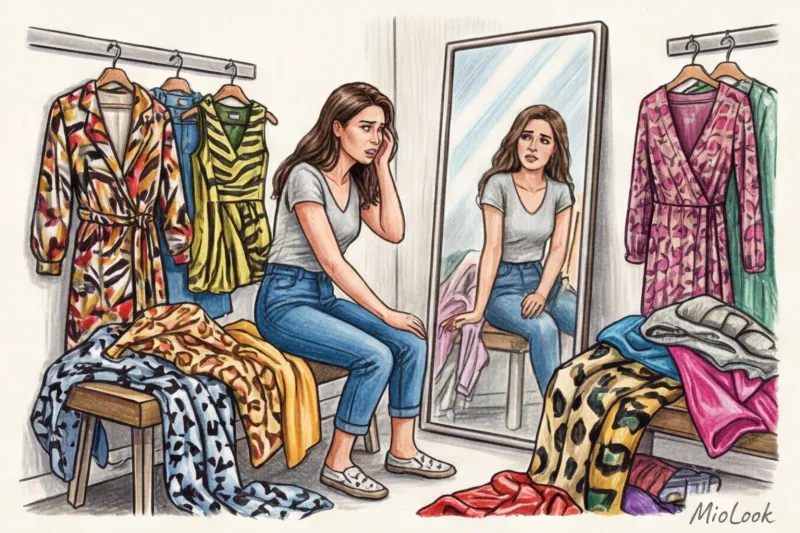
Have you ever noticed how the same trendy item looks like a work of art on a model, but in a regular store's fitting room it makes you look like you're wearing someone else's clothes? It's not about your figure or appearance. Professional stylists use the term "style capacity"—the ability of your basic wardrobe (and your psyche) to seamlessly absorb a complex design concept.
To avoid fashion indigestion, I always use a strict step-by-step adaptation framework. My signature method includes four levels of complexity. Level four is pure runway avant-garde, theatrical deconstruction, and a total couture look, which we consciously reserve for the red carpet and street style. The first three levels are our practical tools for safely and stylishly incorporating any trend into everyday life. Let's break them down from the simplest to the most advanced.
Level 1: Color and Prints (Safest)
According to the analytical agency WGSN, color is the first visual cue the human eye detects (it only takes about 0.02 seconds). This is why incorporating trends through a palette is the safest approach. You're not changing familiar, tried-and-true styles that flatter your figure, but simply updating their color palette.
How does this work in practice? Let's say the Pantone Color Institute declares a complex peach as the main shade of the year, while the deep wine shade Rosso Ancora dominates the runways (remember the recent Gucci shows). You don't need to buy an avant-garde, complexly cut wine coat. Simply take your favorite, perfectly fitting basic V-neck jumper, but buy it in a new, trendy color.
Color doesn't distort body proportions. It's the only trend that won't visually add five kilograms or make your legs look shorter, provided you use the right shade temperature.
If you want to incorporate a complex runway print (like an aggressive leopard or psychedelic geometric), use the rule portrait zone Or an accessory group. By placing a print in the portrait area (from the chest to the crown of the head)—for example, in the form of a silk scarf, a shirt collar, or glasses frames—you highlight the face and garner compliments without overpowering the look. For the most discreet, integration through footwear is ideal: leopard loafers paired with straight-leg blue jeans and a white shirt look sharp, but are perfectly appropriate even for a Friday meeting.
Level 2: Textures and Materials
At this point, we say goodbye to safe, smooth cotton and basic suiting fabrics. The catwalk always emphasizes tactility, and to create a look that looks luxurious, you need to master the art of materials. Swap your usual fabrics for trendy ones: instead of a knit skirt, try a textured leather one; instead of matte silk, try a flowing "liquid metallic."
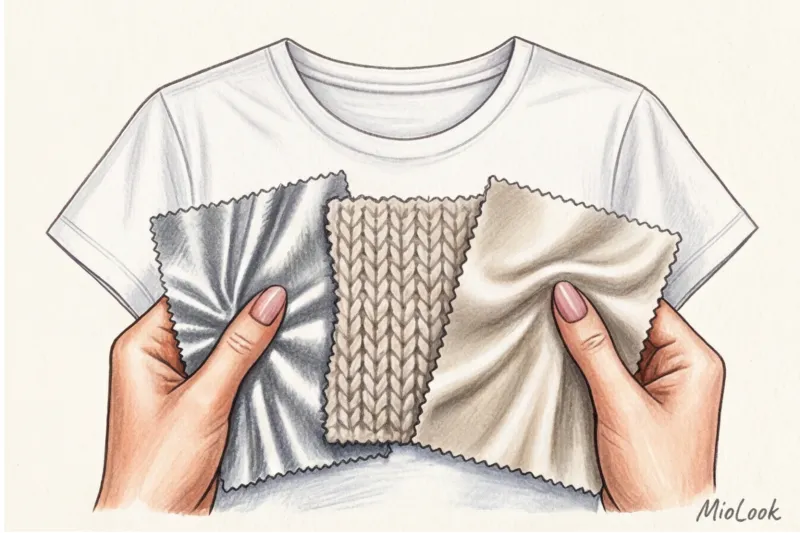
The main secret of stylists at this level is rule of texture conflict The secret to a rich and complex look lies in the juxtaposition of materials with opposing properties. The formula is: matte plus shiny, rough plus delicate, dense plus translucent.
Let's take a classic example with sequins, which designers insist on wearing during the day. Sequins are no longer a faux pas during the day, but only if you know how to tone down their formality. How do you do that?
- Create a conflict: Wear a statement sequin skirt (decent mid-range options can be found in the €80–€120 range) with a very utilitarian, chunky top.
- Add volume: It could be a chunky knit men's sweater, a distressed oversized denim jacket, or a tailored men's jacket.
- Simplify your shoes: No stilettos. Just chunky boots, loafers with chunky soles, or minimalist sneakers.
It's this contrast that shows you didn't spend three hours getting dressed, but casually threw a cozy sweater over a shiny skirt. That's true fashion chic.
Level 3: Silhouettes and Proportions (Advanced)
We've reached the most dangerous territory. Silhouette trends include exaggerated shoulders a la Saint Laurent, extremely low waists at Miu Miu, or total, figure-absorbing oversize. Why does this level require skill? Because architectural tailoring directly affects your body proportions. An ill-fitting, oversized jacket can visually detract from your neck, while a low waist can make your legs look disproportionately short.
To tame a complex silhouette, use one-volume rule The gist is simple: a complex, voluminous trend should always be balanced with a basic, understated, and form-fitting piece. If you're wearing a jacket with exaggerated shoulders, your bottoms should be as simple as possible—straight jeans, a pencil skirt, or stirrup leggings. Don't try to wear a voluminous top and wide palazzo pants at the same time if you're under 175 cm tall—you'll just get lost in the meters of fabric.
Adapting to the low-rise trend requires some math. If you wear hip-hugging pants, compensate for the lost leg length with a monochrome look (matching your shoes) or a crop top, which will visually elevate your legs.
Before investing in a complex architectural piece, I highly recommend a digital test drive. I always ask my clients to use the "smart wardrobe" feature in MioLook Upload a photo of a trendy item before purchasing and try to create at least five virtual looks with it from your current collection. If the silhouette doesn't balance on screen and the item looks out of place, it won't work in real life either. This simple habit saves hundreds of euros and protects your closet from outliers.
How to Wear Runway Trends to the Office: Bypassing Strict Dress Codes
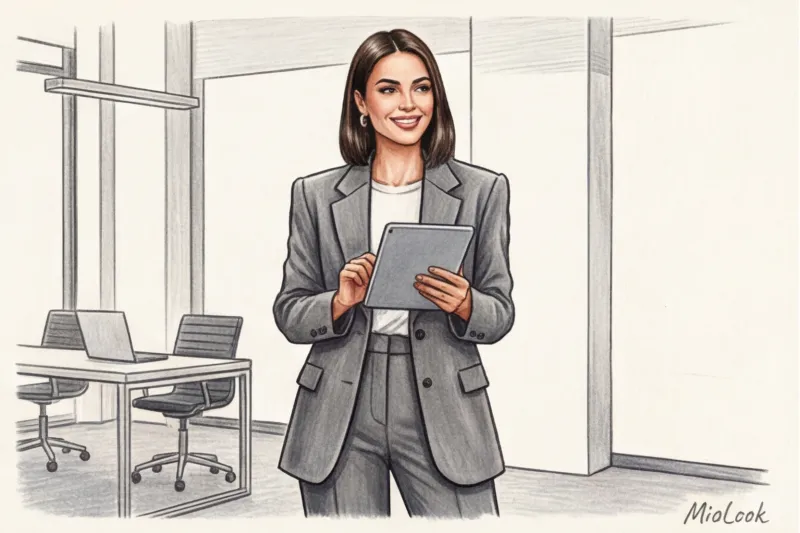
It's believed that corporate environments and high fashion are mutually exclusive. If a company's regulations stipulate strict business attire, most women give in and switch to the safe "uniform" of boring gray suits. Clients often ask me the same question: How to wear runway trends When HR is vigilantly monitoring skirt lengths and necklines? The answer lies in clever styling and a shift in emphasis.
Let's face it: even the most provocative runway ideas can be legalized in the office if you apply a filter of appropriateness. Let's take three of the most challenging trends: sheer, lingerie-style, and mini.
- Transparency: A semi-sheer chiffon or organza blouse will be a no-brainer when used as a base layer. Wear it under a tailored architectural vest or a thick sundress. Another option is to wear a sheer garment. on top basic opaque turtleneck.
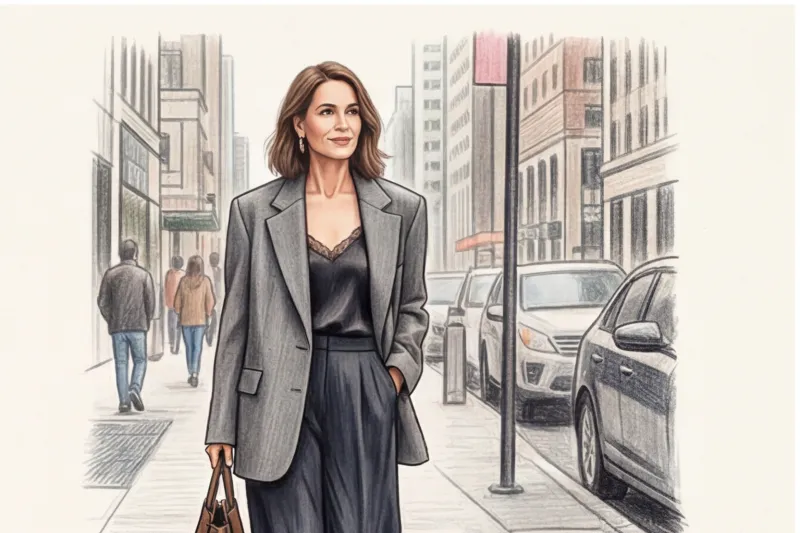
- Lingerie style: A silk slip top with delicate lace trim instantly loses its boudoir appeal when paired with a straight-cut, double-breasted jacket. The contrast of textures (delicate silk and coarse suiting wool) works flawlessly.
- Mini: This length can be adapted for casual Fridays. Choose A-line skirts in a thick fabric (tweed, heavy wool), pairing them with thick matte tights in a matching color and flat shoes, such as chunky-soled loafers. The rule of balance is unwavering: while revealing your legs, you keep your top completely covered.
Using architectural tailoring in tailored suits is another smart cheat code for a business wardrobe. A simple black pantsuit looks like a uniform. But the same black suit with exaggerated shoulders (in the spirit of early Saint Laurent collections), an asymmetrical jacket closure, or an accentuated hourglass silhouette instantly transforms you into an industry insider. An investment in such a complex suit (in the mid-price range, it will cost approximately €200–€350) pays for itself the fastest, as the garment requires no additional embellishments.
If experimenting with cuts seems too radical for your position, shift your focus downwards. Trendy shoes are a perfectly legitimate way to modernize your office capsule wardrobe.
Shoes set the tone for the entire look. You could be wearing the simplest basic pencil skirt and white shirt, but a pair of pointed kitten-heel slingbacks or Derby shoes with a statement sole will immediately show you're keeping up with the times.
I had a revealing case in my corporate styling practice. I had a client, a lawyer from a consulting firm with an ultra-conservative dress code. Her wardrobe consisted exclusively of dark blue and graphite two-piece suits. We didn't change the basics to comply with regulations, but we did introduce two trendy elements. First, we added a deep, elegant burgundy color through silk blouses. Second, we replaced the classic, boring pumps with patent leather Mary Janes with two thin straps. The result exceeded expectations: the client retained the absolute formality of her look, but, according to her, she began to feel much more confident and modern during negotiations.
To avoid missing out on buying statement pieces for work, I recommend putting together outfits virtually first. Upload a photo of your favorite office outfit to MioLook and see how it will look with a trendy blouse or a new pair of shoes before you spend money.
Access to MioLook for €0.99 — one-time payment
Start creating perfect looks with the help of artificial intelligence and plan your office wardrobe without mistakes.
Get access — €0.99 onceFast Fashion Pitfalls: The Main Mistakes When Copying Fashion Shows
How many times have you seen a luxurious silhouette from Fashion Week on your social media feed, only to have algorithms present you with a copy on a marketplace for €15 the next day? The temptation to buy a cheap knockoff is instantly strong, but this is precisely where most stylish endeavors fail. Lyst analytics and a McKinsey report (2024) on the life cycle of microtrends prove that TikTok aesthetics (the so-called "core" trends, whether balletcore or mob wife ) burn out in just 3-5 weeks. Investing in them by buying items for one season means guaranteed waste and cluttered shelves.
Let's take a look at the three main style traps we fall into when trying to keep up with the catwalk.
Mistake 1: Buying a trend at the cheapest execution
Poor fabric can ruin even the most brilliant idea. Runway cuts often rely on complex fabric architecture. While a Saint Laurent jacket with exaggerated shoulders looks classy thanks to its stiff interlining and dense 100% wool, its fast-fashion counterpart, made of thin, squeaky polyester for €35, won't maintain its shape. It will bulge, become staticky, and deform as you walk.
Asymmetrical necklines, intricate draping, and deconstruction require a perfect fit and high-quality hardware. If you're on a budget, it's better to invest in a perfectly basic sweater made of thick cotton or a cashmere blend than a trendy acrylic top that will pill before the first wash.
Mistake 2: The Total Catwalk Look
The catwalk is a theatrical stage. Designers deliberately exaggerate styling to convey the concept of the collection to the audience in the back rows. Carrying the catwalk total look to the city streets means to consciously wear a carnival costume.
Trying to copy a model's look from head to toe robs you of your individuality. You become a walking brand mannequin, projecting someone else's vision instead of your own.
Think of the viral Miu Miu shows: micro shorts over thick tights, revealing underwear, tousled hair, and a cropped sweater. On the runway, it's a bold statement. On the street, you'd feel completely out of place in such a look. A smart adaptation is to take just one detail (for example, textured gray tights) and mix them with your usual midi skirt and calm loafers.
Mistake 3: Ignoring your body type and lifestyle
Recently, a client—a department head at an IT company—and I were collecting items for a charity. We got rid of a whole stack of extremely low-rise Y2K cargo pants. She, with her feminine hips and sedentary work style, was physically suffering in this silhouette, but she stubbornly bought them to follow the trends.
Never compromise your proportions and comfort for the sake of fashion. Love the 2000s aesthetic? Grab a baguette bag or a pair of sunglasses, but keep your trousers at a height that's flattering to you. Trends should serve your life, not you, who should adapt to the awkward patterns of fleeting fashion.
Digitizing trends: How technology helps avoid buying unnecessary things
According to statistics from the research organization WRAP (2023), approximately 30% of the clothes in the average closet haven't been worn in the past year. During the launch of new collections and aggressive fashion marketing, our brains easily fall into a dopamine trap: we buy not the item itself, but the fantasy of how vibrant and modern we'll look in it. But how can we avoid a situation where a runway hit turns into a "monument to wasted money"?
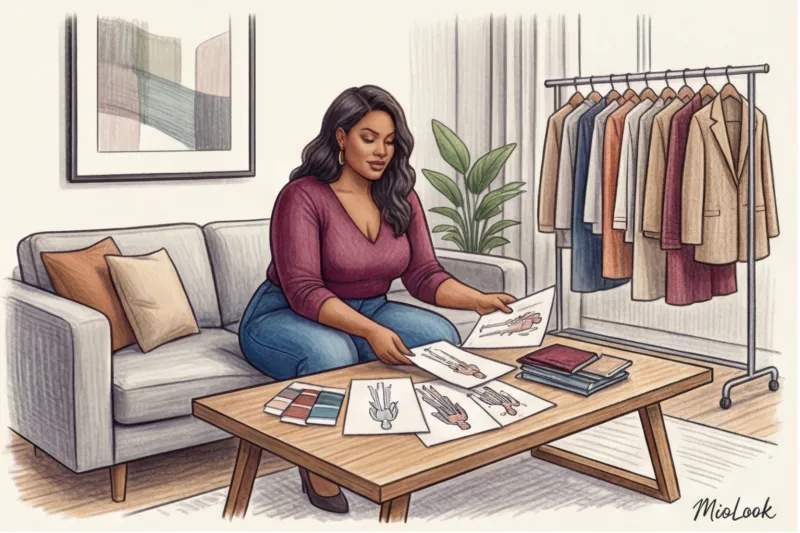
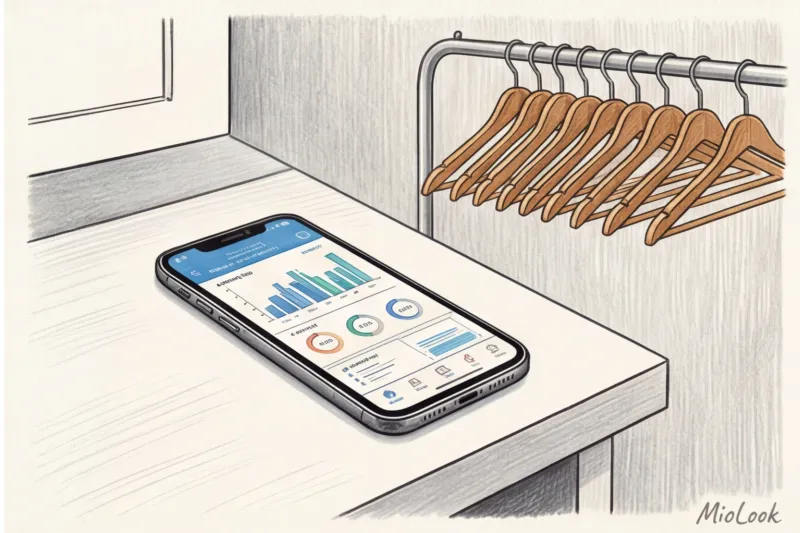
As an expert working at the intersection of IT and personal styling, I always say: objective data is a better way to sober up impulsive shopping than any amount of persuasion. Before you take that statement sequin skirt or deconstructed jacket to the checkout, take a digital test drive. Take a photo of the item right in the fitting room (or save a screenshot from the online store) and upload it to MioLook wardrobe management app The virtual trend try-on feature allows you to create visual collages with your current wardrobe in just a few minutes. If an extravagant new item doesn't pair well with at least three other items without the need to buy additional "transitional" pieces, feel free to leave it in the store.
The next mandatory step is financial mathematics. In a professional environment, we use metrics. Cost-Per-Wear (CPW) , or cost per wear. The formula is extremely simple: the price of the item plus the cost of specific care (for example, dry cleaning for difficult fabrics), divided by the realistic number of wears.
Let's do the math. Let's say a pair of ultra-fashionable metallic shoes for €180 that you'll wear to two trade shows and one corporate event will cost you €60 per outing. Meanwhile, a pair of quality, basic loafers for €250 that you'll wear 100 days a year costs just €2.50 per outing. When you filter every runway trend through CPW, the urge to buy one-time hits naturally disappears.
Your ideal image
it begins Here
Join thousands of users who look flawless every day with MioLook.
Get access — €0.99 onceFinally, regularly analyzing your wear statistics is your most honest personal audit. When you start recording your daily looks in the app, the algorithms reveal the brutal truth about how often you actually wear statement pieces. One user whose wardrobe we analyzed was absolutely convinced that her style was built on complex asymmetries and bold prints. But when we downloaded six months' worth of data, we discovered that 85% of the time she opted for comfortable minimalism, while complex trendy pieces simply created visual clutter in her closet.
Digital reflection helps answer the central question of conscious consumption: do you simply enjoy the aesthetic appeal of this trend, or are you truly ready to integrate it into your routine?
Digitalization is transforming fashion from an emotional impulse into a controlled investment in your image, allowing you to choose only what truly works for you from the catwalk.
Checklist: Is this trend worth incorporating into your wardrobe?
In behavioral economics, there's a term called "hot state"—a moment when emotions completely shut down rational thinking. It's in this state that 90% of impulse purchases are made after browsing street style reports. We see a supermodel in Miu Miu micro shorts and buy into the idea of daring freedom, completely forgetting about our own work schedules, corporate dress codes, and the harsh weather outside.
To break this chain of impulsive consumption, I encourage my clients to pause. Here's the final tool: a mindfulness checklist. If an item doesn't get 4 out of 4 resounding "yes," it stays on the store's rail.
Does this item go with at least 3-4 items from my base?
I call items that require additional accessories "wardrobe parasites." Let's say you've set your sights on a trendy asymmetrical skirt for €150. If you need a new cropped jacket and specific shoes to go with it, the actual cost of the trend instantly rises to €400 or more. The perfect statement piece should seamlessly integrate into your current wardrobe. To avoid guesswork in the fitting room, I recommend taking a photo of the item and uploading it to MioLook — Try putting together three different looks with her virtually (for the office, for brunch, for an evening out) using the basics you already have. Still not pulling it off? Decline without a second thought.Am I physically comfortable in this silhouette?
In style psychology, there's a concept called "kinetic image"—the way you move in your clothes. You can wear the latest architectural corset, but if it prevents you from raising your arms or forces you to slouch, the look is ruined. Discomfort is always interpreted by others as insecurity and stiffness. Runway models tolerate an uncomfortable cut for exactly 45 seconds while walking under the spotlight. You, however, have to live in that silhouette for hours. If a trend requires you to constantly tug at your hem, adjust your straps, or suck in your stomach, it's a bad investment.Does this trend fit with my archetype and personal brand?
Trends are not universal, and that's perfectly okay. If your professional identity is built on the "Sage" or "Guardian" archetype (for example, you're a corporate lawyer or financial consultant), then suddenly pairing an "office siren" aesthetic with translucent blouses will create severe cognitive dissonance in your clients. Choose runway looks that enhance your personal brand, not challenge it. For expert niches, it's always better to adapt trends through refined textures (suede, thick silk) or deep shades rather than provocative cuts.Will I be able to wear this in a year when the peak of fashion has passed?
It's crucial to distinguish microtrends from macrotrends. Analysts at fashion platforms like Lyst note that viral social media items fade away within three to four months. The toxic pink "Barbicore" colorway flared and faded, leaving many with unwearable closet clutter. Meanwhile, the trend for wide-leg suit trousers with pleats at the waist has been going strong for three years now, thanks to its emphasis on comfort and classic elegance. Ask yourself honestly: "If I hadn't seen this item on influencers, would I even like it?"
What makes you fashionable is not the number of trends in your closet, but the precision of their selection and the ability to fit them into the context of your real life.
Instead of trying to keep up with every new item this season, focus on curating your own style. My top practical tip, which you can implement today, is to institute a "cart quarantine" policy. Add your desired trendy item to your online shopping cart and then forcefully close the tab for exactly 48 hours. During this time, the dopamine rush will subside, and you'll be able to go through this checklist with a cool head. Trust me: 8 out of 10 times, you won't even remember why you wanted to buy it.
Guide Chapters
Catwalk Makeup in Life: Beauty Trends for Every Day
Eight out of 10 women shy away from fashionable beauty trends for fear of looking ridiculous. We'll explain how to safely adapt runway looks to real life.
How to update your wardrobe for the season without spending extra money
Full closet, but nothing to wear? Learn how to properly declutter before the new season and give old clothes new life with restyling.
How to Wear Fashionable Colors: Incorporating Trends into Your Wardrobe
Bought a bright item, only to have it hang in your closet for years with the tag still attached? We'll explore the precise formula for incorporating runway shades into your everyday wardrobe.
Strange Trends: How to Wear Sheer Clothing in Life
Bought a bold piece but afraid to wear it? A stylist shares the 80/20 rule to help you incorporate runway trends into your everyday wardrobe.
Fashionable microtrends in accessories: how to update your look
Think microtrends are a waste of money? Learn how to transform a basic look into a million-dollar outfit with just one statement piece.
Casual Trends: Runway Chic for Everyday Wear
The runway is a mood board, not a shopping guide. Learn how to skillfully combine high fashion with basics to create flawless everyday looks.
Affordable Catwalk Looks: How to Create a Mass-Market Look
The secret to expensive mass-market outfits isn't buying luxury knockoffs, but choosing the right silhouettes and textures. Learn how to replicate runway trends without breaking the bank.
Catwalk trends for plus-size women: fashion adaptation
Stop hiding your figure in black robes. Learn how to adapt high fashion and complex runway looks to a plus-size wardrobe using deconstruction.
Office Style Trends: How to Update Your Business Wardrobe
Outdated clothing styles can subconsciously signal to colleagues that you're stuck in the past. We'll explore how to update your business wardrobe and boost your credibility.
Fashion Trends for Women Over 40: How to Look Elegant
Forget boring classics that make you look older. We'll show you how to wear trendy pieces after 40 and look truly elegant.
Virtual Dressing Room: Try on Trends with AI
Runway looks often look intimidating and aren't meant for everyday wear. Learn how AI can help you try out complex trends on your body before you buy.
The 80/20 Rule: How to Combine Trends and Basics in Your Wardrobe
Full closet, but nothing to wear? Let's explore the 80/20 rule to help you stylishly incorporate runway trends into your everyday wardrobe.