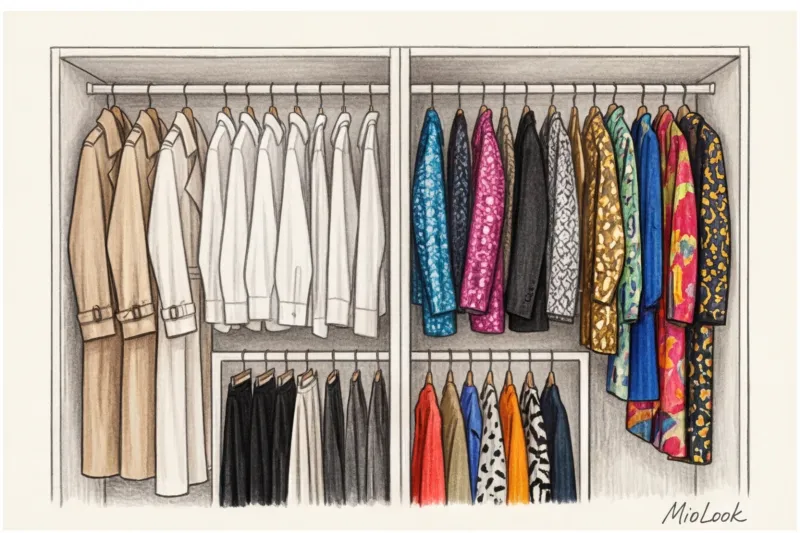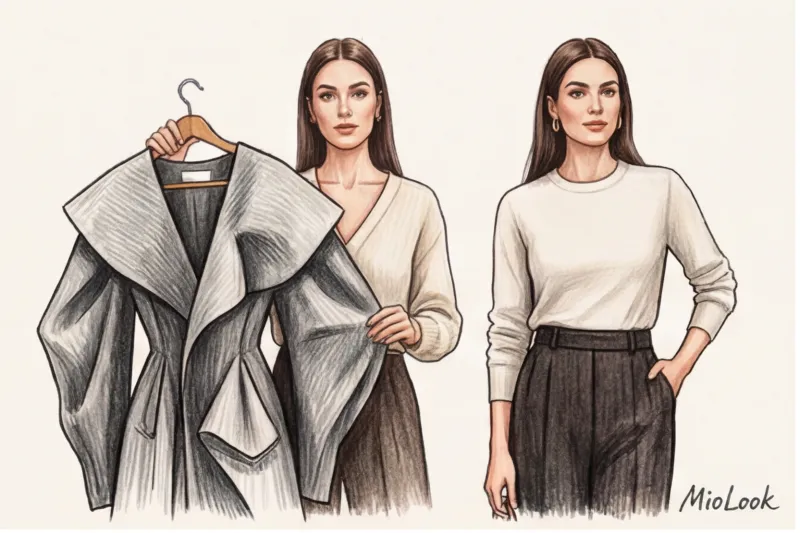
Have you ever stood in the middle of a store, holding a completely insane yet captivating piece, thinking, "This is a masterpiece, but where would I wear it?" Over 12 years as a personal stylist, I've seen this look on hundreds of women. We buy an emotion, bring it home, and then it hangs in our closet for years with the tag because we're afraid of looking weird or out of place in real life.
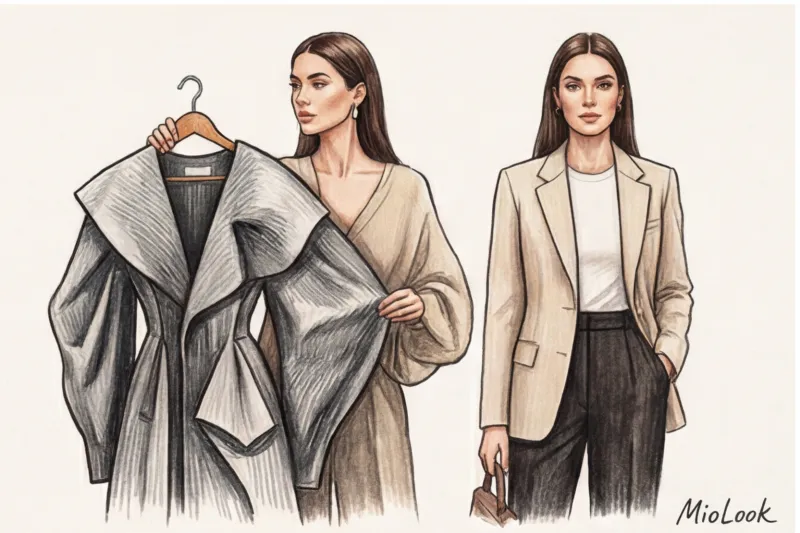
We talked about this phenomenon in more detail in our the complete guide to adapting catwalk trends , but today I want to talk about practice. Understanding, How to wear sheer clothing Whether it's oversized or asymmetrical cutouts, most people make the same mistake: trying to hide the trend or, conversely, copying the catwalk's total look. Neither works in real life.
In this article, I'll share my favorite 80/20 method, which transforms runway outrageousness into a tool for creating an expensive, multi-layered, and prestigious look. We won't hide. We'll use "oddities" as architectural accents.
The Anatomy of "Strange" Trends: Why What Looks Scary on the Hanger Works in Life
The catwalk doesn't sell us clothes, but rather a concentrated idea. When models at the Saint Laurent show walk out in completely sheer blouses with no underwear, the designer isn't suggesting you wear them to the office. He's conveying texture, mood, and lightness. Our job is to tone down the drama to an acceptable level.
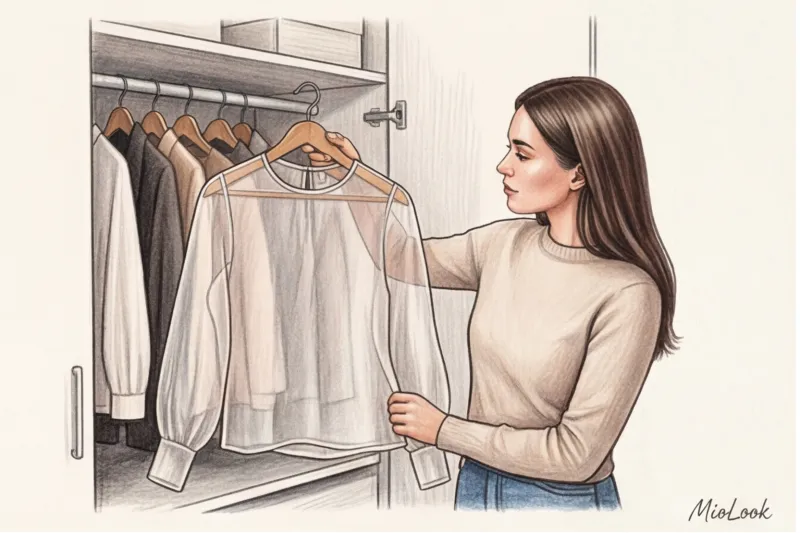
A story from my practice: a lawyer client bought a stunning neon translucent organza blouse for €150. The purchase was impulsive, fueled by the excitement of a successful case. The blouse hung in the closet for a year until we did a closet audit. The biggest mistake newbies make is wearing such a piece alone. As soon as we paired this "crazy" blouse with a tailored, thick wool jacket, leaving only the cuffs and stand-up collar visible, the look went from garish to sophisticated and classy.
Trends are always evolving. The hyper-shoulders of the '80s have evolved into neat shoulder pads that set your posture, and "naked" dresses have become elegant capes worn over a thick base layer.
How to Wear Sheer Clothing: From Vulgarity to Elegance
According to Lyst, a 2024 data analytics platform, searches for sheer fabrics (the "sheer trend") increased by 47%. But the line between high fashion and vulgarity here is thinner than the fabric itself. Texture is everything.
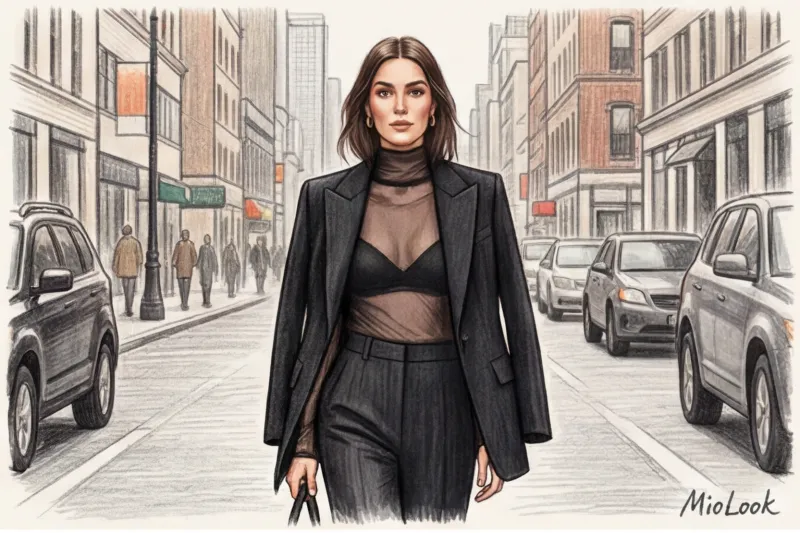
My golden rule of Mediterranean style: the secret to confidence is to let transparency hint, not shout. Leave a hint.
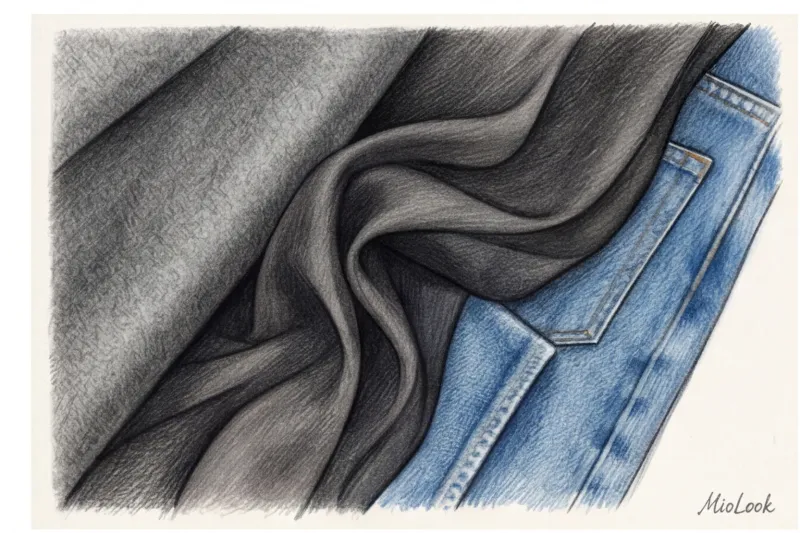
Matte chiffon, fine organza, or fine silk look expensive. But cheap stretch mesh instantly cheapens the look. If you choose a sheer piece, invest in quality: a good organza top will cost between €80 and €150, but it's worth every penny.
Bottom Layer Rule: Forget about lace lingerie under a sheer blouse unless you're going to a theme party. The optimal base layer weight is at least 100 denier. A smooth silk top with thin straps, a minimalist bandeau bra, or a thick cotton tank top (at least 180 g/m²) will make the look modern, not provocative.
Access to MioLook for €0.99 — one-time payment
A smart AI stylist will select the perfect look with sheer items for every day.
Get access — €0.99 onceEveryday look formulas with transparent fabrics
To avoid racking your brain in the morning, use these proven formulas. You can upload your things to MioLook to visualize these combinations before trying them on:
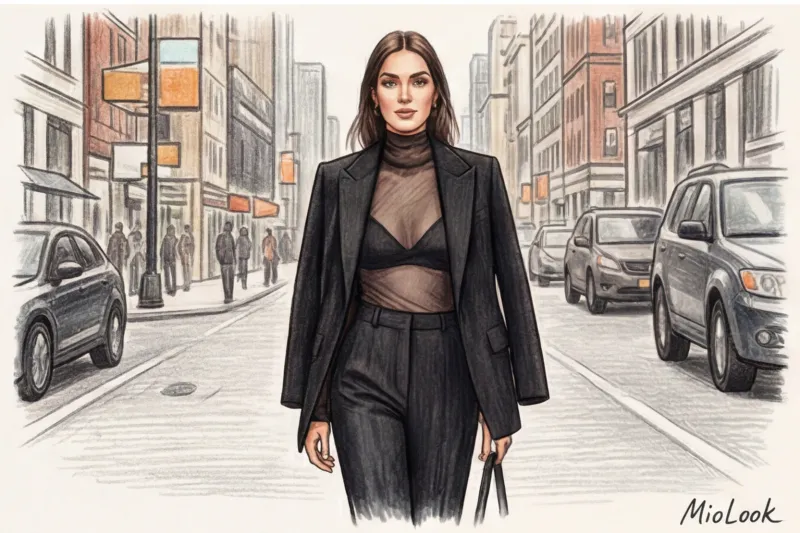
- Formula 1: Status intrigue. A sheer turtleneck + a tailored wool men's jacket + palazzo pants. The jacket acts as armor, and the sheerness near the face is refreshing.
- Formula 2: Complex layering. A thick basic T-shirt + a sheer cape dress on top + loafers. Perfect for those who want to rock the trend but aren't ready to show skin.
- Formula 3: Relaxed Chic. A voluminous sheer blouse + a thick, minimalist bustier top + classic straight jeans.
Oversized: How to Avoid Drowning in Clothes and Maintain a Feminine Silhouette
Now here's the bitter truth that many people don't want to hear: oversized clothes don't hide excess weight. This is the biggest misconception in styling. If you wear baggy clothes to "hide" your figure, and in doing so, cover up the thinnest parts of your body, you'll visually add 5-10 kilograms.
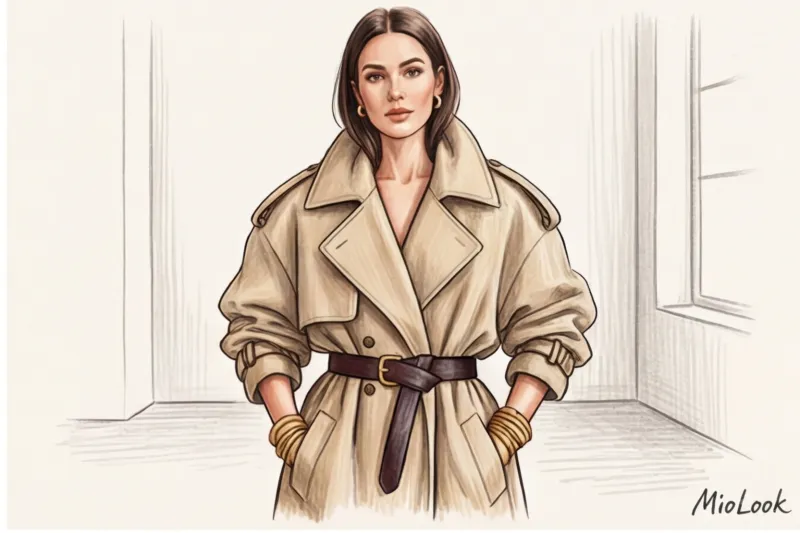
Oversized clothing works only through contrasting volumes. The "air" rule states that a garment should sit 3-4 centimeters away from the body, creating the illusion of fragility within. As soon as I ask my clients to simply roll up the sleeves of a voluminous jacket, revealing slender wrists, their posture changes, and their silhouette instantly becomes lighter.
Fine Line Demonstration Method:
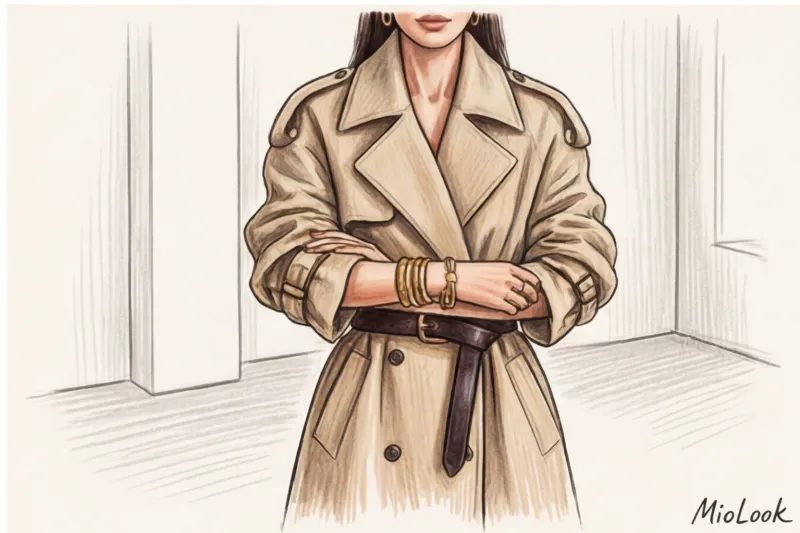
- Always show your wrists (rolled up sleeves).
- Show off your ankles (cropped trousers or cuffs).
- Use a V-neck to elongate your neck and show off your collarbones.
Volume architecture: the one wide thing rule
To avoid a shapeless cloud, maintain balance: a hyper-voluminous top calls for a gathered bottom (straight jeans, a pencil skirt). Conversely, wide palazzo pants are best paired with a compact top.
When it does NOT work: Total oversize (both wide tops and wide bottoms) is strictly contraindicated for apple-shaped figures unless the waist is firmly secured with a belt. The exception is monochrome looks in flowing fabrics (such as heavy silk or viscose) paired with heels, which elongate the vertical line.
Your perfect look starts here
Join thousands of users who look flawless every day with MioLook. Create your capsule look.
Get access — €0.99 onceCut-outs: The Art of Showing Skin Without Taking Your Clothes Off
A study by trend bureau WGSN showed that asymmetrical cutouts remain at the top of consumer preferences for the third season. Why? It's all about the psychology of perception: an unexpected cutout at the waist or collarbone attracts much more attention and appears more sophisticated than a simple plunging neckline.
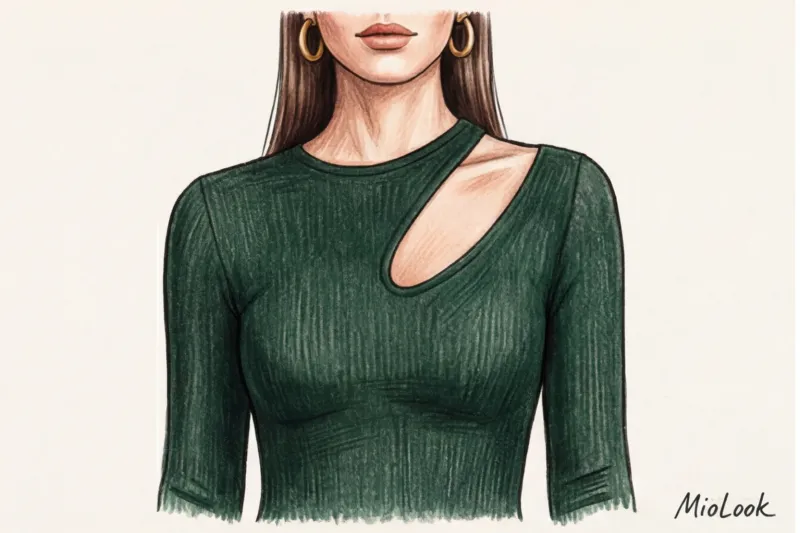
Asymmetry is a powerful tool for figure shaping. A diagonal cutout at the waist visually breaks the horizontal line, slimming the silhouette. However, there's a strict stylist rule: if a garment features a prominent neckline, its length should be midi or maxi. A minidress with a midriff cutout is a direct route to the 2000s aesthetic, which rarely looks classy.
Safe areas for cutouts:
- Clavicles and shoulders: fits absolutely everyone, regardless of clothing size.
- Back: It looks incredibly elegant, but requires perfect posture and special tapes instead of a classic bra.
- Waist: Choose styles where the neckline is located just above the natural waistline, at the thinnest parts of the ribs.
The 80/20 Method: A Stylist's Secret to Adapting Any Crazy Trend
According to McKinsey (2024), mindful consumption is changing our approach to our wardrobe: we buy less, but want things to perform more efficiently. This is where the 80/20 method comes in. It's the core of my stylistic approach.
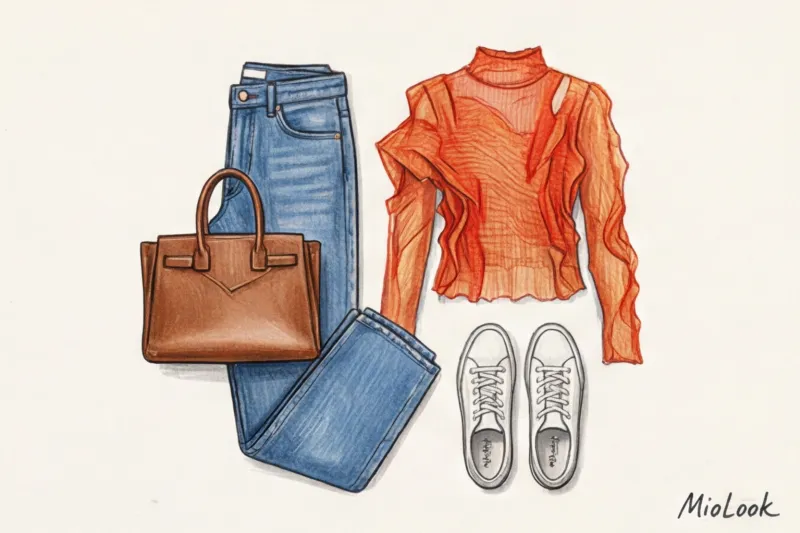
The gist is simple: 80% of your look should be made up of clear, classic, high-quality basics (Styling Anchors), and the other 20% should be that "weird" trend. Clean lines always calm the avant-garde.
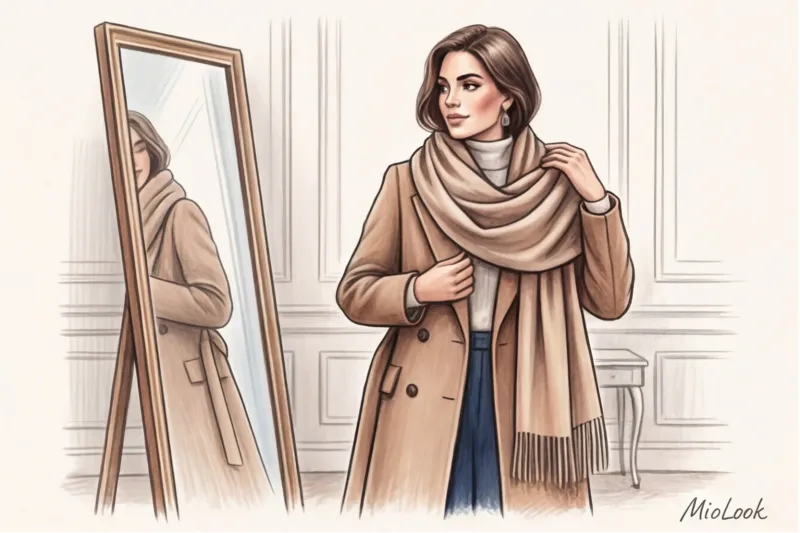
Let's say you have a top with a wild print, asymmetry, and sheer panels. Pair it with leather pants and bright shoes, and you'll get a theatrical costume. But pair it with straight blue jeans (no distressing), classic leather loafers, and a beige trench coat—and you'll get a look straight out of a Vogue cover. The base acts as a frame for a complex painting.
Don't forget about accessories. A structured, classy bag with a rigid shape (even a mid-price €150–€300 one) instantly ties together a relaxed or sophisticated look, adding a touch of polish.
Ready to get started?
Try the MioLook plan for free—no commitments required. An AI stylist will help you apply the 80/20 rule to your wardrobe.
Get access — €0.99 onceChecklist: 4 steps to check your image before release
Trendy pieces are tricky when they're in motion. One of my clients once spent the entire evening at a corporate event pressed against the walls because her low-cut top shifted with every movement. To avoid this, I introduced a mandatory checklist before going out.
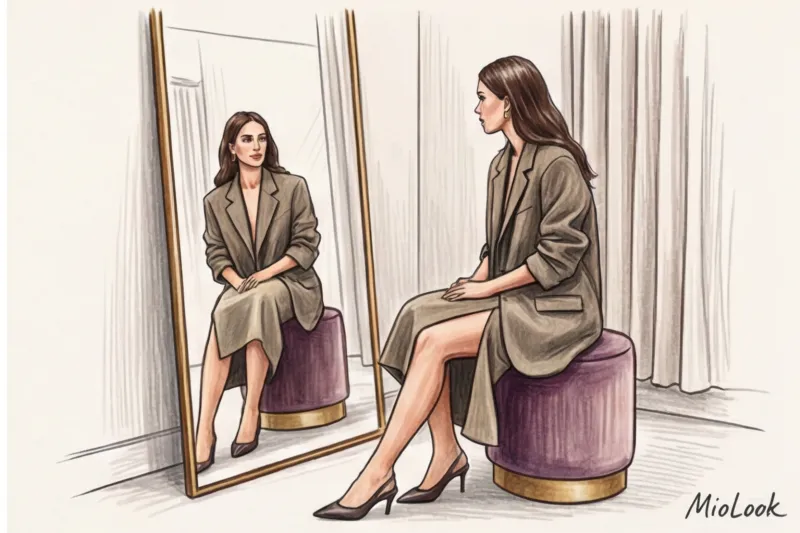
- Movement (Sit and Bend): Be sure to sit down in front of a mirror. Make sure the oversized jacket doesn't bunch up around your stomach, and the slits don't reveal anything that shouldn't be.
- Light ("Flash Test"): This is my personal must-have for sheer items. Take a photo in the mirror with your phone's flash. You'll be surprised how "opaque" a black turtleneck can be under spotlights or bright sunlight.
- Balance (Coco Chanel's Rule): Look in the mirror and remove one accessory. When styling complex trends, we often overdo the details.
- Comfort ("Confidence Test"): If you're constantly tugging at your hem, adjusting your neckline, or sucking in your stomach within the first five minutes of wearing it, take it off. No trend is worth the awkwardness.
Fashion isn't a strict test, but a game played by your own rules. Don't be afraid of the "weird" pieces on the hangers. Think of them not as a ready-made uniform, but as spices for your basic wardrobe. A touch of transparency, a bit of architectural volume, a well-chosen neckline—and your everyday style will take on a whole new meaning.