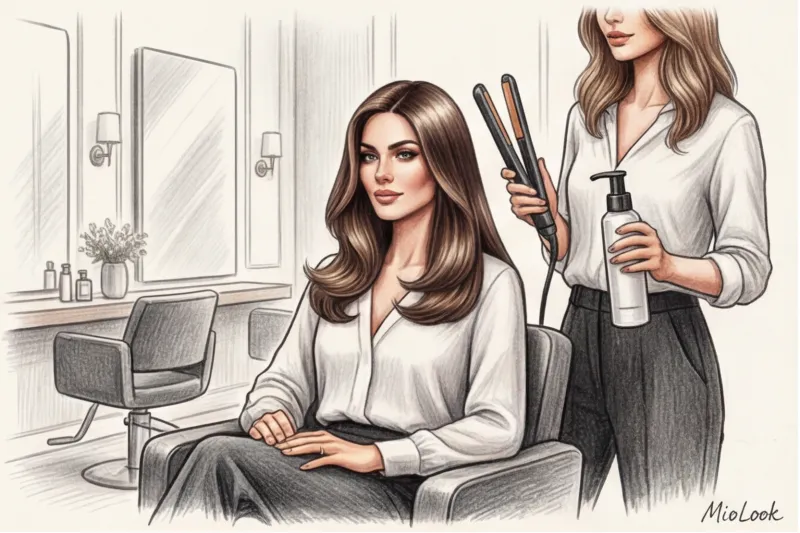
A couple of years ago, a revealing incident occurred during a commercial shoot. My client, a successful top manager, bought a luxurious three-piece custom-made suit for €2,000. The fabric held its shape perfectly, the fit was impeccable. But when we took the first test shots, the look fell apart. Against the backdrop of the expensive Italian wool, her dry, dull, and frizzy hair looked as if she'd just woken up and forgotten to brush her hair. The hairstylist and I spent almost an hour layering professional silicones to simulate a healthy shine and "save" the shot.
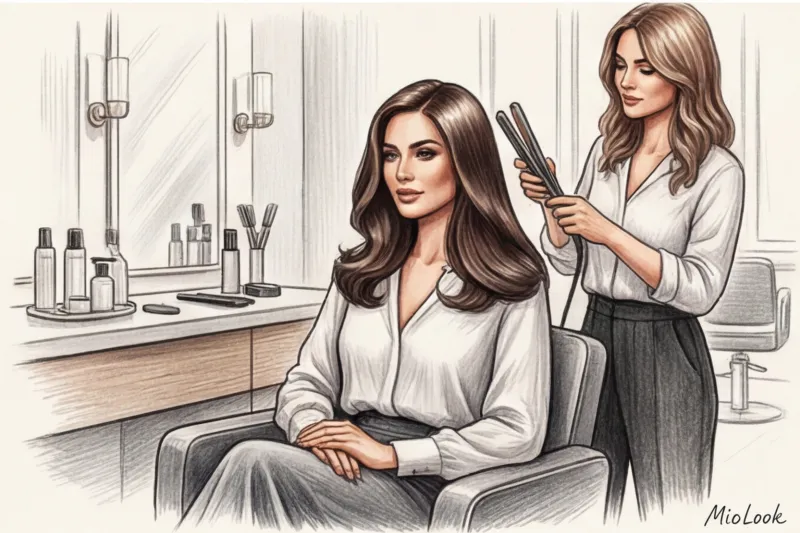
It was then that I realized once again: you can wear the most exclusive pieces, but if the architecture of your hairstyle is ruined by damaged hair, the entire look is devastated. And here the question comes to the fore: How to use heat protection for hair with it so that it actually works and doesn't just create a sticky film?
I have already talked in more detail about how a competent basic routine forms the foundation for any styling in our a complete guide to proper hair care for perfect styling Today, we'll explore heat protection not just as a means to prevent split ends, but as a crucial step that directly impacts how "expensive" your hair looks.
A luxurious look starts with quality hair: why heat protection is more important than hairspray
Backstage at fashion shows and shoots, stylists always begin by assessing the quality of the hair's texture. Hairspray or texturizing spray may help set the shape, but they won't achieve the same effect. old-mani style styling - flowing, dense, light-reflecting strands.
Let's look at the physics of the process. Wet, healthy hair is quite elastic—it can stretch up to 30% of its length. But it contains water. What happens when you straighten a damp strand with a flat iron heated to 200°C?
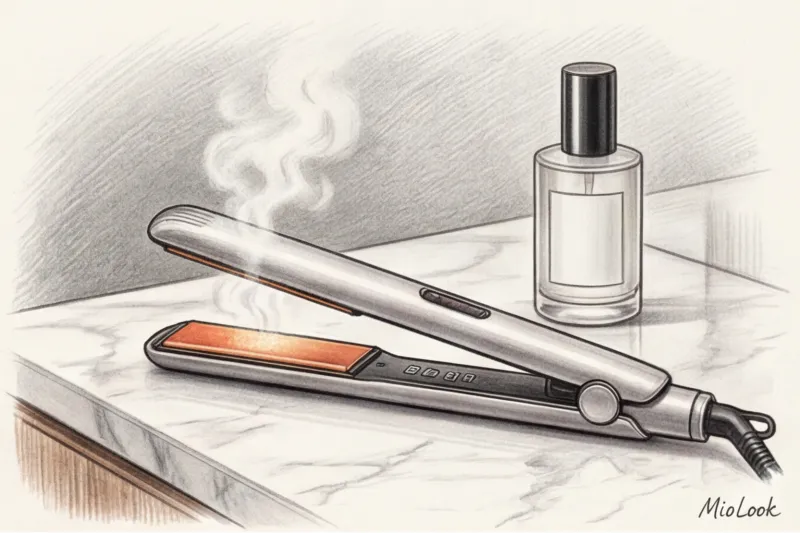
The water inside the hair instantly boils at 100°C. It turns into steam, which needs a way to escape. A micro-explosion occurs from within, rupturing the cuticle. Trichologists call this the "bubble hair" effect. After this, it's impossible to cosmetically restore the hair structure—the only way is to cut it off.
Heat protection acts as a buffer that absorbs thermal shock. It prevents moisture from evaporating too quickly and evenly distributes the tool's heat throughout the strand, preventing pinpoint burns to the cuticle.
The Anatomy of Protection: How the Right Formula Works and Why Oils Won't Save You
One of the most dangerous myths I regularly hear from clients: "I don't use chemicals; I apply natural coconut or argan oil before curling my hair." Please never do this.
Using pure natural oils before applying heat to your hair is literally like deep-frying your hair. The oil heats up, maintains extreme temperatures, and literally "cooks" the hair protein. According to a large-scale study in the International Journal of Trichology (2022), keratin begins to irreversibly denature (melt) at temperatures as low as 150°C. Most home straightening irons operate in the 180–230°C range.
How do high-quality modern products work?
- Volatile silicones (eg, Cyclomethicone): They don't weigh down the hair. Their purpose is to create a thin, breathable microfilm that evenly distributes the heat from the styler's plates and then simply evaporates, leaving the strand light.
- Thermosetting polymers: They are activated by heating, filling micro-voids in porous hair and smoothing the cuticle scales.
- Amino acids: They work to moisturize during the drying process.
Access to MioLook for €0.99 — one-time payment
A smart AI stylist will select the perfect look based on your new hairstyle and personal features.
Get access — €0.99 onceCream, spray, or fluid? Choosing the right format for your hair type
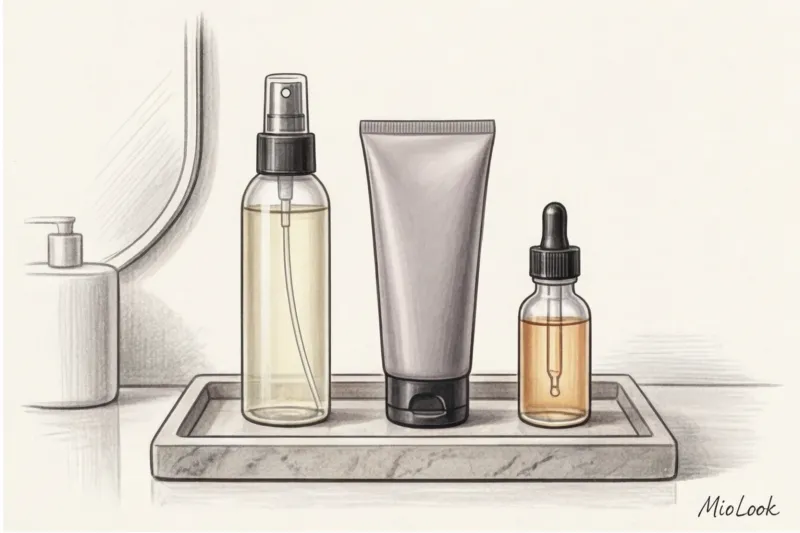
There are hundreds of products on the market, ranging in price from mass-market options for €10 to premium bottles for €60. But price doesn't matter if you get the texture wrong.
For fine, volume-less hair
Use only lightweight, water-based sprays. My honest disclaimer: creamy textures do NOT work here. I've seen dozens of cases where a client with fine Slavic hair applied a thick cream, and within an hour, their perfect salon-style style turned into icicles. A spray will provide weightless protection.
For porous, frizzy and bleached hair
You need dense, creamy textures. Blondes and natural curls naturally have open cuticles. Cream will not only protect against heat but also act as a filler, weighing down the hair in a positive way and eliminating frizz. This is especially important if you wear fashionable haircuts for long hair with a straight cut.
For coarse and thick hair
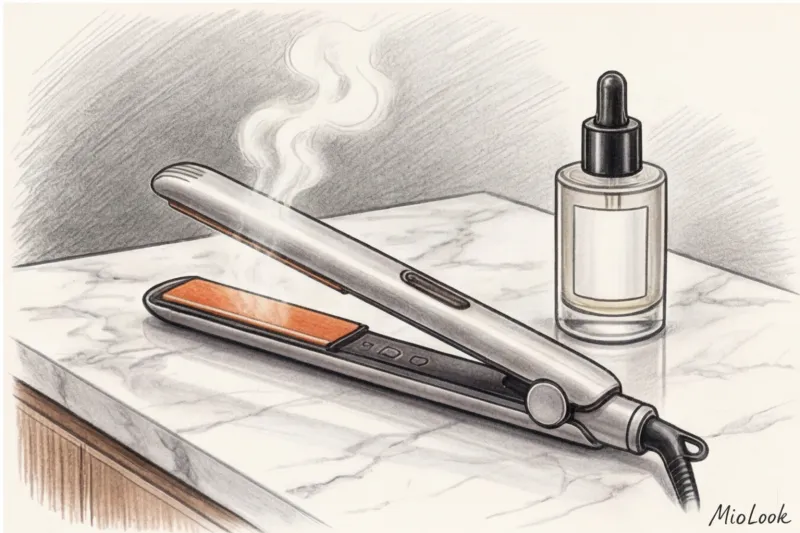
Two-phase serums and oil-based fluids (containing special silicones rather than pure base oils) are ideal. They will provide additional conditioning and make coarse hair more manageable for brushing.
The main question: how to use heat protection for hair correctly, step by step
Even the most expensive product will be useless if applied incorrectly. Over 14 years of practice, I've developed a clear application checklist for my clients that guarantees results.
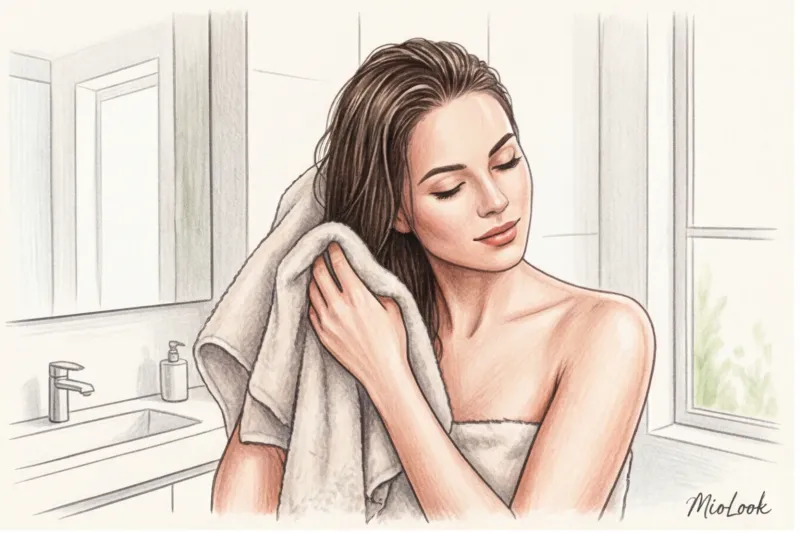
- Correct humidity level: Never apply heat protectant to dripping hair. The product will simply run off into the sink. Pat your hair dry with a towel (don't rub, but gently squeeze) so it's damp but not dripping wet.
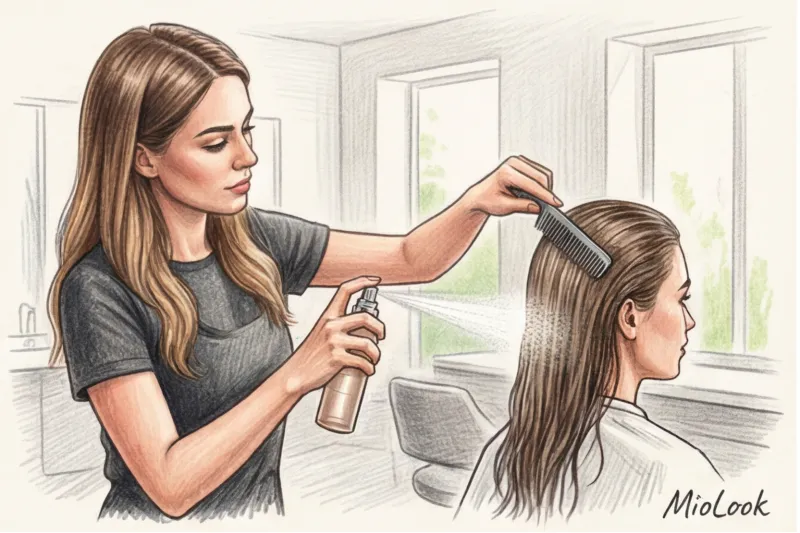
- Application technique: 90% of women make the mistake of spraying hairspray on top, like perfume, and then drying it. This only protects the top layer. Divide your hair into sections and apply the product in layers.
- Combing (Critically Important!): After application, be sure to comb your hair with a wide-tooth comb (such as a Tangle Teezer or carbon comb). This ensures that every hair is coated with a protective film.
- Special attention to risk areas: The ends and strands near the face (especially if you have layered haircut ) are damaged the fastest. Add a little more product there.
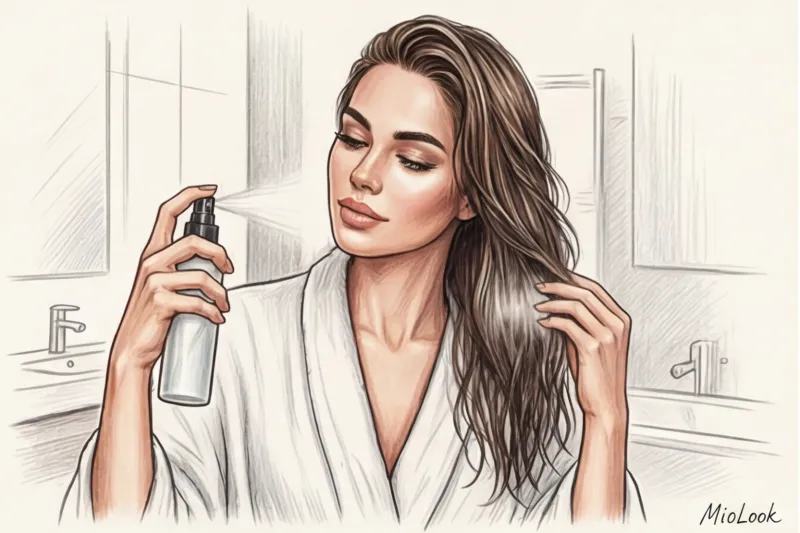
On damp or dry strands?
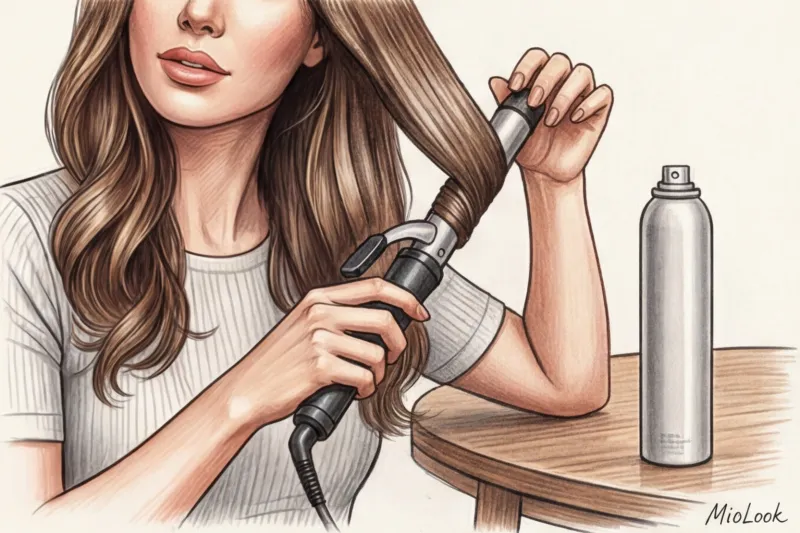
This is where confusion often arises. If you blow-dry your hair, apply a classic cream or liquid heat protectant to damp hair. But if you use a flat iron or curling iron, the golden rule applies: the tool should touch your hair. only absolutely dry hair Even if they have the best protection in the world, a damp strand will boil under the iron.
The Art of Layering: How to Combine It with Other Styling Products
Layering isn't just about clothing. Professional hairstylists layer products in a strict order:
Leave-in conditioner (moisturizing) → Heat protection (barrier) → Styling for volume at the roots → A flexible hold hairspray at the end.
There are all-in-one products (like 10-in-1 cream). They're a great time-saver in the morning and perfect for your daily routine. However, for complex hairstyles or photo shoots, it's best to separate the steps—this way you can control the hold in different areas.
Your perfect look starts here
Join thousands of users who look flawless every day with the MioLook app.
Get access — €0.99 onceDouble Styling: Secrets to Safe Second-Day Refresh
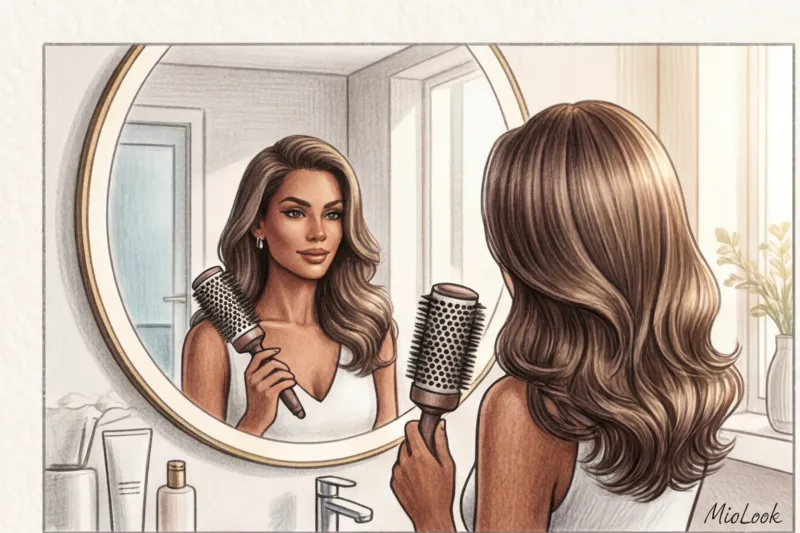
Let's say you straightened your hair with a brush yesterday and want to add a few curls with a curling iron today. How can you protect your strands without overloading them or making them look greasy?
You can't apply liquid spray to dry hair—you'll have to wait for it to dry again, otherwise you'll burn the strand. For refreshing your style, there are dry heat protectants Their texture resembles dry shampoo or a very light hairspray. They spray on in a fine, dry cloud and instantly coat the hair without adding moisture.
A stylist's lifehack: when re-styling your hair the second day, always reduce the heat setting by 20-30 degrees. Your hair already took shape yesterday; today you just need to refresh it slightly, so extreme heat isn't required.
Checklist: 4 Signs Your Heat Protection Isn't Working (or You're Making a Mistake)
How can you tell if your current skincare routine is failing? Here are four signs I always look for when a new client comes to me:
- Persistent burnt smell after styling. Your hair shouldn't smell like burnt feathers. If it does, the keratin is burning. Either the tool is too hot (no need to exceed 190°C for home styling), or the heat protection isn't working.
- Thick white steam from the strand. A slight, almost imperceptible evaporation is normal (volatile silicones are evaporating). However, if the steam billows out in a thick cloud and is accompanied by a hissing sound, the hair was too wet. Stop and finish drying the strand with a hairdryer.
- White flakes on the styler plates. This means the heat protectant contains low-quality resins that melt and crystallize. They will snag and tear the cuticle when sliding. A good product will not leave a residue on the ceramic.
- The styling became "wooden". Strands should flow freely as you move them. If your hair feels stiff and wiry after heat protection, you've either overdosed the product or chosen a formula that's too heavy for your hair's thickness.
Summary: Shiny hair is the best accessory
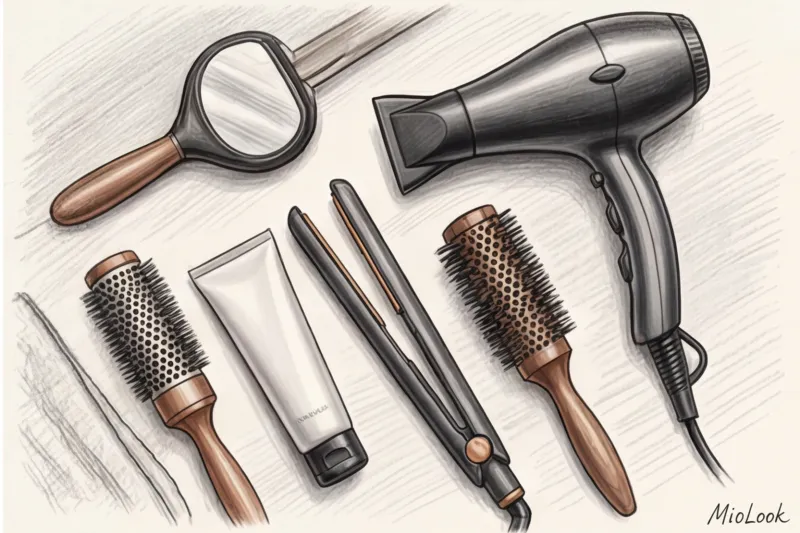
We often spend hours choosing the right jacket, bag, or jewelry, forgetting that hair is an accessory you wear every day without ever taking it off. Heat protection isn't a marketer's ploy, but a basic safeguard for your attractiveness. It's an invisible shield that preserves elasticity, shine, and color.
If you're investing in complex coloring, high-quality haircuts, and premium clothing, don't let one missed care step ruin all your efforts. Start using the right heat protection routine tomorrow morning, carefully combing through your strands, and you'll see your hair become more salon-quality, and your look become more cohesive and complete.
Ready to get started?
Try the MioLook plan for free—no commitments required. Artificial intelligence will help you integrate your new hairstyle into stylish everyday looks.
Get access — €0.99 once