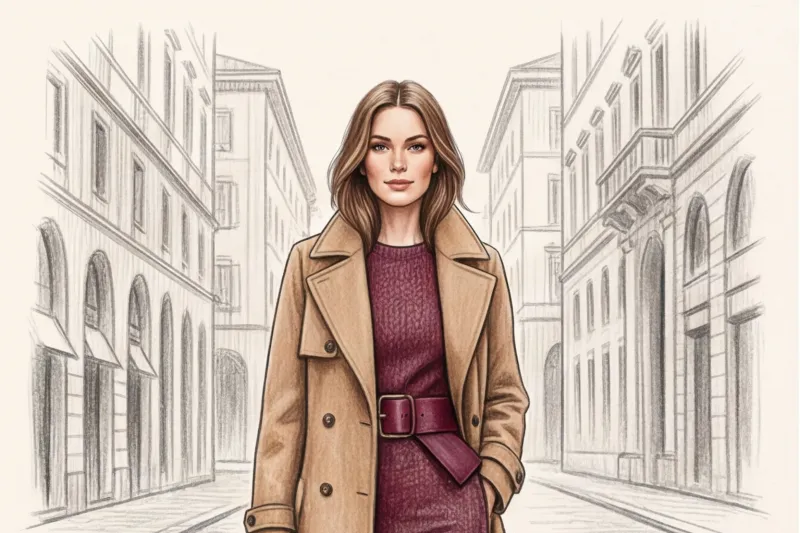
Have you ever noticed how sometimes a perfectly put-together, expensive outfit suddenly makes a woman look a good ten years older? Everything seems perfect: pumps, a crisp bag, and a leather belt—all in the same elegant burgundy shade. But instead of classy elegance, we see a mothballed austerity. And the main reason is the belt.
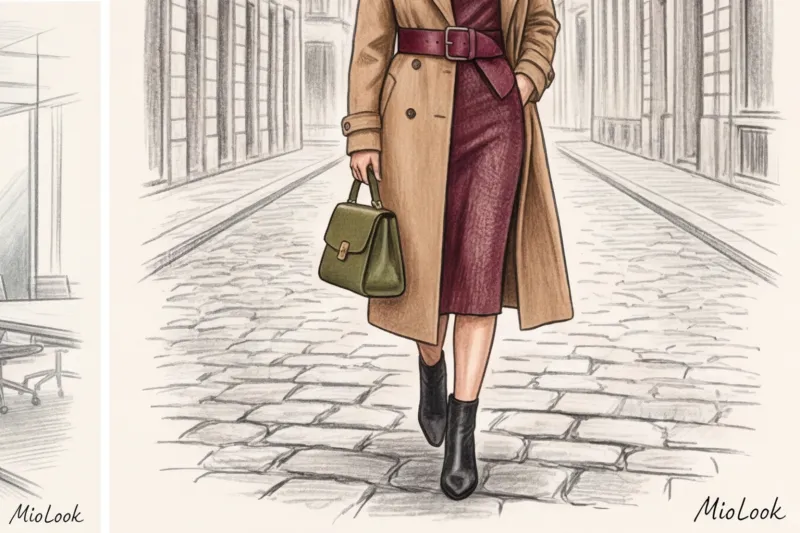
Over 12 years of working as a stylist and attending Fashion Weeks, I've discovered one principle: how you incorporate a belt into your look reveals your level of vision. While we were once taught strict rules for choosing accessories, today this wardrobe element has become a powerful tool for visually shaping your figure. We've covered the architecture of the silhouette in more detail in our article. A complete guide on how to choose the right women's belt for your figure , and today we will look specifically at coloristics.
The main myth of style: what should a women's belt be paired with in 2024?
Let's put the "big three" rule (tone-on-tone belt, bag, and shoes) to rest once and for all. According to WGSN's 2024 analysis, consumers associate perfectly matched accessories with a conservative uniform rather than a personal style. This creates a "I tried too hard" effect, depriving the look of breathtaking, dynamic style.
I recall a case from my own practice: a client, the CFO of a large IT company, came to me. Her wardrobe was filled with premium accessory sets (ranging from €300 to €800 per set), selected with mathematical precision. The first thing we did during the analysis was "break down" these sets. We kept the cognac shoes, added a dark chocolate-colored bag, and tied a soft khaki suede belt around her waist. The client looked in the mirror and said, "I feel like I've taken 10 years off my age and can breathe more freely."
In the modern paradigm, what a women's belt should be paired with is a secondary question. The primary question is: what part of the body do you want to visually elongate?
Your perfect look starts here
Join thousands of users who look flawless every day with an AI stylist.
Get access — €0.99 onceStrategy 1: Belt + Pants or Skirt = Endless Legs
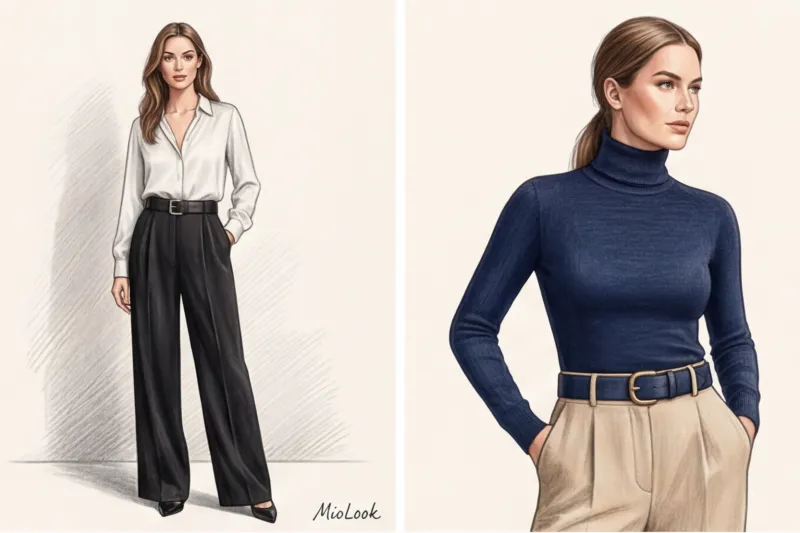
The human eye scans a silhouette from top to bottom. Any contrasting horizontal line along this path acts as a stop sign. If you wear black pants, a white shirt, and a contrasting red belt, you literally "cut" your height by 3-5 visual centimeters.
To achieve the "endless legs" effect, use the golden ratio (1:1.618), where the smaller portion is the torso and the larger portion is the legs. By choosing a belt that matches the color of your bottom (or a half-tone darker), you blur the line where your legs start. This strategy is an absolute must-have for petite women and those with long torsos.
How it works in practice:
- Dark grey wool palazzo pants + graphite leather belt + light cashmere sweater.
- Indigo denim + navy blue belt (without the shiny, chunky buckle!) + white tee.
Strategy 2: Belt + Top or Blouse = Elongate the silhouette from the top
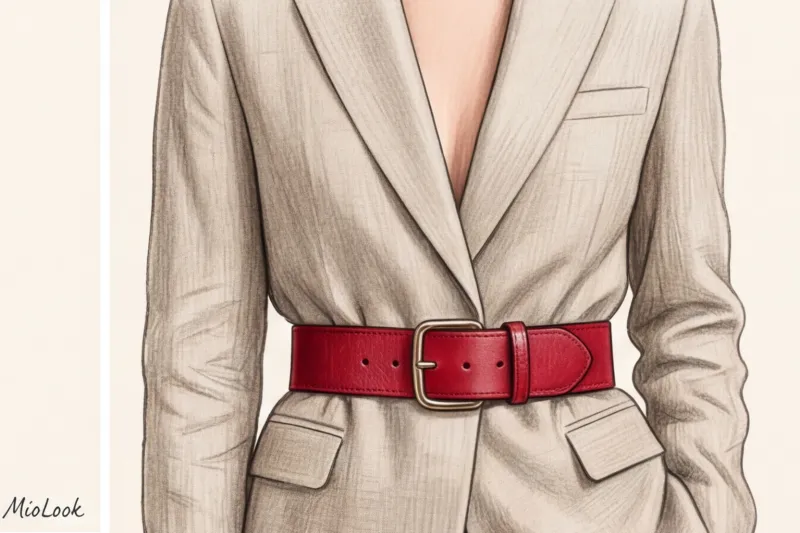
What if nature has blessed you with luxuriously wide hips, but you want to draw the attention upward? Here, we use a reverse optical illusion: continue the color of the top downwards.
By choosing a belt that matches your blouse or jacket, you create a unified color line across your upper body. However, this is where a common mistake I see beginners make. If you have a full bust and a short torso, never Avoid using wide corset belts (wider than 5 cm) with this strategy. They will literally "swallow" your ribcage, making your figure look boxy. A narrow, 2-3 cm, soft leather belt is the optimal choice.
Strategy 3: Accent Belt as a Standalone Player (Color Blocking)
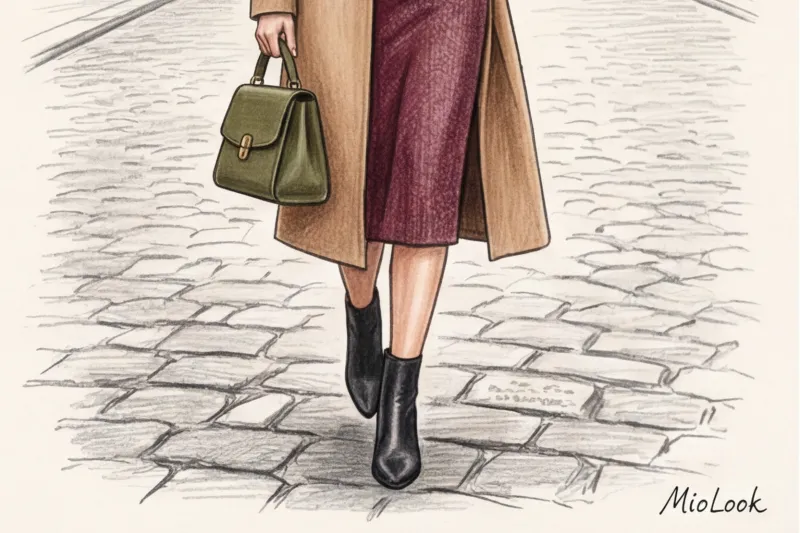
At Milan Fashion Week shows (especially at Prada and Bottega Veneta), the belt often appears not as a companion but as a soloist. It's a color-blocking tool, based on Johannes Itten's color theory and the 60-30-10 rule.
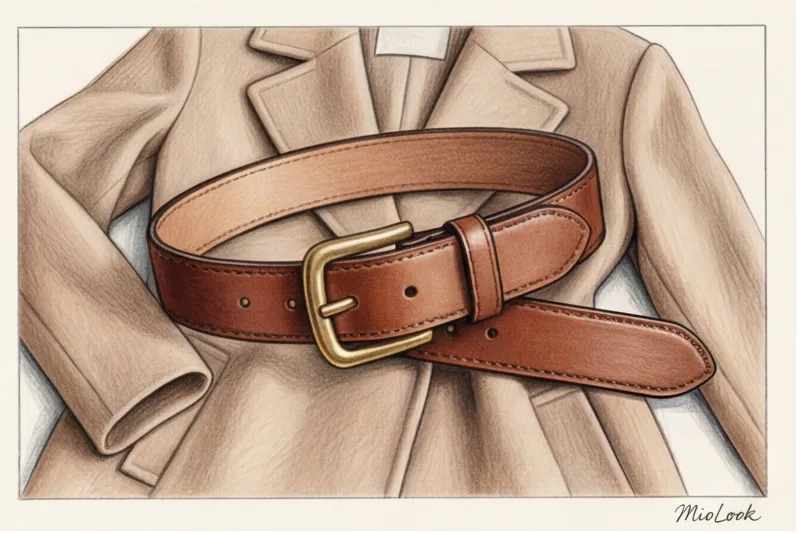
In this formula for a harmonious look, 60% is the main color (for example, a beige trench coat), 30% is the secondary color (blue jeans), and 10% is the accent color. Your belt is that 10%. If you're wearing a monochrome navy dress, add a terracotta or mustard belt.
To prevent an accent from looking like an accidentally forgotten detail, use the "roll call" rule. The belt's color can be supported with subtle touches that aren't immediately noticeable:
- Lipstick shade (wine belt + wine lips).
- A splash of color on a silk square scarf.
- The color of the glasses frame or even the manicure.
Access to MioLook for €0.99 — one-time payment
A smart AI stylist will select the perfect look from your items and suggest the best color combinations.
Get access — €0.99 oncePairing Belts with Shoes and Bags: New Rules of the Game
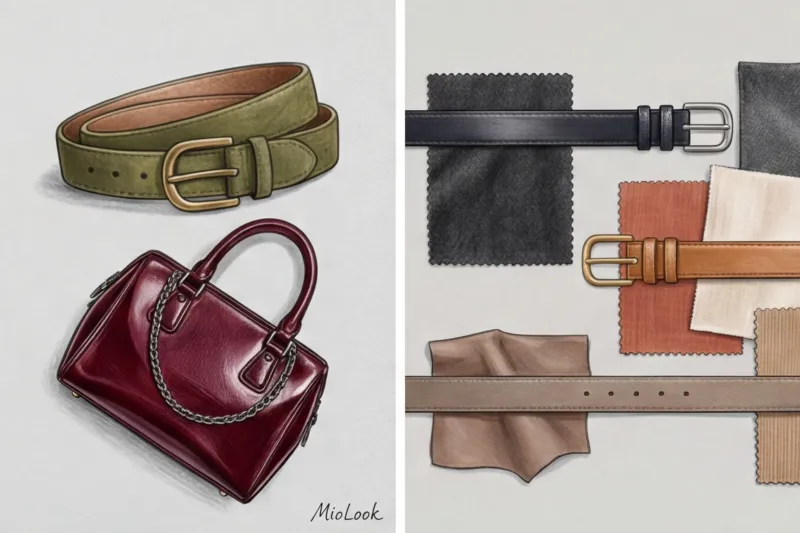
So, we've agreed that we're not looking for a bag and shoes that match the belt exactly. So how do we tie the accessories together so the look doesn't fall apart? The answer lies in temperature undertones.
You can confidently combine olive, burgundy, and dark brown in a single accessory ensemble, provided they all have a warm, earthy undertone. Avoid mixing warm and cool in basic pieces: a cool gray-black belt will clash with a warm caramel-colored bag.
Texture is more important than color
If you want to look expensive, learn to mix textures. A look where your bag, shoes, and belt are all made of the same glossy crocodile-skin (especially if it's a mass-market item) looks plasticky and cheapens the overall look.
The secret to classy styling is varying surfaces. Take a suede belt (excellent basic options can be found at Massimo Dutti or COS for €50-€70), add a smooth matte tote bag, and patent leather loafers. Light will reflect off these materials differently, creating a deep, complex visual effect.
Metal fittings: a strict rule or a relic?
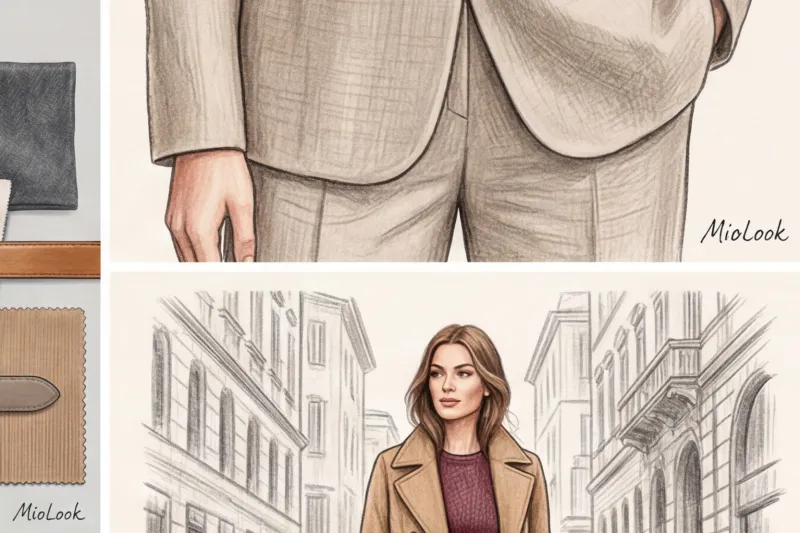
Forget the "a gold buckle only means gold earrings and bag rings" mentality. In 2024, mixing metals is not only permitted, it's encouraged. The main rule: don't mix cheap, yellow, "samovar" shine with aged silver. If you do mix metals, make sure both have a refined matte (brushed) finish.
Belt Color and Your Color Type: What to Consider
According to statistics, 80% of women choose a deep black when buying their first expensive belt, believing it to be universal. But the truth is, jet black only suits high-contrast skin tones (such as "Winter").
Yes, the belt is at the waist, but if you use strategy #2 (matching the belt to the top), that color will inevitably clash with the portrait area. For soft, muted color schemes, a black belt on a light-colored garment looks like rough duct tape.
The Pantone Color Institute regularly recommends deep, primary shades that are softer than black. What can replace them?
- Instead of black: Graphite, deep shade of wet asphalt or bitter chocolate.
- Instead of pure white: Ecru, milky, eggshell color.
- Instead of bright brown: Complex taupe (grey-brown) or cool cocoa shade.
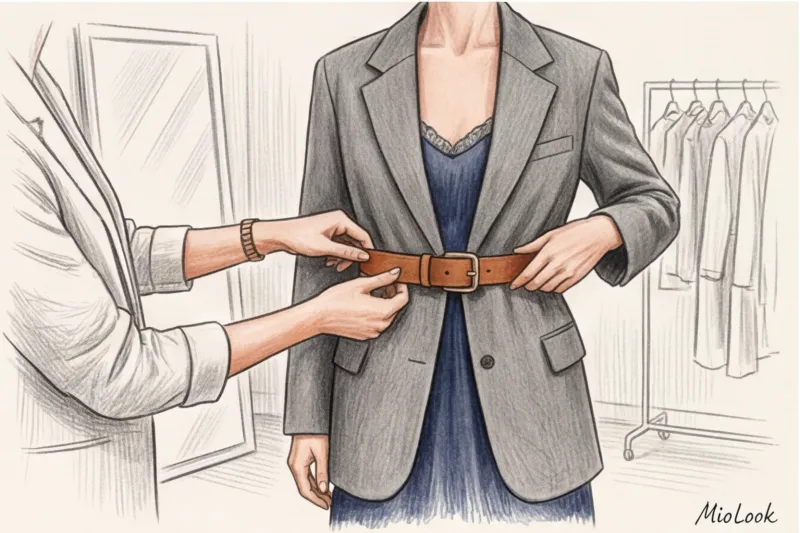
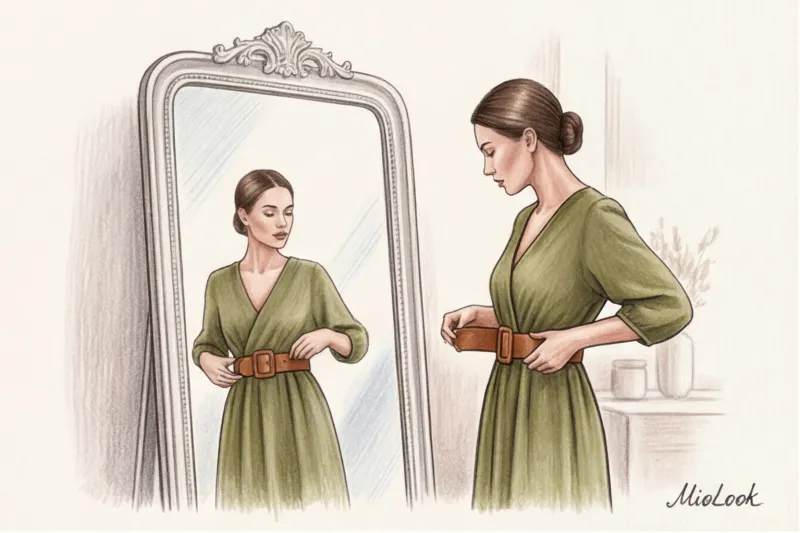
Stylist Checklist: 5 Steps to Choosing the Perfect Belt Color in Front of the Mirror
When my clients put together a look on their own, I ask them to go through this quick filter:
- Analysis of proportions. Take a full-length look at yourself. Want to elongate your legs? Choose a belt that matches your trousers or skirt. Want to elongate your overall silhouette? Choose a belt that matches your jacket.
- Contrast level. Is the belt too flattering? If you're unsure, choose a mid-tone between the top and bottom.
- Temperature check. Is the belt temperature (warm/cold) the same as the temperature of your shoes and bag?
- Test for the "set effect". Do your accessories look like they came all in the same box? If so, swap out one element for a contrasting texture (for example, leather for suede).
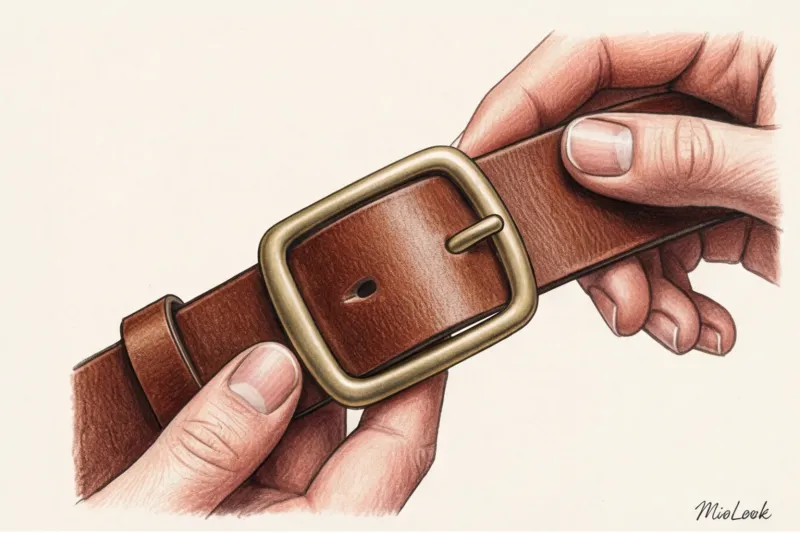
- Density check. A heavy, thick leather belt (at least 3 mm thick) on a thin silk dress will ruin the aesthetics of the fabric. Lightweight fabrics should be worn with lightweight, braided, or thin leather belts.
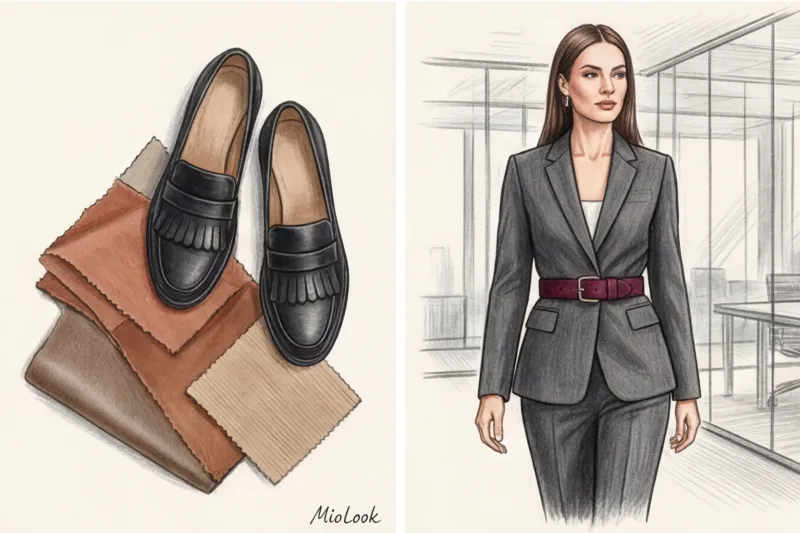
Conclusion: Going Beyond the Box
Today, you decide what to pair a women's belt with based on your silhouette, not on outdated catalog rules. A belt has long ceased to be a utilitarian item that simply keeps your trousers from slipping down. It's your personal architectural framework, a color accent, and a marker of contemporary taste.
Your style challenge for today: open your closet and pull out your favorite bag and shoes that you've always paired with a belt of the same color. Put that belt away and try pairing it with a belt in a completely different shade that complements your temperature. You'll be surprised how much more vibrant, luxurious, and modern your reflection in the mirror will appear.