How many times have you read this "brilliant" advice online: to test silk, pull a thread from the seam and set it on fire? It's a great plan if your main goal is to have security escort you out of a Massimo Dutti or Zara boutique with your hands full. In practice, the question of how to distinguish genuine silk from a fake or a high-quality alternative is solved entirely differently, without pyrotechnics or scandals.
Over 12 years of working as a personal stylist, I've learned one hard and fast rule: the foundation of a smart capsule isn't the brand, but the materials. We covered this in more detail in our The complete guide to capsule wardrobe fabrics Today we'll talk about flowing textures. In my hometown of Madrid, where summer temperatures hover around 35°C, flowing fabrics aren't just aesthetics; they're a matter of survival while maintaining elegance. But how do you choose a piece that will flow like liquid gold, rather than cling to your skin like a cheap film?
The Anatomy of Flowing Fabrics: Silk, Satin, and Cupro—What's the Difference?
To build a wardrobe that works, you need to stop fearing labels and start understanding the physics of fabric. The biggest mistake I see clients make is blindly believing the "100% natural" label and being terrified of the word "artificial."
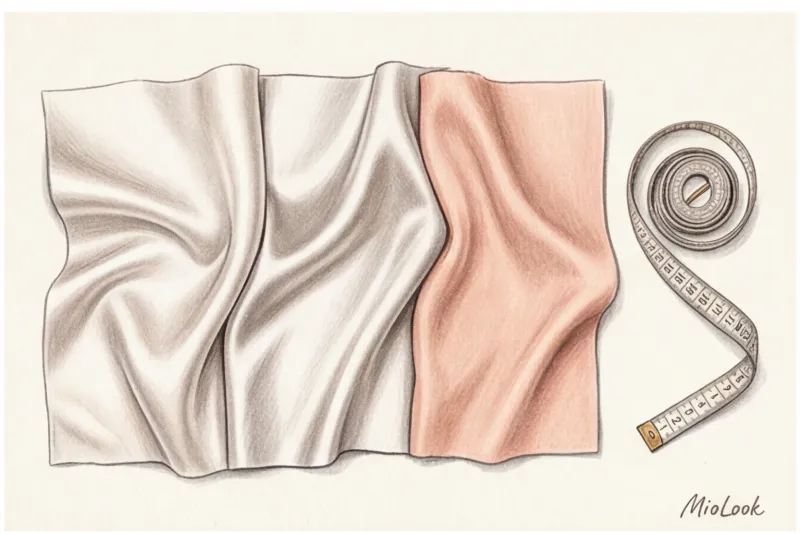
Let's differentiate the concepts. Natural silk — is a protein fiber, a thread spun by the silkworm. It's luxurious, breathable, but very easy to care for.
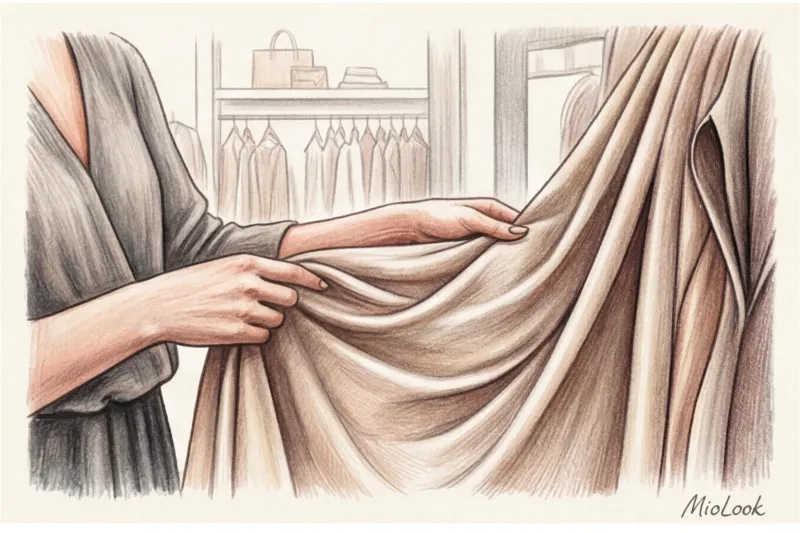
Cupro Cupro, often referred to as "vegan silk," is a man-made fiber. And here's the important point: man-made doesn't mean synthetic. Cupro is made from the finest cotton linters that envelop the cotton seeds. This means it's essentially regenerated cellulose. According to the Bemberg Textile Institute, cupro fabric breathes, wicks away moisture, and regulates body temperature as effectively as natural fabrics, while also offering incredible wear resistance.
The main myth about satin
"I don't wear polyester, I bought a satin dress," one client happily told me recently. I had to disappoint her. Satin is not a fabric composition, it is a type of weave (satin weave) The distinctive feature of satin weaving is that the weft threads overlap the warp threads with large gaps. This is what gives the fabric its luxurious, smooth shimmer on the face. Satin can be woven from natural silk, cotton, viscose, or 100-ruble polyester.
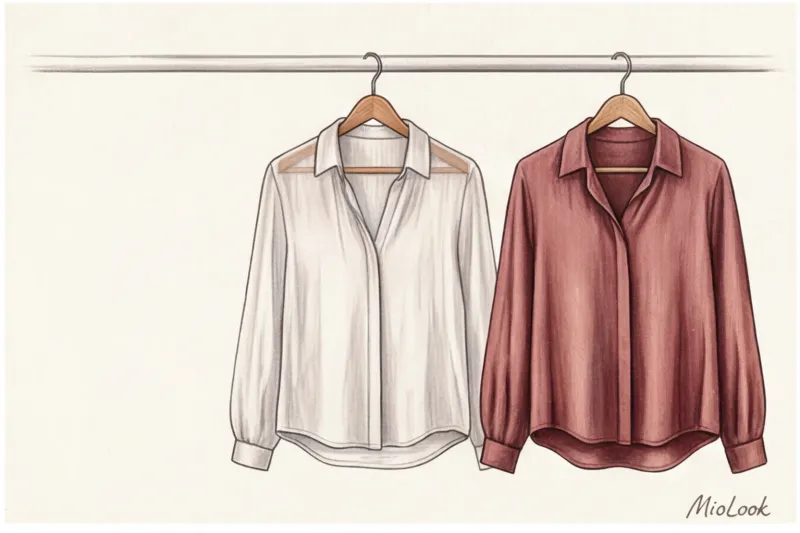
How to identify natural silk in a store (without a lighter or matches)
So, you're in the fitting room. You're looking at a blouse whose price tag hints at premium quality. How can you tell if it's genuine silk, relying solely on your senses?
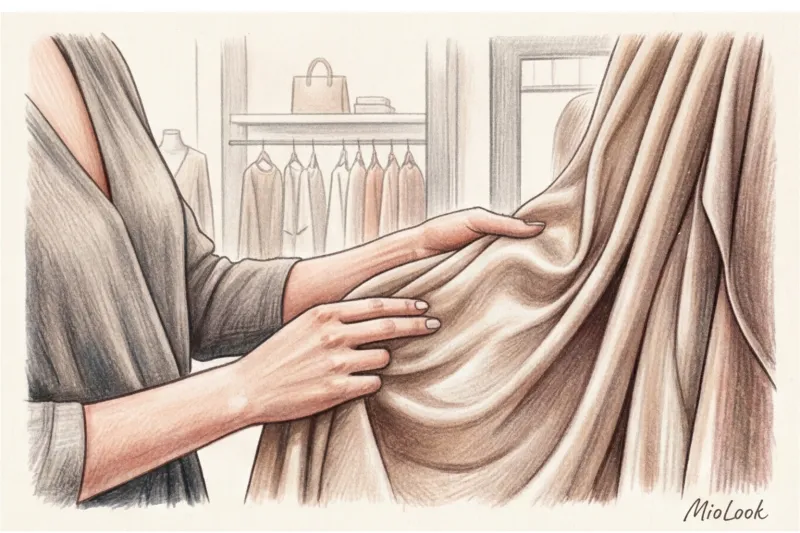
- Temperature test: Natural silk has exceptional thermal conductivity. Place the fabric against your cheek or squeeze it between your palms. Within seconds, the natural protein will warm to your body temperature and no longer feel foreign. Polyester will remain cool and slightly "glassy" to the touch.
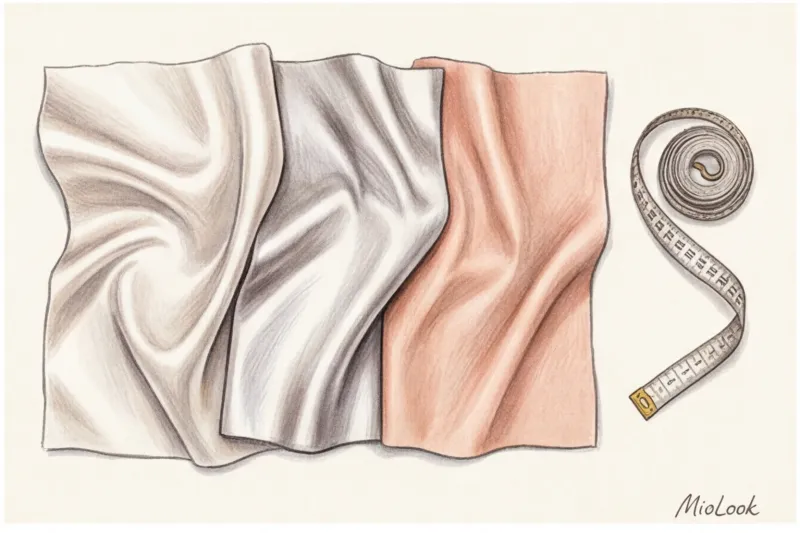
- Optical test: Look at how the fabric reflects light in the folds. Synthetics produce a flat, sharp, white sheen—it shines like plastic. Natural silk doesn't shine; it glows from within. This effect is called pearlescent luster; it's three-dimensional and multifaceted thanks to the triangular cross-section of the silk thread.
- Acoustic test: Lightly rub two layers of fabric against each other near your ear. Real silk will make a slight, characteristic crunching sound (in English terminology, this is called scroop ). Important limitation: This advice does not work if the fabric has undergone an aggressive enzyme wash (so-called sandwashed silk) - such silk becomes matte and noiseless.
Organize your wardrobe wisely
Forget about the "nothing to wear" problem. Upload your items to MioLook, and our smart AI stylist will create dozens of new combinations for you every day.
Start for freeDensity Matters: What is Momme and Why Cheap Silk is a Waste of Money
Here we come to the most counterintuitive styling rule. Many believe it's better to buy cheap 100% silk than good viscose or cupro. This is a fatal mistake for your budget.
The density and weight of silk are measured not in grams per meter, but in mommy (m/m) One momme is equal to approximately 4.3 grams per square meter. According to the standards of the International Silk Association (ISA), the weight of the fabric we buy must strictly correspond to its intended use.
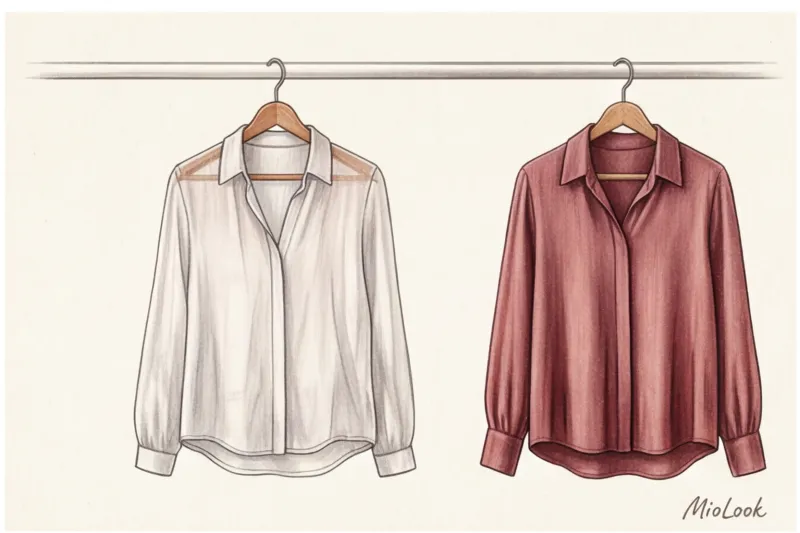
One of my clients bought a silk slip dress for €80 from a well-known mass-market brand. The tag proudly proclaimed "100% Silk." The silk was about 12 momme—a fabric suitable for little more than a light housecoat or scarf. After her very first romantic dinner, the seams on her hips simply came apart. The threads remained intact, but the fabric itself unraveled, creating holes. In the textile industry, this is called seam slippage (thread separation in the seam) is the main disease of cheap silk.
For a basic office blouse that won't show through underwear, look for a 19 momme count. For skirts, dresses, and capsule wardrobe basics The density should start at 22 momme. A quality item with these parameters cannot cost less than €150–200.
Cupro and premium viscose: when non-silk becomes the best choice
If the budget for a single item is limited to €80–€120, I always categorically discourage clients from choosing natural silk. In this price range, premium cupro will look more prestigious, last longer, and be less stressful to wash.
A 2024 study by the WGSN trend bureau found that over 40% of sustainable brands in the mid-price segment have completely switched from basic silk to cupro (specifically, the patented Bemberg fiber) or Ecovero viscose. Why?
- Dynamic behavior: Cupro is heavier than fine silk. It has a magnificent, flowing drape that literally glides over the figure, smoothing out minor imperfections in the silhouette.
- Wrinkle resistance: Unlike silk, which can become creased after an hour of sitting in the office, thick cupro holds its shape perfectly.
- Care: Most cupro items are machine washable on a delicate cycle (although always check the label!), while heavy silk often only requires dry cleaning, which adds at least €15–€20 to the cost of each wear cycle.
Smart Wardrobe Integration: Flowing Fabric Look Formulas
Flowing fabrics are a tool for contrast. Forget the "dressy on dressy" rule. Silk and cupro work best when paired with rough, matte, heavy textures.
Formula 1: Relaxed Chic
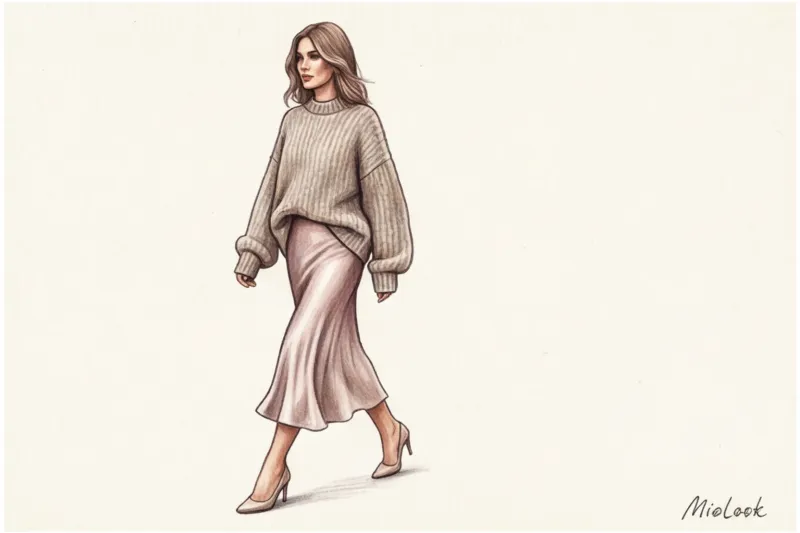
A bias-cut silk midi skirt, paired with a chunky merino wool sweater and chunky leather loafers with chunky soles. The flowing hem lightens the heavy winter top, adding a dynamic touch. It's the perfect choice for a Friday at the office or brunch.
Formula 2: New Strictness
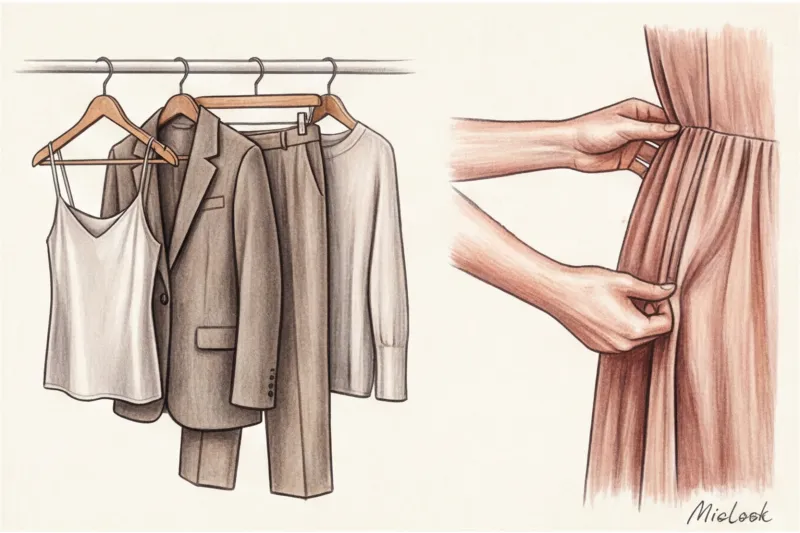
A flowing blouse in matte ivory cupro paired with tailored men's suit trousers in thick wool with a crease. The smooth texture of the blouse illuminates the face, while the dry wool of the trousers creates a streamlined silhouette, conveying confidence and professionalism.
Your perfect look starts here
Join thousands of users who look flawless every day. Upload your items, and the MioLook app will show you how to stylishly pair silk with complex textures.
Try MioLook for freeStylist Checklist: 4 Steps to Check for Flowing Clothing Before Buying
Before taking the item to the checkout, conduct a quick inspection right in the fitting room.
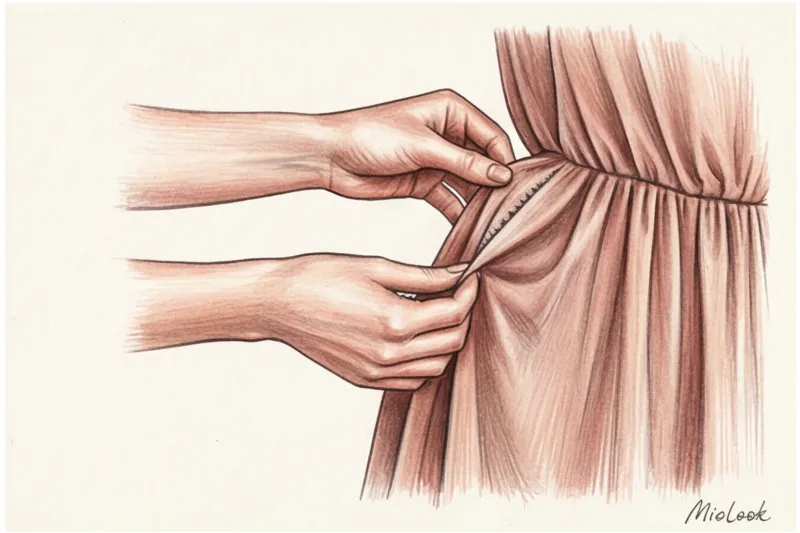
- Seam tension test: Grasp the fabric with both hands on either side of a side seam (for example, on the hip of a skirt) and gently pull it apart, simulating the tension you feel when sitting. If you see the threads of the fabric at the needle puncture begin to separate, creating micro-gaps, hang the garment back up immediately. It will tear within the first month.
- Cut rating: A flowing skirt or slip dress should be cut exclusively on the bias (at a 45-degree angle to the grain). Only this cut allows the fabric to gently hug the hips and spring back as you walk, without creating bubbles. Pull the hem of the skirt down—if the fabric springs back slightly, the cut is correct.
- Fist crumple test: Squeeze the edge of the garment in your fist and hold for 10 seconds. Release. If the fabric remains crumpled, it will look untidy after an hour of wear. High-quality, thick silk and good cupro will straighten out almost completely in a couple of minutes.
- Examining the care label: Be honest with yourself. If the label says "Dry Clean Only" (the letter P in a circle), and you know you don't have the time or budget to regularly dry clean a basic shirt, skip the purchase. Improper home care will ruin the silk's luster forever.
A stylish and luxurious look isn't built on fancy fabric names, but on their density, dynamic performance, and proper integration into your life. Stop chasing thin, mass-market silk just for show. Opt for dense, heavyweight cupro or invest in genuine silk from 22mm—and these pieces will boost your confidence for years to come.