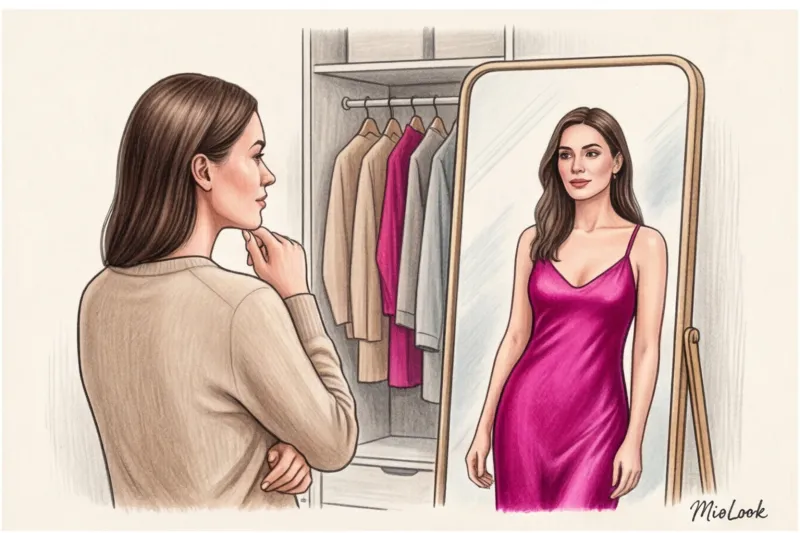
You know what I hear most often from clients in the fitting room? "Oh, Julia, they're so soft and cozy, they fit like a second skin, I'm taking them!" And every time, I have to gently but firmly return these jeans to the hanger. Why? Because while thick, basic jeans fit perfectly in the first few minutes of trying them on, they'll treacherously stretch out at the knees and sag in the back by lunchtime on the first day.
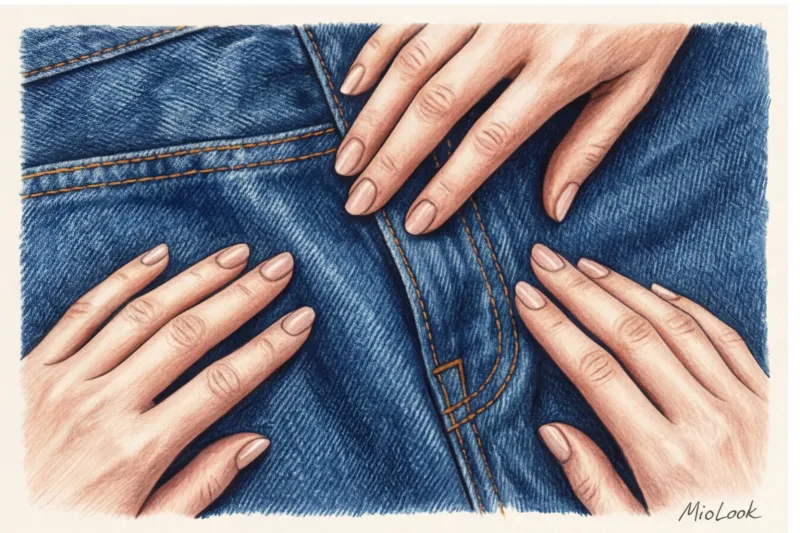
Unlike the basic advice that simply calls for looking for "100% cotton," today we'll dig deeper. I'll show you the back of premium denim, teach you how to read ounce labels, and explain why it's smart to ask about How to choose quality jeans , begins with understanding the physics of tissue.
The foundation of any wardrobe is its materials. I discussed this principle in more detail in our A complete guide to choosing fabrics for a smart capsule , but denim deserves special, undivided attention. It's not just pants; it's the canvas for your look.
The Anatomy of the Perfect Pair: Why It's Important to Know How to Choose Quality Jeans
My client Elena once came to sort through her wardrobe with three pairs of identical black jeans from a mass-market store. Each one cost her about €40. They looked fine on the hanger, but on her figure... The thin fabric bunched up limply, highlighting even the slightest imperfections in her silhouette, and after five washes, the color had turned a dull gray.
We replaced them with a pair of quality Italian denim for €220. Three years have passed. Elena wears them every week, and they only look better, acquiring a refined texture. That's the essence of an investment wardrobe. Basic pieces don't tolerate skimping on raw materials.
The key rule to remember about high-fashion denim is that it should hold its shape, not cling to you like nylon tights. Cheap, loose fabric ruins even the most precise fit, visually cheapening the entire look, even if you're wearing a silk Saint Laurent blouse.
Weight Matters: Understanding Denim Density
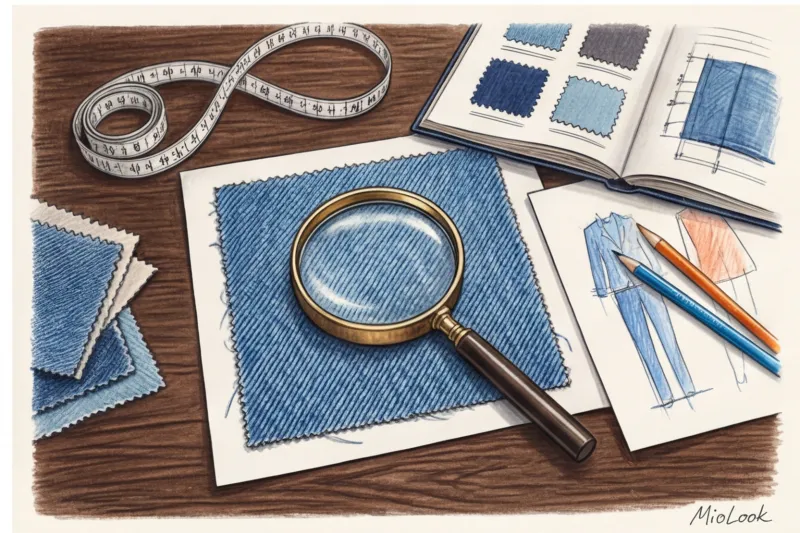
If you visit a premium brand boutique, you'll often see mysterious numbers on the tags: 12 oz, 14 oz. These are ounces per square yard—the standard measurement of denim density in the textile industry. The higher the number, the heavier and denser the fabric.
Why is this critical? The mass market uses this technology. open-end (rotor spinning). This is a fast and inexpensive method that produces a loose thread. The premium segment works with ring-spun — ring-spun. The yarn is twisted tightly and unevenly, making the fabric incredibly durable. Thin denim (under 10 oz) made from cheap, open-end yarn guarantees wrinkles in the crotch and thighs.
Try MioLook for free
A smart AI stylist will select the perfect look based on your wardrobe.
Start for freeSummer, mid-season, and heavy: a cheat sheet for ounces (oz)
- Lightweight denim (9-11 oz): Ideal for hot summers and flowing styles (palazzos, culottes). However, keep in mind the limitation: these jeans do not provide a shaping effect.
- Medium Denim (12-13 oz): The gold standard for year-round wear. This is the weight range to look for the perfect straight-leg jeans.
- Heavyweight Denim (14-16+ oz): This is the true "armor" of raw denim. At first, they're stiff and can even chafe. But after a few months of wear, they mold perfectly to your figure, creating unique creases.
The Comfort Trap: How Much Elastane Should a Product Contain?
There's a common misconception among fashion purists that only 100% cotton is acceptable. I respect that, but let's be realistic. Stiff 100% cotton is great for vintage Levi's 501s, but if you spend eight hours in the office, then drive, and then go to dinner, you need mobility.
The secret lies in the golden ratio of the composition: 98% cotton and 2% elastane (or 1-2% polyurethane). This proportion provides shape retention — shape memory effect. The elastane thread acts like a microspring: it allows the fabric to stretch when you sit down, but instantly contracts back when you stand up.
If you see 4-5% elastane combined with polyester, run. These aren't jeans anymore, but leggings styled like denim. They'll lose their structure after the first wash.
Why overly soft jeans in the fitting room are a warning sign
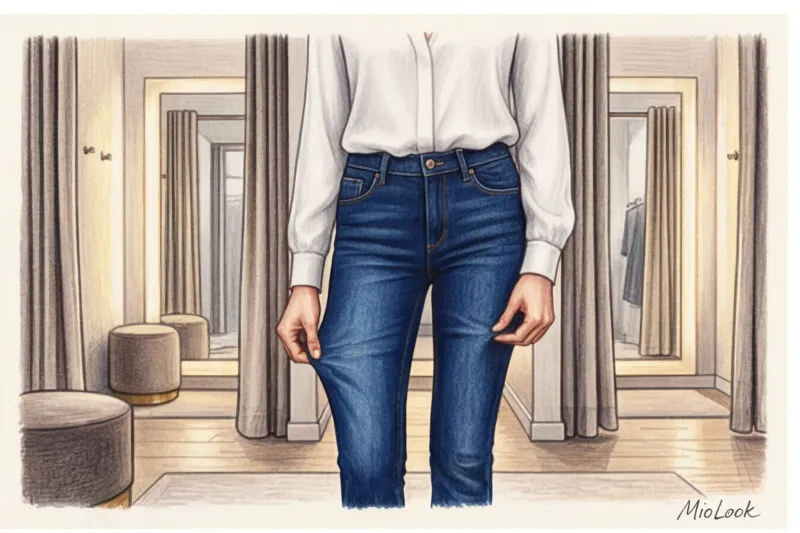
Let's bust the biggest myth: good jeans don't have to be comfortable right out of the box. Fabric physics is unforgiving: if a garment doesn't offer any resistance when you put it on, it won't hold your body's shape.
A rule for buying heavy denim: it should button with a light but noticeable effort. You should have to exhale to fasten the top button. Over the first three days of wear, the heavy cotton will relax slightly under the influence of your body heat and fit perfectly.
Japanese Selvedge and Italian Yarn: What Makes Premium Denim Different?
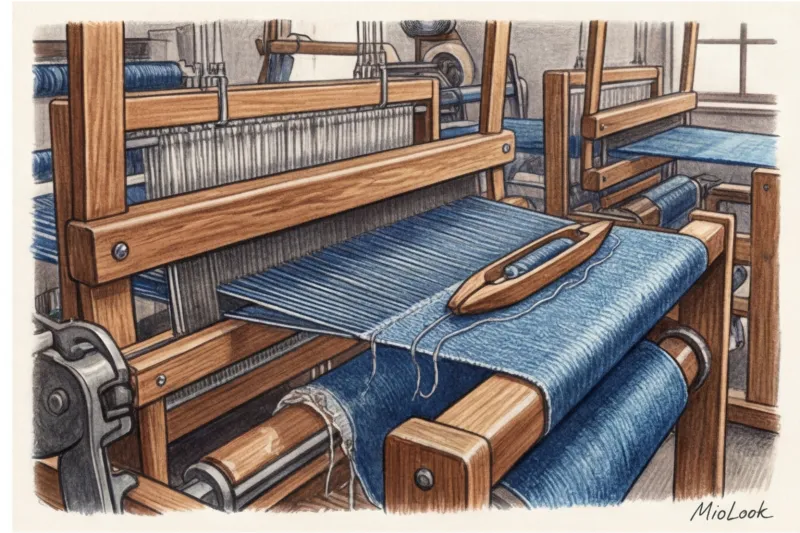
When you pay over €200 for a pair, you're paying for history and technology. In the mid-20th century, when demand for jeans became massive, American factories switched to projectile looms. The old, narrow shuttle looms were bought by the Japanese. Thus, the legend of Japanese denim was born.
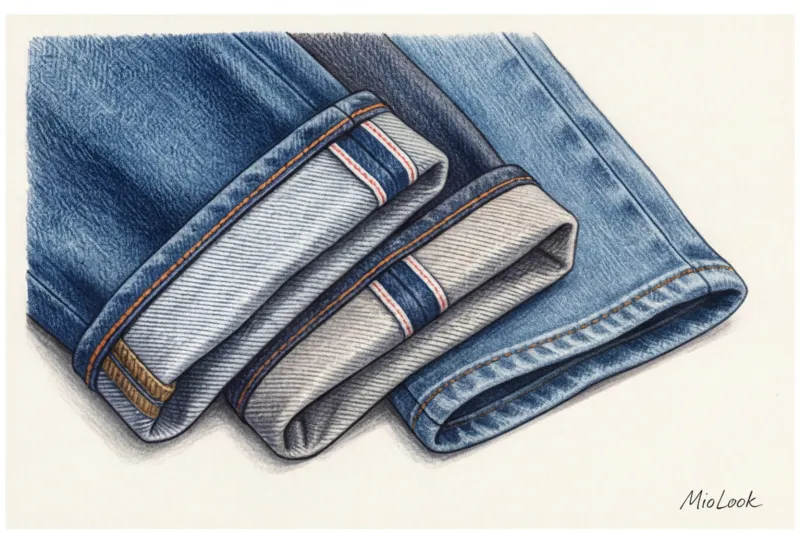
Shuttle looms weave slowly. They create a dense, slightly uneven fabric with a closed edge—the very same selvedge If you roll up the leg of a pair of proper jeans, you'll see a neat white edge with a woven-in colored (often red) thread on the inseam, not just an overlocked edge.
The Italian approach (for example, the famous Candiani factory) is different. Italians focus on luxurious softness with high density, a complex deep indigo color, and eco-friendly rope dyeing methods. These fabrics are valued for their slub — intentional unevenness of thread thickness, which gives away an expensive, not mass-market item.
Your perfect look starts here
Join thousands of users who look flawless every day with MioLook. Digitize your wardrobe in just a few clicks.
Start for freeStylist's checklist: hardware, seams, and coloring
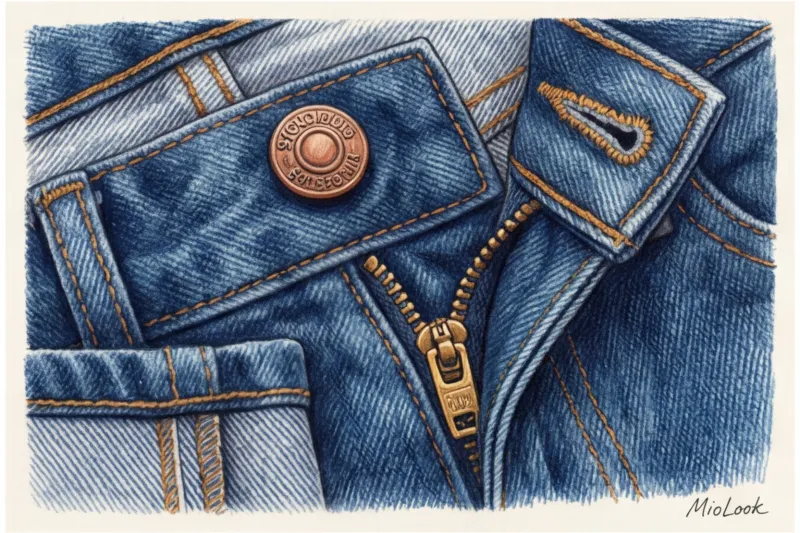
When auditing a wardrobe, I pay attention not only to the brand but also to the technical execution. The hardware is the product's passport.
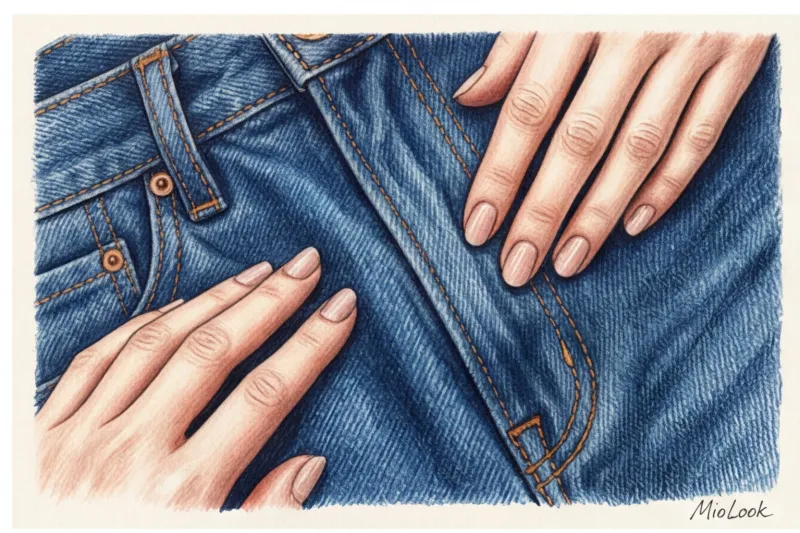
- Metal: Premium brands use copper rivets, and buttons that fit tightly, without any play. Zippers are only time-tested Japanese YKK or Swiss Riri. Plastic zippers are unacceptable on denim.
- Chain stitch: Look at the hem of the leg. Expensive jeans will have a thick chain stitch there. After washing, it shrinks slightly, creating a beautiful wave at the edge (roping effect).
- Tissue aging: According to WGSN market research (2024), high-quality denim is valued precisely for its fade. Cheap dye simply fades evenly, leaving the garment dull. Expensive denim fades at the folds, leaving a deep color in the creases.
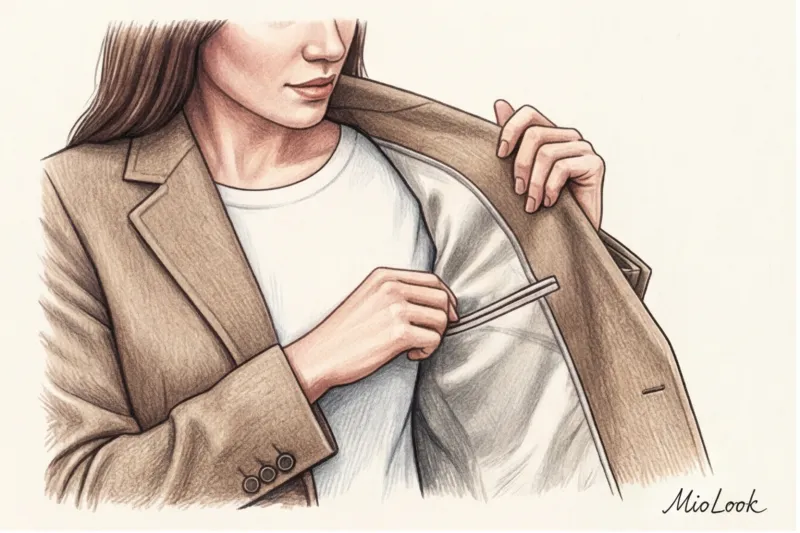
- Back side: Turn your jeans inside out. The pocket lining should be made of thick cotton or twill, and all interior seams should be hidden. If the pockets are made of thin mesh that tears easily with keys, the manufacturer cut corners.
Wardrobe Integration: Which Jeans Are Appropriate for the Office and Meetings?
Let's be honest: not every pair of jeans is appropriate for work, even if your company has a casual dress code. Save the light blue, distressed, raw-edge styles for weekends and brunches with friends.
For the office, where you want to project expertise and status, only jeans without a pronounced wash (raw or dark wash) are appropriate. A minimum 12 oz weight ensures the fabric maintains a crease or a clean, straight silhouette. Styles: straight (straight) or light bootcut , hiding the heel.
The texture of denim completely changes your status. Dark, smooth, almost glossy indigo paired with a silk blouse, structured jacket, and pumps is the look of a top manager. But thin, distressed stretch denim will ruin the same outfit, relegating it to the level of a part-time student.

A Practical Guide: How to Check the Quality of Jeans Before Buying
I have my own fitting room "ritual" that I make all my clients go through. No guesswork, just physical tests:
- Light test: Take the fabric of one pant leg and hold it up to a fitting room lamp. If you can see the light, the denim is too loose. A high-quality, tight weave won't show through.
- Snap test (rebound test): Put on your jeans, bend your knee, pull the fabric at your kneecap with your fingers, and release quickly. The fabric should instantly snap back into its original flat state. If the "bubble" remains even for a second, take them off.
- Inspection of belt loops: Belt loops should be reinforced with bar tacks. Pull them hard. A flimsy seam will crack.
- Smell Check: Cheap factories use harsh chemicals and formaldehyde to fix the color. If a new item gives off a strong chemical or "burnt" smell, that's a red flag. Good cotton smells... just like pure cotton.
By the way, to avoid getting confused with your lucky finds, I recommend my clients take photos of the ingredients labels and upload them to the "smart wardrobe" feature in MioLook This way, you'll always know which fabric thickness works best on your figure.
Investment or waste: calculating the cost-per-wear of premium denim
Over 12 years of working as a stylist, I've learned some simple financial math. Buying a pair of mass-market jeans for €50 only seems like a good deal when you're paying at the checkout.
Let's count Cost-per-wear (cost per wear) A pair of €50 jeans made of thin fabric will lose their shape after about six months of regular wear. Over three years, you'll have to buy six pairs (and spend €300), constantly experiencing irritation from stretched knees.
A premium pair of Italian or Japanese selvedge denim for €250 will last you at least 5 years. The annual cost of ownership is just €50. But the main thing is, you'll look and feel your best every day of those five years.
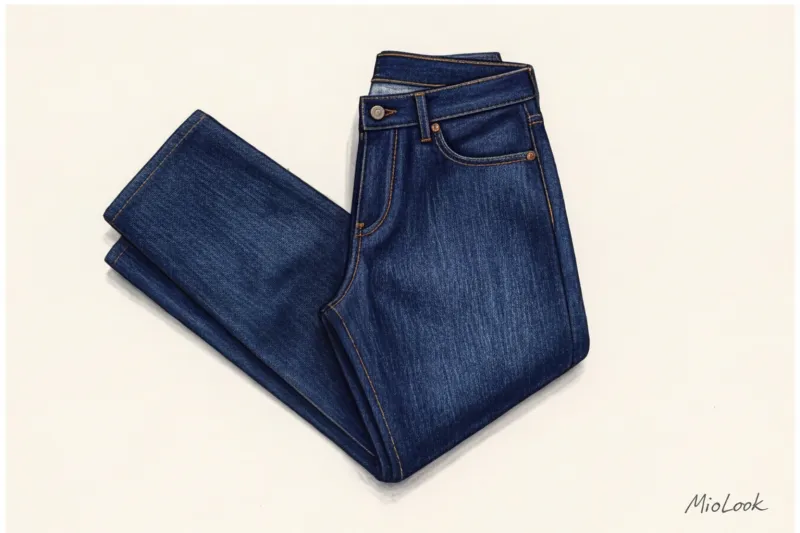
"Denim is the only fabric in your wardrobe that ages with you, adapting to your habits and lifestyle. Don't deny yourself the pleasure of wearing something that only gets better with time."
Next time you're in the fitting room, remember the Snap Test, check the inside of the seams, and don't be fooled by the deceptive comfort of thin stretch fabric. Quality jeans aren't just an expense. They're a long-term investment in your style, confidence, and personal comfort.