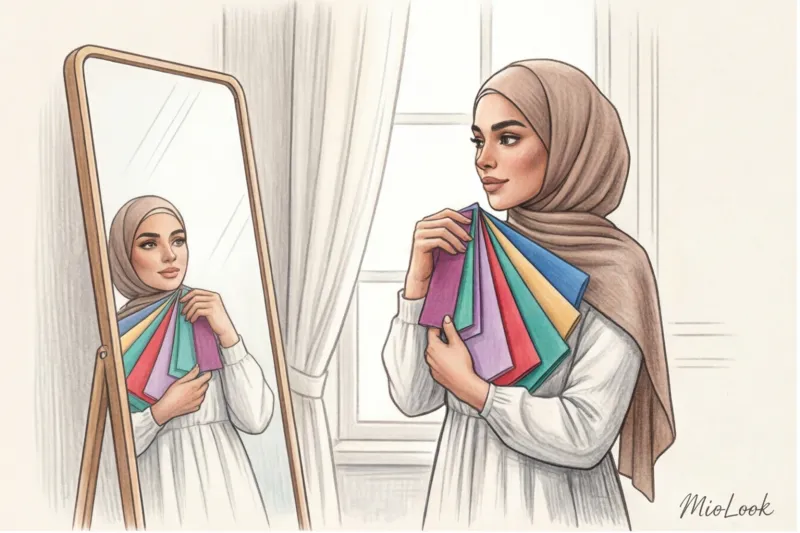
I'll start with an unpopular opinion: if you wear a hijab, you can safely close the tabs with classic color charts. Yes, those same cheat sheets with palettes for "Winter," "Spring," "Summer," and "Fall" that migrate from blog to blog. Over 14 years of working with the portrait zone and modest fashion styling, I've become convinced: the traditional system fails critically the moment you cover your head.
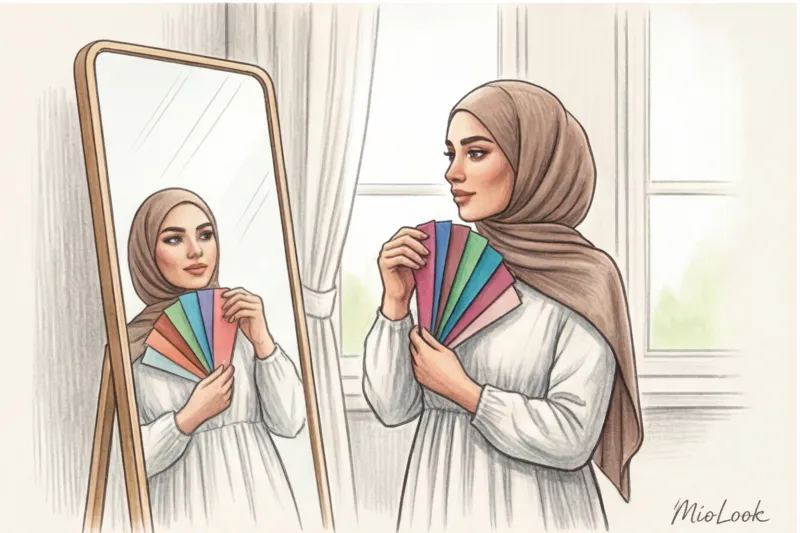
One of my clients, Aisha, considered herself a classic "Autumn" for years due to her brown eyes and slightly olive skin. She'd buy mustard, terracotta, and brick-red stoles, but she'd always complain that she looked tired and that the dark circles under her eyes were becoming more noticeable. The problem wasn't her, but an outdated algorithm. We've already covered the basic rules in more detail in our The Complete Guide to Choosing a Hijab Color: A Style Guide , but today I want to explore the physics of color on a deeper level.
Why classical color theory breaks down with hijabis
Traditional facial analysis is always a mathematical triad: skin + eyes + hair. It's the hair that creates the main contrast frame around the face. Remove the hair, hiding it under a cap, and the entire contrast geometry changes. Statistics are merciless: using the 12 seasons for covered women yields a 30-40% error. When choosing hijab color according to color type In its classic sense, you risk buying a shade that will highlight pigmentation rather than conceal it.
A color that frames the face 360 degrees and sits close to the chin is 10 times more effective than the color of a dress or blouse. It's no longer just clothing—it's an optical filter.
It's a huge misconception to think that all Eastern and Caucasian women automatically suit "warm" autumnal shades. That same Aisha with the mustard headscarves had a cool olive undertone (yes, such a thing exists). And the warm yellow pigment in the fabric literally clashed chemically with her skin.
Try MioLook for free
A smart AI stylist will select the perfect look and help you determine your palette.
Start for freeThe Hijab as a Studio Reflector: The Physics of Light and Skin Tone
If you've ever been to a professional photo shoot, you've seen photographers use reflectors. Holding a scarf over your face does the same thing: it bounces light and casts rays of color onto your skin.
According to dermatologists studying the effect of light spectra on facial perception, warm light from fabric can visually enhance yellowness and highlight spider veins if it doesn't match your natural undertone. This is where we encounter a key pitfall: the difference between overtone and undertone.
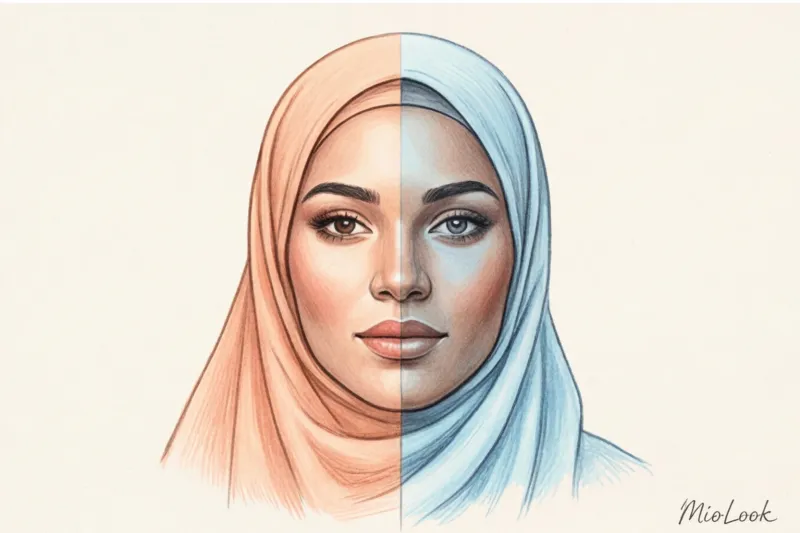
- Overton — is the surface color of the skin. It can change due to tanning, health, and diet (for example, excess carotene causes a yellowish tint).
- Undertone - this is the temperature of the shadow under the skin, which never changes.
80% of women confuse these concepts. Your skin may appear yellowish on the surface but have a completely cool, icy undertone. How can you tell? Forget the popular advice about "looking at the color of the veins on your wrist"—this method is completely ineffective for olive and dark skin, where veins always appear greenish due to superficial melanin.
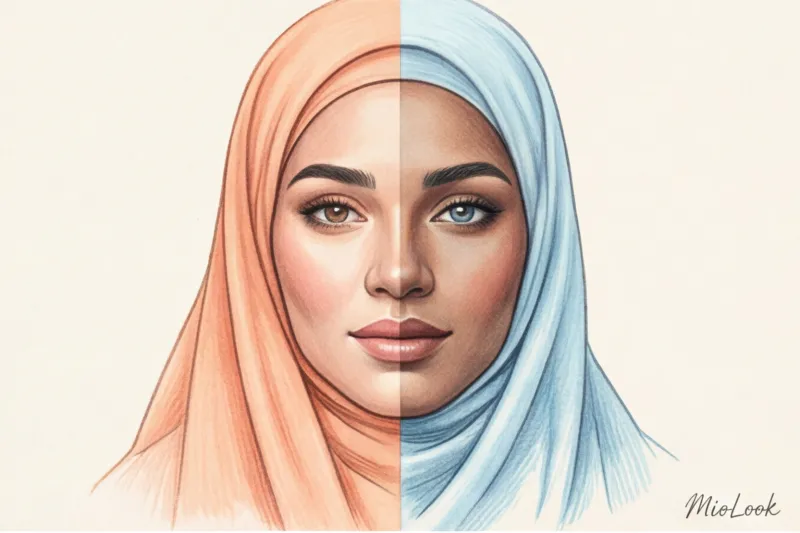
Instead, use the foil test in natural daylight. Hold a sheet of gold foil to your bare face, then a sheet of silver foil (or matte fabrics in these shades). If the silver creates a more defined facial contour and brightens the whites of your eyes, your undertone is cool. If the gold erases signs of fatigue and leaves your skin velvety smooth, your undertone is warm. If it suits you both metals, you are the lucky owner of a neutral undertone.
Hijab Color by Color Type: Creating the Perfect Basic Palette
Since the hair is hidden, we build a new, adapted system. Our focus narrows to three parameters: the white of the eye (how pure white or milky it is), the iris, and the previously identified undertone. This combination will tell you which colors will work like a "Paris" filter on Instagram, and which will add 5-7 years to your age.
And here I must debunk the biggest myth of modest fashion: black hijab is NOT a universal base. It's the most demanding and tricky color in the palette. Black absorbs light. If you have a low-contrast complexion, a black headscarf will act as a mourning frame, outlining every nasolabial fold and shadow under your eyes. Black only suits high-contrast complexions.
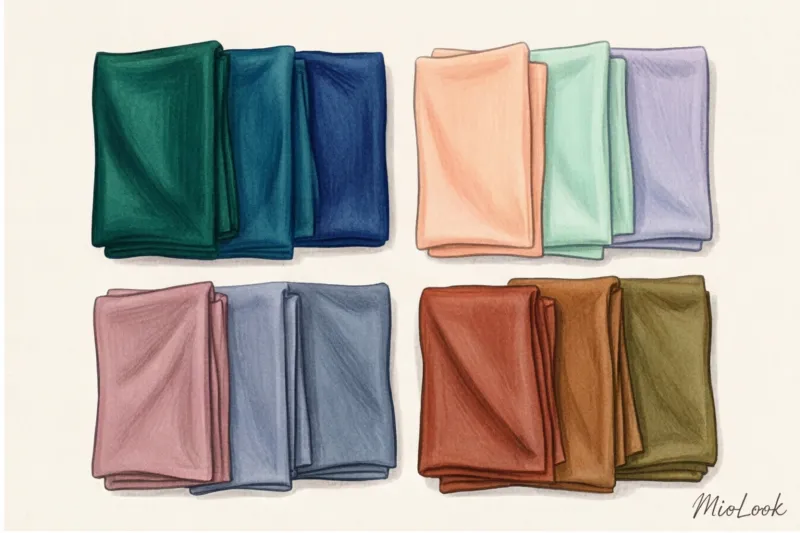
Cool Undertones (Winter and Summer): From Ice to Dusty Rose
If the foil shows that your direction is cool, the palette is divided into two branches depending on the brightness of the eyes:
- For contrasting (similar to Winter): Your best friends are deep, pure colors. Emerald, sapphire, snow-white, rich fuchsia. Deep eggplant purple will enhance the brightness of your irises. Avoid brick, orange, and warm mustard colors.
- For muted (similar to Summer): Choose colors with a touch of gray. Dusty rose pink , blue-gray, cool taupe, lavender. Your biggest mistake is neon flashes and reddish-beige tones, which will make your face look sickly pale.
Warm Undertones (Spring and Fall): Peach to Terracotta
For warm undertones, light works differently - you need gold and sun in the fabric pigments.
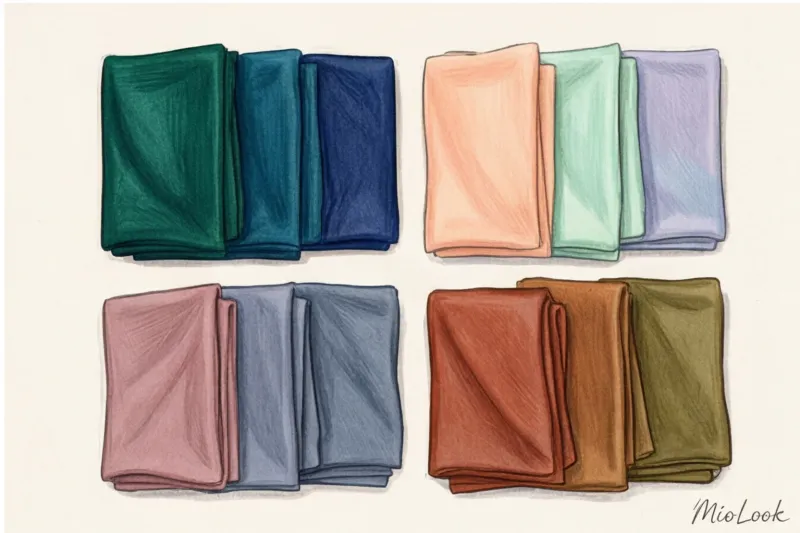
- For the bright ones (similar to Spring): Light, vibrant shades. Peach, warm lime, butter, and cream. You'll struggle with dense, muted dark colors like burgundy or graphite—they'll overwhelm your appearance.
- For deep (similar to Autumn): The whole special palette. Brown color from chocolate to caramel , olive, deep terracotta. The main enemies are icy shades and snow-white, which is best replaced with ivory.
Your perfect look starts here
Join thousands of users who look flawless every day with the MioLook AI assistant.
Start for freeIn Search of the Perfect Nude: Why Beige Doesn't Suit You
How many times have you bought a "beautiful beige hijab," brought it home, and realized it blends in with your face, turning you into a featureless blob? This is because "nude" is a concept, not a specific color. There's no such thing as a one-size-fits-all beige hijab.
Researchers at the Pantone Color Institute, who developed the Pantone SkinTone Guide (the official reference of 110 human skin tones), have proven that the base color adjacent to the face must adhere to a strict formula. It should be exactly 1-2 shades darker or lighter than your skin, but at the same time exactly repeat its undertone.
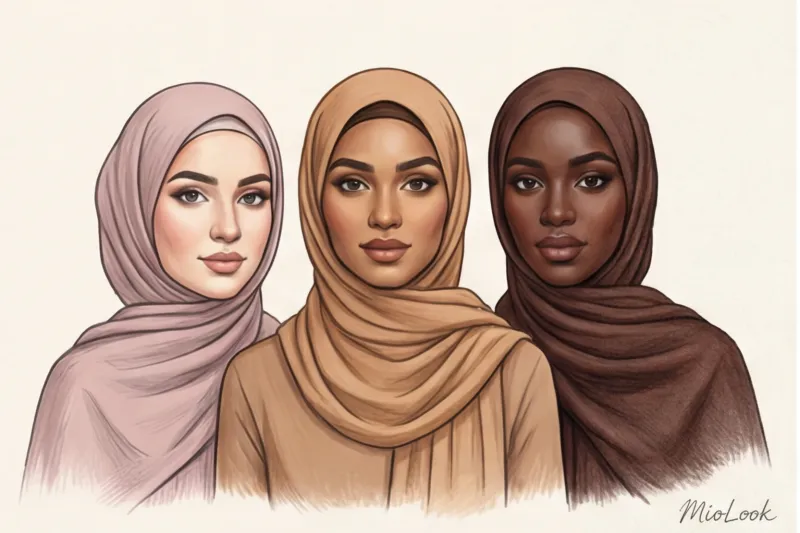
- If you have a cool undertone: Look for taupe (grey-brown, the color of cocoa with milk). Classic reddish beige will make you look sickly.
- If you have a warm undertone: Your nude is camel, caramel, sand.
- If neutral: Choose balanced creamy shades without obvious gray or red tint.
In the appendix MioLook We've taken this factor into account. Algorithms help digitize your palette and select the perfect base shades, eliminating the risk of buying another "dead" beige scarf.
The Texture Trap: How Fabric Changes Color Near Your Face
You've found your perfect emerald green according to all the rules, buy a silk scarf, put it on, and... it makes you look older. Welcome to the texture trap. The physics of fabric are such that the same dye on chiffon, matte jersey, and smooth silk can produce a difference of up to two tones in perception.
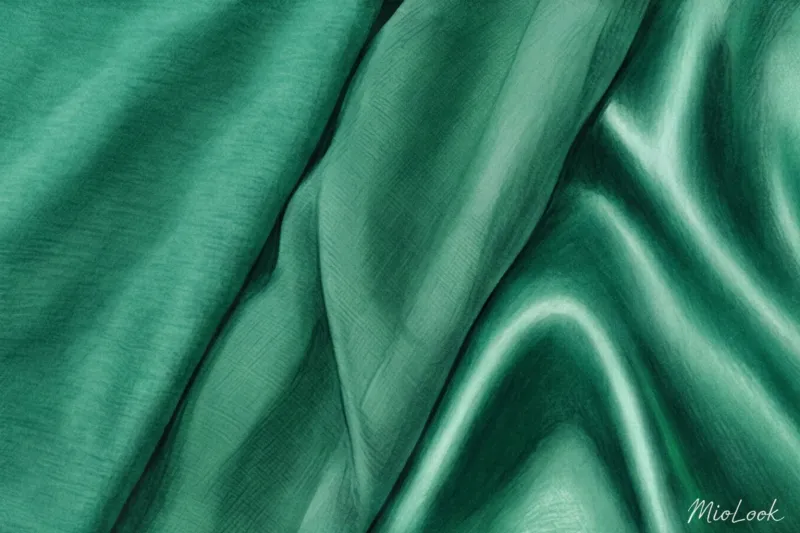
Glossy fabrics (silk, satin, satin) act like mirrors. They dramatically enhance color contrast and, unfortunately, mercilessly highlight skin imperfections: enlarged pores, acne, fine lines. Gloss requires a flawless complexion.
Matte fabrics (cotton with a weight of 180 g/m² or more, crepe, viscose jersey) absorb light. They make any shade, even the brightest, more muted and safe for everyday wear. They are forgiving of a lack of makeup and a slight lack of sleep.
Professional stylist secret: If you absolutely love a color but realize it clashes slightly with your undertone, buy it in a translucent texture—for example, in fine chiffon. When the fabric is translucent, your own skin (especially on the neck) shows through, which automatically reduces the clash and makes the alien shade blend in with your appearance.
MioLook Checklist: Testing Color Before Buying
Never test new hijab shades in a mall fitting room. The lamps there have a low color rendering index (CRI) and distort the undertone by 30%. What seemed like a refined taupe in the store will turn into a dirty gray-green in daylight at home.
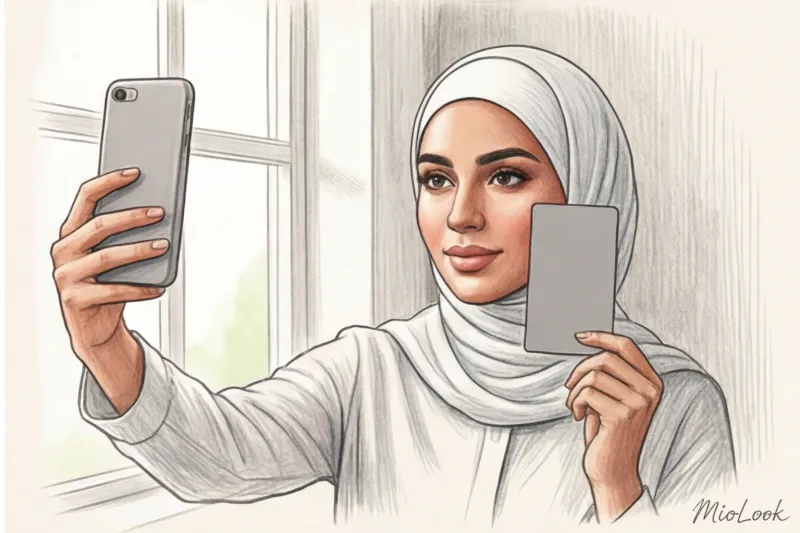
To assemble a functional capsule of scarves, use this short algorithm:
- Window Rule: Check the color only in indirect daylight. Go to a window (but not direct sunlight)—this is the only true light for your skin.
- Drapery Rule: It's not enough to simply place a folded scarf against your neck or chest. You should wrap the fabric around the contours of your face, simulating how you'll wear it. Only then will you see the true reflective effect on your cheeks and chin.
- Analysis in statics: Take a selfie by the window in a color you think is flattering. Our perception of what we see in the mirror is often subjective. Assessing clothing color from photos helps to abstract and see the real picture.
The color of your hijab isn't just a fashion statement; it's a tool for managing the impression and architecture of your face. Don't try to squeeze yourself into the "spring" and "fall" styles when those styles were originally written for girls with loose hair. Explore your undertone, find the right highlighter, and remember: the perfect headscarf is one that makes you feel like you don't need to apply concealer.