Remember that feeling when you take out your favorite jacket after winter, only to see the collar treacherously crumble into tiny black flakes? Or that disappointment when your new stylish leather jacket feels like a portable sauna even at 15 degrees Celsius? In my 14 years as a personal stylist, I've seen hundreds of ruined garments and disappointed clients who fell victim to marketing ploys.
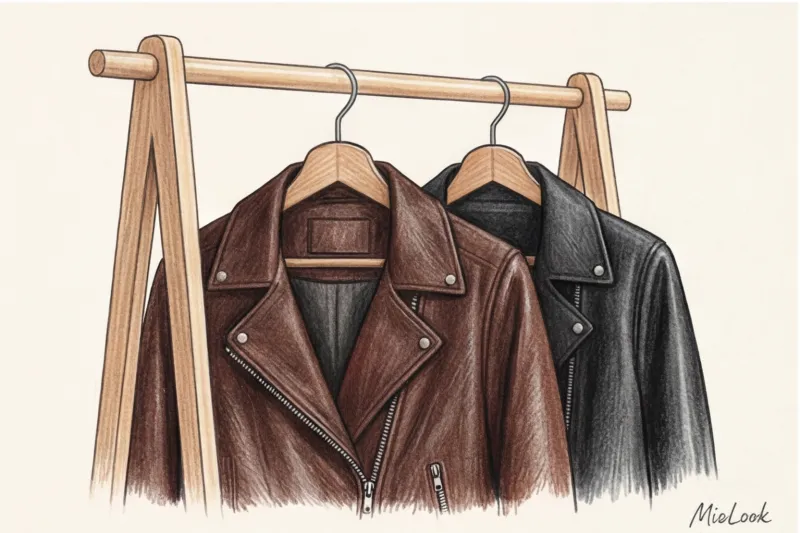
Let's be honest. Choosing outerwear is always an investment, even if you buy it from a mass-market store. Many people are puzzled: Faux leather or genuine leather, which is better for a jacket? In volatile urban weather? This choice is usually simply reduced to budget or ethical considerations. But in practice, it's much more complex. The design of the cut, how the material ages, and even how your clothes react to your favorite perfume—all play a decisive role.
Today, we'll explore this issue not as theorists, but as practitioners. We've already covered more details on how to extend the life of your favorite items in our a complete guide to caring for leather items Now let's focus on the choice aspect. I'll show you a formula that has saved my clients tens of thousands of euro: classics always demand naturalness, while cutting-edge trends forgive artificial materials.
Faux leather or genuine leather: which is better for a jacket and what's the real difference?
First, let's take off our rose-colored marketing glasses. The prefix "eco" sounds noble, but in 90% of cases, it conceals ordinary polyurethane (PU) or polyvinyl chloride (PVC) applied to a fabric base. Yes, plant-based alternatives exist today, but they remain the preserve of niche brands. What awaits you on the shelves of shopping centers is plastic.
Genuine leather is historically and unconsciously read by us as a marker status wardrobe Our brains are incredible scanners. Even if we're not fashion-savvy, we intuitively distinguish between a vibrant texture and flat synthetics. The depth of color, the subtle squeak of movement, the natural creases—all of this sends a signal of quality and solidity to others.
Cheap faux leather always gives away its feel. It's either too rubbery, creaky, and catches your fingers, or, conversely, has an unnaturally smooth, slippery surface. High-quality polyurethane has come a long way, but it still can't replicate the natural material's main superpower—breathing.
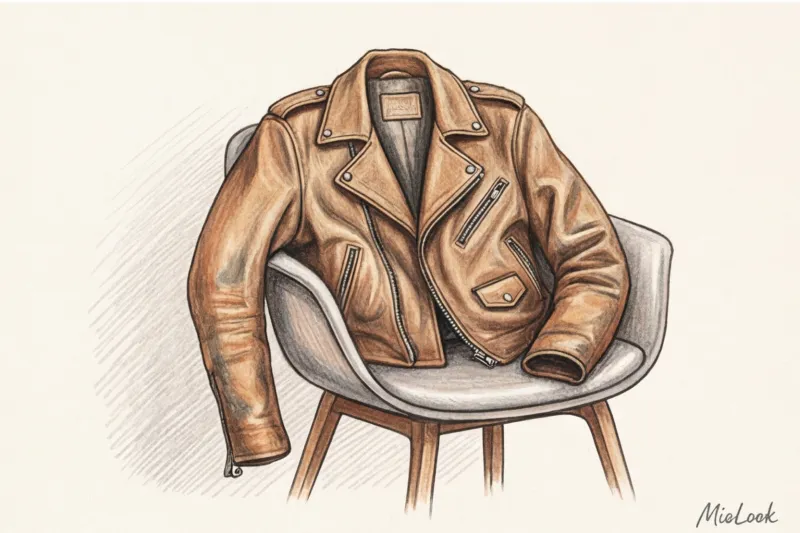
The Anatomy of Genuine Leather: An Investment in Status
When you buy genuine leather, you're buying a living material. But it also comes in different varieties. Two types are most commonly used for jackets:
- Sheepskin: Incredibly soft, lightweight, and flexible, it fits perfectly from day one, but requires careful handling as it's more susceptible to scratches.
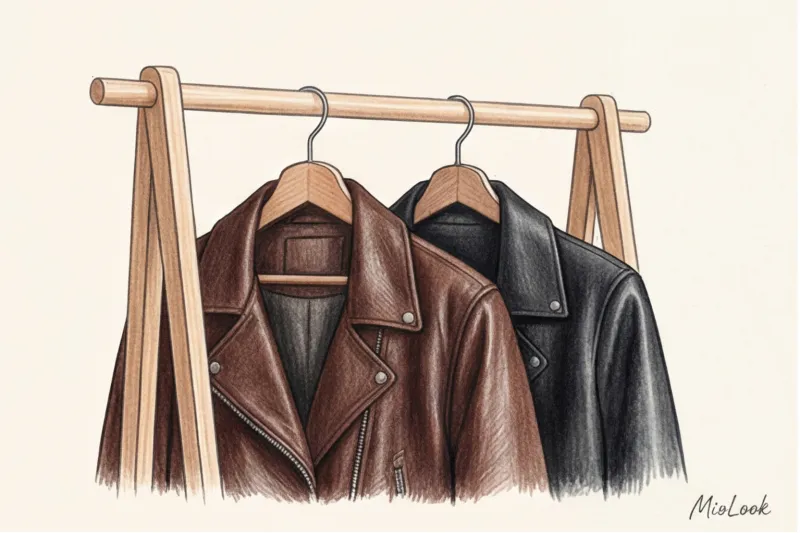
- Calfskin: Thick, tough, and indestructible. True biker jackets are made from this material. It may feel like armor at first, but over time it breaks in, molding to your body.
According to leather institutes (in particular, the Leather Working Group), high-quality calfskin can absorb up to 30% of its own weight in moisture while remaining dry to the touch. That's why such a jacket will keep you comfortable on a cool summer evening and warm in early fall. Pay attention to measure — a natural surface pattern. Slight irregularities, microscopic scars, or differences in texture between different parts are not defects. They are a quality certificate, proving that you are not dealing with a stamped product.
The Truth About Eco-Leather: From Polyurethane to Plant-Based Innovations
I'm not against artificial materials when used wisely. The fashion industry is rapidly changing. Today, you can see jackets made from apple pomace, cactus leather (Desserto), or innovative mushroom mycelium (Mylo) on the catwalk. These are truly exciting technologies of the future.
But let's get back to reality. The stuff you find hanging in mass-market stores for $50-$100 is made from petrochemicals. It has its advantages. Faux leather is incredibly lightweight. It's completely impervious to heavy rain (unlike porous genuine leather, which can stain). And finally, it allows you to create items in crazy, neon shades without complex and expensive chemical dyeing.
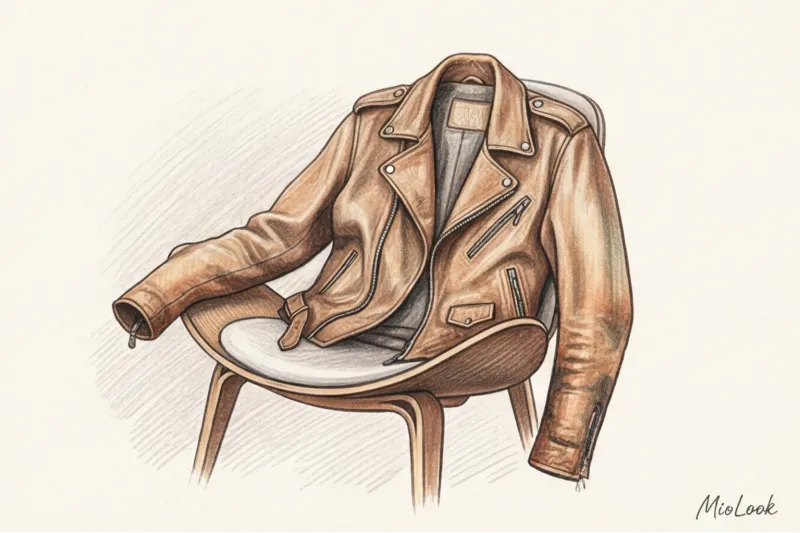
Your perfect wardrobe starts here
Need help pairing your new leather jacket? Let AI help you. Upload your items to our smart wardrobe, and we'll curate dozens of stylish everyday looks for you.
Start for freeHow Materials Behave in Real Life: My Experience as a Stylist
Let's put theory aside and consider what happens to jackets in the harsh conditions of a big city. The main problem with polyurethane is temperature. Cheap faux leather has a limit: at temperatures below -10-15 degrees Celsius, it literally stiffens in the cold. If you bend your arm, the material can split at the seam. In a warm room, however, it creates a greenhouse effect.
"A quality calfskin leather biker jacket is something you can pass down as an heirloom. It doesn't wear out, it develops a patina. The worn elbows and seams only add texture and value."
But the most insidious enemy of faux leather is our own body chemistry and perfume. A couple of years ago, my client Anna bought a stunning, trendy jacket from a mass-market brand. She loved spraying her favorite perfume on the neck. After just one season (about three months of active wear), the jacket's collar began peeling and bubbling. The alcohol in the perfume, combined with sebum from the skin, reacted chemically with the polyurethane, completely dissolving the outer film. The item had to be thrown out. Genuine leather reacts well to this kind of treatment.

The Eco-Friendly Myth: What's Really Worse for the Planet?
This brings us to the industry's most controversial insight. Many believe that by purchasing an item with an "eco" label, they are saving the planet. This is a profound misconception. According to a major 2023 report by Textile Exchange, polyurethane is one of the main sources of microplastics in the oceans.

The average lifespan of a jacket made of mass-market faux leather is 1-3 years, after which it loses its marketable appearance. A jacket made of good genuine leather lasts 10, 15, or even 20 years. The math is simple: buying five plastic jackets over a decade, which will take hundreds of years to decompose in a landfill, causes colossal damage to the environment.
A McKinsey study (2024) confirms that the future belongs to circular fashion. If you're truly concerned about ethics and ecology, buy a vintage leather jacket. You won't create demand for new production, you won't add plastic to landfills, and you'll get a piece with incredible energy and quality tailoring that's hard to find at a reasonable price.
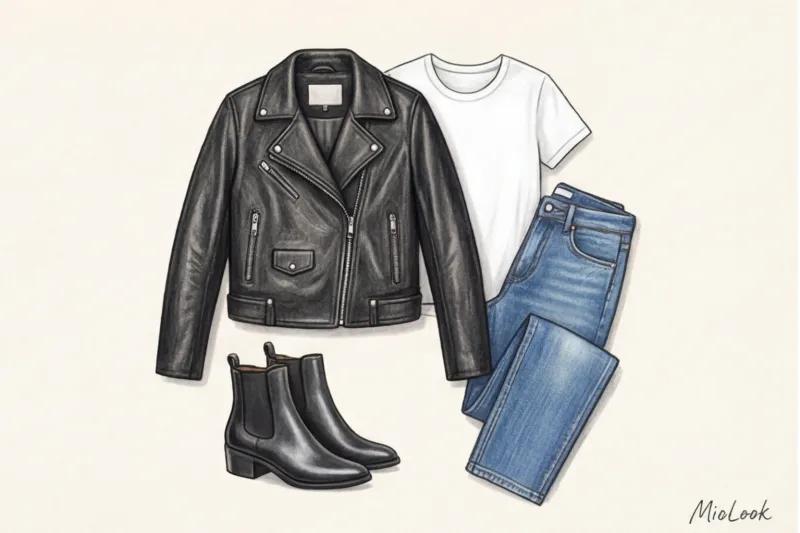
Stylist's secret: choose a style to match the material
The material dictates the shape. This is a basic styling rule that 90% of shoppers forget. Different fabrics hold the shape of a garment differently. Here's my cheat sheet for choosing:
- Basic biker jacket or classic straight jacket: Genuine leather only. These items should fit like a glove, gently hugging the shoulders. Synthetics will instantly reveal their cheapness.
- Ultra-oversized bombers, Matrix-style coats, and statement neon jackets: Here, eco-leather is a clear winner. Firstly, such items are bought for one or two seasons while the trend is alive—there's no point in investing hundreds of dollars in them. Secondly, PU holds its rigid, exaggerated shape very well.
But be careful if you're petite. Stiff faux leather tends to "stiffen." On shorter women, dense faux leather often doesn't drape into soft folds, but instead bulges, creating a cardboard box effect that visually adds extra pounds.
Not sure if this style is right for you?
Upload your photo to MioLook. Our AI stylist will analyze your figure and suggest which jacket style will best highlight your best features.
Choose an image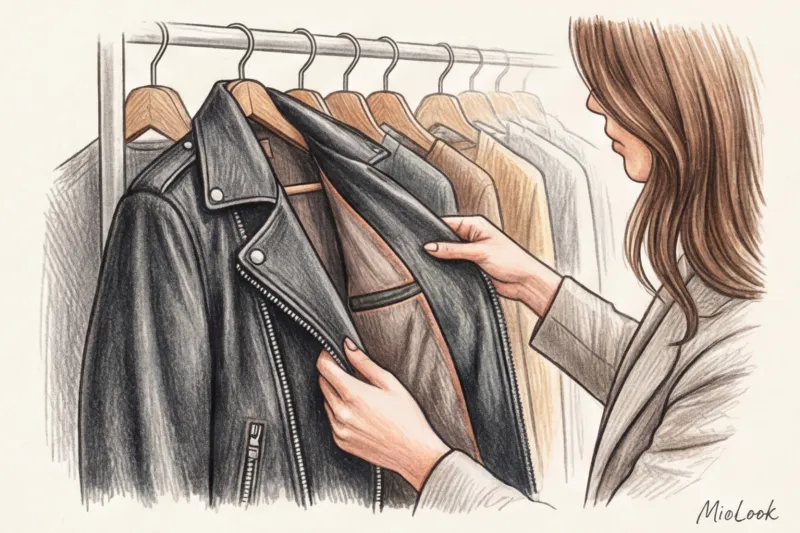
Checklist: How to check the quality of a jacket before buying
Imagine you're standing in a fitting room. How do you know if something is worth the money? Over the years of shopping experience, I've developed a quick, four-step process:
- Heat exchange test. Place your palm on the material for 10-15 seconds. Genuine leather will quickly absorb your body heat and become warm. Faux leather will remain cool or simply damp from your hand.
- Study the sections. Find a place where the edge of the material is visible (usually on the inside seams of pockets or near a zipper). Genuine leather has an open, fuzzy edge, reminiscent of suede. Faux leather always has folded and sealed edges, or the fabric backing (threads) are visible at the edge.
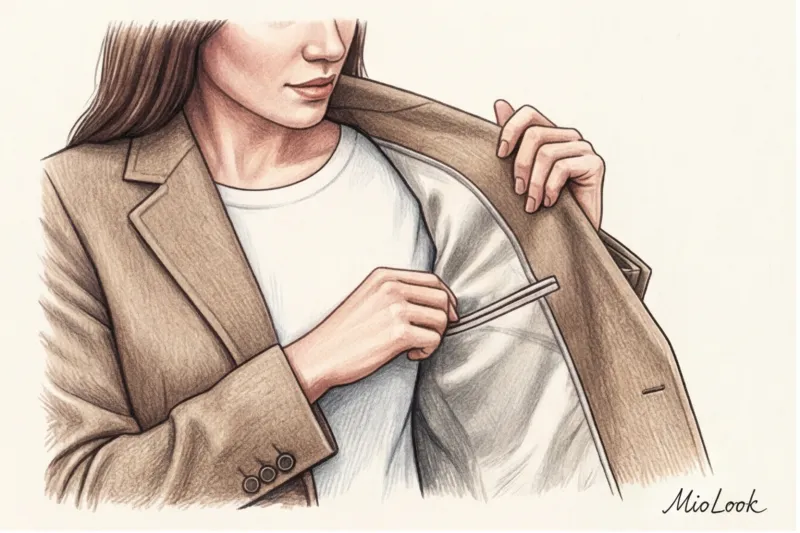
- Inspect the lining. No self-respecting manufacturer would stuff a $500 leather jacket with glass-like polyester that would make you sweat. Look for viscose, cupro, or cotton (at least a cotton blend) in the lining.
- Checking the fittings. Hardware is the star of a garment. Zippers should move perfectly smoothly, and the pulls should be substantial and metallic, without the cheap sheen of samovar gold.
Summary: Which Jacket Should You Buy?
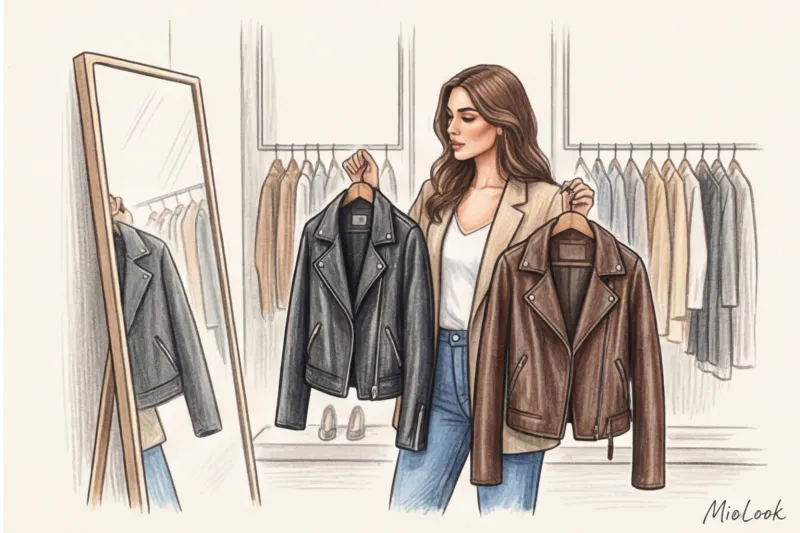
So what's the bottom line: Faux leather or genuine leather, which is better for a jacket? Is this right for you? If you're building a functional basic wardrobe, prefer smart casual, and want something that will last for decades, invest in genuine leather or search for gems in vintage stores. This investment will pay off a hundredfold.
If you're a vegan by conviction, love experimenting with fast trends, frequently change your style, or are on a tight budget right now, high-quality faux leather is a great option. Just remember its limitations in cold weather and keep it away from perfume.
And my final piece of advice as a stylist: if your budget is extremely tight, don't buy cheap imitation leather that will look dull within a month. For the same price, invest in a luxurious, heavy-duty denim jacket or a high-quality cotton trench coat. Style isn't about materials, it's about appropriateness and quality craftsmanship.