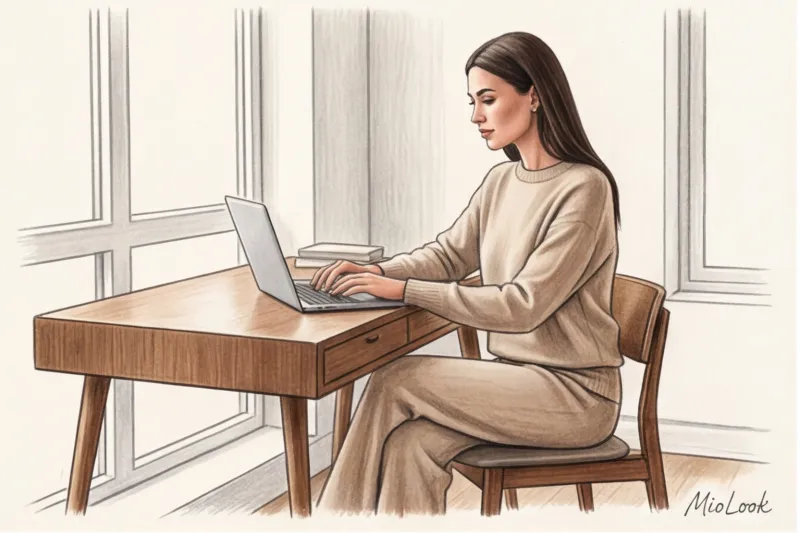
It's a familiar scene: five minutes before your morning call, you throw on a decent jacket right over a washed-out pajama top or old leggings, hoping the camera won't reveal your true state. You sit down at your laptop, but for some reason your thoughts are jumbled, your posture is shaky, and your voice sounds unsteady. The problem isn't a lack of coffee. The problem is that your brain refuses to function in sleepwear.
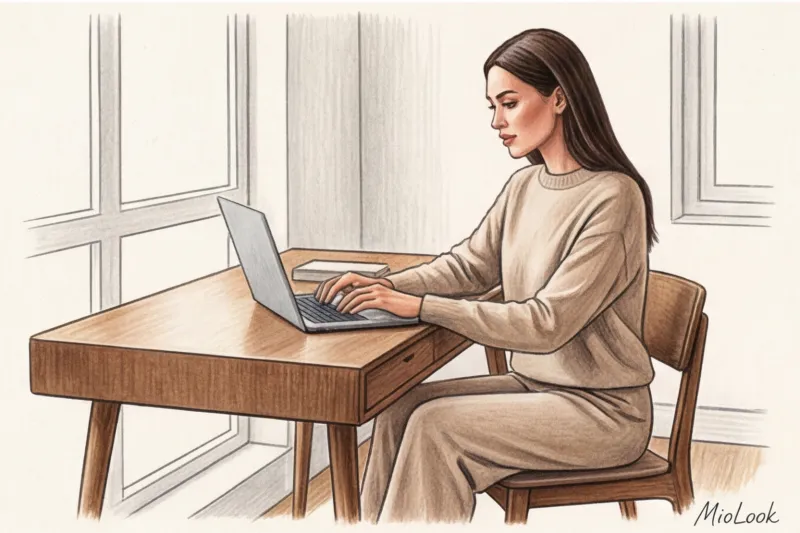
High quality clothes for working from home It's not just a matter of aesthetics. It's the most powerful and subtle tool for managing your productivity. We've covered the fundamental importance of such self-investment in more detail in our The Complete Guide to Women's Loungewear: Aesthetics and Self-Love Today, we'll explore the math and neuroscience of a remote work wardrobe.
Why Old T-Shirts Are Killing Your Productivity: The Neuroscience of Style
Clothes speak not only to others, but also to your subconscious. In 2012, researchers at Northwestern University (Hajo Adam and Adam Galinsky) proved the existence of the phenomenon. Enclothed Cognition (embodied cognition). In an experiment, people wearing a white doctor's lab coat demonstrated a sharp increase in attention span compared to those wearing regular clothing.
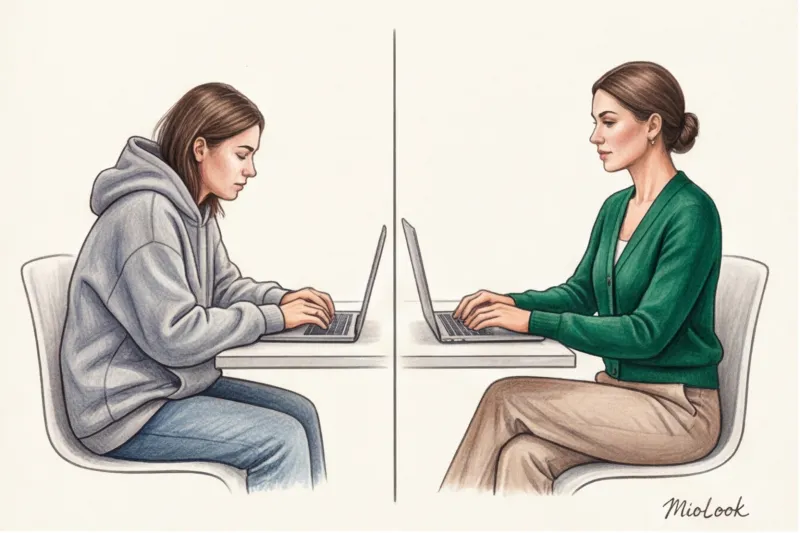
What happens when you work in stretched-out sweatpants or a faded T-shirt you're too sad to throw away? You're sending your brain a very clear signal: we're either sick, about to do a deep cleaning, or getting ready for bed. None of these scenarios are conducive to solving complex strategic problems.
Stanford University's reports on remote work productivity confirm that the lack of a morning dressing routine reduces your ability to focus. Changing from leisure clothes to work clothes (even while staying in your apartment) creates a psychological boundary between personal and professional time.
Your perfect look starts here
Join thousands of users who look flawless every day with the help of smart wardrobe analysis.
Get access — €0.99 once'Soft Tailoring': Ideal Work-from-Home Clothing
Forget the clichéd advice of "just wear a suit at home." Sitting at the kitchen island for eight hours in a stiff jacket and pleated trousers is a form of torture that will only lead to irritation. The solution lies in the concept. Soft Tailoring (soft tailoring).
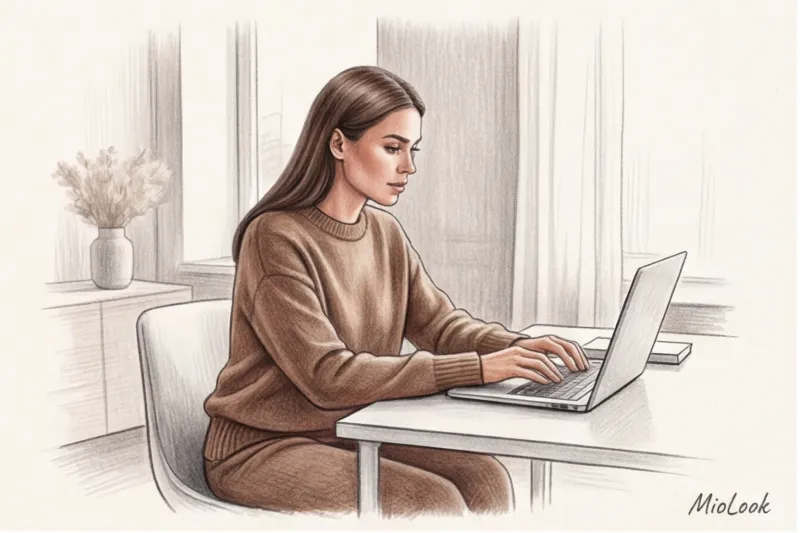
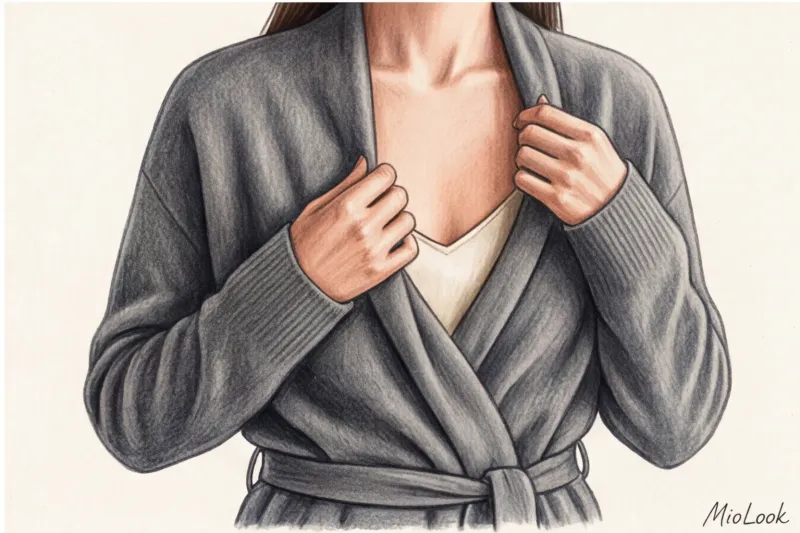
Soft tailoring is the perfect balance between office aesthetics and home comfort. We avoid rigid structures, bonded interlinings, and corset-like inserts, while maintaining structured lines through dense, shape-retaining knits.
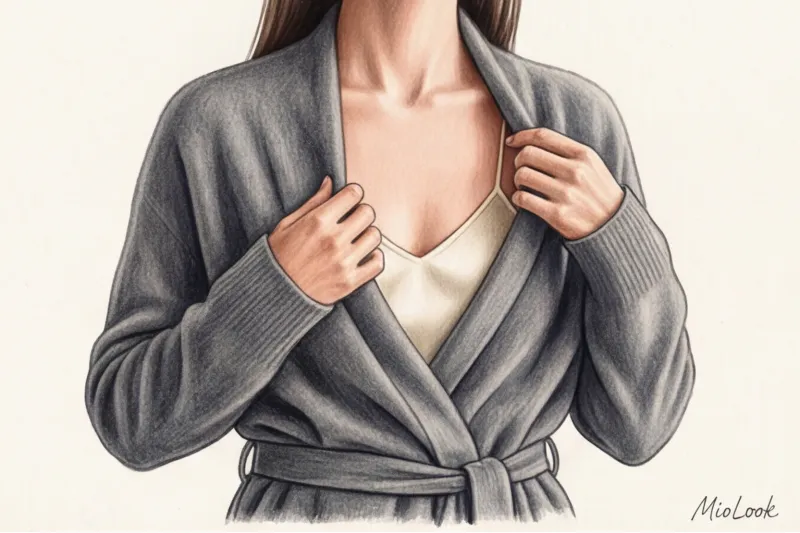
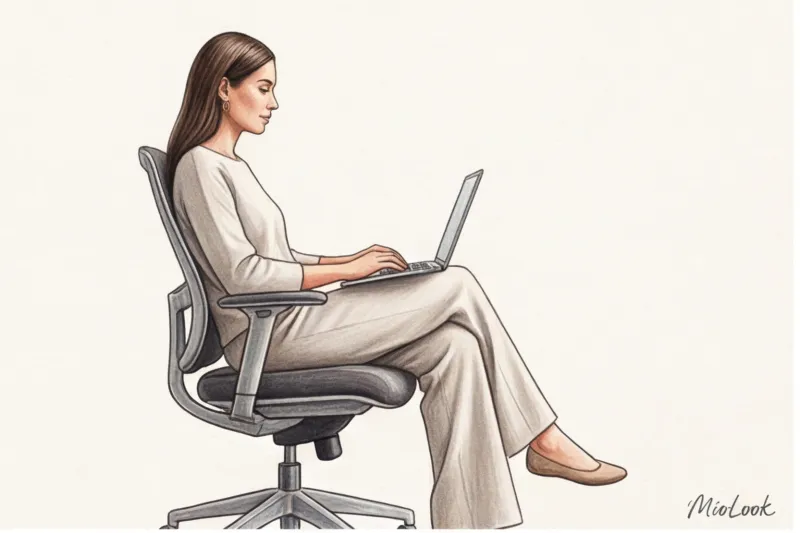
Over 12 years of working as a stylist, I've noticed one pattern: as soon as a client switches from loose, thin knitwear to a thicker one with a well-defined shoulder seam, her back automatically straightens. And proper posture directly affects the way your voice sounds during online conversations—it becomes deeper and more confident.
The Author's 'Belt Rule': The Main Secret to Composure
When choosing home capsules, I always use my 'Belt Rule.' It goes like this: If a garment is held at the waist only by a dangling drawstring, it puts the brain into rest mode.
Why is this so? A tactile sense of our own body's boundaries helps us avoid "splaying out" on our desk chair. The ideal option for home wear is palazzo pants made of thick viscose or merino wool with a wide, flat, built-in elastic waistband (4 to 6 cm wide). They don't put pressure on your stomach when sitting, but provide a subtle supportive effect that keeps you in shape.
Capsule wardrobe for remote work: building a working base
To avoid wasting your morning time choosing clothes, create a separate micro-capsule just for working from home. The basic formula is: 2 bottoms + 4 tops + 1 cardigan or cape.
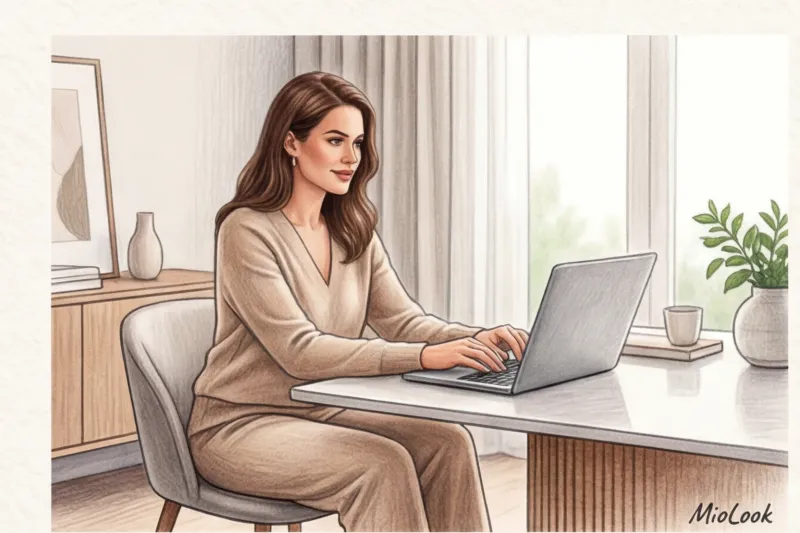
Remote work is the era of the portrait zone. 80% of the time, colleagues only see your shoulders and face. Therefore, the focus when shopping should shift to necklines and collars.
Choose a V-neck (which visually elongates the neck) or an elegant boat neck. Avoid plunging necklines or turtlenecks, which often look like a head lying on a table on a webcam.
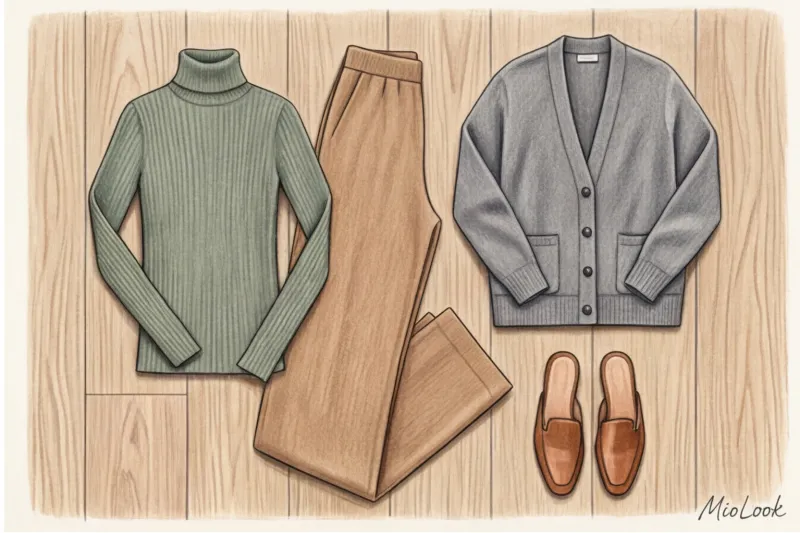
Pay special attention to color. Many people like to wear black at home for practical reasons. But laptop cameras wash out shadows, turning black clothes into a flat, shapeless blob that highlights dark circles under the eyes. Instead, choose sophisticated, refined shades: camel, sage, dusty rose, milky, or deep chocolate. Brands like COS and Massimo Dutti do a great job of embracing this palette in their knitwear lines.
Fabrics That Work for You: The Mathematics of Investment
Buying premium loungewear often evokes psychological resistance. Why spend big money on something no one will see? The answer lies in the cost-per-wear metric.
Let's do the math. You buy a stunning merino wool lounge suit for €300. You wear it at least three times a week (about 150 times a year). The cost per wear is €2. Now think about that stunning silk slip dress for the same €300 that you wore to a corporate event and a friend's wedding (€150 per wear). Clearly, expensive loungewear is the most cost-effective investment in your closet.
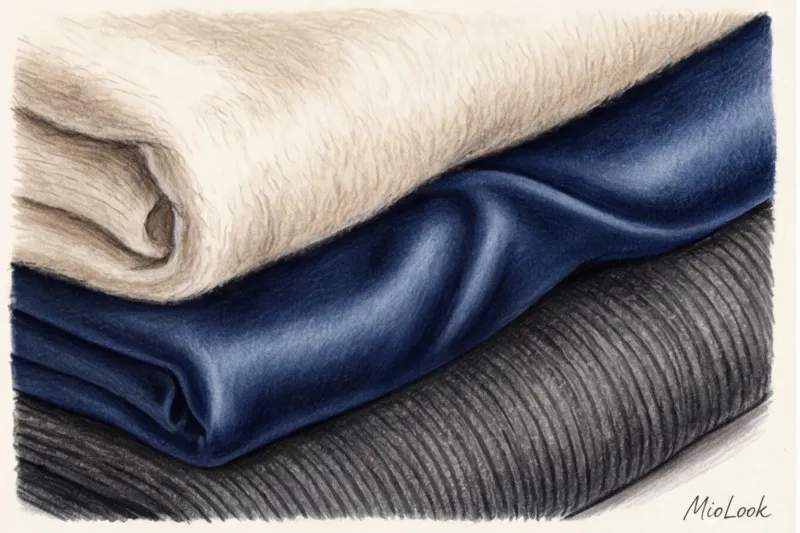
What's really worth paying for?
- Cashmere and merino wool: Absolute champions. Choose a tightly knit, long-fibered fabric to prevent pilling after a month.
- Premium modal and cupra: They breathe better than cotton, drape beautifully, and don't wrinkle.
- Thick silk: Ideal for shirts you wear on video calls.
What you absolutely should avoid at home is polyester. When you're sedentary, synthetics disrupt your body's thermoregulation, create a "greenhouse effect," and cause discomfort, which you'll unconsciously convey to others through your facial expressions.
Ready to overhaul your wardrobe?
Digitize your belongings and create stylish home capsules in one click.
Get access — €0.99 onceThe 'Zoom Look' Myth: Why Wearing a Jacket with Sweatpants Is a Bad Idea
The pandemic has given us a fun but extremely destructive trend: the 'Zoom-mullet' (business on top, party on the bottom). The idea of wearing a formal blouse and jacket while wearing flannel pajama pants seems like a great life hack. In practice, it's a disaster.
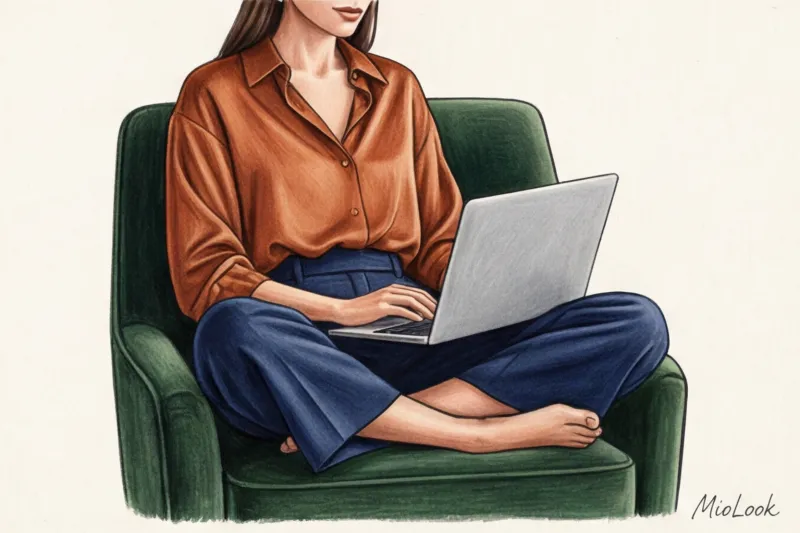
One of my clients, a project manager, nearly ruined an important investment negotiation. She wore a formal jacket on top and pink Mickey Mouse shorts underneath. Halfway through the presentation, she had to get up to close the window. Realizing she couldn't do it without risking being seen, she panicked, lost her train of thought, and lost control of the conversation. But even if you don't have to get up, the cognitive dissonance between a formal top and a relaxed bottom increases underlying anxiety.
What to wear instead of a jacket in a photo shoot? Choose thick viscose polo shirts, structured chunky knit cardigans (but not too bulky), or silk shirt-style blouses. They look professional but won't clash with a casual setting.
Accessories and Shoes: Classy Work-from-Home Attire
Shoes are a powerful psychological anchor for your work ethic. Working barefoot or in fluffy, cat-like slippers is a voluntarily compromising attitude.
European aristocrats have long since come up with a solution. Remember the Italians? friulane shoes — velvet shoes with soft rubber soles, which Venetian gondoliers wore to avoid damaging the paint on their boats, and which nobles adopted as luxurious house shoes.
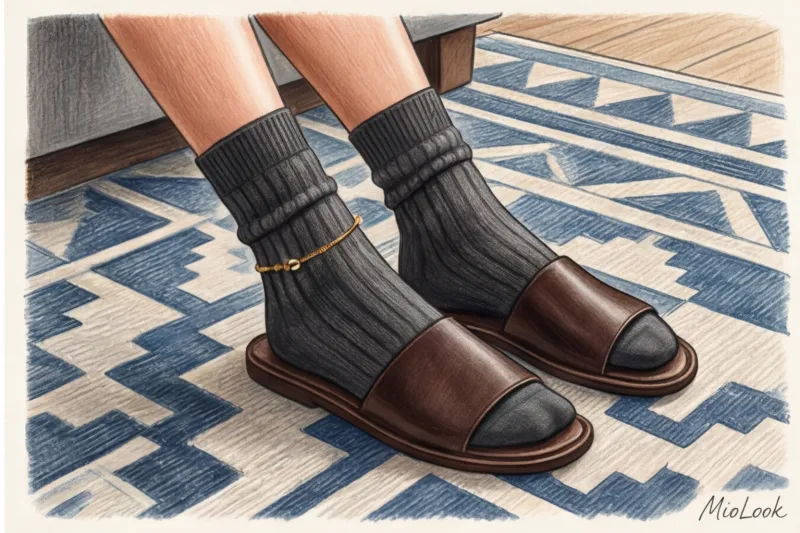
Flat leather mules, soft suede loafers (for home use only), or minimalist slip-ons are great alternatives. Complete the look with simple jewelry: pearl studs, a thin chain, or a sleek ring. They won't interfere with typing but will create a polished look that says: I got ready for this day.
Checklist: An Audit of Your Current Home Wardrobe
Theory is useless without practice. This very evening, I suggest you conduct an audit of your home shelves. The virtual closet feature in MioLook app , where you will clearly see your 'blind spots'.
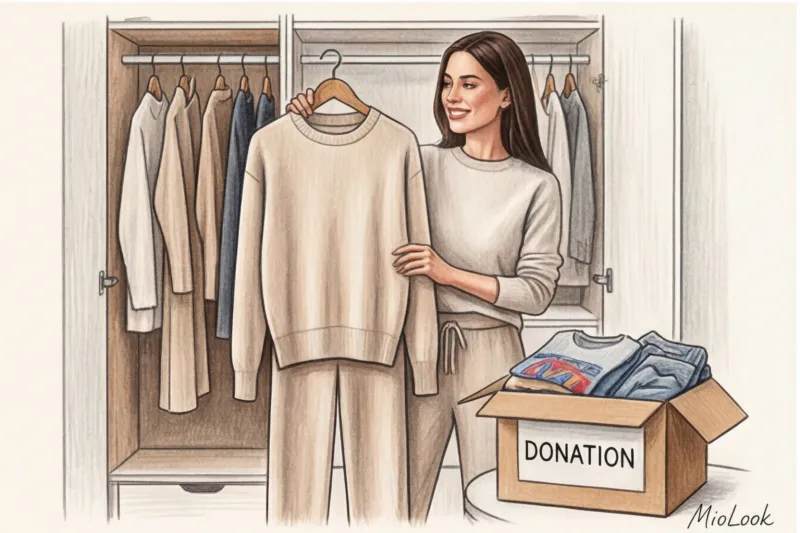
How to declutter properly?
- Courier test. Take out the item and answer honestly: "Would I open the door to a nice neighbor, a delivery guy, or a surprise guest wearing this?" If the answer is "no, I'd run and change," it's time to recycle.
- A merciless farewell. Throw away (or recycle at H&M) anything with stains, pilling, stretched knees, or faded prints.
- No demotions. Stop relegating items that have lost their shape outside to the 'indoor' category. Your home is not a graveyard for old clothes.
To be fair, this carefully curated capsule approach isn't necessary for artists, sculptors, or handicraft makers, where clothing is a consumable item inevitably subject to paint or glue. But if your toolbox is communication, strategy, text, or code, then clothing becomes your uniform, even when no one's watching.
Self-respect begins with how we look in private. And paradoxically, it's this quiet, private elegance that directly translates into confidence and financial success when working remotely.