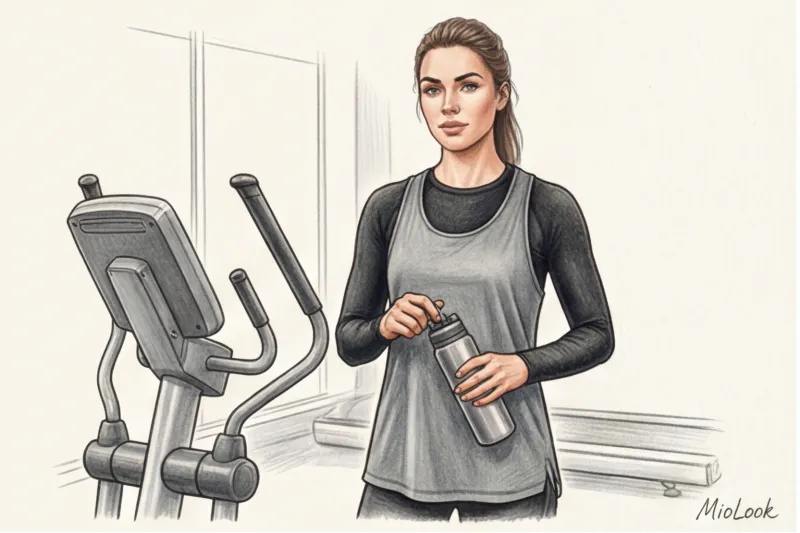
Do you know what style advice most often causes confusion among my clients who prefer modest fashion To look as covered and modest as possible during an intense workout, you first need to wear something completely tight. It sounds counterintuitive, but this counterintuitive principle is the foundation of a modern, technologically advanced, and safe fitness wardrobe.
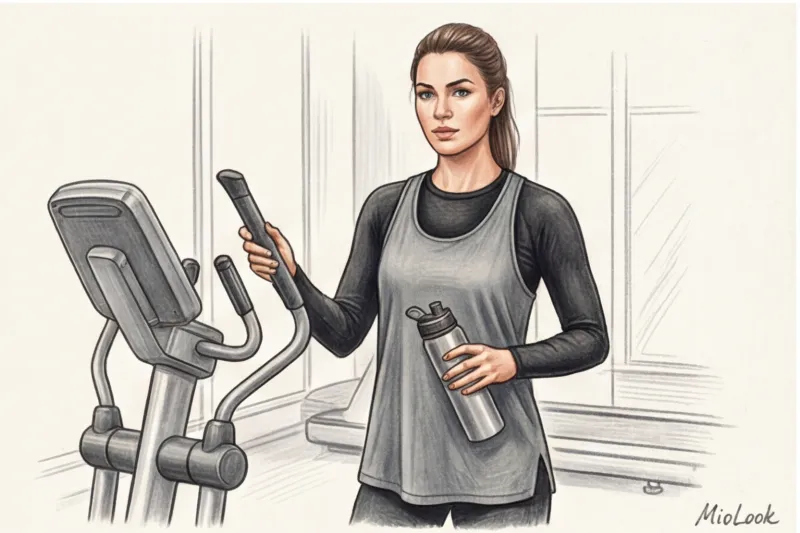
Modesty in the gym is no longer measured in meters of fabric. It's achieved through a well-designed layering system, with the right compression base layer serving as the foundation. We discussed the evolution of closed-loop workout attire in more detail in our The complete guide to sportswear for Muslim women In this article, we will focus on the main element of this architecture—the rashguard.
Hidden Base: Why a Women's Fitness Rashguard Is the Foundation of a Modest Look
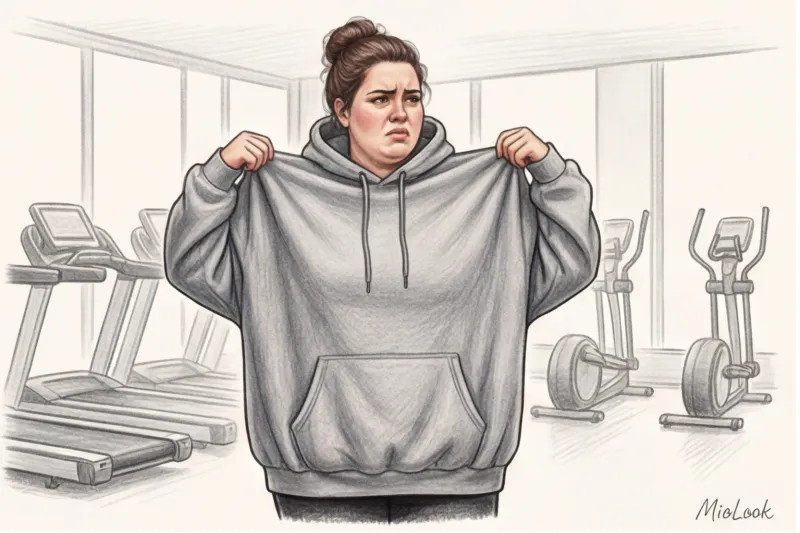
In my experience, the lion's share of discomfort in the gym arises from the wrong first layer of clothing. One of my clients tried to work out in a regular thick cotton turtleneck under a bulky sweatshirt. The result? Overheating after 15 minutes on the elliptical, a wet and cold back as she cooled down, and constant tugging at the ridden-up hem.
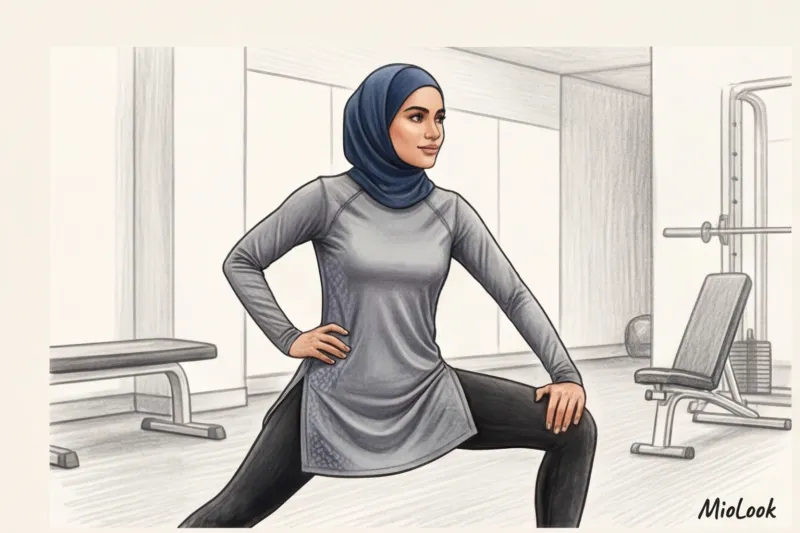
The solution was a high-quality, full-body women's fitness rashguard. In the context of modest fashion, we view it not as a standalone top (like the kind worn during CrossFit or MMA), but purely as high-tech underwear. It's your second skin, taking care of all the technical work: wicking away sweat, protecting against drafts, and, most importantly, ensuring that not a single millimeter of skin is exposed during complex, high-range movements.
I always recommend starting your sports capsule digitization with the base layer. When you add your items to MioLook , the algorithm will immediately show how one high-quality black rashguard can work in conjunction with five different top layers, eliminating the need to buy dozens of closed tracksuits.
The Compression Paradox: Why Does a Shy Woman Need Tight Clothing?
The main stereotype I have to fight is that modest fashion supposedly rejects tightness in principle. This is only true for external layer. For a base layer, fit is a matter of safety and functionality.
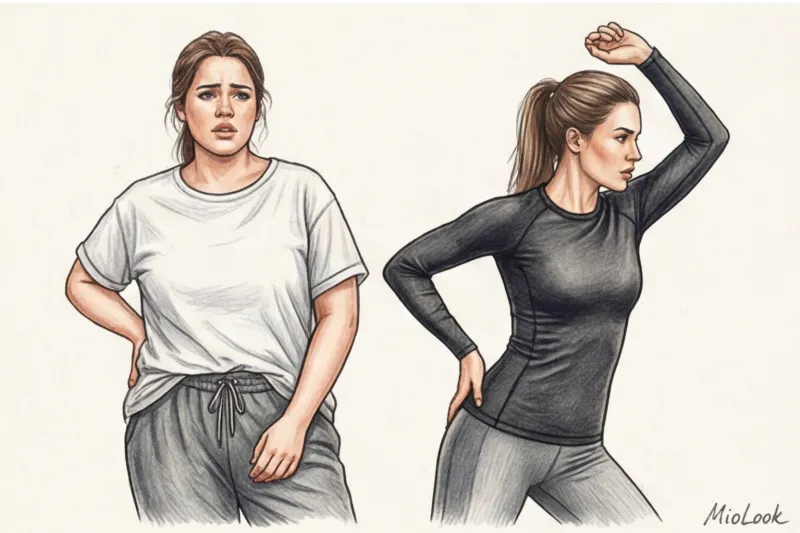
According to a study published in Journal of Sports Sciences (2023) High-quality compression clothing reduces muscle fatigue by 12% by improving blood microcirculation. But for us, another property is more important: support. When doing burpees, barbell curls, or downward dog poses, loose clothing inevitably slips down, exposing the lower back, abdomen, and forearms. Compression fabric secures the body securely.
The "wet T-shirt" effect and technological rescue
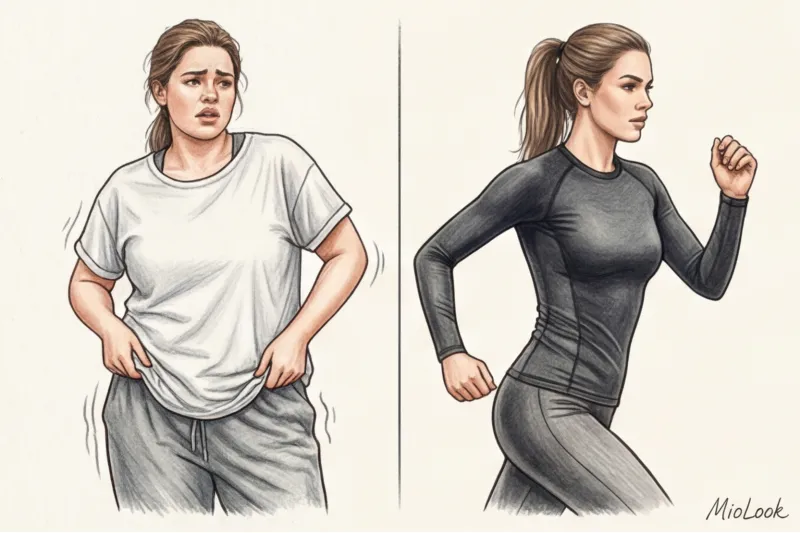
Have you ever noticed what happens to natural fabrics when they get wet? Cotton absorbs up to 27 times its weight in water and instantly becomes transparent, clinging to your body and highlighting every crease and contour of your underwear. This is an absolute fail for modest fashion.
According to textile standards (specifically, AATCC Wicking Test Method 79), the synthetic fibers of a good rashguard don't absorb moisture, but rather distribute it by capillary action across the surface, transporting it to the outer layer. A synthetic base dries 80% faster than cotton. Your skin stays dry, and the dense fabric of the rashguard maintains 100% opacity even during intense sweating.
Your perfect look starts here
Join thousands of users who look flawless every day with MioLook. A smart AI stylist will help you create the perfect sportswear capsule.
Get access — €0.99 onceHow to Style a Rashguard: The Principle of Safe Layering in the Gym
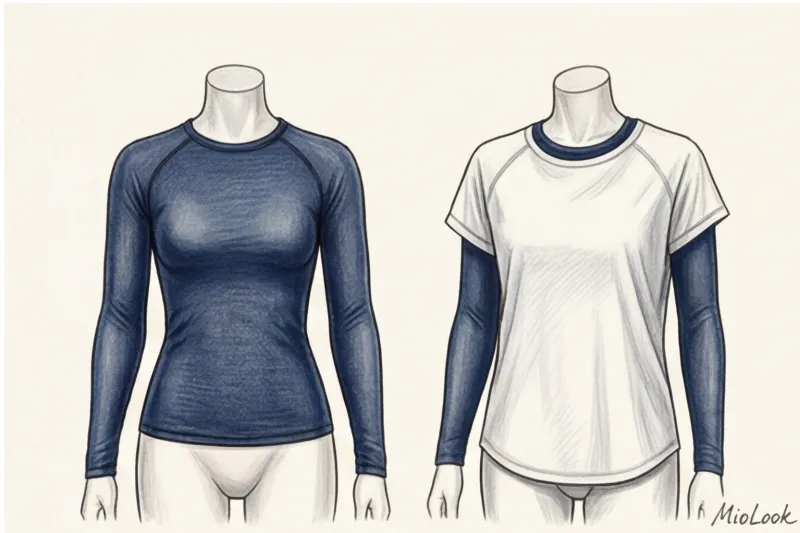
The architecture of a proper modest sports image is built according to the formula: form-fitting technical base + insulating loose layer An important rule: the outer layer must also be made of athletic fabric. If you wear a cotton T-shirt over a perfectly good rashguard, it will simply block moisture evaporation, and the entire system will fail.
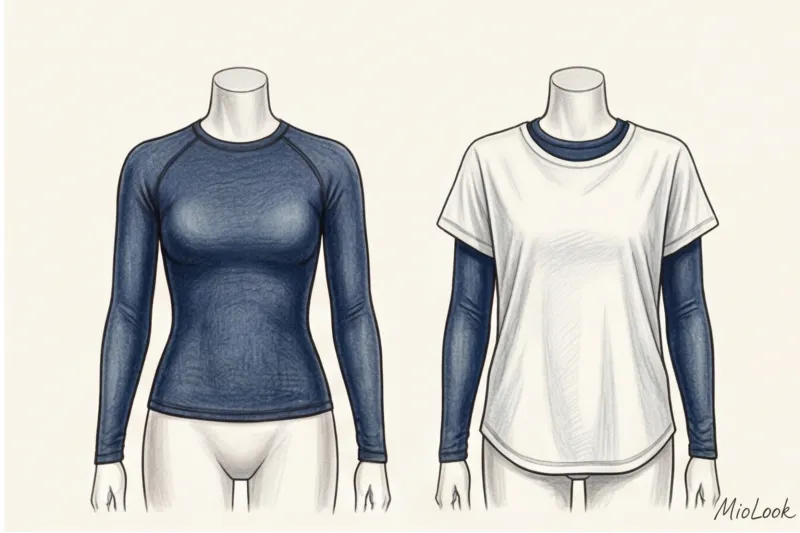
Rashguard + sports tunic or sleeveless jacket
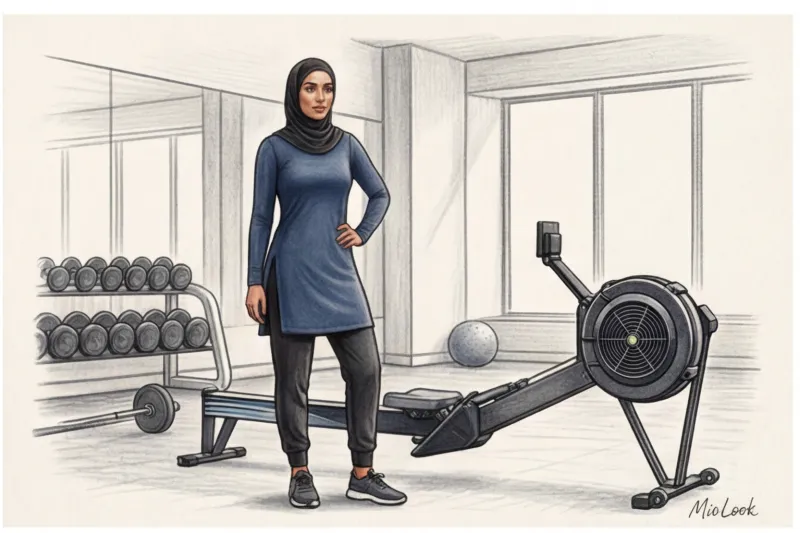
This is my favorite formula, which I recommend to 9 out of 10 clients. A matte, smooth long-sleeve rashguard looks great under a long, sleeveless sports tunic (reaching mid-thigh). The rule of texture contrasts applies here: if the base is smooth, the top can be mesh, perforated, or micro-jacquard. This combination visually elongates the silhouette and conceals the hips without creating a "cabbage" effect.
Rashguard + oversized T-shirt from Dry-Fit
Oversized clothing can be dangerous in the gym—loose edges can easily get caught in moving parts of the equipment. To avoid this, choose t-shirts made of heavy, flowing sports polyester (using technologies like Dry-Fit). This fabric falls under its own weight, without creating excess bulk at the sides. The length of the t-shirt should cover the buttocks, but not fall below mid-thigh, so as not to restrict movement during squats.
The Anatomy of a Proper Rashguard: A Stylist's Checklist
Over the years, I've analyzed hundreds of sportswear returns. Statistically, 60% of base layer returns are due to chafing seams and loss of shape. To ensure every penny of your investment (a good basic rashguard typically costs between €45 and €90), check the following:
- Fabric composition: Look for a combination of polyester or nylon (polyamide) with the obligatory addition of elastane (spandex). Elastane should be at least 15–20% Only this composition will provide 4-way stretch technology—stretching in four directions without deformation.
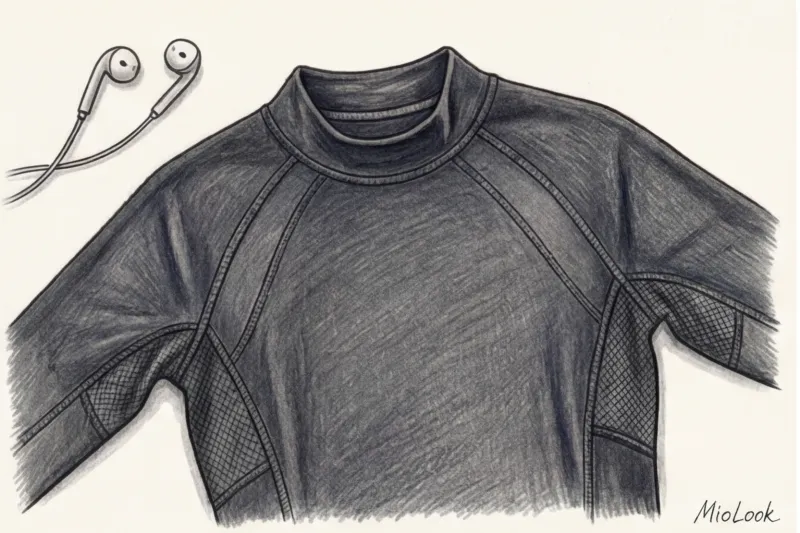
- Seams: Flatlock seams are the only option. Regular overlock seams under the outer layer will cause severe chafing during vigorous arm movements. Rashguards should not have any zippers, buttons, or large logo patches.
- Neck: A mock neck is ideal for modest fashion. A classic round neckline can fall away from the body when bending over, revealing the collarbone and ribcage. A mock neck of 3-4 centimeters elegantly covers the neck without putting pressure on the Adam's apple.
"Invest in the basics, not trends. A quality black rashguard will last you 3-4 years of regular training, while a trendy neon T-shirt will look out of place after a season."
Fatal errors: what gives away a cheap database?
My personal crash test took place a couple of years ago: I was training for a half marathon and decided to try out three different brands of compression underwear—from a mass-market option for €20 to a professional running brand for €85. The cheaper option failed the test after just the second wash: the sleeves stretched out at the elbows, turning the tight-fitting base layer into a sloppy sweatshirt.
Here are the three biggest mistakes when choosing a rashguard for a modest look:
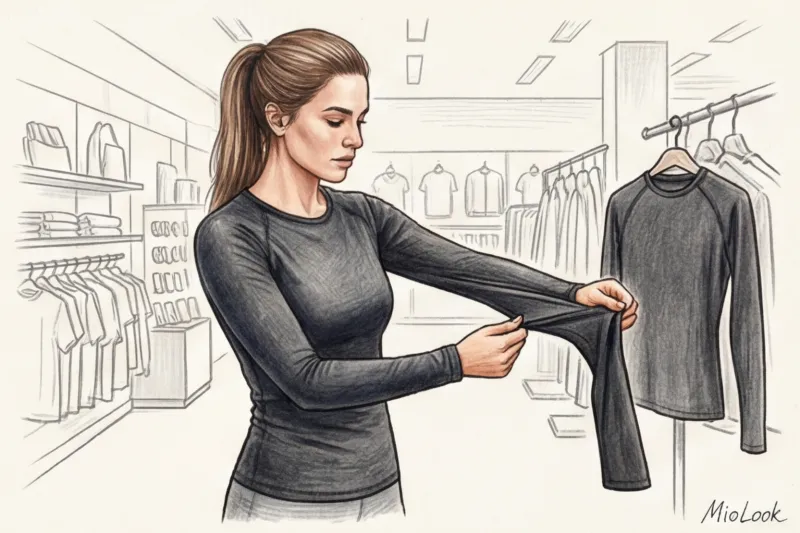
- Failure of the "squat test" on the forearms. Most girls only check leggings for transparency (by squatting in front of a mirror). I teach people to check the sleeves and shoulders of a rashguard. Pull the fabric tightly at the bend of your elbow right in the store. If you see your skin color, the fabric is too thin and will tear or bunch up from rubbing against the outer layer.
- Trying to buy a larger size. This is a fair limitation to be aware of: a compression layer will NOT work if you buy it two sizes too big in the hopes of hiding your figure. A loose rashguard won't wick away moisture (since it doesn't make close contact with your skin) and will bunch up under your shirt. Choose your exact size. The top layer will hide your bulk.
- Lack of thermal zones. High-quality models have micro-mesh zones built into the armpits and sometimes along the spine. Without them, you risk overheating, especially if you're wearing a thick tunic over it.
Ready to get started?
Upload your sportswear to the app and let the AI create stylish and understated looks for you every day.
Get access — €0.99 onceSports Capsule: Integrating a Rashguard into Your Workout Wardrobe
Let's do the math for a smart wardrobe. If you work out three times a week, you don't need five rashguards. Two high-quality base layers are enough, provided you wash them immediately after your workout. Synthetic fabrics dry in a few hours at room temperature.
For a base color, I recommend sticking to a utilitarian minimalism: deep black, graphite gray, or navy. These colors are completely opaque, don't show sweat marks, and visually "disappear" under any bright or light top layer, creating the effect of shadow rather than excess clothing.
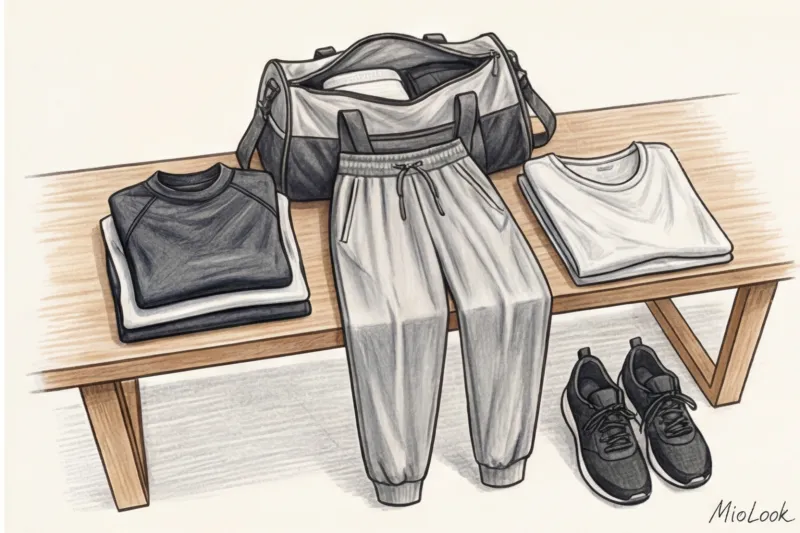
Action Plan for care (to prevent elastane degradation):
- Never use fabric softener. It clogs the capillaries of synthetic fabrics, permanently damaging the rashguard's moisture-wicking properties.
- Wash at a temperature no higher than 30°C. Hot water destroys elastane fibers, causing the garment to lose compression.
- Dry away from radiators.
A properly fitted rashguard isn't just a piece of clothing; it's a tool for your confidence in the gym. When you know the first layer reliably protects you from overheating and accidental exposure, you stop worrying about how you look and start focusing on what you're doing. And that's the main purpose of any sports gear.