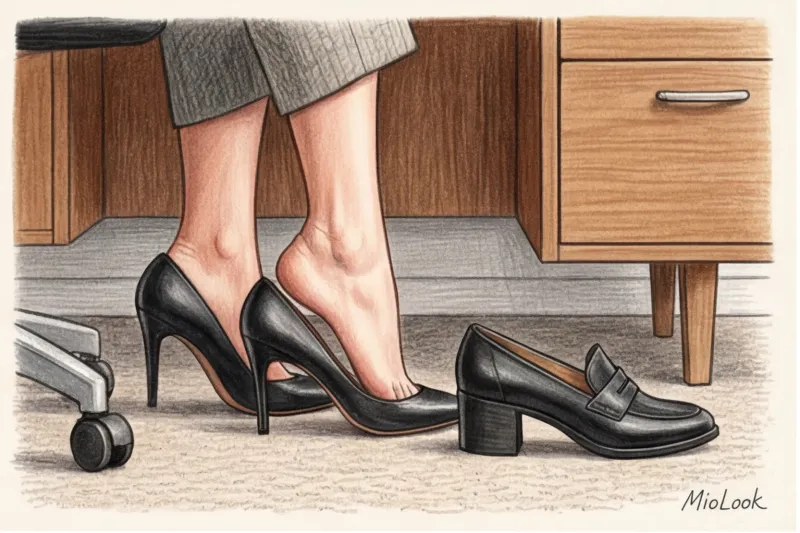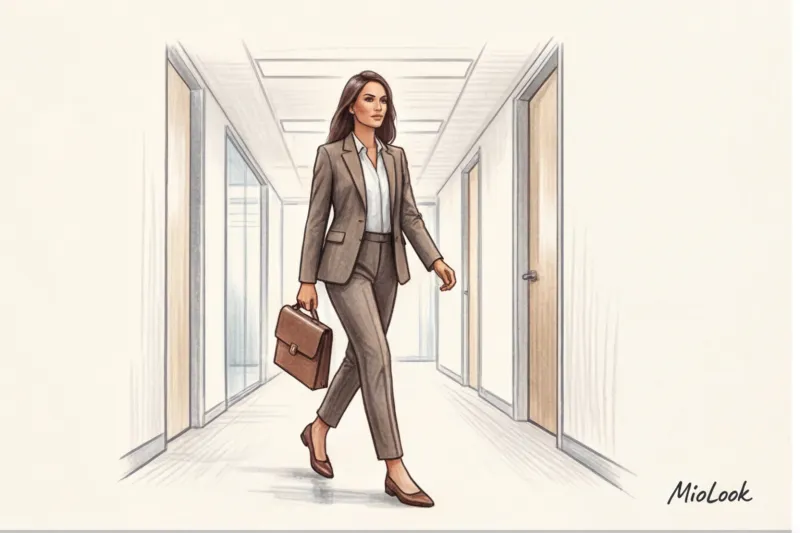
Have you ever noticed how a woman's voice and intonation change when she discreetly kicks off her uncomfortable shoes under the table? For a second, she transforms from a confident professional into someone who just wants the day to be over. Physical discomfort literally saps our charisma and concentration.
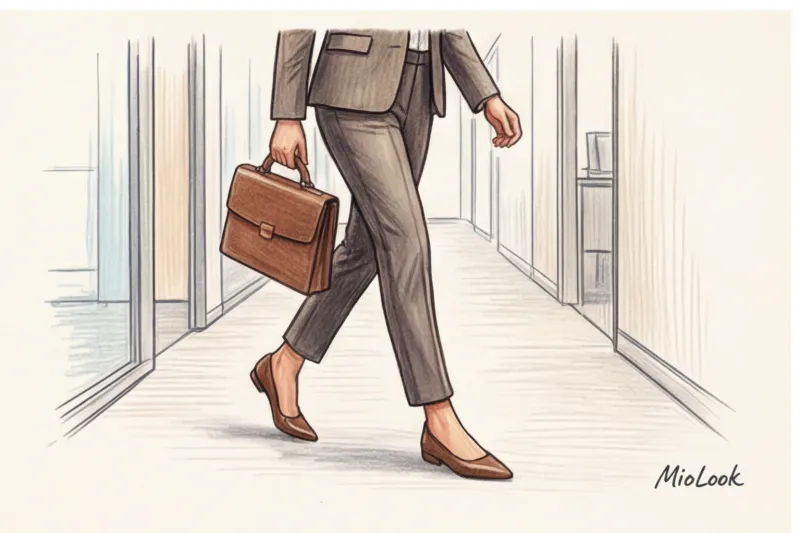
There is a term in psychology Enclothed Cognition (embodied cognition) is a concept proven by researchers at Northwestern University (USA) in 2012. It explains how clothing and footwear influence our cognitive processes. A rigid, structured shoe last makes us stand up straighter, our stride becomes more precise, and our brain receives the signal: "I'm focused and in control." We've already discussed the architecture of a business wardrobe in more detail in our A complete guide to "Business Dress Code for Women: From Formal to Casual".
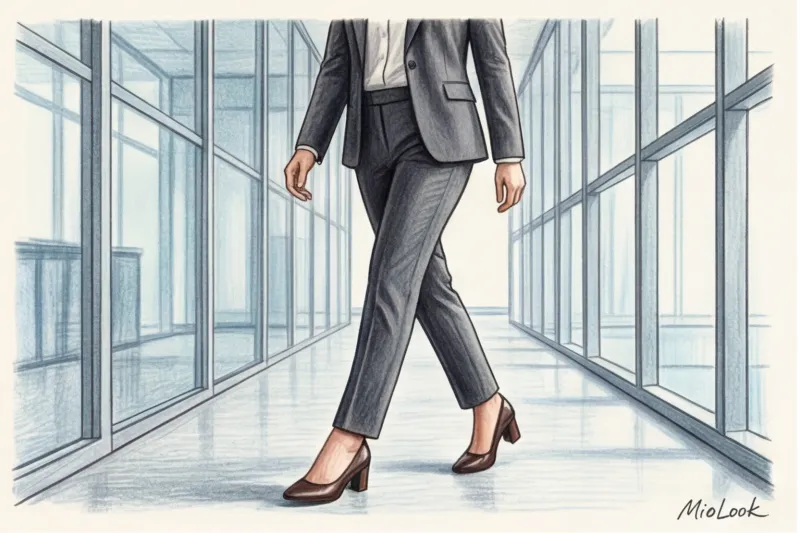
Today, the right women's office shoes aren't about sacrificing for the sake of beauty. They're a tool for impression management. And as a practicing stylist with 14 years of experience, I want to show you why status has long ceased to be measured by the height of the stiletto heel.
The evolution of business etiquette: what women's office shoes are in fashion today
If ten years ago my clients would come to me with a request: “Olena, find me some comfortable stiletto pumps” (which in itself is an oxymoron), today the request sounds different: “I need status shoes with flat heels.”
The post-pandemic reality has changed the rules of the game forever. According to statistics from global HR agencies, over 65% of international companies have officially enshrined smart flat shoes in their corporate guidelines. Dress codes have become more relaxed, but—and this is key—the requirements for neatness and a well-designed silhouette have increased exponentially.
Modern business shoes are built on three pillars:
- Closed Cape: The basic rule of respect for colleagues in the work environment.
- Rigid form (structure): The shoe should hold its frame even when you take it off.
- Deep texture of the material: thick smooth leather, high-quality suede or polished calfskin (spazzolato).
The Anatomy of Status: Why Classic Pumps Are Losing Their Ground
Let's be honest: constantly wearing heels higher than 7 centimeters is not only uncomfortable but also counterproductive. When your feet hurt, you make worse management decisions. This isn't a metaphor, but a physiological fact: pain saps your attention.
According to the American Podiatric Medical Association (APMA), wearing a 7-cm heel places approximately 75% of your body weight on the forefoot. The optimal, physiologically safe heel height for daily wear is 2-4 cm. This height provides proper arch support and prevents vein strain.
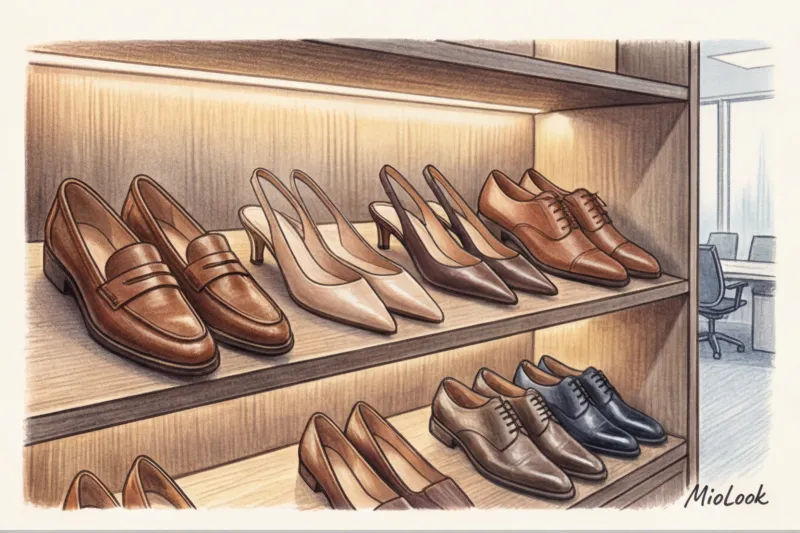
Does this mean we should throw out pumps? No. They remain indispensable for business formal events, evening receptions, and stage performances. But for the daily office grind, we need smarter alternatives.
Access to MioLook for €0.99 — one-time payment
A smart AI stylist will select the perfect outfit from your items, taking into account business etiquette.
Get access — €0.99 onceTop 5 Stylish Alternatives to Pumps for the Modern Office
When creating capsule wardrobes for my clients, I always rely on this basic arsenal. Each of these pairs can replace classic shoes without diminishing the formality of your look.
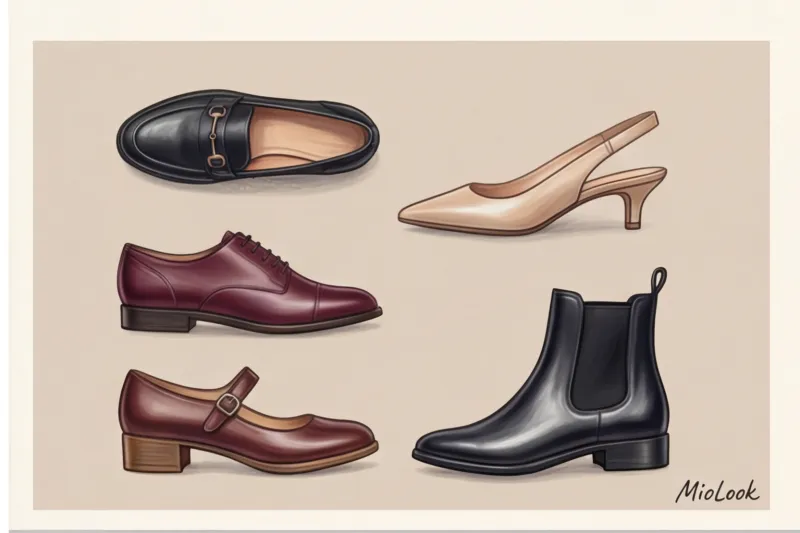
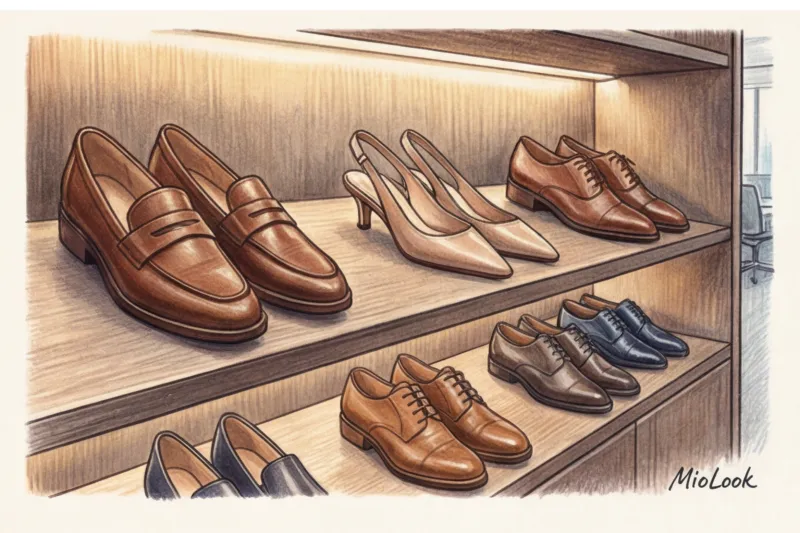
Loafers: From Relaxed Penny Loafers to Formal Buckle-Fastened Models
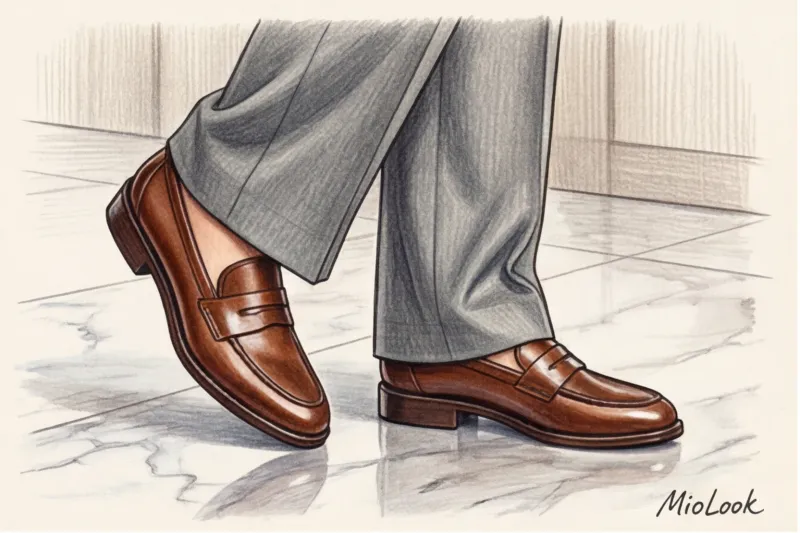
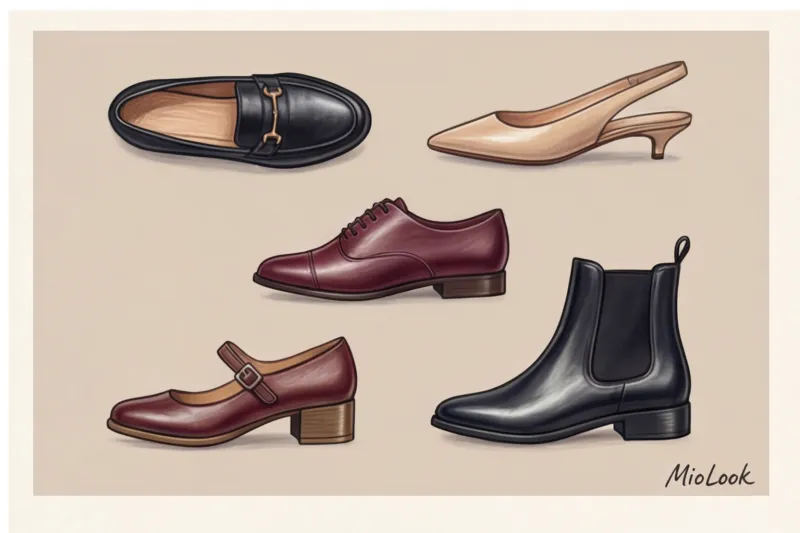
Loafers are the absolute foundation of business casual. They brilliantly balance masculine sophistication with feminine elegance. If your office has a strict dress code, choose models with a minimalist metal buckle (Gucci-style) or classic penny loafers in smooth leather.
"The golden rule for office loafers: avoid oversized soles. What looks great on the street at Fashion Week looks like teen grunge in a boardroom. Choose a sole no thicker than 1.5–2 cm."
They work flawlessly with cropped trousers with a crease, A-line midi skirts and thick tights that match the shoes.
Slingbacks: Open-Heel Elegance
When summer arrives, slingbacks (closed-toe shoes with a strap over the open heel) are a real lifesaver. According to traditional etiquette, open toes are taboo in the office, but open heels are perfectly acceptable in smart casual settings.
The most sophisticated option is kitten heel slingbacks (that same 3-4 cm high "wine glass"). They visually elongate the silhouette just as much as 10-centimeter stilettos, but allow you to comfortably move between departments all day.
Oxfords and Brogues: Masculine Style for Women's Authority
There's an interesting psychological trigger here. Lace-up shoes subconsciously convey composure, reliability, and meticulousness.
One of my clients, a top manager in the IT sector, had long struggled to gain authority on predominantly male boardrooms. She wore formal sheath dresses and stiletto pumps. We made a radical change: we switched to three-piece wool pantsuits and classic leather brogues. The result amazed her—not only did her gait change (she became more confident and grounded), but her colleagues also began to listen to her. Classic men's shoes always look sophisticated on a woman's foot.
Mary Jane: The Trend That Became the New Basic
Mary Janes made a comeback a few seasons ago and have become a firm staple. The main danger with Mary Janes is the risk of looking like a straight-A student at school assembly.
To avoid this, pay attention to the toe: it should be either an elongated almond shape or a graphic square. Avoid round, upturned toes. Texture is also crucial: patent leather or crocodile-embossed leather instantly elevates this style from naive to classy.
Sneakers in the office: how to avoid crossing the line between smart casual and the gym
Yes, sneakers are allowed in the office almost everywhere. But there's a catch. The main rule I never tire of repeating: Office sneakers should never see the treadmill..
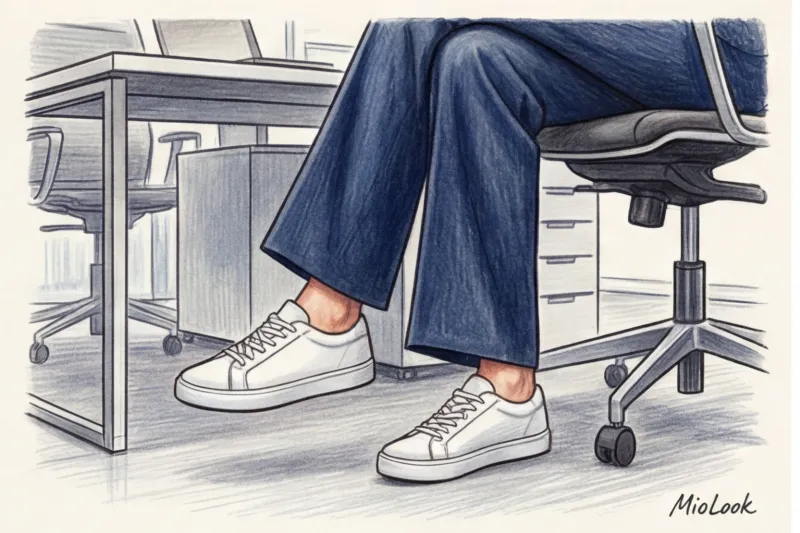
Signs of classy sports shoes for work:
- Absolute minimalism (no neon inserts or massive air cylinders).
- No flashy logos.
- Smooth matte skin (not mesh!).
- Monochrome: pure white, beige, dark blue or black.
My favorite styling trick: the more casual your shoes, the more formal your clothes should be. Don't wear sneakers with jeans and a hoodie—you'll look like you're just going out to buy bread. Pair them with oversized two-piece suits. The contrast between tailored tailoring and sneakers is true modern chic.
Your perfect look starts here
Join thousands of users who look flawless every day with MioLook. Upload your items, and the AI will create outfits from them.
Get access — €0.99 onceThe biggest styling mistake: why ordinary ballet flats ruin a business look
Now, on to the real issue. If I were asked to name one item that instantly cheapens and ruins a business look, I'd say classic round ballet flats made of soft leather or fabric with a completely flat sole.
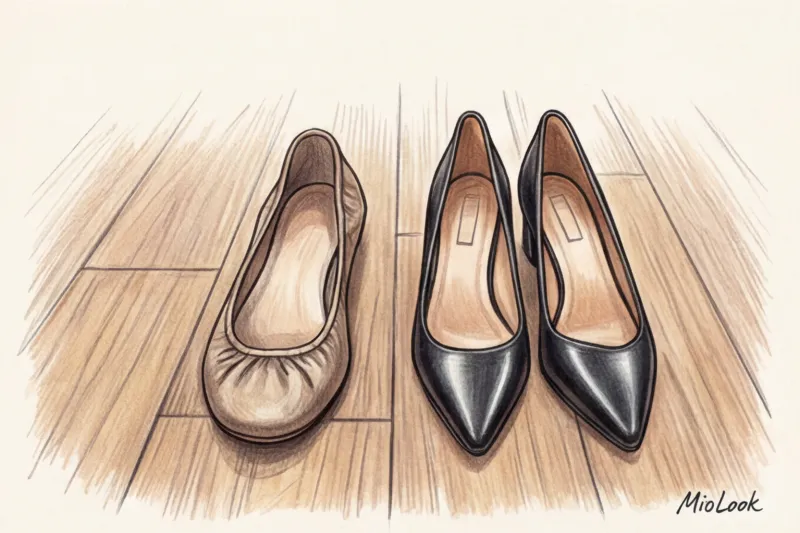
It's counterintuitive, since they've been sold to us for years as "comfortable classics." But let's face it. The soft shape doesn't support the foot; it spreads out and becomes shapeless. The lack of arch support ruins your posture by midday. And the round toe combined with the flat sole makes the silhouette look childish.
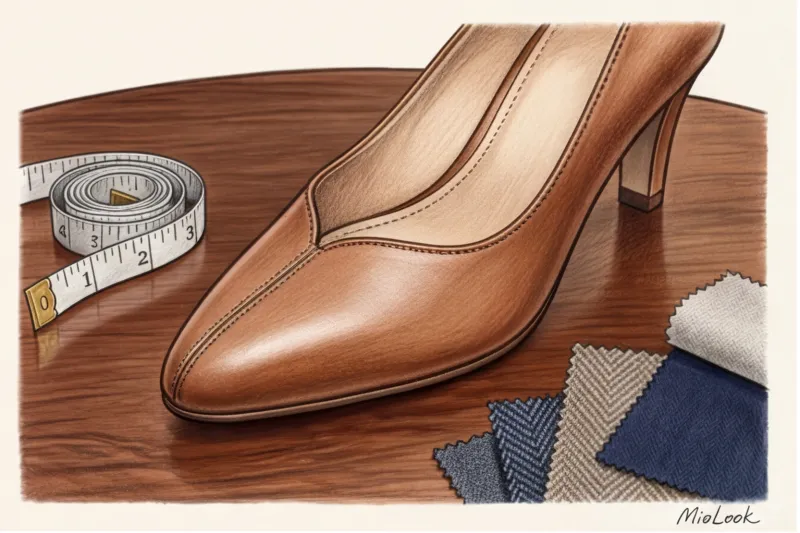
How to fix? Replace them with structured ballet flats with a pointed or almond toe. They should have a rigid counter to support the heel and a micro heel (1-1.5 cm). The difference in perception is dramatic: a pointed shoe visually lengthens the leg and adds that edge and dynamism needed in business.
Stylist Checklist: How to Choose the Perfect Pair (and Save Money)
Buying office shoes is an investment. And they should be evaluated not by the price tag on the box, but by a formula. Cost-per-wear (price per one exit).
Imagine a pair of premium leather loafers for $300. You'll wear them to the office at least 100 times per season. The price per wear is $3. Now, consider a pair of mass-market faux leather shoes for $50. They're hot, they chafe, and after 10 wears (if you can even wear them that much), they'll lose their shape. The price per wear is $5. It's ironic, but expensive, high-quality shoes are cheaper for your budget.
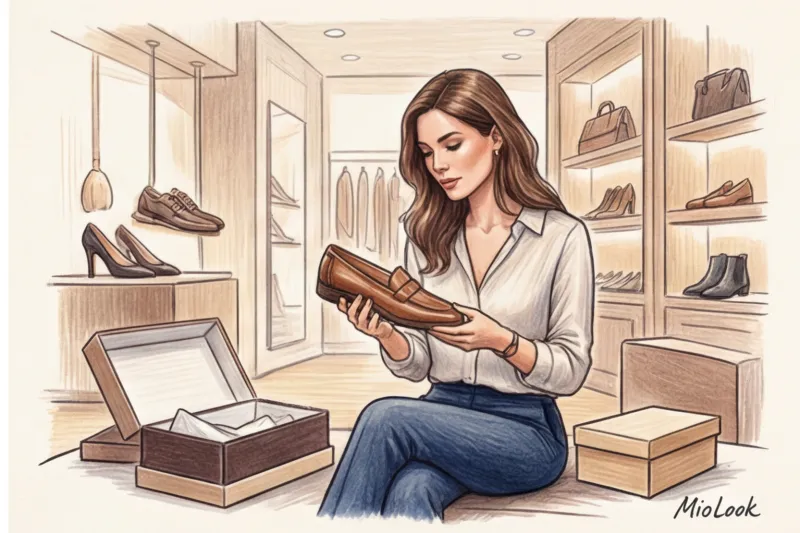
What to look for when choosing:
- Materials by season: Smooth leather is versatile. Suede looks luxurious, but it's doesn't work During the autumn slush and chemicals on the streets. Save the suede for the dry spring or as a change of shoes in the office.
- The fittings give the price: Avoid overly bright, samovar-like gold on buckles. Matte metal, aged brass, or silver look more refined and expensive.
- Fitting time: Always buy office shoes in the afternoon. By 4:00 PM, your feet naturally swell a little. If your shoes are perfect in the morning, by evening they'll look like a Spanish boot.
To prevent a new pair from becoming dead weight in your closet, it should match at least 60% of your work wardrobe. Incidentally, it's for these kinds of situations that I recommend using the "smart wardrobe" feature in the MioLook app You simply take a photo of your shoes in the fitting room, and the AI stylist immediately shows you which trousers and jackets from your closet will pair them perfectly.
Remember the most important thing: your shoes in the office are your point of support. Literally and figuratively. Choose pairs that give you physical stability, and you'll notice how this stability translates into your words, decisions, and career advancement.