Wardrobe Psychology: Why Your Suit Speaks Louder Than You Do
Have you ever noticed how a woman's body language changes when she puts on an uncomfortable, overly stiff jacket? Her shoulders rise, her gestures become stiff, and her hands constantly tug at the hem. In 12 years of working as a personal stylist in Europe, I've seen this scene hundreds of times. The woman receives a long-awaited promotion, walks into the conference room, but her clothes literally scream, "I'm here by accident, and I'm really scared."
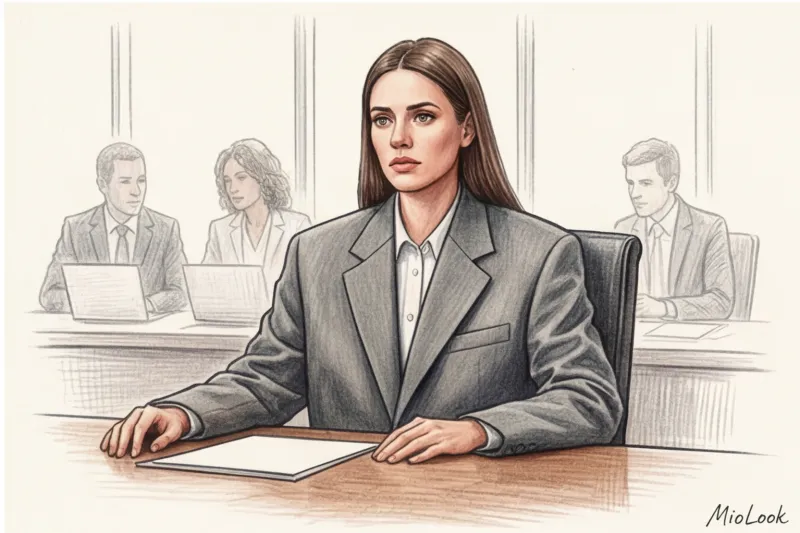
The most critical mistakes in a woman's business style They're rarely related to the banal length of a skirt or the depth of a neckline. Hundreds of boring instructions have been written about this. The real mistakes lie in the realm of psychology. They include overcompensation, fussiness with silhouettes, and attempts to hide behind brands that your team and partners subconsciously perceive as a lack of confidence in your own leadership.
We discussed the fundamental rules in more detail in our a complete guide to the ideal image of a female leader , but today I want to look at those less obvious mistakes that are killing your authority every day.
Mistake 1: Hiding behind "male armor" (Imposter Syndrome)
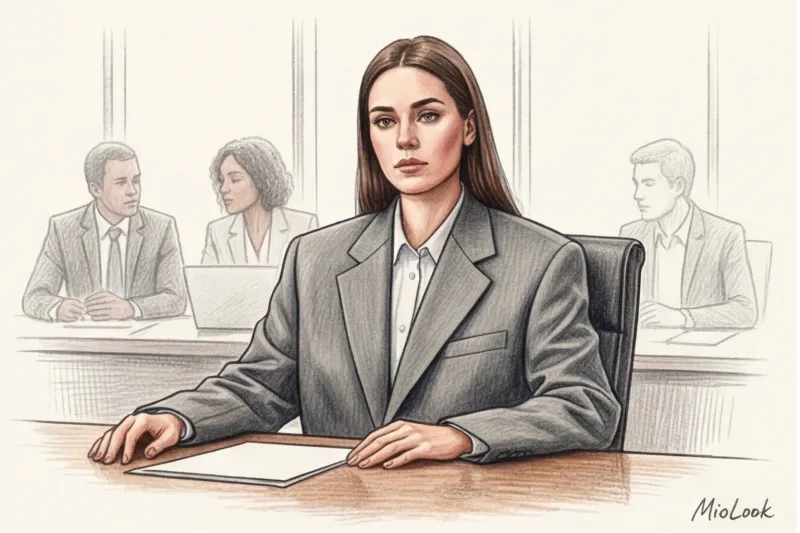
The first instinct of many women who land a leadership position is to buy a stiff, tight-fitting three-piece men's suit with exaggerated shoulder pads. It seems that the broader the shoulders and the thicker the fabric, the more weight your words will carry.
Counterintuitive fact: a perfectly tailored, armor-like suit doesn't make you a leader. On the contrary, it betrays a middle manager who's trying too hard. True authority is conveyed through a slight, controlled nonchalance (the Italians call it sprezzatura ) and absolute comfort.
In 2012, researchers Hajo Adam and Adam Galinsky demonstrated the phenomenon of enclothed cognition. Our brains adopt the characteristics of the clothes we wear. But if clothing is perceived as foreign armor, it evokes not confidence but cognitive dissonance.
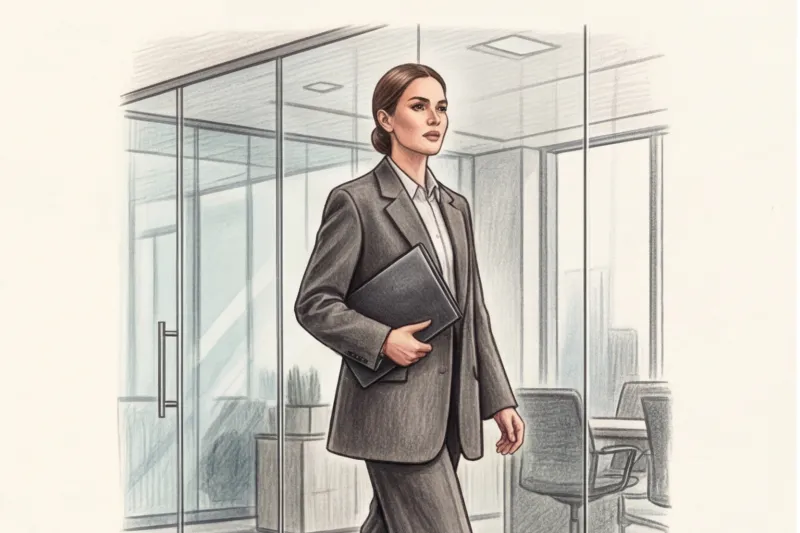
I worked with the CFO of a large IT holding. She hid behind bland gray sheath suits to appear older and more formal. When we replaced the stiff jackets with high-quality, thick knits, soft tailoring, and flowing trousers, her authority with the board of directors paradoxically increased. She stopped looking like a frightened clerk in a uniform and began to look like a woman in control.
Access to MioLook for €0.99 — one-time payment
A smart AI stylist will select the perfect look that will highlight your authority, not hide it.
Get access — €0.99 onceMistake 2: Ignoring the Custom Fit (Cheap Silhouette)
I always repeat to my clients one golden rule of European stylists: it's better to buy a basic suit from Zara and take it to a tailor than to wear a Hugo Boss suit that doesn't fit. A garment's status is determined 80% by its fit, and only 20% by the tag on the collar.
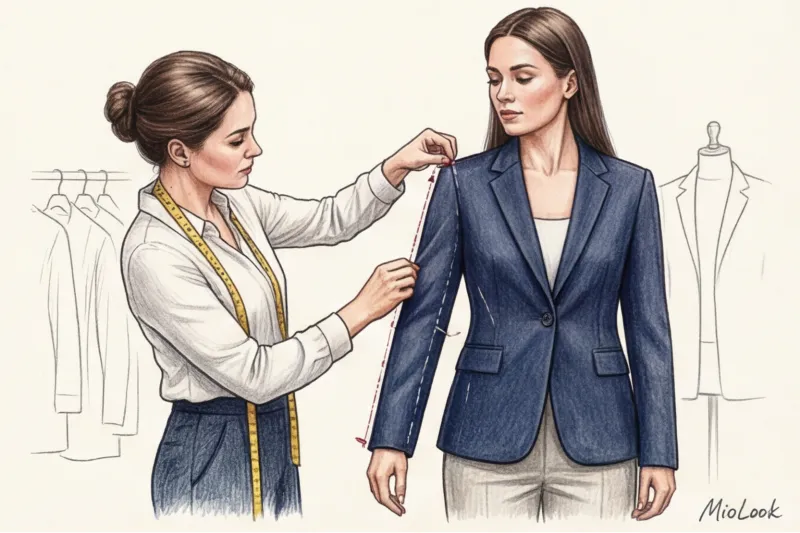
Sleeves that are too long (covering the wrist bone), creases in the crotch area of trousers, and buttons that pull at the chest—all of this creates the effect of a "cheap silhouette" and sloppiness. Subconsciously, the interviewer concludes: if she can't organize her own wardrobe, how will she manage a department?
Checklist for a perfect jacket fit:
- The shoulder seam ends exactly where your natural shoulder ends (unless it's deliberately oversized).
- A fist can easily fit between the buttoned button and the body.
- The sleeve ends strictly at the base of the wrist (bone), allowing the cuff of the shirt or watch to show through by 1-1.5 cm.
For reference, having a tailor tailor a mass-market jacket in Europe costs around 20-30 euros. This investment visually increases the item's value tenfold. However, there's a caveat: this advice won't work if the jacket's armholes are misaligned to begin with. A tailor won't be able to salvage such a garment without a complete re-cut, which will cost more than the jacket itself.
Mistake 3: The "Good Girl" Syndrome and Over-Romanticism
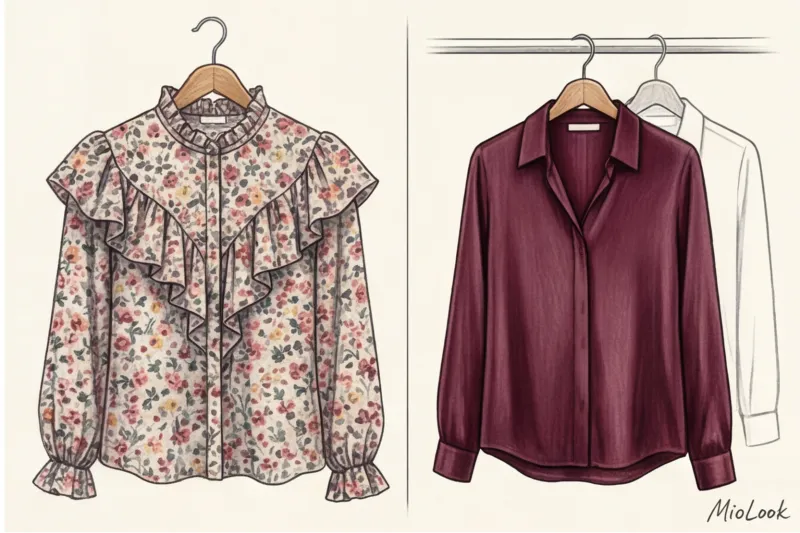
Ruffles, small floral prints (millefleur), neck bows, and an abundance of delicate lace are visual codes of immaturity. In a business environment, they subconsciously reduce your status to that of a junior or assistant.
The psychology of perception works mercilessly here: childish, overly soft details in clothing make partners doubt your ability to make tough, unpopular decisions. You may be a brilliant strategist, but a ruffled blouse says, "Please don't hurt me."
Compare a micro-floral ruffled blouse from &Other Stories with a simple shirt in thick matte silk in a deep wine shade from COS. Both pieces are feminine, but the former evokes weekend romance, while the latter conveys confident, mature elegance.
How should a boss wear feminine pieces? Replace embellishments with architectural cuts. Instead of ruffles, opt for asymmetrical draping. Instead of floral prints, opt for deep monochrome shades (emerald, sapphire, burgundy).
Your perfect look starts here
Join thousands of users who look flawless every day with MioLook. Create your own capsule look without the childish details.
Get access — €0.99 onceMistake 4: Logomania and flashy brands (Status deficit)
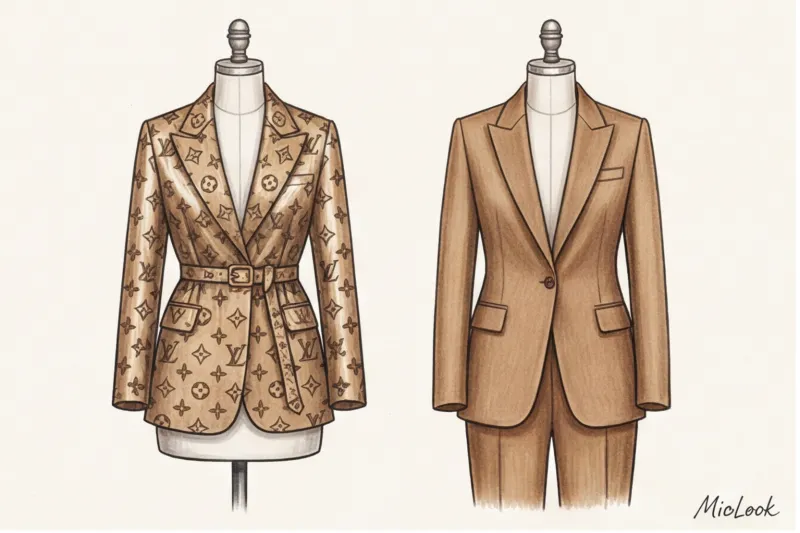
Belt buckles shaped like giant Hs or GGs, bags covered in monograms, and recognizable prints are a sign of insecurity. A person whose status is undeniable doesn't need their clothes to act as an advertising billboard.
According to a 2024 McKinsey study, luxury consumption among senior management has finally shifted toward the concept of "Quiet Luxury." Status is now determined by the texture of fabric, the impeccable stitching, and the design of the cut, rather than the size of the logo.
Use the "10-Second Rule": if the brand of your bag or belt can be identified at first glance from three meters away, it's not suitable for serious negotiations. It distracts from your expertise and shifts the focus to your spending.
Mistake 5: Treacherous details and tired textures
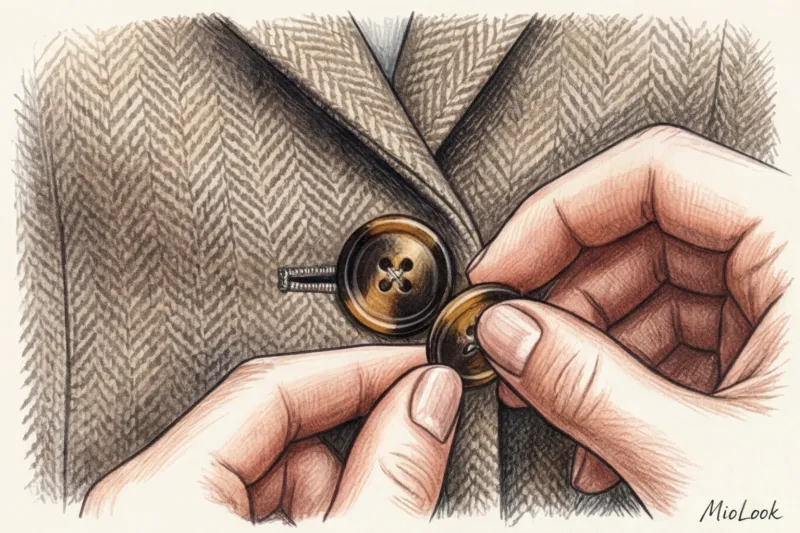
The devil is in the macro details. You can wear a perfectly fitted suit, but a cheap plastic button that glitters in the light will instantly ruin the magic. The same goes for pilling in knits, cuffs, and shiny nude tights (which are long overdue for opaque ones no heavier than 8-15 denier).
I'm sharing a personal life hack I use when shopping with my clients. We often buy excellent basic jackets at Massimo Dutti or Zara's basic line, and then I go to a haberdashery and buy expensive buttons made of natural horn, mother-of-pearl, or high-quality matte metal. Replacing the hardware takes 15 minutes, but the item looks like it was bought in a high-end boutique.
Fabrics that work for your authority:
- Thick cotton (from 180 g/m² - it holds its shape and is not see-through).
- Blended wool (with the addition of 2-5% elastane to prevent the fabric from stretching at the elbows).
- Matte silk or high-quality thick viscose.
Avoid 100% polyester—not only does it look cheap and shiny, it also creates a greenhouse effect, which is unacceptable in stressful work situations.
By the way, to avoid confusion about which textures go with what, I recommend using wardrobe digitization feature in the MioLook app You simply upload your items, and artificial intelligence shows you how to combine dense wool and lightweight silk into one harmonious look.
Mistake 6: Shapeless bags and worn-out shoes (Lost anchors)
Research in nonverbal communication shows that during a first meeting, up to 70% of a person's impression of their status is formed by their shoes and accessories. You can skimp on a white shirt—under a jacket, no one will know whether it costs 30 or 300 euros. But you shouldn't skimp on shoes and a bag.
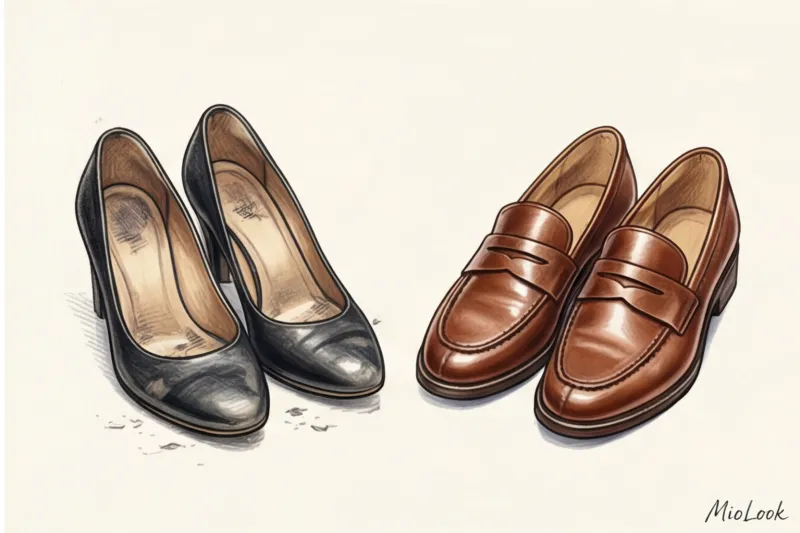
A hobo bag and soft, worn-out ballet flats ruin even the most formal business look. They detract from the silhouette's poise.
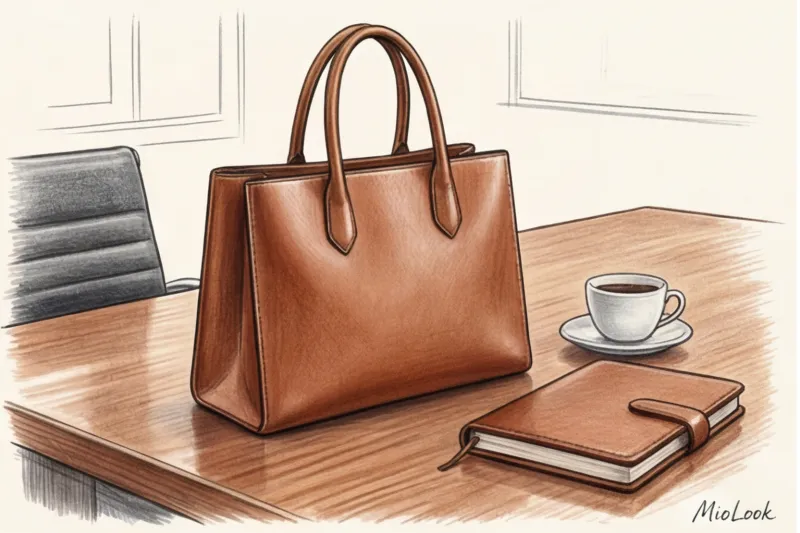
Remember the "Status Anchors" rule: executive shoes and bags should always have a rigid frame and a clear geometric shape. If you place your bag on a table or the floor, it shouldn't settle into a shapeless puddle. Invest in structured totes and impeccable leather loafers, oxfords, or classic pumps.
Ready to get started?
Try the MioLook plan for free—no commitments required. Organize your accessories and shoes right now.
Get access — €0.99 onceMistake 7: Clothes that dictate fussy body language
This is my favorite topic during consultations. No brand will save you if you're physically uncomfortable. A tight skirt that rides up when you walk; slipping straps on a silk top; a shirt collar that's too tight—all of these things provoke fidgety micro-gestures.
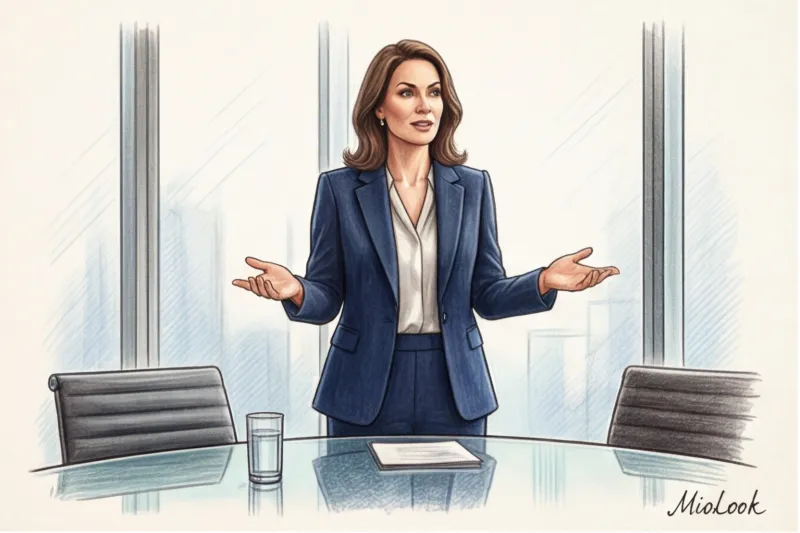
When you're speaking to a board of directors and constantly tugging at your jacket or adjusting your neckline, the audience doesn't interpret it as a sartorial issue. They interpret it as nervousness, uncertainty, and incompetence. Physical discomfort directly leads to a loss of psychological control.
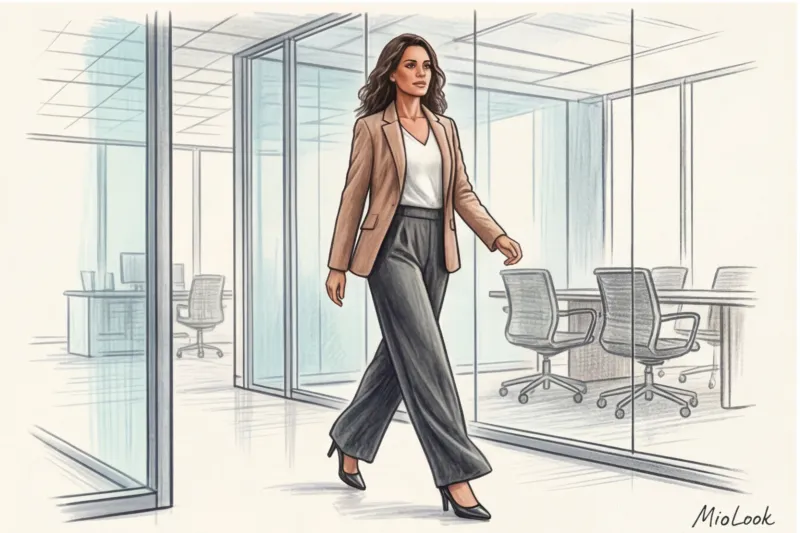
One of my clients constantly complained of a fear of public speaking. We discovered that she always performed in a very tight pencil skirt, making it impossible to take a normal step. When we replaced the skirt with wide palazzo pants made of a thick, flowing fabric, her gait changed dramatically. She began to occupy more space on stage, and her gestures became smooth and confident.
Test drive in the fitting room: Never buy business clothes just by standing in front of a mirror. If you're wearing trousers, be sure to sit down (is the waistband digging in?), if you're wearing a jacket, raise your arms (is the back creaking?), and if you're wearing a skirt, take a wide step.
Checklist: How to Check Your Look Before Heading to the Office
Before you walk out the door, do a quick audit of your appearance. I recommend my clients create ready-made, proven capsules in MioLook , so you don't waste mental energy on it in the morning. But if you're planning on the fly, ask yourself four questions:
- Silhouette rating: Is there a defined shoulder line in my look? Do I look put together or "splayed out"?
- Comfort rating: Can I raise my hands freely to point at the chart? Will I have to pull down my skirt after I get up from my chair?
- Detail rating: Are the edges of my bag in order? Are there any scratches on the toes of my shoes? (This is where the other person's gaze falls when you sit across from them.)
- Appropriateness rating: Are there too many accents? Remember Coco Chanel's brilliant rule: before leaving the house, look in the mirror and remove one accessory. For a manager, this rule works without fail.
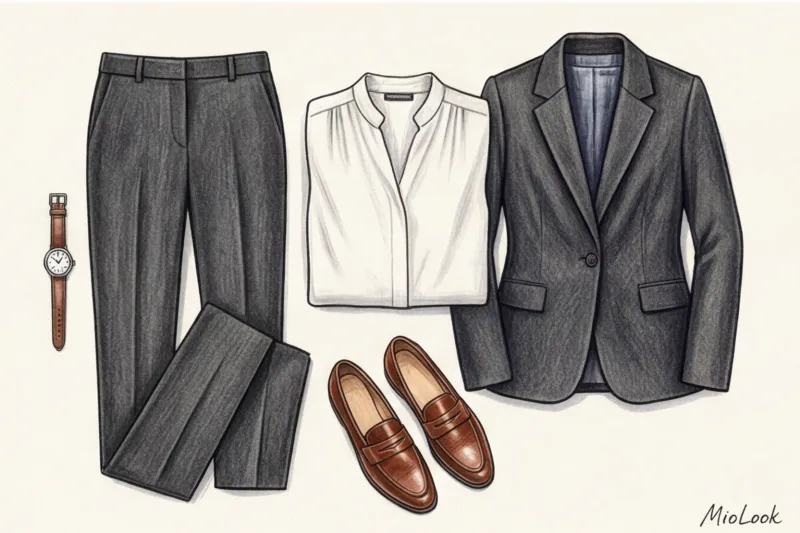
True power dressing today isn't about appearing tougher than you are. It's about creating a wardrobe that frees up your mental energy. When you're 100% confident in the fit of your trousers, the quality of the buttons on your jacket, and the clean lines of your bag, you stop thinking about your clothes. And that's when you begin to project true, genuine authority.