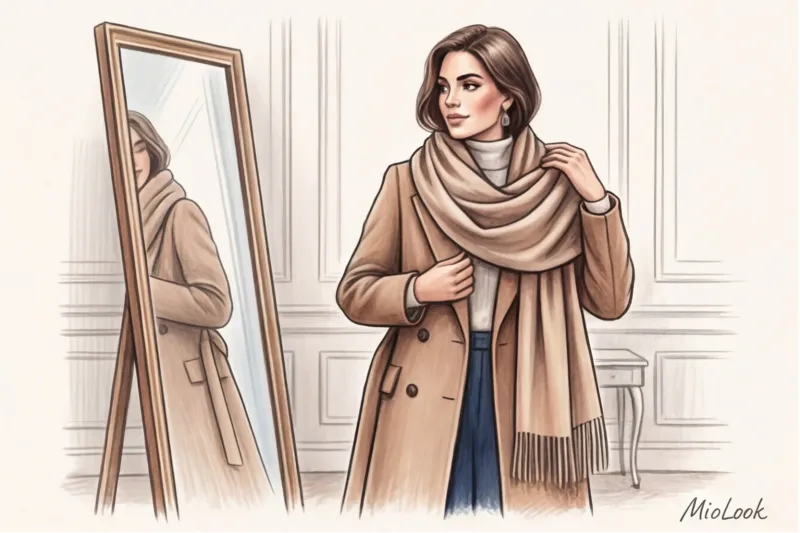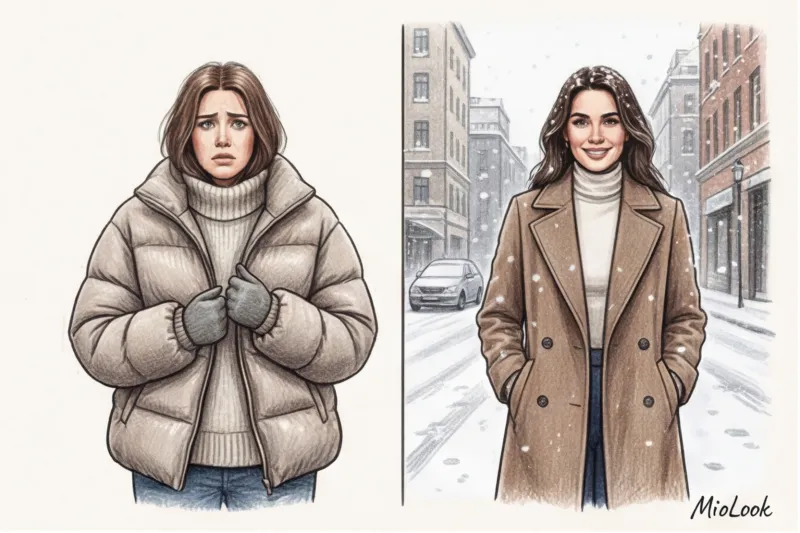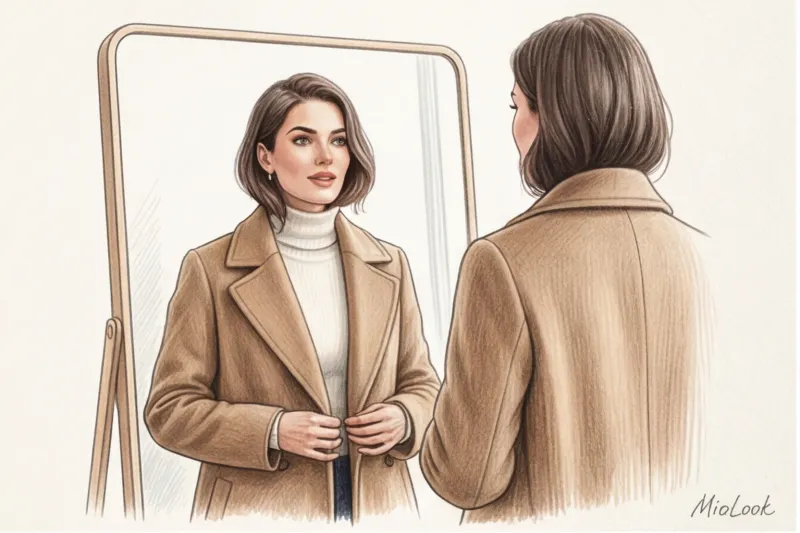
Remember your twenties in the winter? We'd stand in front of the mirror in the morning and make a choice: either chatter our teeth in a thin, beautiful coat, or throw on three sweaters under a jacket, turning into a clumsy "cabbage." Fortunately, with age comes the understanding: true style requires no sacrifice. Perfectly crafted Winter basic wardrobe for 30-year-olds — it's not about thick, itchy sweaters, but about smart fabrics, thermodynamics, and architectural cuts.
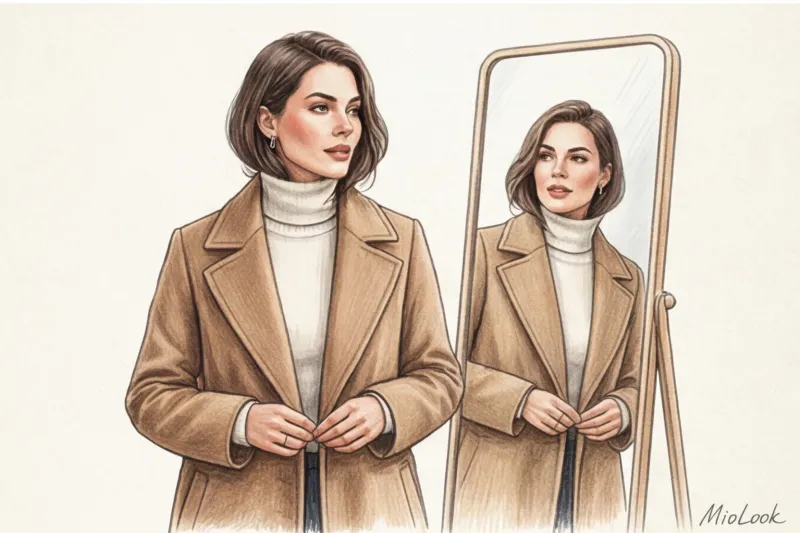
We have already discussed the philosophy of conscious style in more detail in our The complete guide to a basic wardrobe for women over 30 Today, I, Sophie Müller, propose a deep dive into the physics of winter clothing. We'll explore how to achieve a graceful silhouette in subzero temperatures, why acrylic makes us feel cold, and how to stop sponsoring fast fashion brands by buying up clothes for just one season.
Winter Basic Wardrobe 30: Why We No Longer Compromise
Once we reach thirty, we experience a significant psychological shift. The desire to impress others with ultra-fashionable but impractical items gives way to the need for personal comfort, status, and tactile pleasure.
I had a revealing experience in my stylist practice. A thirty-two-year-old client, Anna, invited me to sort through her winter clothes. We discovered a veritable "sweater graveyard"—15 shapeless polyester and acrylic jumpers, bought on the run from a high-street store. She'd sweat in them on the subway and instantly froze in them on the street. We ruthlessly cleared the shelves, leaving only the essentials, and invested in four sweaters made from high-quality blends. The result? Her morning get-ready time dropped from 20 minutes to three, and her confidence in work meetings skyrocketed.
If you want to create the same order on your shelves, use the digitization function in the MioLook app When you have your entire wardrobe in the palm of your hand, you stop buying duplicates and start investing consciously.
The Anatomy of Heat: How to Read Labels and Choose the Right Fabrics
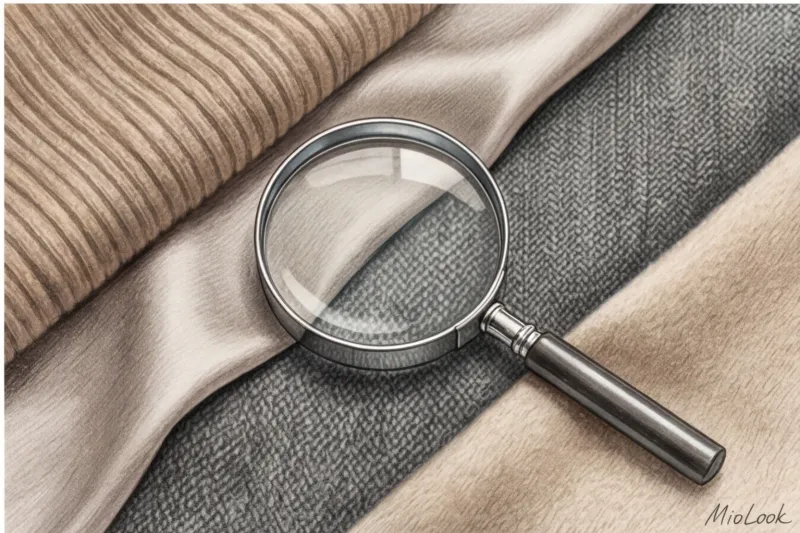
The biggest mistake I see year after year is trying to stay warm by using the bulk of a garment rather than its composition. According to the report Material Change Insights Report (2023) According to Textile Exchange, synthetic fibers (acrylic, polyester) retain less than 15% of body heat compared to wool, but they still block moisture evaporation.
The secret to warmth lies in the air. Merino wool fibers are finer than human hair (ideally 17–19.5 microns). They create microscopic air pockets that act like a thermos. Acrylic, on the other hand, has a smooth, dense structure—it simply creates a greenhouse effect.
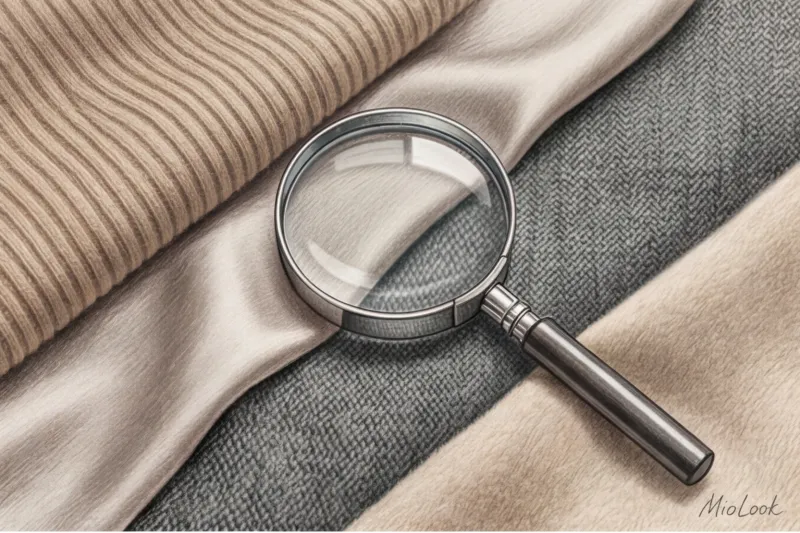
Stylists have an unspoken rule: 10–20% polyamide or nylon in a wool jumper is a technological necessity for shape retention and wear resistance. However, 50% synthetics or more is deceiving the consumer and a way for the manufacturer to cut costs on raw materials.
The Chunky Knit and 100% Cashmere Myth
Forget the "thicker, warmer" rule. The density of the yarn weave plays a much more important role than the knitting volume. A smooth but tightly knit turtleneck will keep you warmer than a loose, holey sweater two fingers thick.
And here we come to the most counterintuitive fact. I often hear: "I'll buy one 100% cashmere sweater for every day." This is a mistake. Cashmere is an incredibly delicate fiber. Under a heavy winter coat or from the constant friction of a bag strap, 100% cashmere will pill within a couple of weeks of active wear. My personal choice and advice to clients: for everyday winter wear, look for thermal underwear and base layers made from a blend. fine merino (70-80%) and silk (20-30%) Silk adds strength and incredible smoothness, while merino provides warmth.
Access to MioLook for €0.99 — one-time payment
A smart AI stylist will select the perfect look and help you create a capsule wardrobe using the right fabrics.
Get access — €0.99 onceOuterwear as an Investment: The Architecture of the Silhouette
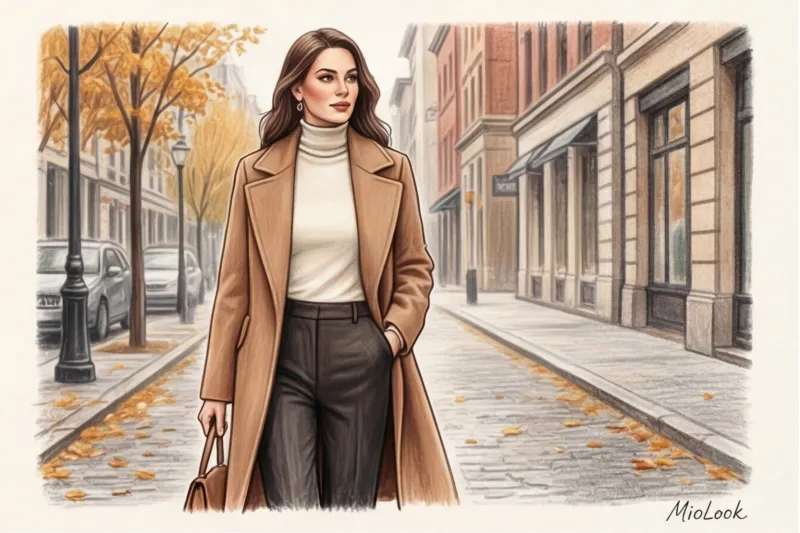
In winter, outerwear is your calling card. In cold climates, people may not see what you're wearing underneath your coat for months, so it's your coat that communicates your status.
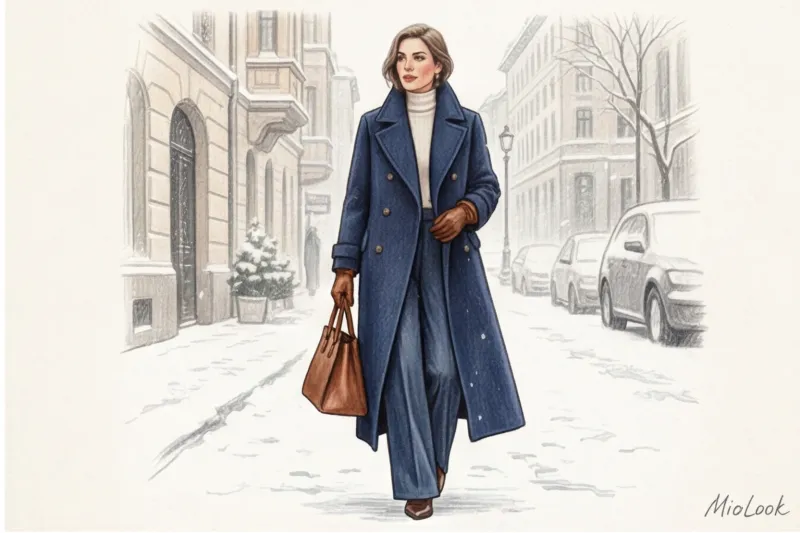
Let's calculate Cost Per Wear. Let's say you buy a trendy polyester coat at a mass-market store for €80. It starts to look dull by the end of the season. Your cost per wear is about €0.80. Now, let's take a structured 100% wool coat for €350. You'll wear it for at least five years. Its cost per wear is a paltry €0.70, but you'll look impeccable every day.
What to look for when choosing:
- Length: Midi or maxi. This is the only true solution for cold weather. A short coat visually cuts the figure into squares, especially if a skirt is visible underneath.
- Shoulder line: It should be crisp. Soft, sloping shoulders (unless that's the intention of the cocoon style) make the look appear sloppy.
- Lining density: Look for viscose or cupro. A 100% polyester lining will negate the breathability of expensive wool outerwear.
Knitwear capsule: sweaters, cardigans, and the "expensive" fiber rule
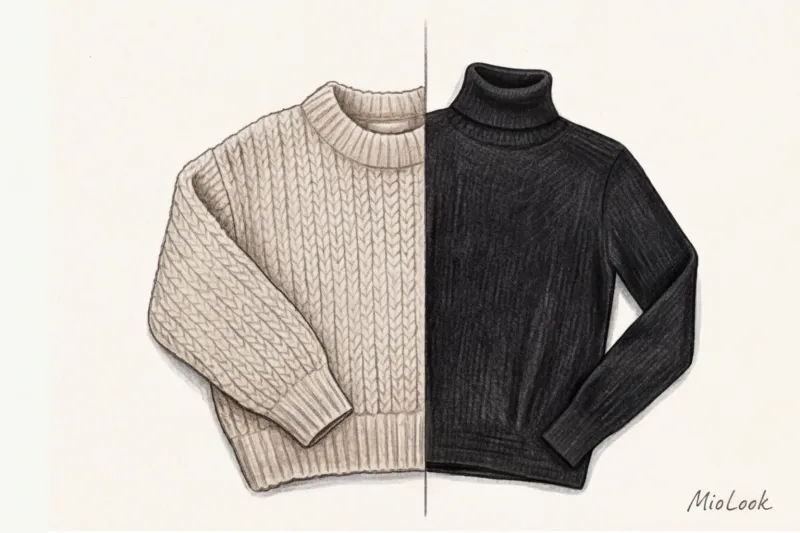
A basic winter outfit that will solve 90% of your styling needs consists of just three items: a sleek, basic turtleneck, a loose V-neck jumper (it elongates your neck beautifully), and a chunky, structured cardigan.
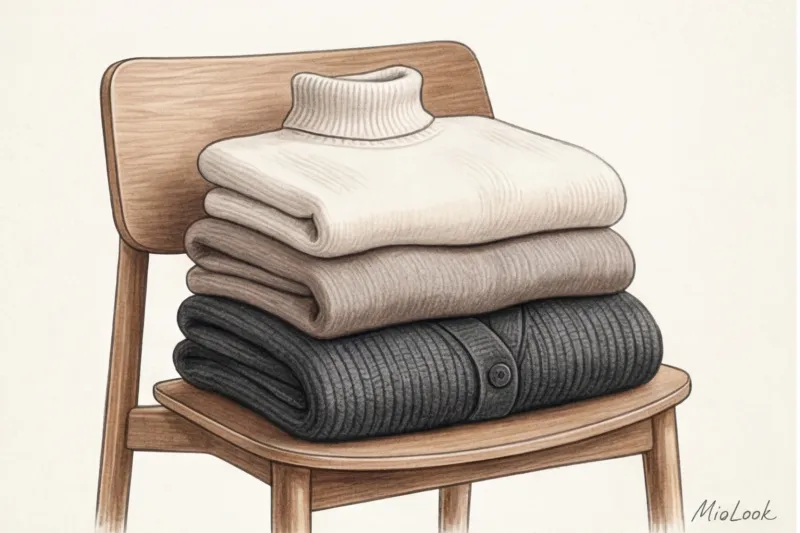
As a textile expert, I always teach clients to perform a tactile test right in the store. Take the edge of a sweater and squeeze it tightly in your fist for 5 seconds. Release. If the fabric springs back immediately, you're looking at a high-quality long-staple yarn. If the fabric remains wrinkled and limp, it will deform after the first wash.
To create visual depth, use contrasting textures. Wear a smooth turtleneck under a fluffy cardigan. Secrets to styling women's turtlenecks are hidden precisely in the multi-layered nature: it serves as a canvas on which the rest of the image is built.
Winter trousers and skirts: a balance of fabric density and impeccable fit
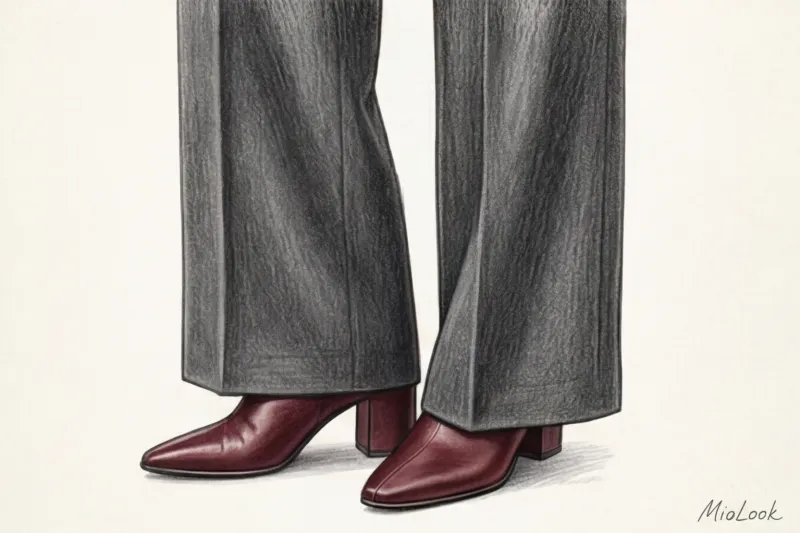
Thin, flowing fabrics look lonely in winter. We need density and heaviness. Look for trousers with a fabric density (GSM - grams per square meter) of 300 to 450 g/m². In such wool suit trousers, you won't freeze even at -10°C, and the fabric will fall in heavy, expensive folds, visually elongating your legs.
Winter skirts require a special approach. Tweed, corduroy and heavy wool They look incredibly luxurious, but they reveal another problem: tights. Nothing cheapens an elegant look like shiny 40-denier nylon tights in the cold. Choose thick, matte tights with wool, cotton, or cashmere blends. They should be completely opaque, with no hint of lurex or elastane sheen.
Your perfect look starts here
Upload your winter items to MioLook, and our AI will suggest dozens of new combinations you never even thought of.
Get access — €0.99 onceWinter shoes and status accessories: details that make the look
After turning 30, we officially say goodbye to uncomfortable shoe trees. Winter footwear should be impeccable. Choose insulated ankle boots with the right toe shape—a soft square or an elongated, pointed toe with a stable block heel.
The number one rule of winter styling that 8 out of 10 women break on the streets: gap rule If you wear wide-leg or straight-leg trousers, their hem should overlap your shoe shaft by at least 2-3 centimeters when walking. A bare ankle between the hem of your trousers and your shoe is cold and visually shortens your height.
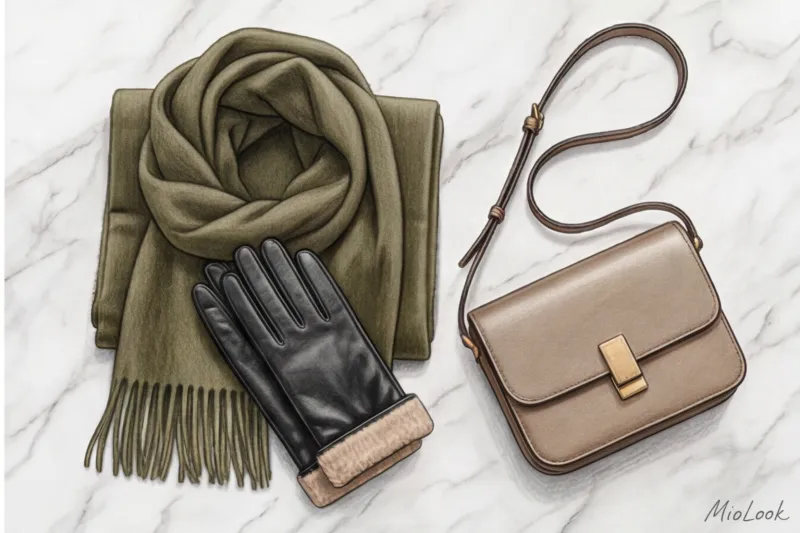
When it comes to accessories, avoid flashy logos and cheap hardware. Overly shiny, light yellow zippers on a bag or boots instantly betray low quality and cheapen the look. Instead, invest in texture: cashmere-lined leather gloves (trust me, once you wear them, you'll never go back to plain ones) and chunky wool-blend scarves in deep shades like burgundy, emerald, chocolate, or camel.
A practical checklist: putting together your personal winter base
Theory without practice is dead. Before you go shopping, do an inventory audit. Throw away or recycle all misshapen knitwear and sweaters with persistent pilling.
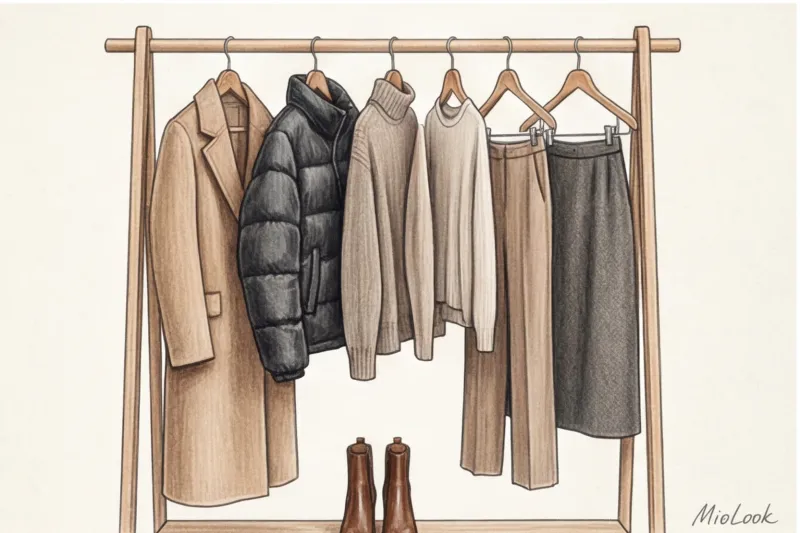
I recommend my clients to use formula 3x3x2x2 To create a working winter capsule:
- 3 tops: 1 basic smooth turtleneck, 1 thick jumper (wool/cashmere), 1 textured cardigan.
- 3 bottoms: 1 pair of full-length wool wide-leg trousers, 1 pair of dark straight leg jeans without any fading, 1 pair of thick midi skirt (leather or tweed).
- 2 pairs of shoes: Ankle boots with a comfortable heel for the city and structured flat boots (Chelsea or lace-up) for long walks.
- 2 outerwear options: An elegant wool midi coat and a high-quality minimalist down jacket (without fur, rhinestones or unnecessary belts).
This math gives you over 30 different combinations. And a little insider tip: quality fabrics are expensive, so focus on mid-season sales of premium brands (budget €100–€300 per discounted item) rather than new fast-fashion collections.
Winter elegance isn't a matter of layering. It's the art of choosing the right materials and architectural shapes. Invest in hidden technologies—the thermodynamics of high-quality wool, the right proportions, and impeccable fit—and winter will no longer be a season of compromises between style and health.