December. Morning. You look at the thermometer, which mercilessly reads -15°C, sigh, and pull your coziest, thickest sweater from the shelf. And at that very moment, your carefully cultivated authority as a leader begins to melt away like the first snow on a windshield.
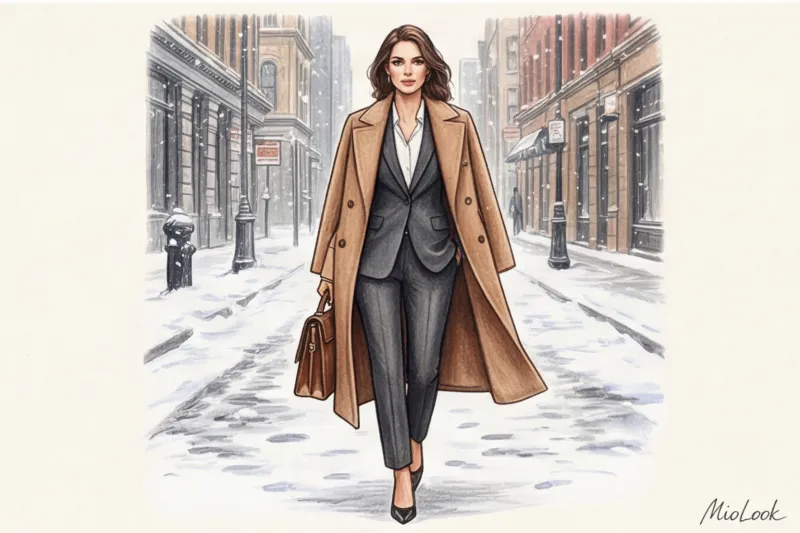
The biggest myth of winter dress code is: "To stay warm, you need to wear thick clothes." As a practicing stylist, I officially declare: chunky knits ruin your status silhouette. It's not the thickness of the fabric that retains heat, but the air between the thin layers. A properly chosen winter office wear for women It's not a compromise between health and elegance. It's the strict mathematics of materials.
We have already discussed the architecture of a business image in more detail in our The Complete Guide to Business Attire for Women , but today we'll apply this knowledge to extreme conditions. Instead of banal advice like "wear thermal underwear," I offer you a Mediterranean approach: a "smart microclimate" strategy, where fine silk, merino, and thick suit wool work better than any ski sweater.
Silhouette vs. Cold: Why It's So Hard to Maintain Executive Presence in Winter
Over 12 years of working with top managers, I've noticed a pattern. As soon as the temperature drops below freezing, a "cabbage effect" sets in in conference rooms. Women hide in shapeless cardigans and voluminous stoles, losing their crisp lines and, along with them, their nonverbal authority.
I had a client, Anna, the CFO of a major retailer. Last winter, she complained that she was being interrupted more often at board meetings. When we went through her wardrobe, the reason became obvious: with the onset of cold weather, she had swapped her structured jackets for soft, cozy oversized jumpers. A soft shoulder line psychologically conveys a gentle character.
According to the 2023 Center for Talent Innovation (now Coqual) study on executive presence, appearance and posture account for up to 26% of a leader's perceived leadership qualities. Shapeless clothing reduces this figure by half.
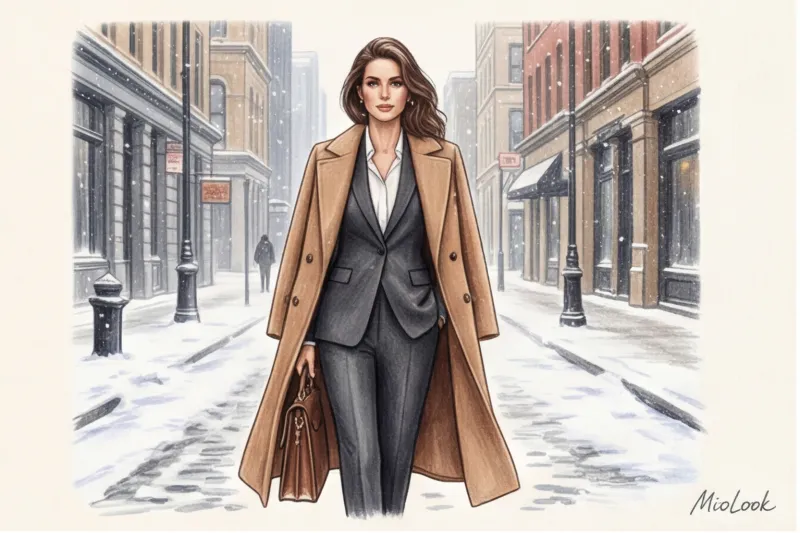
When we swapped her fluffy knitwear for a three-piece suit of heavy English flannel and a thin turtleneck, Anna not only stopped feeling cold but also regained control of the audience. In winter, your main goal is to maintain a rigid, architectural cut. The suit set shouldn't give way to "lounge" knitwear.
Smart Microclimate Strategy: How to Dress for the Street and the Office Simultaneously
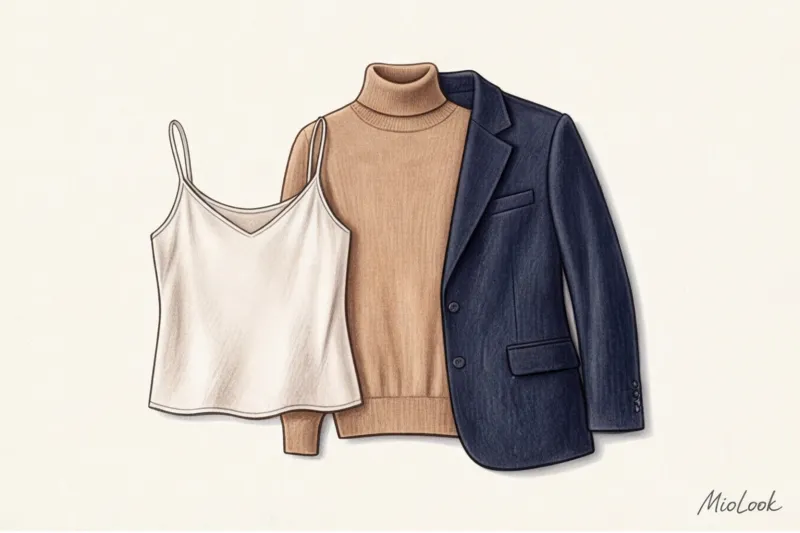
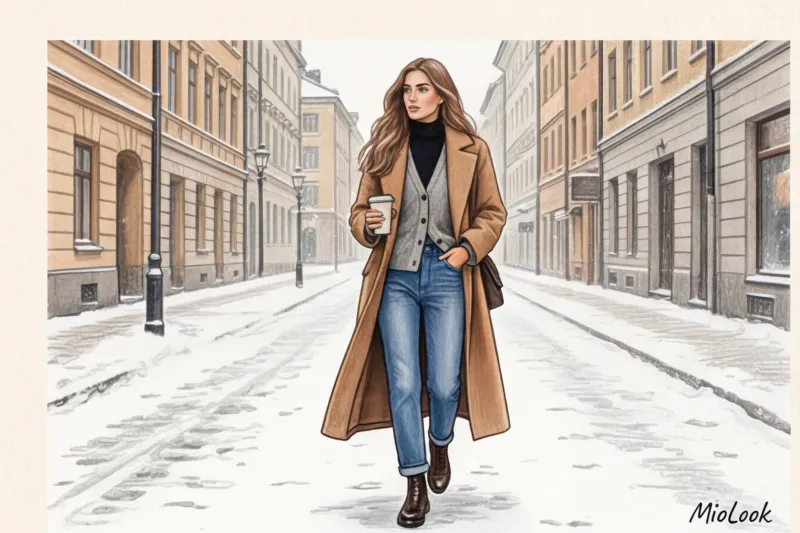
Many people dress as if they're going to spend eight hours in a snowdrift. But let's be honest: our real goal is to survive the temperature contrast. You walk down a freezing street (-10°C), take the subway or get into a warm car (+20°C), and then enter an office with dry, heated air from the radiators (+23°C).
This is where the main danger of synthetics lies. Polyester or acrylic under a winter coat will make you sweat on the way to work. Once you step out into the cold, the moisture will cool, and you'll freeze in seconds. And in the office, that same sweater will create a greenhouse effect.
The solution? The "transformer capsule" rule. Each layer should breathe and look classy if you decide to take off your jacket. The bottom layer is your personal climate control system, and the top layer is your armor.
Your perfect look starts here
Join thousands of users who look flawless every day with the smart MioLook algorithm.
Get access — €0.99 onceFabrics That Work for You: The Anatomy of the Perfect Winter Base Layer
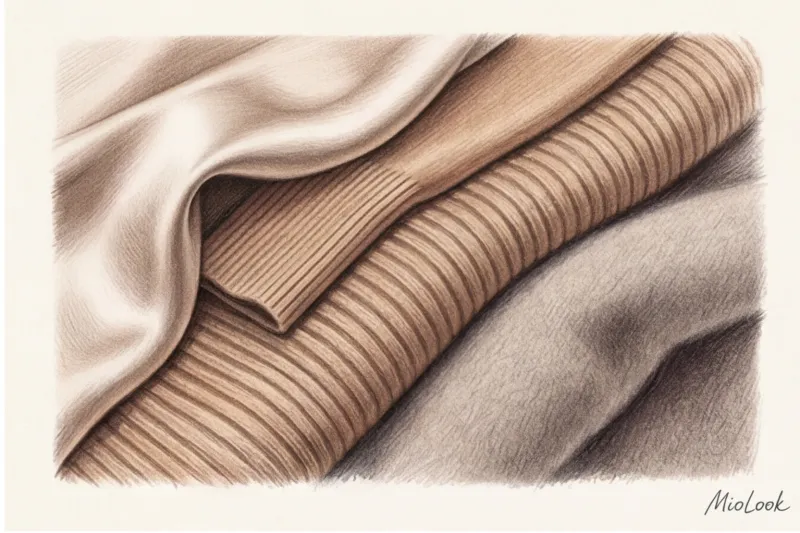
I often conduct an experiment with my clients: I ask them to compare a mass-market turtleneck (where the tag proudly proclaims "5% cashmere"—a pure marketing ploy) with a basic top made of 100% extrafine merino wool. The difference is colossal. According to textile labs, a 100% acrylic sweater is 60% less warm than a superfine merino turtleneck.
Remember the 30% rule: this is how much natural animal fibers (cashmere, alpaca, merino) a blended fabric should contain for it to actually work at retaining heat.
Here are three winter wardrobe staples that will change the way you feel:
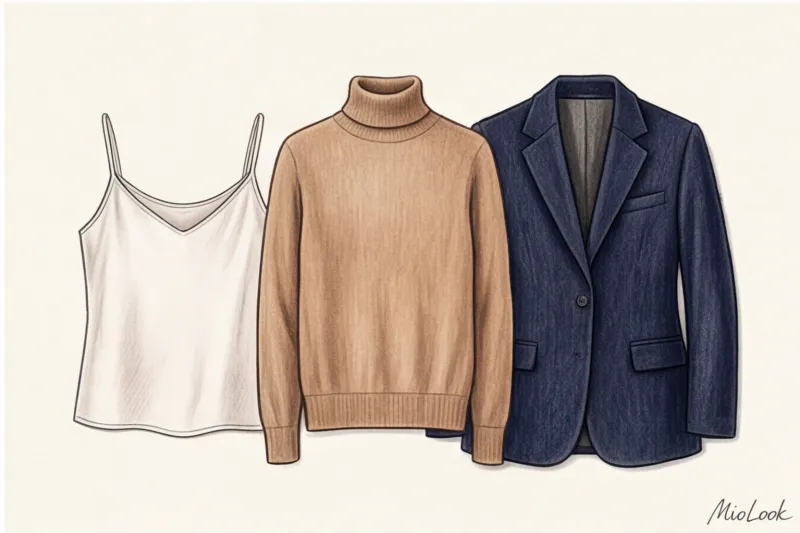
- Extra-fine Merino: It's thinner than cotton, but three times warmer. It fits perfectly under any jacket, even the tightest, without bunching.
- Natural silk: The secret layer of successful women. A silk tank top worn under a cotton shirt acts as a thermostat. Silk doesn't leach your body heat out, while remaining completely invisible.
- Flannel and tweed: A winter alternative to smooth wool suiting. The flannel's nap traps micro-air bubbles, creating an ideal barrier against the cold, while the fabric perfectly maintains the shape of lapels and creases on trousers.
The Truth About Cashmere: What We're Paying for and How to Avoid Buying a Fake
Why does one cashmere jumper last for years, while another starts to pill on its way out of the store? It's all about the length of the fiber. Cheap cashmere is made from short fibers that quickly shed.
You can check the quality right on the shelf: squeeze the fabric in your fist for 10 seconds. Good cashmere will immediately straighten out without deep creases. Then hold the fabric up to the light: it shouldn't be loose, like gauze. Disclaimer: This method won't work if the material contains nylon (it's also springy), so always check the tag—it should be 100% Cashmere.
Winter Office Wear for Women: 3 Formulas for a Classy Style
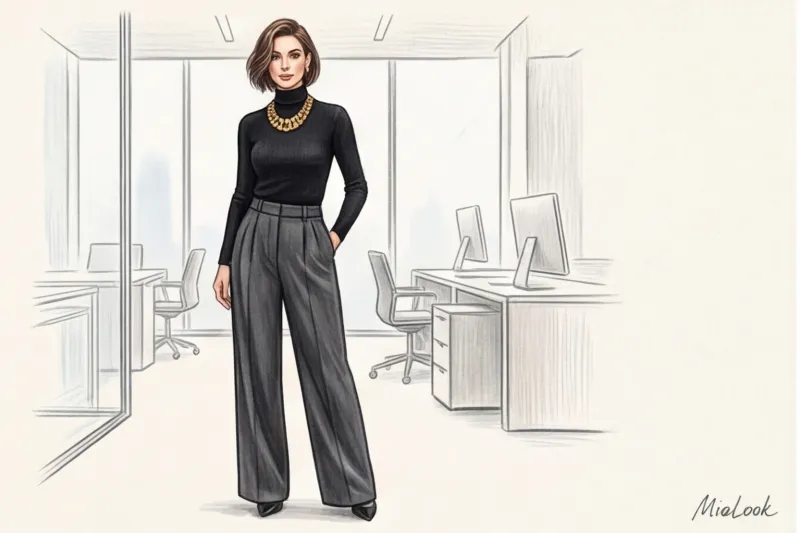
My favorite feature in MioLook — is the ability to create Outfit Formulas. When it's dark and cold outside, getting ready shouldn't take you more than five minutes. Here are three proven formulas that guarantee executive presence under any circumstances.
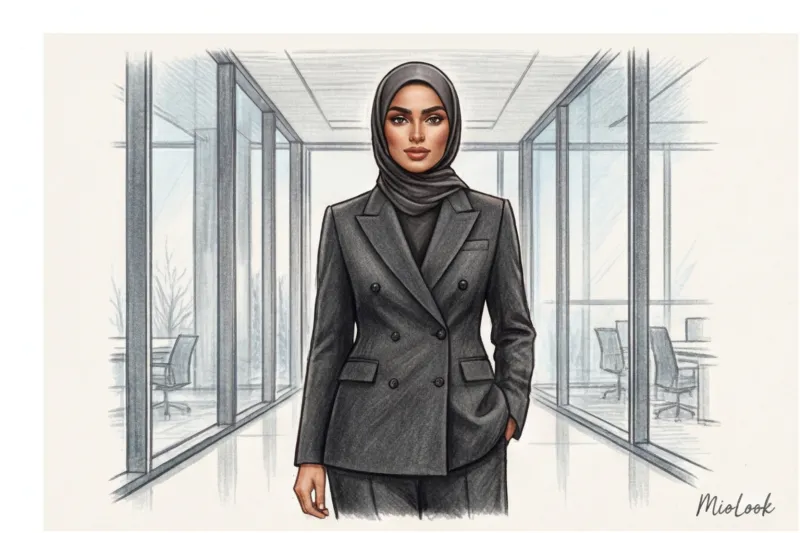
- Intelligent elegance: Thin merino turtleneck + Thick wool jacket + Palazzo pants.
The turtleneck covers the neck (the most vulnerable area in winter), and the jacket restores structure to the shoulders. The heavyweight trousers flow gracefully as you walk, without clinging to your legs due to static. - Relaxed Authority: Chunky knit midi dress + Wide leather belt + Structured embellishments.
The dress should be tight enough to conceal the contours of your underwear. A wide belt that cinches the silhouette and large earrings that complement the dress's soft texture are essential. - Sophisticated smart-casual: Cashmere V-neck jumper + Silk midi skirt + Opaque tights.
The contrast of textures (fluffy cashmere and smooth silk) looks incredibly expensive. Wear a silk top under the jumper for warmth. You can read more about similar combinations in our article about bright accents in a business look.
Shoes and tights: the main pain points of the winter dress code
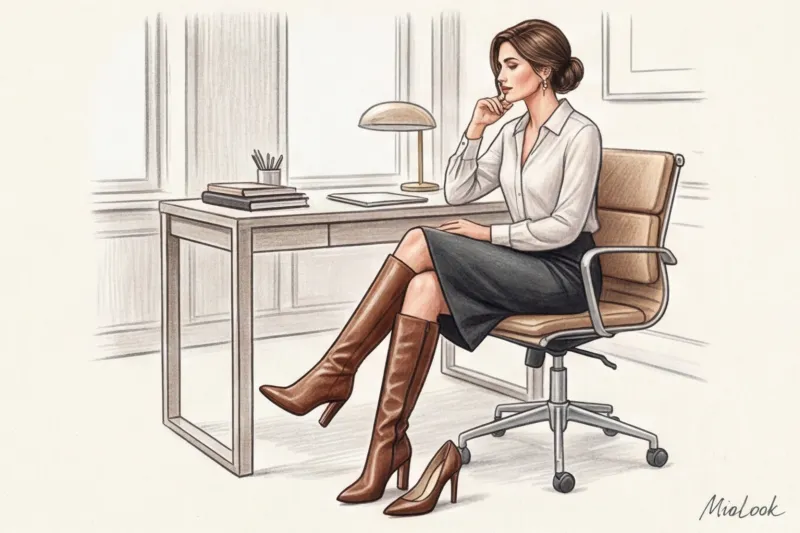
The biggest mistake I see in business centers is wearing a formal business suit with fur-lined winter boots or, even worse, Uggs. This instantly destroys the illusion of professionalism.
Wearing office clothes isn't a whim, but a rule of business etiquette. Leave your classic pumps or elegant loafers at work. But what about the commute?
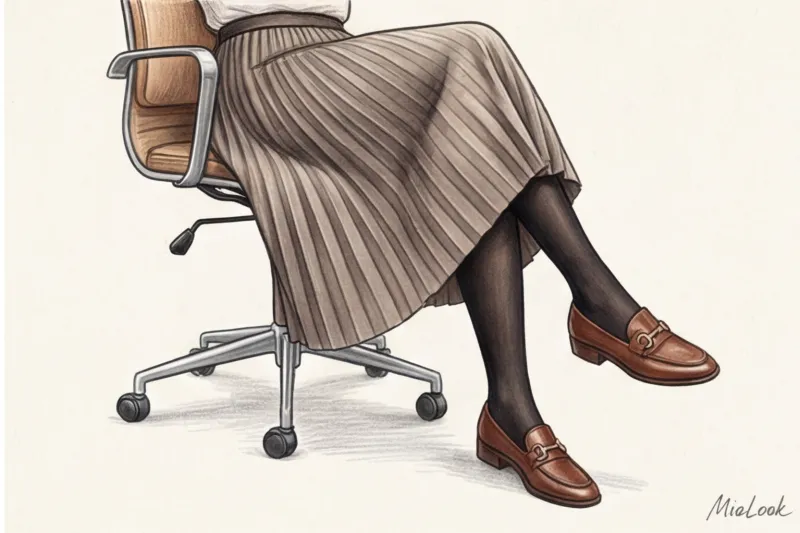
My favorite styling trick for winter is high pipe boots , the shaft of which extends directly under a midi skirt or culottes. There shouldn't be any visible leg between the hem of the skirt and the top of the boot. This allows you to wear any thermal tights (or thermal underwear), even the warmest, without anyone noticing.
If you wear knee-length skirts, the thickness of your tights is crucial. Sheer 20 denier tights look out of place in January. Opt for thick, completely opaque 80-100 denier tights. Avoid the sheen of lycra. If you're extremely cold, look for tights with a "bare skin" look—they're fleece-lined on the inside, but look like thin nylon on a tanned leg.
Winter accessories as a tool of influence
Soft winter knitwear inevitably relaxes the look. To avoid looking like you're just out for coffee at the dacha, we need crisp, geometric details. Accessories in winter act as the very framework that underpins our status.
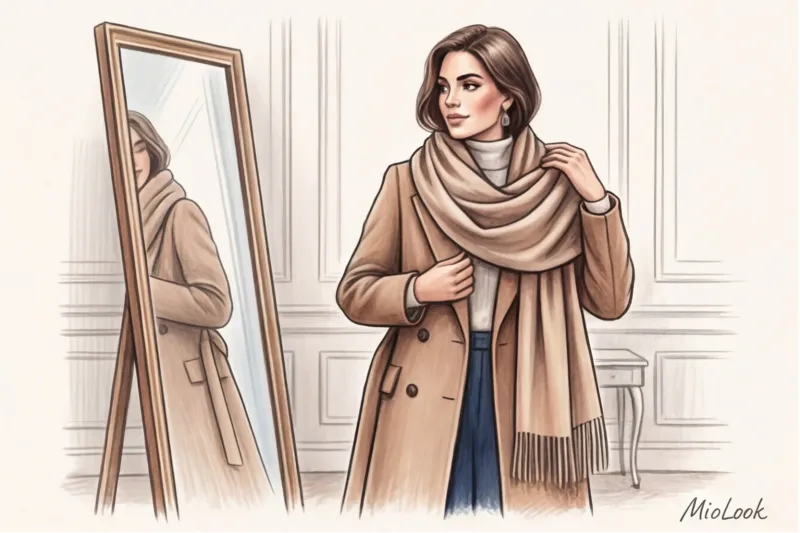
Forget about wrapping a scarf over your jacket at the office. If it's chilly, drape a wide, fine cashmere pashmina stole over one shoulder, securing it with a minimalist brooch at the waist. It's called draping, and it looks regal. Read more about status accessories in our separate article.
Another important consideration is the bag. In winter, soft hobo bags look out of place against the backdrop of bulky coats and thick fabrics. Your look requires a bag with a rigid shape, sharp angles, that sits comfortably on a tabletop without tipping over.
Ready to do a wardrobe audit?
Try MioLook's free plan—upload your items and let AI create the perfect capsule for you.
Get access — €0.99 onceChecklist: Auditing Your Winter Wardrobe for Executive Presence
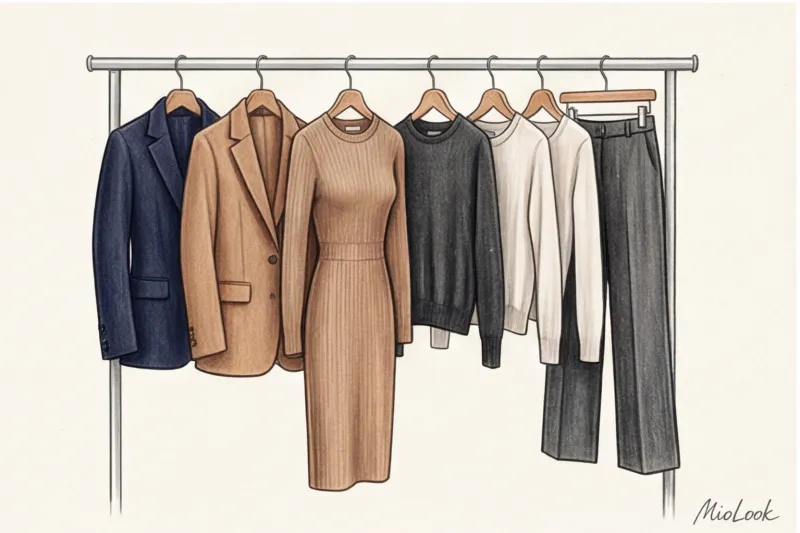
Stop compromising between cool and stylish. Take 15 minutes today, open your closet, and do a quick inventory using this checklist:
- Get rid of synthetics: Put away all sweaters with more than 50% acrylic or polyester on a back shelf. Save them for trips out of town.
- Check the fit of the jackets: Wear your favorite office blazer over a thin merino wool sweater. If the sleeves are tight and the back is bulging, this jacket is only suitable for summer silk tees.
- Buy the "secret layer": Invest in two high-quality base layers—one silk, one fine wool. This will change your relationship with winter forever.
- Organize a change of shoes: Bring a pair of smart, smooth leather pumps to work. Your posture and gait in the office will thank you.
Winter isn't a reason to put your style on hold until April. Treat the cold weather as an opportunity to showcase your mastery of complex, layered textures. Save the down jackets and oversized sweaters for the weekend. At the office, cashmere, thick silk, and impeccable tailoring reign supreme. Dress warmly, but never sacrifice your authority for the sake of the temperatures outside.