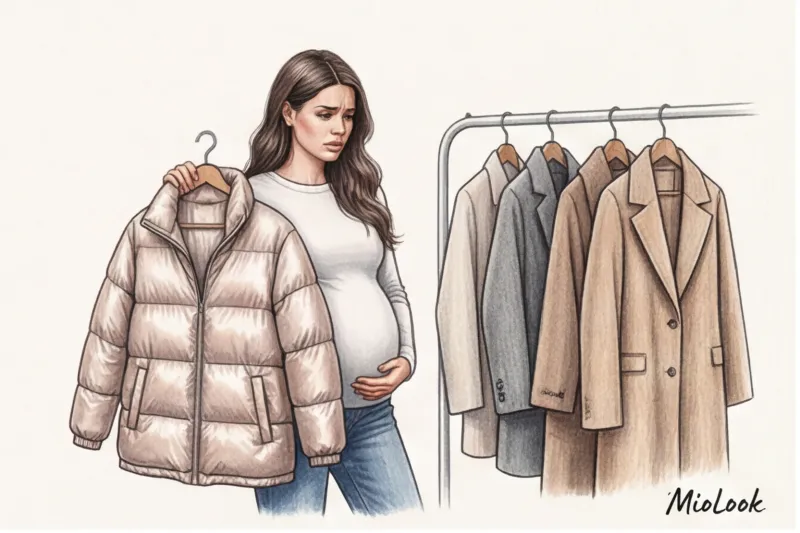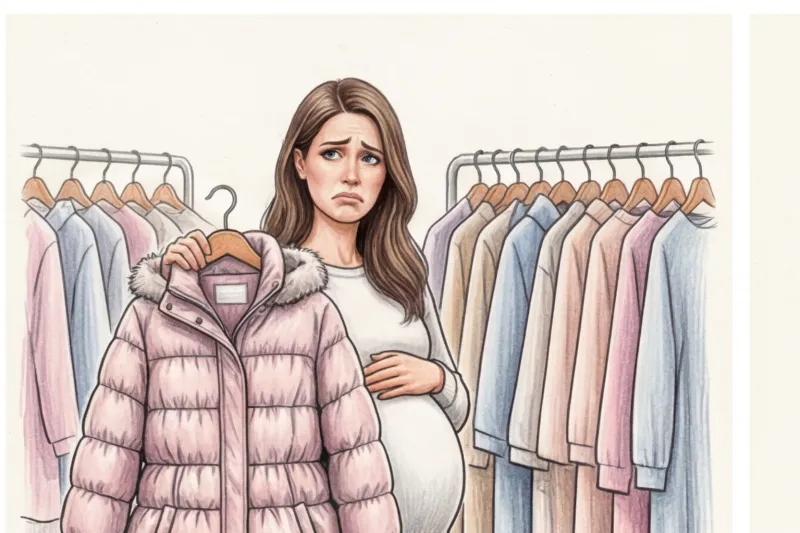
A tearful call. My marketing client, Anna, seven months pregnant, called me straight from the fitting room: "Olena, I look like a giant marshmallow; I have nothing to wear to the project presentation." It turned out she'd just spent €400 on a specialized "maternity" parachute down jacket. Three weeks later, she hated it because of its overtly "sissy" cut, and after giving birth, she simply threw it away. This is a classic mistake that 9 out of 10 women make.
The fashion industry persistently convinces us that winter maternity clothes are necessarily a separate, ugly, and expensive wardrobe segment. As a stylist with 14 years of experience, I declare: this is a marketing myth. You don't need to become a "cabbage" or buy clothes for one season. We discussed the architecture of a smart wardrobe for expectant mothers in more detail in our The complete guide to stylish maternity clothes Today I'll tell you how to use thermoregulation principles and men's tailoring to survive the winter in style, warmth, and without unnecessary expenses.
Why Specialized Winter Maternity Clothes Are a Trap
Let's talk about the tough economics of wardrobe. There's a universal formula for assessing the profitability of items: Cost Per Wear.
Imagine a jacket from a maternity store for €300. You'll wear it for a maximum of 2-3 months (about 75 days). The cost per wear is €4. Now, consider a high-quality oversized basic coat or wrap coat for €600. You'll wear it every winter for 5 years (about 450 days). The cost per wear drops to €1.30. In the latter case, you maintain your style rather than compromise.
The main problem with specialized clothing is the "greenhouse effect." To reduce production costs for these disposable jackets, brands use cheap synthetic insulation and 100% polyester linings. Trying to stay warm in such synthetic materials results in a loss of shape due to the excess bulk and instantly causing sweating on public transport.
Base layer: a secret weapon against the cold and the greenhouse effect
When I was pregnant, winter subway rides were a real ordeal. Hormonal fluctuations sent me alternately hot and cold. I felt suffocated in my down jacket on the platform, and when I stepped out into the freezing street, I instantly froze. My mountaineering experience saved me.
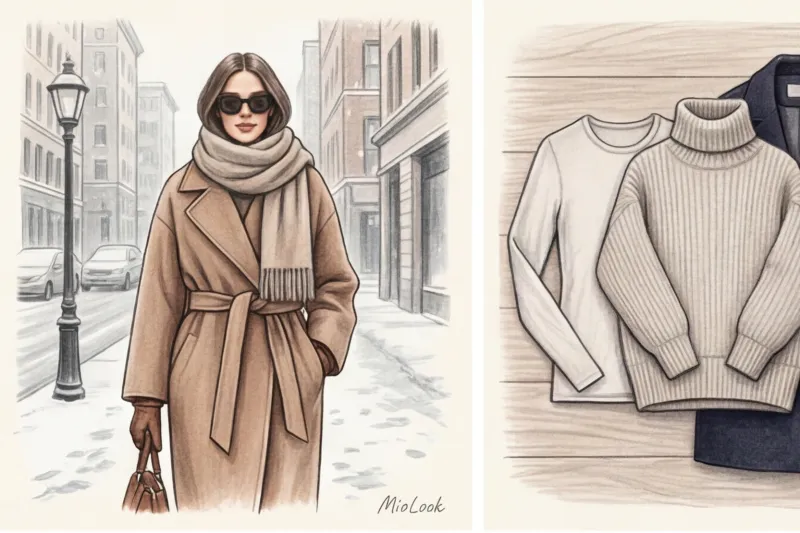
Outdoor gear experts have been using the three-layer rule for decades: a base layer (wicks away moisture), a mid-layer (warmth), and an outer layer (windproofing). We're simply adapting this concept for urban style. Forget thick, itchy, chunky-knit sweaters. A single, thin, premium merino wool baselayer provides the same warmth as three layers of cotton-polyester jersey, without adding any bulk.
Thermal underwear and the right tights: reading the labels
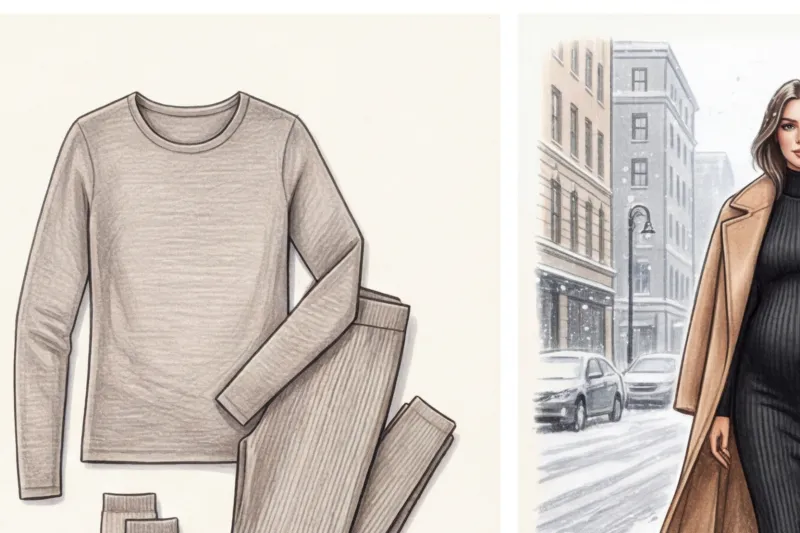
The ideal base layer composition is 70% merino wool and 30% silk. Silk is pleasantly cool and prevents the wool from itching, while merino acts as a climate control system. I strictly forbid my clients from wearing acrylic or 100% polyester during pregnancy, as the risk of contact dermatitis in pregnant women increases significantly.
Regarding tights: specialized maternity models with a huge belly insert aren't necessary for everyone. Up until 6-7 months, regular, high-quality tights of 100 denier (with more microfiber and less elastane) can be sufficient, simply by carefully pulling the waistband down under your belly. There is, however, an important exception: This life hack doesn't work at all with shapewear—their tight waistband will compress the blood vessels.
Layering Formula: How to Stay Warm While Maintaining a Sleek Silhouette
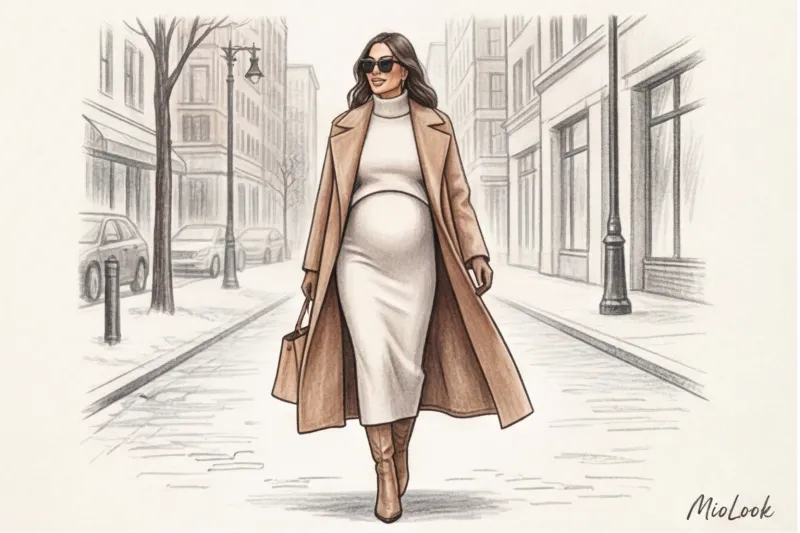
How to avoid looking like a ball? Use the following rule of style: a fitted bottom and a voluminous, but always unbuttoned, top.
I often use this styling trick during shoots: I dress the model in a thick knitted noodle dress and layer a long, contrasting cardigan or menswear-style jacket over it, leaving it unbuttoned. The two sides of the cardigan create artificial vertical lines right in the abdominal area. This visually elongates the figure by at least 5 centimeters and creates a slimmer silhouette even at eight months.
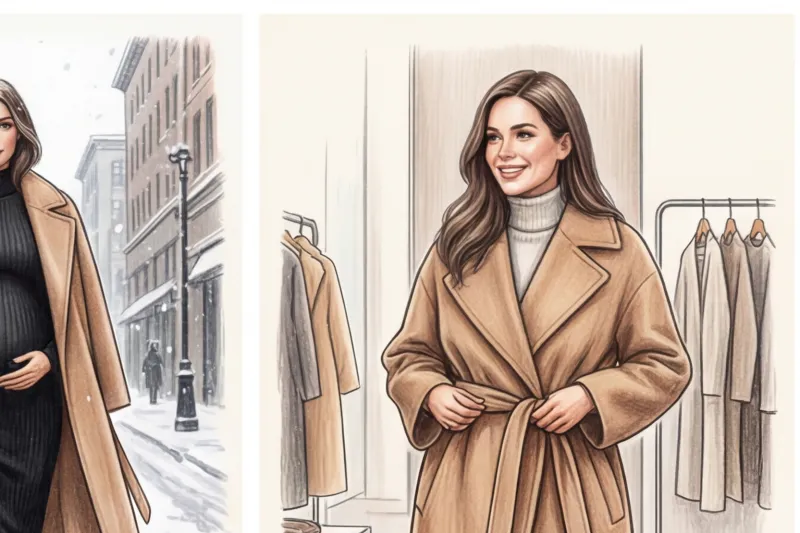
In the appendix MioLook At our company, where we conduct wardrobe audits with our clients, statistics reveal an interesting fact: about 80% of regular loose-fitting and cocoon-style items from a current wardrobe fit perfectly until the 7th or 8th month of pregnancy. It's easy to learn how to mix textures: a smooth basic dress and a fluffy mohair cardigan work much more beautifully together than boring, uniform knitwear.
Access to MioLook for €0.99 — one-time payment
A smart AI stylist will select the perfect look from your items and suggest additional purchases.
Get access — €0.99 onceOuterwear: What to Invest in Without Regrets
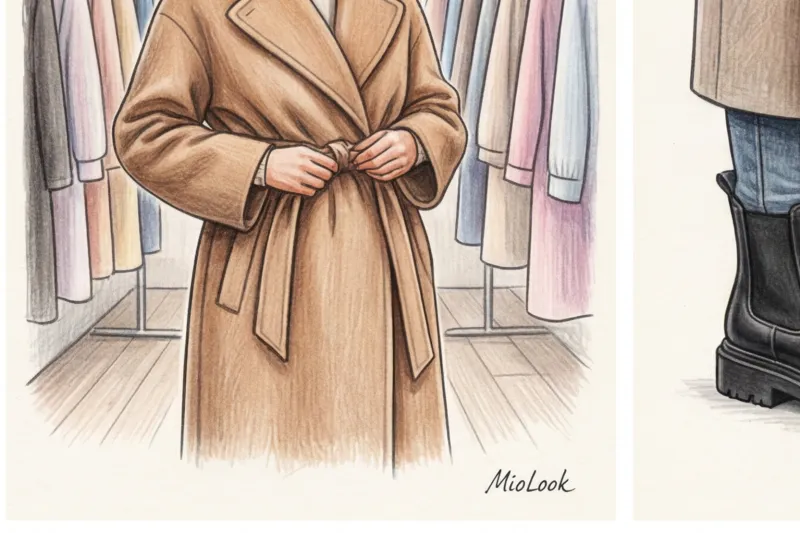
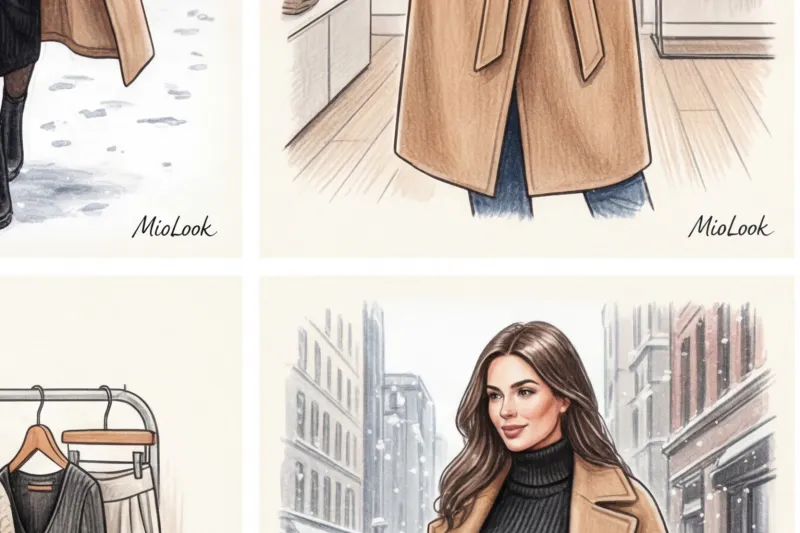
If your pre-pregnancy winter jacket was fitted and won't close, don't rush to the maternity store. The best investment you can make in your wardrobe is a quality wrap coat.
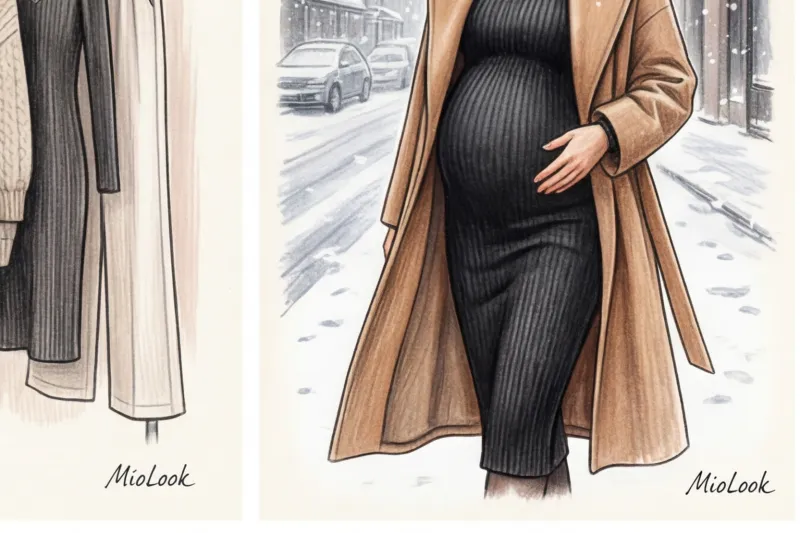
The genius of the style popularized by Max Mara lies in its lack of rigidity. You simply wrap the coat around your waist and tie the belt above your belly. As your belly grows, the wrapping will subside slightly, but the coat will still fit perfectly. Choose styles with dropped shoulder seams—they won't restrict movement as your ribcage expands in the third trimester. Look for a wool blend of at least 70-80% wool (alpaca or cashmere).
Lifehack from a stylist: men's section and sling inserts
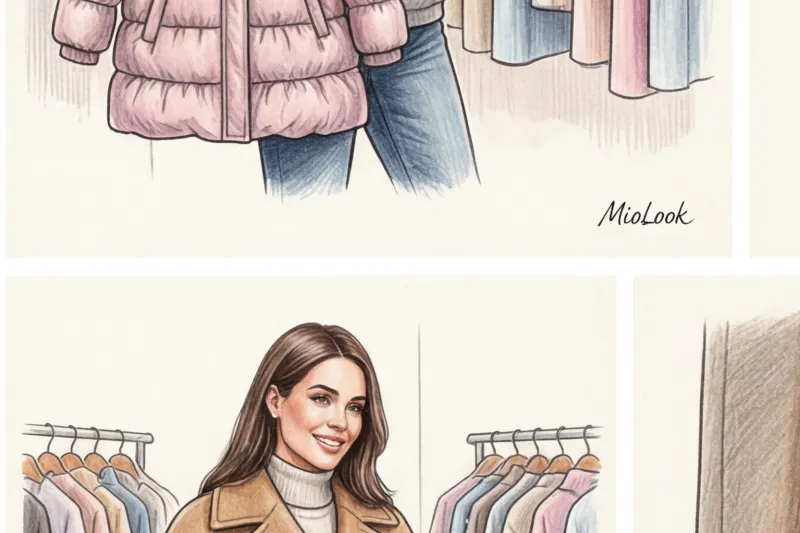
Here's my favorite, slightly counterintuitive tip: for a winter down jacket, go to the men's department (for example, at COS, Uniqlo, or Massimo Dutti). Why? Firstly, men's styles tend to be straighter and have wider armholes—exactly what pregnant women need. Secondly, brands often pack more insulation into men's models, and paradoxically, they cost less than similar women's jackets.
Now for the main secret: buy a universal sling insert (jacket extender) on a marketplace. It's a fabric piece with two zippers on the sides that clips into your regular jacket. It costs around €30-50 and instantly transforms your favorite men's or unisex down jacket into a ninth-month outfit. After giving birth, simply unzip the insert and continue wearing your stylish garment.
Shoes and accessories: warmth, safety, and the right accents
At 8-9 months, trying to tie your winter boots isn't just uncomfortable; it's a full-blown cardio workout, accompanied by heartburn and shortness of breath. Have mercy on your back.
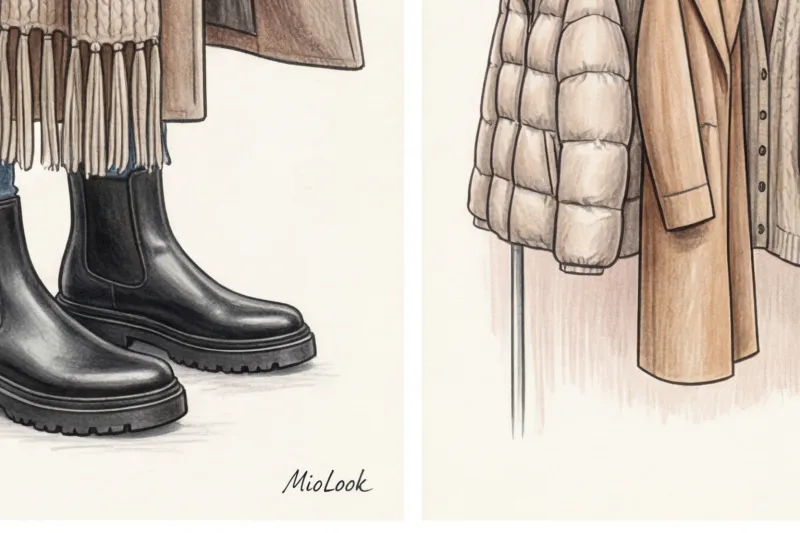
You need slip-on shoes that can be put on with a long shoehorn. Chelsea boots with elastic on the sides are ideal. But they must have a chunky "tractor" sole. According to a 2024 WGSN study, chunky shoes remain a global trend, but for pregnant women, it's also a safety issue. A thick sole (3-4 cm) creates an air gap, protecting the foot from the frozen ground, and a deep tread prevents slipping due to a shifted center of gravity.
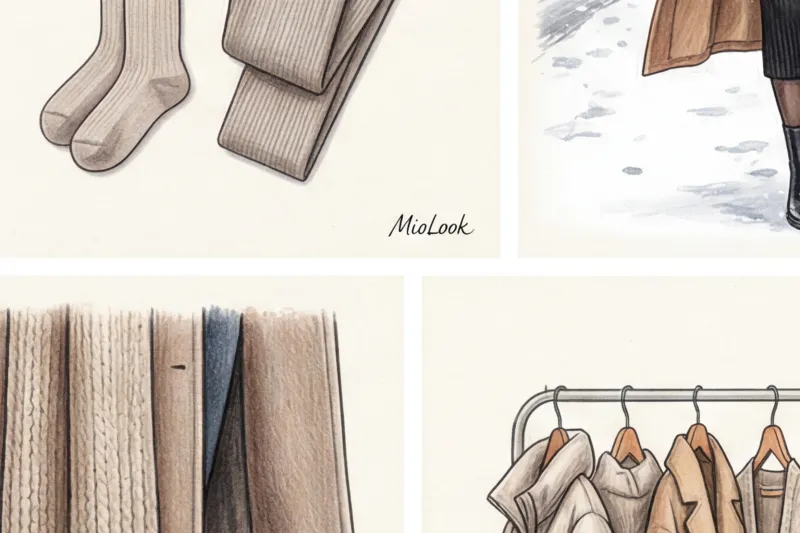
If your winter wardrobe is neutral (black, camel, gray), use accessories to shift the focus. A voluminous, bright scarf or a statement beanie in burgundy or emerald will draw attention to your figure, distracting from its curves.
Your perfect look starts here
Join thousands of users who look flawless every day with MioLook. Our AI will help you integrate new items into your existing wardrobe.
Get access — €0.99 onceOlena's Checklist: 5 Things for the Perfect Winter Mama-to-Be
To avoid buying too much, I've put together a minimal capsule for you that will cover 90% of your winter outings and last you through maternity leave and stroller use:
- Set of thin thermal underwear (merino/silk) - your second skin.
- Ribbed knit midi dress in a basic color - stretches with you, maintaining an elegant silhouette.
- A chunky wool cardigan (or a heavy men's shirt/zip-up sweater) - to create slimming vertical lines over the dress.
- A wool-blend robe coat or a straight-cut down jacket (with a sling insert) - the top layer is not tied to size.
- Chelsea boots with a thick, lugged sole and no laces - warm, stylish and can be put on hands-free.
Pregnancy isn't a reason to give up your style or buy things you feel uncomfortable in. Think of this period not as a time of restrictions, but as an excellent crash test of your ability to work with textures, layering, and clever tailoring. Invest in quality, explore the men's section, and remember: a stylish mom starts with confidence.