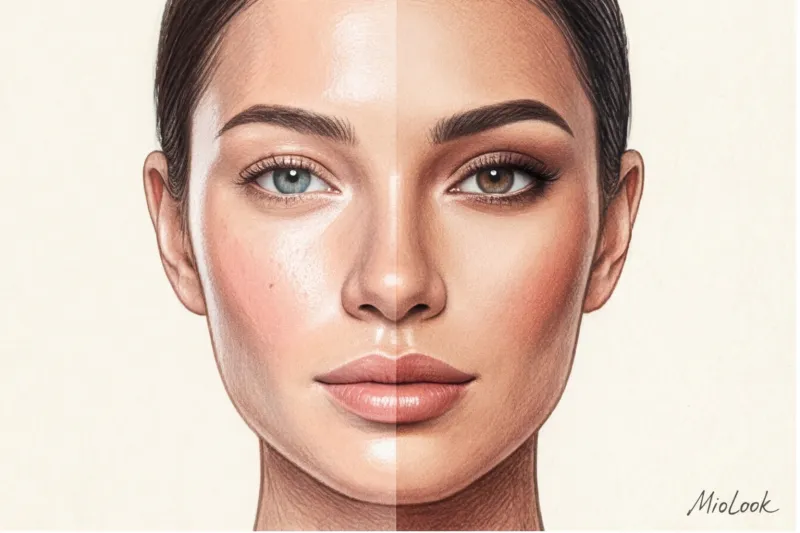
Live in 15 minutes. My client, a famous TV presenter, is sitting in her dressing room wearing an immaculate €2,000 wool Jil Sander suit. The look is meant to project absolute confidence and status. But under the harsh studio lights, we witness a disaster: the thick, expensive foundation has begun to crack and settle into her pores, forming patches. The makeup artist frantically reaches for her powder, but I stop her. The problem wasn't the foundation or even the primer. The problem was that we'd skipped one "minor" step—applying a hydrating toner.
There is still a heated debate in the beauty industry about whether Do you need toner before applying makeup? , or is it just a marketing ploy by brands wanting to sell us tinted water? Over 12 years of working as a stylist at the intersection of fashion and glamour, I've learned one thing: proper canvas preparation is more important than the cost of paint. We've already discussed the care architecture in more detail in our a complete guide to basic facial skin care , but today I want to look at a specific, most underestimated stage.
In this article, I won't be regaling you with platitudes about "finishing cleansing." We'll explore the physics of pigment adhesion to the skin and the chemistry of pH balance, so you understand: without the right toner, even a luxury €100 foundation risks oxidizing and ruining your carefully crafted look.
Do you need toner before applying makeup? Debunking the main myths
For a long time, toners (or lotions, as they were called in the '90s) were associated with harsh, alcohol-based liquids designed to remove makeup and tighten pores until they squeak. This gave rise to the main myth: if you've washed your face thoroughly with a modern cleansing oil and a gentle foam, you can safely skip toner.
But a modern toner isn't a makeup remover. It's the first, lightest, and most penetrating step of moisturizing. Imagine dry soil in a flowerpot. If you suddenly pour a glass of water on it (or apply heavy foundation), the water will simply roll off the surface, leaving the cracks dry. But if you first lightly spray the soil (apply toner), it will become loose, pliable, and ready to absorb.
To answer the question of whether toner is necessary before applying makeup: yes, if you want the product to blend seamlessly with your skin, rather than sit on it like a foreign mask. A hydrated skin distributes and holds makeup 30–50% more effectively.
The Hidden Reason Why Your Dear Tone Slips by Lunchtime
Many women, faced with their foundation fading or creasing by the middle of the workday, make a classic mistake. They go to the store and buy a mattifying silicone primer, hoping to "stick" their makeup in place. It's counterintuitive, but that's where the trap lies.
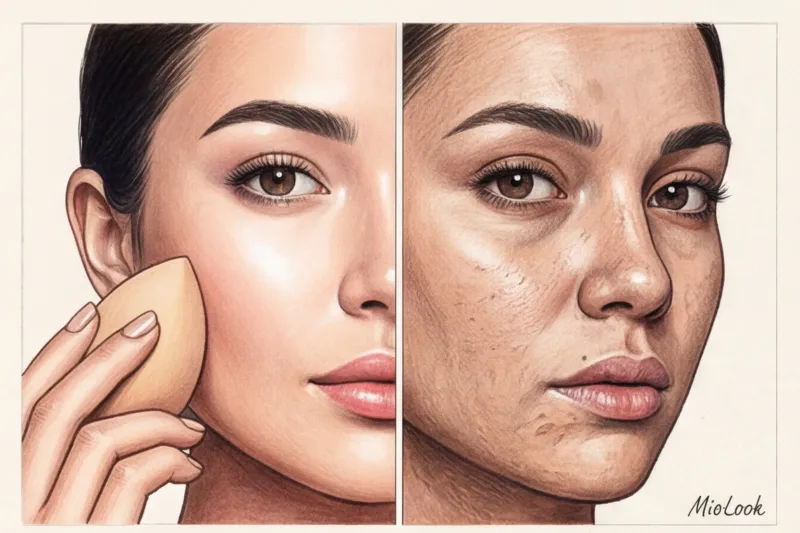
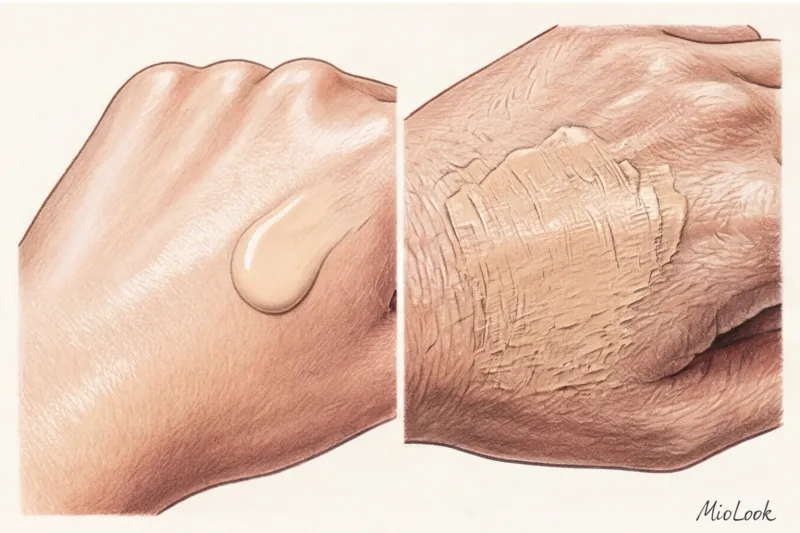
If you apply a base or foundation to dehydrated skin (which you have deprived of a hydrating toner), the so-called sponge effect The stratum corneum, desperate for moisture, literally begins to suck the water out of your foundation. What's left on the surface? Dry, uneven iron oxide and titanium dioxide pigment mixed with sebum. It lays on in patches, highlights every flake, and inevitably starts to cake.
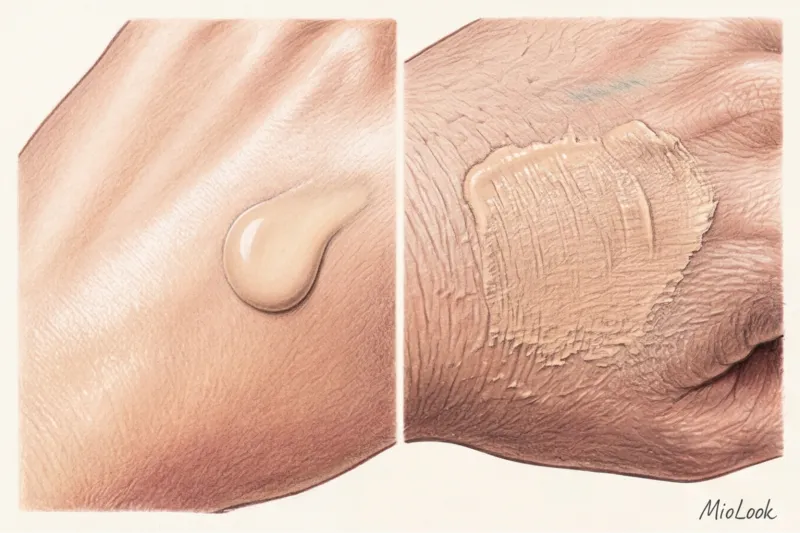
No silicone primer, even the most legendary, will save the situation if there's a desert underneath. Silicone will only create a greenhouse film, causing dry skin to secrete even more sebum in an attempt to protect itself. The result: a shiny face with cracked makeup.
How exactly does toner affect the longevity of foundation: the physics of the process
Let's talk in the language of professional makeup artists. The secret to the perfect foundation lies in two terms: microrelief And adhesion (clutch).
Under a microscope, our skin's surface resembles a tiled roof due to the dead flakes of the stratum corneum. After washing, these flakes are often raised. If you apply foundation directly to them, the brush or sponge will trip, creating micro-streaks. A properly chosen toner instantly smooths these "shingles." It reduces the skin's surface tension, allowing liquid textures (serums, primers, foundation) to glide on smoothly, like glass.
Your perfect look starts here
Join thousands of users who look flawless every day with MioLook, the smart AI stylist. Makeup and wardrobe selection in one click.
Get access — €0.99 oncepH balance and prevention of pigment oxidation
Now, a little chemistry. Have you ever noticed that a foundation that was perfect when you applied it in the morning suddenly turns reddish or half a shade darker by midday? This process is called pigment oxidation, and toner plays a key role in preventing it. If you're unsure about your shade choice initially, I recommend researching How to choose a foundation online using AI , but even the correct shade can change color due to a chemical reaction.
According to research published in Journal of Clinical and Aesthetic Dermatology (2022) The normal pH of healthy skin ranges from 4.7 to 5.5 (slightly acidic). The pH of tap water in most cities reaches 8.0 to 8.5. Washing with just water or a harsh gel shifts your skin's pH toward the alkaline side. Restoring the natural acid mantle takes up to two hours.
Pigments in makeup (especially iron oxide) are extremely unstable in alkaline environments. When they react with your skin's altered pH and oxygen, they oxidize—hence that telltale orange undertone. Toner instantly restores your skin's proper acidic pH (around 5.0), blocking the chemical oxidation reaction. Your foundation stays exactly the same color as when you took it out of the bottle.
Acids, ceramides, or hydrolates: choosing a toner for your makeup needs
In my work as a stylist on lookbook shoots for brands like COS or Massimo Dutti, I always coordinate skin prep with makeup artists based on the lighting and goals. Toner should be a logical continuation of your makeup, not an accidental addition. By the way, when choosing a look in MioLook app , we always take into account the texture of the makeup matches the texture of the clothes.
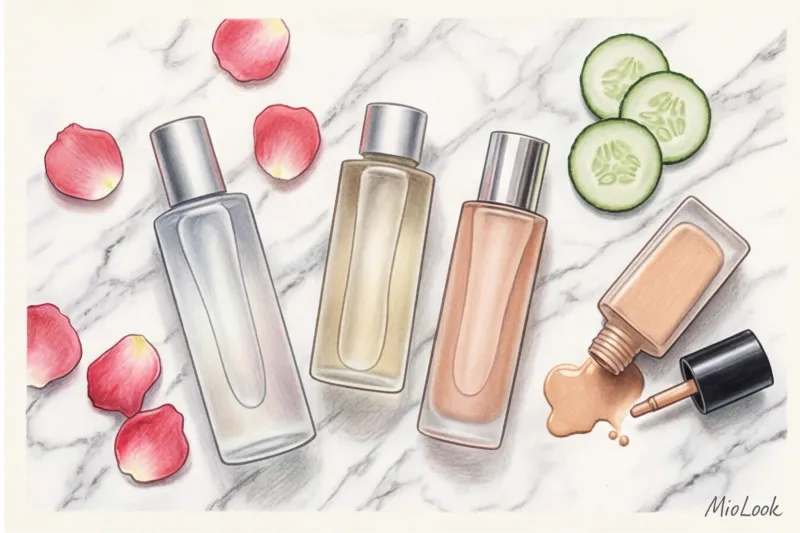
- Tonics with AHA/BHA acids: Indispensable before HD filming or an important event if your skin feels dull. A weak solution of lactic or glycolic acid works as a micro-peel, dissolving dead skin cells. Skin becomes polished, reflecting light. The foundation adheres to it like a mirror. Limitation: Do not use them before going out into the sun without a strong SPF, otherwise you will cause pigmentation.
- Moisturizing tonics (with hyaluronic acid, glycerin, centella extract): The gold standard for creating a dewy glow. They attract moisture, visibly smoothing fine lines and wrinkles. Ideal under lightweight fluids and BB creams.
- Balancing toners (with niacinamide, zinc, green tea extract): A lifesaver for combination and oily skin. Niacinamide regulates sebum production, so your forehead won't turn into an oily pancake by midday, and your makeup won't run.
Makeup Artist Secrets: How to Apply Toner for Maximum Lasting Power
Backstage at Paris Fashion Week is absolute chaos. Top models can perform four to five shows a day. Imagine what happens to their skin when makeup removers and new layers are applied every few hours. The skin becomes red, reactive, and refuses to hold its tone. In such conditions, the only salvation is proper toning techniques.
Layering method (7 skin method)
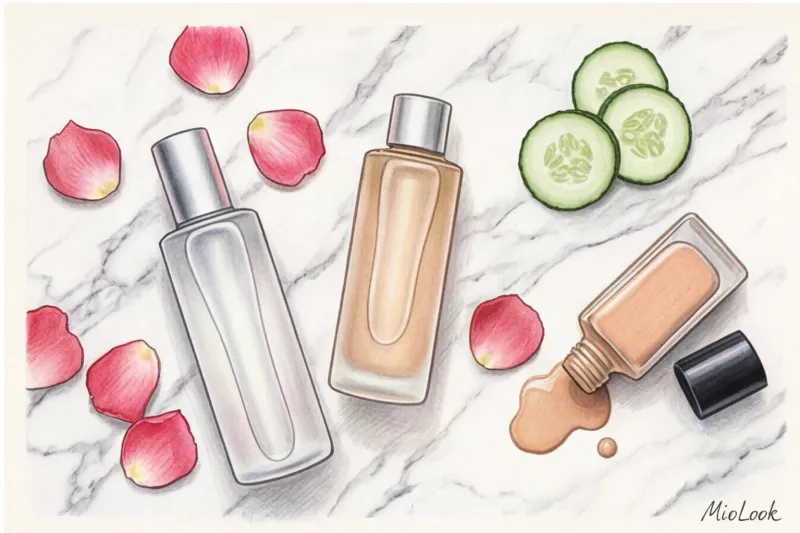
Instead of one layer of thick cream that will settle under your foundation, we apply a light, hydrating toner in 3-5 ultra-thin layers. We apply it, let it absorb for 15 seconds, and then reapply. This creates an extreme level of hydration (the skin literally "gets drunk") without leaving a greasy film that clashes with your makeup.
Hands instead of cotton pads
Save the cotton pads for nail polish remover. Makeup artists always apply toner with their hands. Firstly, you avoid damaging the skin with unnecessary friction. Secondly, the warmth of your hands helps the product penetrate better. Pour a couple of drops into your palms, rub gently, and use pressing (patting) motions to "pat" the moisture into your face.

The three-second rule
A huge mistake is waiting for toner to dry completely before applying serum or cream. Toner is a conductor. The next step (and primer) should be applied while the skin is still slightly damp. This will lock in the hydration.
Ready to get started?
Try the MioLook free plan—no commitments required. Upload your photos and let the algorithms create the perfect everyday look for you.
Get access — €0.99 onceFatal Mistakes: Which Toners Are Guaranteed to Ruin Your Makeup
I must make an important disclaimer: toner is not a magic wand. This rule does NOT apply if you choose a product whose formula clashes with your makeup. Some products can destroy your makeup faster than doing nothing at all.
First of all, be careful alcohol lotions If the first or second place in the lineup is Alcohol Denat , put the bottle down. Yes, for the first few minutes, your skin will seem matte and velvety. But alcohol instantly dissolves the lipid barrier. After a couple of hours, your skin will panic and release a massive dose of sebum, and your foundation will simply dissolve in the oil.
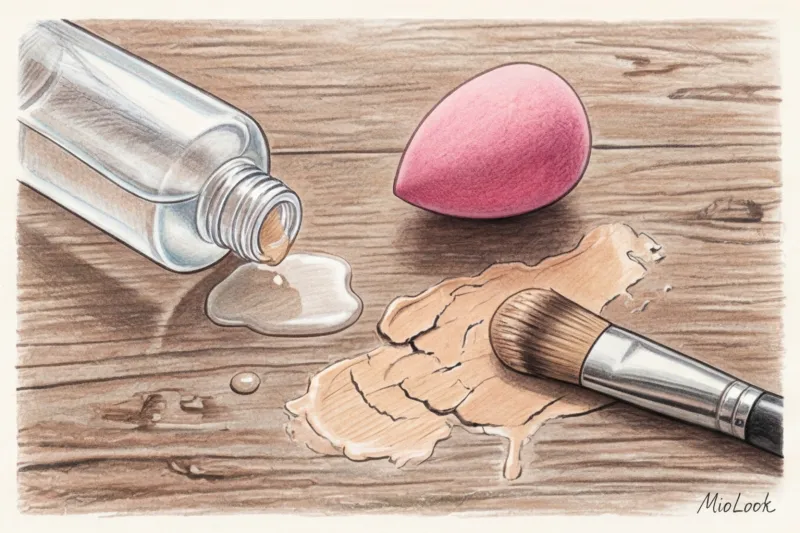
Secondly, keep an eye on texture conflict Two-phase toners with added oils (such as squalane or shea butter) are popular these days. They're great for evening skincare. But if you apply an oily toner and a lightweight water-based foundation on top, the effect is the same as mixing water and vegetable oil in a glass. The textures will repel each other, and the foundation will curl into unsightly flakes right when you blend it.
Checklist: Step-by-step skin preparation before an important event
To put all this theory into practice, here's my professional action plan. Use it before an important conference, a job interview, or just on a day when you need to look your best.
- Washing: Use a gentle cleanser suitable for your skin type. Pat your face dry with a paper towel (cloth towels leave behind lint and bacteria).
- Tonic (right away!): Within the first 3 seconds after wiping, apply the hydrating toner using a patting motion. Wait 15–20 seconds until it becomes slightly tacky but not completely dry.
- Serum and cream: Apply a light moisturizer. Let it soak in for at least 3-5 minutes. This is critical. If you rush, the pigment will mix with the cream.
- Primer (optional): Only on those areas that require correction (for example, silicone primer-filler ONLY on the T-zone with enlarged pores).
- Tone: Apply with a damp sponge or a tightly packed brush using patting movements.

Let's get back to my client from the TV studio. By replacing aggressive mattifying treatments with deep hydration using a basic toner with ceramides, we ensured her makeup lasted four hours under the hot lights of the cameras without a single touch-up.
Well-groomed, properly moisturized skin is the best base, transforming any makeup from a mask into a natural extension of yourself. Invest time in preparing the canvas, and your "paints" will never let you down.