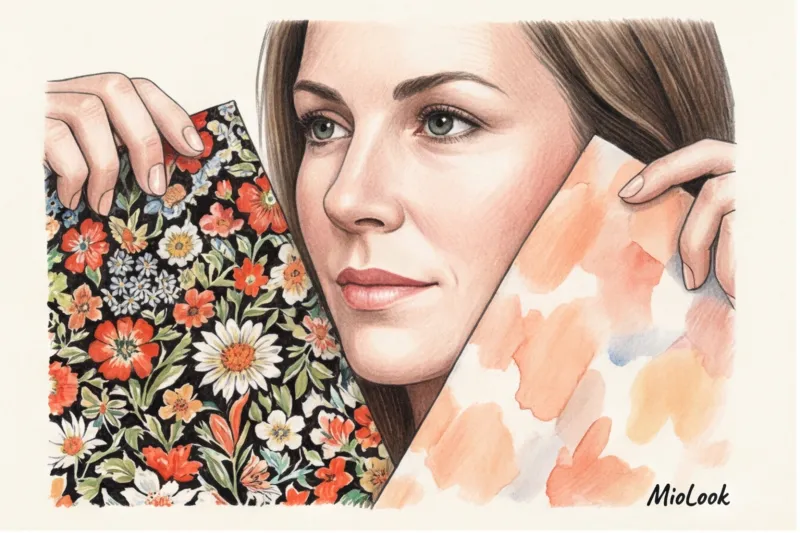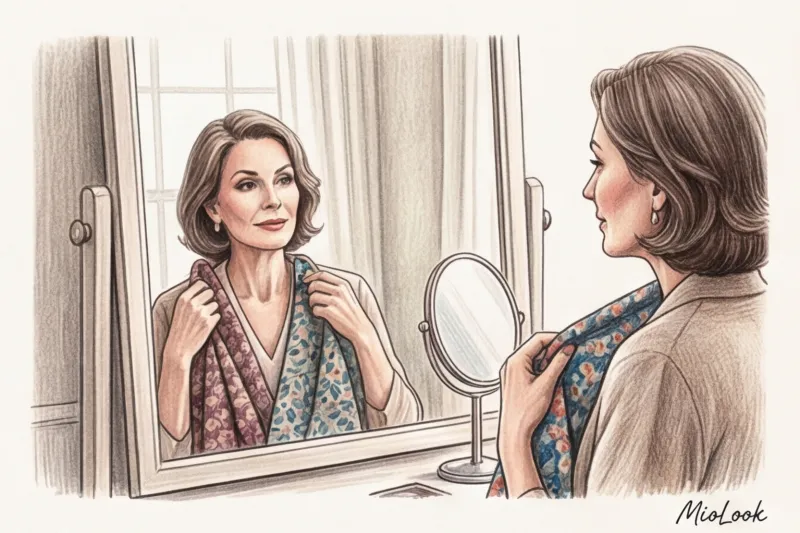
Recently, a charming client came to me for a wardrobe review. She was holding a seemingly "safe" blouse: a dark burgundy viscose with a small, densely packed calico flower print. "It's so romantic," she said. But when we held the fabric up to her face in daylight, her skin instantly took on an earthy hue, and the shadows under her eyes appeared deeper. We replaced the blouse with a thick silk top with a large abstract brushstroke—and her face literally glowed from within, shedding a good ten years.
Many women intuitively sense a catch when looking for an answer to the question, What prints make you look older? , but most often they blame a bad cut or their own lack of sleep. We talked in more detail about the optics of age and styles in our A complete guide to style mistakes that make women look older Today, we'll be talking exclusively about print. As a stylist who specializes in investment wardrobes, I assure you: "granny print" isn't a matter of taste. It's pure physics, optics, and color.
The Physics of Pattern: Why Are We Even Talking About Which Prints Age?
Clothing near the face works like a reflector in professional photography. The secret lies in the concept microcontrast As research by the PANTONE Color Institute (2024) shows, with age, the natural contrast of our faces—the difference between skin tone, lip color, eyebrow color, and the whites of the eyes—inevitably decreases. Colors become softer, and undertones become more complex.
And herein lies the main pitfall. If you wear something with a very dense, rhythmic, and aggressive pattern, the fabric begins to visually "shout out" your face. This creates an optical ripple. The other person's eyes become physiologically tired from the flickering of small details on your blouse, and the brain unconsciously projects this "fatigue" onto their perception of your face.
"A print shouldn't enter a room before you do. If, after a meeting, people remember the pattern of your shirt but not the color of your eyes, you've chosen the wrong pattern."
The Anatomy of a Granny Print: 4 Patterns That Add Age
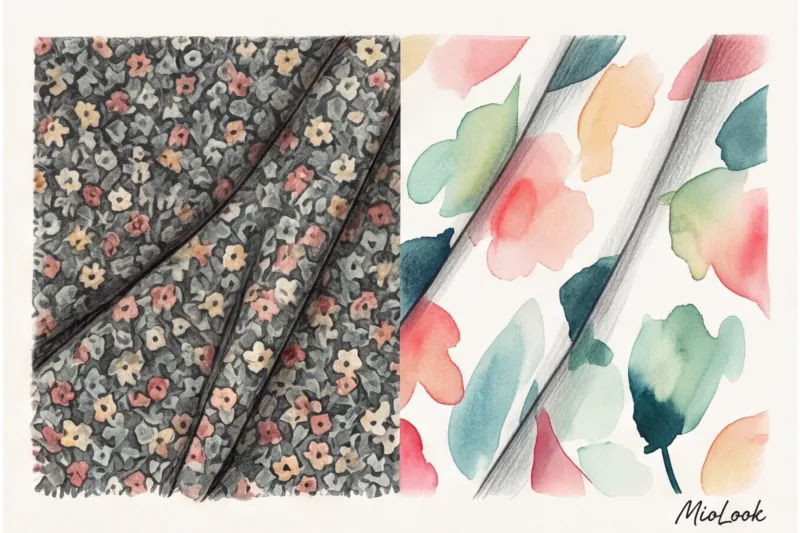
Let's take stock. These four patterns are traditionally sold in mass-market stores as "feminine essentials," but they're the ones that mercilessly steal your freshness.
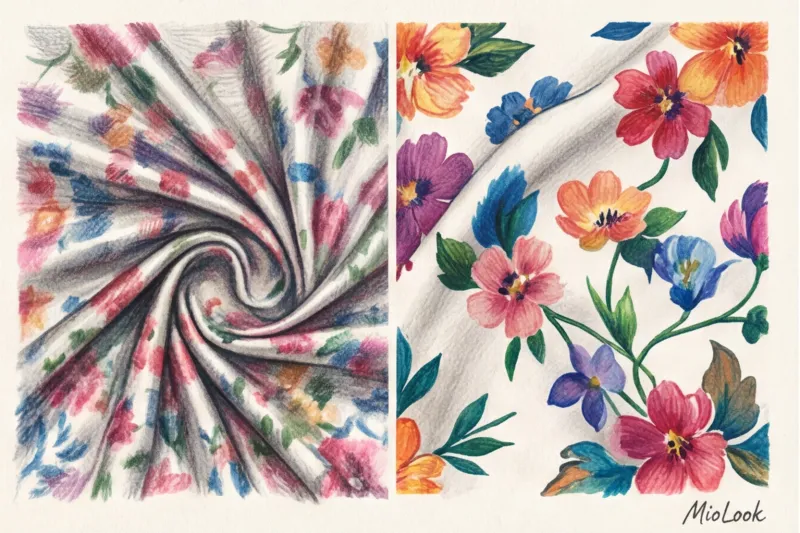
Small calico flower on a dark background (Millefleurs)
Historically, the millefleur (thousand-flower) pattern was used for cheap home textiles and cotton robes—simply because the small, mottled pattern hid stains and imperfections on cheap fabrics perfectly. The main problem with this print is the complete lack of negative space (the "air" between elements). This turns the fabric into a visual mess.
These colors are especially dangerous against dull, dirty backgrounds: brown, dark green, mustard. These shades cast gray-green shadows on the chin and neck, creating the effect of a sickly face.
Perfectly even, high-contrast polka dots (Polka Dot)
It's commonly believed that classic black and white polka dots are a safe, timeless elegance. Over 12 years of work, I've learned that this is the most insidious myth in the fashion industry.
Physics intervenes: the geometrically perfect circles on the fabric create a stark contrast with the natural, slightly aged lines of the face. According to the Müller-Lyer optical illusion, against the perfect symmetry of the polka dots, the slightest facial asymmetry, age wrinkles, or slight ptosis become accentuated. Moreover, when moving, the small, contrasting polka dots create a stroboscopic effect that literally makes your eyes dance.
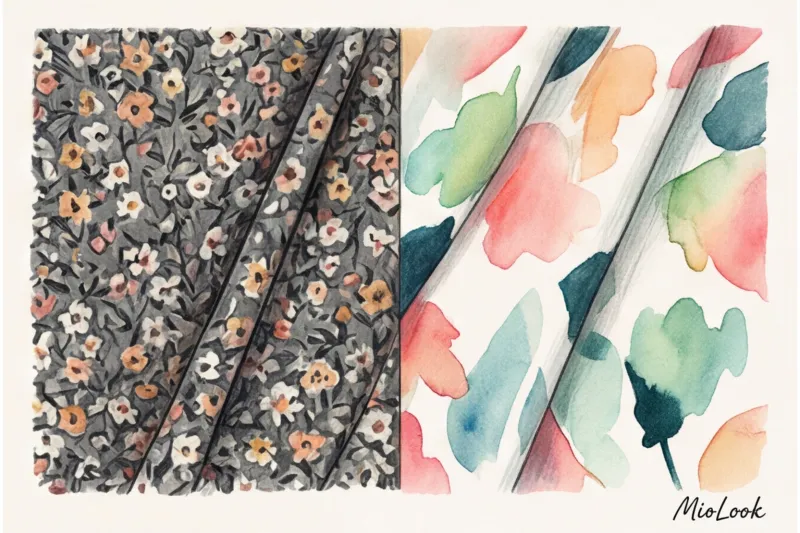
Outdated animalism: cheap leopard and zebra
Animal print can be incredibly prestigious—remember the collections of Christian Dior or Yves Saint Laurent. But there's a huge gulf between luxury leopard and the market-standard kind. Cheap leopard is prone to unnaturally large spots and a distinctly yellow or orange undertone, which can make the complexion appear sallow.
Moreover, cheap animalism carries with it excessive, aggressive sexualization, which in an elegant age looks more caricature than attractive.
Psychedelic Geometry and Paisley
The paisley pattern is a litmus test of quality. To make this oriental design look expensive, it requires the highest quality silk and complex multi-stage printing (like at Etro). When paisley is printed on cheap viscose or polyester, it instantly begins to resemble the upholstery of a Soviet-era sofa. An excess of tiny curls strains the eye and visually "dirties" the image.
Your perfect look starts here
Join thousands of users who look flawless every day with MioLook. Digitize your wardrobe and discover which prints truly suit you.
Get access — €0.99 onceIt's not just about the design, but also the texture: a stylist's insight
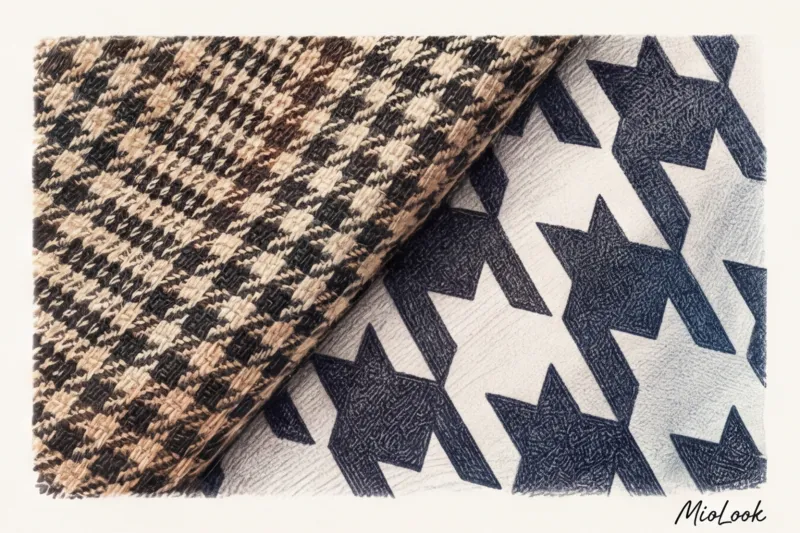
I always teach my clients one simple trick in boutiques: Before buying a printed item, turn it inside out. This insider rule distinguishes an investment wardrobe from clothes that are just a day's wear.
The problem is that budget brands use surface printing on cheap synthetics. While the pattern may appear vibrant on the front, the back remains blindingly white. When walking, the hem of a jacket or blouse inevitably rolls back, revealing this white back, instantly revealing the cheapness of the production.
Luxury brands use yarn-dyed or gravure printing on heavy silk (for a high-status look, the silk must have a density of at least 19 momme). Woven patterns, such as jacquard, tweed, or bouclé, work even better. In these, the pattern is created not by dye, but by the interweaving of the threads. This creates incredible depth of texture, which reflects light softly and elegantly, unlike cheap polyester, whose plastic sheen mercilessly accentuates enlarged pores and uneven skin.
Smart Replacement: Which Prints Make a Look Classy and Fresh?
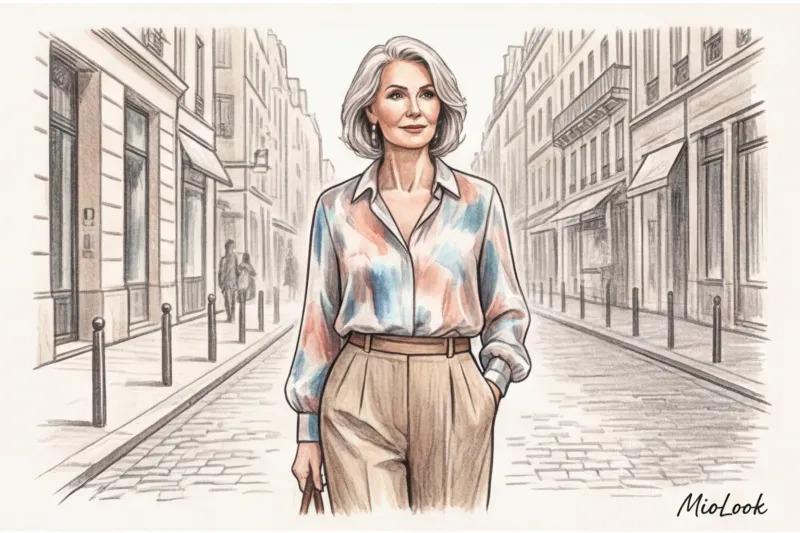
If you think you can only wear plain gray sweaters now, I have good news. Prints are essential for an investment wardrobe, you just have to choose them wisely.
Abstract watercolor instead of clear colors
Replace a small calico flower with a large abstraction. The blurred, uneven edges of watercolor prints create a soft-focus effect on the face—they work just like a smoothing filter on a smartphone camera. The strict "air" rule applies here: the background, calm color should occupy at least 50% of the fabric.
Natural textures and color blocking
Instead of fine ripples, opt for large color blocks. Asymmetrical wide stripes or large geometric inserts visually elongate the silhouette. Prints that imitate natural textures look stunningly luxurious: marble cuts, malachite, or complex, muted tie-dye in elegant shades (like coffee and milk).
Classic textured geometry
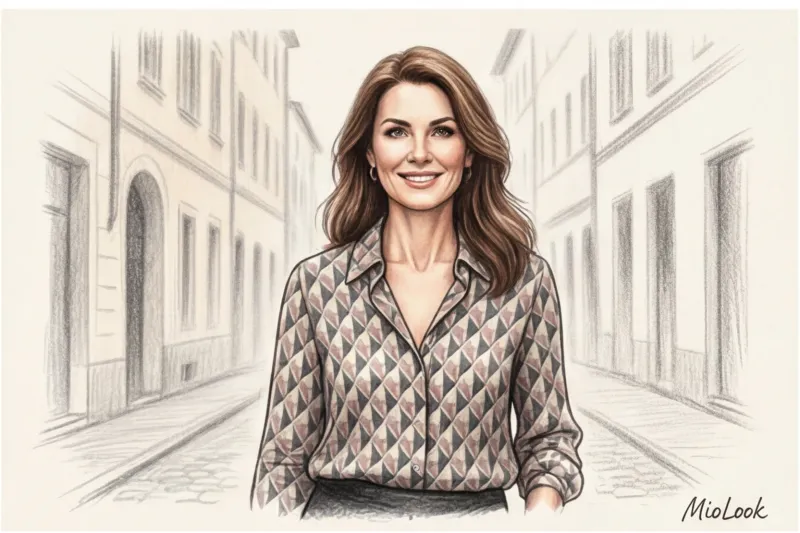
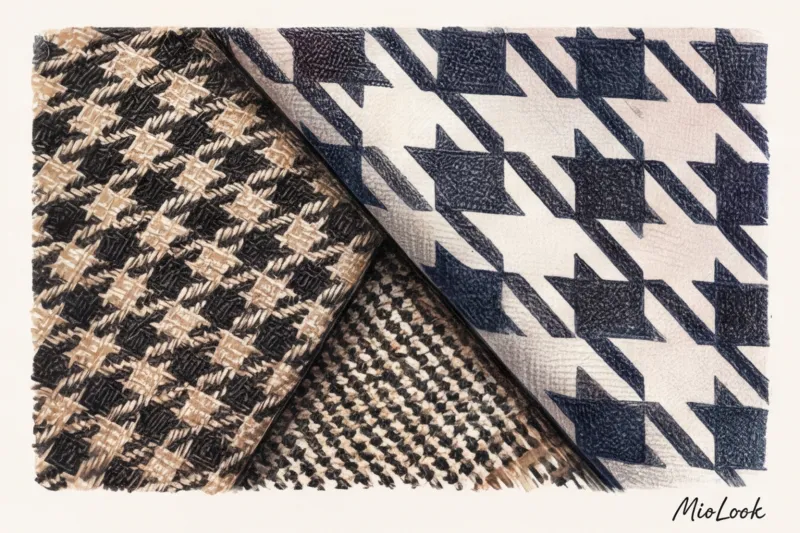
If you need geometric patterns for work, turn to old-money aesthetics. Pied-de-poule (houndstooth), pinstripe, or argyle. Why do they work? They don't fray. They structure the silhouette, create a clear vector, and evoke intellectual luxury.
Access to MioLook for €0.99 — one-time payment
A smart AI stylist will select the perfect look based on your appearance and color principles.
Get access — €0.99 onceThe 30-Centimeter Rule: How to Wear Complex Patterns Without Damaging Your Face
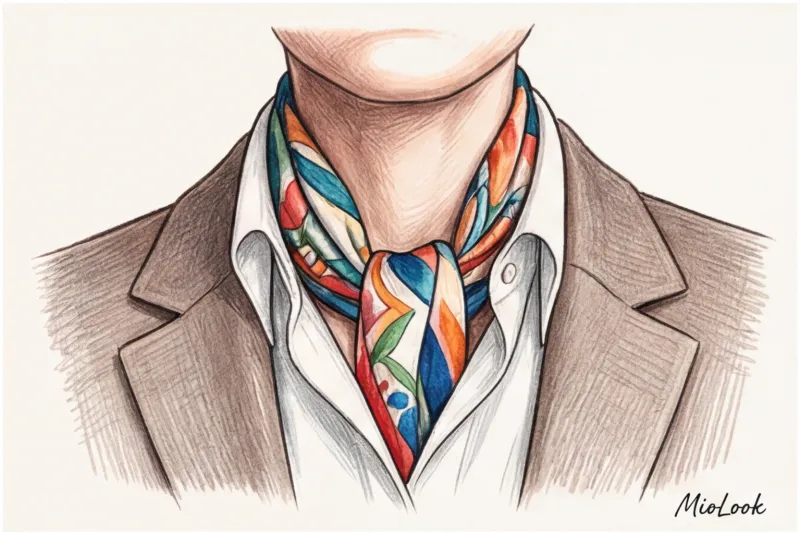
What if you already have a favorite silk blouse with a questionable print hanging in your closet that you're not ready to part with? This is where stylistic math comes into play.
Use 30 centimeter rule: This is the exact distance you should move a prominent or controversial print away from the portrait area. We need a visual "buffer" to absorb the impact of the light.
- White collar. Wear a basic white or light blue shirt made of thick cotton under a patterned sweater. The stiff collar will frame your face perfectly.
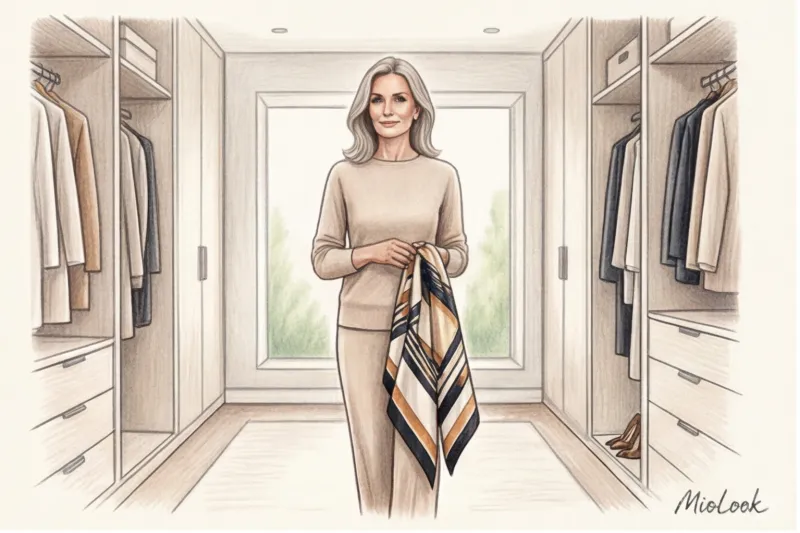
- Silk scarf. Wear a solid scarf in the right, refreshing shade around your neck. It will offset the print on your blouse.
- Downward shift. The safest way to wear leopard or polka dots is to place them on skirts, trousers, or shoes. The further away from the face, the less distortion.
To be fair, the buffer zone rule doesn't work for all body types. If you have a naturally short neck or prominent shoulders, a buttoned collar or choker can visually "cut off" your head. In this case, it's better to opt for a deep V-neck, showing off bare skin, and leave the print to the hem of the jacket.
Wardrobe Review with MioLook: How to Filter Out the Unnecessary
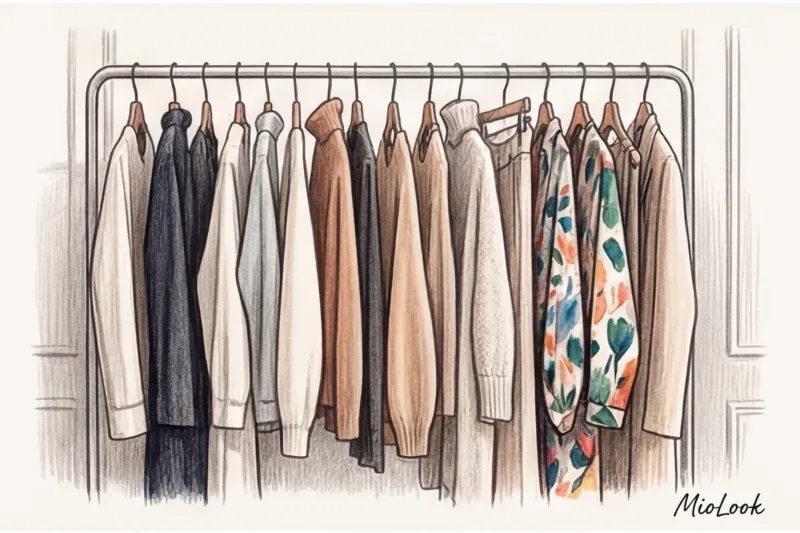
To stop impulsively buying one-time-only items with unfortunate patterns, you need a systematic approach. Digitize your closet with Virtual wardrobe features in the MioLook app By uploading your clothes to your phone, you'll clearly see how many colorful blouses are gathering dust on hangers simply because there's nothing to pair them with.
In the world of investment style, we always consider the Cost-Per-Wear metric. A cheap polyester blouse with a small floral print for €40, which you'll wear twice (because it makes you look older), will cost you €20 per outing. A stunning blouse in thick silk with an abstract print from a brand like Massimo Dutti for €150, which you'll happily wear 30 times a season, will cost you just €5 per outing.
Forget visual noise. Invest in the quality of silk, the depth of texture, and the richness of color, not the garishness of the pattern. Your face will thank you with a radiant, fresh look that won't require a heavy layer of foundation.