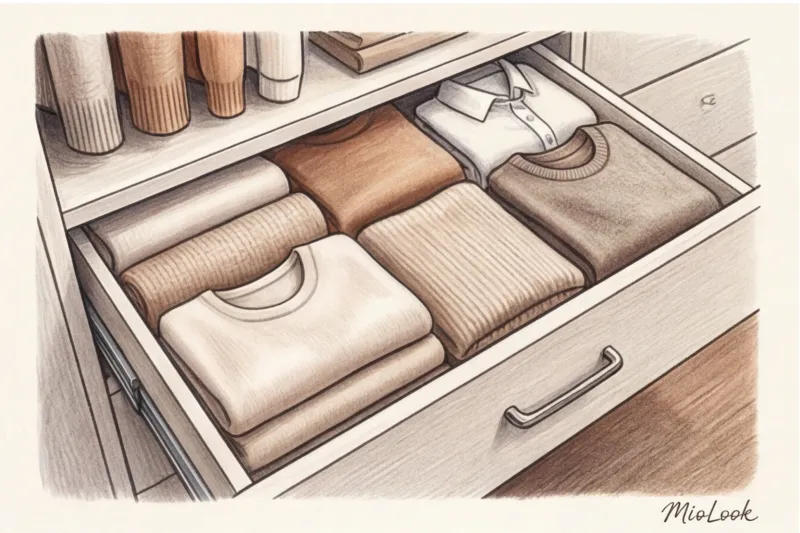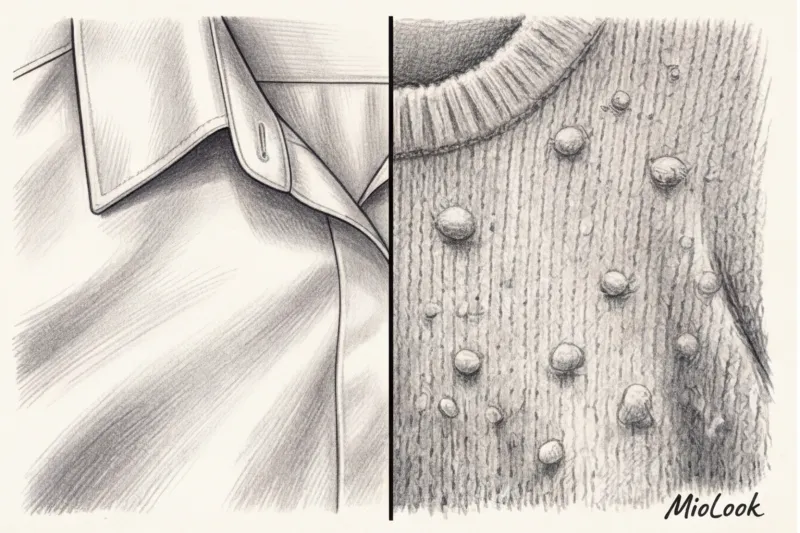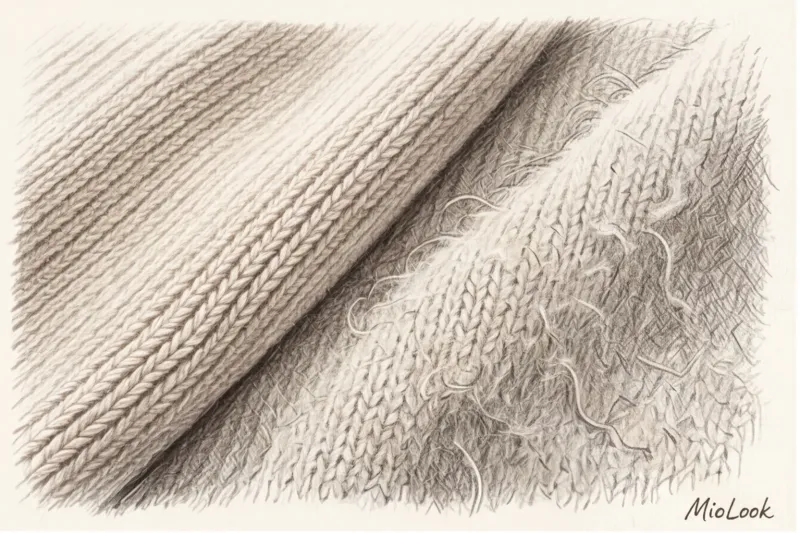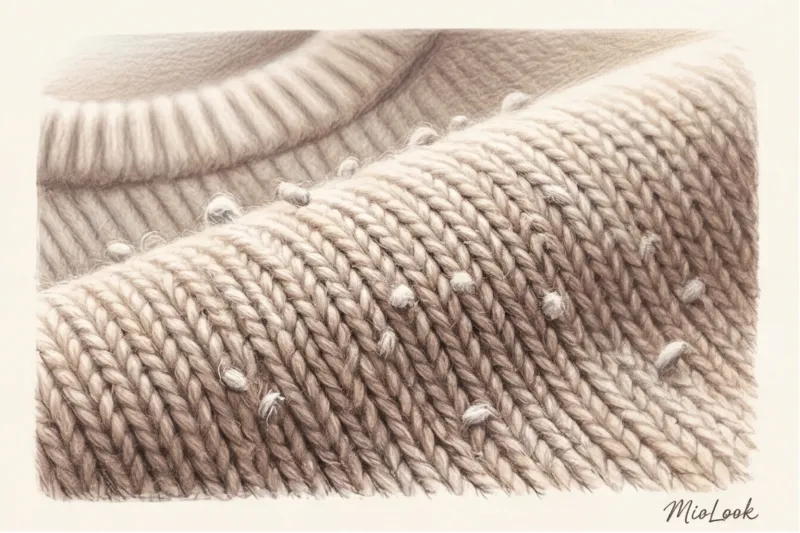
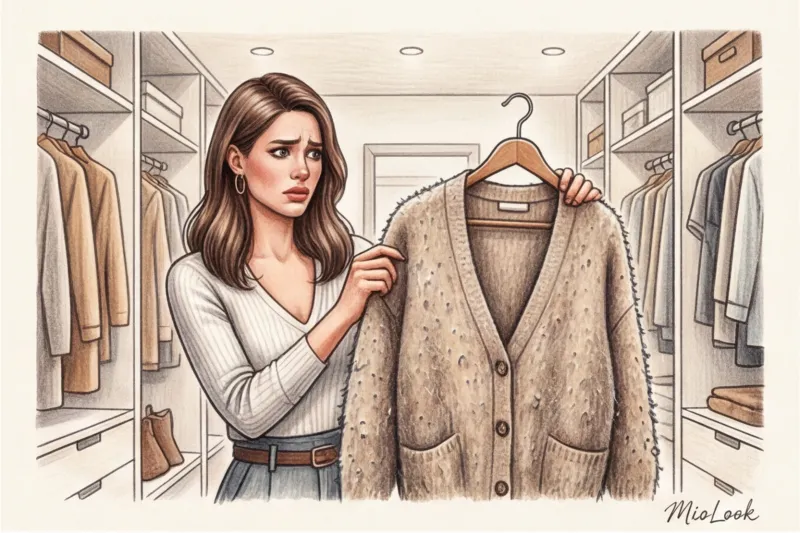
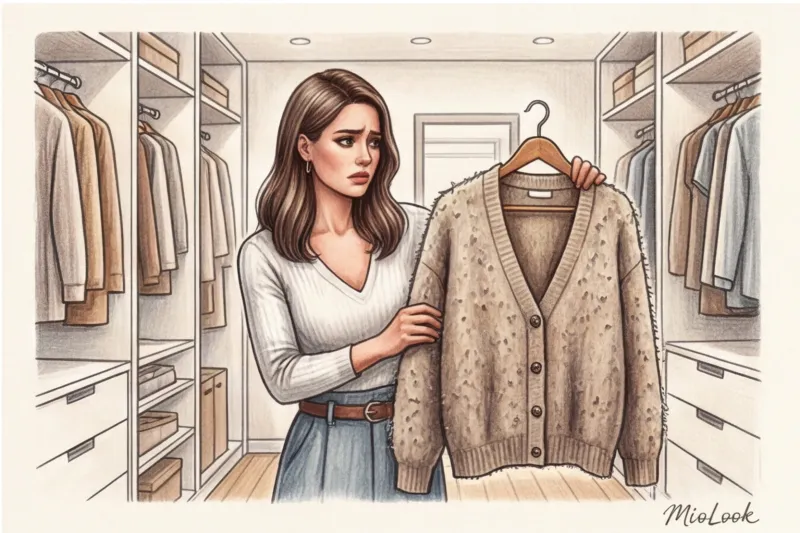
Last week, my client Anna nearly burst into tears while sorting through her wardrobe. She pulled out a luxurious (she thought) 100% cashmere sweater from its bag, which cost 300 euros and was bought just a month ago. The entire armpit area, sides, and inside of the sleeves were covered in a thick layer of untidy pilling. But her basic thick viscose turtleneck, bought three years ago at Massimo Dutti for next to nothing, looked like new.
This case perfectly illustrates the main problem with modern shopping: we've forgotten how to understand fabrics. We trust price tags, beautiful visuals on social media, and magic words like "natural wool" on the tag. But to understand, What fabrics pill? , and which ones will last for years, you need to look deeper. We've covered the basic principles of tag analysis in more detail in our a complete guide to choosing fabrics , and today I propose to focus on the physics of pellets.
Anatomy of the problem: Why do tissues roll up in the first place?
Let's forget the marketing hype of brands for a moment and turn to textile materials science. The process of pilling (professionally called peeling ) is pure physics. When you move, the fabric rubs against itself, the lining of your outerwear, or the strap of your bag. This friction causes the shortest and most loosely attached fibers to rise to the surface.
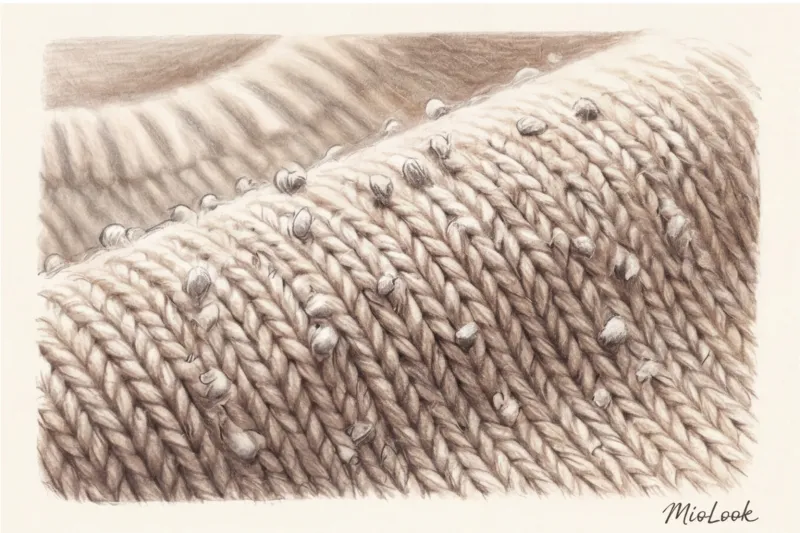
What happens next is that these loose ends catch on each other, tangle into microscopic knots, and form those very balls that instantly transform a thing from status symbol to worn-out.
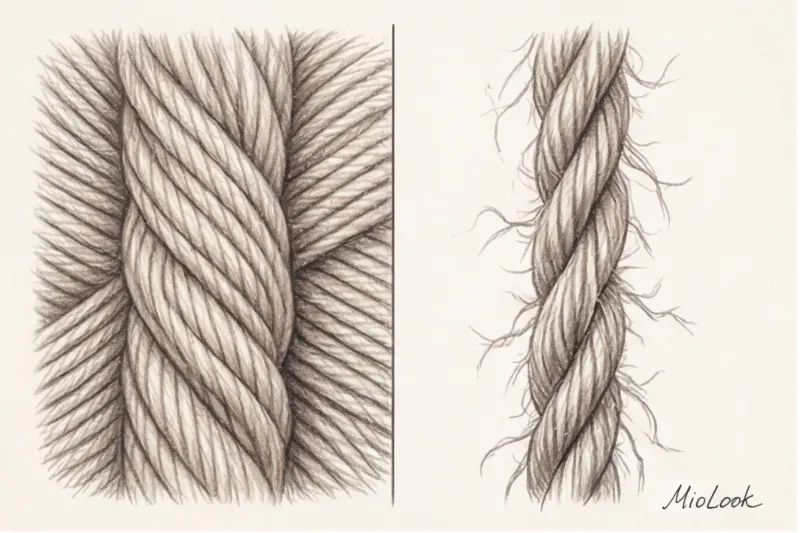
According to research by the Textile Institute (2023), 70% of a material's tendency to pilling depends on two factors: the length of the staple (single fiber) and the twist density of the thread, and not on the origin of the material itself.
The main secret of fast-fashion brands like Zara or H&M is their savings on raw materials. Long fibers are expensive. Short fibers (towel, scraps) are cheap. To make thread from short fibers, they are made bulky and loose (low twist). In the store, such a sweater feels incredibly fluffy, soft, and cozy. You touch it and fall in love. But this "hanger fluffiness" is the first warning sign. The easier it is for fibers to break free from the thread, the faster you'll get pilling.
Stylist's Anti-Rating: Which Fabrics Pill the Fastest?
Over 12 years of working as a personal shopper in Europe, I've sorted through thousands of items. The unsightly appearance of pilling ruins any look, even the most carefully considered one. You can wear perfectly tailored trousers and expensive shoes, but if your jumper is covered in pilling, all the status quo disappears. I often mention this when we discuss... How to look expensive on a budget Below is a list of your wardrobe's main enemies.
Blended Fabric Trap: Wool + Acrylic
Many people think that a blend of natural and synthetic fibers is a compromise for durability. In reality, this is the worst-case scenario for pilling. Acrylic is a very strong synthetic fiber, while wool (especially inexpensive wool) is weak. When short hairs rise to the surface, the strong acrylic acts as an anchor. It firmly holds these pilling fibers to the fabric, preventing them from simply falling off during washing.
My 20% rule: If a wool item contains more than 20% acrylic, it's doomed. Leave it in the store.
An eco-trend that's ruining things: recycled polyester
Nowadays, every second tag in the mass market proudly displays the inscription Recycled Polyester It sounds eco-friendly, but there's a technological caveat. As the McKinsey Circular Fashion Report (2024) notes, during the mechanical recycling of plastic bottles into yarn, the fibers are inevitably chopped, becoming significantly shorter and more brittle than those of virgin polyester.
The result? "Eco-friendly" mass-market lines often become covered in hard, prickly pilling after just one wash. Machine-saving this kind of fabric is nearly impossible—the thread is too stiff.
Expensive Deception: Why Does Cashmere Also Pill?
This counterintuitive fact shocks my clients: 100% natural fibers don't guarantee pilling resistance. Cheap cashmere (up to 150-200 euros per sweater) is made from short down combed from the legs and bellies of goats. To ensure the yarn holds together, it's spun very loosely.
Expensive cashmere (from Loro Piana or Brunello Cucinelli) is made from long hair from the neck and chin. The resulting thread is smooth and dense. That's why mass-market cashmere will shrink in a week, while premium cashmere will last for decades, with only slight fuzzing.
Access to MioLook for €0.99 — one-time payment
A smart AI stylist will select the perfect look and help you organize your wardrobe without items that quickly become unsightly.
Get access — €0.99 onceInvest wisely: fabrics that don't pill
When creating capsules for top managers, I always rely on materials that don't require daily machine cleaning. Here's what to look for:
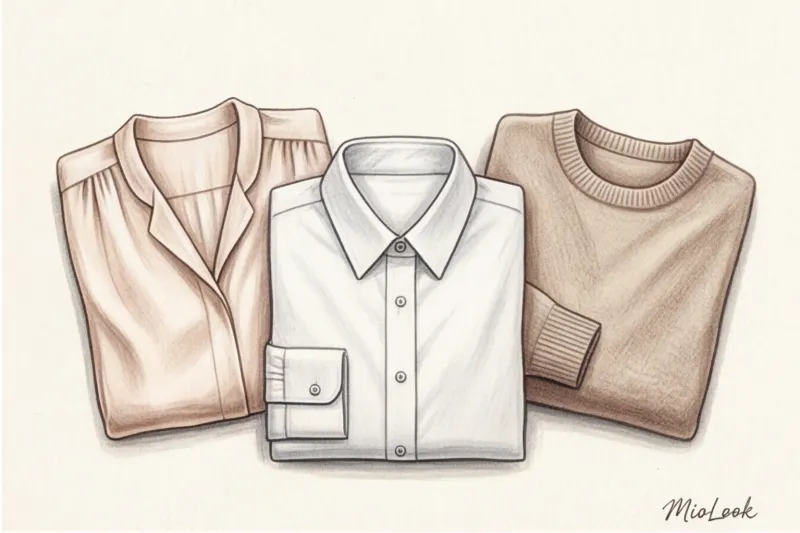
- Smooth natural fabrics: Silk, heavy cotton (from 180 g/m²), linen. They simply don't have that fluffy texture that could roll up.
- Worsted wool: This is wool that has been thoroughly combed before spinning, removing all short hairs. How can you recognize it? It's not fluffy. The surface is smooth, dense, slightly cool to the touch, and has a subtle, elegant sheen. It's used to make expensive suits and fine, high-quality turtlenecks.
- High quality artificial fibers: Lyocell (Tencel), cupra, and dense viscose. They are made from cellulose, and their fibers can be made infinitely long, making them virtually pilling-free.
- Correct synthetics: Nylon (polyamide). Unlike acrylic and polyester, adding 10-15% nylon to high-quality wool actually increases its strength without the risk of pilling.
How to check for pilling in the fitting room (stylist test)
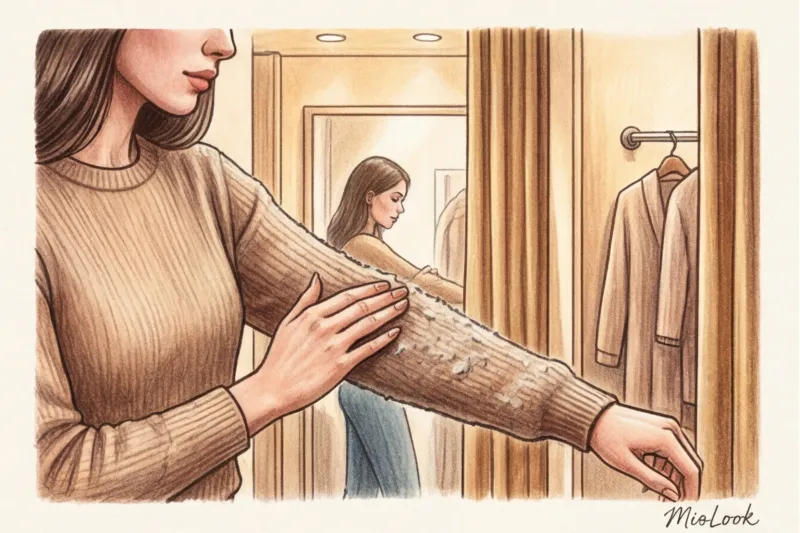
I never allow customers to buy knitwear without my signature "friction test." It's a rigorous but effective method for weeding out disposable items at stores like COS or &OtherStories.
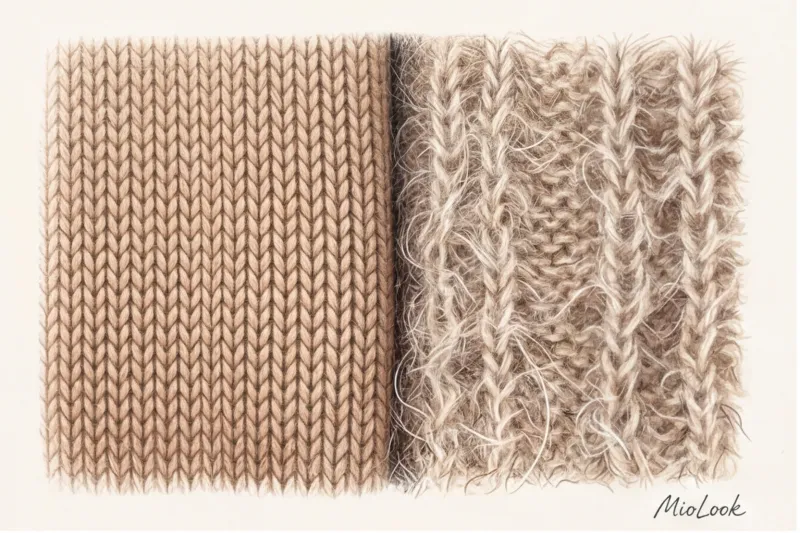
- Visual inspection before fitting. Look at the item at an angle to the light. Do you see long, uneven fuzz or visible micro-knots? If the item looks like this before washing and wearing, it will only get worse.
- Friction test. Take the edge of the sleeve and rub it vigorously against the side seam of the same garment (inside out) for 10-15 seconds. Simulate the friction of your hands as you walk. If the fabric immediately frays and clumps at the point of friction, leave the item in the store.
- Evaluation of knitting density. Gently tug the knit fabric sideways. If it's loose, see-through, and the stitches are easily deformed, the yarn doesn't have enough twist.
To be fair, this test doesn't work for all fabrics. For example, testing stiff denim or heavy linen this way is pointless—they won't pill anyway. But for sweaters, cardigans, and coats, it's a must.
To keep track of which brands and ingredients have stood the test of time for you personally, I recommend maintaining an electronic database of items. For example, using smart wardrobe feature in MioLook , you can add comments to each item and generate statistics on successful purchases.
Read the label: what proportions in the ingredients guarantee a problem?
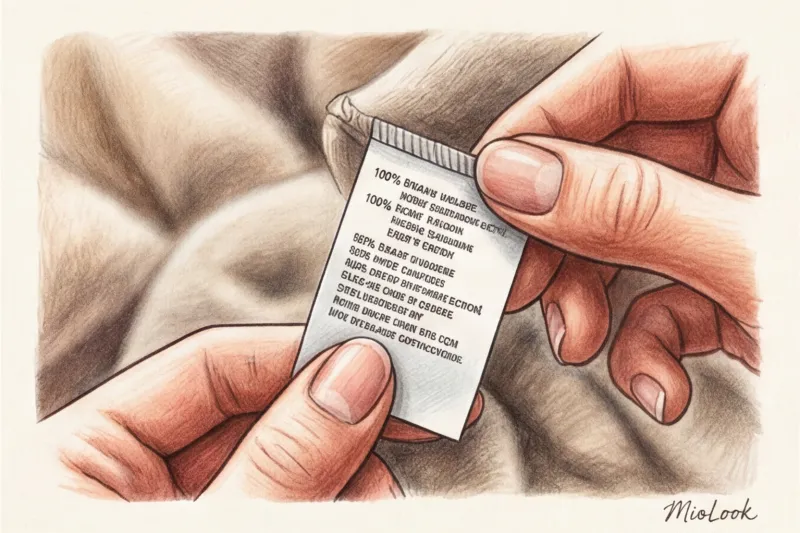
Knowing how to read a label is the art of style. Manufacturers are required to list the fibers in descending order of their percentage. If you see "Wool Sweater," and the label says: 50% acrylic, 30% nylon, 20% wool — In front of you is a plastic item that will become covered in pills in three days.
Safe lens hoods (you can take them):
- 90% wool + 10% cashmere (cashmere provides softness, wool keeps its shape).
- 95% cotton + 5% elastane (ideal for T-shirts, elastane prevents deformation).
- 70% viscose + 30% polyamide (excellent smooth knitwear that lasts for years).
Dangerous blends (a waste of money):
- 70% acrylic + 30% wool (a classic mass-market trap - it will pill up).
- 50% recycled polyester + 50% cotton (will form small, prickly pellets that will irritate your skin).
- Any composition where the word is present Angora (angora) without a dense synthetic base - it will not only roll up, but also leave its fluff on all your clothes.
Your perfect look starts here
Join thousands of users who look flawless every day with MioLook. Plan your capsule wardrobe with the right fabrics.
Get access — €0.99 onceWhat to do if your favorite item has curled up?
Even high-quality fabric can cause slight pilling in areas of high friction (underarms, areas where it touches a crossbody bag). The main rule: Never pick off the pellets with your hands! By tearing off one ball, you pull new fibers out of the thread, causing three more new pellets to appear in the same place.
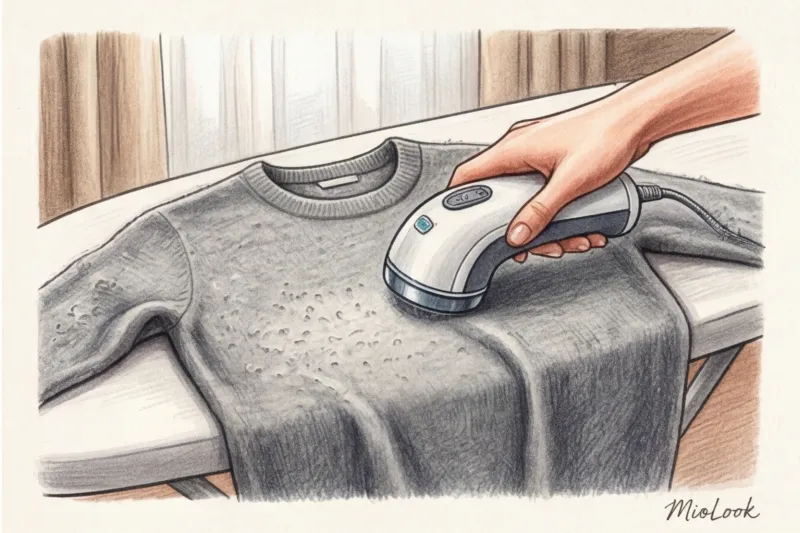
For smooth knits and thick wool, use a high-quality electric clipper with a wide blade. Move it in a circular motion over the fabric, laying it out on a hard, flat surface (such as an ironing board). For fluffy cashmere and mohair, clippers are dangerous—they'll cut off the desired pile. A special cashmere comb is needed for this purpose, which gently removes the excess.
To minimize the problem when washing, always turn items inside out (to allow the abrasion to occur on the inside, not the outside), use only liquid detergents (powder acts as an abrasive), and wash delicate knits in special mesh bags.
I'll be honest: If a mass-market item has puckered up 80% of its surface after the first wash and is thin and loose after washing, it's time to admit defeat. Relegate this sweater to the "dacha" category and invest in the right fabric next time.
Checklist: Buying knitwear that will last for years
Quality fabric is the foundation of a luxurious look. No fashionable cut will save a garment if it looks like a washcloth. Before your next shopping trip, keep this action plan in mind:
- Ignore the "Premium Quality" label on the price tag—look only at the sewn-in percentage tag.
- Avoid mixtures with more than 20% acrylic.
- Avoid buying basic sweaters that are too fluffy, loose, or airy—they only last until they're washed once.
- Perform a 15-second friction test right in the fitting room.
- Choose worsted (smooth) wool, heavy viscose or blends with polyamide/nylon (up to 15%).
Your wardrobe doesn't have to be huge; it should be functional. Avoiding impulse purchases of "soft" disposable sweaters will save you hundreds of euros a year and eliminate the need to stressfully clean your clothes before leaving the house.