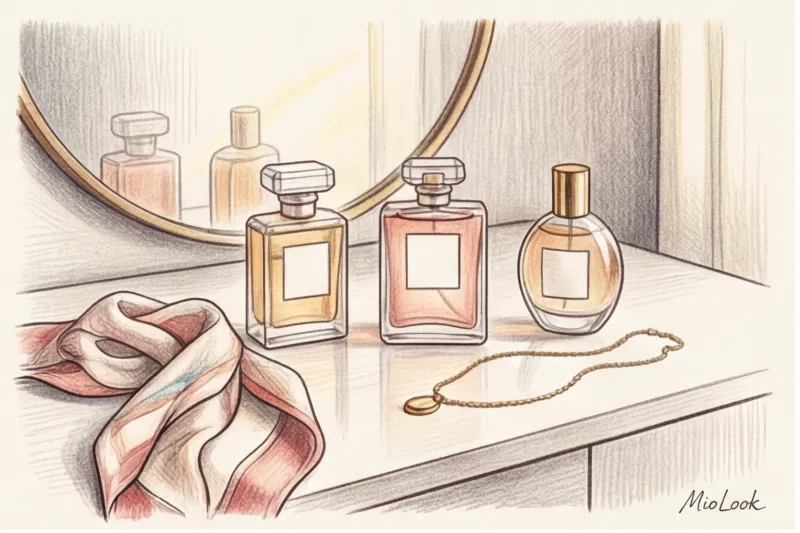
Have you ever noticed how the same expensive perfume smells like a multifaceted, niche masterpiece on your friend, but after a couple of hours, it turns into a flat air freshener on you? The problem is rarely in the bottle itself. In 12 years of working as a personal stylist, I've realized something counterintuitive: we're accustomed to thinking of perfume as cosmetics, when in fact, it's clothing. Invisible, yet absolutely real.
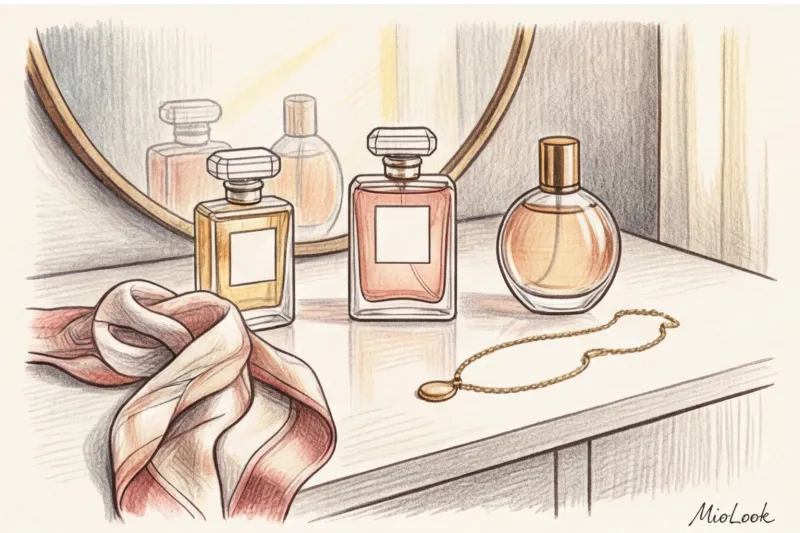
When clients ask me, Where to spray perfume to mix To create them beautifully and without the "perfume shop" effect, I always suggest forgetting the anatomical map of the body. Let's think in terms of wardrobe. Skin is your base (like a silk lingerie top). Hair is your train (like a flowing chiffon scarf). And clothing is the structure (like a thick wool jacket). We've already discussed the basic rules of combining notes in more detail in our The complete guide to blending perfume on skin and the art of layering , and today we will move on to an advanced level: spatial 3D modeling of aroma.
Why Location Matters: The Anatomy of Spatial Layering
The biggest mistake beginners make is trying to layer two or three different perfumes on the same spot on the neck. It's like wearing three sweaters at once: you'll feel stuffy and heavy, and everyone around you will see only a shapeless lump. Spatial layering works differently. We distribute fragrances across different temperature and texture zones, creating a three-dimensional aura around ourselves.
The temperature of different areas dramatically changes the rate at which notes unfold. On hot skin, the fragrance pyramid "burns out" quickly: the top citrus accords fade within 15 minutes, quickly revealing a heavy base. On cool fabrics (for example, cotton with a weight of 180 g/m² or more), the same citrus notes can linger for hours. By separating the scents in space, you force them to sound synchronized without drowning each other out.
Access to MioLook for €0.99 — one-time payment
A smart AI stylist will select the perfect look and suggest how to complete it with the right perfume.
Get access — €0.99 onceLeather: the perfect canvas for heavy and base notes
Your skin has a unique chemical composition, pH level, and temperature. That's why amber, musk, rich oud, and sweet gourmand notes (vanilla, tonka bean) should always be in contact with your body. Without the warmth of human skin, they sound flat and synthetic.
However, there are strict safety rules here. According to the 2023 IFRA (International Fragrance Association) guidelines, many essential oils, especially citrus oils (bergamot, bitter orange, lemon), are highly phototoxic. When exposed to direct sunlight, they can cause severe pigmentation and even burns. Therefore, in the summer, I strictly avoid applying citrus layers to exposed areas of the décolleté and neck. Reserve these areas for pure molecular bases, and transfer the citrus oils to fabric.
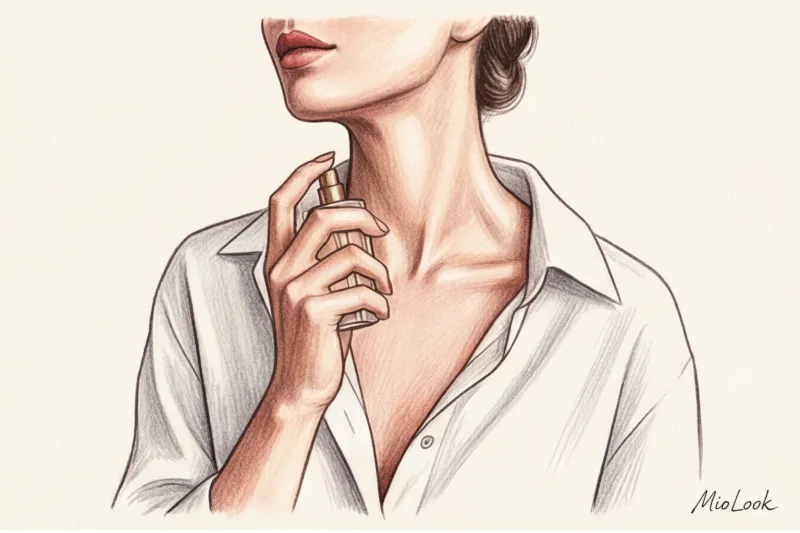
Wrists Are the Worst Area for Leering (Debunking the Myths)
If you're habitually reaching for your wrists right now, stop. This is the most ingrained and harmful beauty myth. Statistically, about 80% of women make a double mistake: they spray perfume on their wrists and then vigorously rub them together. What happens when you do this? You literally break the fragile molecular structure of the top notes in just a few seconds.
"Your wrists are a constant source of friction. You wash your hands with soap, which alters their scent. You wear a watch (the metal oxidizes and gives it a sour undertone). You constantly rub your hands against your desk. By lunchtime, all that remains of your luxurious leering will be a vague, perfume-smelling mess."
Alternative: Apply a base layer to the back of your neck, just below your hairline, or to the sternal notch (the hollow between your collarbones). There, the scent is protected from external friction, but the pulsating bloodstream allows it to gently evaporate.
Hair: How to Create Luxurious Fringe Without Drying Out Your Hair
Hair is nature's best diffuser. Its porous structure and constant movement create that signature "flying scarf effect," leaving a subtle, alluring trail behind you as you pass by or turn your head.
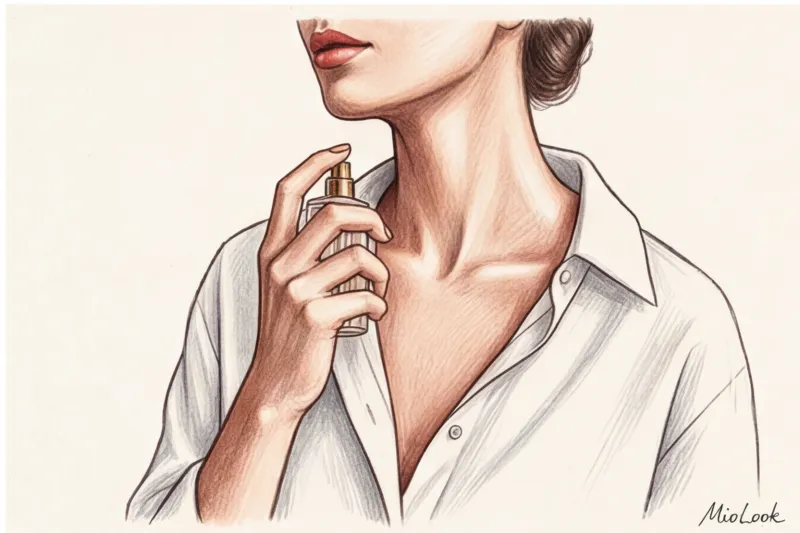
But there's a huge "BUT" here, one that trichologists and cosmetic chemists constantly point out. Classic perfumes contain up to 80% ethyl alcohol. When sprayed directly from the bottle onto your hair, the alcohol instantly lifts the hair cuticle, drawing precious moisture from the shaft and damaging keratin. If you do this every day, within a month your ends will turn into dry, straw-like fibers.
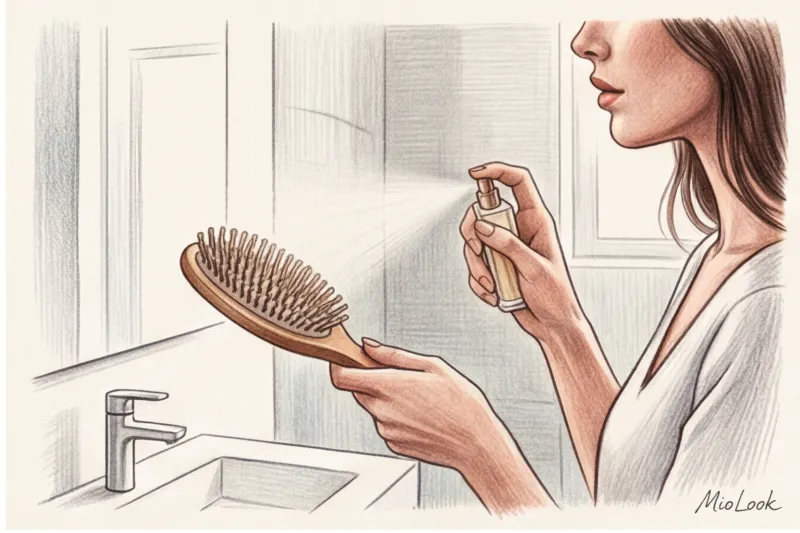
Secret trick of stylists: Use a wooden comb. Spray two or three sprays of your "airy" layer (floral, fruity, or aquatic notes) onto the teeth of the wooden comb. Wait exactly 10 seconds for the harsh alcohol to evaporate, then comb through your hair. The essential oils will soak into the wood and gently transfer to your strands without any damage.
Your perfect look starts here
Join thousands of users who look flawless every day with MioLook.
Get access — €0.99 onceClothes: Keeping them fresh and protecting fabrics
Fabric works as an excellent "fixative" or "fixer" for those notes that last only a few minutes on hot skin. Natural wool, cashmere, and dense cotton can hold vibrant citrus and green accords up to three times longer than your body.
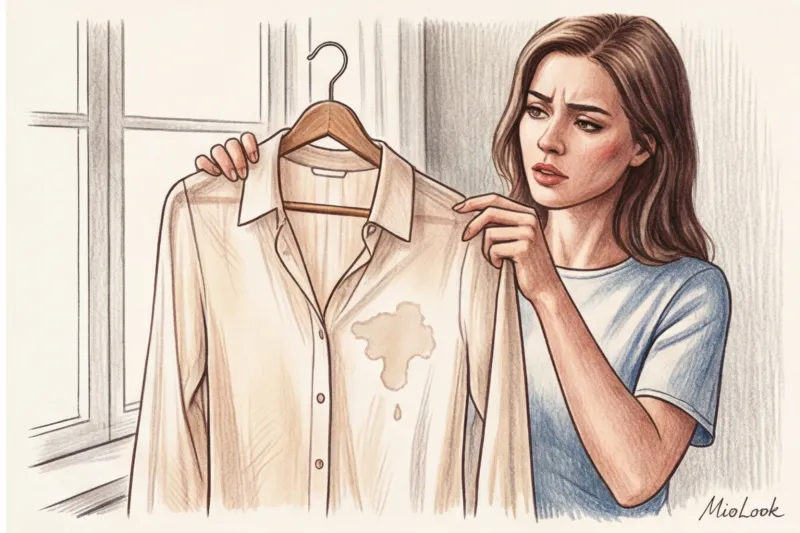
However, this method requires caution. One of my clients once ruined a luxurious €400 silk blouse by attempting to apply a thick niche extract to it. Natural silk, light viscose, and thin leather instantly absorb essential oils, leaving indelible yellowish stains that no dry cleaner can remove.
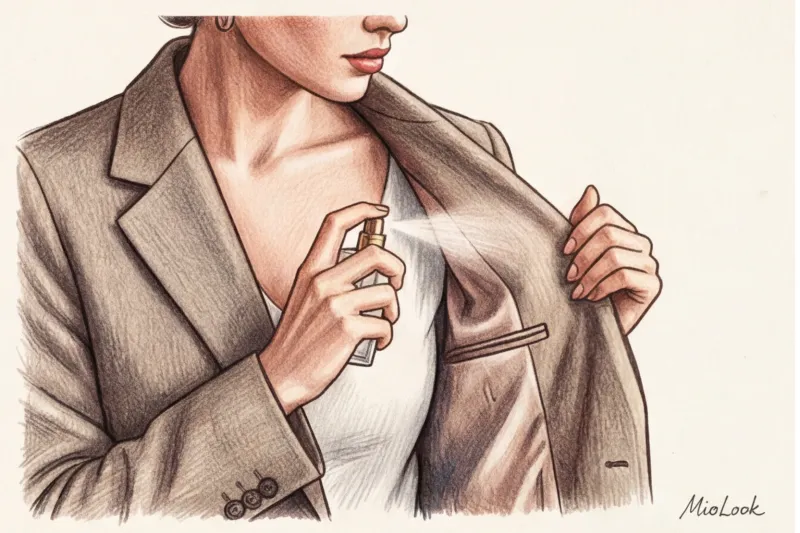
My personal stylistic technique: Apply a scent enhancer (like Escentric Molecules or any light musk) to the inside lining of a business jacket or the hem of a skirt. I call this an "aura of trust." When you take off your jacket or gesture vigorously, the scent gently pulses from within, creating a feeling of purity and status, while the expensive outer fabric remains completely safe.
Ready-made schemes: where to spray perfume to mix it like a pro
Theory is great, but let's move on to practice. Here are three of my signature spatial formulas that work flawlessly in various life scenarios.
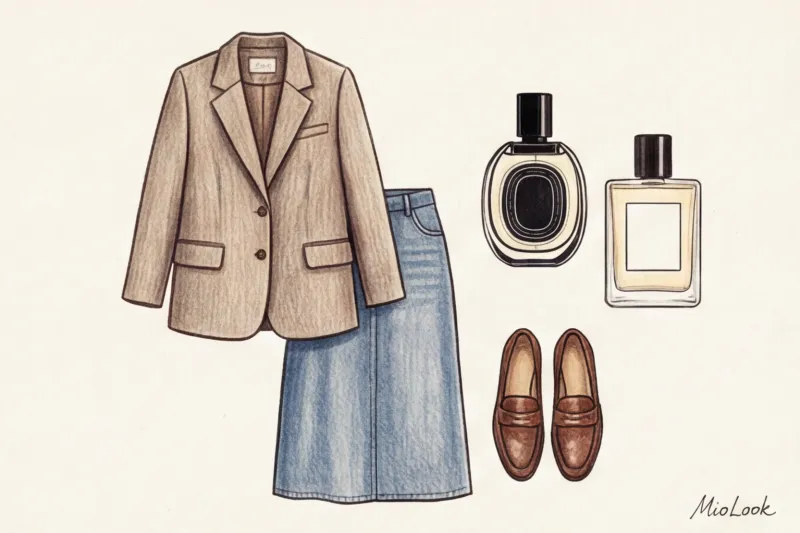
- Scheme 1: “Contrast shower” (for long working days)
Base: Apply a rich, woody scent (sandalwood, cedar) to your stomach or chest under your clothes. Body heat will slowly release the scent throughout the day.
Accent: Apply a vibrant citrus scent (grapefruit, yuzu) to your hair with a comb. The result: you feel refreshed, while others perceive a confident, calm base. - Pattern 2: "Echo" (for dates and evening outings)
Base: One spray of pure molecular fragrance per lining of clothing.
Accent: A bright, provocative floral scent (tuberose, jasmine) spritz on the back of your neck. The result: the scent doesn't overwhelm the person sitting across from you, but it leaves an unforgettable impression when you leave. - Pattern 3: "Spanish Drama" (to create a luxurious trail)
Method: Apply a rich, lingering scent to the hem of wide palazzo pants or a flowing midi skirt. As you walk, it creates an "updraft" effect—the scent rises from the bottom up, enveloping you completely without causing a headache.
Ready to get started?
Try the free plan—no commitments required. Upload your wardrobe and get ready-made look formulas.
Get access — €0.99 onceCommon Mistakes in Spatial Layering of Aromas
Even the most perfect design can be ruined if you ignore the basic laws of physics and chemistry. Here are three scenarios where layering absolutely WON'T work:
- Layering wet on wet in one spot. If you spray two fragrances on the same spot a second apart, they won't mix; they'll simply overpower each other, producing a vague, soapy scent. Always separate them.
- Two dense bases on clothing. Combining oud and heavy patchouli on a wool sweater risks smelling less like an elegant woman and more like an esoteric shop. Save the heavyweights for the skin and apply only the "air" to the fabric.
- Ignoring skin care products. We often forget that a brightly scented mango body lotion is already a full-fledged perfume layer. If you're planning a complex layering, use an unscented base cream.
I had a revealing case. I was putting together a perfume capsule for a top manager speaking at a major IT conference. We needed a scent that would keep the speaker alert but wouldn't overwhelm the front row of listeners. The solution? We applied invigorating vetiver exclusively to the inner lining of her linen jacket, leaving her skin and hair completely clean. This created the perfect working distance.
Checklist: Your Perfect Perfume Wardrobe Plan for Today
Mixing perfumes in space produces a much more luxurious, voluminous, and prestigious scent than trying to find the perfect blend in a single bottle. To start using this method today, save this simple checklist:
- Step 1: Select a base. Apply a warm, woody or musky scent to clean skin (your jugular or the back of your neck) immediately after a shower while your pores are still open.
- Step 2: Select "air". Take a light floral or citrus perfume, spray it on a wooden comb, wait 10 seconds and run it through your hair.
- Step 3: Choose a structure. If your look requires some extra oomph, apply a neutral molecule to the lining of a jacket or the hem of a skirt.
Perfume isn't just a finishing touch before leaving the house. It's a full-fledged accessory that requires the same thoughtful approach as choosing shoes or a bag. Experiment with textures, consider the temperature, and remember: your perfect scent isn't what you buy in the store, but how you wear it.