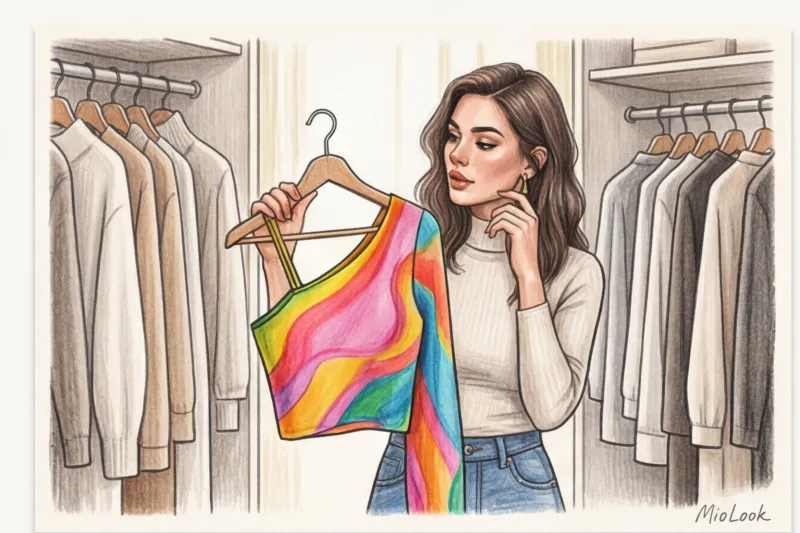
You know what popular glossy magazine advice irritates me the most? "Buy white T-shirts in bulk from the mass market—they get dirty quickly anyway; it's better to save up for a designer bag." Over 12 years of sorting through wardrobes and closely studying textile production, I've become convinced that this approach is quietly draining us of thousands of euros and leaving our closets bulging with unusable items.
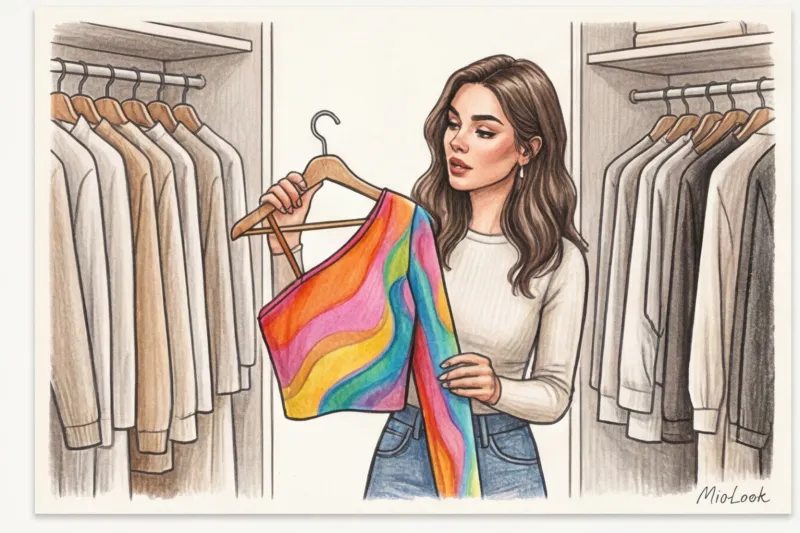
Today we will analyze from the point of view of textile physics and simple mathematics, What clothes can you save on? without the slightest compromise to your style, and where trying to save a few euros will turn into constant irritation. We've already discussed budgeting in more detail in our A complete guide to creating a basic wardrobe on a budget , but now let's dig deeper - into the very structure of the fabrics and cut.
The Illusion of Benefit: Why We Spend More While Trying to Save
One of my clients, let's call her Lena, bought a new white T-shirt every month for €15. After three washes, the old one would warp along the side seam (a sure sign of a cheaply cut tubular shirt) and become covered in gray pills. Lena spent €180 a year on "consumables." When I convinced her to buy one high-quality long-staple cotton T-shirt for €60, Lena wore it for two years without losing its shape. The savings are obvious, plus or minus dozens of hours spent shopping at the mall.
In styling, this is called Cost Per Wear (CPW). A €150 item worn 100 times costs you €1.50 per wear. A trendy €30 blouse worn twice and forgotten in the closet costs you €15 per wear. A tenfold difference.
"According to anonymized statistics from our MioLook app (2024), 68% of users throw budget-priced mass-market items into the trash or throw them away because they lose their shape after just 3-5 washes."
Access to MioLook for €0.99 — one-time payment
A smart AI stylist will select the perfect look and help calculate the real effectiveness of your purchases.
Get access — €0.99 onceWhat clothes can you save on without sacrificing style?
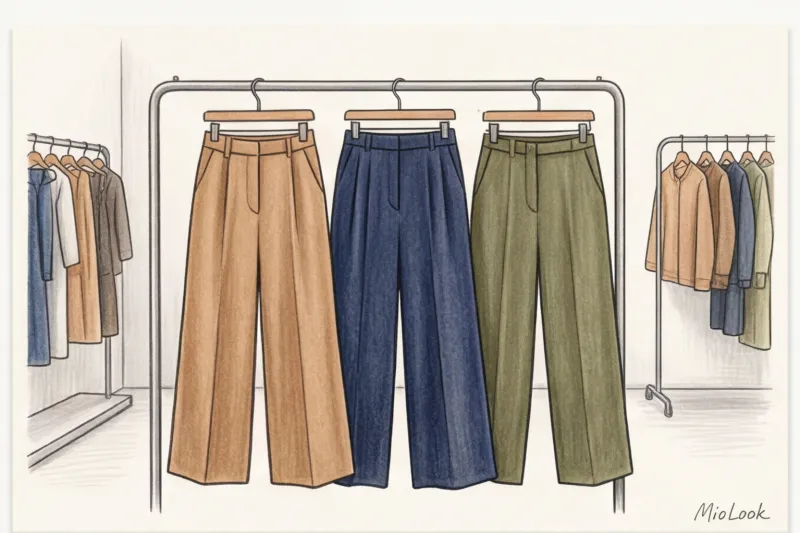
The main rule of textile economy is: The less the fabric comes into contact with the skin (areas of active sweating) and the less frequently the item requires aggressive washing, the more you can cut your budget. Let's look at specific categories.
Microtrends and accent pieces
Don't invest hundreds of euros in leopard-print tights, tops with asymmetrical cutouts, or a color that PANTONE declared "the hit of the season" but will be out of style by November. Use the 10% rule: ultra-fashionable, one-time-only items shouldn't take up more than a tenth of your capsule wardrobe budget. Here, mass-market fashion is your best friend. Bought it for €20, wore it for a season, and recycled it without a guilty conscience.
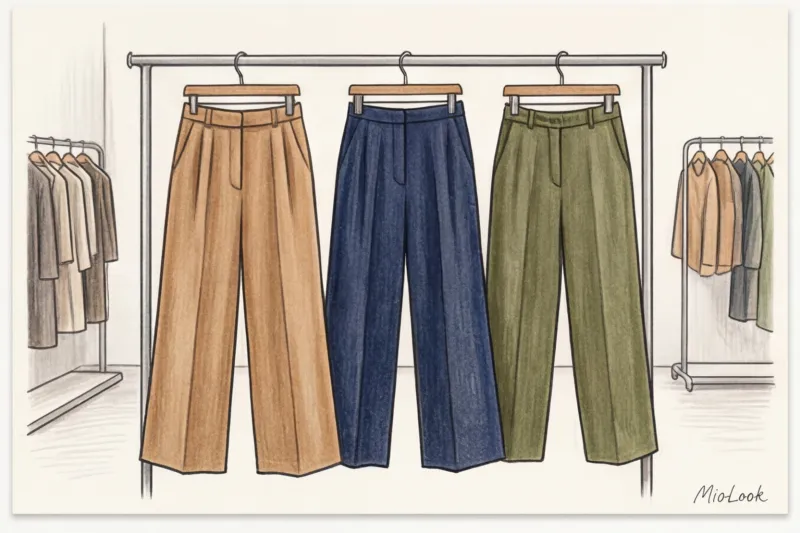
Structured bottoms: skirts and wide-leg trousers
I'll share a tip: a crisp, architectural cut perfectly disguises a cheap fabric. If you're looking for wide-leg palazzo pants for work Fridays (when you want to look relaxed yet put-together), go for the mid-price range (€40–€70). Heavyweight suiting viscose with added polyester will hold its crease and shape perfectly.
Why does this work with wide-leg trousers but not with skinny jeans? Because there's air between the body and the fabric in palazzo jeans. There's no constant tension on the knees and hips—no deformation of the fibers. However, There is an exception where this advice does NOT work. If you have sensitive skin or are prone to allergies, synthetic fabrics in pants will cause irritation after sitting for long periods. In this case, you'll have to pay extra for lyocell or heavy cotton.
Clothes for special occasions
Buying a €500 dress for a friend's wedding only to wear it once for a photo on social media is a financial crime against your wardrobe. These items have the highest and most unprofitable CPW. It's much wiser to buy a simple €40 slip dress made of thick faux silk and dress it up with statement accessories, or rent a designer dress for the same €40-60 for a weekend.
Your perfect look starts here
Join thousands of users who look flawless every day with MioLook. Digitize your wardrobe in 15 minutes.
Get access — €0.99 onceTailor's Secrets: How to Make a Budget-Friendly Look Expensive
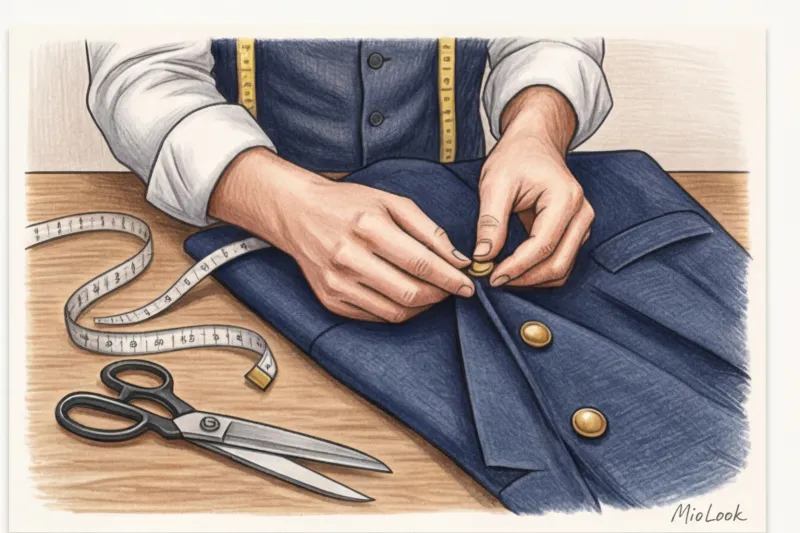
On commercial shoots, stylists constantly "rescue" cheap items on camera. We use clips, pins, and steamers, but in real life, your local tailor will be able to help. Three things give away a budget item: hardware, a crooked fit, and unnecessary embellishments.
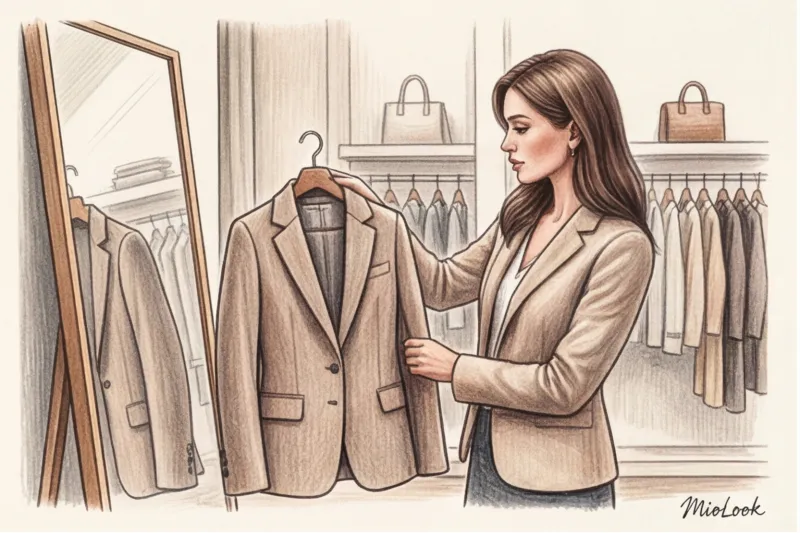
- Replacing buttons. Buy a basic jacket for €50 and replace the plastic "sparkles" with horn, tortoiseshell plastic, or matte metal buttons (costing €5-10). The jacket will instantly move into the "over €200" visual category.
- Fit to the figure. Mass-market clothes are tailored to fit the average mannequin. Pay a tailor €15 to shorten the sleeves of a jacket exactly to the wrist bone or tailor a pair of trousers to fit your waist perfectly. Fit is 80% of the look's success.
- Removing "garbage". Ruthlessly rip flimsy lace from budget tops, cut off the thin fabric belts that come with dresses (replace them with a leather belt), and remove plastic rhinestones. The more simple an inexpensive item is, the harder it is to guess its price.
What's worth the extra cost: the foundation of a smart wardrobe
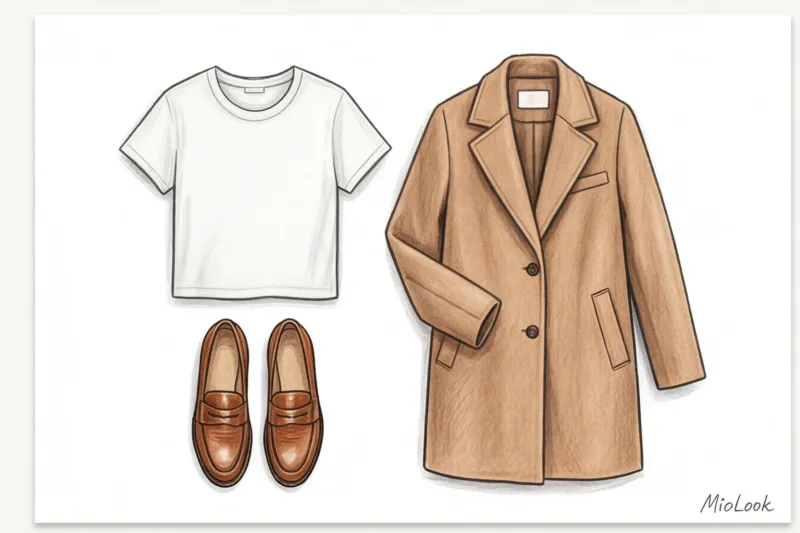
Here we're turning conventional wisdom upside down. You need to invest not in the items you wear on special occasions, but in those that bear the brunt of the impact: mechanical friction, sweat, frequent washing, and temperature fluctuations.
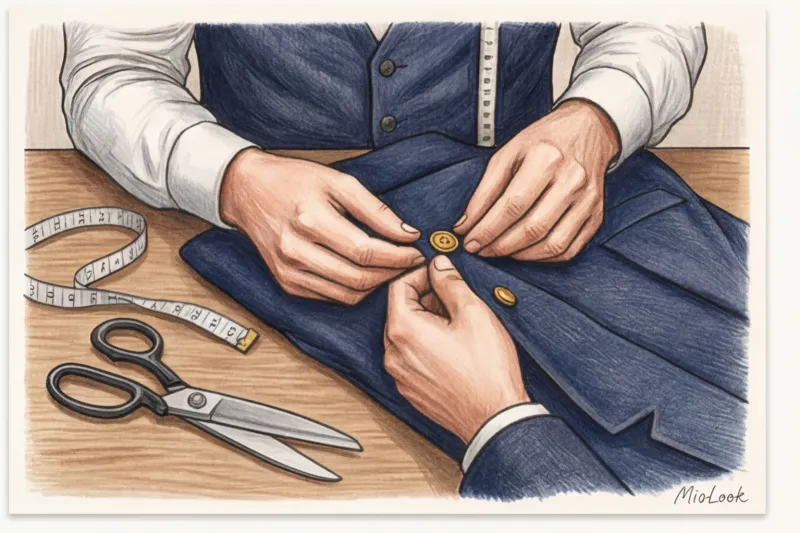
Basic knitwear: T-shirts, turtlenecks, long sleeves
As we discussed at the beginning of this article, cheap knitwear is an illusion of economy. Look for labels that say Pima cotton, Makò cotton, or mercerized cotton. Mercerization is a thread treatment that removes fuzz. This type of T-shirt will feel slightly smooth to the touch, won't pill, and will retain its crisp white color. The weight should be at least 180 g/m²—the contours of the underwear shouldn't be visible through the fabric.
"The Textile Exchange (2024) report notes that long-staple cotton products can withstand 2.5 times more washing cycles without losing their molecular structure compared to standard mass-market cotton."
Outerwear and thermoregulation
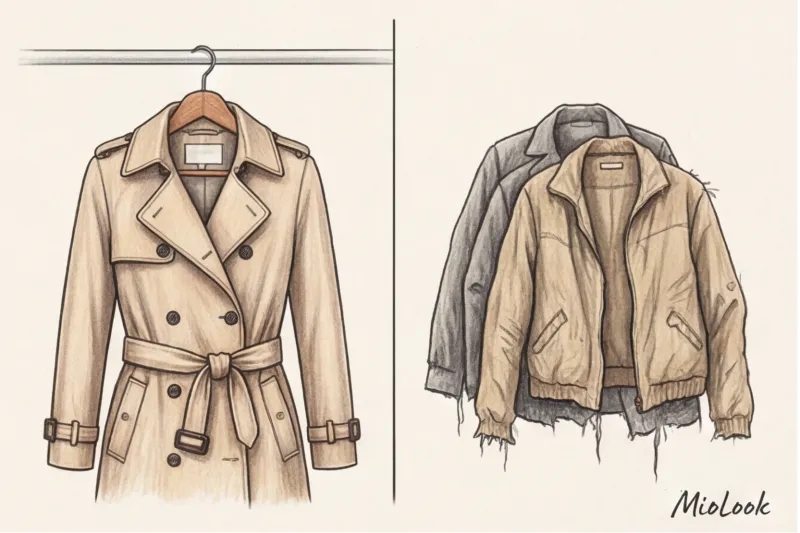
Buying a 100% polyester or acrylic fall coat for €60 is a waste of money. It won't keep you warm because synthetics don't create an air gap to retain body heat, but they will create a greenhouse effect. Furthermore, acrylic develops monstrous pills (pilling) where your bag rubs after just two weeks of wear. A WRAP (Waste and Resources Action Programme) study confirms that a high-quality wool coat lasts, on average, four years longer than its synthetic counterpart.
Look for blended fabrics: ideally, a coat should be 70% to 80% wool, with 20-30% polyamide or nylon. Synthetics in this ratio aren't a cost-cutting measure, but rather a framework that prevents the wool from stretching out at the elbows.
Shoes and bags: architectural elements
Shoes directly affect the biomechanics of your gait, as well as the health of your joints and spine. The last must be correct, and the materials (genuine leather, suede, or high-tech, breathable eco-friendly alternatives) must conform to the shape of your foot. Skimping on health is unacceptable. As for bags, a sturdy, structured bag with a high-quality leather edge and even stitching can elevate an outfit consisting of simple jeans and an inexpensive sweater.
Ready to get started?
Try MioLook's free plan—no commitments required. Upload your essentials to smart wardrobe function and create new combinations in one click.
Get access — €0.99 onceChecklist: Test the quality of the item right in the fitting room
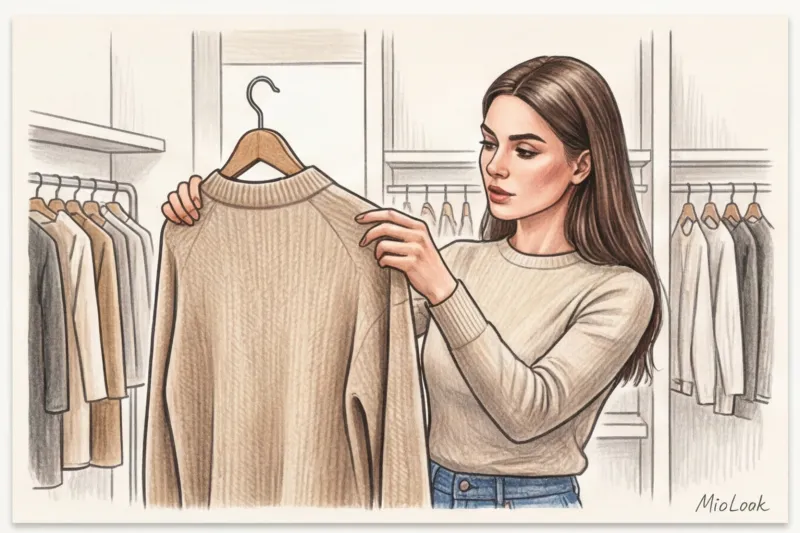
Next time you're hesitant to buy, do this one-minute audit right in the store booth:
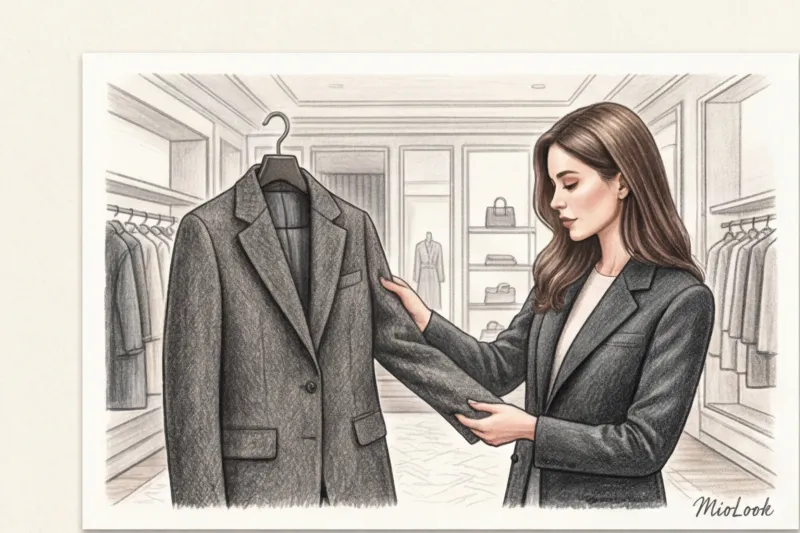
- Translucent test. Hold the fabric up to a lamp in the fitting room. The weave should be uniform, with no loose threads or bald spots. The tighter the weave, the longer the garment will last.
- Crash test. Squeeze the edge of a piece of fabric (like the hem of a shirt) in your fist, hold it for 10 seconds, and then release. If the fabric remains crumpled, you'll look unkempt after just an hour of sitting in the office. (Note: This test is not applicable to 100% linen and fine silk, as creasing is a natural tendency for these fabrics).
- Inspection of the inside. Turn the garment inside out. Loose threads are not a problem, but raw or crooked edges of the fabric on the overlocker (the seam that pulls the fabric together) are a sign that the garment will unravel after washing. A quality jacket often has its seams finished with bias binding.
- Elasticity test. Gently tug the knit fabric (a T-shirt or sweater) sideways and release. It should immediately return to its original shape. If the fabric remains stretched like a bubble, it doesn't have the right amount of elastane, and elbows will soon develop "bumps."
Summary: Invest wisely, not emotionally.
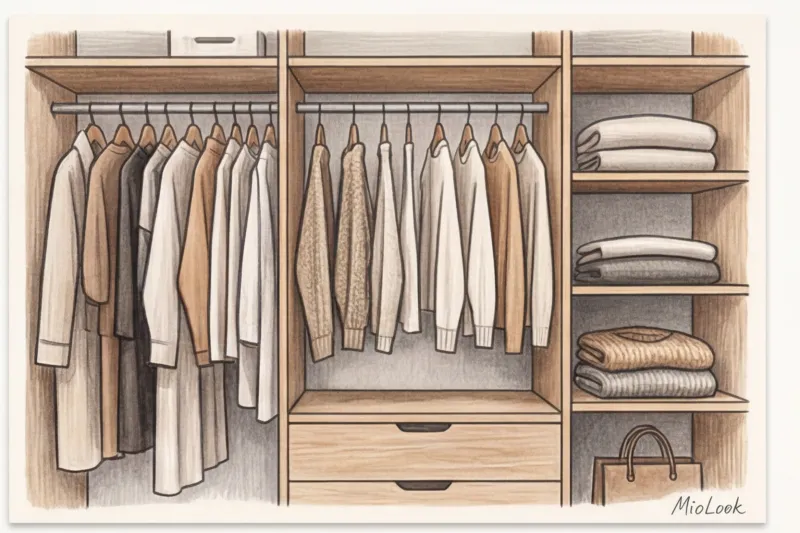
Let's summarize. What clothing items can you save on? On trendy experiments, on items that don't have direct contact with your underarms (wide skirts, baggy trousers), and on one-off special occasion outfits. What's worth paying more for? Basic knitwear (because we wear it every day), outerwear (for thermal protection), and shoes (for your health).
Before your next shopping trip, I recommend digitizing your closet through MioLook Look at the statistics: which categories do you wear most often? It's these, the most active "workhorses" of your wardrobe, that you should focus your budget on. Mindfulness saves not only your money but also our environment.