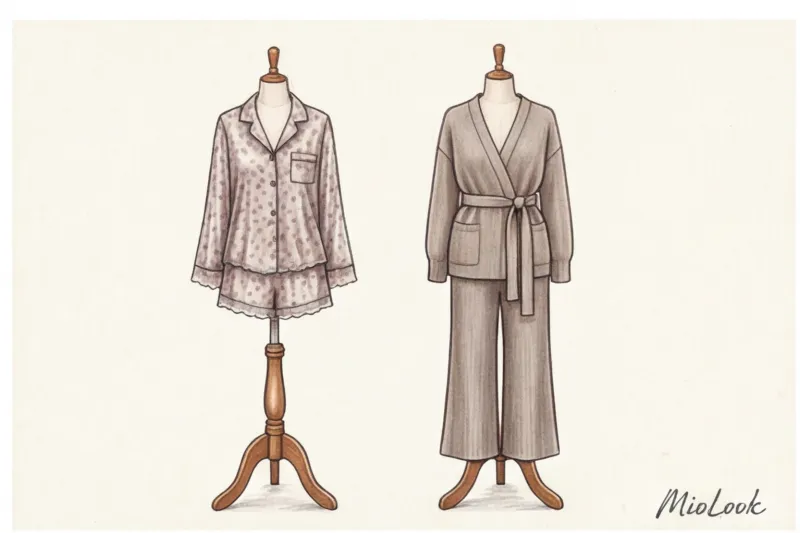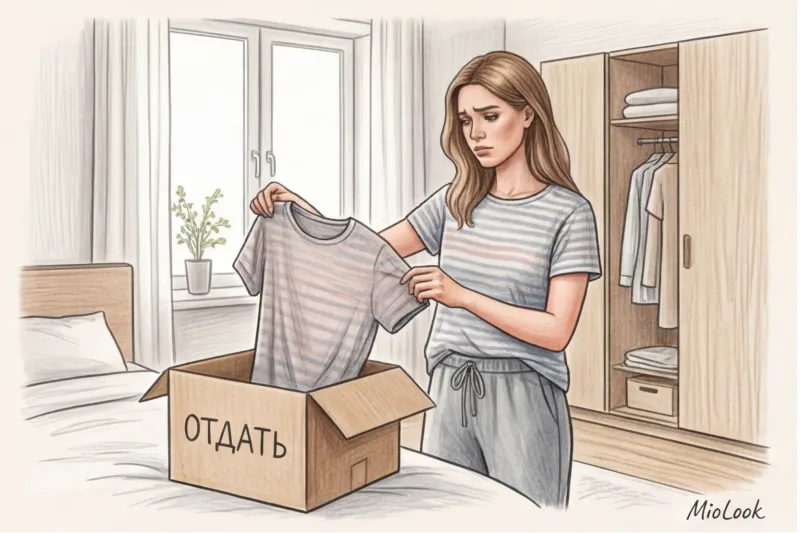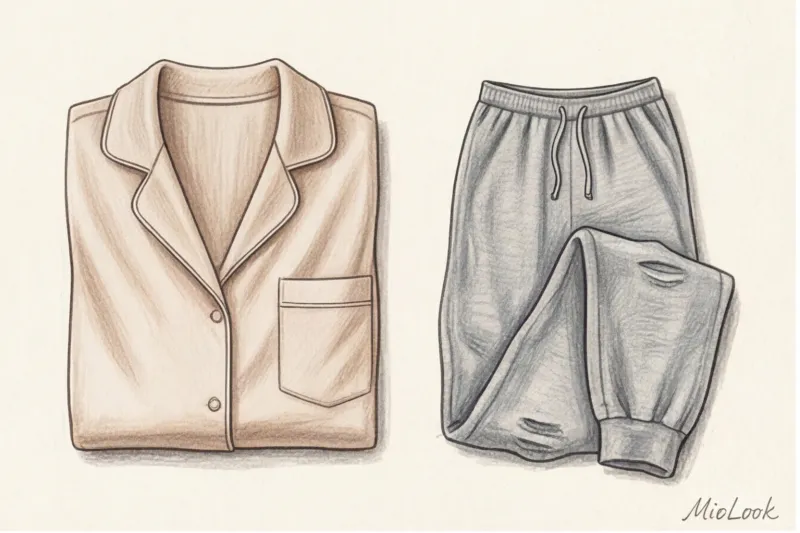
Look down and take a look at what you're wearing right now. If it's a faded T-shirt with the logo of the company you worked for five years ago and sweatpants with the knees stretched out, you're not alone. We're used to spending tens of thousands of euro on office suits and evening dresses that we wear maybe a couple of times a month, but we completely forget about the clothes we spend most of our real lives in.
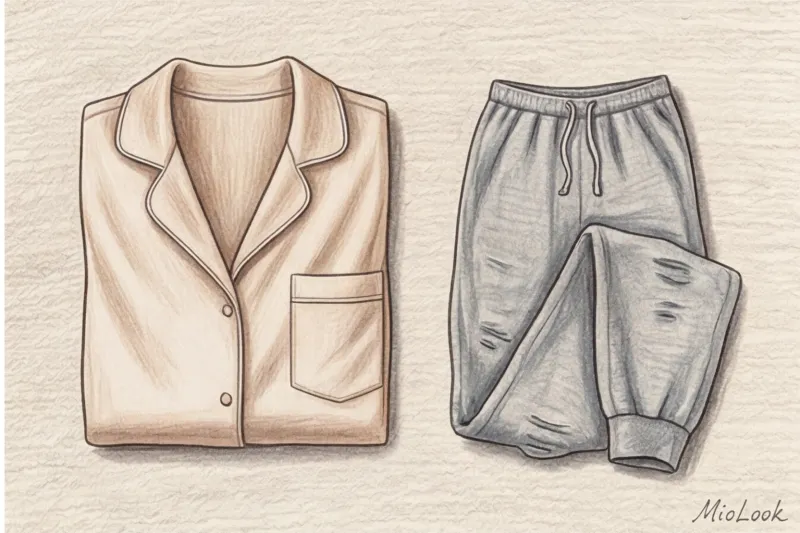
When clients ask me, Where to buy loungewear , they usually mean looking for beautiful shades or cozy prints. But as a textile expert, I look at other things: the twist density of the yarn, the percentage of elastane, and the seam architecture. We've already covered how loungewear affects our self-esteem and productivity in our The complete guide "Home Wardrobe: How to Assemble a Stylish Capsule Wardrobe" In this article, we will focus on the physics and chemistry of tissues.
Loungewear as an Investment: Why Mass-Market Is a False Economy
Let's do the math. In styling, there's a golden rule for evaluating a wardrobe—the cost-per-wear formula. Imagine you bought a luxurious evening gown for 25,000 € and wore it to two events. The cost per wear would be 12,500 €.
Now let's take a high-quality lounge suit for 10,000 €. If you wear it 150 evenings a year, the cost per outing drops to 66 €. The difference is colossal.
Cheap pajamas from a mass-market store for 2,000 € seem like a bargain until the third wash. Why do they lose their shape so quickly? The secret lies in the anatomy of frugality. Fast fashion brands use short-staple cotton (it's cheaper, but it quickly pills) and harsh dyes that stain.
"We wear clothes at home that we're embarrassed to wear outside, falling into the psychological trap of putting our lives on hold. But it's our home clothes that touch our bodies at the moments when we're most vulnerable and in need of restoration," says a woman working with her clients' wardrobes.
What fabrics to look for and where to buy loungewear: a guide to materials
Three years ago, a client named Anna came to me complaining of persistent contact dermatitis. She'd changed her laundry detergent and shower gel, but the problem persisted. The solution lay in her loungewear: Anna had been sleeping in pretty, but cheap, polyester nightgowns.
Dermatological studies clearly show that synthetic fabrics (polyester, acrylic) create a greenhouse effect on the skin. They don't absorb sweat, but trap it, disrupting the skin's natural microbiome and impairing thermoregulation. After we completely replaced her home capsule with high-quality modal and tencel, the skin problem disappeared within a month.
Modal, Lyocell, and Tencel: Technological Comfort
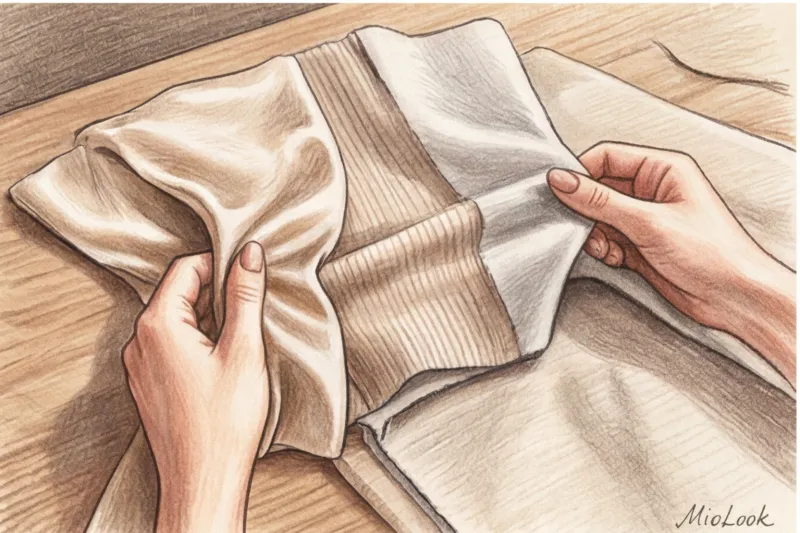
If you're looking for the perfect material for your home, consider next-generation artificial fibers. Don't confuse them with synthetics! Modal, lyocell, and Tencel are made from natural wood pulp (eucalyptus, beech) using high-tech processing.
- Absorption: Tencel absorbs moisture 50% more effectively than regular cotton, leaving skin dry.
- Tactility: The fabric has a silky, cool texture that is ideal for sleeping.
- Durability: Unlike cotton, high-quality modal is virtually resistant to pilling.
Debunking the Myth: Why 100% Cotton Is a Bad Choice for Your Home
The most counterintuitive discovery for many of my clients: “Ideal loungewear should be 100% cotton” is a harmful myth.
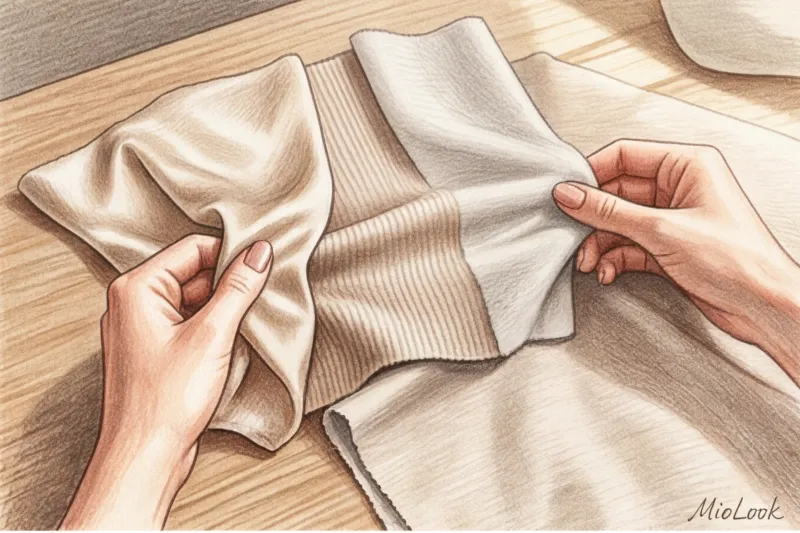
The physics of pure cotton fiber is such that it doesn't return to its original state after being stretched (so-called recovery stretch). This is why your favorite 100% cotton pajamas develop "bubbles" at the knees and elbows after just two days of wear.
The formula for ideal knitwear: Look for blends on the label. Cotton with a weight of at least 180 g/m² combined with 5–8% elastane (spandex) guarantees that the garment will breathe while maintaining its cut, even after dozens of squats on the couch.
Silk and linen: premium base and temperature regulation
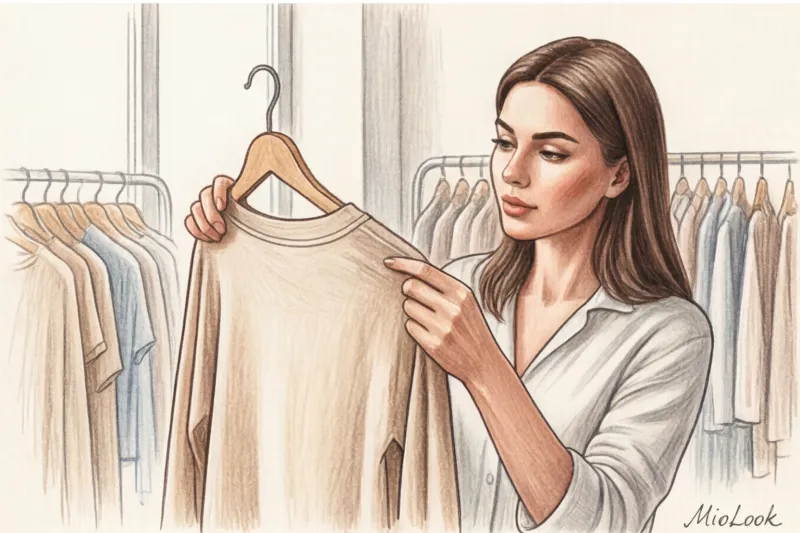
Silk is an investment that requires careful consideration. The main indicator of silk quality is its density, measured in momme. Never buy silk loungewear with a density below 19 momme. Anything thinner will inevitably come apart at the seams from the slightest strain while sleeping.
Softened linen is ideal for a summer home capsule. It has natural antibacterial properties. However, there is a catch. important limitation: Silk and fine linen are absolutely not suitable if you have active pets at home (claw marks will appear on the first day) or if you cook a lot with oil.
Your perfect look starts here
Having trouble organizing your new home capsule? Upload your items to our app, and our algorithm will help you create stylish combinations for every day.
Get access — €0.99 onceStylist's checklist: how to check the quality of an item before buying
As part of a professional experiment, I once bought five sets of loungewear in different price ranges (from 1,500 to 15,000 €) and washed each one 20 times. The budget mass-market set gave up after the seventh wash—the overlock seam simply unraveled. To avoid wasting money, use this checklist in the fitting room (or when online ordering with fitting ):
- Transmission test: Hold the fabric up to a lamp in the fitting room. If the weave is uneven, there are thick threads, or the fabric is too translucent, the item will wear out quickly.
- Seam assessment: Turn the garment inside out. High-quality sleepwear uses French seams, where the edges of the fabric are tucked in. A cheap, scratchy overlock is a sign of extreme frugality.
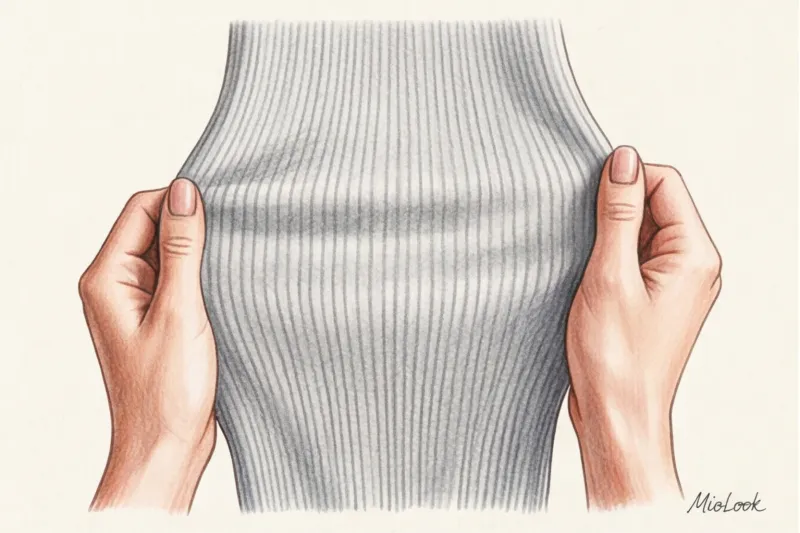
- Shape Memory Test: Stretch the fabric slightly over your stomach or knee (where it tends to stretch) and release. High-quality knitwear with the right percentage of elastane will instantly return to its original shape without rippling.
- The fittings give everything away: If a brand claims to sell premium Tencel pajamas but uses cheap, jingling plastic buttons, you're looking at a botched product. Look for buttons made of shell (mother-of-pearl), coconut, or high-quality matte polymer.
Top conscious brands: where to buy quality loungewear
According to the Textile Exchange 2024 report, the share of brands switching to certified sustainable fibers has increased by 15%. This means finding quality items has become easier if you know where to look.
When shopping online, always look for abbreviations on the product card. Oeko-Tex Standard 100 (guaranteed absence of toxic dyes) or GOTS (global standard for organic textiles).
Where to look for the right things:
- Premium minimalism: Brands like Hanro and Zimmerli offer benchmark-quality seamless micromodal underwear and clothing. They're high-priced, but their garments last 5-7 years.
- International base: Loungewear lines from COS, Massimo Dutti, and premium brand Oysho. They work well with heavy cotton and linen blends.
- Local sustainable brands: Look for small, local producers that openly display fabric certifications. Their prices are often comparable to mass-market brands, but the quality of the tailoring (those same covered seams) is significantly higher.
How to care for your home wardrobe so it lasts for years
Buying the right item is half the battle. The other half is not ruining it in the first wash. Did you know that your favorite scented fabric softener is the main enemy of elastane and modal?
Fabric conditioners work by enveloping the fibers in a silicone film (this is what creates the illusion of softness). This film seals the micropores of technical fabrics. As a result, modal stops wicking moisture away from the body, and elastane fibers dry out and crack under the influence of these chemicals, causing the garment to lose its shape.
Golden rules for caring for a home capsule:
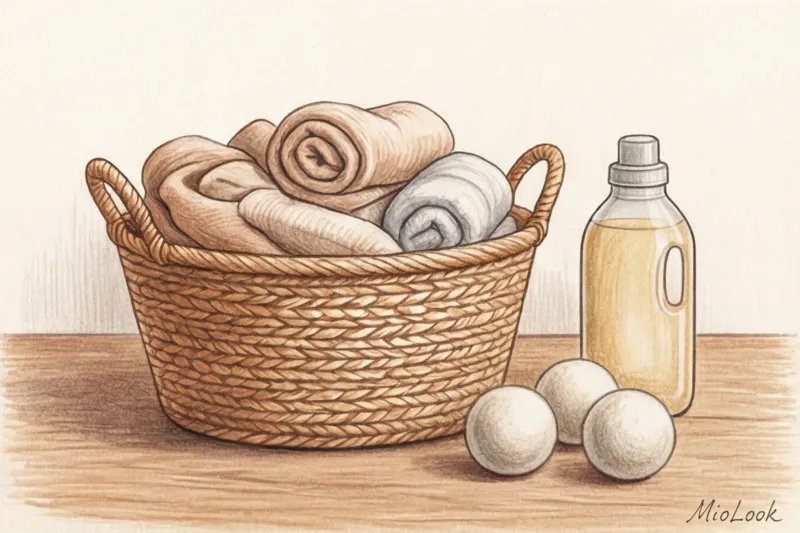
- Wash knitwear and delicate fabrics only with liquid detergents (gels). Granular powders are abrasives that scratch fibers and accelerate pilling.
- Use laundry bags, especially if you wash pajamas with items that have zippers or hooks.
- Temperature conditions: no higher than 30°C for silk and elastane.
- Never hang knitted suits on hangers! They will stretch out under their own weight. Store them only folded on shelves. If you have trouble organizing storage, try wardrobe visualization feature in MioLook - it helps to see everything at a glance.
Investing in quality loungewear is, above all, a sign of self-respect. You don't have to wear old T-shirts just because "no one at home" is looking. Start small: take stock tonight and ruthlessly toss that stretched-out item that makes you feel sloppy. Replace it with one high-quality set made of thick modal—and you'll physically feel the difference in how you relax.