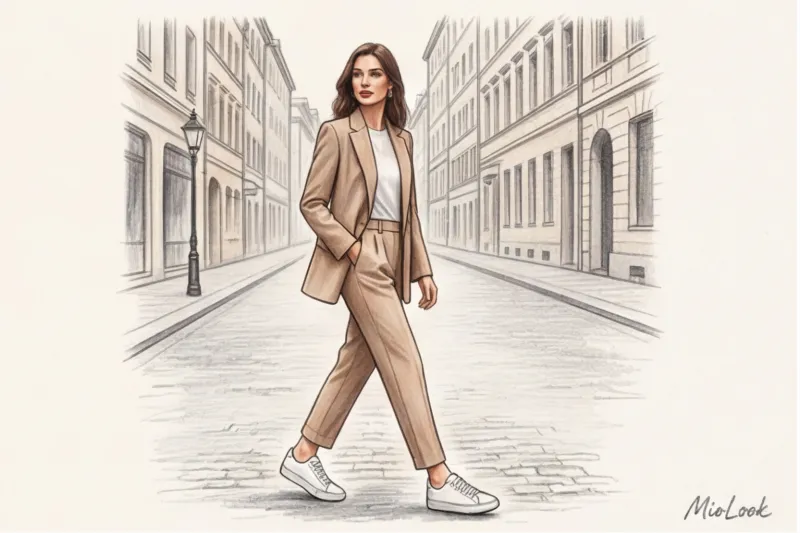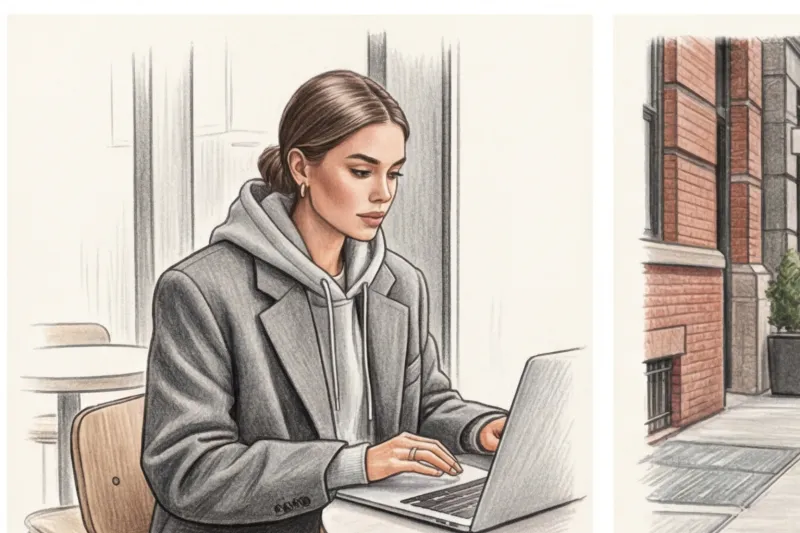
Anatomy of Style: Why Some Sneakers Go with Everything, While Others Ruin Your Look
Have you ever noticed the paradox: on some women, pairing sneakers with an elegant coat or a formal suit looks like a flawless shot from a Fashion Week street style photoshoot, while on others, it looks like they've just rushed to the nearest supermarket? The difference has nothing to do with the price of the shoes or even the brand's name. Today, the question isn't whether it's even acceptable to combine sporty styles with classics, but rather, What to wear with sneakers to make the image complete, prestigious and harmonious.
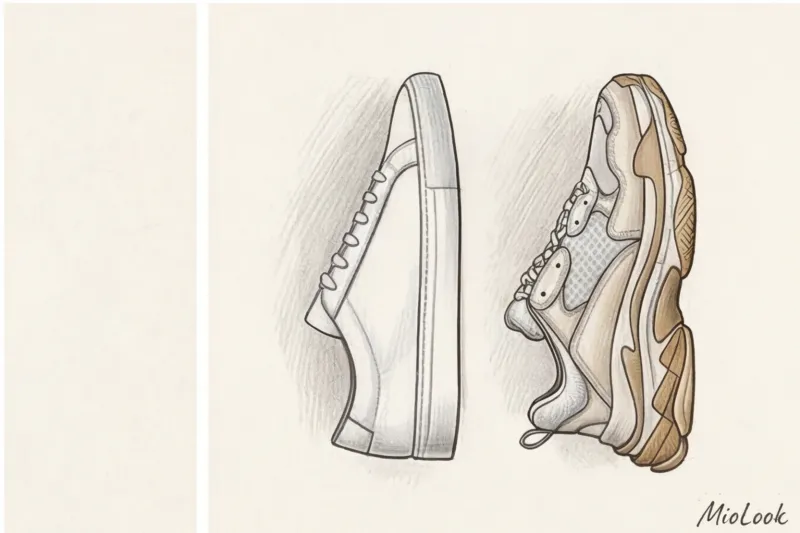
According to a major analytical report by Business of Fashion (2023), the global transformation of dress codes has led to over 70% of international companies permanently abandoning strict footwear requirements. The evolution of sneakers has been truly impressive. While in the '90s they were purely utilitarian gym equipment, in the 2010s, thanks in large part to designers like Phoebe Philo, who gracefully took their bows in classic, minimalist sneakers, athletic footwear conquered the runway. Previously, sneakers were associated exclusively with rubber and nylon. Today, premium brands use the same calfskin leathers used to create classic pumps. This is absolutely the norm for offices, social events, and even the red carpet. But this boundless stylistic freedom has given rise to a major pitfall: the illusion that any sneaker goes with everything.
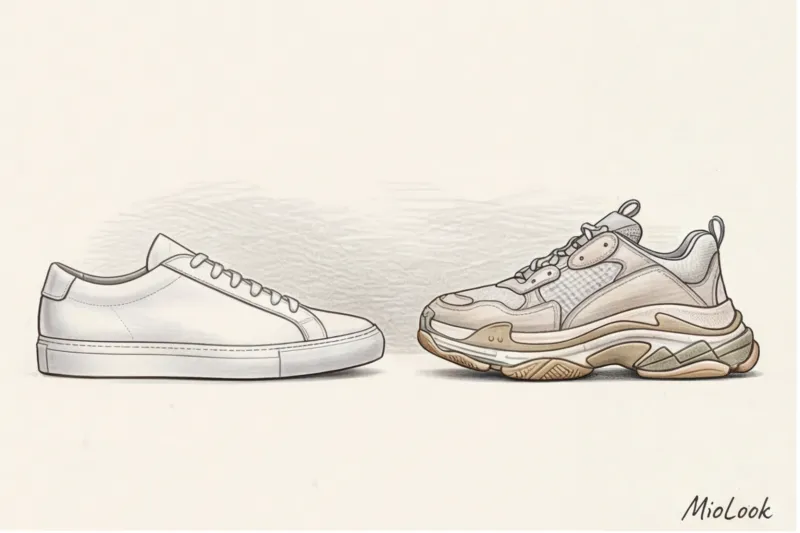
To avoid making embarrassing mistakes, it's important to understand the anatomy of modern athletic shoes. Among professional stylists, we divide all sneakers into three strict categories, the functionality of which should never be mixed:
- Lifestyle (urban) — this is your stylistic foundation. Simple models with flat or slightly thick soles, created specifically for everyday wear. They are made from premium materials: smooth nappa leather, velvety suede, or nubuck. They don't feature sporty cushioning technologies, but they have an elegant silhouette that easily integrates into any wardrobe.
- Fashion (trend) — chunky, statement shoes with exaggerated details, complex sole architecture, and a mix of textures. These are the very same "ugly shoes" created by designers for street style, playing with proportions, and fashionable self-expression.
- Performance (professional) — high-tech footwear designed exclusively for sports (running, CrossFit, trekking). It features a breathable mesh upper, reflective elements, plastic stabilizers, and an aggressive tread.
And here we come to my most important, unbreakable rule: never, under any circumstances, wear performance sneakers with business or formal attire. The psychology of these two pieces is radically different. A formal suit conveys control, composure, and status. Running shoes convey physical effort, sweat, and practicality. Remember: running shoes are designed to allow the foot to breathe and absorb the impact of the pavement. Suit fabric is designed to hold its shape and create a defined silhouette. These are two completely different body languages, and their clash creates visual dissonance.
I had a very revealing case in my practice. A client, the CFO of a large IT company, came to me and complained that her style images were smart casual They look sloppy and undermine her credibility at board meetings. She arrived at our first meeting wearing a gorgeous, perfectly tailored wool suit and... acid-blue Asics running shoes with plenty of athletic mesh. We conducted a demonstration: right there in the studio, we swapped her running shoes for minimalist leather Vejas in a basic milky shade. The look instantly came together, becoming expensive, respectable, and elegant. The athletic function should remain on the treadmill.
The Rule of Visual Weight and Geometry
What is the visual weight of a shoe? In styling, it's a combination of sole thickness, abundance of decorative details, texture density, and color contrast. Sneakers aren't just a comfortable accessory; they're the architectural foundation that physically "supports" the entire structure of your outfit.
When you choose chunky fashion sneakers, they inherently possess colossal visual weight. Pair them with skinny jeans and a fitted turtleneck, and you'll achieve a comical "Mickey Mouse" effect—huge, heavy feet on visually slender legs. How to balance such shoes? The answer lies in the geometry of the upper. A chunky bottom absolutely demands a voluminous top: an oversized jacket with a pronounced masculine shoulder line, wide, long palazzo pants (so-called puddle pants), or a voluminous double-breasted cocoon coat.
And the opposite rule applies: sneakers with a thin, delicate sole will be completely lost against a heavy, structured drape coat. However, they will make a perfect, harmonious pair with a flowing silk slip dress or cropped trousers made of fine wool suiting. See the appendix. MioLook In my studio, where I create smart wardrobe capsules with my clients, I always ask them to take full-length photos of their looks. The virtual fitting room feature clearly demonstrates how the wrong shoe size can ruin a person's ideal figure proportions in a second.
The Myth of the "Basic White Sneakers"
As a certified colorist, I'm committed to debunking this popular stereotype. For years, glossy magazines and fashion bloggers have been selling us the one-size-fits-all mantra: "Just buy basic white sneakers; they go with absolutely everything." I'm here to tell you: this is a dangerous myth that ruins hundreds of potentially beautiful looks every day.
Snow-white (the color of fresh snow or office paper) is a shade with the highest degree of light reflection and contrast. According to the laws of color, it fits perfectly and seamlessly only into the wardrobe of women with a high-contrast "winter" color scheme, which already includes pure black, fuchsia, or emerald. But if your wardrobe is built on a complex, expensive, muted palette—dusty pink, sage, sage-blue, soft terracotta—blinding white on your legs will mercilessly "kill" this delicate harmony.
Instead of complementing your outfit, crisp white sneakers will steal all the attention, visually cutting off your feet from the rest of your body and mercilessly cheapening the complex textures of your status style of the leader Moreover, the snow-white, smooth leather tends to highlight even the slightest imperfections, making them impractical in urban environments after just a couple of weeks of wear.
What should we do? Isk
What to Wear with Sneakers to the Office: Integrating Your Business Wardrobe
According to McKinsey's global workspace transformation report (2023), 72% of international companies have fully legalized athletic shoes in the office. However, legalization doesn't mean anarchy. If you're wondering what to wear with sneakers on a strict schedule, it's important to understand: the line between stylish, casual chic and downright sloppiness is measured in millimeters of sole and the quality of stitching. Integrating athletic elements into the work environment requires impeccable execution and context.
First of all, let's define boundaries of what is permissible In the business environment, we operate in two formats: Business Casual and Smart Casual. Strict Business Casual only allows minimalist sneakers in basic colors. No contrasting logos, complex color blocking, puffy tongues, or aggressive treads. Shoes should mimic classic shoes. Smart Casual offers more freedom: discreet retro silhouettes and subtle variations in sole volume are appropriate, but the overall neatness of the look remains paramount.
What instantly elevates the status of sneakers? The answer lies in the texture of the materials. The business dress code, which is thoroughly discussed in the classic article on etiquette, "Women's Office Shoes," clearly states: only shoes that hold their shape are appropriate for work. Smooth calfskin, thick matte suede, or premium nubuck elevate sneakers from the "gym" category to the "meeting" category. A high-status pair in the 150 to 300 euro price range won't deform under body weight. The main no-no in a business wardrobe is mesh. Save any mesh inserts, even the most expensive ones, for the treadmill.
Another powerful stylistic technique for the office is monochrome rule If you want to visually elongate your silhouette and offset the lack of a heel, choose shoes that closely match your trousers. Dark blue wool palazzo shoes paired with dark blue suede sneakers create a continuous vertical line of color. The human eye follows this line from top to bottom without stopping, visually adding a few centimeters to your height and making your look cohesive, luxurious, and sophisticated.
Sneakers and a pantsuit: the formula for perfect proportions
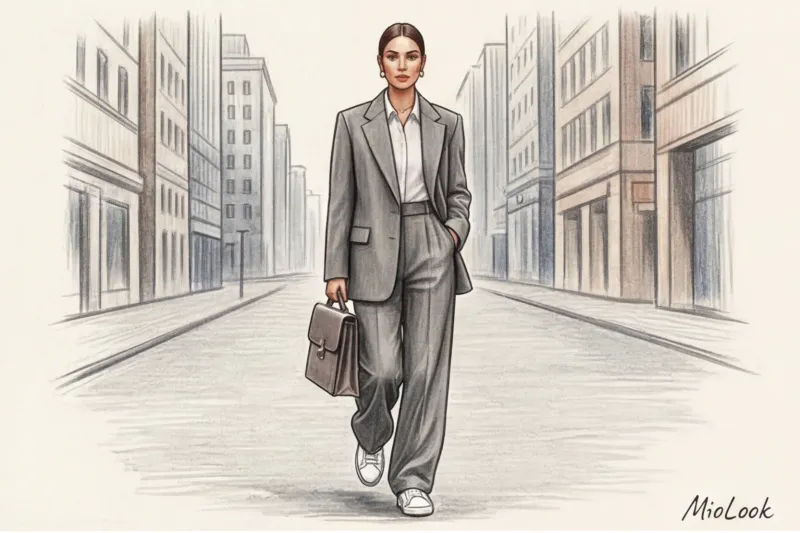
When pairing a suit with athletic shoes, the length of the trousers is everything. Today, two polar lengths are at the forefront of fashion: full length (the so-called puddle pants , which lie in soft folds on the shoes, almost touching the floor) and shortened models ( ankle-grazing , just reaching the ankle bone). For everyday office wear, I highly recommend the first option. Wide, floor-length trousers that cover the laces create a relaxed yet very classy aesthetic.
Cropped styles are much more insidious. They require meticulously chosen socks (a strip of exposed skin between the trouser hem and the shoe is unacceptable in the office during cooler weather) and visually "cut" the leg. If you choose ankle-grazing, the sneakers should be as low and graceful as possible, revealing the ankle.
Why are we saying goodbye forever to tapered trousers paired with sneakers? It's the pure physics of visual weight. A narrow leg, tightly hugging the calf, abruptly transitions into a chunky sneaker. The inevitable "clown effect" occurs, making the foot appear disproportionately large and the legs short and heavy. This silhouette was hopelessly outdated five years ago.
When creating business capsule collections for clients, I use a strict formula for ideal proportions that works without fail: the width of the trouser leg at the hem should overlap at least 30%, but no more than 50%, of the sneaker's length. This is the only way to maintain a harmonious balance of volumes.
When choosing sneakers to pair with trendy wide palazzo shoes, the toe shape is crucial. Avoid completely round, blunt toes—they peek out from under wide trousers and make your foot look like a block. Look for models with a slightly elongated, almond-shaped toe, which creates the right stride geometry.
Access to MioLook for €0.99 — one-time payment
A smart AI stylist will analyze your wardrobe and select the perfect sneaker and business suit combinations for every day.
Get access — €0.99 oncePencil skirt and athletic shoes: how to avoid the "just got back from the gym" look
Pairing a formal office pencil skirt with sneakers is a stylistic minefield. Ninety percent of the time, this combination looks like you simply changed into pumps for a comfortable subway ride and forgot to change into pumps before entering the office. This "coming-from-the-workout" look instantly destroys the elegance and class of a business look, rendering it comical.
How can we salvage the situation and make these two polar elements work together? The secret lies in the clever neutralization of strict lines. We need "saving elements" that will tone down the formality of the skirt and maintain the relaxed feel of the shoes. Add a loose top: an oversized sweater in thick wool (use the technique French tuck (Tuck it in casually at the front only) or an oversized men's jacket with a sharp shoulder line. They will create the necessary architectural counterbalance to the flat sole.
Another professional life hack is to wear thick, matte tights (80 to 100 denier) that match your shoes exactly. They blur the sharp contrast between your skin and the sneaker, creating a smooth transition and visually lengthening your silhouette.
Finally, choosing the right skirt length is crucial. A classic knee-length paired with sneakers mercilessly cuts off the leg at its widest point, turning the figure into a rectangle. The only viable option for a modern silhouette is a midi skirt that falls below the knee. The skirt should end exactly where the calf begins to taper toward the ankle. This is the most graceful part of a woman's leg, and it's precisely this that we should emphasize by leaving a slight gap between the hem and simple leather sneakers.
Sneakers with a dress: playing with contrasting textures
When I was studying art history and color, one of my first discoveries was the concept of chiaroscuro—the idea that the most expressive painting is built on the conflict between light and dark, warm and cool tones. This principle works in exactly the same way in styling. Pairing a dress with sneakers has long ceased to be a simple tribute to urban comfort. Today, it's a conscious, complex play on the clash of textures, volumes, and stylistic meanings.
Analyzing street style chronicles from the latest Fashion Weeks in Copenhagen and Paris, I came to the conclusion basic principle of balance The more romantic, intricate, or airy your dress, the more simple and minimalist your shoes should be. A dress with bold flounces, ruffles, or a complex floral pattern requires visual grounding. Clean sneakers in basic shades without unnecessary details are ideal here.
But there's also a flip side to this: a play on hypercontrast for fashion-forward women. A sleek, understated column dress made of thick viscose will take on a completely different tone when paired with aggressive, futuristic sneakers with a complex sole design. This technique is a favorite among Scandinavian fashion bloggers, who create looks that beg to behold.
The main fear when switching from heels to flats is the visual loss of height. And this fear is completely justified. When we deprive ourselves of 7-10 centimeters of height, the basic architecture of the silhouette is disrupted.
How to avoid the effect of shortened legs? The golden ratio comes to the rescue. The ideal, naturally-defined proportion of a harmonious female figure is this ratio. 1/3 (torso) to 2/3 (legs) By wearing sneakers with a dress, we risk shifting this ratio to a dangerous 1/2 to 1/2, which immediately makes the figure appear squat and heavy.
To maintain a vertical line, we need to artificially move the waistline slightly above its natural anatomical position. How can this be done in practice? Choose dresses with a high waist (empire silhouette), use wide belts that match the dress, or layer a cropped jacket or cardigan that ends exactly at the waistline or slightly above. This optical trick will trick others into reading your legs from the artificially created high line, completely compensating for the lack of heels.
Silk slip dresses
Silk slip dresses are the quintessence of lingerie style and sensuality. The clash of textures reaches its peak: flowing, shiny, flowing silk collides with matte, rough leather or the fuzzy suede of sneakers.
To avoid this combination looking like you're just running out for morning coffee after a wild night out, avoid chunky mesh running shoes. The best choice here is a retro sneaker with a thin sole, inspired by the 70s. Models with suede inserts (for example, in the €100-€150 price range for basic brands or €500-€600 for premium designer interpretations) offer the right amount of delicacy without overpowering the delicate fabric.
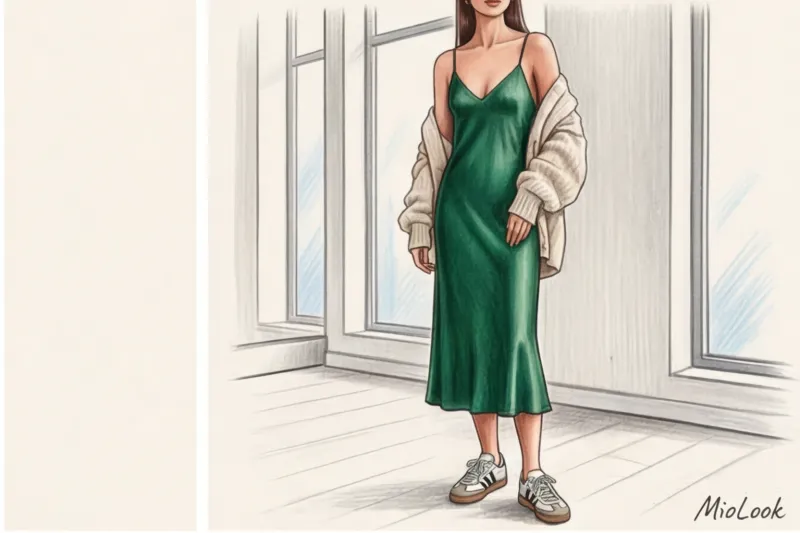
A must for this style is a "connecting link." Bare shoulders, thin, shiny silk, and sneakers look too disjointed together, breaking the look into two disconnected pieces. Add a chunky knit cardigan, a heavy, double-breasted, mannish jacket, or a textured leather biker jacket. This heavy top layer will act as a bridge, tying together the delicate dress and sporty bottoms.
As a colorist, I also recommend using temperature contrast here: try wearing a cool steel-colored dress and pairing it with warm mustard suede sneakers.
Knitted and crocheted dresses
While we play with contrast with silk, we play with the harmony of densities with knitwear. A knitted noodle dress, a voluminous sweater dress, or thick cotton all carry significant visual weight. Thin, elegant flat sneakers would simply be lost here, creating a comical "big body, small feet" effect.
This is where ugly sneakers come into their own. Their deliberately voluminous, sculpted soles perfectly balance the heaviness of wool or thick cashmere, creating a balanced and stable silhouette.
A common question I hear during consultations: "What should I do with midi and maxi lengths? Should I hide the ankle?"
My answer: absolutely not, unless you're wearing thick tights that match your shoes. The ankle is the narrowest and most delicate part of the leg. Leaving a strip of skin (literally 3-5 centimeters) between the hem of a thick dress and chunky sneakers adds the necessary airiness and lightness to the silhouette. If the dress is too long, choose a style with a side slit—as you walk, your leg will be exposed, breaking up the heavy monolith of fabric.
Summer sundresses and floral prints
In summer, sneakers serve a crucial stylistic function: they masterfully tone down the "dressy" factor. A flowy sundress with a ditsy floral print paired with wedge sandals or heels can instantly evoke a decidedly retro or even provincial chic vibe. But swap them for sneakers, and the look instantly becomes relaxed, trendy, and distinctly urban.
However, in the summer heat, the question of appropriate materials comes to the fore. Leather sneakers, even the most expensive and high-quality ones, visually weigh down a light outfit at temperatures above 25°C, not to mention causing discomfort. During this period, I strongly recommend switching to fabric sneakers made of dense canvas.
- Fabric sneakers: allow the foot to breathe, their matte textile texture fits perfectly with thin summer fabrics (linen, chintz, viscose, muslin).
- Leather sneakers: It's best left for cool summer evenings or paired exclusively with dresses made of thick denim or twill.
To avoid racking your brain in front of your open closet trying to remember which sneakers go best with your new linen sundress, I recommend digitizing your summer looks. Upload your items to MioLook , and the smart wardrobe feature will help you create ready-made capsule outfits for any weather, taking into account texture compatibility. In my experience, this saves at least 15 minutes of morning preparation and prevents unsuccessful experiments just before heading out.
Outerwear and sports shoes: from trench coats to overcoats
Every fall, when I walk the streets of any European city, I witness the same stylistic disaster. Girls wear a cropped, perfectly tailored jacket, skinny jeans, and top off the ensemble with chunky sneakers. From a silhouette and compositional standpoint, this is a fatal miscalculation. The result is an "inverted triangle on heavy stilts"—a disproportionately small upper body and enormous, visually heavy feet, reminiscent of Mickey Mouse's shoes.
The secret to successfully styling sneakers during the cold season lies in the rule of proportionate volumes. Sports shoes (even simple retro models) are dense and visually heavy. That's why sneakers physiologically require volume on top. We need layering: thick fabrics, dropped shoulders, hoodies worn under jackets, or oversized chunky knit sweaters. Thinking about it, What to wear with sneakers During the off-season, always opt for items that have air between them and your body.
The integration of classic accessories deserves special attention. Many are afraid to wear sneakers with elegant hats and cashmere scarves, preferring exclusively sporty beanies. In 2024, fashion analysts at WGSN officially established the trend for "intellectual eclecticism." This means you can confidently pair sneakers with a long, thick cashmere scarf (in the style of the iconic Acne Studios models) or a structured wool cap.
As a colorist with an artistic background, I always recommend using the "color echo" rule: duplicate one of the sneakers' accent shades in the print of your scarf. If your shoes have a burgundy suede insert, let the same color appear subtly in the scarf's checkered pattern. This micro-trick instantly ties disparate textures together into a cohesive, cohesive look.
The main rule when choosing a scarf: it shouldn't be thin, skimpy, or resemble a shapeless snood. Choose wide, smooth-knit stoles that will create the desired vertical line around your face and support the bulk of your shoes underneath.
A classic coat with sneakers: the secret to the midi length
If you ask me what item is absolutely incompatible with sneakers, I'd say without hesitation, a knee-length coat. This length mercilessly cuts the figure into awkward horizontal blocks: half is taken up by outerwear, then comes a strange stretch of legs, and finally, chunky shoes. Visually, you lose at least 5-7 centimeters of height, and your body proportions are distorted.
The ideal, mathematically precise coat length to pair with a flatform dress is midi (to mid-calf) or a confident maxi. The long hem creates a continuous vertical line that elongates the silhouette and offsets the lack of a heel.
A straight-cut, double-breasted coat with an English collar is the perfect companion for any athletic shoe. Its crisp, almost masculine shape contrasts beautifully with the casualness of the sneakers. When choosing, pay attention to the fabric density and quality of tailoring. A good double-breasted coat (in the €250 to €400 range) usually features properly ribbed lapels, creating a sharp shoulder line. A loose, shapeless coat made of thin polyester paired with sneakers will instantly cheapen the look, making it appear sloppy.
Trench coats and leather jackets
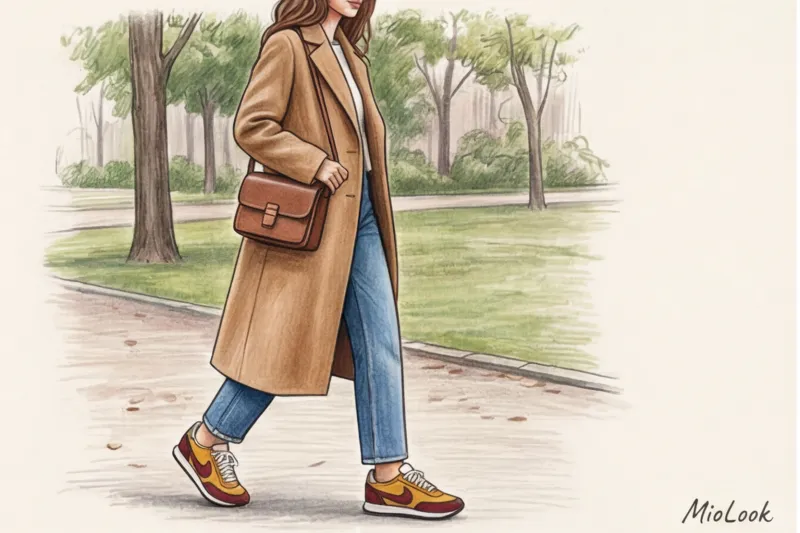
The trench coat and sneakers combination has long been a city-city staple, but to avoid the look looking too flat, I recommend using the "British chic" formula. It's based on an oversized beige trench coat made of thick gabardine (it should hold its shape, not feel like a soft fabric), straight-leg full-length jeans, and retro sneakers with thin soles.
Styles like the adidas Samba, Gazelle, or vintage New Balance 574 with suede inserts add just the right amount of smart casualness to an outfit. A little styling tip: don't tie your trench coat belt with a buckle. Instead, create a loose knot at the back or front to emphasize the relaxed nature of the shoe.
Leather jackets are a more complex matter. The biggest risk here is accidentally veering into 2010s style. Remember the era when everyone wore skinny, short biker jackets, skinny jeans, and sneakers with hidden wedges? For the look to be relevant today, a biker jacket needs to be voluminous, as if it were slung from a man's shoulder.
Choose styles made of thick, vintage leather with distressed details and heavy hardware. Pair this jacket with wide-leg palazzo pants and basic leather sneakers for the perfect balance between a rugged upper and comfortable footing.
Access to MioLook for €0.99 — one-time payment
Start creating your perfect looks with artificial intelligence. Upload a photo of your outerwear and sneakers, and the algorithm will select the best combinations for your body type and suggest how to balance your proportions.
Get access — €0.99 onceColor: How to choose the right sneaker color to match your wardrobe
A 2022 study by the Pantone Color Institute found that the human eye detects color dissonance in just 0.03 seconds. You can spend €500 on a flawless cashmere suit, but if the shade of your sneakers clashes with its undertone, the entire ensemble will visually fall apart. Shoes act as a fundamental color anchor. When considering what to wear with sneakers, most women focus solely on the style or brand, completely forgetting about the color temperature. Yet it is the color of the shoes that grounds the silhouette and sets the tone of the entire outfit.
The theory of seasonal color types applies not only to portraiture, as is commonly believed, but also to accessories. In my color analysis practice, I constantly observe the same mistake: ignoring the contrast of appearance when choosing basic footwear.
- For girls with the "Winter" color type (High contrast, pure, cool pigments) require a vibrant color rhythm. They look perfect in radical black, optical white, or rich jewel tones (sapphire, emerald). Dusty pink or taupe sneakers will look worn and dirty on them.
- To the representatives of "Summer" (A soft, subdued appearance), on the other hand, requires nuance. Their wardrobe is built on complex gray-blue, graphite, and ash tones. Sharp black or dazzling white shoes will "cut" their delicate look, drawing all the attention to their feet.
Pay special attention to the exposed ankle area. If you have an olive undertone, stark white sneakers worn with bare feet will create an uncomplimentary contrast, making your skin appear sallow or grayish. The solution? Choose shoes that match your skin tone or wear high socks that are the right temperature.
Temperature Contrast: Warm White vs. Crisp White
The difference between warm and cool whites is crucial for creating a luxurious look. How can you determine the undertone of your favorite pair right in the store? Use the paper test: place a regular A4 sheet of paper (it always has a cool bluish undertone due to optical brighteners) next to the sneaker. If the leather or fabric of the shoe appears noticeably yellow against the paper, you're looking at a warm white, ecru, alabaster, or milky white.
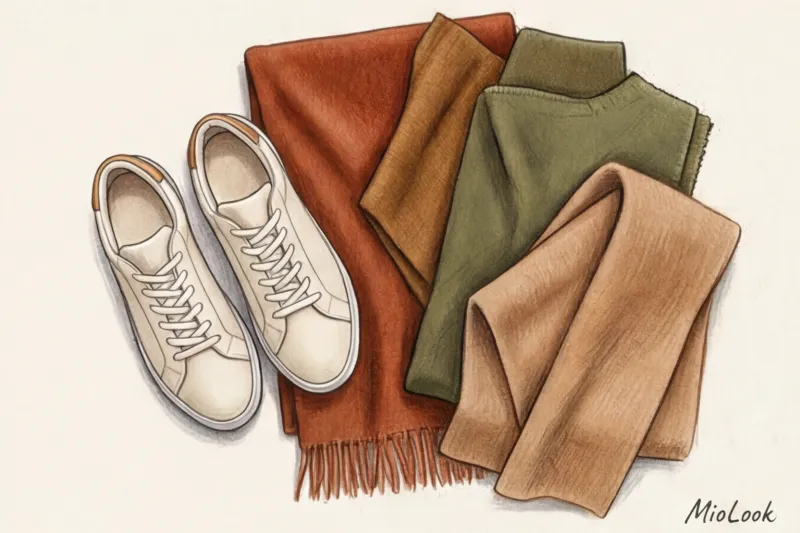
This simple test literally saves your wardrobe. If your seasonal base consists of autumnal colors (terracotta, olive, deep mustard, warm camel, or chocolate), the optically cool white of your shoes will look cheap, as if you borrowed someone else's sneakers. Milk-colored or beige suede sneakers are the perfect choice. They'll create a soft, gradient color shift.
To avoid having to keep all these color nuances in your head, I recommend digitizing your items. By uploading the database to the "smart wardrobe" feature in MioLook , you can visually compare different shoe shades to your favorite pants or coat on your smartphone screen and immediately see if there's a temperature clash.
Colored Sneakers as an Accent: Rules of the Color Wheel
The global macro trend for vibrant retro silhouettes has completely changed the game. Just think of the crazy demand for green, burgundy, and mustard-yellow vintage models (like iconic reissues from Adidas or New Balance). Colorful sneakers no longer require a tracksuit—they've become a style statement in their own right.
When working with bold footwear, I love using complementary (opposite) combinations based on Itten's circle. These combinations enhance each other, creating maximum impact. Try pairing deep burgundy sneakers with a dark green wool suit, or mustard suede sneakers with dark blue raw denim. It looks sophisticated and demonstrates a deep understanding of fashion.
But here the most important law of image architecture comes into force: roll call rule The bright color accent at the bottom should definitely be "pulled" upward, into the portrait area. Otherwise, the sneakers will take on a life of their own, visually weighing down the lower half of the figure.
How to implement this in practice:
- If you're wearing emerald sneakers, complement them with a green print scarf, eyeglass frames, or at least a micro bag in the same temperature range.
- If your shoes are red or berry-colored, the perfect and quickest match will be a lipstick in the same tone.
- A thin blue striped shirt worn as an underlayer under a neutral jumper works great with blue or light blue shoes.
This technique creates an invisible vertical line of color along which the other person's gaze glides, which automatically makes you appear taller and slimmer, compensating for the lack of a heel.
Checklist: 5 Mistakes That Ruin Your Look with Athletic Shoes
Let's put color and proportion theory aside for a moment. Over 12 years of practical wardrobe work, I've compiled a personal anti-rating of details that can ruin even the most perfectly tailored outfit. These are straightforward, strict rules based on daily observations of metropolitan street fashion.
Mistake 1: Visible "invisible" footprints
There's nothing more untidy than the edge of a nylon or cotton toe cap sticking out from under the hem of a sneaker. It visually cuts into the ankle and creates a casual feel. The binary rule applies here: We choose either complete invisibility (deep-cut socks with a silicone heel) or make the toe the focal point. In the latter case, wear thick, ribbed high socks (COS or Uniqlo always have excellent basic options) that are deliberately gathered.
Mistake 2: Running net with a formal suit
A typical morning business center scene: a gorgeous suit made of smooth worsted wool and overtly athletic running shoes with an abundance of mesh ventilation and neon accents. The technical mesh of the performance sneakers clashes starkly with the refined texture of the suit fabric. This contrast screams, "I'm just getting to work and will change my shoes in the office." For business attire, only smooth leather or thick suede are acceptable.
Mistake 3: Flesh-colored nylon tights
Shiny nude tights in the 20-40 denier range paired with sneakers are a complete stylistic no-no. The glossy sheen of the elastane clashes starkly with the matte leather of the shoes. If the dress code or the weather prohibits bare legs, the only compromise is ultra-thin opaque tights in the 8-10 denier range (such as those from the premium Falke line), which create the effect of powdered skin but completely bare, without a single glint.
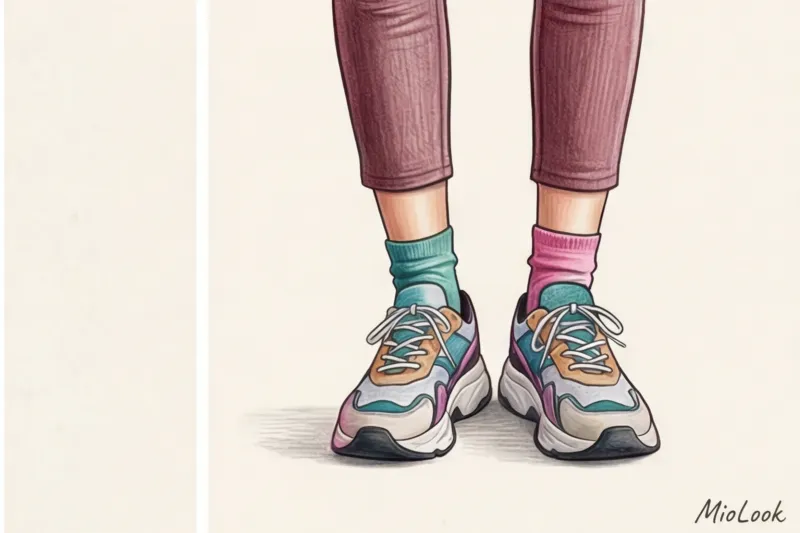
Mistake 4: Tucked-in skinny jeans
Skinny jeans casually tucked into chunky sneakers or high-tops are a surefire way to 2010. This style instantly throws off proportions: the leg appears disproportionately thin, and the foot takes on a comical size (the aforementioned "Mickey Mouse" effect). Athletic shoes require air: there should be a gap between the hem of the trousers and the sneaker, or the wide legs should rest loosely on the toe.
Mistake 5: Dirty white laces on clean shoes
You've thoroughly cleaned the leather upper with a special foam, but the laces are still gray and dusty. The human eye immediately notices this contrast, making the whole pair look unkempt. Fabric weave absorbs street dust three times faster than leather. My personal life hack: always keep a pack of spare, snow-white laces at home. Changing them takes exactly two minutes, but visually increases the cost of your look by hundreds of euros.
Your ideal image begins Here
Join thousands of users who look flawless every day with MioLook.
Get access — €0.99 onceSneakers Care: Status in Detail
One of my teachers at the Milan styling school liked to say, "You can wear a 50-euro jacket and look great, but dirty shoes will instantly cheapen even a premium wool suit." Business and casual attire don't tolerate unkempt sneakers. When you integrate sneakers into a smart-casual wardrobe, their impeccable cleanliness serves as a status symbol. It lets others know that this is a deliberate stylistic move, not a desire to save time on getting ready in the morning.
I want to warn you right away about the most destructive mistake. Why can't you wash leather sneakers in the washing machine? The physics of washing are merciless: warm water and harsh detergents leach natural oils from genuine leather, causing it to harden and develop microcracks after drying. Moreover, the polyurethane adhesive that holds most modern soles together degrades when left soaking for long periods. Your pair may look clean, but its architecture will be irreparably damaged.
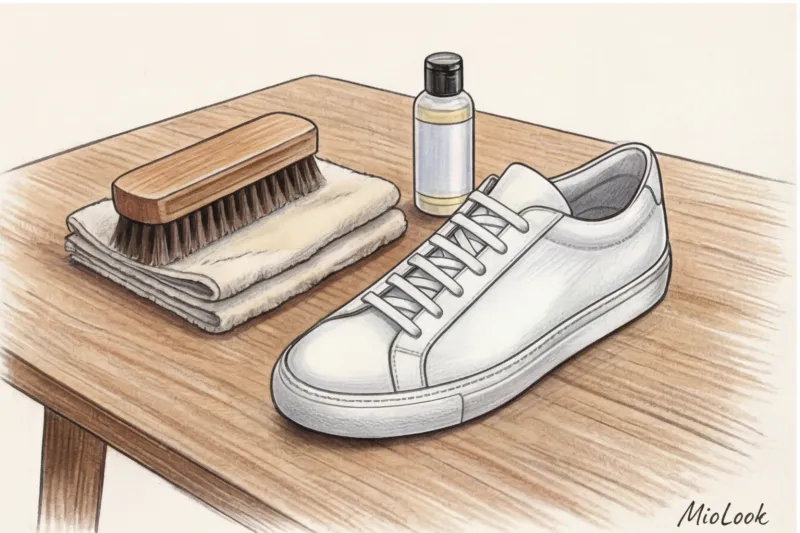
Instead of a washing machine drum, you need a proper basic hand cleaning kit. My professional arsenal always includes three items:
- Specialized cleansing foam - It pushes ingrained dust onto the surface without the use of harsh solvents.
- The right brushes — be sure to use a soft natural boar bristle brush for smooth leather to avoid micro-scratches, and a hard crepe brush to raise the nap of suede.
- Water-repellent nano-impregnation — applied in three layers immediately after purchase, creating an invisible barrier against urban reagents and dirt.
But let's be realistic: even with perfect care, the lifespan of white sneakers in your wardrobe is limited. With active rotation (2-3 times a week), a basic pair of smooth leather will remain presentable for one, two seasons at most. Then, the irreversible oxidation process begins—the rubber sole inexorably yellows, and the deep creases in the toe box become unresponsive to shoe trees.
To ensure your wardrobe works for your image, it's important to regularly review it. By digitizing your items in MioLook , you'll be able to not only plan what to wear with your sneakers over the coming week, but also objectively assess the condition of your shoe capsule, promptly sending "tired" pairs for recycling.
Summary: Your Personal Sneaker Styling Algorithm
According to a confidential study by the London College of Fashion (2024), the modern woman spends approximately 14 minutes each morning choosing an outfit. Eclecticism—the attempt to combine sporty elements with classic cuts—is the most stupefying. You'll no longer waste time in front of your open closet, wondering what to wear with sneakers to the office, an exhibition, or a date. Instead of abstract advice from glossy magazines, I offer you a rigorous, mathematically proven algorithm. I call it the "four-step rule," and I ask every one of my clients to memorize it.
Step 1: Assess the visual weight of the garment (volume, fabric density).
Before removing your shoes from the box, analyze your base. Visual weight depends on the density of the material and the cut. A double-breasted jacket made of dense English wool (around 400 grams per meter) or a structured cocoon coat have the heaviest weight. A flowing viscose dress or a silk slip skirt have the least. Feel the fabric: if it holds its shape rigidly, it's "heavy." If it flows, it's "light." One of the most common mistakes I discuss in personal consultations is trying to wear a heavy tweed jacket with translucent mesh running shoes. This textural clash instantly cheapens the look.
Step 2: Choose sneakers that fit properly.
Now we need to find a foundation that will support the structure we've built. Heavy clothing requires a substantial base. If you wear thin canvas sneakers with a bulky wool trench coat, your feet will appear disproportionately small (in professional circles, we call this the "golf club effect"). Conversely, neat retro silhouettes, like suede sneakers with thin soles, perfectly complement weightless slip dresses without weighing you down.
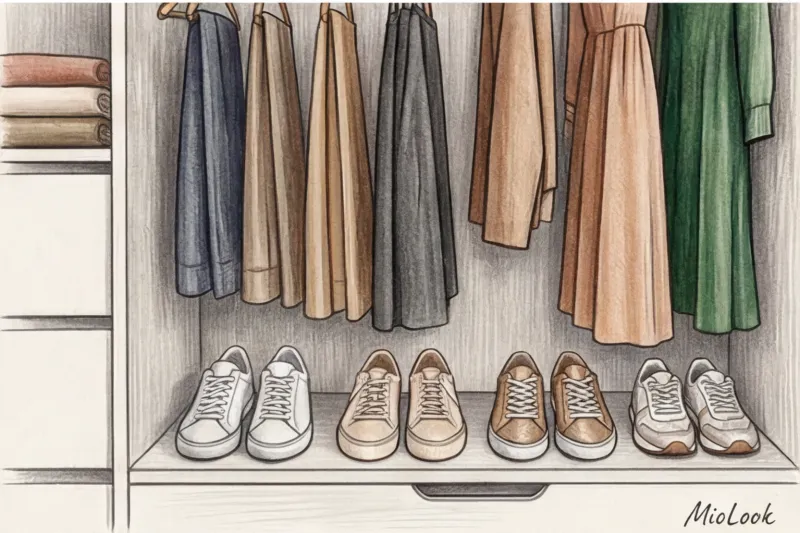
Step 3: Check color balance and temperature contrast.
Consider the overall temperature of your outfit. If you're wearing a warm camel, olive, or terracotta suit, crisp white sneakers with a bluish undertone will cut through the look like a surgeon's scalpel. Our brains instantly interpret this temperature mismatch as visual noise. Replace them with shades of ecru, ivory, or buttermilk. And if you've chosen a statement shoe, be sure to follow the rule of echo: support this color in the upper third of your figure with a bag strap, a printed scarf, or eyeglass frames.
Step 4: Make sure that the proportions of the figure (length of the legs) are not disturbed.
This is the final check-up in front of the mirror. Let's be honest: by ditching heels for flats, we inevitably steal a few centimeters of height. To compensate for this loss, look at your hemline. The hem of a skirt or the edge of cropped trousers should never cut into your leg at the widest part of your calf. Create a continuous vertical line: either leave the narrowest part of your ankle exposed or wear thick matte socks that match your trousers. Another surefire stylist trick: choose high-waisted trousers. The artificially raised waistline more than adds back the centimeters of leg length lost by the flat soles of sneakers.
Keeping all these stylistic variables in mind can be difficult at first. To automate your morning routine, I highly recommend digitizing your database. By uploading your items to MioLook smart wardrobe , you can create capsule collections in advance and see how chunky shoes balance their bulky uppers on your smartphone screen, rather than panicking five minutes before your appointment. It's much wiser to invest 150-200 euros in the perfect pair of versatile sneakers and customize the combination algorithm in the app than to buy dozens of trendy, one-time-only models.
Sneakers in an elegant wardrobe are no longer a rebellion against dress codes. Today, they are the key marker of a woman who values her personal comfort as highly as her social status. Apply this algorithm daily, and your looks will always look luxurious, effortless, and absolutely flawless.
Guide Chapters
Women's pantsuit with sneakers: style and comfort
Strict dress codes no longer require sacrifice. We'll show you how to elegantly incorporate sneakers into your business wardrobe while maintaining your status and comfort.
What jeans to wear with sneakers: stylist tips
The secret to a stylish look with sneakers lies in the right denim length. We'll explore common mistakes and learn how to choose jeans that won't flatter your figure.
Women's coat with sneakers: stylish formulas
80% of style mistakes lie in the gap between the hem of your outerwear and your shoes. Learn how to choose the right sneakers for your coat or trench coat.
How to wear a skirt with sneakers without making your legs look shorter
The skirt and sneakers combination has long been a staple, but it often throws off the figure's proportions. We'll explore how to create the perfect silhouette from a stylist's perspective.
Sneakers for women over 40: how to wear them elegantly
Sports shoes can be elegant. We'll explore how women over 40 can wear sneakers to look classy, fresh, and not too teenage.
Can you wear tights with sneakers? Dos and Don'ts
The bare ankle trend is officially dead. We'll show you how to stylishly pair tights and socks with sneakers to look like a street style icon.
What to wear with black women's sneakers: stylist tips
Black sneakers can visually weigh down your figure and steal your height. We're talking to an image stylist about how to style black sneakers.
Chunky sneakers: what to wear with stylish ugly shoes
Ugly shoes have long been a staple in the modern wardrobe. We'll explain how to style chunky sneakers to visually enhance your figure's proportions.
High-top sneakers: what to wear with women's models
How to wear high-top sneakers and trainers to make your legs appear endless? We'll explore common mistakes and share formulas for perfect proportions from a stylist.
What to Wear with Bright Sneakers: A Style Guide
Colorful shoes often gather dust in the closet for fear of looking too garish. Learn how to skillfully incorporate bright sneakers into your everyday and office wardrobe.
How to choose basic white women's sneakers
Not all light-colored shoes go with everything. We're talking to a personal stylist about how to choose the perfect white sneakers that will become a staple in your wardrobe.
Sneakers with a dress: which ones to wear this season
Learn how to pair athletic shoes with feminine outfits. We'll explore common mistakes and share secrets for perfect proportions.